In Bali’s Hidden Alley, Family Workshop Keeps Dance and Music Alive
At the center of Sanggar Taman Suci stands Putu Gde Chaksu Raditya Uttama—known to everyone as Kak Tude. Beyond teaching, he serves as a protector of Balinese creative heritage, dedicating decades to instructing new generations. He and his relatives have kept the sanggar’s spirit alive, making it a nurturing space for artistry and customs. Through daily rehearsals and informal talks, he highlights respect for ancestors and proper technique.
The sanggar operates out of a narrow lane in Baturiti. More than a dance studio, Taman Suci serves as a communal art classroom where children and teens receive training in Balinese dance, the rhythms of tabuh gamelan, and the subtleties of gender wayang performance. The curriculum blends long-standing compositions with lessons aimed at contest-ready routines.
Practice area of Sanggar Taman Suci. Photo: personal collection.
The first classes trace back to the late 1980s. Then still enrolled at a vocational arts institution, Putu Gde began offering lessons under the name Dharma Suci. That initiative gained momentum until 2008, when his family officially launched Sanggar Taman Suci. Early struggles included tight budgets, limited instruments, and the challenge of persuading young people to stick with traditional arts.
When the COVID-19 outbreak interrupted in-person gatherings, the sanggar had to suspend its gamelan workshops over a shortage of instructors. Some participants transferred to other academies. Kak Tude chose to keep dance and gender wayang sessions running with smaller groups, so that core skills would survive the hiatus.
The sanggar has regularly supplied performers for temple festivals and cultural gatherings across Tabanan regency. Those events serve as real stages for students to test skills and build confidence before diverse audiences.
Since then, operations have returned to normal with the sanggar managed by three relatives who serve as principal instructors. Classes divide into two categories: regular group sessions that cover foundational techniques and private lessons aimed at polishing routines ahead of competitions. That structure has allowed both hobbyists and talent hopefuls to find their place.
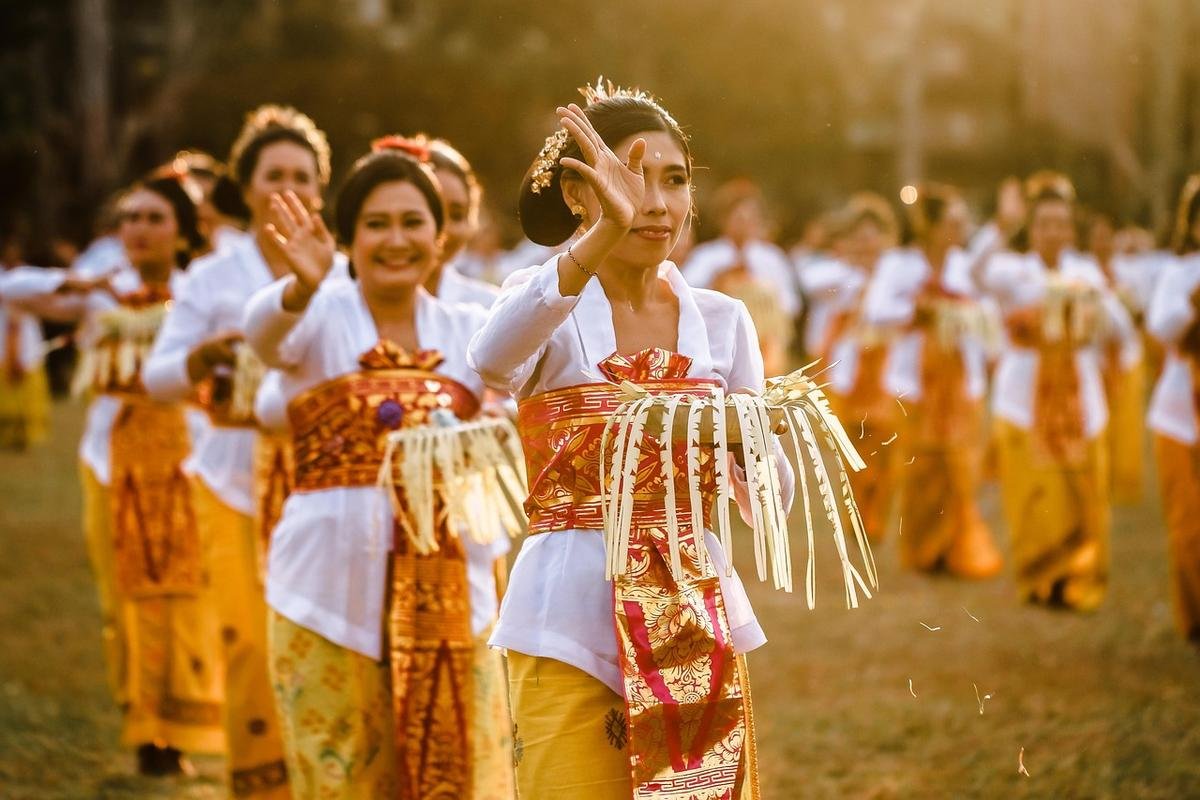
Students of Sanggar Taman Suci during practice. Photo: personal collection.
A striking shift in gender wayang classes reveals a breakdown of past customs: young women now learn and perform the instrument alongside male peers. This change marks a growing openness among new artists who no longer see Balinese performance art as confined by gender expectations.
Approach to dance training has shifted. Twenty years ago, students tackled numerous repertoires in a set sequence. Now many prefer to concentrate on select pieces designed for stage competitions. In response, private coaching sessions focus on refining those contest-friendly routines and group lessons cover the broader canon.
That targeted training has paid off. Dancers from Taman Suci regularly take home prizes at regional and provincial events, bringing recognition to the sanggar and its staff. Parents often report seeing a boost in confidence and discipline among the young performers when they return home.
The family at the studio occasionally invites extended relatives or former students to lead workshops, but the day-to-day leadership remains in the hands of the three core instructors. Their combined effort has kept the place welcoming and disciplined.
Every Sunday, the air fills with metallic resonances from the gamelan gongs and the measured beat of footwork. In that compact rehearsal space in Baturiti, Balinese art stays alive as a living tradition.