Secret Temples In Bali Charming Photogenic Retreats
Ever wondered if Bali’s most magical temples are the ones most visitors never find?
Tucked off the tourist trail, you’ll discover seven small shrines. Quiet spots to pause, breathe, and watch the island’s water-and-stone rituals up close.
Picture a sunrise mirrored in a lotus pond, the surface glass-smooth, the air soft with frangipani (sweet white flowers).
Pure calm.
I’ll point you to each secret temple, tell you the best light for photos, and share the little rituals and scents that turn a quick stop into a memory.
Think of it as a gentle map to moments you’ll keep.
Secret Temples In Bali Charming Photogenic Retreats

These seven tucked-away temples and shrines sit well off the tourist trail. Quiet places to pause, take photos, and feel Bali’s water and stone rituals up close. Ever dreamed of catching a sunrise reflection in a lotus pond while the air smells like frangipani? Come closer.
-
Pura Dalem Jagaraga , near Kerobokan Beach, Singaraja, about 19 miles north of Ulun Danu Beratan.
A 12th-century tri-mandala temple (a three-part sacred layout) with carved reliefs that quietly tell the story of Dutch and Balinese encounters. The stone carvings catch soft light late in the afternoon. Perfect for close-up shots that feel like history. -
Underwater Temple of Pantai Jemeluk , Amed’s black-sand shore.
An ancient ruin now draped in coral and marine life. Snorkelers love the otherworldly photo ops of stone and coral meeting the sea. Bring an underwater camera or try a wide-angle lens from the shore. -
Kehen Temple , Cempaga, Bangli highlands.
This one feels older than time with megalithic foundations and three copper inscriptions. Look for the carved Candi Kurung gateway (a stone-framed shrine) and the Bale KulKul, the wooden drum tower tucked in a banyan tree. The scent of wet earth here is something you’ll remember. -
Goa Gajah (Elephant Cave) , near Bedulu.
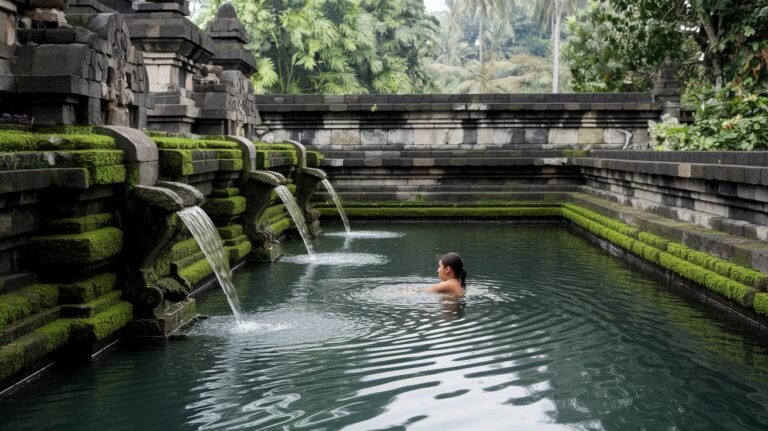
A carved stone entrance opens into meditation chambers and a secret spring-fed bathing pool used for purification. The carvings are dramatic up close. Sit quietly for a moment and listen to the soft drip of the pool. -
Gunung Kawi Sebatu , Sebatu highlands, Tampaksiring.
A peaceful water temple with a crystal-clear holy spring set in lush tropical gardens. Sunrise is magical here for photos, when mist and light weave through the palms. Tranquility. Right here. -
Pura Mengening , Tampaksiring’s quieter temple.
Ancient stonework and a small sacred spring locals say is restorative. It’s less crowded so you can frame portraits without people in the background. Pure calm. -
Saraswati Temple , central Ubud.
A lotus-pond sanctuary dedicated to the goddess of arts, with carved stone and floral reflections that make gentle, framed portraits. The lily pads and carvings create natural picture frames. Great for a slow morning visit.
More detailed notes follow in the sections that come next. You’ll find how to reach each site, opening times and seasonal cautions, dress and ritual etiquette, best photo angles and drone rules, nearby places to stay, plus sample one- and two-day plans. Think of it as your easy map to explore each stop with confidence.
Secret Temples in Bali: Transport and Access Tips

From Ubud, most of these temples sit about 20-60 minutes away by car. If you’re coming from Denpasar, add roughly 20-40 minutes depending on traffic. For northern sites, Lovina or Singaraja is the nearest hub; for example, Pura Dalem Jagaraga can be 30-90 minutes from Lovina depending on your starting point. Small roads and winding highland routes add time, so give yourself a buffer.
Think of your transport like choosing the mood for the day: slow and curious, or quick and flexible.
- Private car with driver. Best for groups and temple-hopping, and the comfiest way to reach places like Sebatu or the Bangli highlands. Local drivers know the quieter side roads and local gate etiquette, which saves time and hassle.
- Scooter. Fast for short hops around Ubud and Tampaksiring if you’re confident on two wheels. Wear a helmet and carry a lightweight rain jacket.
- Boat or snorkel trip. You’ll need one to visit the Underwater Temple at Pantai Jemeluk in Amed. Book a local boat or a guided dive for safety and navigation.
- Guided walking tours or local shuttle. Ideal for Goa Gajah, Saraswati Temple, and village shrines where paths get narrow and a guide adds history and context.
| Temple | Nearest Base | Recommended Transport | Approx. Travel Time |
|---|---|---|---|
| Pura Dalem Jagaraga | Singaraja / Lovina | Private car / guided tour | 30-90 minutes from Lovina; 1.5-2.5 hours from Denpasar |
| Pantai Jemeluk Underwater Temple | Amed | Boat / snorkel trip | About 2 hours from Ubud |
| Kehen Temple | Bangli | Private car / scooter | 40-60 minutes from Ubud |
| Goa Gajah | Ubud | Walk / scooter / car | 10-20 minutes from central Ubud |
| Gunung Kawi Sebatu | Tampaksiring | Private car / scooter | 25-40 minutes from Ubud |
| Pura Mengening | Tampaksiring | Car / scooter | 30-45 minutes from Ubud |
| Saraswati Temple | Ubud | Walk / scooter | 5-15 minutes in central Ubud |
When you hire a local driver, agree on a full-day rate and tell them which temples you want to visit. App taxis like Gojek and Grab work well around towns but they may not reach remote parking spots. So for early starts or late returns, arrange a driver who can wait or pick you up.
Imagine arriving as the morning prayers begin, the scent of frangipani (sweet white flowers) in the air, and the village slowly waking. Pure calm. Ever thought about catching sunrise at a nearby rice terrace (stepped fields that glow emerald at sunrise) before a temple visit? If so, mention it when you book and your driver will help plan the timing.
Secret Temples in Bali: Opening Hours, Fees, and Seasonal Advisories

Most temples open around 7:00 a.m. and close by 5:00 to 6:00 p.m. Early mornings and late afternoons are the quietest times to visit, when light and shadows make the carvings glow. Ever dreamed of wandering a temple before the crowd arrives? Try sunrise.
Entry fees vary by site. Small shrines like Saraswati Temple and Pura Mengening often accept a modest donation or have free entry. Larger attractions such as Goa Gajah (elephant cave) and Kehen usually charge about IDR 15,000 to 30,000. Gunung Kawi Sebatu and Pura Dalem Jagaraga typically ask IDR 10,000 to 50,000 depending on maintenance or whether you want a guide. The Underwater Temple at Pantai Jemeluk (a beach and reef site) has no land gate fee but you will need a boat, snorkel, or dive booking through operators who set their own trip rates.
Rain season runs roughly November through March. Stones get slick, paths turn muddy, and spring and waterfall flows can rise fast. Cave floors and river approaches may become dangerous after heavy rain. Coastal snorkeling and diving trips can be paused when the sea looks rough. Flash floods are rare but possible in narrow gorges, so keep an eye on local weather reports.
If you plan temple visits during the monsoon, bring a lightweight rain jacket and wear sturdy shoes with good grip. Keep electronics in dry pouches and pack a small towel for muddy steps. Ask your villa concierge or driver to call ahead if rain is in the forecast so you don’t arrive to a closed path or unsafe trail.
Avoid late-afternoon arrivals on steep routes, and listen to temple staff when they advise you to wait. If a ritual or water shrine looks fast or cloudy, step back and come back another day. For boat trips, always confirm that operators perform safety checks and provide lifejackets before you board.
Tranquility. Right here.
Secret Temples in Bali: Cultural Etiquette and Ritual Practices

Respect changes the visit. Step softly, lower your voice, and let the warm scent of incense and frangipani (plumeria) flowers set the pace. Temples are living places of worship where locals come to pray, leave offerings, and gather. Your calm attention makes space for that, so smile gently and follow what worshippers do when you’re unsure.
Ever wondered what to do if a ceremony begins? Pause, watch, and mirror the quiet movements nearby. It’s the kindest way to be part of the moment.
Dress Code Requirements
Sarongs and sashes are the usual visitor wear. A sarong is a wrap skirt you pull down to cover the knees, and a sash is a narrow cloth tied around the waist. You can rent or buy them at the temple entrance, a market stall, or ask your villa concierge if they provide one.
- Make sure the sarong covers your knees.
- Tie the sash around your waist over the sarong. Some inner courtyards require a sash to enter.
- Cover your shoulders with a light shawl or shirt.
Shoes come off at stone steps or doorways. Need help tying a sash? Ask a temple attendant or a vendor. They’re usually happy to show you.
Offering and Donation Customs
You’ll see small woven trays of flowers and rice called canang sari (daily offerings) sitting on shrines and along walkways. You may place one at the shrine edge or hand a sealed donation to a temple attendant. For cash, use a plain envelope folded neatly.
When you offer, present it with both hands and bow your head slightly. Then step aside so worshippers can pass. Don’t step over offerings or move them. If a priest gives a blessing, he might sprinkle holy water or touch your forehead with a frangipani leaf. Receive it with your hands together.
Photography Guidelines
Ask before photographing people during prayers. Flash can distract ritual focus and is often not allowed near inner shrines, so turn it off. Respect ropes, signs, and staff who tell you where cameras aren’t welcome.
For portraits, wait for a quiet moment and offer a small thank-you if someone poses. Tripods can block paths, so set them up carefully and keep equipment out of sacred spaces.
Secret Temples in Bali: Photography and Drone-Friendly Spots

Sunrise at the water temples and cliff shrines is pure magic. Get there before first light to watch mist lift off the ponds and to catch carved stone backlit by soft morning glow. Ever pictured a shrine reflected perfectly in a still pool? That’s the moment.
Aim low to capture reflections in lotus ponds (water lilies that frame the shrines). Use a wide-angle lens for the whole scene, or a 70–200mm to pull gentle, intimate details from afar. Bring a polarizing filter (it cuts glare and deepens blue skies). If mornings are cool, battery warmers keep cells happy. And breathe. Quiet patience usually wins.
Twilight gives caves and waterfall alcoves a very different mood. The warm, diffused light at a cave entry brings textures alive. Flash is rude and often not allowed – use a higher ISO (more light sensitivity) and steady hands, or a small LED panel if you’ve asked permission. Tripods help when you have the space.
For waterfalls, try long exposures from 1/4 second to several seconds on a tripod to turn rushing water into silky ribbons. Pack an ND filter (neutral density filter for shooting bright scenes) for midday shots, and a lens cloth to wipe off spray. Wear grippy shoes for slippery steps and keep a microfiber towel within reach.
Drones are tempting for cliff temples and Pantai Jemeluk underwater ruins (a bay with submerged structures), but many temple grounds don’t allow flights. Always ask a temple attendant or your driver first and follow local aviation rules. When flying is allowed, try a 45-degree oblique for depth, a top-down for lotus ponds, and slow, steady orbits for a cinematic effect.
Shooting with a phone? Turn on HDR (high dynamic range), use gridlines for composition, and the wide lens for tight spots. Bring a compact tripod or a gorillapod and a remote shutter to avoid shake. Oh, and pack spare batteries and extra memory cards. Respect the place, and you’ll come away with photos that feel like you were really there.
Secret Temples in Bali: Accommodation and Retreat Options

Pick your stay by the temple you want to wake up near.
Want quiet mornings at Gunung Kawi Sebatu (a peaceful mountain temple) or Pura Mengening (a hilltop temple overlooking rice terraces (stepped fields that glow at sunrise))? Head for the highlands.
Craving snorkel access to the underwater ruins off Pantai Jemeluk (Amed beach)? Stay near Amed, where the sea is your neighbor and sunrise swims are easy.
Looking for beachfront luxury with on-site private yoga, guided meditation, spa therapies, and private temple-tour packages with transport? Sense Canggu Beach Resort is a solid pick. The waves, the yoga platform, the in-house spa, pure calm.
-
Homestays near caves
Family-run homestays around Bedulu and Amed put you a short walk from Goa Gajah (Elephant Cave shrine) and a quick ride to Pantai Jemeluk boat launches. Expect simple breakfasts, warm local tips about the best shrine timings, and hosts who’ll treat you like family. -
Eco lodges close by
Small eco lodges in Bangli and Tampaksiring sit about 20 to 40 minutes from Kehen Temple and 15 to 30 minutes from Gunung Kawi Sebatu. Think shaded terraces, farm-to-table meals, and guides for quiet garden walks and slow village treks. Gentle mornings, bird song, tea on the veranda. -
Boutique stays with view
Private villas with jungle or cliff views make sweet bases for Saraswati Temple and the Tampaksiring sites. Most are 10 to 35 minutes from the temples. See options under luxury villas in Ubud for panoramic picks with private pools and in-villa chefs. Picture a floating breakfast drifting by your door. -
Camping permitted areas
There are designated coastal camping spots near Amed and regulated highland clearings if you want starry nights and first-light temple walks. Village permission is usually required. Facilities are basic in some spots, composting toilets and hot-water showers at a few sites, but the sky makes up for it. -
Wellness retreats nearby
Small retreat houses and resorts offer overnight packages, private ceremony bookings, meditation on request, and sunrise yoga platforms before temple visits. Many will arrange private transport and a guided stop list. Ask about local temple tours or check suggested routes like off the beaten path temples in Ubud.
Tell your host which temples you plan to visit and they’ll advise on travel times and whether a local guide, boat, or driver works best. Tranquility.
Secret Temples in Bali: Sample Offbeat Exploration Itineraries

Want a day that feels like a secret? Here are two gentle routes that mix mountain springs, caves, coral, and quiet coastal temples. Think slow, sensory, and a little tucked-away.
One-day offbeat loop – a sunrise to sunset route that blends mountain springs, cave calm, reef color, and a quiet coastal temple.
-
5:00 AM – Sunrise at Gunung Kawi Sebatu (a mountain shrine with spring-fed pools).
Mist floats between the trees, birds call, and the water looks like glass in the first light. Take a short walk through the garden paths, then warm up with a nearby coffee stall. Ever tried a strong Balinese kopi at sunrise? -
8:30 AM – Mid-morning at Goa Gajah (Elephant Cave).
Explore the carved entrance, then sit by the hidden bathing pool fed by a spring and listen to the steady drip. Quiet and cool. Perfect pause. -
12:30 PM – Lunch near Kehen Temple in Bangli.
Simple local rice plate (nasi campur) and time to photograph the Candi Kurung gateway and the temple’s old stonework. The air smells faintly of frangipani. -
3:00 PM – Afternoon snorkel or dive at the Underwater Temple off Pantai Jemeluk (Pantai means beach; this site has submerged ruins and coral).
A boat will pick you up and the guide will point out coral-covered stone and colorful reef fish. Bright, alive, and a surprisingly peaceful dive. -
6:00 PM – Sunset at Pura Dalem Jagaraga near Singaraja (a coastal village temple).
Late light warms the reliefs. You’ll end the day feeling quietly full.
Two-day exploration plan – a mountain to rice-terrace circuit with cave and coast highlights.
Day 1
- Morning: arrive at Goa Gajah for the cooler cave light and a calm start.
- Midday: head to Gunung Kawi Sebatu for the water shrine and garden paths.
- Afternoon: stop at Pura Mengening for a slower tempo, then sleep in a nearby eco-lodge. Pure bliss.
Day 2
- Dawn: a rice-terrace walk around Tampaksiring (lotus ponds and lily reflections). Imagine the terraces glowing at sunrise.
- Midday: Kehen Temple for detailed stonework and the banyan-tree Bale KulKul (a traditional bell pavilion).
- Afternoon: drive east to Amed for snorkeling at the submerged Pantai Jemeluk ruins and finish with coastal photos.
Want a private custom tour? Tell your driver the pace you like – sunrise-heavy, beach plus cave, or a mountain to rice-terrace circuit – and they’ll stitch together routes and timings.
By the way, for a quiet day mix one calm water shrine or a lesser-known temple between popular stops. You get the classic views and the secret moments too.
Final Words
Stepping over sun-worn steps, we met seven offbeat temples by name and place, cave shrines, a submerged sea altar, and a river grotto. You also explored transport options, opening hours and modest entry fees, dress and offering customs, photo and drone spots, nearby stays, and two easy itineraries.
Pack a sarong, a curious camera, and a respectful heart. Ever dreamed of snorkeling above a sunken altar? The secret temples in bali await with calm beauty and a warm welcome.
FAQ
What are the top secret temples in Bali to visit?
Some lesser-known or “secret” temples to consider:
- Pura Dalem Jagaraga
- Underwater Temple at Pantai Jemeluk
- Kehen Temple
- Goa Gajah
- Gunung Kawi Sebatu
- Pura Mengening
- Saraswati Temple
Which temples are the most famous or biggest Hindu temples in Bali, and is there a temple on the water?
Pura Besakih is Bali’s largest and most famous temple complex. Well-known water-related temples include:
- Ulun Danu Beratan (on a lake)
- Tanah Lot (on a sea rock)
Other renowned temples include Goa Lawah and Lempuyang.
What are the nine temples in Bali?
The “nine temples” (Sad Kahyangan) are the nine directional temples protecting Bali. Commonly listed temples include:
- Besakih
- Lempuyang
- Uluwatu
- Batukaru
- Goa Lawah
- Ulun Danu Beratan
Different traditions may name other temples to complete the nine.
Is it okay to wear red in Bali?
Yes, wearing red for everyday clothing is fine. For temple visits you should cover shoulders and knees with a sarong and sash and follow any ceremony-specific dress rules.
Is $1000 enough for a week in Bali?
A $1,000 budget for one week in Bali can be sufficient for one person for mid-range accommodation, meals, local transport, and several activities. Costs rise for luxury stays, private tours, or high-end dining.
Can I kiss my girlfriend in Bali?
Public kissing is generally accepted in tourist areas, but avoid open displays of affection at temples and in traditional villages out of respect for local customs and elders.