7 ubud monkey forest visit Delightful Day Trip
Ever wondered what it feels like when a curious macaque snatches your watch? You might laugh while your heart skips a beat, you know. And that’s exactly what awaits at Ubud Monkey Forest.
Here ancient banyan trees (giant fig trees with hanging roots) arch overhead, forming a leafy cathedral for over 600 long-tailed macaques. You’ll feel the soft rustle of coconut palms (tall palms with feathery leaves) and the warm, earthy scent of mossy stones underfoot. Pure bliss!
In this guide we’ll share ticket tips, the best times to visit, and insider tricks for early birds. Plus simple safety hints so the monkeys stay curious but paws-off your stuff. By the time you leave, your day trip will feel smooth, memorable, and utterly Balinese.
Planning Your Ubud Monkey Forest Visit: Tickets, Hours & Best Times
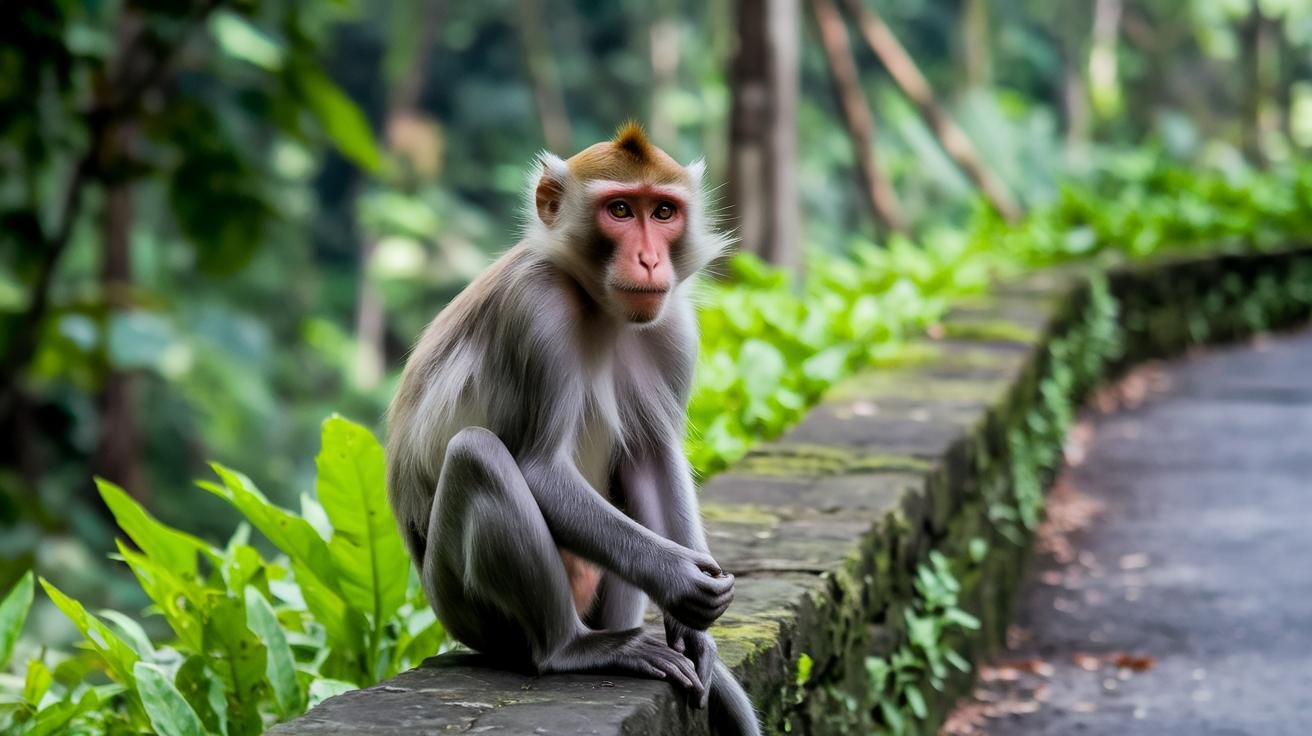
Your Ubud Monkey Forest adventure starts in Padangtegal village (a quiet spot about a 10-minute walk from Ubud center). You’ll hear the soft rustle of coconut palms (tall palms with feathery leaves) overhead and smell damp earth as you wander toward the entrance. Pure magic.
The forest is open daily from 8:30 AM to 6 PM, with ticket sales until 5:30 PM. Tickets cost IDR 80,000 (about $6 USD) for adults and IDR 60,000 (around $4.50 USD) for kids. No need to book in advance, just stroll up and pay at the gate. For any fee updates, see Ubud Monkey Forest ticket prices and updates.
Top tips for early birds:
- Arrive at 8:30 AM to beat the crowds and enjoy cool air
- Skip the feeding platform at first; monkeys gather there later on
- Pack a reusable water bottle to stay refreshed
- Stash phones, shiny jewelry, and tickets in your bag, curious macaques love things that sparkle
- Follow ranger signs and staff instructions at all times
- Wear sturdy shoes for uneven paths and hidden roots
Looking for a deeper dive? Guided “Best of Ubud” tours include villa pick-up, ranger stories on macaque behavior, and a safety briefing at the gate. You’ll get behind-the-scenes on temple carvings and tips for playful monkeys. Feels like having a friend whispering secrets in your ear.
Prefer going solo? You set the pace, linger at secret clearings, and wander between mossy trails. Early morning is hands down the best time, soft light filters through banyan trees and the forest feels almost private. Tranquility.
Primate Species and Conservation in Your Ubud Monkey Forest Visit
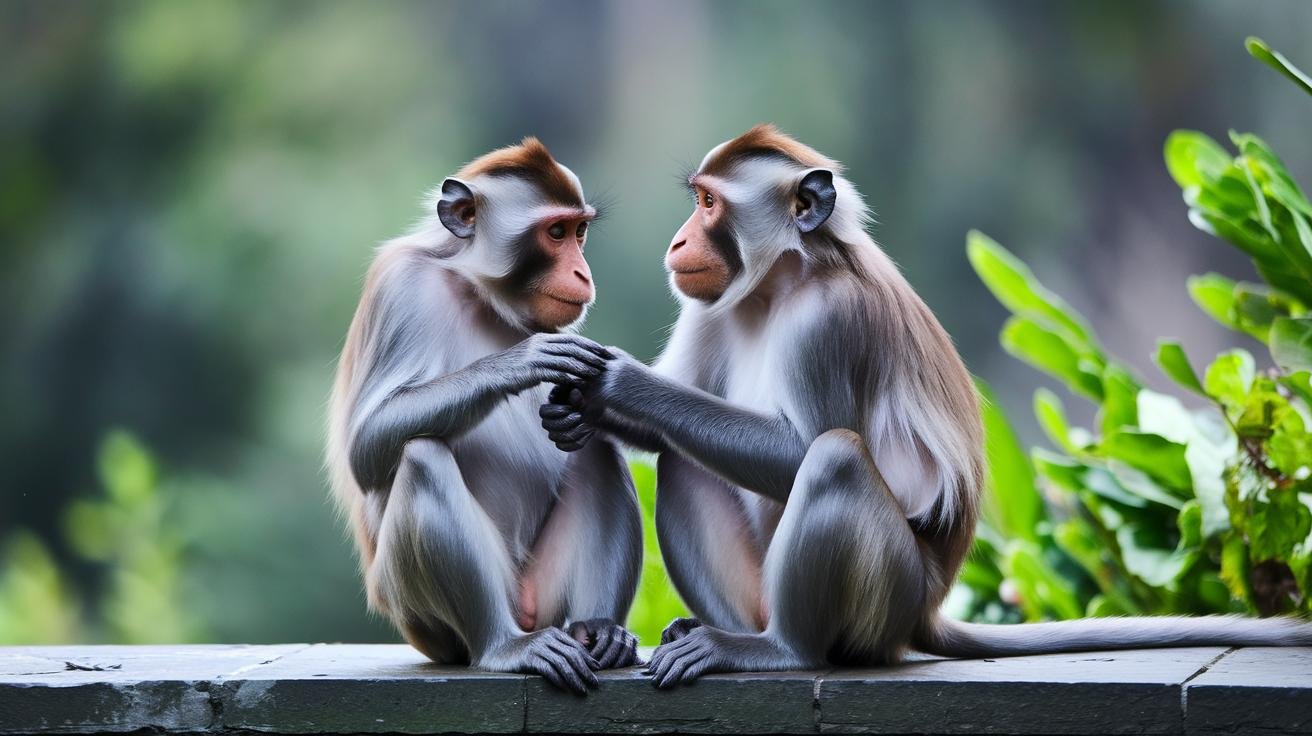
Imagine stepping into the Ubud Monkey Forest (28 acres of emerald green where over 600 long-tailed macaques, also called crab-eating macaques, roam free). You’ll hear their cheerful chatter echo around soaring banyan trees (giant fig trees with hanging roots) as dappled sunlight warms the forest floor. It’s like getting a backstage pass to a secret jungle concert.
These macaques live in four family clans, each guided by its alpha male. He patrols the branches, keeping peace with a confident grunt. Moms snuggle their babies on mossy stones for midday naps while youngsters dart and twirl through low-limbed branches, squealing with delight. They’re so used to visitors that a shy head tilt often replaces fear.
By the way, the forest stays vibrant thanks to dedicated conservation efforts. Rangers quietly mend wooden boardwalks and clear fallen debris so you can wander safely. Behind the main temple, a small clinic hums with vets who check on any injured monkeys. And at the welcome gazebo, guides share gentle tips on how to watch these clever primates without disturbing their day.
Oops, almost forgot, your wildlife adventure here is more than just a visit. It’s a special moment shared with nature’s most charming residents.
Essential Safety Guidelines for Your Ubud Monkey Forest Visit
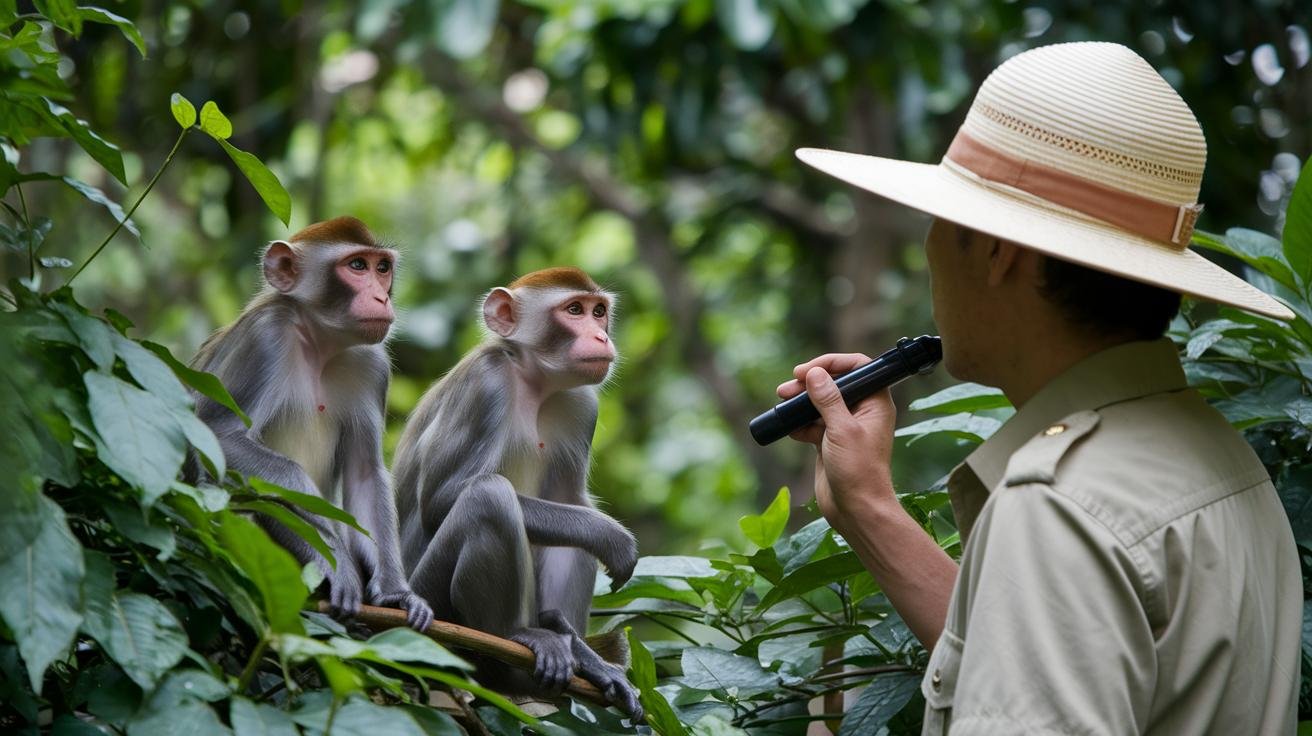
Imagine stepping into a world where warm sun filters through towering trees and you hear the soft murmur of leaves as playful macaques (small wild monkeys) chatter nearby. Rangers drift by like friendly guardians, quick to share safety tips and keep the trails clear for you.
They’ll gently remind you: no outside snacks or fruits. Monkeys should munch on their jungle treats. Tossed chips can spark a chase or a squabble over crumbs. These simple rules help protect our furry hosts and keep your walk peaceful.
Oh, and touching a baby macaque? Off-limits. Mama monkeys have fierce instincts, she might hiss, lunge, or bark if she senses a threat. Avoid eye contact too. A steady stare can feel like a dare to them.
Keep shiny things out of sight. Cameras, tickets, jewelry, stow them in zipped pockets or your bag. Even a glowing phone screen can look like a toy to those nimble paws.
Kids brim with wonder here. Stay close and keep voices soft. Remind them not to dash after monkeys or wave treats. If a macaque wanders over, guide little ones to step back calmly, slow breaths. For toddlers, hand-holding is pure peace.
Temples, Trails & Flora on Your Ubud Monkey Forest Visit
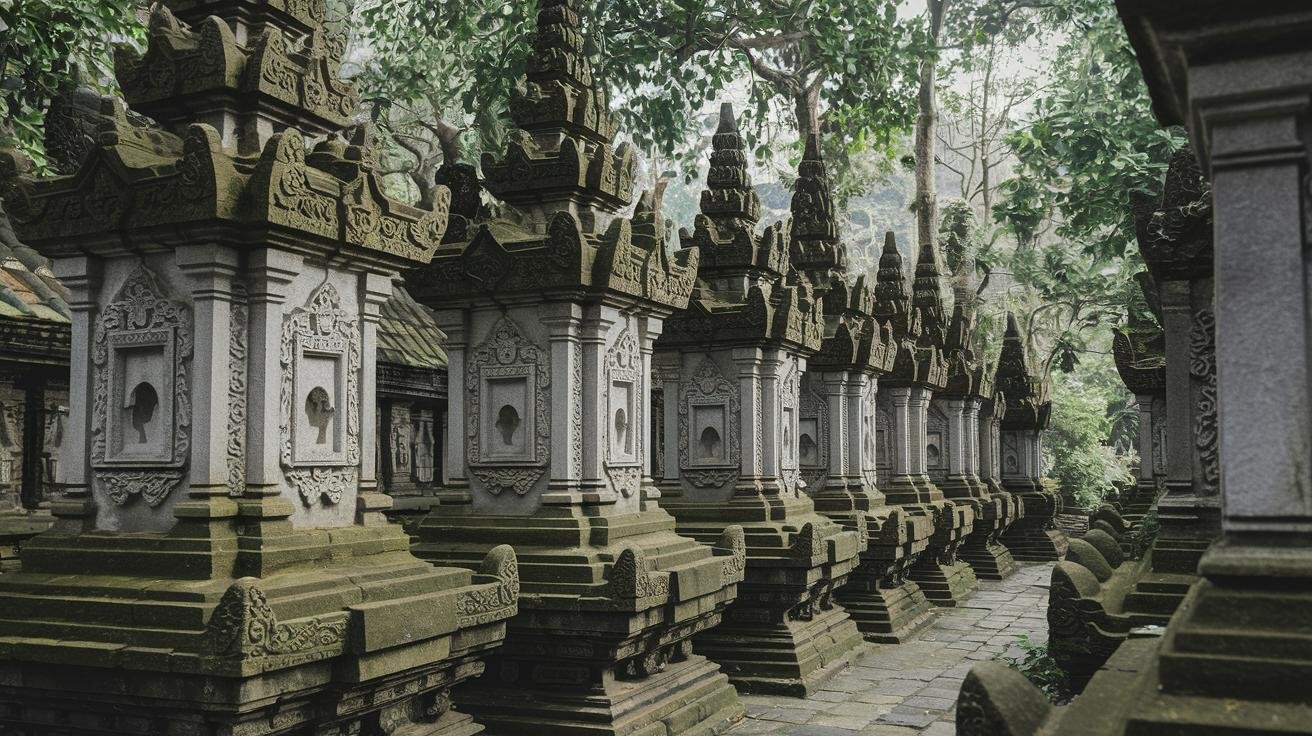
As you wander deeper into the sanctuary you’ll discover three sacred shrines carved from stone and wood. Pura Dalem Agung Padangtegal stands in the central plaza, its weathered statues and jagged rooflines whisper centuries of Balinese devotion. Off the western trail you’ll find Prajapati, the Cremation Temple, where quiet ritual fires glow among ornate reliefs. And in a cool, shaded nook the North-East Shrine glimmers with moss-kissed carvings used for water-purification rituals. Plumeria (frangipani) blossoms drift on the breeze around each altar. Ever wondered how these stones hold their secrets through time?
| Temple Name | Location | Purpose |
|---|---|---|
| Pura Dalem Agung Padangtegal | Central Plaza | Main worship site |
| Prajapati (Cremation Temple) | Western Trail Junction | Funeral rites and ceremonies |
| North-East Shrine | NE Trail Branch | Water-purification rituals |
The forest has six marked trails winding through 28 acres of dappled light. Wooden signposts guide you past shaded brush and gentle streams. Expect uneven earth, tangled roots, and a few stone steps, it’s a moderate trek that takes about forty-five minutes if you’m taking it easy. Bright orange spathodea trees (flame trees) pop against emerald ferns. Ancient banyan trees (huge fig trees with hanging roots) form natural arches overhead. Wild ginger blooms scent the air near mossy logs. In spring you might spot orchids tucked into tree hollows or glimpse a kingfisher at a creek crossing. Pause on hand-carved benches by the temple gateways and follow helpful signboards to each shrine. For a smooth stroll, download the forest map before you arrive, printed guides await you at the welcome center.
Photography Guidelines for Your Ubud Monkey Forest Visit
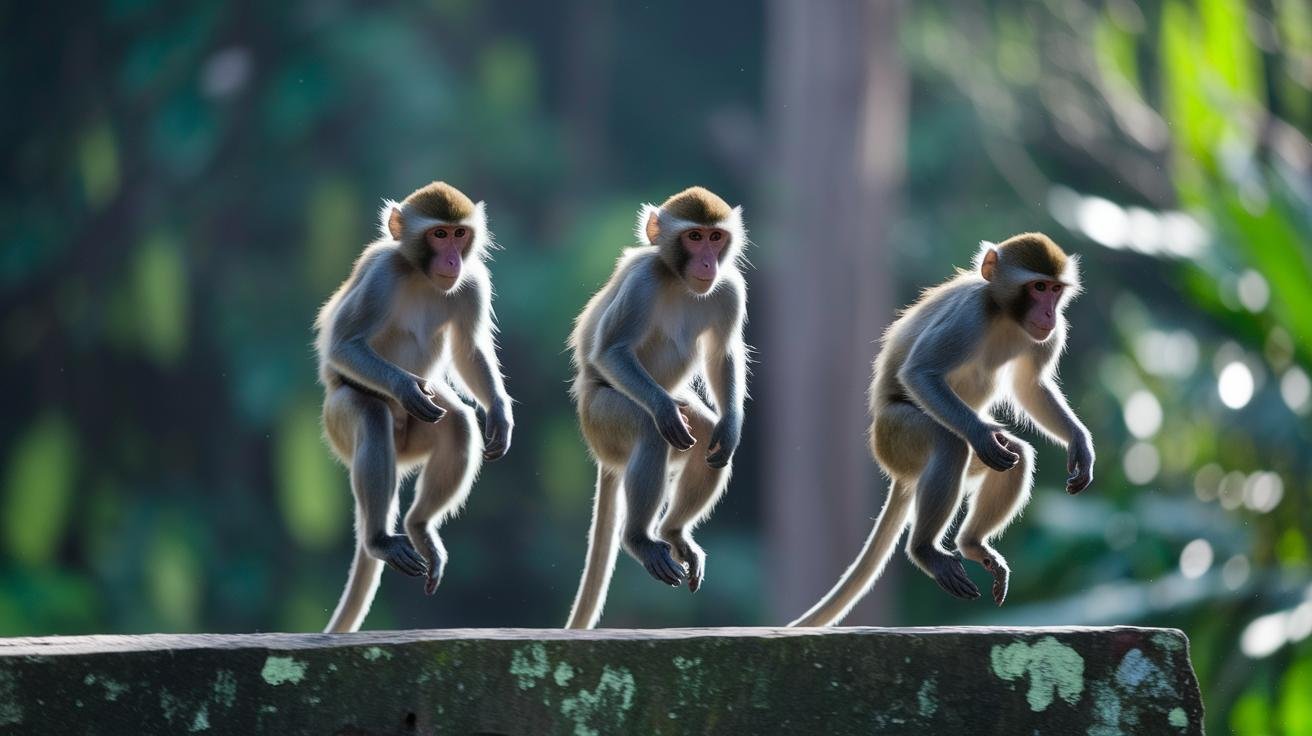
Imagine the forest waking up around you: the soft rustle of giant banyan leaves, warm sunlight dancing on moss-covered stones, and curious macaques chattering in the trees. Ever dreamed of freezing a monkey mid‐swing? Here’s how to get shots you’ll treasure.
The feeding platform is a front-row seat to monkey mischief. Watch macaques tug at bananas and spring into the air. Frame them against swaying palm fronds for lively action shots. Pure fun.
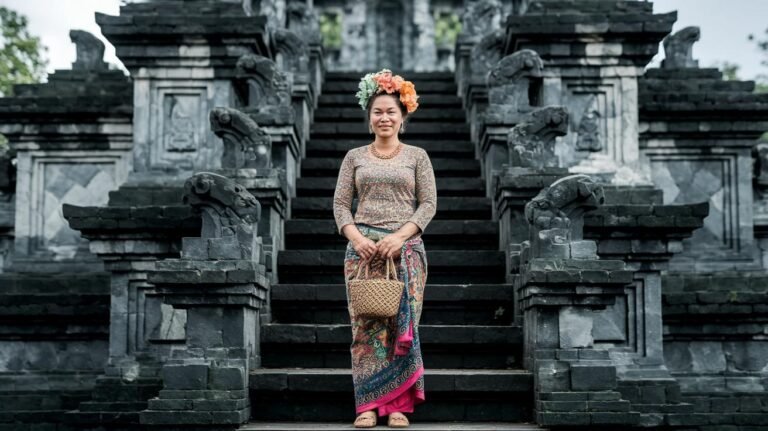
Next, head to the main temple stairs (mossy steps lined with carved stone guardians). The stairs lead you from bright sun into cool shade, perfect for dramatic depth. Let your lens wander from the first step up to the detailed statues guiding your view. Tranquility meets drama here.
By the way the canopy walk is a hidden gem. Vines drape overhead and dappled sunlight creates a leafy tunnel just made for backlit silhouettes. Pause and let a monkey perch behind you while you snap its outline. Magic.
Drones aren’t allowed here, they can spook our furry friends and shatter the peaceful hush. Flash photography might startle a grooming pair or freeze a playful moment. So keep your light soft and steady. Everyone will thank you for the gentler approach.
For crisp images, think of a zoom lens in the 35 to 200 mm range (great for close-ups and treetop antics). In shaded spots set ISO at 400 or lower. Then bump your shutter speed above 1/250 of a second to freeze those midair flips. Try continuous shooting mode, hold down the shutter to catch every surprised expression. Oops, let me rephrase that, keep your finger on the button and watch the magic unfold.
Shooting on your phone? Tap and hold to lock focus then slide up or down to adjust brightness before you snap. A simple wrist strap or snug pouch keeps your device safe from curious hands. Ready to make memories that swing?
7 Ubud Monkey Forest Visit Delightful Day Trip
Picture this. You slip into the Monkey Forest at 8:30 AM. Soft sunlight filters through giant banyan trees and playful macaques (local monkeys) scamper all around you. Their excited chatter feels like a secret jungle party.
By 10 AM, wander five minutes to the Ubud Art Market. Narrow lanes burst with hand-woven baskets and carved wooden statues. Grab a fresh coconut to sip or a warm banana pancake at a street stall. Yum.
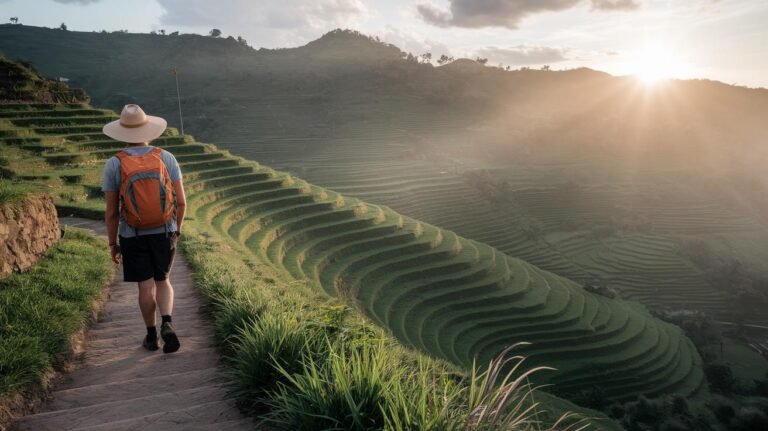
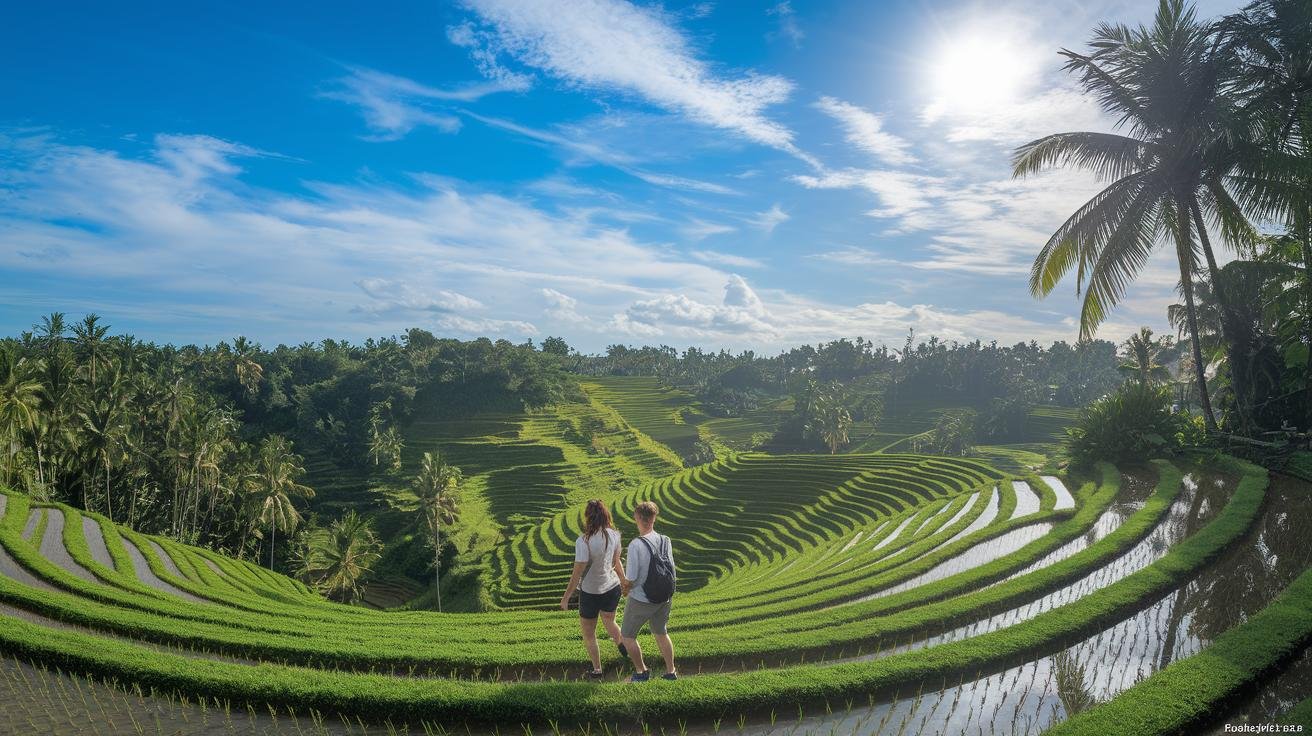
At 12:30 PM, hop on a scooter or hail a quick taxi north. Thirty minutes later, you’ll arrive at Tegalalang Rice Terraces (stepped fields of emerald that glow at sunrise). Find a shaded warung (open-air café) perched above the paddies.
Order nasi campur (mixed rice) and a cold iced tea, pure comfort. Then swing back to the little café near the Monkey Forest entrance for a light snack or cool drink before you head on.
Late afternoon calls for the Campuhan Ridge Walk, just a 10-minute scooter ride from the forest gates. Step onto the gentle hilltop trail as dusk paints the sky pink and orange. The breeze brushes your face, and below, rice paddies and palms sway in unison.
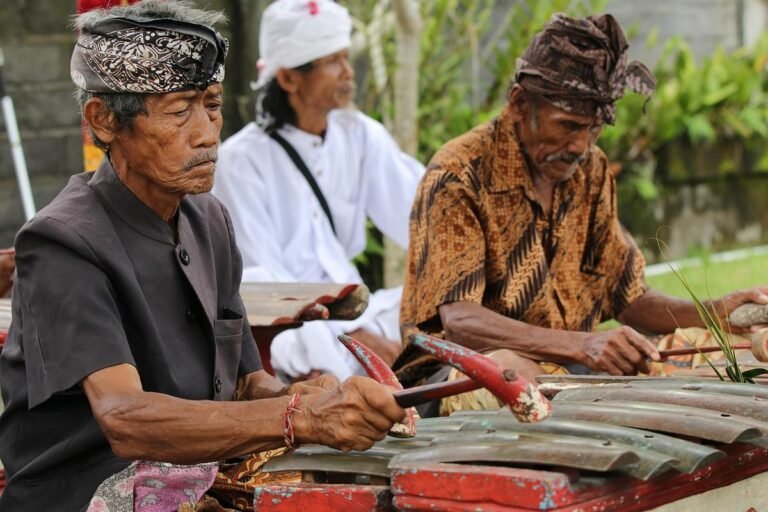
Spot a carved wooden bench? Pause there, listen to distant gamelan music (traditional Balinese orchestra) drifting up from Ubud center. Aim to loop back by 5:45 PM so you’re inside the forest before it closes at 6 PM. Bliss.
Travel Logistics & Accessibility for Your Ubud Monkey Forest Visit
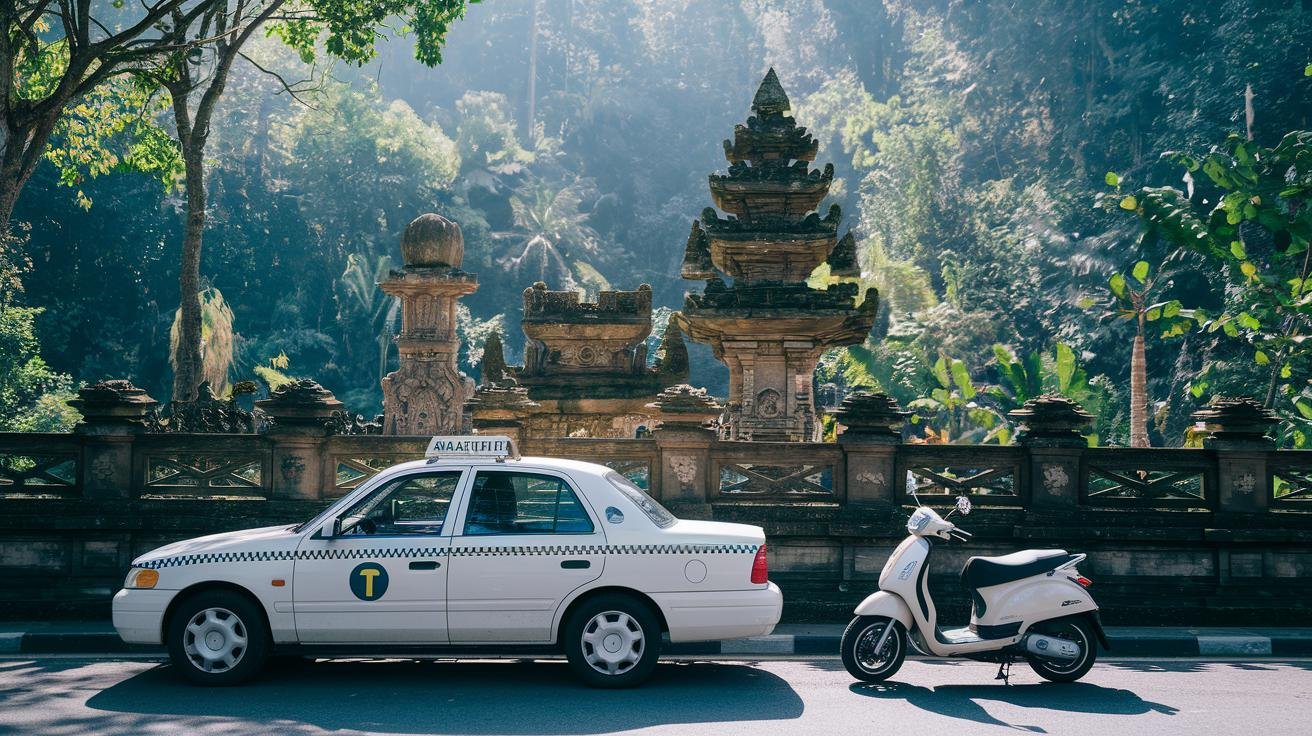
Flying into Ngurah Rai Airport, you can hop in a taxi or jump on a shuttle to Ubud center (learn more at how to travel to Ubud from Ngurah Rai Airport).
Once you arrive, scooters buzz past rice terraces (stepped fields that glow emerald at sunrise) or you can hail a Blue Bird taxi.
The Monkey Forest sits about a 10-minute scooter or taxi ride from downtown. If you’d rather stretch your legs, a 30-minute walk along quiet lanes leads you under the gentle rustle of coconut palms (tall palms with feathery leaves). No park closing time limits your visit. Linger as long as the sun is up.
Restrooms await at the main entrance and by the central temple plaza so you can refresh after a forest stroll. Much of the main path is paved and wide enough for wheelchairs. Watch for occasional tree roots. Friendly rangers will point out the smoothest route if you need help.
Pets aren’t allowed inside.
Pack light, roam free, and let the forest work its magic.
Final Words
After diving into ticket details, opening hours and top tips for beating the crowds, you’ve got the essentials to plan a smooth sanctuary day. You’ll know when to arrive, what fees to expect and how to choose between a guided tour or wandering on your own.
You’ve met the macaque families, learned safety guidelines, and discovered temple highlights, photo spots and handy itineraries. Transport options and on-site facilities won’t catch you off guard.
Your ubud monkey forest visit is set to be a seamless and joy-filled adventure.
FAQ
Where is the Ubud Monkey Forest located and can you walk through the monkey forest?
Ubud Monkey Forest tickets, prices, and booking requirements?
What are the opening hours of Monkey Forest Ubud?
Are Ubud Monkey Forest visits worth it based on reviews?
How long do you need at Monkey Forest Ubud?
Can you take photos at Ubud Monkey Forest?
Has there been a death at Ubud Monkey Forest?