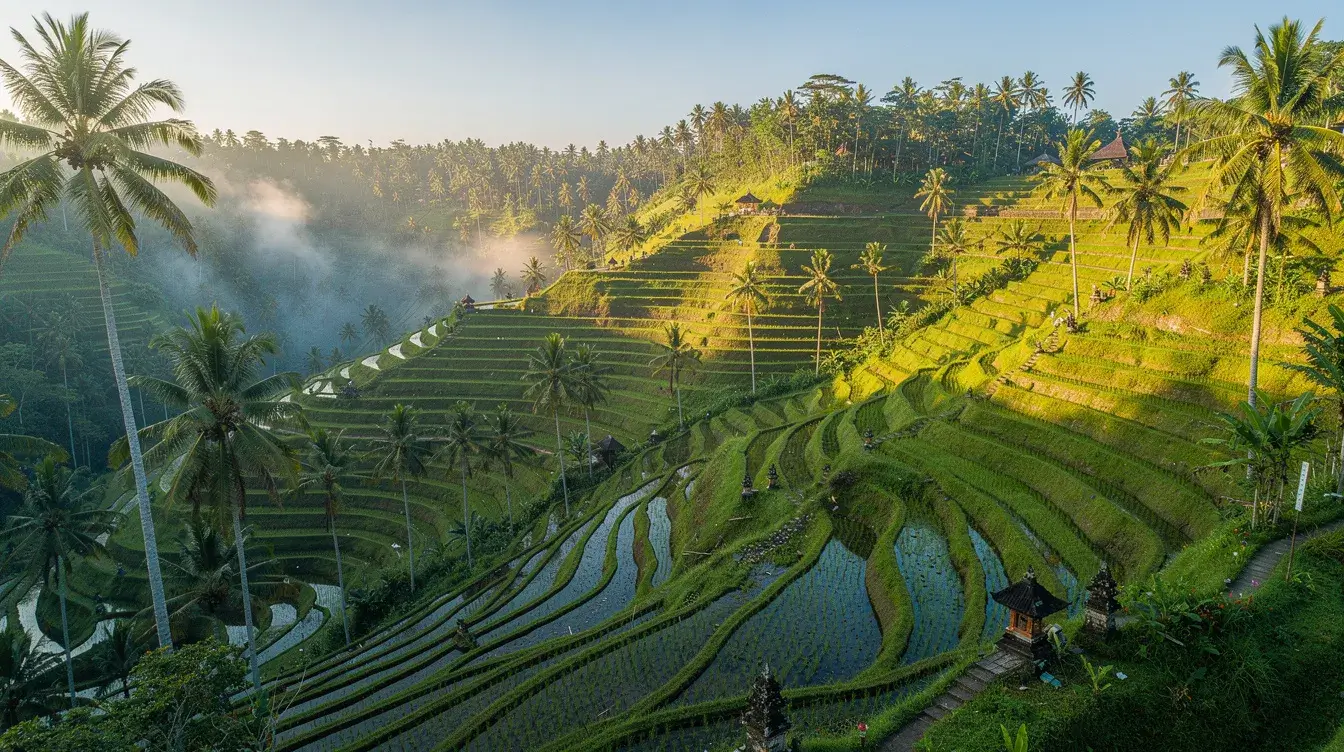
Tegallalang Rice Terrace Ubud: A Complete Visitor Guide
There are moments in Bali that stop you mid-breath. Walking along the carved green terraces of Tegallalang is one of them. Just twenty minutes north of central Ubud, this ancient landscape of sculpted rice paddies cascading down a steep river valley has drawn travelers, artists, and photographers for generations — and for good reason.
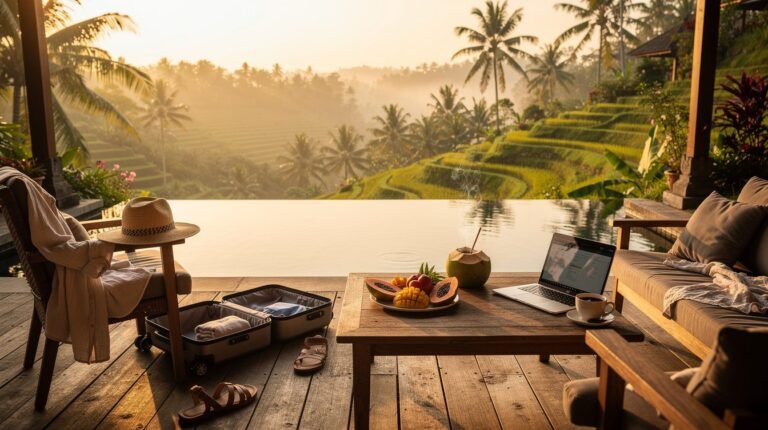
If you are staying at a private pool villa in Ubud, Tegallalang Rice Terrace should be near the top of your list. Here is everything you need to know before you go.
Why Tegallalang Rice Terrace Is Worth the Visit
Bali has rice terraces everywhere. Drive any back road and you will see emerald paddies framed by coconut palms. But Tegallalang is different. The terraces here are extraordinarily steep, layered in dramatic tiers that follow the natural contours of the valley. The subak irrigation system — a cooperative water management tradition dating back to the ninth century — feeds each terrace in turn, and UNESCO has recognized this system as a Cultural Landscape of Bali.
Standing at the edge and looking across, you feel the scale of something ancient. The air smells of wet earth and green growth. Dragonflies hover over shallow pools of water. Farmers in conical hats work the paddies the same way their ancestors did centuries ago. It is authentic, immersive, and quietly moving.
Best Time to Visit Tegallalang
Timing matters. The terraces look completely different depending on the season and the rice-growing cycle:
- Bright green paddies (planting season): The most photogenic phase. Young rice shoots glow an almost electric green. This typically occurs a few weeks after planting — roughly April through June and again around October through December.
- Golden paddies (harvest time): The rice turns amber and gold just before harvest. Beautiful in a different way — warm, sun-drenched tones across the valley.
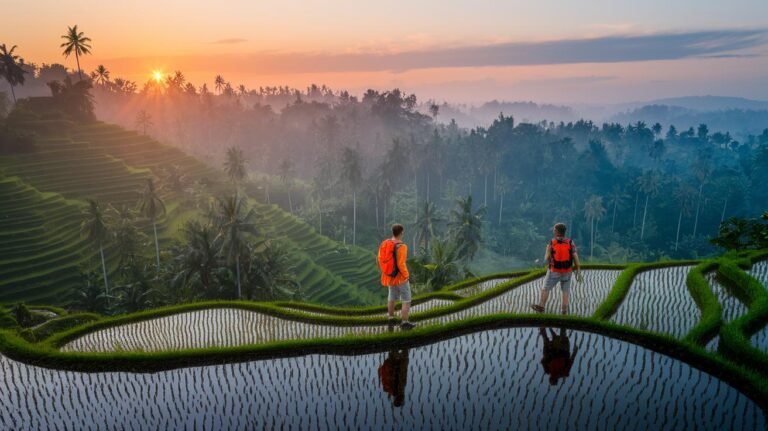
- Flooded paddies: Just after harvest, the terraces are cleared and flooded. Mirror-like water reflects the sky and surrounding palms. Stunning at sunrise.
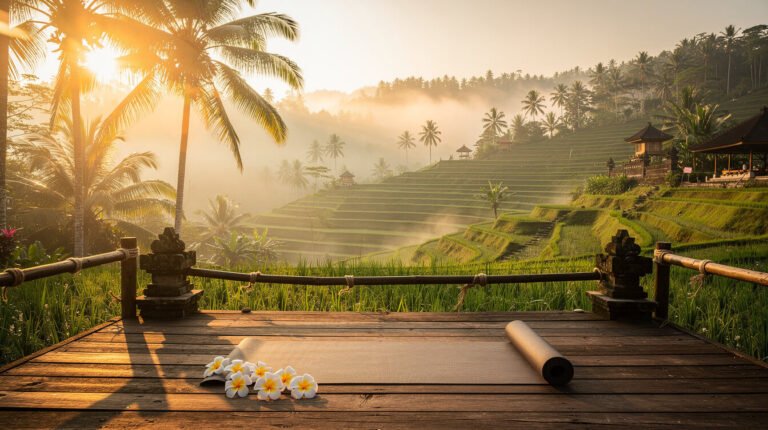
For the best experience, arrive early — between 7:30 and 8:30 in the morning. The light is soft, the air is cool, and you will have the paths mostly to yourself before the tour buses start arriving around 10:00 AM.
Getting There From Ubud
Tegallalang sits along Jalan Raya Tegallalang, the main road heading north from Ubud toward Kintamani. The drive takes about 20 minutes from central Ubud, depending on traffic. You have several options:
- Private driver: The most comfortable option. Your villa staff can arrange a driver for the morning — expect to pay around 150,000–200,000 IDR for a half-day. Ask them to wait while you explore.
- Scooter: If you are comfortable riding in Bali traffic, rent a scooter and ride north. The road is straightforward, and parking at the terraces costs around 5,000 IDR.
- Grab or GoJek: Ride-hailing apps work from Ubud. Getting there is easy; getting a return ride from Tegallalang can sometimes take a few minutes longer.
If you are staying at Villa Amrita, the drive is particularly easy. Our villa manager can help arrange transport the evening before so you can head out right after breakfast.
What to Expect When You Arrive
Tegallalang is not a single entrance, single path kind of attraction. The terraces stretch along the valley, and there are multiple access points along the main road. Here is how it works:
Entrance fee: The standard entrance is 25,000 IDR per person (about $1.60 USD). Some sections managed by local families may ask for a small additional donation — this goes directly to the farmers who maintain the terraces.
Walking paths: Narrow paths wind through and alongside the terraces. Some sections involve steep stairs. Wear comfortable shoes with grip — flip-flops are not ideal, especially if it has rained recently. The paths can be slippery.
Swings and photo spots: You will notice large bamboo swings and Instagram-ready photo platforms scattered along the terraces. Some are free; others charge 50,000–150,000 IDR. They are fun but entirely optional — the terraces themselves are the real attraction.
Cafes and warungs: Several cafes line the ridge above the terraces, offering cold drinks and simple meals with extraordinary views. Grab a fresh coconut and sit on a terrace overlooking the valley. It is one of those simple pleasures that stays with you.
Tips for a Better Visit
- Go early or go late. The golden hours — before 9:00 AM or after 3:30 PM — give you softer light and fewer crowds. Midday is hot, bright, and busy.
- Bring water and sunscreen. There is very little shade on the terrace paths. The tropical sun at this altitude is stronger than it feels.
- Wear a hat and comfortable shoes. You will be walking uneven terrain. A sun hat makes the experience far more enjoyable.
- Carry small bills. For donations, drinks, and parking, having 10,000 and 20,000 IDR notes on hand saves hassle.
- Combine it with other stops. Tegallalang is on the road to Kintamani and Mount Batur. Ask your driver to combine the rice terraces with a coffee plantation visit (there are several excellent ones along the same road) and lunch with a volcano view.
Beyond the Terraces: A Full Morning Itinerary
Make the most of the trip north with this easy half-day route from Ubud:
- 7:30 AM — Tegallalang Rice Terrace. Arrive early, walk the paths, take your time. Spend about 60–90 minutes.
- 9:30 AM — Luwak coffee plantation. Several roadside plantations between Tegallalang and Kintamani offer free tastings of Balinese coffee and tea, including the famous (and controversial) kopi luwak. The tasting gardens are beautiful and make a nice rest stop.
- 10:30 AM — Kintamani volcano viewpoint. Continue north for another 20 minutes to the rim of the ancient caldera. Mount Batur and Lake Batur spread out below — a genuinely breathtaking panorama. Several restaurants here serve buffet lunch with the volcano view.
- 12:30 PM — Return to villa. Head back to Ubud for a quiet afternoon by the pool at your villa.
This route covers three of Ubud’s most iconic experiences in a relaxed half day, and you will be back at your villa in time for a late lunch prepared by your private chef.
The Subak System: Living Heritage
What makes Tegallalang truly special is not just how it looks — it is how it works. The subak system is a democratic water management cooperative that has governed Balinese rice cultivation for over a thousand years. Every farmer in the subak has a voice. Water flows from the highest terrace to the lowest, shared according to agreements that balance spiritual practice with agricultural necessity.
Temples are positioned at key water sources. Offerings are made before planting and harvest. The whole system reflects the Balinese philosophy of Tri Hita Karana — harmony between humans, nature, and the spiritual world. When you stand among these terraces, you are standing inside a living expression of that philosophy.
UNESCO inscribed the subak landscape as a World Heritage Site in 2012, recognizing it as a unique cultural landscape that demonstrates the water temple system’s role in shaping the physical landscape of Bali.
Planning Your Stay in Ubud
Tegallalang is just one reason Ubud remains the cultural heart of Bali. From here, the Sacred Monkey Forest is ten minutes south. Tirta Empul water temple is twenty-five minutes east. The Campuhan Ridge Walk starts just west of town. Every direction holds something extraordinary.
If you want to experience it all at your own pace — without tour schedules or hotel lobbies — a private villa with pool in Ubud gives you the freedom to explore on your terms and return to genuine comfort. Your own pool. Your own garden. A chef who knows exactly how to end a morning of adventure with the perfect Balinese lunch.
Tegallalang is not just a place to take photos. It is a place to feel something. Go early. Go quietly. Let the green wash over you.
Villa Amrita is a private pool villa in the heart of Ubud, Bali. Check availability and book your stay to explore Tegallalang and everything Ubud has to offer.