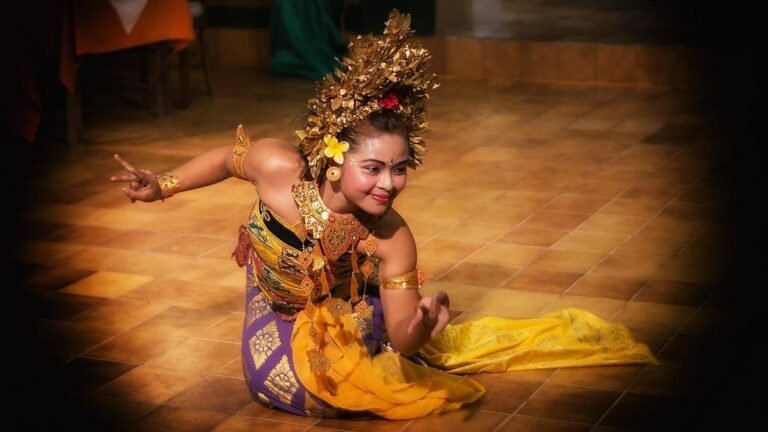
Bali’s Dewi Kili Mantra Channels Sacred Teachings to Guard World Harmony
In a secluded Balinese hamlet, Dewi Kili Mantra entered the world into a respected Brahmin household. Her father served as a revered Hindu priest known for spiritual insight, and her mother excelled in performing sacred rites. From earliest days, she absorbed lessons in mantra recitation, meditation techniques and ritual traditions.
Kili Mantra displayed an extraordinary gift for spiritual study well before adulthood. Villagers often found her beneath a massive banyan tree, eyes closed in deep meditation or leaning forward as her father shared interpretations of ancient scriptures. Her ability to master complex passages marked her as a likely successor to her family’s priestly role.
Under her father’s supervision and the guidance of prominent Balinese teachers, she pursued a rigorous course of Hindu scholarship. She studied the Vedas and Upanishads, explored advanced meditation methods and learned puja ceremonies. This intensive regimen shaped her into a respected authority on all things sacred and mystical.
As she reached adulthood, an unmistakable calling drew her toward a life dedicated to spiritual service. She came to view her own journey as inseparable from the needs of her community, convinced that true purpose lay in helping others find inner calm and meaning.
Kili Mantra chose to be ordained as a priestess at a time when few women followed that path. In her ordination ceremony, she received blessings from village elders and began conducting rituals both in her home settlement and its neighboring communities. Her presence inspired peace among participants, earning her deep reverence as a holy woman.
Word of her gifts spread beyond local shrines. People arrived at her doorstep seeking guidance for health worries, family disputes and social dilemmas. Her calm voice and precise advice soon became legendary, with many attributing unexpected recoveries and reconciliations to her counsel.
The situation captured the attention of King Bali, who faced relentless threats from rival factions. He dispatched envoys to request Kili Mantra’s aid in cleansing his kingdom of dark influences. With humility, she agreed and traveled to the royal court to conduct a series of purification rites.
Her ceremonies drove out the kingdom’s harmful energies and eased ongoing feuds among ministers and tribal leaders. For a season, peace reigned. Then reports emerged of shadowy disturbances returning to the palace gates, signaling a new challenge was at hand.
Kili Mantra held a deep affinity for the natural world and wove local flora, stones and water into her ceremonies. She stressed the bond between spiritual practice and ecological well-being, championing rituals that honored rivers, forests and volcanic slopes central to Balinese belief.
Faced with an encroaching malevolent force, she led a complex, days-long exorcism that tested every ounce of her training. Villagers stood guard at nightfall while she chanted mantras and sprinkled holy water around the palace grounds. At dawn, the dark presence dissolved, and tranquility returned across the land.
People rejoiced at her victory, celebrating with offerings of flowers and fruit at village shrines. King Bali himself knelt before her, placing a garland at her feet in gratitude. Her status as spiritual protector of the realm grew stronger with every story of deliverance.
Her responsibilities only multiplied after that campaign. Requests poured in from distant communities, each facing its own crisis, from flooded rice fields to bitter family rifts. She journeyed by foot and small boat, carrying sacred tools to remote settlements in search of balance and relief.
In one mountain hamlet hit by landslides, she led purification ceremonies beside broken terraces, calling on elemental spirits to restore harmony. Witnesses spoke of storms passing without harm once her rites concluded, and survivors credited her intervention with saving lives and livelihoods.
Off the ritual grounds, she invested energy in social welfare projects. She helped organize food distributions, supported artisans preserving traditional crafts and provided shelter for the elderly. Her example showed that spiritual practice and community action could reinforce each other.
Kili Mantra made a point of uplifting women, offering classes on meditation, sacred song and scriptural study. She encouraged female villagers to find their own voices and asserted that true spiritual leadership welcomed contributions from every soul, regardless of social standing.
One influential courtier, displeased with her rising influence, attempted to disrupt a major temple festival. Dark incantations were whispered near the ceremonial fire on the eve of her key ritual. Undeterred, she redirected the energy with chanting and offerings of jasmine, safeguarding all attendees from harm.
At the height of her work, she established a small study center beside her childhood home. A select group of male and female disciples gathered there each morning to learn recitation of mantras, meditation posture and the philosophy behind keeping mind, body and spirit in balance.
As age advanced, she embarked on a final pilgrimage to Bali’s sacred mountains, trekking along volcanic slopes and through mist-shrouded forests. She meditated at hidden springs and ancestral caves, deepening her sense of oneness with the divine forces she long served.
In her last years, she withdrew to a hillside hermitage, leaving behind all worldly duties. Neighbors heard her gentle chants at sunrise and witnessed the yellow robes she wore as symbol of her devotion. There, she reached a state of profound illumination, becoming one with earth, water and sky.
When she passed from this life, followers mourned but also commemorated her legacy. Shrines sprang up at sites where she had taught or performed miracles. Local villagers maintained daily offerings, keeping her memory alive through generations of Balinese seeking solace and guidance.