What the Stone Remembers in a Bali Garden
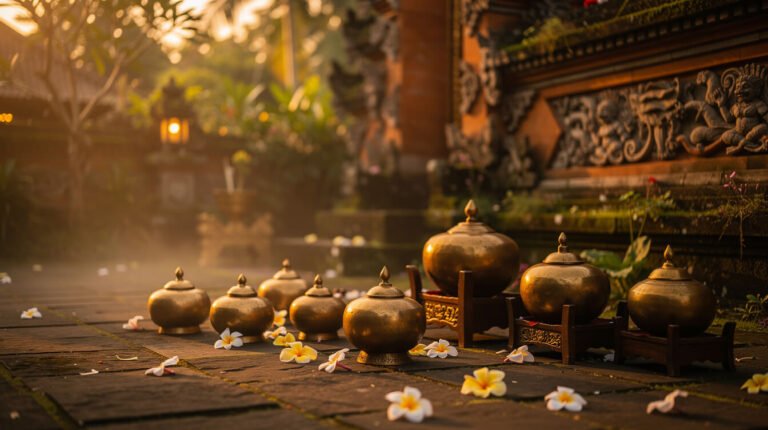
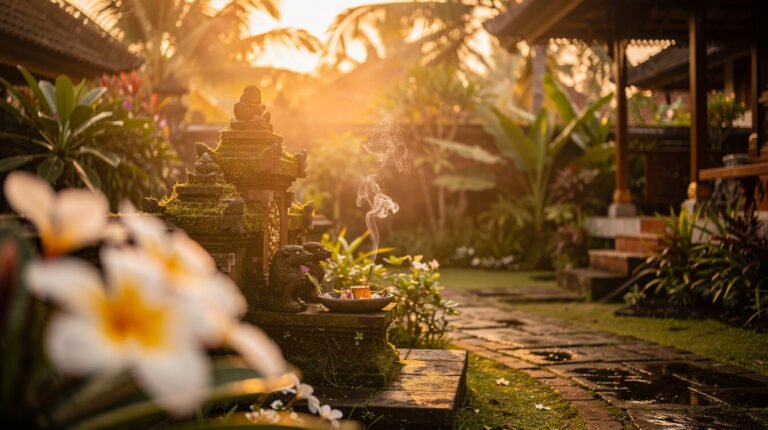
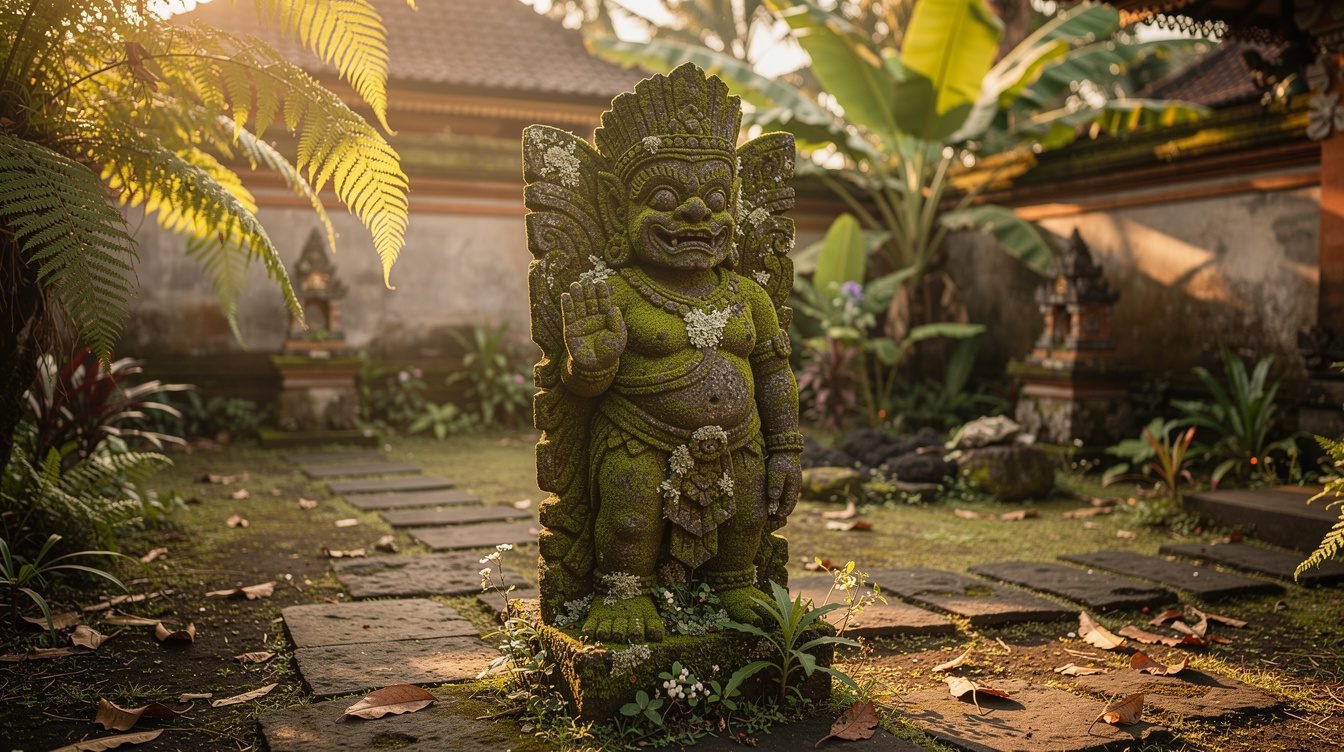
Every Bali garden has a story carved into volcanic stone — paras stone, the soft gray rock that Balinese sculptors have shaped for centuries. You notice it before you notice the flowers. A guardian figure at the gate. A carved offering shelf beside the path. A wall panel where a face peers through fern shadow, half smile worn smooth by decades of rain.
The First Thing You Notice
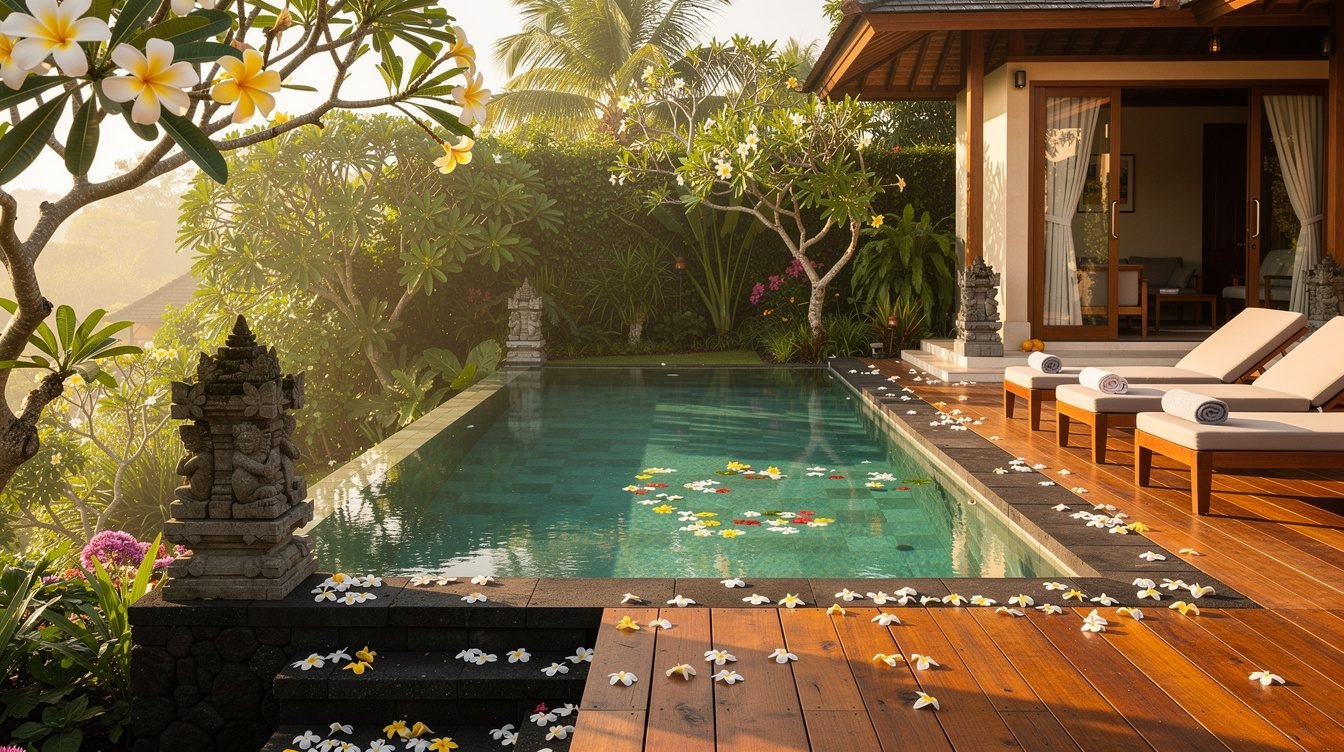
It’s the texture. Paras stone starts rough under the chisel, then softens year by year. Rain rounds the edges. Moss fills the crevices. What began as sharp intention becomes something gentler — something that belongs to the garden as much as the roots do. At our villa, the stone guardians by the entrance are older than anyone on the team. They’ve watched every guest arrive. Their expressions have changed with the weather, and that’s exactly the point. Balinese artisans carve knowing the stone will change. The sculpture is a collaboration with time.
What Grows on Stone
Moss is the signature. In Ubud’s humidity, stone turns green within a single rainy season. Lichens arrive next — pale circles that spread like small maps. Then ferns find the cracks, sending threadlike roots into carved details that become tiny forests. Our gardener doesn’t fight this. He reads it. Some moss he leaves because it softens a face beautifully. Some he clears with a soft brush because a carving deserves to be seen. It’s a daily negotiation between human intention and what the garden wants to become. The same instinct shapes how the whole team works — guide, don’t force. Listen for what wants to happen next. You might recognize a similar patience at Ubud’s Water Palace, where Lempad’s carved stone breathes alongside lotus ponds.
Get a free 3-day sample itinerary
The Gardener’s Relationship with Stone
Watch him long enough and you’ll see it — the way he pauses at each carved figure during his morning rounds. A cloth across a shoulder. Water poured at a base where an offering sat yesterday. He knows which stones were placed by the original owner and which came later. He knows the one that leans slightly after the 2017 earthquake and hasn’t been straightened because, he says, it looks like it’s listening now. This is what a genuine villa experience feels like — not polished surfaces, but tended ones. Surfaces with memory.
Why the Chisel Marks Matter
Modern Bali construction uses machine-cut stone. It’s uniform, efficient, forgettable. But in older gardens — and in any garden that values what came before — you find hand-carved paras where every stroke is visible. Uneven. Imperfect. Alive. The Balinese word for this kind of craft is “taksu” — the spirit that enters a work when the maker is fully present. You can feel it in the temple carvings across Ubud, and you can feel it in a garden wall where someone spent three days on a single lotus panel. That panel doesn’t need a spotlight. The moss knows where it is.
Book the Villa
Stone as Time Keeper
There’s something honest about a Bali garden built around stone that ages. It doesn’t pretend to be new. It doesn’t try to freeze a moment. The carved Ganesha by the pool was sharper five years ago, and five years from now his smile will be softer still. That’s not decay — it’s conversation. Stone and rain and root and the gardener’s careful hand, all of them adding a sentence at a time. You don’t visit a garden like this. You step into its ongoing story. And if you sit still long enough — really still, the way the stone sits — you might hear the garden say something back. You can explore more of what makes Ubud extraordinary beyond the garden walls.
Join our newsletter — fun, new, exciting Bali news