What the Water Remembers
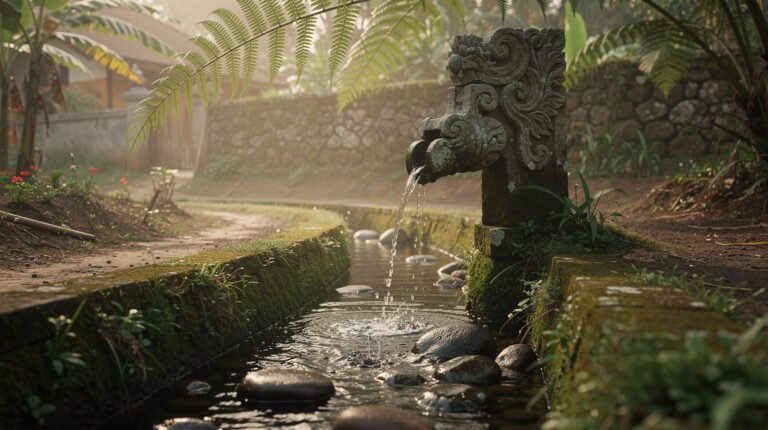
You hear it before you understand what it is. A thin, continuous sound — not quite a stream, not quite a drip. Something between the two, running beneath the ferns along the path that leads past the rice paddies north of the villa.
It is water, of course. But not random water. This is subak water — guided, shared, and argued over for more than a thousand years.
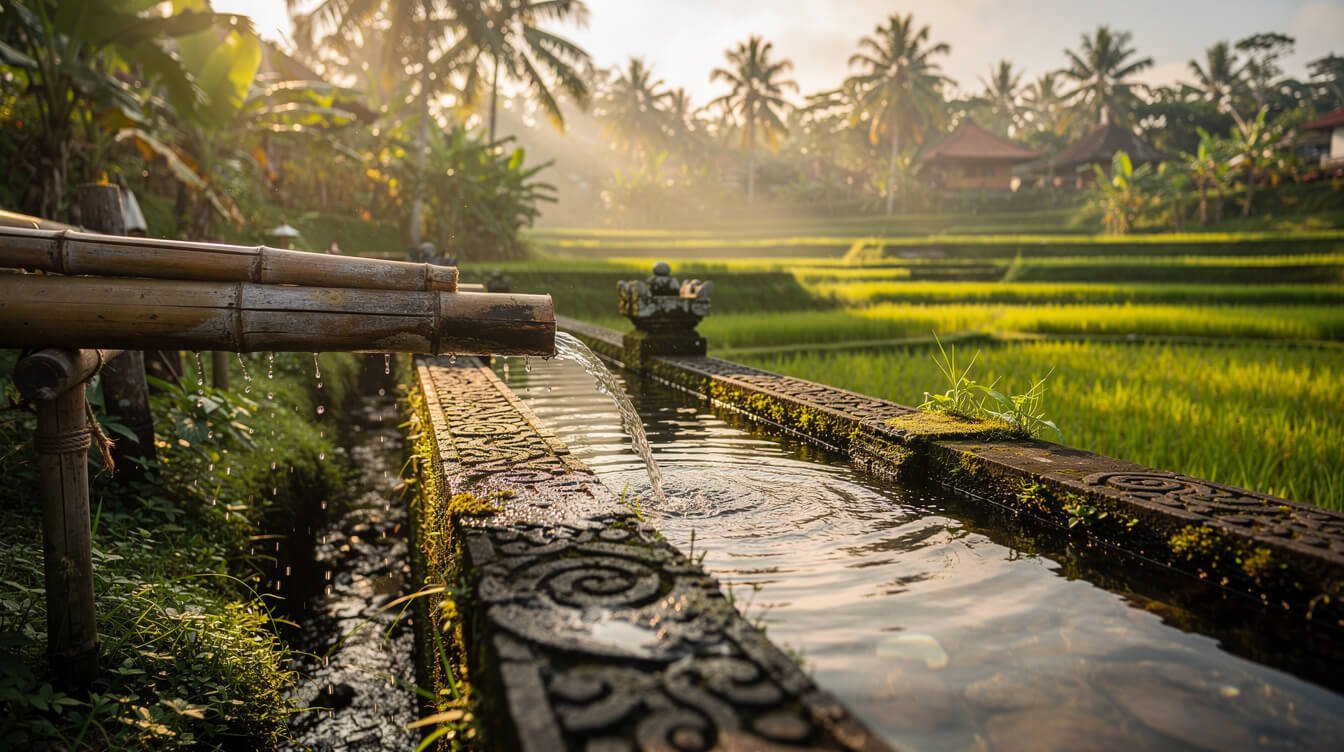
The rivers and waterfalls around Ubud get the attention. The subak channels do the actual work. They are narrow — sometimes no wider than your forearm — carved into volcanic stone or routed through split-bamboo troughs that angle water from one terrace to the next. The system is a UNESCO World Heritage marvel, but it does not look like one. It looks like a ditch with moss on it.
That is the point. The subak was never built to impress. It was built to be fair. Every farmer in the cooperative receives water in turn. The schedule follows ceremony, moon phase, and the age of the rice — not money, not influence. When you walk along the terraces near Ubud’s quiet paths, that thin ribbon of moving water under your feet is democracy older than most constitutions.
If you stop and listen — really stop, phone away, breath slow — you can hear the different voices of the channel. A high murmur where the water crosses stone. A hollow gulp where it enters a bamboo pipe. A soft exhale where it spills into the next terrace and fans out across the mud, suddenly silent, suddenly still, sinking toward roots that have been waiting since the last cycle ended.
The gardener at the villa knows this sound the way you know a ringing phone. He grew up three villages east, in terraces fed by the same watershed as the Ayung River gorge. When it rained last week, he listened at the edge of the garden for a full minute, then nodded. The channels are running well, he said. Nothing more.
There are moments in Ubud that teach you something without explaining anything. The subak is one of those. You walk past it, you hear it, and some quiet part of you recognizes: this is what cooperation sounds like when nobody is watching.