The Circle Scratched in the Lane After School
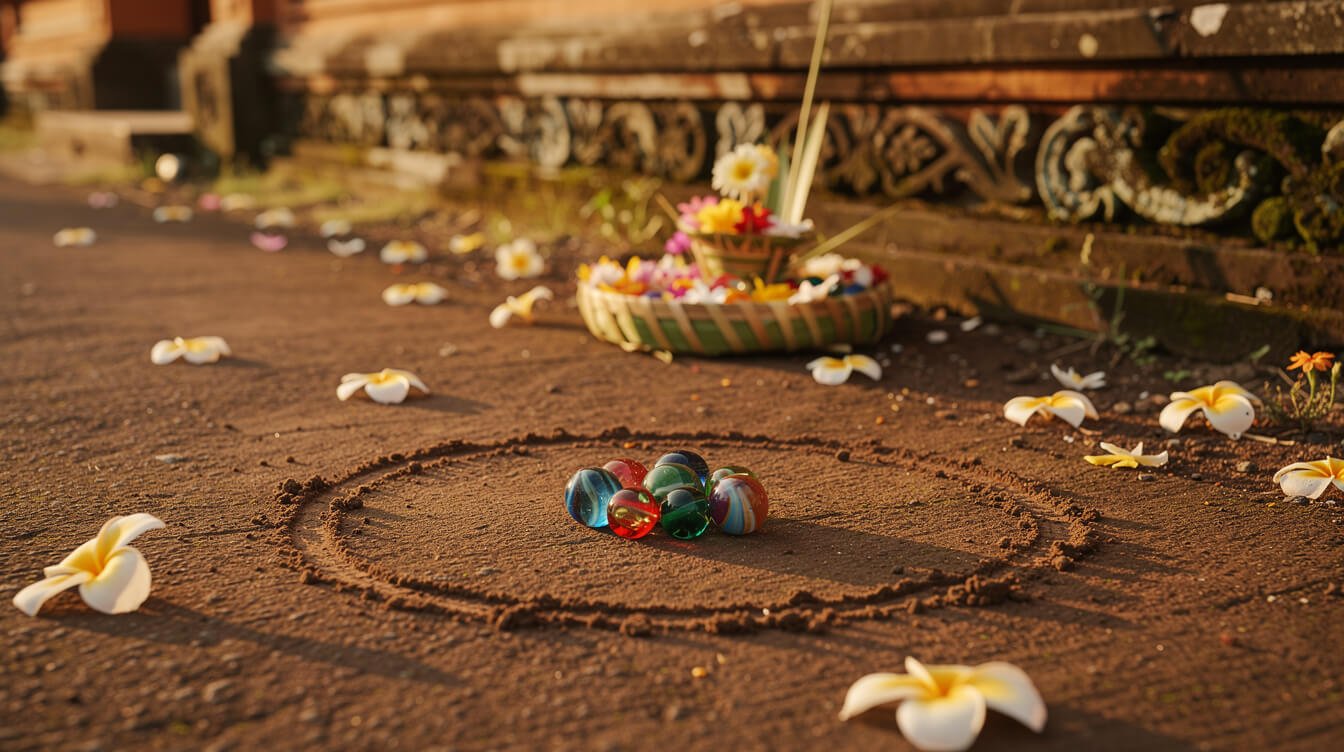
You hear it before you see it. Glass hits glass, a small bright click, and then a shout from a few kids at once. Walk a little further down the lane and there they are, crouched around a circle scratched into the packed dirt beside a compound wall, school shirts untucked, sandals kicked off to one side. Someone has just knocked two marbles clean out of the ring, and the argument about whether one of them really crossed the line has already started.
In Indonesia, marbles are called kelereng, and they’re one of the oldest and simplest of the traditional games in Bali’s villages. The rules change a little from lane to lane, but the heart of it is always the same. Each player puts a few marbles into the circle. Then, one at a time, you kneel at the line, press a knuckle into the dirt, and flick your shooter with your thumb. Whatever you knock out of the ring is yours to keep. That shooter is a serious thing. Kids call it the gacoan, and a lucky one gets carried in a pocket for months.

Get a Free 3-Day Sample Itinerary
A walk down the lane, a long lunch, the rice fields in the last light of the day. We will send you a three-day Ubud rhythm built around the moments most visitors walk straight past.
What surprises most visitors is that the games come in seasons. For a few weeks, every child in the village seems to be playing marbles. Then one day the circles are gone and everyone is out with wooden spinning tops, or the sky over the paddies is full of humming kites. Nobody announces the change. It just moves through the lanes the way the weather does, and the marbles go back into a jar until next time.
It’s a cheap game, which is part of its charm. A handful of marbles costs a few thousand rupiah at the little warung on the corner, where they sit in a plastic jar next to the snacks. Hold one up to the afternoon light and you’ll see the twist of color frozen inside, green or orange or deep blue. Kids trade them, lose them, win them back. The best players can pick off a marble from across the circle without looking like they’re trying.
If you walk past a game, slow down. Stand back a little and watch a round or two. You may get a grin, or a solemn explanation of the rules in quick Indonesian. If you’re traveling with children of your own, this is one of the easiest bridges there is. A few marbles from the warung and a patch of dirt need no shared language at all. If you’re staying at a staffed villa in Ubud, ask the team where the kids gather after school. They’ll know the lane.

Book the Villa
Three bedrooms, a full in-villa team, and a pool of your own, and afternoons slow enough to stop and watch a game of marbles in the lane. Check availability for your dates.
The game usually starts around the time the voices come down the lane at one and goes on until the light turns gold and someone’s mother calls them in. Then the circle is left in the dirt, half scuffed out by sandals. By morning a broom will have swept it away, and by afternoon someone will have drawn it again.

Join Our Newsletter
Fun, new, exciting Bali news — straight from the villa, every so often.