What the Kitchen Sounds Like Before Dinner in Ubud
There’s a rhythm that starts around four.
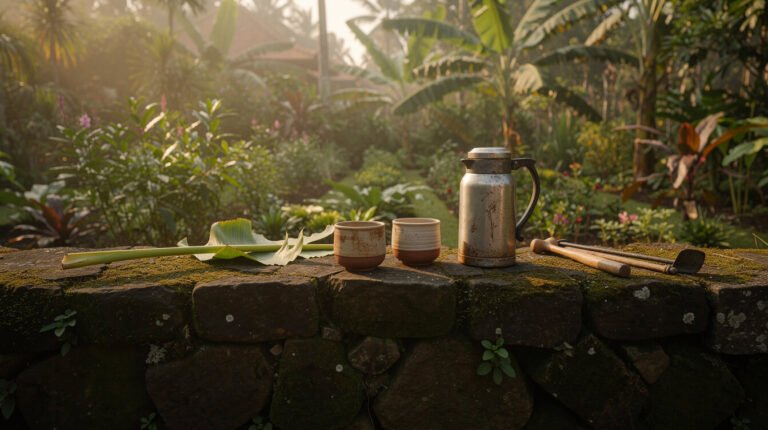
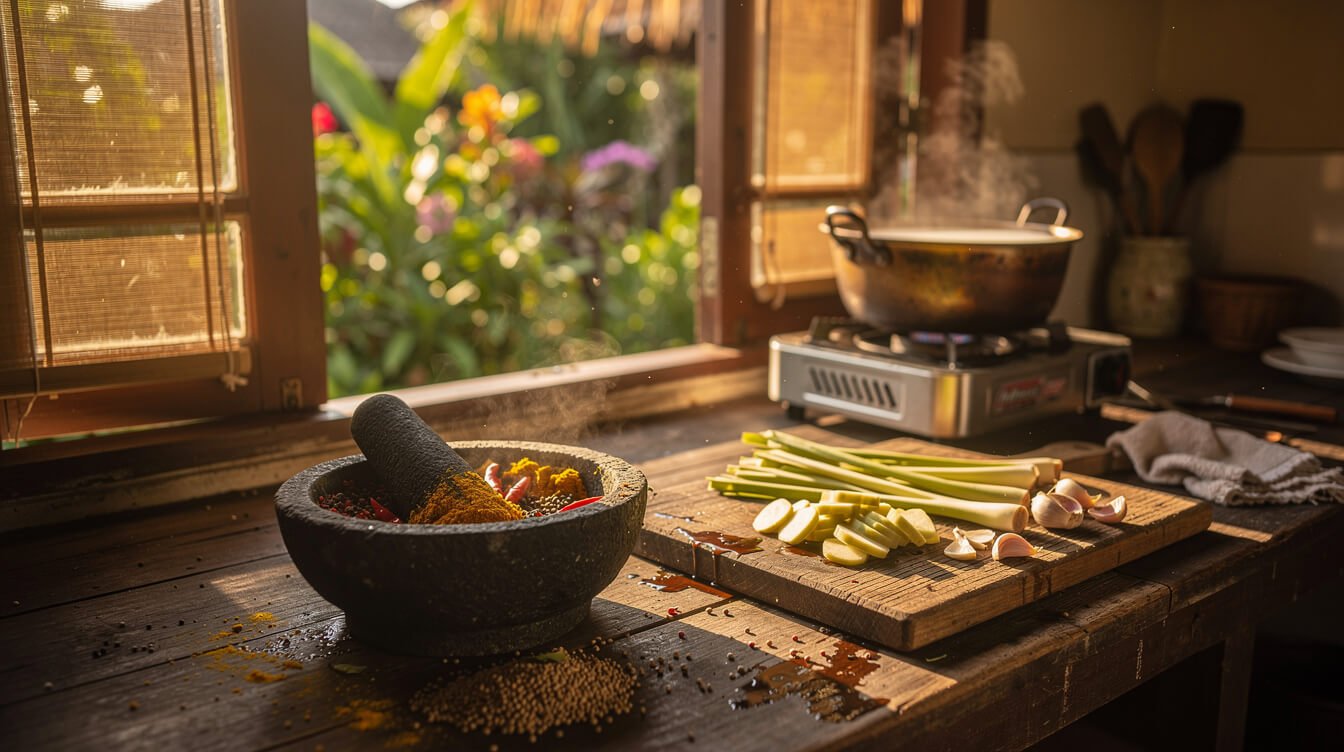
You might not notice it at first — you’re reading on the pool deck, or napping with the fan on low, or watching the garden go amber. But somewhere behind the main house, stone meets stone. A mortar and pestle working through fresh sambal. The cadence is unhurried, almost percussive, like the gamelan rehearsals drifting from the village banjar.
Then comes the knife on the wooden board. Steady, quick, confident. Shallots. Lemongrass. Galangal — which smells sharper than ginger and looks like it, until you hold one in each hand and your nose tells you the difference.
This is what a private chef villa in Ubud actually feels like. Not a prix fixe menu slid under your door. Not a reservation to make. It’s the sound of someone who knows your preferences from two conversations — and who walked to the morning market at seven to find the right turmeric.
By five, the kitchen smells like coconut milk reducing in a saucepan. The sweetness hits you on the upper terrace, and you think briefly about asking what’s for dinner. But you don’t, because part of the pleasure is not knowing. Letting it arrive.
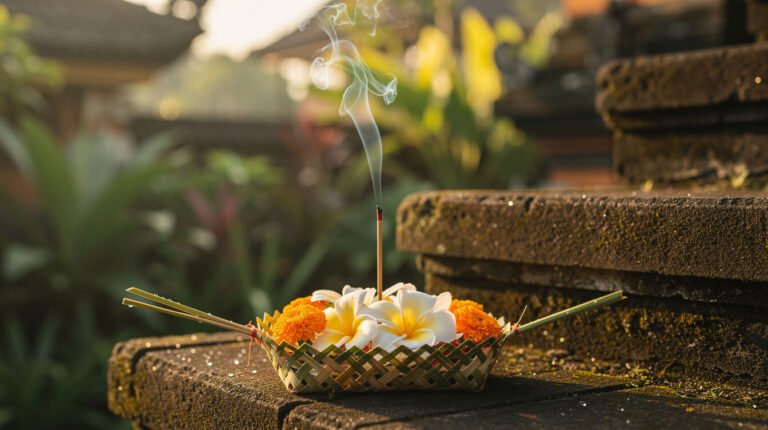
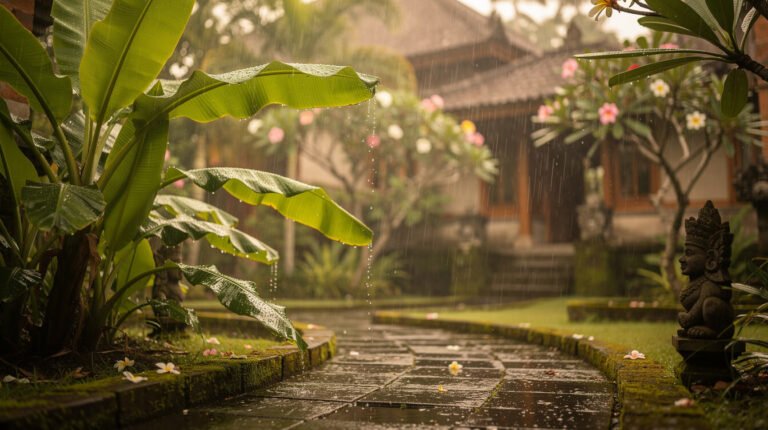
Made will set the table on the garden terrace if the sky is clear, or under the pavilion if there’s a whisper of evening cloud. Either way, the candles appear before you’ve thought to ask for them. A small cluster of frangipani on the corner of the table that wasn’t there an hour ago.
When the plates come out, they’re warm. That’s the detail that surprises first-time guests — warm plates, even here, even in the tropics. It matters. A beef rendang that’s been simmering since three holds its heat differently on warm ceramic, and the difference is care.
You didn’t go out tonight. You didn’t need to. The evening came to you — carried by someone who does this not because it’s a job description, but because this is how food works in Bali. It’s prepared for the people in the house.
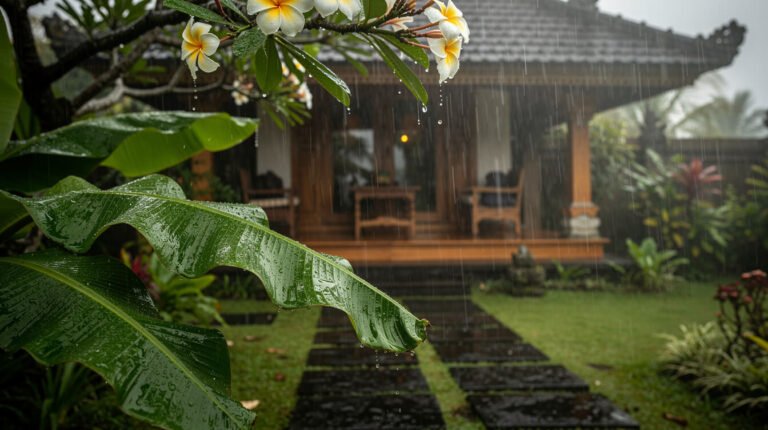
If you’ve eaten at Ubud’s best restaurants, you already know the island’s flavors. But a villa with a private chef offers something those restaurants can’t: the meal as context. Rice fields beyond the table. The last of the daylight threading through banana leaves. The gardener’s frangipani on a plate that’s already warm.
That’s dinner. Not the food alone — the way it arrives.