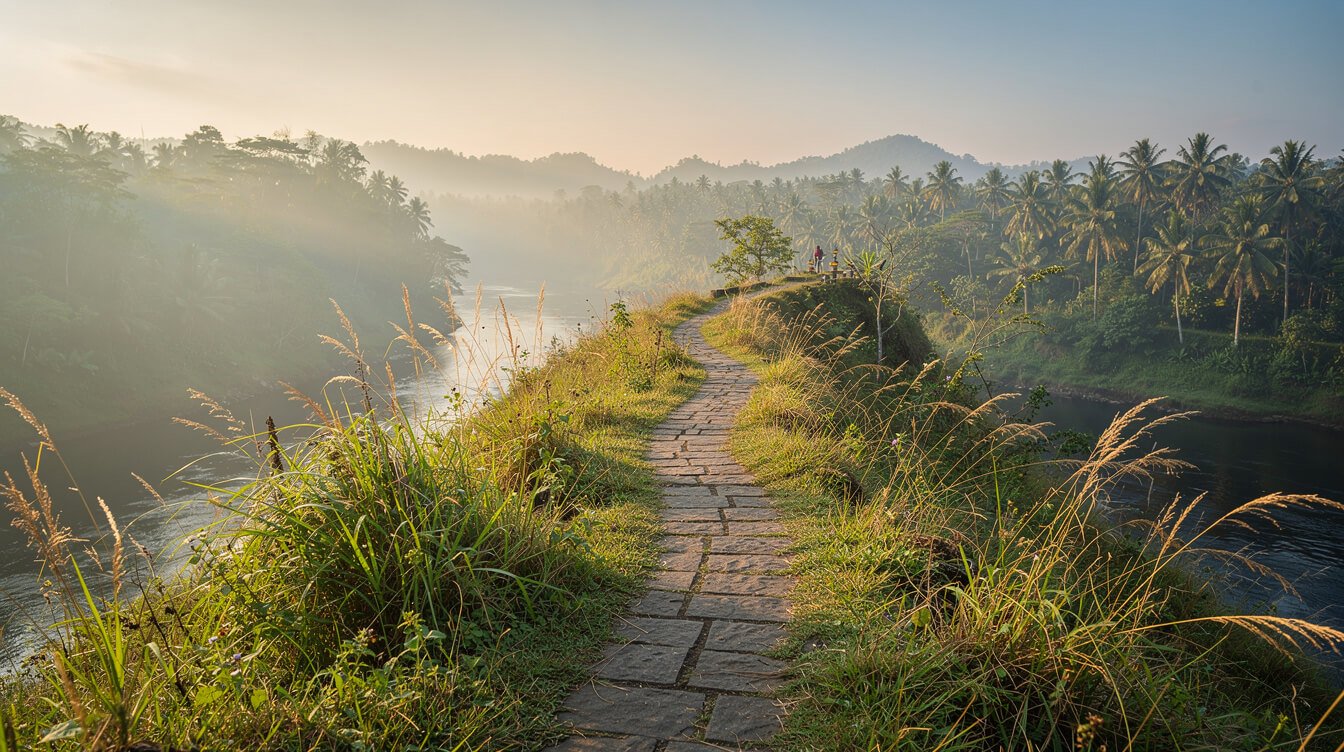
Campuhan Ridge Walk Ubud: Your Complete Guide to Bali’s Most Scenic Morning Stroll
The Campuhan Ridge Walk Ubud is one of those rare walks where you forget you’re in a town at all. One moment you’re on Jalan Raya Ubud, passing art shops and motorbikes. The next, you’re standing on a narrow grass ridge between two river valleys, watching morning mist dissolve into the palms below. No ticket counter, no tour bus, no queue. Just a stone path, tall grass, and the sound of the Wos River somewhere beneath you.
This guide covers everything you need to make the most of your Campuhan Ridge Walk — when to go, how to get there, what to bring, and where to eat the best breakfast in Ubud afterward. Whether you’re staying for a week or passing through on a 7-day Bali itinerary, this walk belongs on your first morning.
What Makes the Campuhan Ridge Walk Ubud So Special
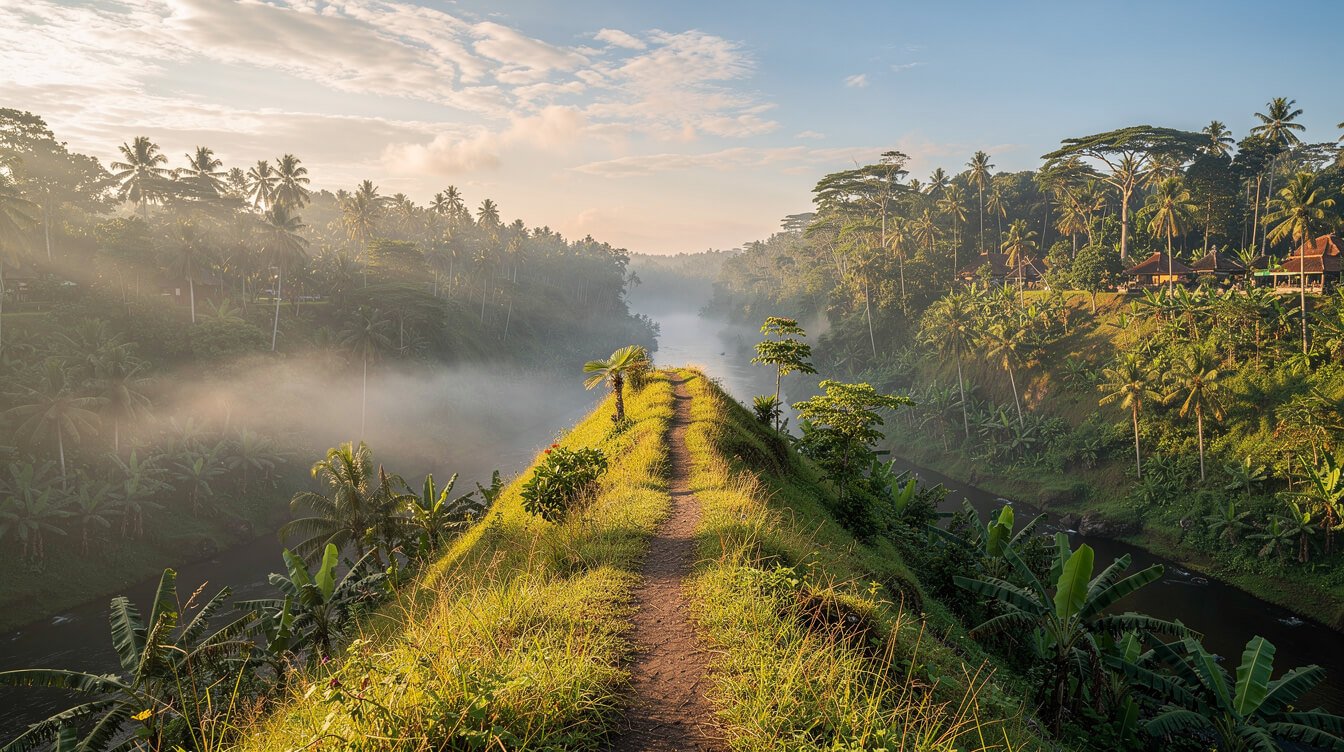
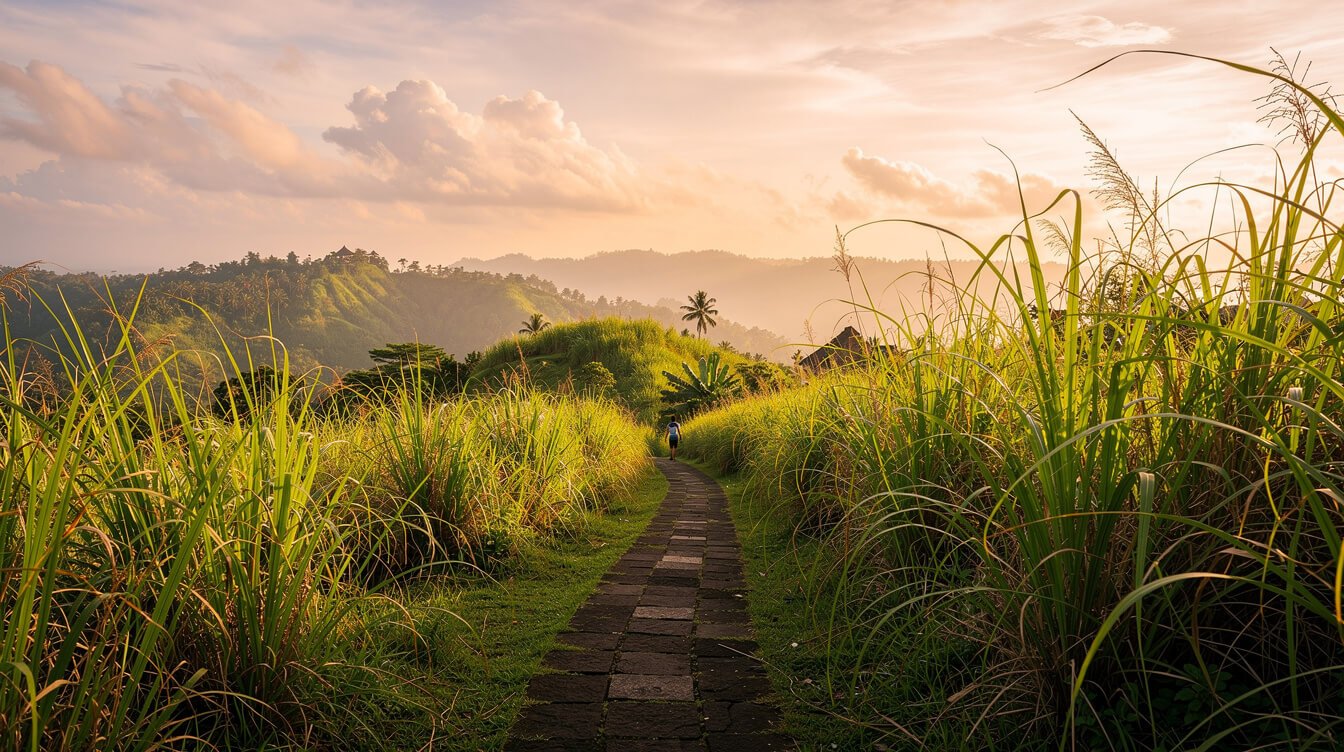
Most walks in Ubud involve rice terraces, temple stairs, or forest paths that close in around you. The Campuhan Ridge Walk is the opposite — it opens up. The trail follows the spine of a narrow ridge where the Wos River splits into two branches, and the land drops away on both sides into dense jungle canopy. You’re walking above the trees, not through them.
The ridge is roughly two kilometers each way, with the entire out-and-back taking about 60 to 90 minutes at a comfortable pace. The path is paved with stone and concrete for most of its length, with gentle inclines that make it accessible for nearly everyone — families with young children, couples on a morning stroll, solo travelers looking for a quiet place to think.
What sets this walk apart from the more famous Tegallalang rice terraces or the Monkey Forest is how uncurated it feels. There are no entrance gates, no selfie platforms, no vendors lining the path. The ridge belongs to the morning joggers, the local farmers tending the alang-alang grass, and the birds. If you arrive early enough, you’ll have long stretches entirely to yourself.
The name “Campuhan” comes from the Balinese word for the meeting point of two rivers — campuh means “to mix.” This confluence is considered spiritually significant in Balinese Hinduism, which is why the ancient Pura Gunung Lebah temple sits right at the trail’s starting point. You’re walking along a place that has mattered to this village for centuries.
How to Get to the Campuhan Ridge Walk from Ubud Center
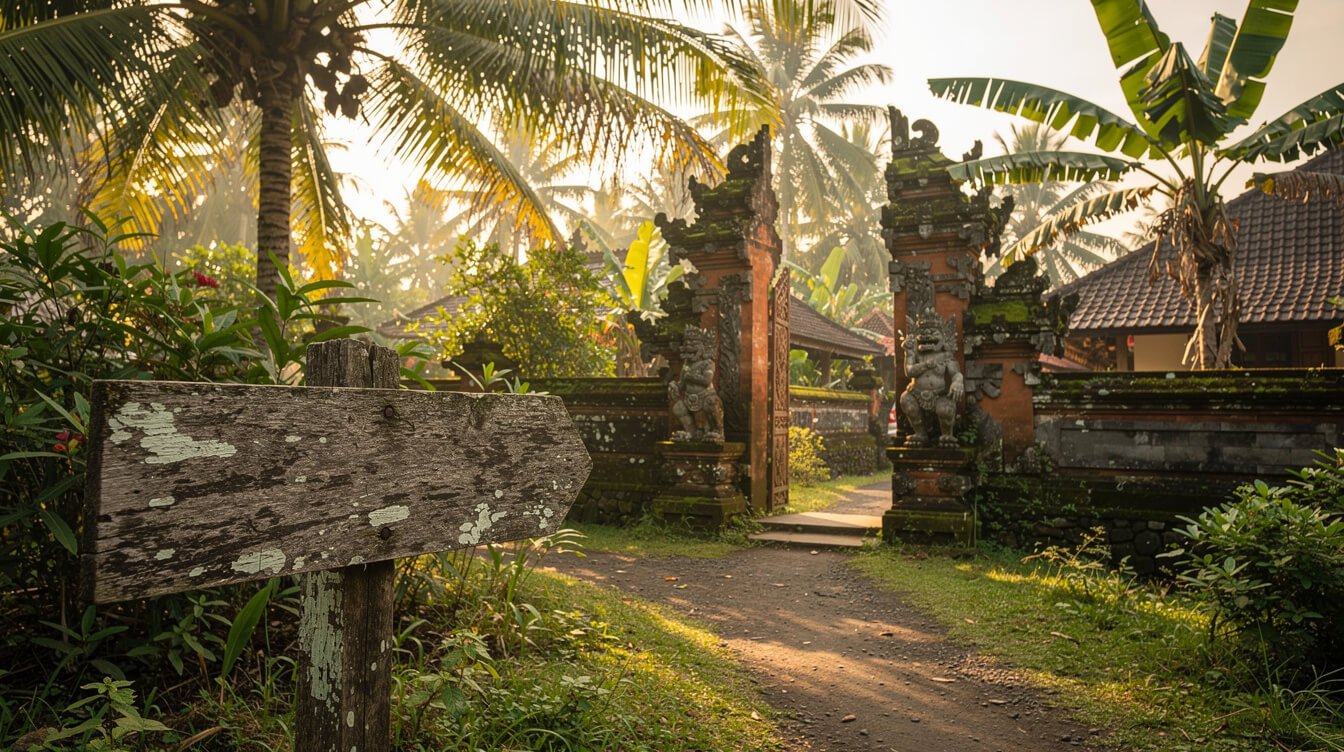
The trailhead sits on Jalan Raya Campuhan, roughly a 10-minute walk west from Ubud’s central market. If you’re staying in central Ubud, you can walk there from most hotels and villas without needing a ride.
On foot from Ubud center
Head west along Jalan Raya Ubud, past the Bridges restaurant and the Blanco Renaissance Museum. The road curves downhill toward a bridge over the Campuhan River. Just before the bridge, look for a small sign on the left side of the road — it points down a set of stairs beside the Warwick Ibah hotel entrance. Those stairs lead past the outer wall of Pura Gunung Lebah and onto the ridge itself.
The sign is easy to miss if you’re not looking for it, but the locals know it well. If in doubt, ask anyone nearby for “the ridge walk” — they’ll point you straight there.
By scooter or car
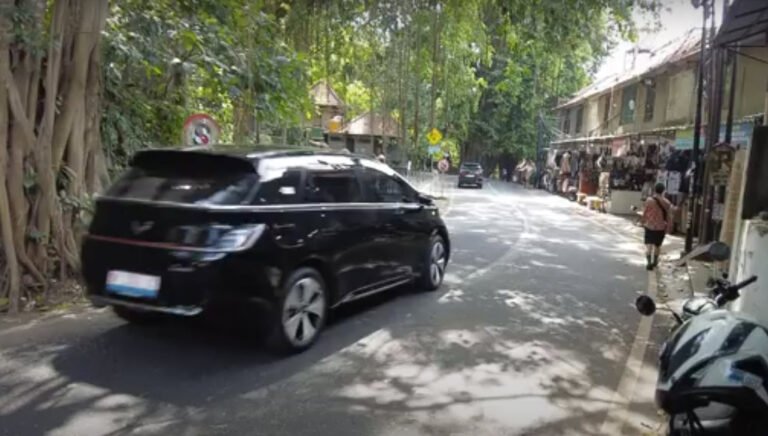
There’s limited parking near the trailhead — a small area beside the Ibah hotel and another across the bridge near a warung. If you’re riding a scooter, you can park along the road, but arrive before 8:00 AM to find a spot on busy mornings. Ride-hailing apps like Grab and Gojek will drop you at the bridge; just search for “Campuhan Ridge Walk” and the pin is accurate.
From a villa in the Ubud area
If you’re staying at a villa with staff — as many visitors to Ubud do — ask your villa manager to arrange a morning drop-off at the trailhead. Many villas will have your driver wait at one of the cafés near the endpoint while you walk, then drive you back for breakfast. It’s one of the easiest morning excursions from any Ubud base.
Get a Free 3-Day Sample Itinerary
Mornings like the Campuhan Ridge Walk, afternoons at the villa pool, evenings in the village. We’ll send you our favorite 3-day Ubud rhythm — the one our guests keep coming back for.
Best Time to Walk the Campuhan Ridge — and Why Mornings Win
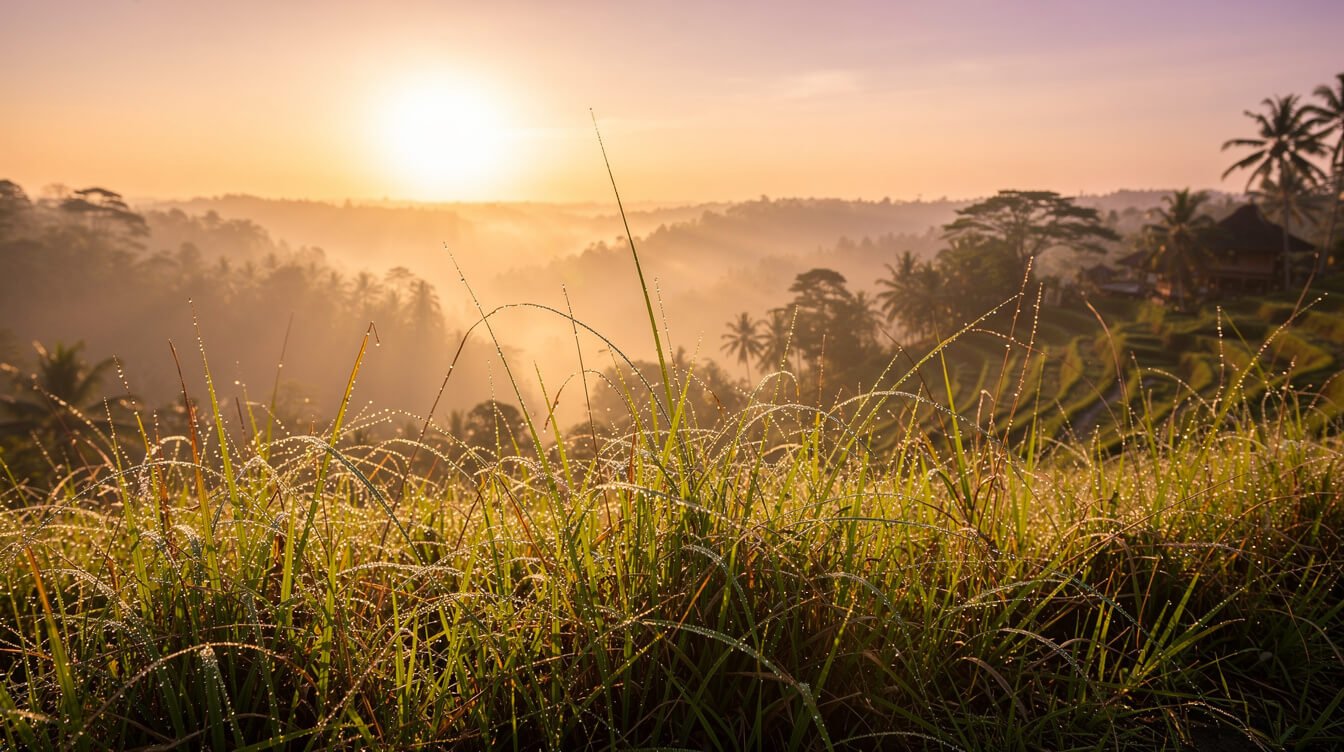
The Campuhan Ridge Walk Ubud is technically open 24 hours — there are no gates, no hours, no ticket window. But the time you choose changes the experience entirely.
Early morning (6:00–7:30 AM) — the golden window
This is the walk at its absolute best. The air is still cool, the grass is dewy, and the light comes in sideways from the east, turning the ridge into something out of a painting. You’ll share the path with local joggers, a few early-bird travelers, and the occasional farmer. The mist hangs in the valleys on both sides, and the only sounds are birdsong and the distant river.
If you’re staying in Ubud and can only do one early-morning activity, make it this one. Set an alarm, skip the snooze, and be on the ridge by 6:15. You won’t regret it.
Mid-morning (8:00–10:00 AM)
Still pleasant, but the magic window is closing. The sun climbs fast in the tropics, and by 9:00 the ridge offers very little shade. You’ll also encounter more visitors — organized tour groups sometimes arrive around this time. Bring a hat and water.
Late afternoon (4:00–6:00 PM)
The second-best window. The light softens, the heat breaks, and the ridge gets quiet again as the day-trippers head back to their hotels. Sunset from the ridge can be genuinely beautiful — the sky goes orange and pink over the palm canopy — though the sun sets behind hills, not directly in front of you. Still worth it.
Midday (10:00 AM–3:00 PM)
Not recommended. The ridge is fully exposed with no tree cover, and midday tropical heat in Ubud can reach 32°C with high humidity. If this is your only option, bring ample water and sun protection — but honestly, you’ll enjoy it more if you wait for the afternoon.
Rainy season considerations (November–March)
The ridge walk is still walkable during the wet season, but the stone path can get slippery, and afternoon rain squalls are common. Morning walks are your safest bet — rain in Ubud typically arrives in the afternoon. Wear shoes with grip, not sandals.
What You’ll See Along the Campuhan Ridge Walk Ubud Trail
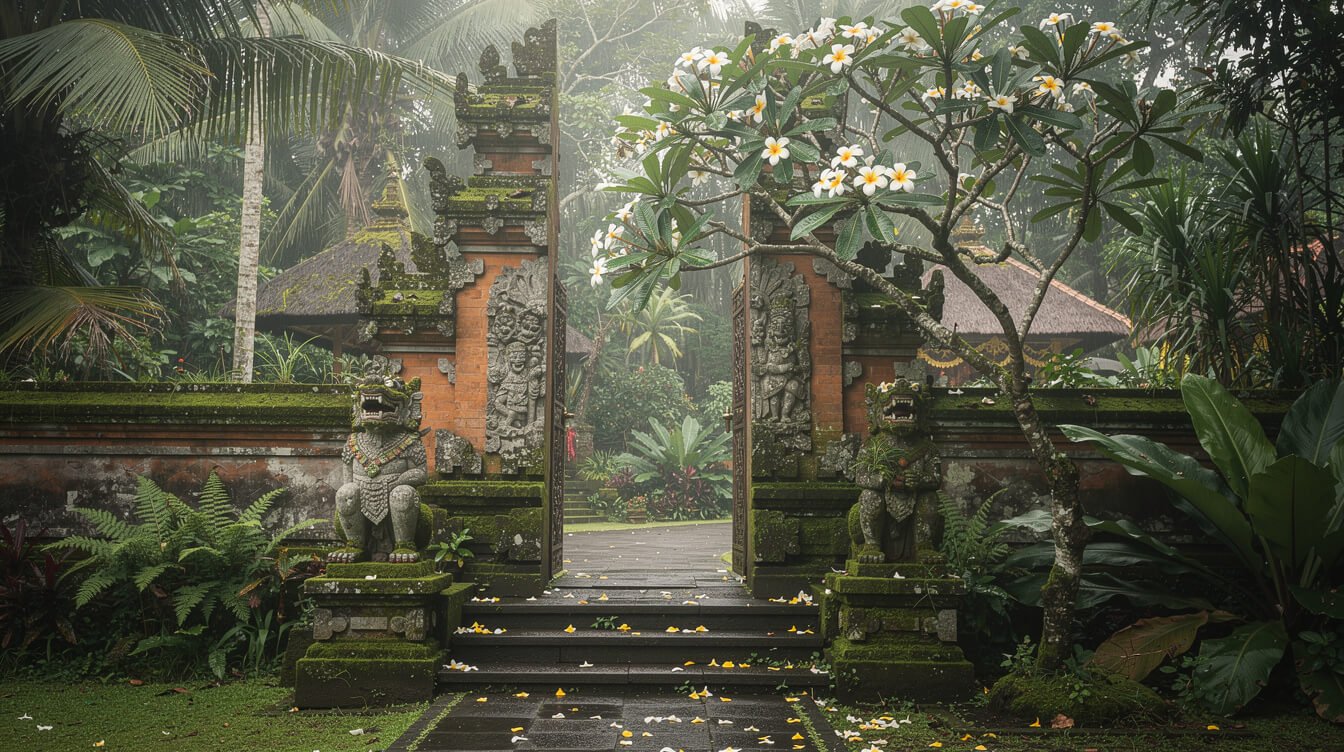
The walk unfolds in three natural stages, each with its own character. Here’s what to expect from the trailhead to the turnaround point and back.
Stage 1: Pura Gunung Lebah and the descent (0–200 meters)
The walk begins at the stairs beside Pura Gunung Lebah, one of Ubud’s oldest and most significant temples. It sits right at the confluence of the two branches of the Wos River — the spiritual “mixing point” that gives Campuhan its name. The temple dates back to the 8th century and is an active place of worship. You can admire its multi-tiered shrines and moss-covered stone from the path, but to enter the inner courtyard, you’ll need to wear a sarong and sash (available to borrow at the entrance).
From here, the trail descends slightly through a shaded section before rising onto the ridge proper. This is the only part with meaningful tree cover — enjoy it.
Stage 2: The open ridge (200 meters–1.5 km)
This is the signature stretch. The path narrows to a single lane, flanked on both sides by tall alang-alang grass that sways in the breeze. On your left, the valley drops toward the south branch of the Wos. On your right, the north branch. The views are wide and unobstructed — green hills rolling toward the horizon, scattered coconut palms, and the occasional glimpse of a thatched-roof compound in the valley below.
Along this section, you’ll pass a few local art studios and small galleries — painters who’ve set up permanent workshops along the ridge. Some are open to visitors and display oil paintings of Ubud landscapes. It’s worth pausing at one or two.
Stage 3: The fields and turnaround (1.5–2 km)
The ridge gradually transitions from wild grass into cultivated fields and a small rural settlement. You’ll know you’re nearing the end when the path widens and you see a few warungs (small local eateries) and a scattering of homestays. Many walkers turn around here and retrace their steps. Others continue down into the rice paddies or walk to the village of Bangkiang Sidem, where a café with valley views makes a rewarding rest stop.
What to watch for
- Birds: Java kingfishers, spotted doves, bulbuls, and — if you’re lucky — a Bali myna. The ridge is one of the better birding spots near Ubud town.
- Butterflies: Particularly abundant in the morning during the dry season (April–October).
- Dragonflies: You’ll see them hovering over the alang-alang grass in the golden-hour light.
- Offerings: Small canang sari (woven offering baskets) placed at the trail’s edges by local villagers — a reminder that this land is still part of daily Balinese spiritual life.
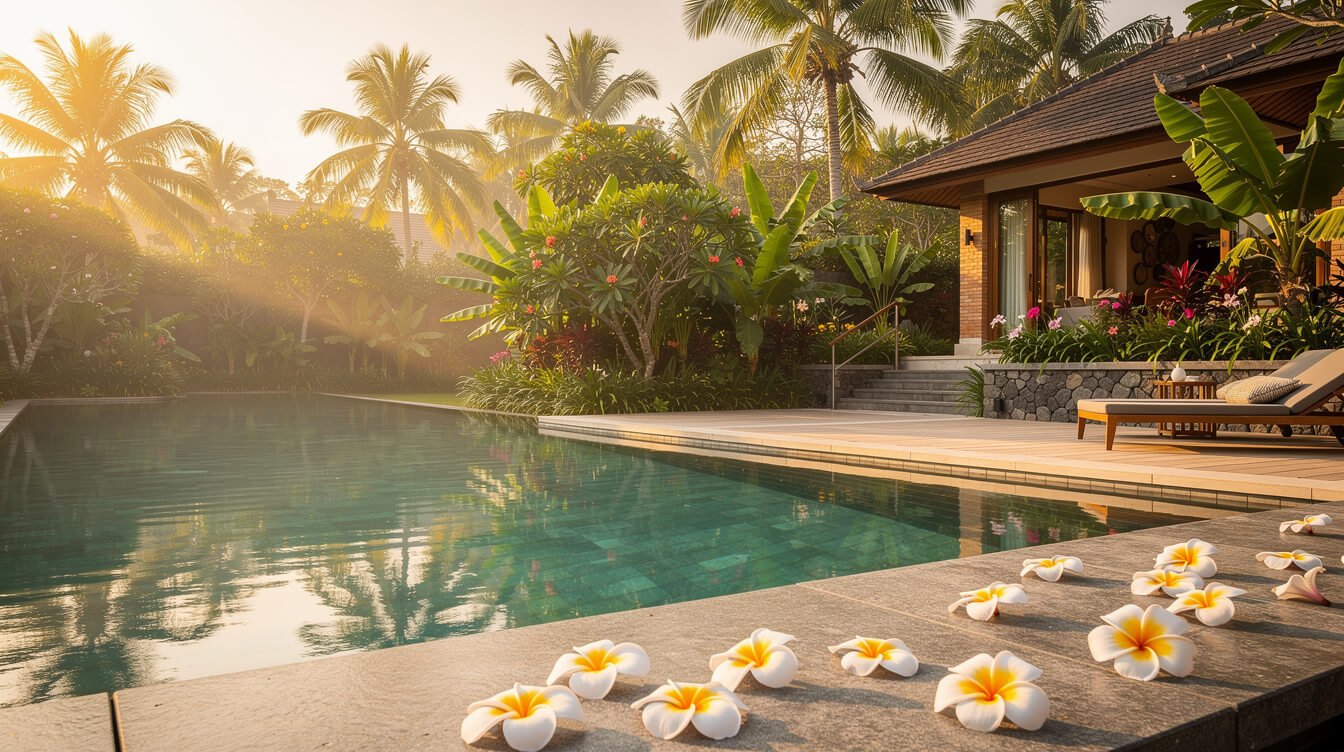
Start Your Mornings from Villa Amrita
A 3-bedroom staffed villa in Ubud — private pool, chef, garden. The Campuhan Ridge Walk is a short drive from your front door. Come back to breakfast by the pool.
Essential Tips Before Your Campuhan Ridge Walk
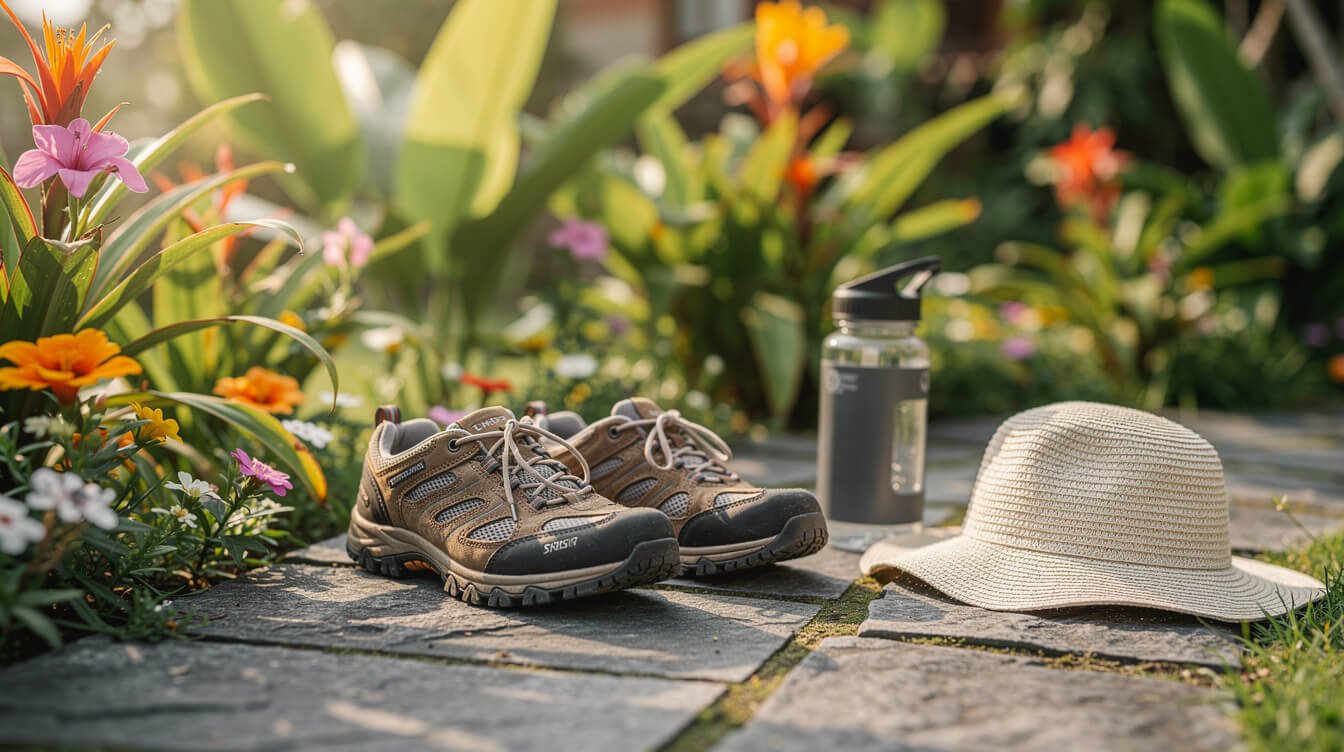
The Campuhan Ridge Walk is beginner-friendly and requires no special gear or fitness level. That said, a few small preparations make the difference between a good walk and a great one.
What to wear
- Footwear: Closed-toe walking shoes or comfortable sneakers are ideal. Flip-flops work on dry mornings but can be slippery on damp stone. Avoid heels or dress shoes.
- Clothing: Light, breathable fabrics. The ridge has no shade for most of its length, so long sleeves or a light coverup can help with sun protection.
- If visiting the temple: You’ll need a sarong and sash to enter the inner courtyard of Pura Gunung Lebah. These are available to borrow at the entrance, but bringing your own is a nice touch.
What to bring
- Water: At least 500 ml, more if walking after 8:00 AM. There are no water vendors on the ridge itself.
- Sunscreen and a hat: Essential for any walk after sunrise. The tropical sun is strong, even on overcast days.
- Camera or phone: The light on the ridge is exceptional for photography, especially before 7:30 AM.
- A small towel: Useful in the humidity, especially during the wet season.
- Cash: Small denominations (20,000–50,000 IDR) for the warungs and cafés near the turnaround point.
Is it free?
Yes. The Campuhan Ridge Walk Ubud has no entrance fee. There’s an optional donation box near the temple entrance, but the trail itself is completely free and open to the public at all hours.
Is it safe?
The ridge walk is very safe. The path is paved and well-maintained, with no steep drops or exposed ledges. It’s popular with local joggers and families, and you’ll see other people at all hours. Solo travelers walk it regularly without any concerns. The only real hazard is the midday heat — stay hydrated.
Accessibility
The path is mostly flat with gentle inclines, making it accessible for most fitness levels. However, the narrow stone path and occasional steps mean it’s not fully wheelchair-accessible. Visitors with limited mobility may find the initial descent from the temple and a few uneven sections challenging. Packing the right footwear makes a difference.
Where to Eat and What to Do After the Campuhan Ridge Walk
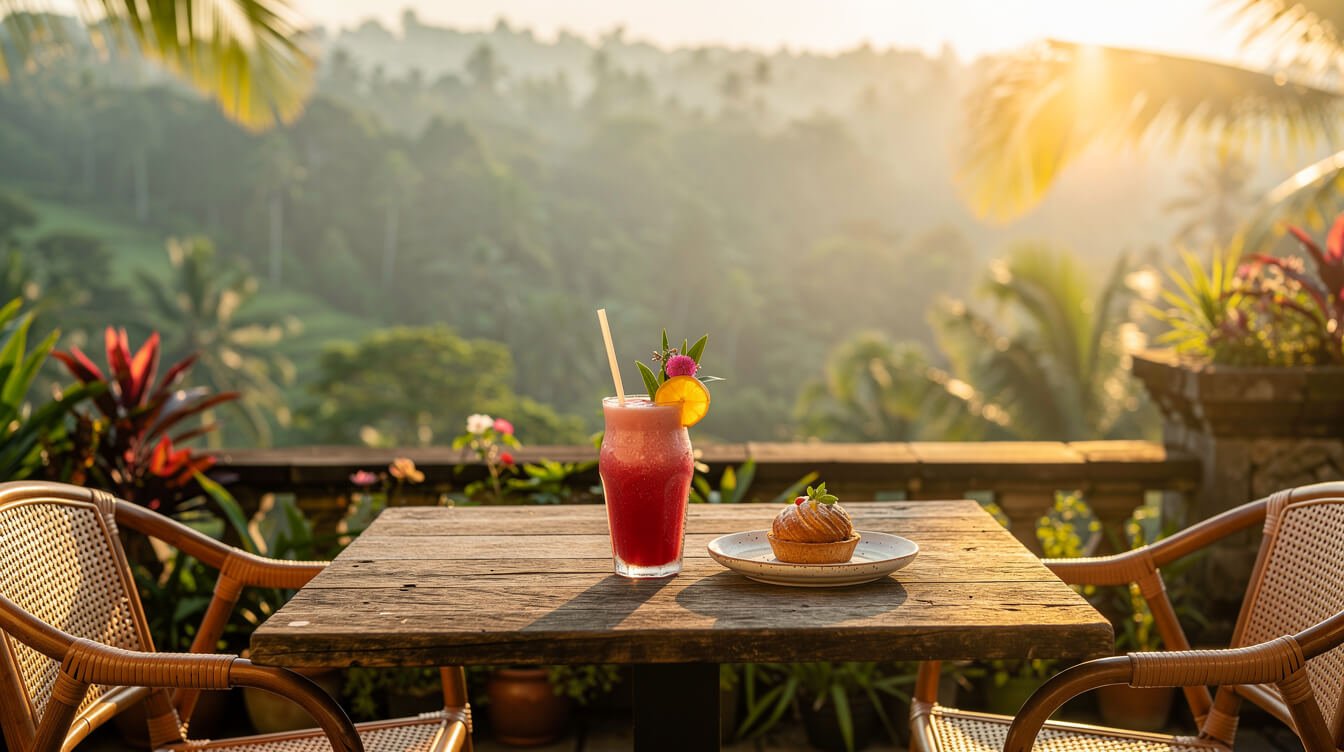
One of the best things about the Campuhan Ridge Walk is what comes after it. You’ve earned a slow breakfast, and Ubud delivers.
Breakfast and coffee stops near the trail
Karsa Kafe sits in the rice paddies just beyond the ridge’s endpoint — one of Ubud’s most photographed café settings. Order a smoothie bowl or a plate of banana pancakes while overlooking a working rice field. Get there before 9:00 AM to beat the crowd.
Lazy Cats Café is closer to the trailhead on Jalan Raya Campuhan. It’s a quiet spot for espresso and pastries, popular with the morning walking crowd. The patio catches the breeze.
Bridges Bali — the restaurant built over the Campuhan River — serves a more upscale breakfast if you’re in the mood. The terrace views of the river gorge are worth the slightly higher price.
Nearby attractions to combine with the walk
The ridge walk pairs naturally with several other Ubud highlights, all within a short walk or 5-minute drive:
- Antonio Blanco Museum: A flamboyant art museum built into the home and studio of the late Spanish-Filipino painter Antonio Blanco. It’s a 3-minute walk from the trailhead and worth an hour of your time.
- Neka Art Museum: One of Ubud’s most important art collections, a short ride north. If you love Balinese painting, combine it with the morning walk.
- Ubud Royal Palace and Market: A 10-minute walk east from the trailhead. The market is liveliest before 10:00 AM — ideal timing after an early ridge walk.
- Bali cycling tours: Many Ubud cycling tours depart in the morning. You could do the ridge walk first, then join a cycling tour that takes you through the rice terraces north of town.
Making a morning of it
Here’s a rhythm that works well: rise at 5:45, be on the ridge by 6:15, walk the full out-and-back by 7:30, have breakfast at Karsa Kafe by 8:00, and be back at your villa by 9:30 — still in time for a swim before the day heats up. If you’re staying at a staffed villa, your team can have a second breakfast or fresh juice waiting by the pool when you return. That’s what mornings in Ubud are made for.
Frequently Asked Questions About the Campuhan Ridge Walk Ubud
How long is the Campuhan Ridge Walk?
The trail is approximately 2 kilometers (1.2 miles) each way, making the full out-and-back roughly 4 kilometers. Most walkers complete it in 60 to 90 minutes, depending on pace and how often they stop for photos or to take in the views.
Is the Campuhan Ridge Walk suitable for children?
Yes. The path is paved and mostly flat, making it suitable for children who can walk independently. Younger children in strollers may have difficulty on a few uneven sections and steps near the start. Many families with kids aged 5 and up walk the trail comfortably.
Do I need to hire a guide?
No guide is necessary. The trail is straightforward — a single path along the ridge with no significant junctions or risk of getting lost. You can walk it entirely on your own.
Can I run on the Campuhan Ridge Walk?
Absolutely. Many Ubud residents jog the ridge early in the morning. The paved surface and gentle gradients make it a popular running route. Just be mindful of other walkers, especially on the narrower sections.
Is there a fee to visit Pura Gunung Lebah temple?
There is no mandatory fee, though a small donation is appreciated. If you wish to enter the inner courtyard, you’ll need to wear a sarong and sash. These can be borrowed at the temple entrance. The temple is an active place of worship, so please be respectful and quiet during ceremonies.
What happens if it rains during the walk?
The stone path can get slippery when wet. If rain begins during your walk, take it slow and watch your footing. There are a few sheltered spots near the art studios along the ridge, but no permanent rain shelters. During the wet season (November through March), plan your walk for early morning when rain is least likely.
Can I see the sunrise from the Campuhan Ridge Walk?
You can catch the sunrise glow, though the ridge faces more north-south than east, so you won’t see the sun break the horizon directly in front of you. What you will see is the morning light flooding the valley walls and turning the grass gold — and that’s worth setting an alarm for. Plan to arrive by 5:45 to 6:00 AM during the dry season for the earliest light.
How does the Campuhan Ridge Walk compare to the Tegallalang Rice Terraces?
They’re very different experiences. Tegallalang is structured, ticketed, and built for tourism — swing photos, café platforms, stepped terraces you walk down into. Campuhan is the opposite: unstructured, free, and quiet. If Tegallalang is the postcard, Campuhan is the morning walk with a local. For a complete 10-day Bali itinerary, both are worth including — but if you only have time for one morning activity in Ubud, choose the ridge.

Join Our Newsletter — Fun, New, Exciting Bali News
Short stories from Ubud, travel tips that actually help, and the occasional recipe from our villa chef. No spam, no hard sells — just Bali, delivered to your inbox.