Why the Gamelan Stops You Mid-Sentence in Ubud
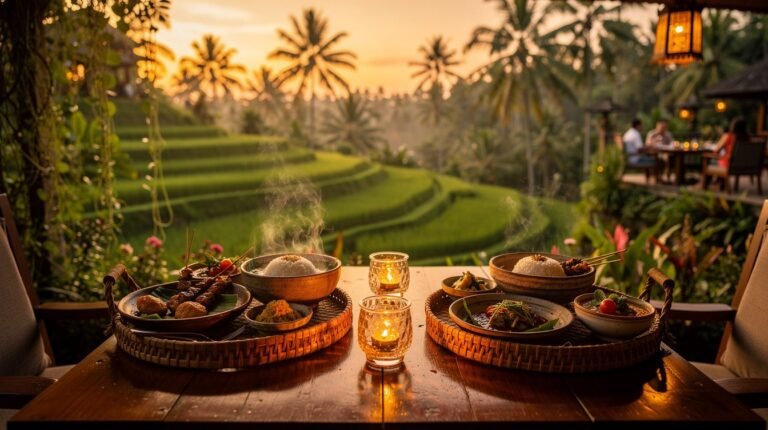
You are mid-sentence — something about tomorrow’s plan, or whether to order the nasi goreng — when a Balinese ceremony stops the conversation for you. The gamelan arrives before you see it. A cascade of bronze and bamboo, close enough that the air itself vibrates. You set down your fork. You forget what you were saying. And for a few minutes, Ubud reminds you that you are inside something much older than your itinerary.
The Sound That Rearranges Your Afternoon
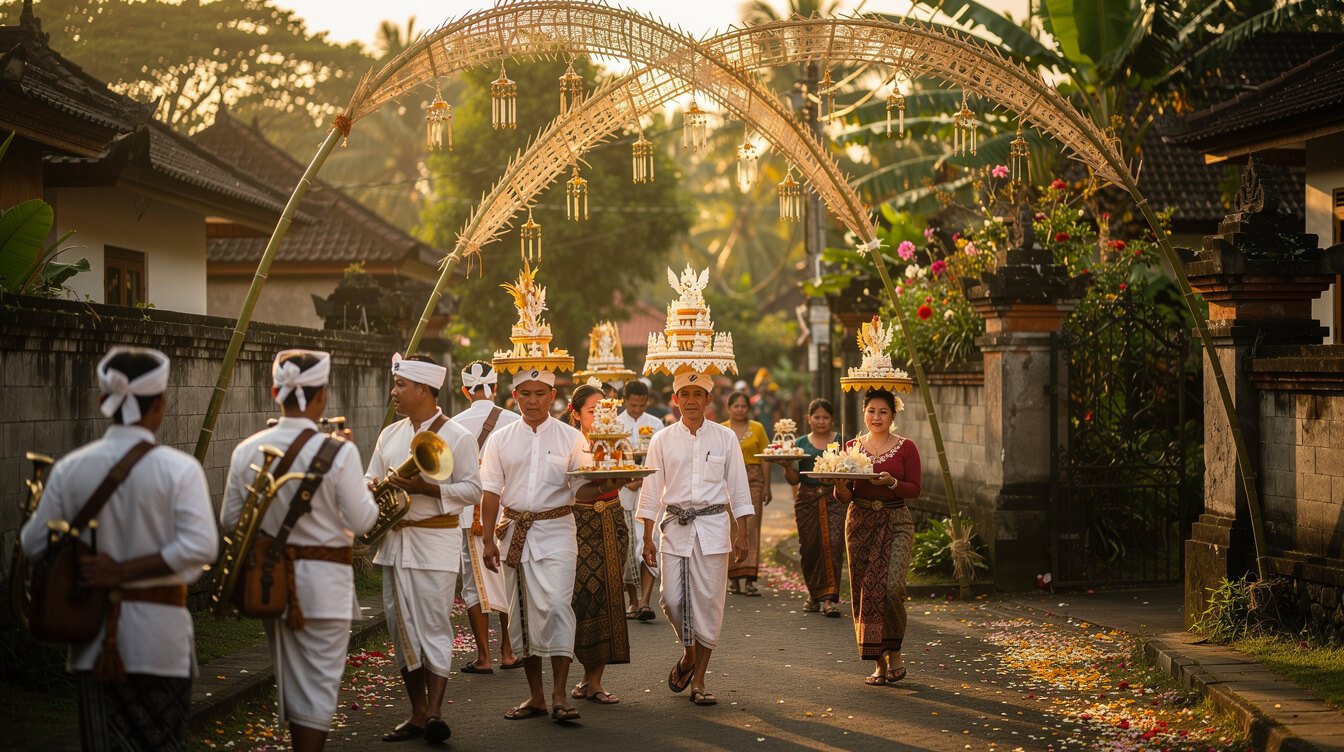
It starts as a distant shimmer — metallic, rhythmic, impossible to place. Then it grows. The Balinese gamelan has no warm-up, no gentle introduction. It arrives fully formed, a wall of interlocking sound that fills the lane outside the villa gate. Gongs anchor the low end. Metallophones cascade above. Someone is playing a kendang drum with the kind of casual precision that takes a lifetime to develop. The rhythm is not for you. It is for the gods, the ancestors, the village. You just happen to be inside it.
White and Gold at the Gate
Made hears it first. He pauses mid-sweep, tilts his head, then walks quietly to the gate and opens it a few inches. He does not announce what is happening. He simply stands aside — the way you hold a door for something that deserves passage. And there it is: a village procession. Dozens of women in white lace kebaya and gold sashes, balancing tall gebogan offerings on their heads — towers of fruit, flowers, and rice cakes so precisely arranged they look architectural. Men in white udeng headcloths carry ceremonial umbrellas and penjor bamboo poles that arc over the lane like golden question marks. Children walk among them, some solemn, some giggling, all dressed in the same ceremonial white.
Get a free 3-day sample itinerary
Ceremonies, rice terraces, and quiet mornings — we will plan the details so you can be present for the moments that matter.
The Scent That Follows
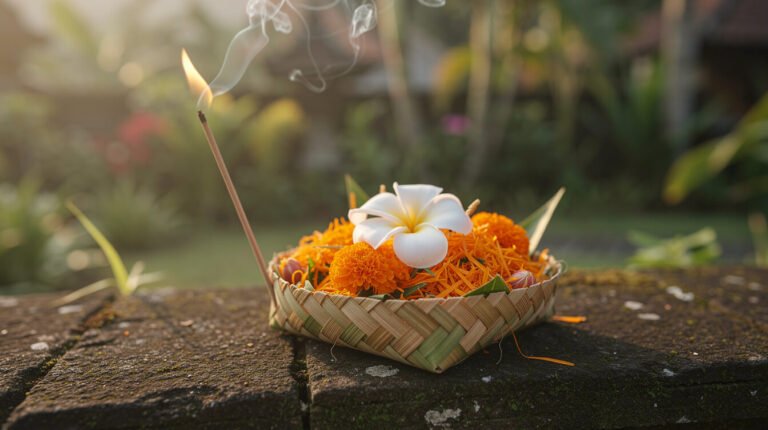
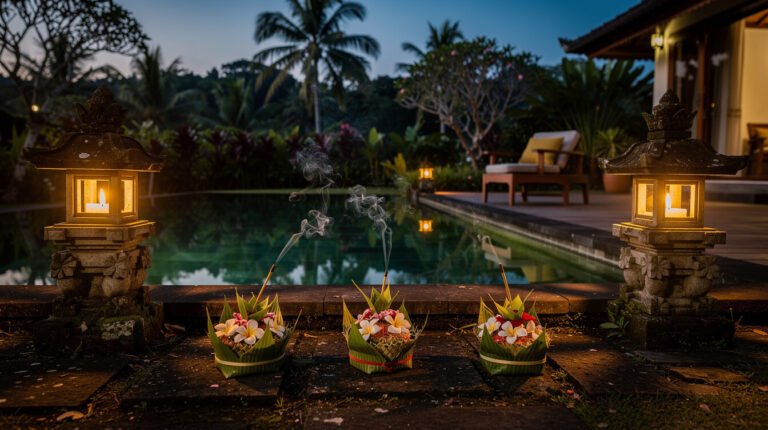
Incense comes next. Not the heavy, smoky kind you might associate with temples abroad — Balinese incense is lighter, sweeter. It mingles with frangipani and the wet-stone smell of the lane after the gardener’s morning watering. The offerings the women carry are not symbolic. They are actual food, actual flowers, actual hours of someone’s morning. Each canang sari at the procession’s edge holds a pinch of rice, a few petals, a stick of incense, and a small prayer. The spiritual life of Ubud is not something you visit — it walks past your gate on an ordinary Tuesday.
What the Team Already Knows
You will notice that the staff is not surprised. Made has already told the cook, who adjusts the lunch timing without being asked. The housekeeper finishes the upstairs rooms a few minutes early — she will join the procession later, carrying her own offering from the small shrine at the back of the garden. This is the part that hotel guests never see: the Balinese calendar does not stop because guests are in residence. It simply includes them. At a villa, you are close enough to the village rhythm to feel it. At a resort, you might hear distant music and wonder.

Book the Villa
A stay where ceremonies pass the gate, the staff knows the village by name, and Ubud is not a backdrop — it is your neighborhood.
Book NowThe Quiet After
It lasts ten minutes. Maybe fifteen. The procession passes, the gamelan fades into the trees, and the lane is quiet again — just birdsong and the gardener’s clippers resuming their patient rhythm. You look at your plate. The nasi goreng is still warm. But something has shifted. You have just witnessed a village carrying its faith down the road, barefoot and unhurried, in the middle of a weekday. No ticket booth. No schedule. No performance. This is what the Ubud morning market vendors and temple priests and villa gardeners share: a daily negotiation between ordinary life and something sacred.
Why It Stays With You
Guests who have traveled widely say the same thing: the Balinese ceremony is the memory that outlasts the beach, the waterfall, the Instagram shot. Not because it is dramatic — but because it is genuine. Nobody performed it for you. Nobody even noticed you watching. The village simply did what it has done for centuries, and you happened to be standing close enough to feel the bronze vibrate in your chest. That is the difference between visiting a place and being inside its rhythm. At a villa in Ubud, the gate is thin enough to let the rhythm through.

Join our newsletter — fun, new, exciting Bali news
Ceremonies, village rhythms, and stories from the garden — delivered to your inbox with warmth from Ubud.