Why the Fruit Tastes Different in Ubud
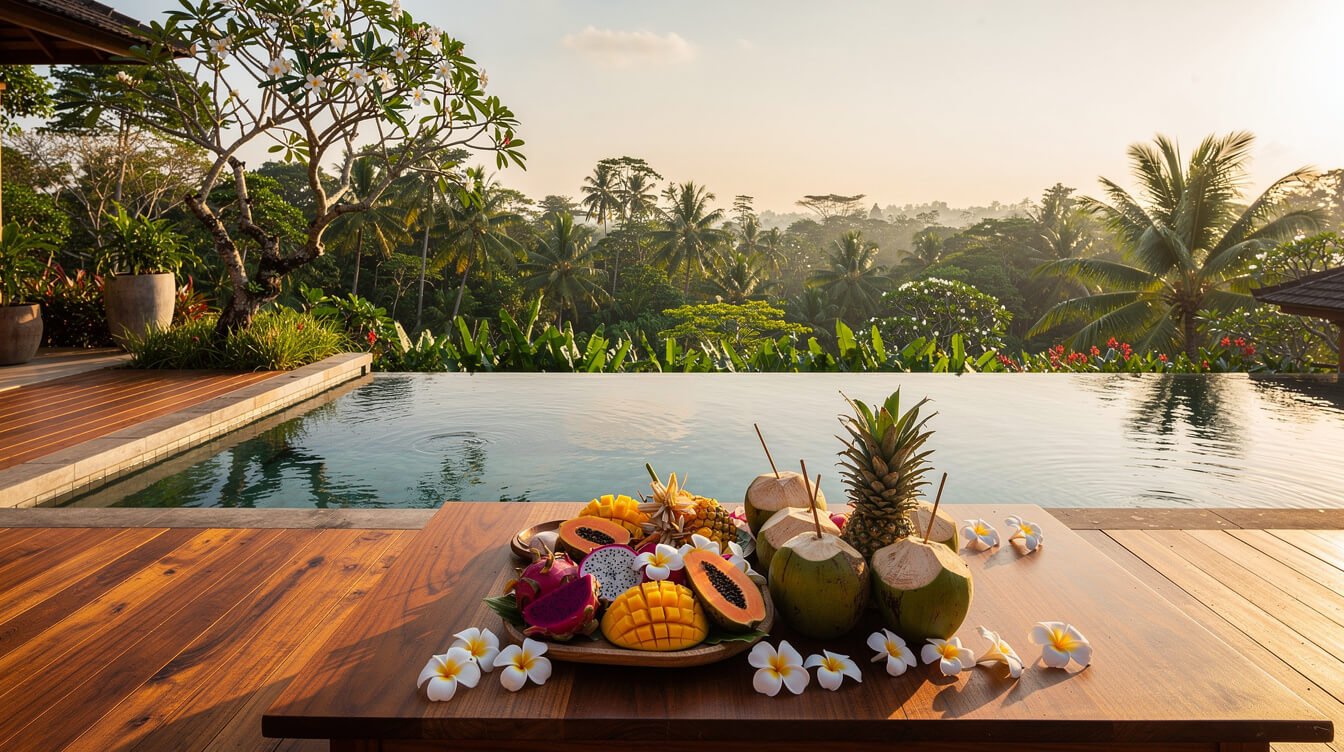
You notice it on the first morning. Someone sets a plate on the table beside the pool — sliced papaya, a fan of mangosteen segments, a wedge of dragon fruit so vivid it looks painted. You take a bite of something you think you know. And then you stop, because you don’t know this at all.
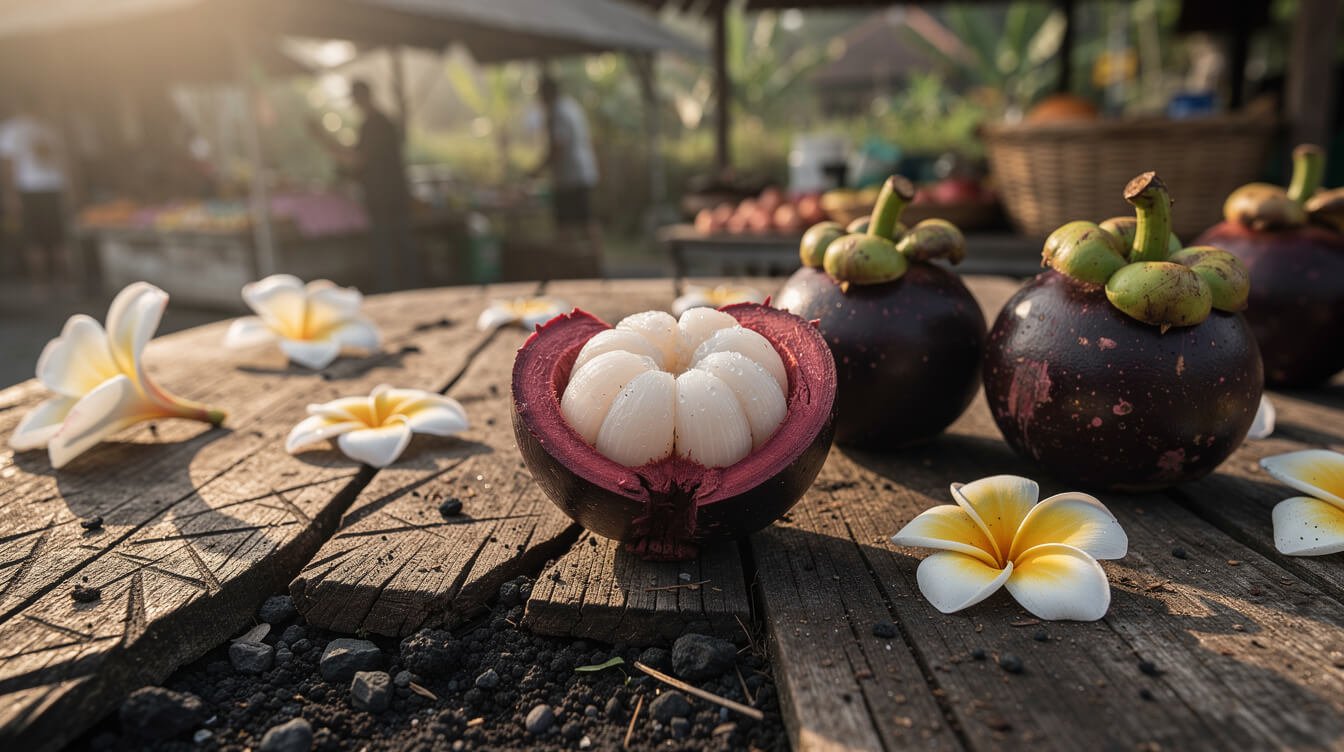
The papaya is not the papaya from home. It’s deeper, sweeter, almost caramel at the center where the seeds were. The mangosteen — if you’ve never opened one in Bali — cracks like a small gift, the white segments so clean and cold they feel like they belong to a different category of food entirely. And the snake fruit, with its brittle brown armor, reveals flesh that tastes like honey and mild acid and something faintly floral you can’t name.
What the Volcanic Soil Does
Ubud sits in the shadow of three volcanoes. The soil here is dark, mineral-rich, absurdly fertile. Our chef will tell you this matters — that the same mango grown near the coast and grown here, in the volcanic uplands, will taste like two different fruits. The altitude helps, too. Cooler nights slow the ripening, concentrating the sugars. The fruit doesn’t rush. It arrives when it’s ready.
The Chef’s Morning Eye
She goes to the village market before six. Not the tourist market in central Ubud — the one where the vendors know her name, where the salak lady saves her the small, tight-skinned ones because she knows those are the sweetest. The market has its own rhythm, and the chef reads it fluently. She picks by weight, by scent, by the give of the skin under her thumb. She never buys what looks prettiest. She buys what the tree let go of this morning.
Get a Free 3-Day Sample Itinerary
Morning markets, volcanic hikes, hidden temples — we’ll plan the first three days so you don’t have to.
The Mangosteen Moment
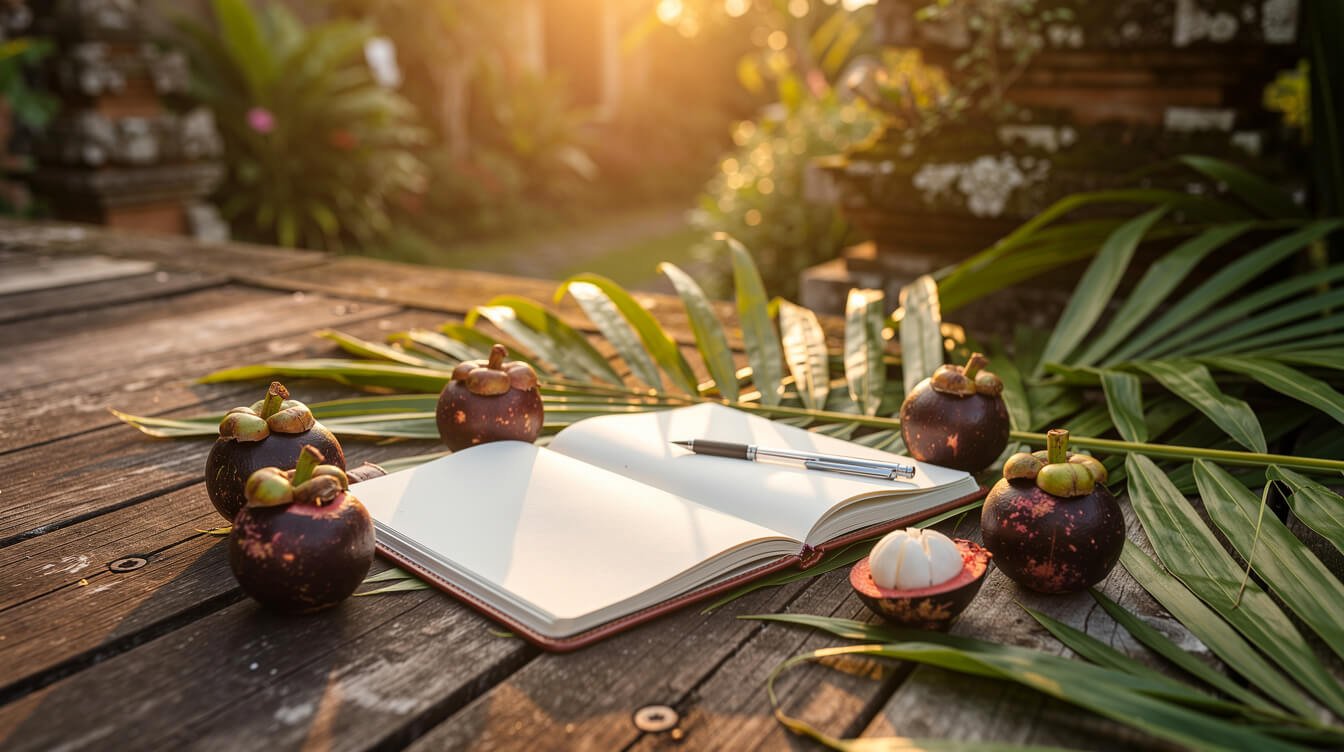
Every guest has one. You crack the thick purple rind with both thumbs, and the inside is impossibly white. You eat the first segment standing up, juice running down your wrist. Then you sit down, because this requires attention. The flavor is cool and tart and sweet all at once — like lychee crossed with something you’ve never tasted. And you think: I’ve been eating fruit wrong my entire life.
Why You Can’t Bring It Home
Most of what makes Ubud fruit extraordinary doesn’t survive export. Mangosteen browns within days. Salak dries out. The rambutan — those hairy, sea-creature-looking things that taste like sweet grapes — lose their juice before they clear customs. This is food that belongs to the place where it grew. It’s one reason staying in Ubud feels so different from reading about it. Some things only exist at the source.
What the Plate Teaches You
The chef doesn’t just feed you. She introduces you to the land through what it grows. The morning breakfast isn’t a menu — it’s a season report, shaped by what the market offered, what the garden gave, what ripened overnight on the tree by the kitchen door. After a few mornings, you stop thinking of fruit as a side dish. You start thinking of it as a reason you came.
Book the Villa
Three bedrooms, full staff, a chef who knows the market by heart. Your mornings start with fruit you’ll remember for years.
Book NowThe Fruit You Didn’t Expect
Ask the chef about buah naga — the magenta-fleshed dragon fruit that stains your fingers. Or about the jackfruit she uses in curry, pulling apart each golden pod like unwrapping something delicate. Or about the starfruit she slices for the afternoon water jug, each piece a perfect five-pointed star floating among ice and pandan leaves. These aren’t exotic novelties. They’re Tuesday.
That’s what makes the fruit in Ubud feel different. It isn’t performed for you. It’s simply what grows here — abundant, unforced, and better than anything you imagined. The plate arrives. You taste it. And something in you recalibrates.
Join Our Newsletter
Fun, new, exciting Bali news — delivered to your inbox. Stories about Ubud, the villa, and the moments that make this place unforgettable.