Where to Stay in Ubud Bali: Your Complete Insider Guide to the Best Areas and Neighborhoods
Choosing where to stay in Ubud Bali changes your entire trip. Not because one area is “better” than another — but because each neighborhood in Ubud carries a different rhythm, a different morning light, a different evening soundtrack. The wrong location means fighting traffic to reach the things that drew you here. The right one means stepping outside your door and already being inside the experience.
We live and work in Ubud. Our team manages a staffed private villa here, and we’ve helped hundreds of guests navigate this exact decision. What we’ve learned is that most “where to stay” guides point you toward hotels and resorts. They skip the neighborhoods entirely — or worse, they lump all of Ubud into a single recommendation. This guide is different. We’ll walk you through each area as it actually feels to wake up in, eat in, and return to after a long day exploring.
Why Where You Stay in Ubud Bali Matters More Than You Think
Ubud is not a resort town. It’s a living village — or more accurately, a cluster of villages that grew into each other over decades. The center around Jalan Raya Ubud and Monkey Forest Road has become genuinely busy: motorbikes, construction, delivery trucks threading past yoga studios and organic cafes. If you picture Ubud as a quiet jungle retreat and book a room in the center, you might be disappointed on the first morning.
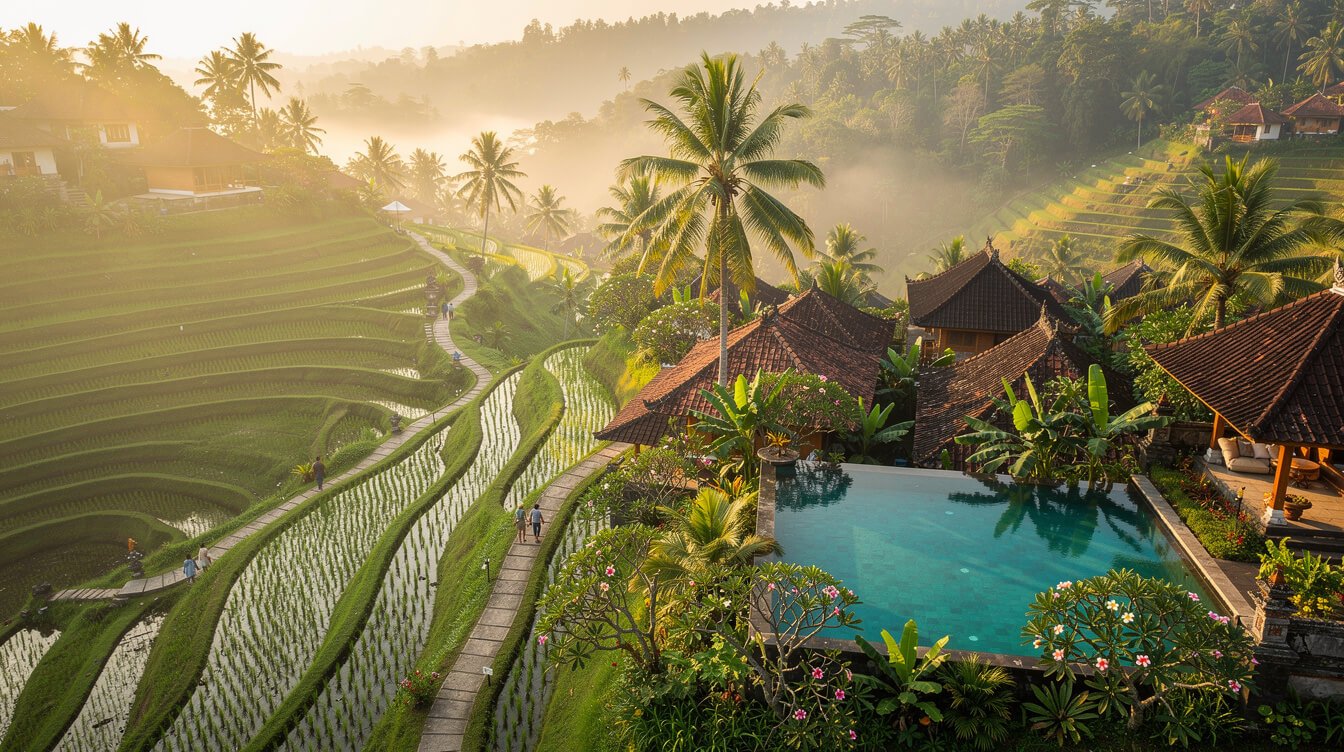
But move just ten minutes in any direction and Ubud transforms. Penestanan feels like a hillside artist colony. Sayan drops into a river gorge so deep the sounds of the village disappear. Tegallalang stretches into rice terraces that seem to have no end. Even Lodtunduh and Mas, just south of center, carry a calm that central Ubud lost years ago.
The difference isn’t subtle. It’s the difference between hearing traffic at 6 AM and hearing roosters. Between walking to dinner and needing a scooter. Between feeling like you’re in a tourist hub and feeling like you’ve been invited into someone’s village. Where you stay in Ubud determines which version of Ubud you experience — and that’s why getting this decision right matters more here than almost anywhere else in Bali.
Central Ubud — The Beating Heart of Village Life
Best for: First-time visitors, solo travelers, people who want to walk everywhere.
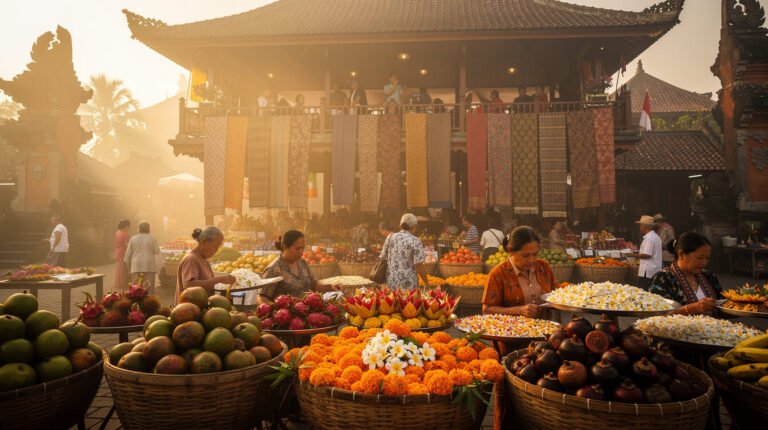
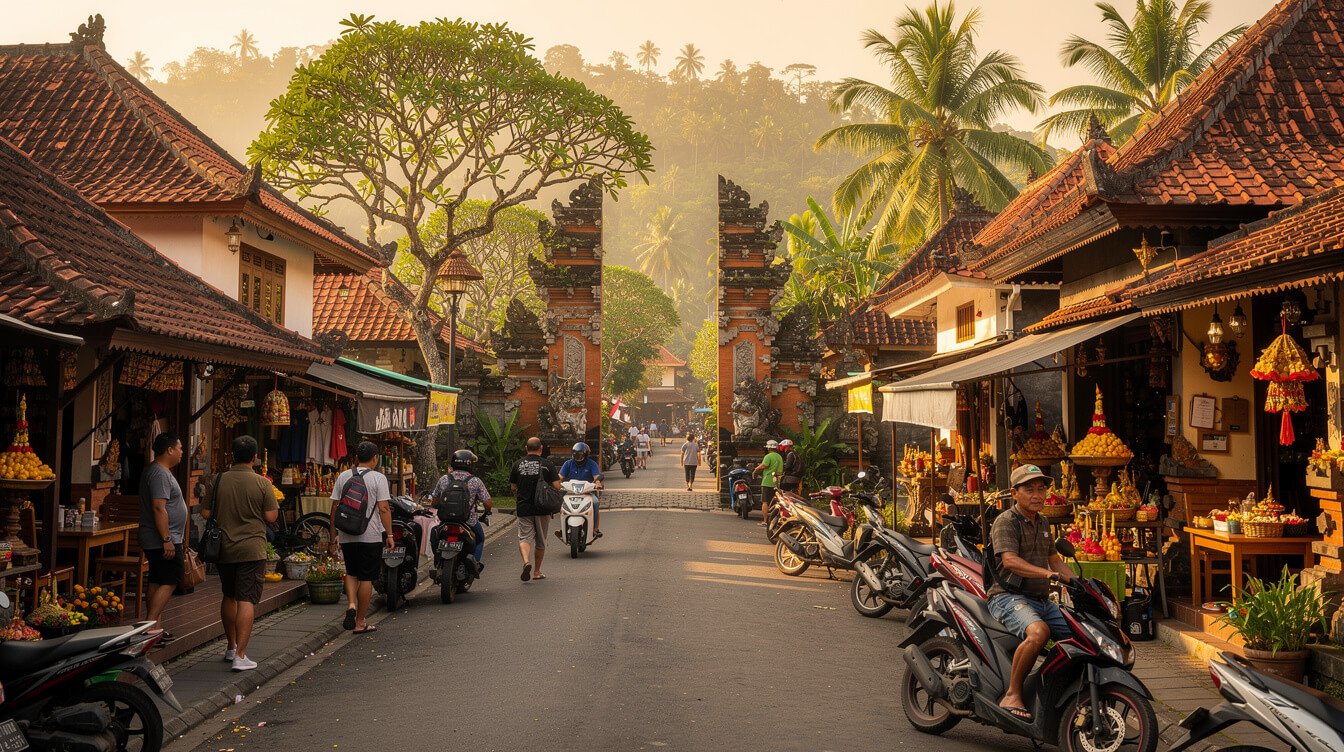
Central Ubud radiates outward from the Royal Palace and the intersection of Jalan Raya Ubud and Monkey Forest Road. This is the Ubud most people imagine — the morning market with its towers of fruit and temple offerings, the Saraswati Temple lotus pond glowing at dusk, the nightly dance performances at Pura Taman Saraswati.
The advantage of staying here is pure convenience. You can walk to the best restaurants in Ubud — from Locavore’s tasting menus to Ibu Oka’s legendary babi guling. You’re a short stroll from yoga studios, galleries, and the Sacred Monkey Forest. No scooter needed. No ride-hailing. Just step outside and go.
The trade-off is real, though. Jalan Raya Ubud is loud during the day. The sidewalks are narrow, sometimes nonexistent. Traffic can stall to a crawl between 10 AM and 6 PM. And the density of tourism-facing businesses means you’ll see more souvenir shops than rice paddies.
If you’re staying two or three nights and want to pack your days with activities, the center works beautifully. You’ll be close to everything in our complete guide to things to do in Bali. But if you came to Ubud for quiet mornings and jungle views, the center might not deliver the experience you’re imagining.
Where to stay in Central Ubud
Hotels and guesthouses here range from budget homestays ($20-40/night) to boutique properties ($80-200/night). Look for rooms facing away from the main roads — a courtyard-facing room on a side street can feel like a different world from one overlooking Jalan Raya. Streets like Jalan Kajeng and Jalan Goutama offer a quieter version of the center while keeping everything walkable.
Penestanan — The Artists’ Ridge Above the Valley
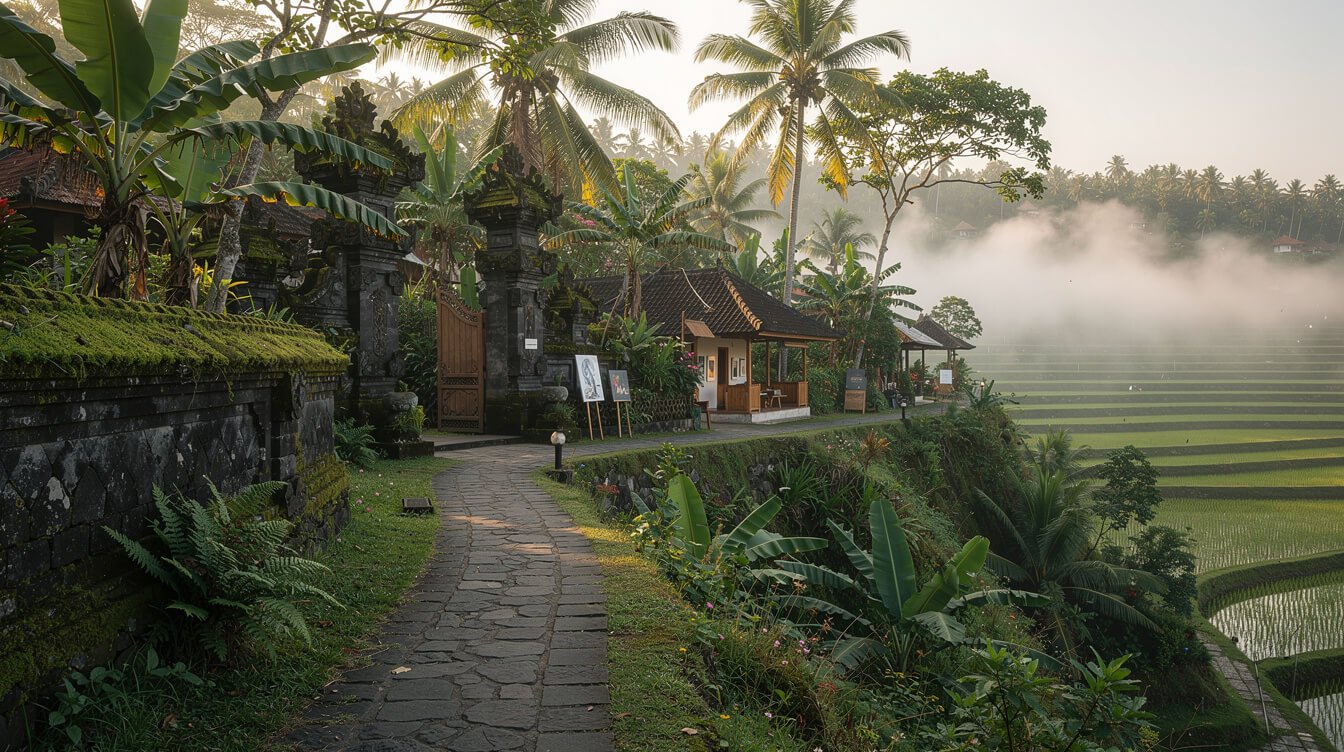
Best for: Couples, creatives, yoga practitioners, anyone who wants Ubud’s culture without Ubud’s traffic.
Penestanan sits on a ridge west of central Ubud, connected by the famous Campuhan Ridge Walk — a narrow path between two river valleys that’s become one of Ubud’s most photographed spots. The walk itself takes you from the center into a completely different atmosphere in about fifteen minutes.
This was Ubud’s original artist colony. The Young Artists movement started here in the 1960s, and that creative energy still lingers in the small galleries, ceramics studios, and yoga shalas scattered along the ridge. Penestanan has excellent cafes — Yellow Flower, Laka Leke — and enough restaurants that you won’t need to go into town for dinner.
What makes Penestanan special is the feeling of being elevated — literally and figuratively — above the bustle. You look out over rice field valleys from your breakfast table. The air moves differently up here. Mornings are quiet enough to hear the gamelan rehearsals from the banjar hall below.
The trade-off: Penestanan involves stairs. Lots of them. Many properties are accessed via steep paths that drop down the hillside. If you have mobility concerns or heavy luggage, this matters. And while scooters can reach most areas, the roads are narrow and sometimes unfinished. But for able-bodied travelers who want that classic Ubud feeling — art, yoga, jungle views, village quiet — Penestanan is hard to beat.
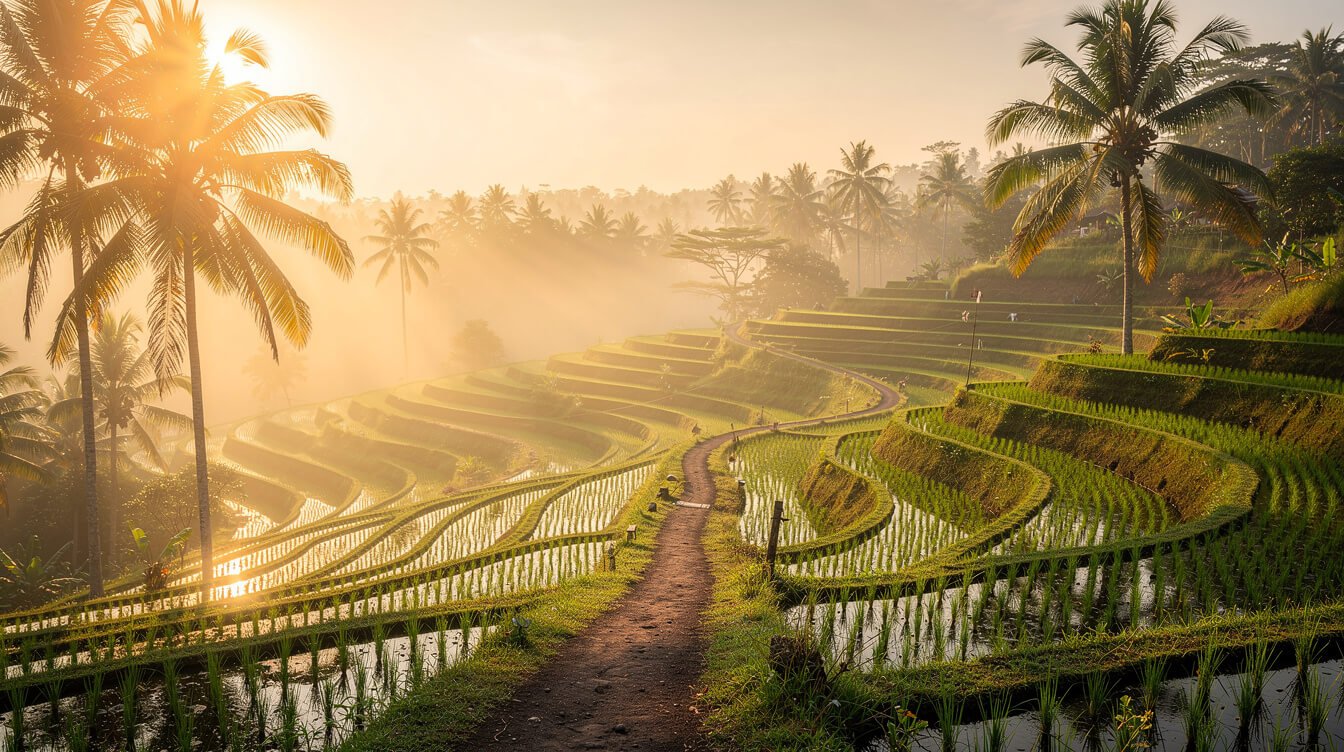
Get a Free 3-Day Sample Itinerary
Planning your Ubud days? We’ve mapped out a 3-day itinerary with our team’s favorite spots — temples, rice terraces, restaurants, and quiet corners most visitors miss.
Sayan and the Ayung River Valley — Where Stillness Lives
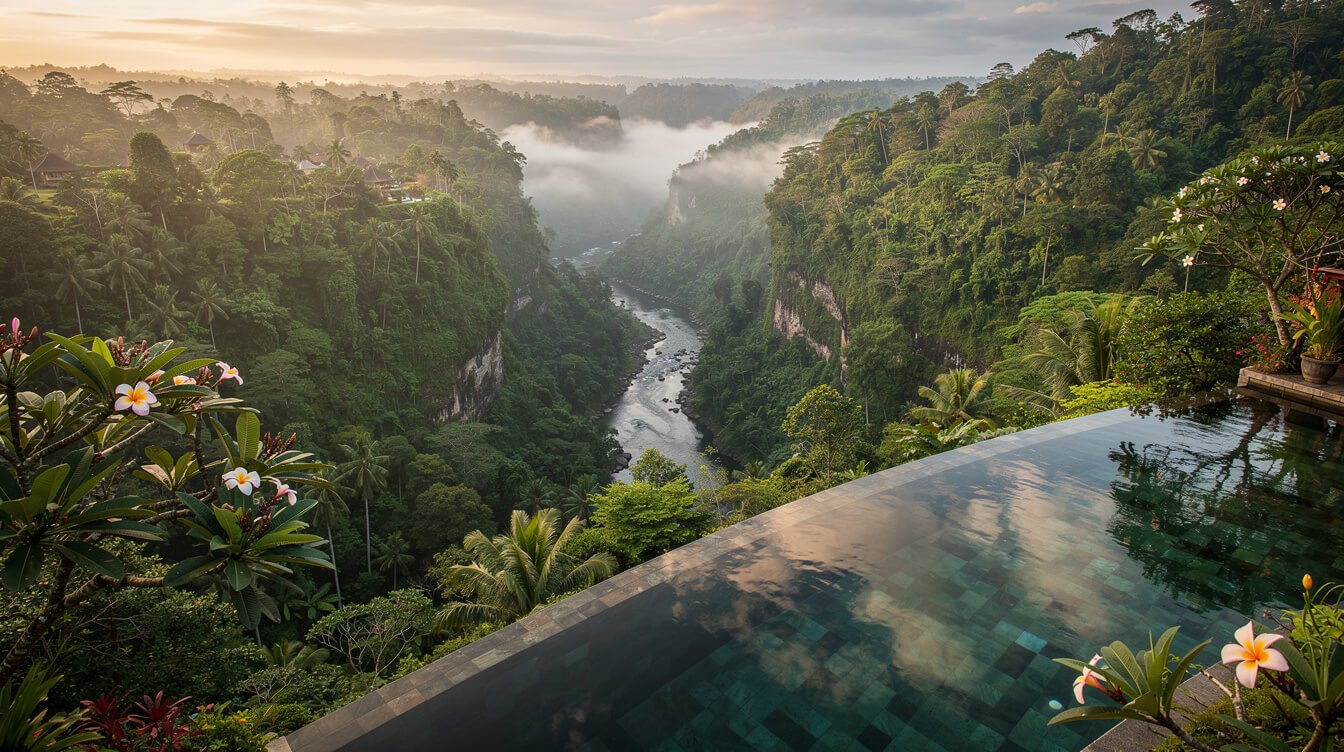
Best for: Honeymooners, wellness seekers, anyone prioritizing peace over proximity.
Sayan is where Ubud gets serious about stillness. This area follows the western rim of the Ayung River gorge — a deep, jungle-filled valley that creates a natural sound barrier between you and everything else. It’s the area where the Four Seasons and COMO Shambhala established their Ubud properties, and there’s a reason: this landscape is dramatic enough to make you forget you’re ten minutes from a market.
Staying in Sayan means waking up to birdsong echoing off the river valley. It means afternoon light filtering through canopy trees onto your terrace. If you’re coming to Ubud for a wellness retreat or yoga retreat, Sayan’s environment supports that intention without you having to create it artificially.
The area has fewer restaurants than central Ubud, but the ones here — Nusantara at Four Seasons, Swept at Samaya — are genuinely excellent. White-water rafting on the Ayung starts from this valley. And the cycling routes through the surrounding villages are some of the most beautiful in Bali.
The trade-off is isolation. You’ll need a scooter or driver for almost everything beyond your accommodation. And “ten minutes from the center” can stretch to thirty during peak traffic hours. But for many travelers — especially couples — that isolation is exactly the point.
Tegallalang and North Ubud — Rice Terraces and Open Skies
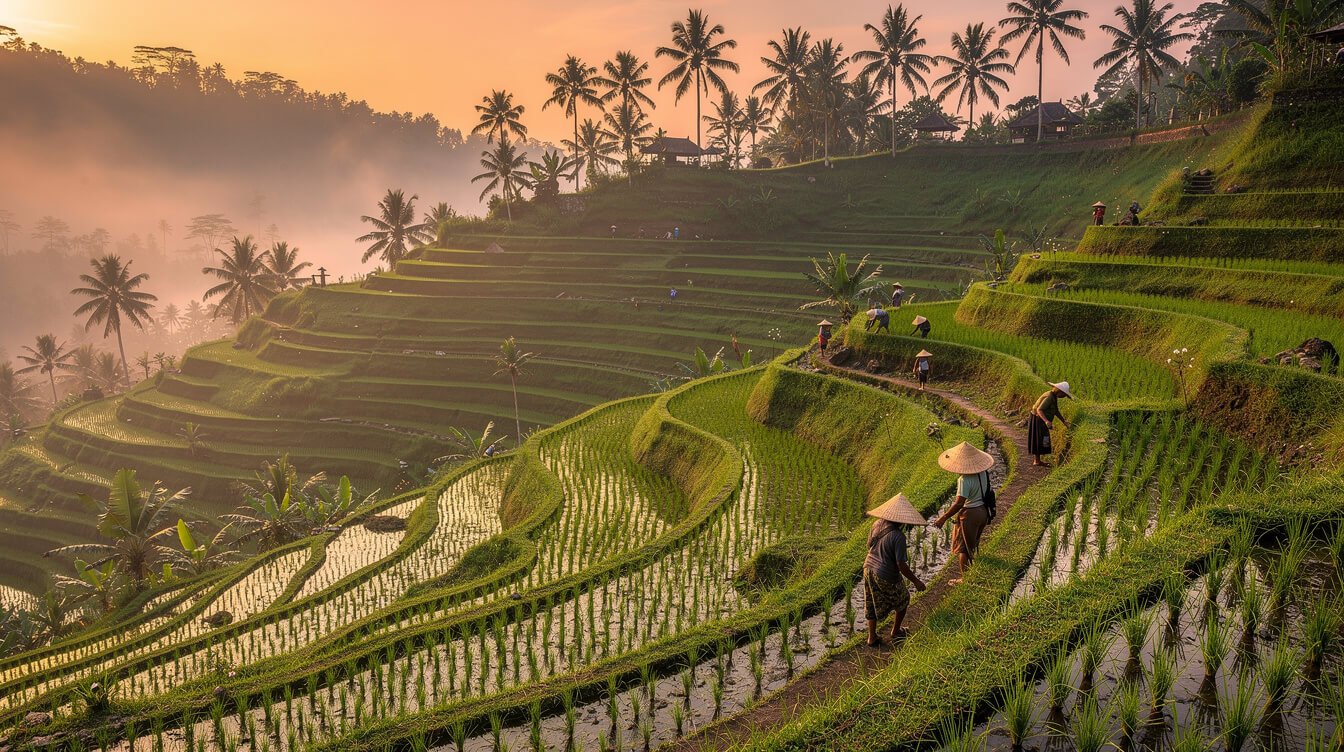
Best for: Nature lovers, photographers, families, anyone who wants space and green views.
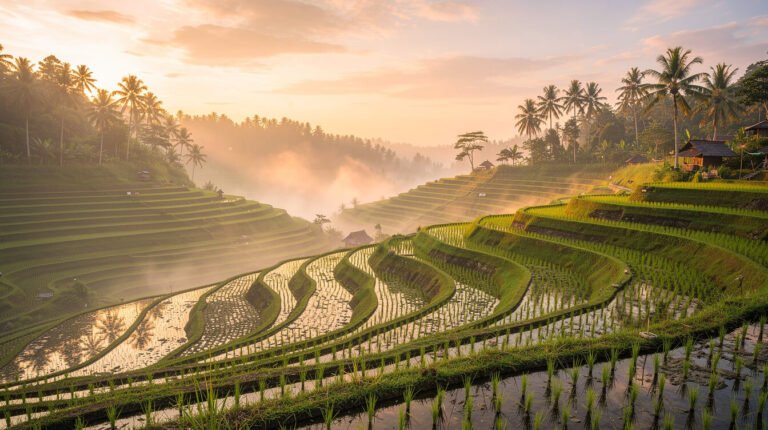
North of central Ubud, the land rises into the iconic rice terraces of Tegallalang — those cascading green steps you’ve seen in every Bali travel photo. Staying up here means you’re living inside that postcard instead of driving to visit it.
Tegallalang and the surrounding villages — Cekingan, Kenderan, Keliki — offer something the center can’t: unobstructed views. Your breakfast table looks out over rice paddies that stretch to the horizon. The air is noticeably cooler. The sounds are agricultural — roosters, irrigation water, the clatter of a farmer’s tools — rather than automotive.
This area has developed significantly in recent years. Cafes with swing seats over the terraces draw day-trippers, and the main Tegallalang terrace site itself gets crowded by mid-morning. But stay on the smaller roads — the ones that lead to Keliki or loop toward Kintamani — and you find a quieter version that still feels like the Ubud of twenty years ago.
For families, Tegallalang offers something important: space. Properties up here tend to have larger grounds, and the roads are calmer and wider than in the center. Children can explore without the traffic anxiety that comes with staying on Jalan Raya. And the proximity to northern attractions — Tirta Empul temple, Gunung Kawi, the drive up to Kintamani volcano — saves time if those are on your itinerary.
The trade-off: you’re 15-25 minutes from central Ubud, which means dinner in town requires planning. And some of the “Tegallalang” properties listed on booking sites are actually quite far north, closer to Tampaksiring than to the terraces. Check the map carefully before booking.
Lodtunduh and Mas — The Quiet South
Best for: Repeat visitors, culture seekers, anyone who wants authentic village life with easy access.
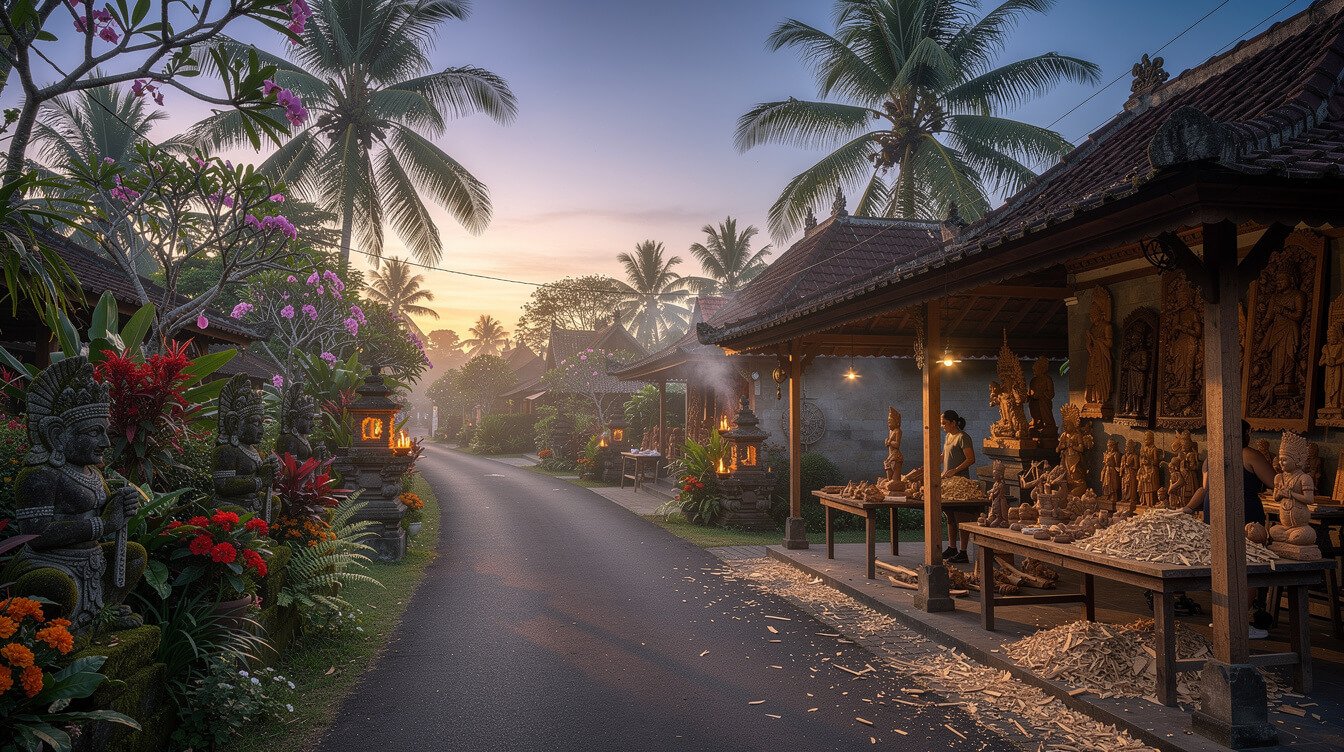
South of the Monkey Forest, the tourist density drops sharply. Lodtunduh and Mas are working villages first — places where woodcarvers still shape temple doors in open-air workshops, where ceremony preparations spill into the road, where your neighbors are Balinese families rather than other travelers.
Mas is famous for its woodcarving tradition — generations of artisans who produce the intricate temple carvings, ceremonial masks, and decorative panels you see across Bali. Walking through Mas in the afternoon, you’ll hear the tap of chisels and smell fresh sawdust from studios that have operated for decades. This is where to stay in Ubud Bali if you want the culture to surround you rather than performing for you.
Lodtunduh, slightly west, is even quieter. Rice fields dominate the landscape. Morning walks pass through village compounds where Balinese families prepare canang sari offerings. It’s the closest thing to rural Bali within a short drive of Ubud’s restaurants and attractions.
Both areas benefit from being on the main road south toward Denpasar, which means transport connections are straightforward. Getting to central Ubud takes 10-15 minutes by scooter, and the bypass road to east and west Bali starts here.
The trade-off: there’s less dining variety close by, and the area lacks the polished infrastructure that the center offers. But if you’ve been to Ubud before and want to go deeper, the south delivers an experience the north-facing tourist corridors can’t match.
Book the Villa
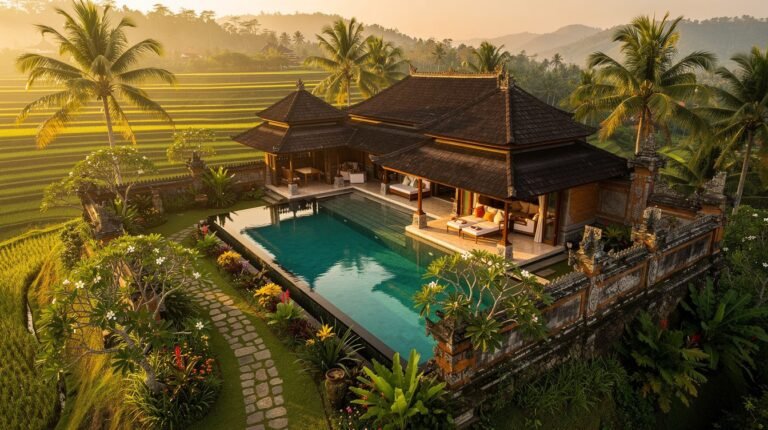
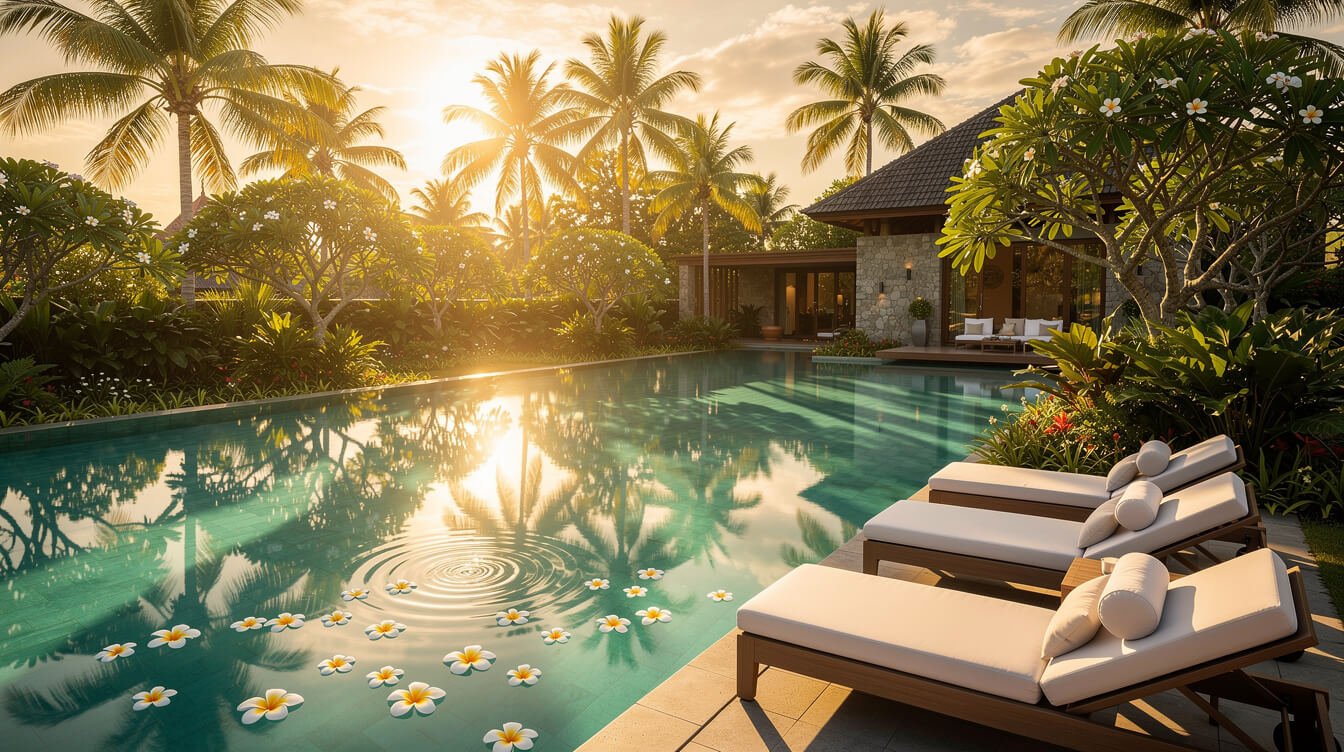
Three bedrooms, a private pool, full staff — chef, housekeeper, villa manager — and a tropical garden that makes every morning feel extraordinary. Check our availability.
Why a Staffed Private Villa Is the Accommodation Type Most Guides Skip
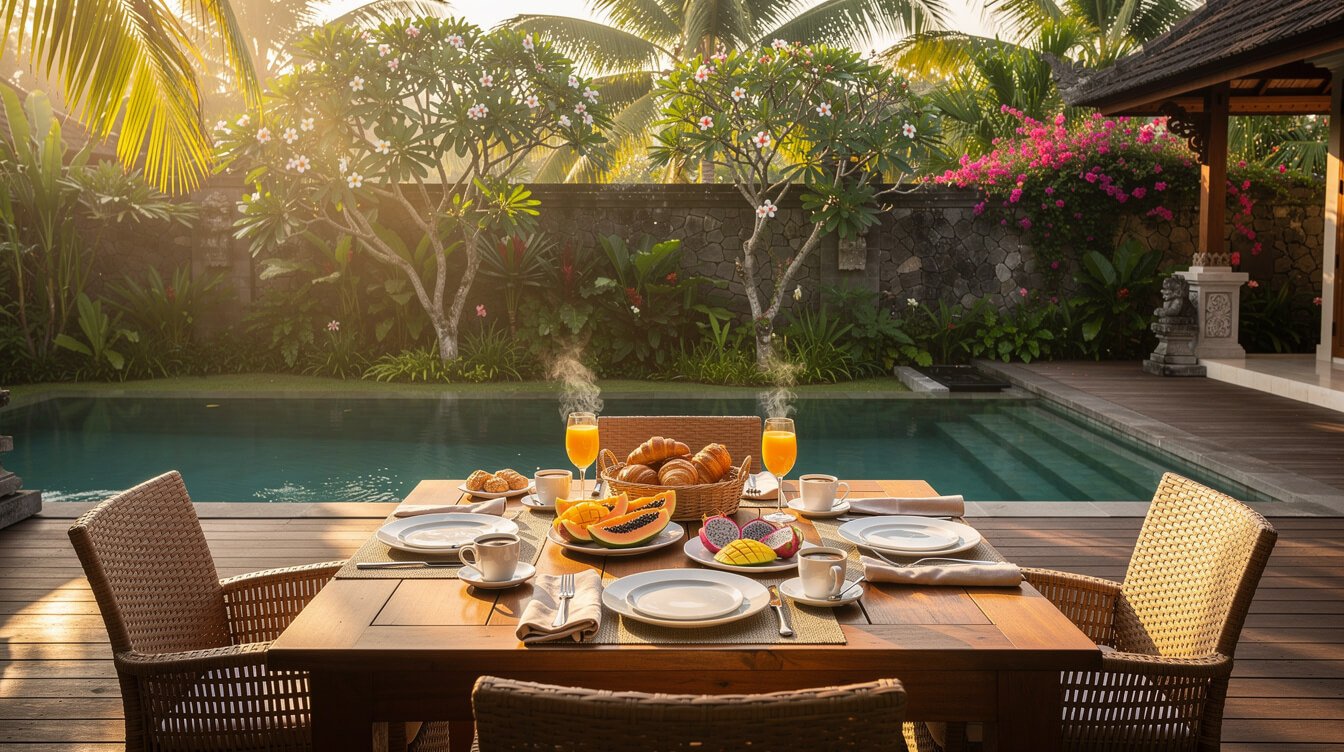
Every “where to stay in Ubud” guide talks about hotels, resorts, and hostels. Almost none mention staffed private villas — and that’s a gap worth filling, because for groups, families, and couples who want genuine immersion, a staffed villa fundamentally changes what “staying in Ubud” feels like.
Here’s the difference. At a hotel, someone checks you in. At a staffed villa, someone knows you’re arriving. Your villa manager has already asked about your dietary preferences. The chef has been to the morning market. The housekeeper has arranged fresh frangipani in your room. Before you’ve unpacked, you’re already being held.
A staffed villa in Ubud typically includes a private pool, full kitchen, multiple bedrooms, a garden, and — critically — a team. The team is what separates a “vacation rental” from an experience. Your manager arranges temple visits, books the best restaurant in the valley, calls a driver when you need one. Your chef cooks Balinese dishes from family recipes — or adapts to your allergies, your children’s preferences, your desire to learn. Your housekeeper maintains the kind of detail that makes you feel like the house was prepared specifically for you. Because it was.
For families traveling with children, this matters enormously. A villa means your kids have space — a pool, a garden, room to move — without disturbing other guests or being confined to a hotel room. For couples, it means privacy that no hotel can match. For groups, the economics are compelling: a three-bedroom villa with private pool often costs less per person per night than individual hotel rooms, and you get a chef, daily cleaning, and a private compound.
Most staffed villas in Ubud sit in the neighborhoods outside the center — Penestanan, Sayan, Lodtunduh, Tegallalang — which means you’re already in the quieter, more authentic version of Ubud. The villa’s location becomes your base camp, and your team becomes your local connection. They know which warung serves the best nasi campur. They know the ceremony schedule at the nearest temple. They know when the rice terraces will be flooded and photogenic.
If you’re comparing accommodation options in Bali and haven’t considered a staffed villa, we’d gently suggest looking into it. The experience is closer to “being hosted by a friend who lives here” than anything a booking site can categorize.
How to Choose the Right Area for Your Ubud Stay

Match your priorities to the neighborhood
- Walkability and restaurants: Central Ubud or Penestanan
- Peace and nature: Sayan or Tegallalang
- Cultural immersion: Lodtunduh or Mas
- Yoga and wellness: Penestanan or Sayan
- Family-friendly space: Tegallalang or a staffed villa anywhere
- Honeymoon romance: Sayan or a private villa in any area
Frequently asked questions
How many nights should I spend in Ubud?
At least three. Four to five is better — it takes a full day to settle into Ubud’s rhythm, and the best experiences happen once you’ve slowed down enough to find them. If you’re building a 7-day Bali itinerary, we’d recommend giving Ubud half or more of your time.
Is central Ubud too busy?
During the day, yes — Jalan Raya and Monkey Forest Road see significant traffic. But early mornings (before 8 AM) and evenings (after 7 PM) feel different. And many central accommodations have courtyards or garden settings that buffer the noise. It depends on your tolerance for bustle and whether you plan to be out exploring most of the day anyway.
Do I need a scooter?
In the center: no. In every other area: highly recommended. Grab (ride-hailing) works in Ubud but can be unreliable during peak hours, and drivers sometimes cancel for short trips. A scooter gives you freedom — but only rent one if you’re comfortable with narrow roads and occasional loose gravel. Otherwise, arrange a daily driver through your accommodation or villa manager.
What about Nyuh Kuning?
Nyuh Kuning is a small village immediately south of the Monkey Forest — walkable from the center but significantly quieter. It’s a strong option if you want the convenience of the center without the noise. Several boutique guesthouses and restaurants have opened here, and the village retains a residential, artistic feel. Think of it as a quieter annex to central Ubud.
When is the best time to visit Ubud?
April through October is dry season — the most comfortable for exploring. But Ubud in rainy season (November through March) has its own magic: the rice terraces are at their greenest, waterfalls are at full force, and the tourist crowds thin noticeably. Prices drop too. If you don’t mind afternoon showers — and they are usually just afternoon showers — rainy season can be the better time to experience Ubud’s real rhythm.
Is it worth staying outside Ubud entirely?
Some visitors base themselves in Canggu or Seminyak and “day trip” to Ubud. We’d discourage this. Ubud reveals itself in the mornings and evenings — the hour before the day-trippers arrive and the hour after they leave. A day visit gives you the traffic and the crowds but misses the quiet magic that makes Ubud worth the trip. If Ubud is on your list, stay here.

Stay in the Loop — Bali News Worth Reading
Fun, fresh, genuine Bali stories — new restaurants, hidden temples, seasonal tips, and the occasional recipe from our chef. No spam, no sales pitches. Just good reading from Ubud.