Where the Incense Goes
You smell it before you see it. A thin line of sandalwood smoke curling past your bedroom door, pulling you from sleep the way an alarm never could.
Somewhere below, Made is already on her knees. Not in prayer exactly — though that’s part of it — but in the daily act of placing Balinese morning offerings at every threshold, every corner, every stone step where the seen meets the unseen. This is the rhythm that runs beneath all of Ubud, and if you stay long enough, you’ll start to feel it.
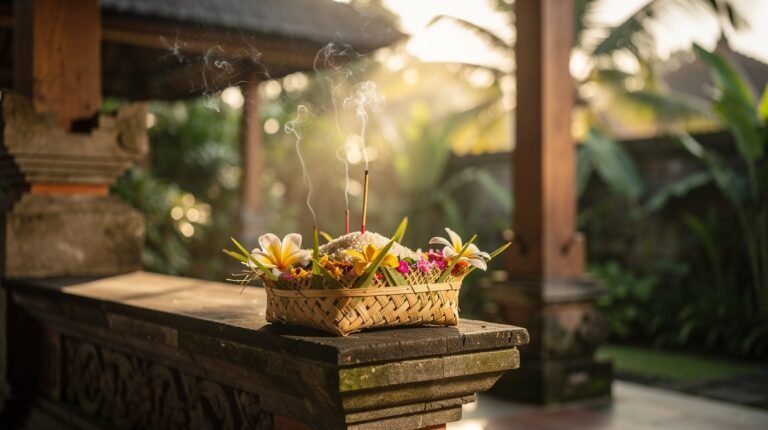
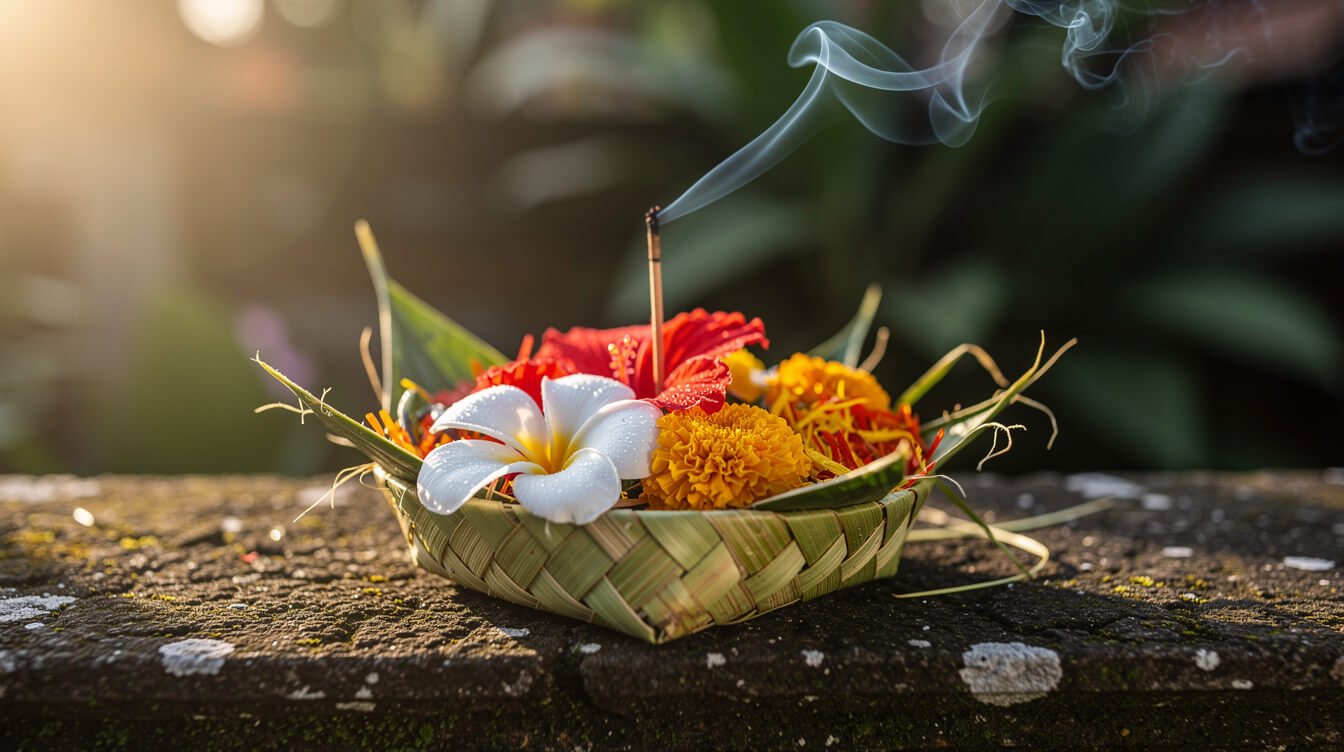
The canang sari is small. A woven palm-leaf tray no bigger than your palm, filled with flowers arranged by color — white toward the east, red to the south, yellow west, blue or green to the north. Each petal placed with purpose. Each one a conversation with something older than the garden walls.
She lights the incense stick, waves it three times, and moves on. The whole gesture takes thirty seconds. Then the next doorway. Then the kitchen threshold. Then the pool deck, because water deserves acknowledgment too.
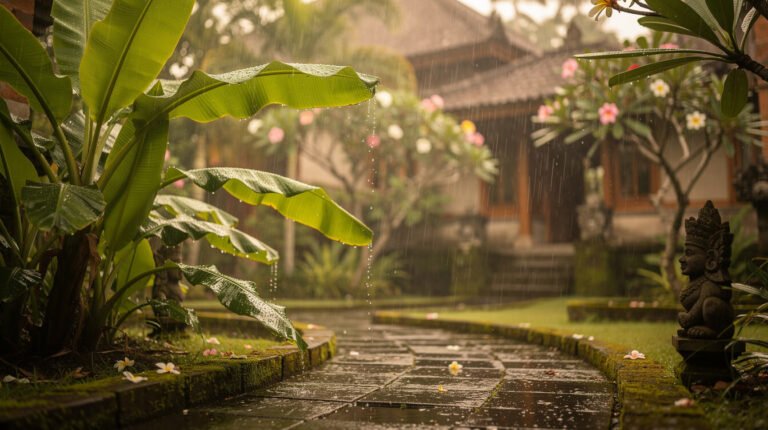
By the time you come downstairs for coffee, there are a dozen of them. At the base of the frangipani tree. Beside the stone statue near the entrance. On the small shrine tucked into the garden wall where geckos sun themselves in the afternoon. You’ll step around them without thinking — and that’s the point. They aren’t decoration. They are the day’s first agreement between this place and the forces that hold it.
Visitors sometimes ask what the offerings mean. Made smiles at the question. “Everything,” she says. “Gratitude. Balance. Asking the day to go well.”
What strikes you, after a few mornings, is the impermanence. By noon the flowers have wilted. Ants find the rice. A breeze scatters the petals across the stone. And tomorrow, she does it all again. That’s the whole teaching, really — not holding on, but showing up.
If you’re planning your first trip to Bali, you’ll see these offerings everywhere — on sidewalks, dashboard shrines, restaurant counters. But watching them made in a quiet garden, incense still warm, before the world fully starts — that’s where the ritual lands differently.
It’s not something you need to understand. Just something worth being awake for.
The mornings here carry their own kind of gentle restoration. The offerings are part of that — a daily reminder that attention itself is an offering. That the smallest gesture, repeated with care, holds the whole house together.
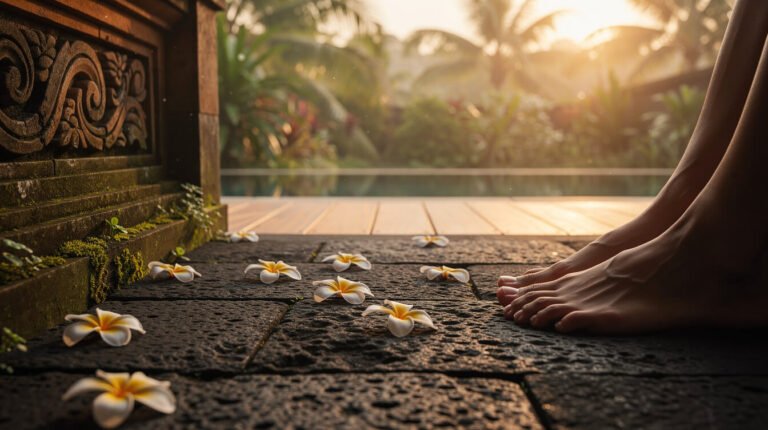
The incense smoke drifts past your coffee cup. The frangipani petals glow white against dark stone. Somewhere in the village, a rooster announces what Made already knew: the day is ready. And it started, as it always does, on its knees.