Sound Healing Ubud Bali: Your Complete Guide to the Best Sound Healing Experiences
Sound healing in Ubud Bali has quietly become one of the most sought-after wellness experiences on the island. Whether you’ve heard the deep resonance of a gong bath echo through a bamboo pavilion or felt a crystal singing bowl vibrate through your chest, you already know this is something different from a typical spa treatment. And Ubud — with its rice terrace quiet, its temple bell rhythms, and its village-pace mornings — is where the practice feels most at home.
This guide covers everything you need to know about sound healing in Ubud Bali: what it actually involves, where to find the most authentic practitioners, what to expect in your first session, and how to weave it into a longer stay. Whether you’re a first-time visitor curious about the practice or a returning traveler ready to go deeper, you’ll find the details here.
What Sound Healing Actually Is — and Why Ubud Is Its Heartbeat
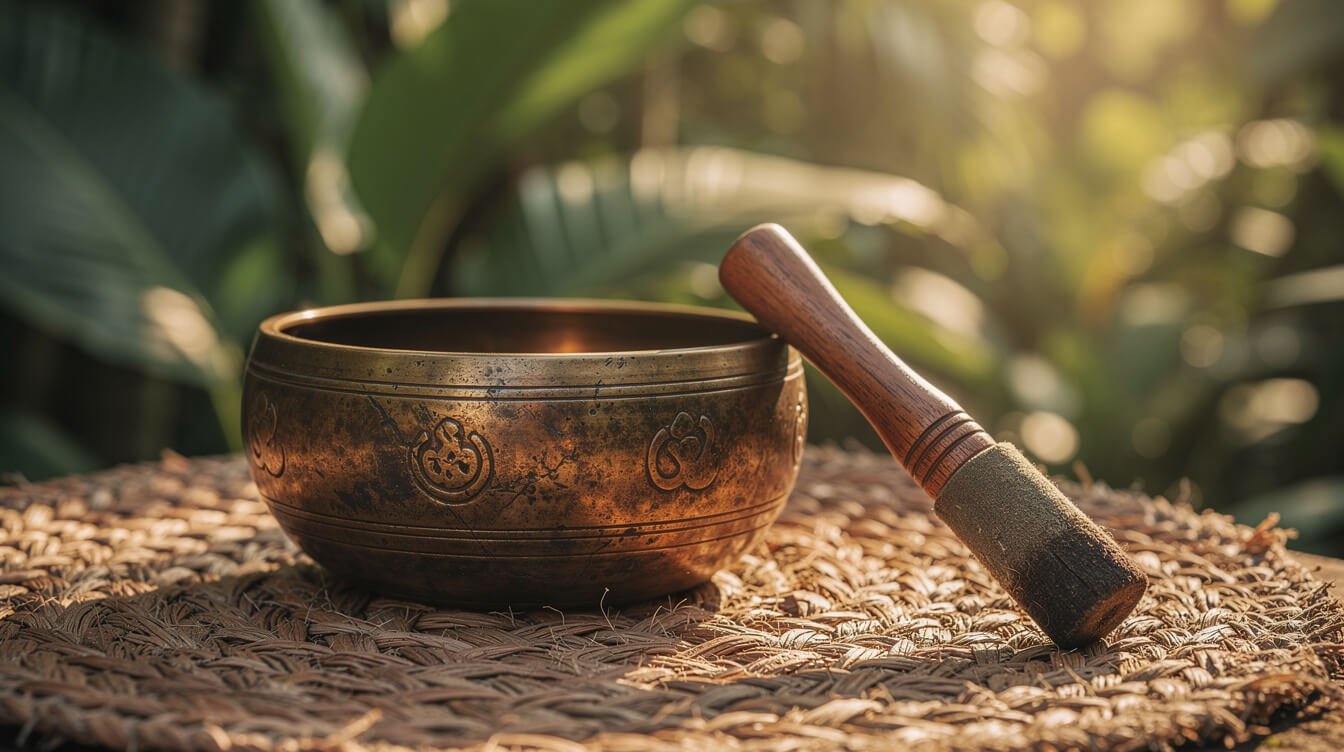
Sound healing uses the vibrations produced by instruments — singing bowls, gongs, tuning forks, crystal bowls, drums, chimes — to guide your body and mind into deep relaxation. It’s not music in the entertainment sense. There’s no melody to follow, no beat to tap along to. Instead, the frequencies wash over you in waves, and your nervous system responds by shifting from fight-or-flight into rest-and-repair mode.
The science behind it isn’t mystical. Sound waves interact with your body’s own vibrational frequency. A 2020 study published in the Journal of Evidence-Based Integrative Medicine found that Tibetan singing bowl sessions significantly reduced tension, anxiety, and depressed mood while increasing spiritual well-being in participants. Brain imaging studies show that sound healing can shift brainwave patterns from beta (active, alert) to theta and delta (deep meditation, dreamless sleep) — states that typically take experienced meditators years to access reliably.
Ubud amplifies this effect in ways that no urban wellness studio can replicate. The ambient soundscape here is already therapeutic: morning birdsong over rice terraces, distant gamelan practice from the village banjar, the rhythmic water flow of the subak irrigation channels. When you walk into a sound healing session in Ubud, you’re not leaving noise behind and entering a soundproofed room. You’re layering intentional healing frequencies over a natural sonic environment that’s already working on your nervous system. That’s why practitioners from around the world come here to study, practice, and teach — Ubud is the landscape that the practice deserves.
The Best Sound Healing Ubud Bali Experiences — Where to Go
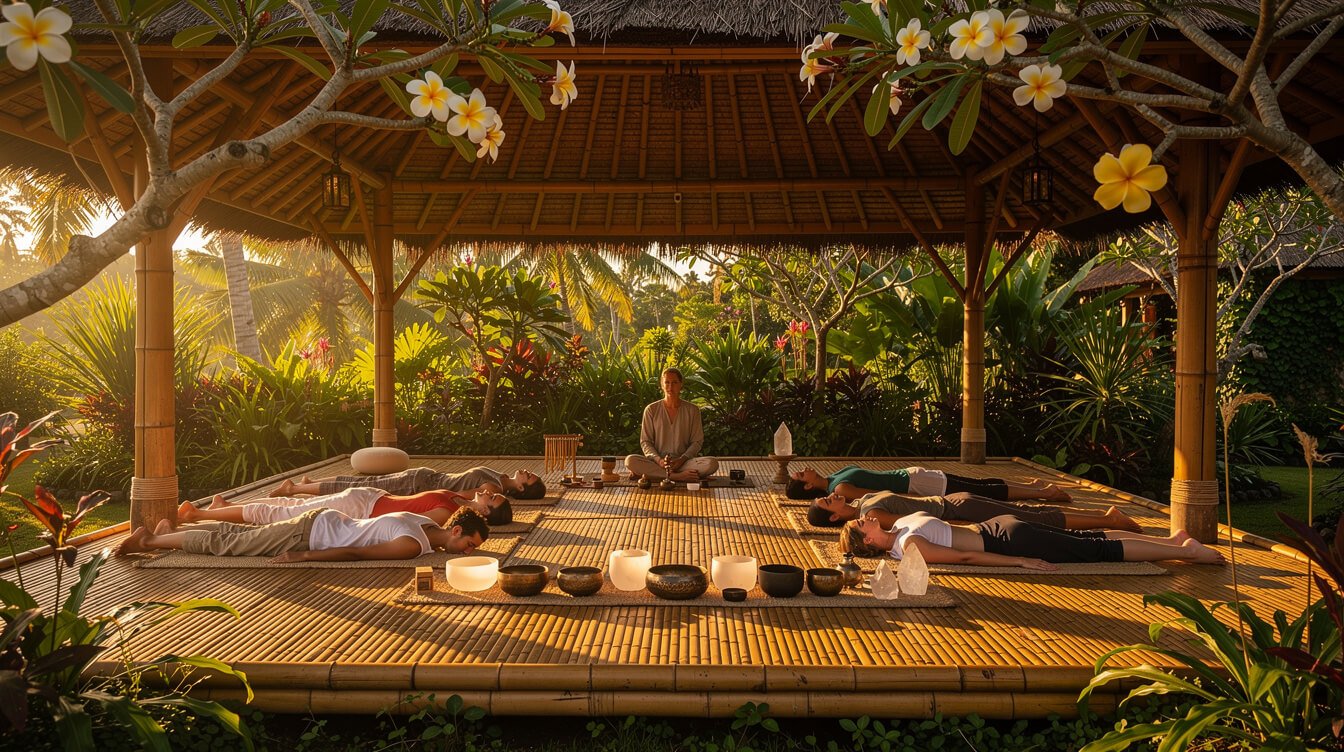
Ubud has more sound healing practitioners per square kilometer than anywhere else in Southeast Asia. Here are the ones worth your time, from landmark venues to hidden gems that even most repeat visitors don’t know about.
Pyramids of Chi
The anchor institution of sound healing in Ubud. Purpose-built sacred pyramids and geodesic domes create amplified acoustic chambers that make every session feel immersive. Their Ancient Sound Healing sessions run multiple times daily (9am through 7pm), using traditional gongs and singing bowls. The AMA Multisensory Dome is their most distinctive offering — combining sound, light, and frequency-based therapies in a technology-augmented space that pushes the practice beyond its traditional roots. They also offer scalar healing energy sessions and one-on-one handpan sessions. Expect to spend half a day here; the grounds alone invite lingering. A free shuttle service makes access easy from central Ubud.
Heart Space Bali
A yoga-integrated wellness center where sound healing weaves naturally into a broader practice schedule. Their daily and weekly sound meditation sessions emphasize the therapeutic effects of sustained vibration — less performance, more immersion. The facilitators blend crystal bowls with breathwork, creating sessions that feel participatory rather than passive. Heart Space draws a mix of committed practitioners and curious newcomers, so the energy in the room tends to be grounded rather than performative.
The Yoga Barn
Ubud’s largest wellness campus includes dedicated sound healing classes in their weekly schedule. The advantage here is context: you can pair a morning yoga class with an afternoon sound bath, or attend a cacao ceremony followed by gong meditation. The variety means you can experiment across modalities without committing to a single center. The sound healing sessions happen in their garden-adjacent shalas, where the acoustic environment blends indoor intention with outdoor nature sounds.
Ancient Vibes Shakti
Ten years, over 2,000 guests, and a commitment to Balinese-led practice. What sets Ancient Vibes Shakti apart is authenticity: their practitioners are skilled Balinese healers who bring the island’s own spiritual traditions into the sound healing space. This isn’t imported wellness repackaged for tourists — it’s a sanctuary where the Balinese understanding of sekala (the seen world) and niskala (the unseen world) informs how sound is used as a bridge between them. Their location in central Ubud makes drop-in sessions easy to fit into any itinerary.
Serendipity Sounds
Over 1,000 guests guided and growing. Serendipity Sounds has earned a reputation for intimate sessions that prioritize personal attention over group scale. If you’re looking for a sound healing experience where the practitioner adjusts instruments and frequencies based on what they sense in the room, this is where you go. The smaller group sizes mean you’re never anonymous — and the post-session integration time is genuinely unhurried.
Udara Bali
One of Bali’s leading destinations for sound healing specifically. Udara offers everything from one-on-one private sessions to group events and deeply immersive multi-day experiences. Their diversity of modalities — singing bowls, gongs, vocal toning, frequency-specific instruments — means you can explore different approaches across multiple visits. Udara’s coastal Canggu location makes it ideal for travelers splitting time between Ubud and the beach areas.

Get a Free 3-Day Sample Itinerary
See how sound healing, temple visits, and slow Ubud mornings fit into three unforgettable days — with our team’s personal recommendations.
What to Expect in Your First Sound Healing Session
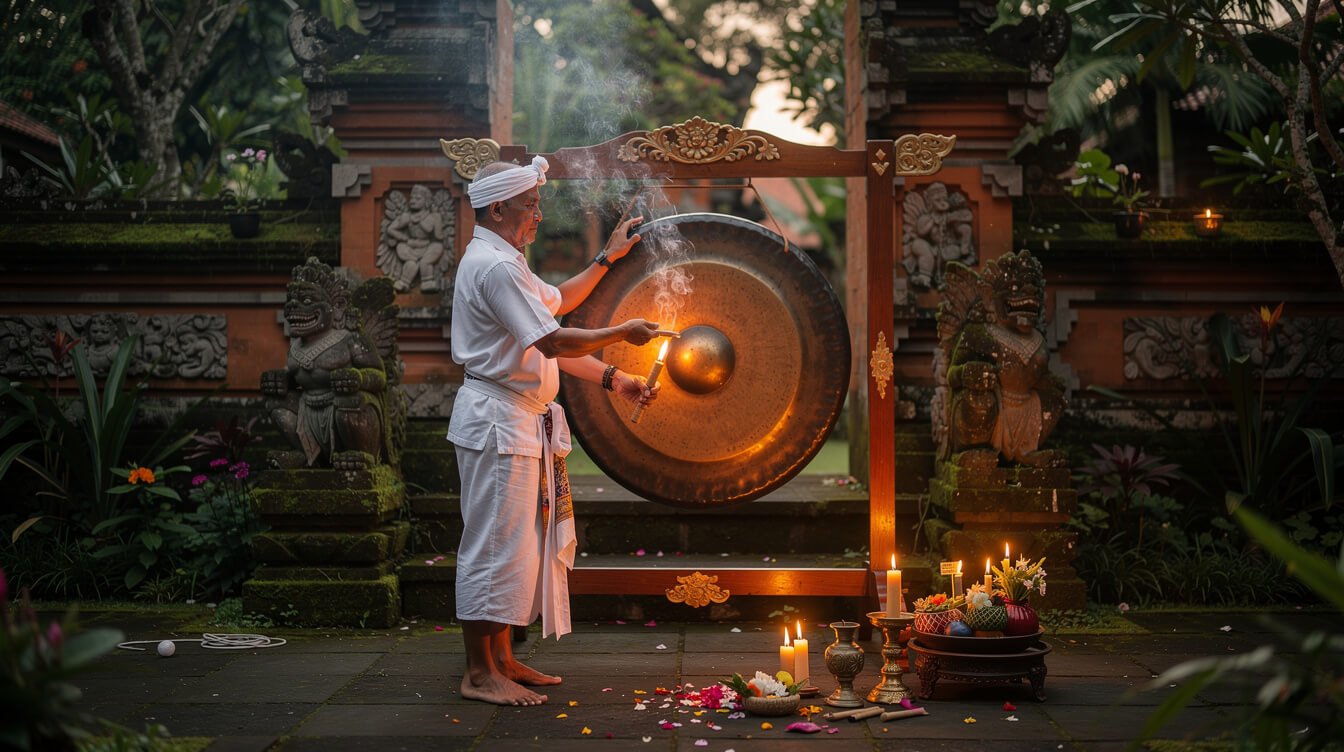
Walking into a sound healing session for the first time can feel unfamiliar. Here’s exactly what happens, so you can arrive without anxiety and leave with something real.
Before the Session
Arrive 10–15 minutes early. Most venues in Ubud ask you to remove shoes and silence your phone. You’ll typically be asked to lie down on a yoga mat with a bolster under your knees and a blanket within reach — temperatures can feel cool when your body fully relaxes. Some practitioners offer an eye mask. Wear comfortable clothing you can breathe easily in.
During the Session
The facilitator will guide you through a brief breathing exercise to settle your mind. Then the instruments begin — usually starting soft and building gradually. A typical group session lasts 60–90 minutes. During that time, you might experience vivid imagery behind closed eyes, involuntary muscle twitches (your body releasing tension), deep emotion surfacing unexpectedly, or the sensation of floating. You might also simply fall asleep — and that’s perfectly fine. There’s no correct way to receive a sound bath.
What surprises most first-timers is how physical it feels. The vibrations don’t just enter through your ears. Crystal bowls and gongs produce frequencies you feel in your sternum, your lower belly, the soles of your feet. If you’ve ever stood near a large church organ, you’ve felt a fraction of this effect.
After the Session
Facilitators usually allow 10–15 minutes of silence after the last instrument fades. This integration time matters — rushing out immediately can feel jarring. Drink water. Many people report feeling both deeply rested and emotionally tender for several hours afterward. Some experience vivid dreams that night. Plan nothing demanding for the remainder of the day. A slow walk through Ubud’s quieter paths or an afternoon by your villa pool are ideal post-session activities.
Sound Healing Ubud Bali Instruments — What You’ll Encounter
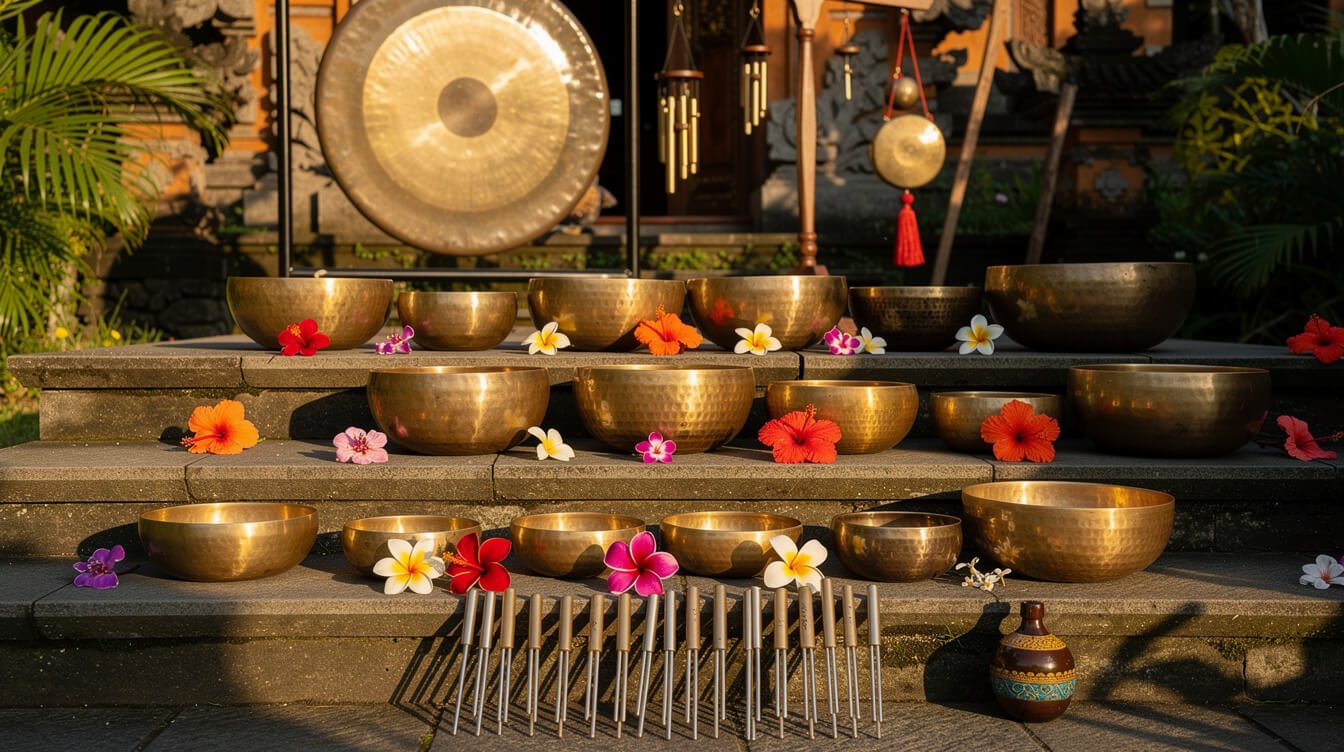
Different instruments produce different effects. Understanding what each one does helps you choose sessions aligned with what your body needs.
Tibetan Singing Bowls
The foundation instrument. Hand-hammered metal alloy bowls that produce sustained, harmonically rich tones. Placed near or on the body, the vibrations travel through tissue and bone. Lower-frequency bowls work on grounding and physical tension release. Higher-pitched bowls work on mental clarity and emotional processing. Most practitioners in Ubud use a combination of both.
Crystal Singing Bowls
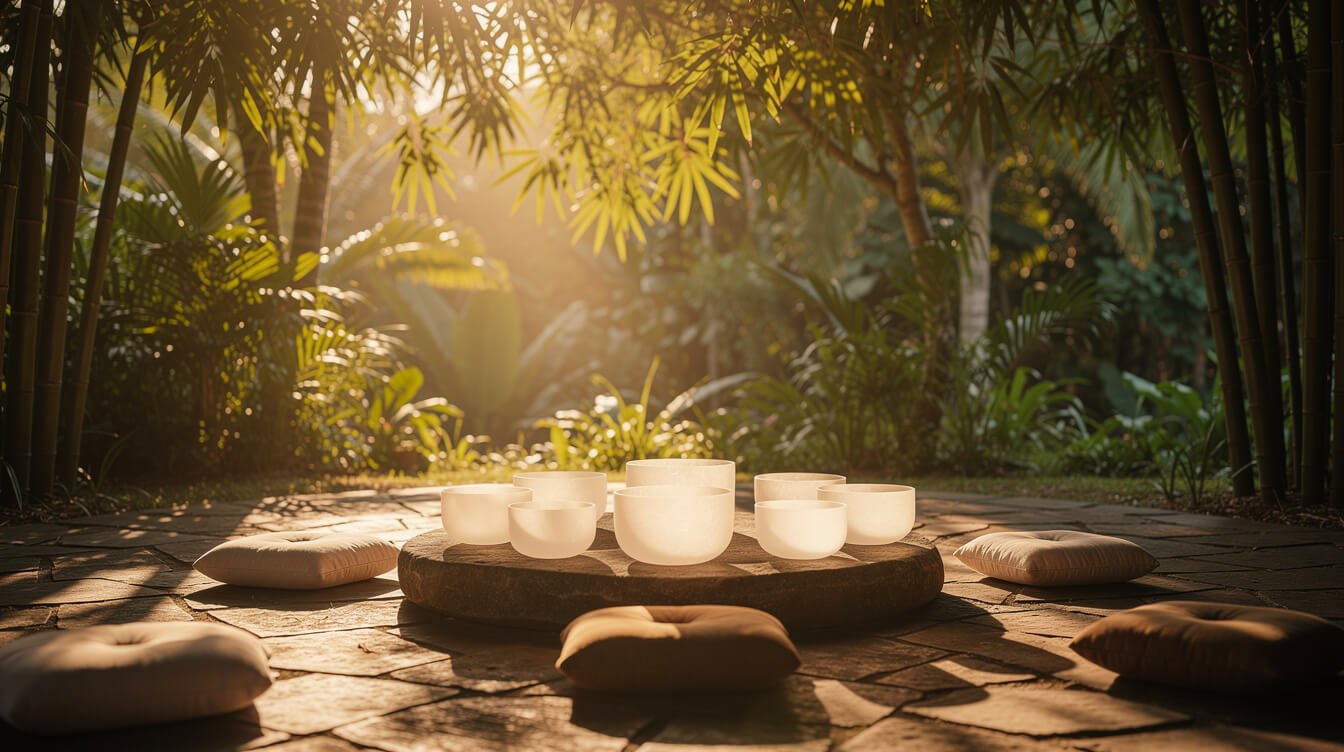
Made from crushed quartz, crystal bowls produce a pure, bell-like tone that carries further and sustains longer than metal bowls. Each bowl is typically tuned to a specific musical note, which practitioners associate with different energy centers (chakras) in the body. The clarity of the tone makes crystal bowls particularly effective for people who find the overtone-rich sound of metal bowls overwhelming.
Gongs
The most immersive instrument. A skilled gong player can take a room from profound stillness to full-body sonic immersion and back again in a single session. Gongs produce a wall of sound that envelops the entire body — you don’t hear a gong so much as you become surrounded by it. Pyramids of Chi and Ancient Vibes Shakti are known for their gong work in Ubud.
Tuning Forks
Precision instruments used primarily in private sessions. Tuning forks produce a single, pure frequency. Practitioners place vibrating forks on or near specific points on the body — similar to acupuncture points — to address targeted tension or energetic blockages. The experience is more focused and clinical than a bowl or gong session.
Handpans, Drums, and Chimes
Supporting instruments that add rhythmic grounding and melodic beauty to a session. Handpans produce steel-tongue melodies that feel both ancient and ambient. Frame drums anchor the body with primal rhythmic patterns. Wind chimes and tingsha bells mark transitions between phases of a session. These instruments rarely carry a session alone but contribute layers that make multi-instrument sound baths so distinct from a single-bowl experience.
Private Sound Healing in Your Villa — The Most Intimate Option
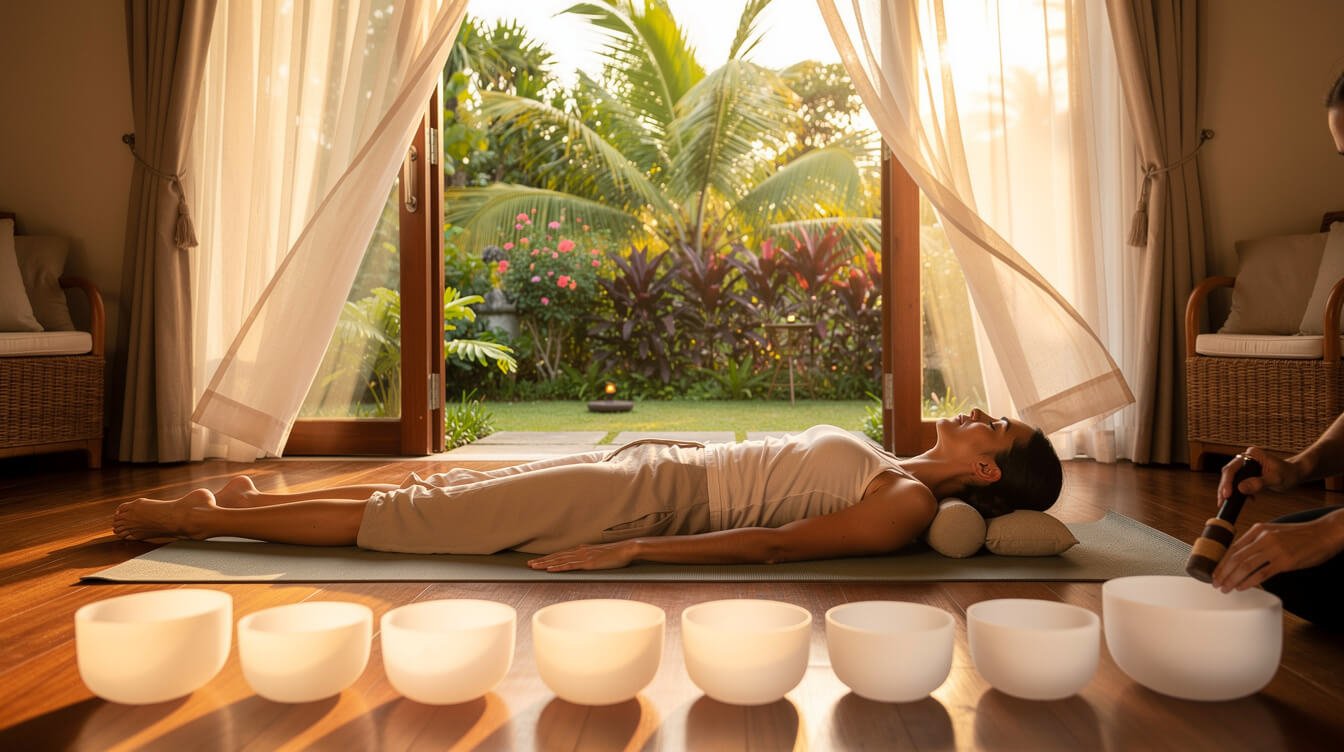
What most visitors don’t realize is that some of Ubud’s best sound healing practitioners will come to you. A private session in your villa transforms the experience completely — and for travelers staying at a staffed private villa, the logistics are simpler than you’d expect.
Your villa manager arranges the practitioner, confirms timing, and prepares the space. A quiet garden corner, the pool deck at sunset, a shaded pavilion — you choose the setting, and the team handles the rest. The practitioner arrives with their instruments, sets up, and delivers a session calibrated entirely to you (or your small group). No shared mats, no stranger’s phone vibrating two meters away, no time pressure.
Private sessions typically run 60–90 minutes and cost IDR 800,000–1,500,000 ($50–95 USD) depending on the practitioner’s experience and the instruments used. That’s comparable to what you’d pay for a group session at a premium venue — except the entire experience belongs to you.
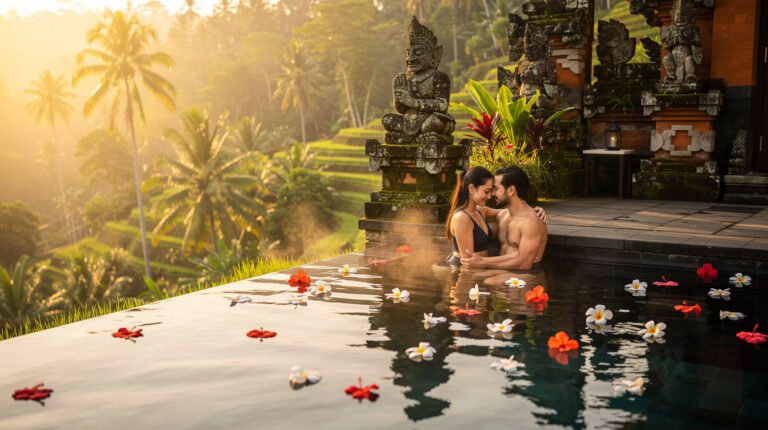
For couples, a private sound healing session on a villa terrace at golden hour is one of the most genuinely romantic experiences you can have in Ubud. For solo travelers on a self-designed retreat, it’s the kind of deeply personal wellness moment that a group class can’t replicate. And for families or friend groups, a shared private session creates a bonding experience entirely unlike anything back home.
The villa advantage goes beyond logistics. After a deep sound healing session, you want quiet — not a scooter ride through Ubud traffic. You want your own pool, your own garden, a cup of tea prepared by someone who noticed you’ve come back looking changed. That post-session integration period, where the effects of the vibrations settle into your body, is the part most people rush. At a staffed villa, there’s nothing to rush toward. That’s the difference.
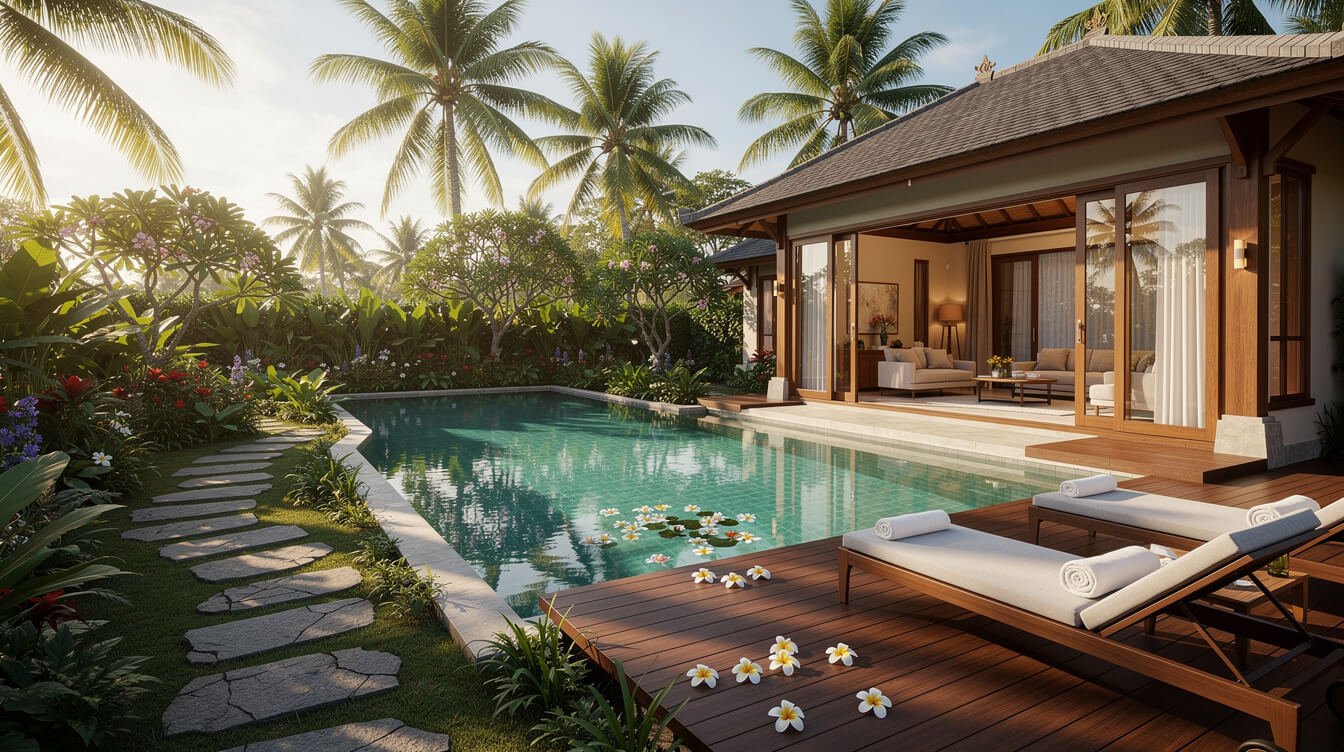
Book Your Sound Healing Retreat Base
A staffed private villa where your team arranges every session and your only job is to arrive, breathe, and feel.
How to Design a Sound Healing Retreat in Ubud
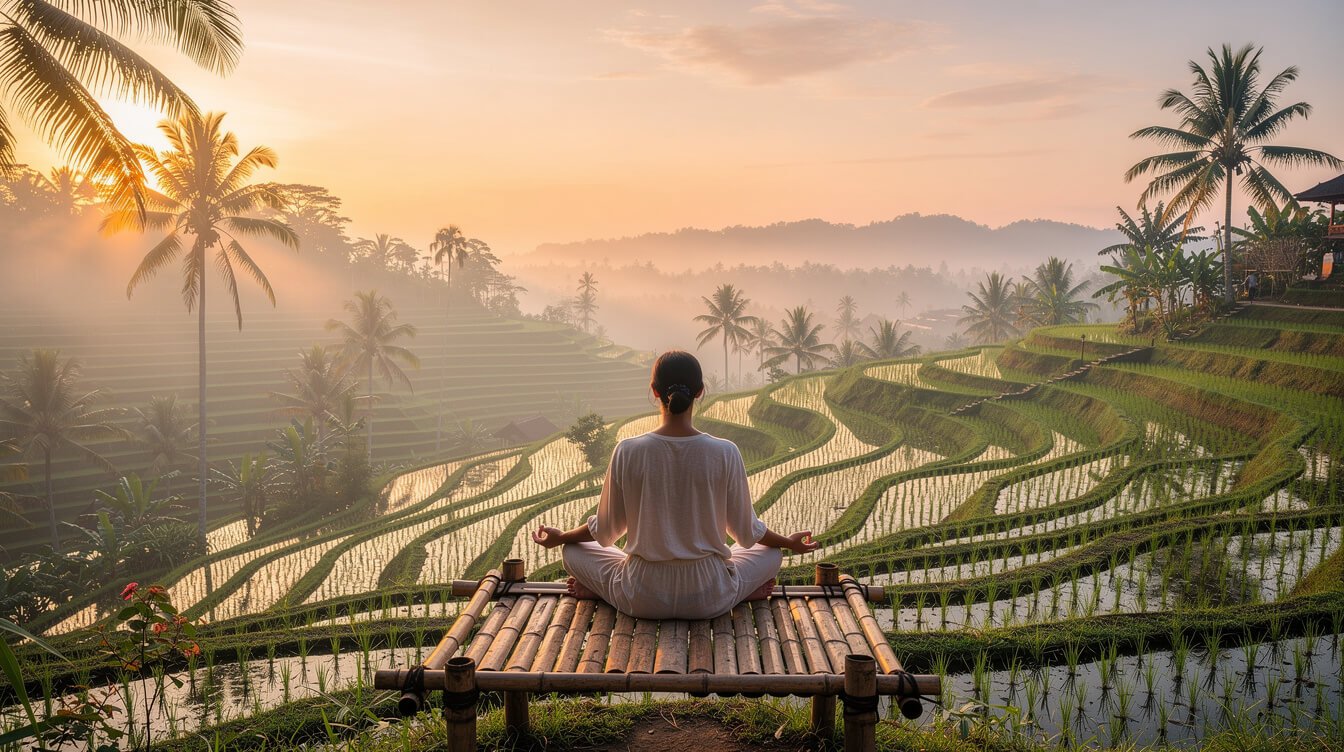
You don’t need to book a structured retreat package to have a transformative sound healing experience in Ubud. With the right approach, you can design your own immersive program — and the results are often more meaningful than anything pre-packaged.
A Sample 5-Day Sound Healing Focus
Day 1 — Arrival and attunement. Settle into your villa. Let your villa manager know you’re interested in sound healing. They’ll have a shortlist of practitioners and studios ready by evening. Take a slow walk through the rice terraces to reset your internal clock. An early dinner, then sleep.
Day 2 — First group session. Attend a morning sound bath at Pyramids of Chi or The Yoga Barn. Let this be your calibration session — notice how your body responds, what instruments resonate, where you feel tension release. Afternoon: a traditional Balinese spa treatment to continue the body-softening process.
Day 3 — Deepening. Try a different modality: gong meditation if your first session was bowls, or crystal bowls if you started with a gong bath. Add a morning yoga class to open the body before the afternoon sound session. Walk to Tirta Empul temple for a melukat purification ceremony — the water ritual pairs with sound healing in ways that feel complementary, not accidental.
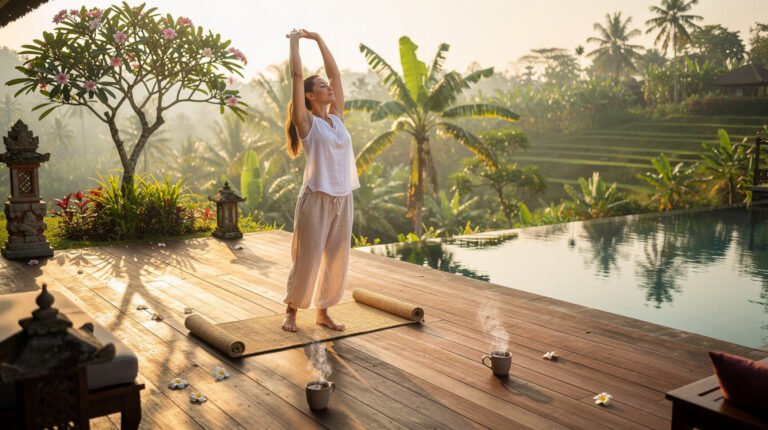
Day 4 — Private session. Book a private sound healing session at your villa. This is where you go deeper than any group session allows. The practitioner can focus entirely on what your body needs — longer sustained tones on areas of tension, specific frequencies for emotional release, a pace that honors your rhythm. Your post-session care is built into the villa experience: warm herbal tea, a garden walk, complete quiet.
Day 5 — Integration and closing. A gentle morning — perhaps the chef prepares a nourishing Balinese breakfast on the pool deck. Return to one of the studios for a final session, or simply sit quietly with the instruments’ resonance still echoing in your body. Journal what you’ve noticed. The best sound healing retreats don’t end with a certificate — they end with a new relationship to silence.
Combining Sound Healing with Other Modalities
Sound healing pairs exceptionally well with other practices available throughout Ubud. Yoga opens the body and makes it more receptive to vibrational work. Meditation develops the internal awareness that allows you to track what the sound is doing in your body. Balinese healing traditions — balian consultations, melukat water ceremonies, Tri Hita Karana philosophy — provide the cultural and spiritual context that makes sound healing in Ubud feel different from sound healing in Brooklyn.
Many travelers also find that a cooking class or market visit with their villa’s private chef provides a grounding counterpoint to the more ethereal sound healing work. You’re not just healing in the abstract — you’re eating, walking, engaging with the daily rhythms of a village that’s been attuned to spiritual practice for centuries.
Practical Tips for Sound Healing Ubud Bali Visitors
When to Visit
Sound healing sessions run year-round in Ubud. The dry season (April–October) means more outdoor sessions in open-air pavilions — the ambient sound of wind and birds adds to the experience. Rainy season (November–March) brings indoor sessions with the gentle percussion of rain on bamboo roofing, which many practitioners consider the most immersive sonic backdrop Ubud offers.
What to Bring
Comfortable, loose-fitting clothing. A light layer or shawl (your body cools when deeply relaxed). A water bottle. If you’re attending an evening session, a small flashlight for the walk back along Ubud’s unlit village paths. Leave your phone in the locker — you won’t want it.
How Much to Budget
Group sessions: IDR 200,000–500,000 ($13–32 USD). Private one-on-one sessions: IDR 800,000–1,500,000 ($50–95 USD). Multi-day packages at dedicated centers: IDR 3,000,000–8,000,000 ($190–510 USD) for 3–5 sessions including consultation. Most studios accept cash and card; some offer walk-in pricing for spontaneous visits.
Booking Ahead vs. Walk-Ins
Major venues like Pyramids of Chi fill their popular time slots (especially sunset sessions) days in advance. Book at least 2–3 days ahead for peak times. Smaller practitioners like Serendipity Sounds and Ancient Vibes Shakti often accommodate same-day bookings, especially for morning sessions. If you’re staying at a staffed villa, your manager can handle all reservations — one of the quiet advantages of having a team who knows every practitioner in the area.
Etiquette
Arrive on time (late arrivals disrupt sessions already in progress). Silence your phone completely — vibrate mode is not silent enough. Don’t leave during a session unless absolutely necessary. Tip the facilitator if you feel moved to — IDR 50,000–100,000 ($3–6 USD) is appreciated and appropriate.
Frequently Asked Questions About Sound Healing in Ubud
Is sound healing safe?
Yes, for the vast majority of people. Sound healing is non-invasive and requires no physical exertion. However, if you have a pacemaker, epilepsy, or are in your first trimester of pregnancy, consult your doctor before attending a session with large gongs or bass-frequency instruments. Let your facilitator know about any medical conditions before the session begins.
Do I need prior experience with meditation or yoga?
No. Sound healing is one of the most accessible wellness practices precisely because it requires nothing from you except the willingness to lie still. You don’t need to empty your mind, maintain a pose, or follow instructions beyond the initial breathing guidance. The sound does the work.
How many sessions should I plan during a week in Ubud?
Two to three sessions across a week gives you enough exposure to feel genuine effects without overwhelming your system. Space them at least a day apart if possible — your body processes vibrational work even in the intervals between sessions. If you’re on a dedicated spiritual retreat, daily sessions are fine, but build in generous rest periods between them.
Can children attend sound healing sessions?
Some studios welcome children over 12, while others maintain adult-only policies. Crystal bowl sessions tend to be more child-friendly than gong baths (which can feel overwhelming in volume). Private sessions at your villa are the easiest way to include younger travelers — the practitioner adjusts the intensity, and familiar surroundings help children feel safe.
What’s the difference between sound healing and a sound bath?
A sound bath is a type of sound healing — specifically, a passive group session where you “bathe” in the ambient frequencies of instruments played around and above you. Sound healing is the broader category, which also includes targeted one-on-one work with tuning forks, personalized bowl placements, and diagnostic approaches where the practitioner adjusts their instruments based on what they sense in your body. Both are valuable; private sound healing sessions simply offer more customization.
Is this connected to Balinese spiritual tradition?
Sound has always been central to Balinese Hindu spiritual practice — gamelan orchestras in temple ceremonies, the bell (genta) rung by priests during prayer, the rhythmic chanting of kidung devotional songs. Modern sound healing in Ubud draws from these traditions while also incorporating Tibetan, Indian, and contemporary Western approaches. The best practitioners honor both lineages without conflating them. Ask your facilitator about their training background if lineage matters to you.
What should I do after a session?
Rest. Drink water. Walk slowly. Don’t schedule anything demanding for at least 2–3 hours. Many people feel deeply relaxed but also emotionally open after a sound healing session — this is normal and temporary. Returning to a quiet villa rather than Ubud’s busier streets makes this transition smoother. Journal if that’s your practice. The insights that surface in the hours after a session are often the most valuable part of the experience.

Join Our Newsletter — Fun, New, Exciting Bali News
Ubud stories, wellness tips, and villa life moments — delivered with warmth, never with sales pressure. Stay connected to the island between visits.