What to Pack for Bali: Your Complete Packing Guide from a Villa Team That Knows
Figuring out what to pack for Bali is one of those tasks that sounds simple until you’re standing in front of your suitcase at midnight. You’ve read the generic packing lists. You’ve seen the influencer flat-lays. But here’s what most guides miss: Bali is not one climate, one dress code, or one kind of day. It’s rice-field mornings that feel like spring, beach afternoons that melt you, temple visits that require covered shoulders, and evenings so warm you want nothing but a sarong and bare feet.
We’re the team at Villa Amrita in Ubud — a full-staff villa that welcomes guests year-round. Between us, we’ve helped hundreds of travelers settle in. We see what people wish they’d brought, what they over-packed, and what they’re relieved to find already waiting in their room. This is that knowledge, organized into the only packing guide you’ll need for Bali.
Clothing for Bali — What Actually Works in the Tropics
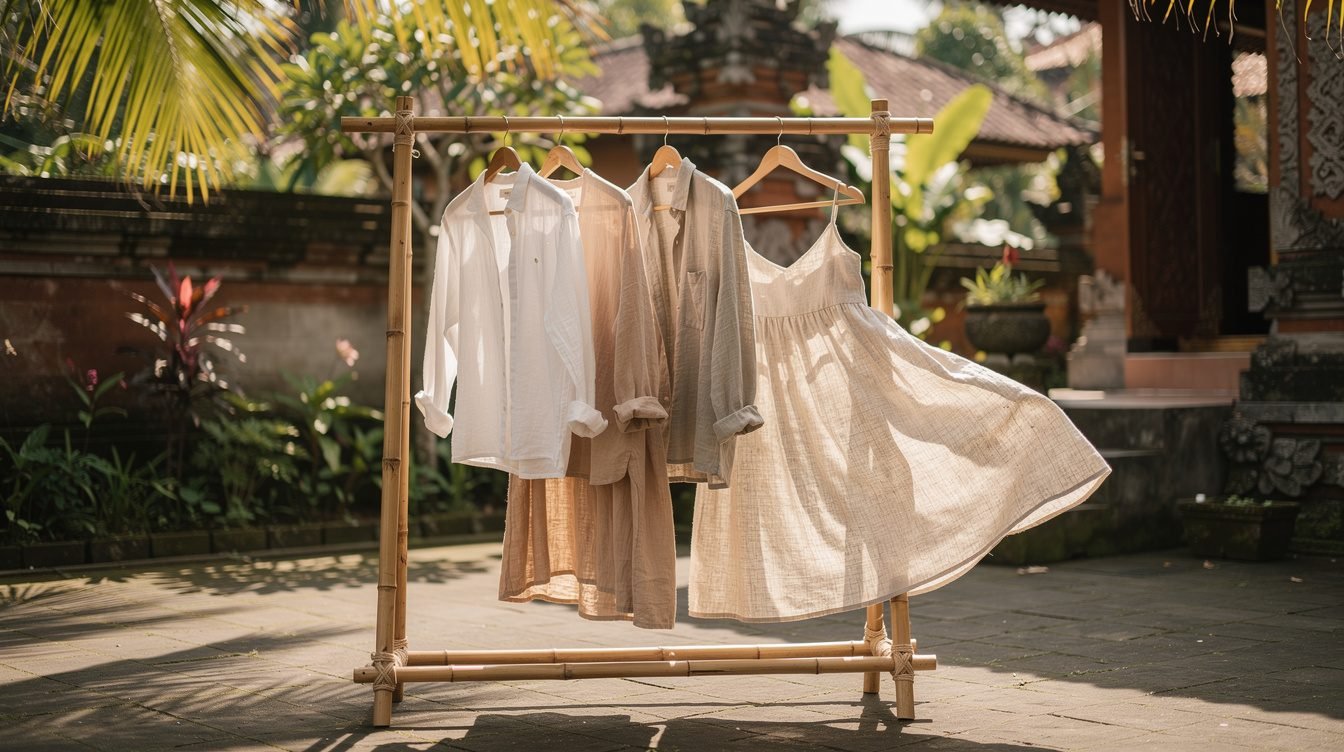
The single most common over-packing mistake we see? Jeans. Heavy cotton. Thick socks. Guests arrive with suitcases full of fabric that makes no sense once the Bali humidity hits.
What works:
- Lightweight linen or cotton blend pants — 2-3 pairs cover a full week. They dry fast after rain, breathe in humidity, and look appropriate everywhere from restaurants to temples.
- Loose cotton or bamboo t-shirts — 5-6 tops is plenty. You’ll wash and dry them in a day (our housekeeper handles laundry, and the equatorial sun does the rest).
- One light long-sleeve shirt — for sun protection on motorbike rides, rice terrace walks, and cooler highland evenings in Ubud. The temperature here drops to 22°C at night — genuinely pleasant, not hot.
- Swimwear — 2 sets. One dries while you wear the other. You’ll use the private pool more than you expect.
- A light dress or smart-casual outfit — for one nice dinner out. Ubud dining is relaxed, but Locavore and Mozaic appreciate a small effort.
- Underwear for a week — quick-dry travel fabric if you want, but cotton is fine. It all dries in hours here.
What to leave at home: Heavy denim, thick sweatshirts, closed-toe leather shoes, formal business wear, more than two pairs of shorts (you’ll default to the same pair daily). Bali rewards light packing. A half-empty suitcase means room for the handwoven textiles and carved wood you’ll find at Ubud’s markets.
What to Wear to Bali Temples — Respectful Attire That Travels Light
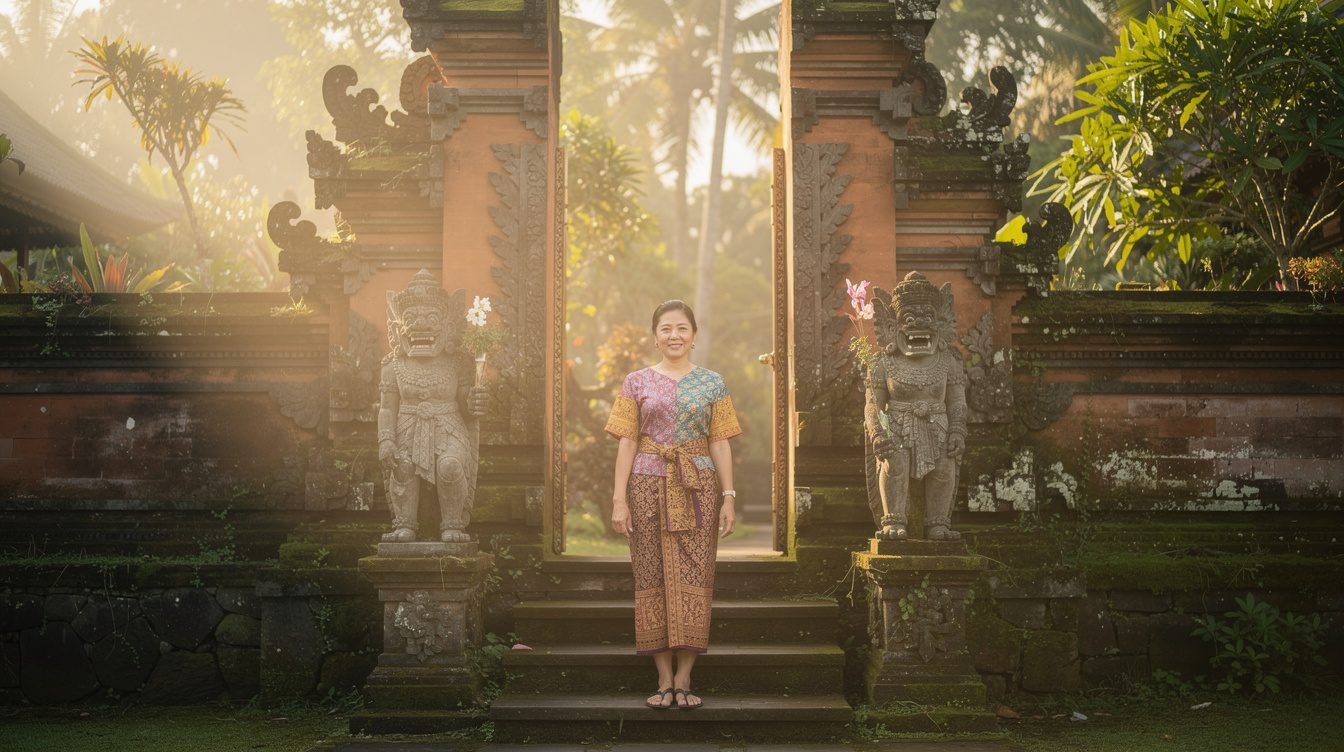
Temple visits are a highlight of any Bali trip — and they require specific clothing. Every Hindu temple (pura) in Bali requires visitors to cover their knees and shoulders. Most also require a sash tied at the waist. This isn’t optional or flexible; it’s a genuine mark of respect for Balinese spiritual life.
What you need:
- A sarong — one is essential. Buy it here (Ubud market sells beautiful batik sarongs for 50,000-100,000 IDR / $3-6) or bring a lightweight one from home. Our team keeps spare sarongs at the villa for temple days, but your own becomes a travel companion — beach blanket, pool cover-up, airplane pillow, impromptu tablecloth.
- A sash (selendang) — a simple fabric band for the waist. Temples provide rental ones at the entrance, but they’re shared and often damp. Pack your own or pick one up at any market for 20,000 IDR.
- Shoulders covered — a lightweight t-shirt or blouse over tank tops. No singlets, no crop tops, no exposed backs.
- Knees covered — your sarong handles this if you’re wearing shorts underneath.
If you’re visiting major Ubud temples like Tirta Empul, Goa Gajah, or Gunung Kawi, arrive dressed for the visit rather than changing at the gate. It’s smoother and shows awareness that temple grounds are active prayer spaces — not tourist attractions with a dress code.
Health and Wellness Essentials — What to Pack for Bali’s Climate
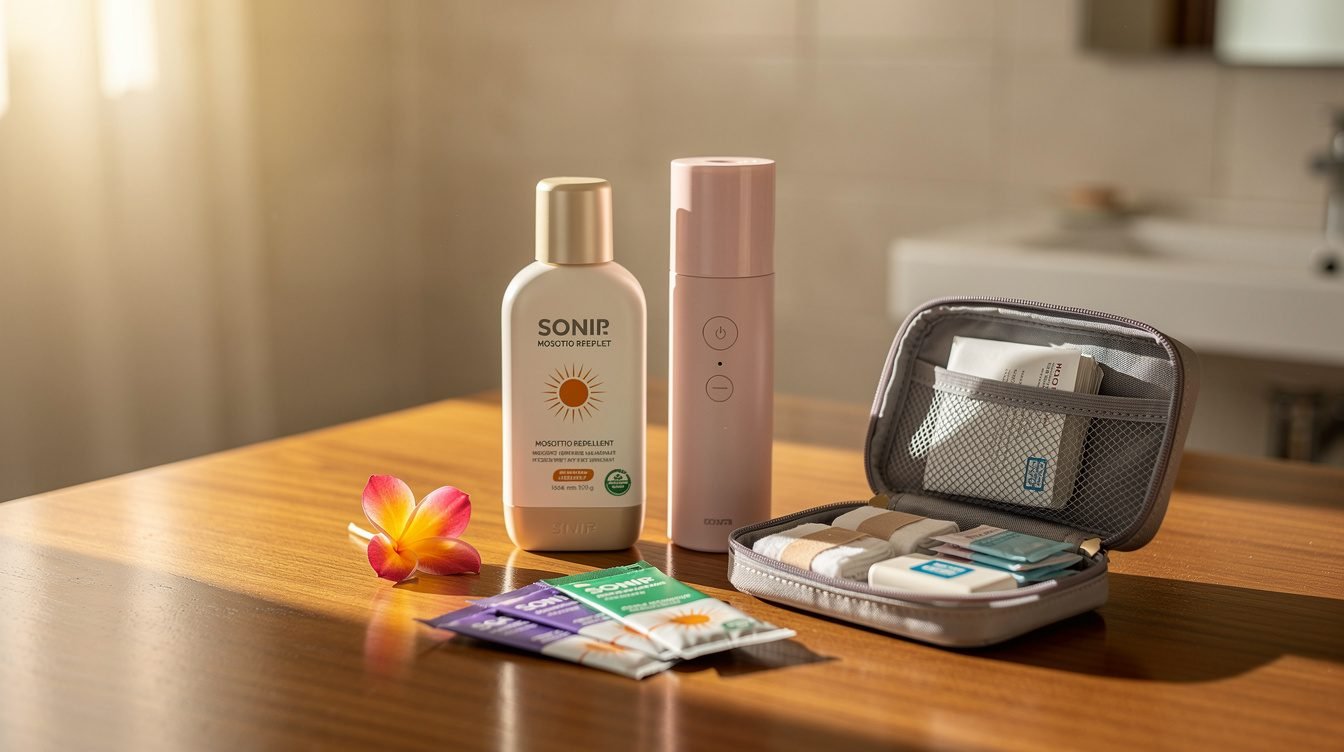
Bali’s climate is tropical — warm, humid, and full of life (including the kind that bites). The health essentials below aren’t about fear; they’re about staying comfortable so you actually enjoy yourself rather than nursing a sunburn on day three.
Pack these:
- Reef-safe sunscreen (SPF 50) — the equatorial sun is fierce even on overcast days. Ubud sits at 300m elevation and the UV index regularly hits 11-12. Apply before breakfast. Reapply after the pool. Non-negotiable.
- Insect repellent with DEET or picaridin — mosquitoes are most active at dawn and dusk. Dengue exists in Bali; prevention is simple. We keep citronella candles lit on the terrace at sunset, but repellent on ankles and wrists is your first line.
- Basic first-aid kit — plasters, antiseptic cream (tropical cuts need immediate cleaning), antihistamines for any reactions, and ibuprofen. Small, light, saves you a pharmacy hunt when you have a blister from new sandals.
- Electrolyte sachets — heat + humidity + walking + Bintang = dehydration. These are cheap insurance. Ubud pharmacies stock them, but having a few from day one is wise.
- Prescription medications — bring enough for your trip plus 3 extra days. Pack in original packaging with the prescription label. Indonesian customs is generally fine with personal medications, but labelled packaging avoids questions.
- Activated charcoal or Imodium — Bali belly is real. Most cases are mild and last 24-48 hours. Having a remedy on hand means you lose an afternoon, not a full day.
If you’re planning a wellness retreat or spa days in Ubud, your accommodation likely provides towels, robes, and toiletries — but check with your host before packing a full vanity case.

Get a Free 3-Day Sample Itinerary
See exactly how three days in Ubud unfold — from morning rice terrace walks to sunset dinners — with our team handling every detail.
Adventure and Outdoor Gear — What to Pack for Ubud Activities

Ubud is not a beach-and-pool-only destination. The highlands offer rice terrace walks, volcano sunrise treks, waterfall hikes, cycling tours through villages, and jungle river rafting. What you pack for these activities determines whether you enjoy them or endure them.
For rice terrace and waterfall walks:
- Sturdy sandals with grip — Tevas, Chacos, or similar adventure sandals. The paths at Ubud’s waterfalls are often wet, mossy stone. Flip-flops will betray you. Proper sandals handle the terrain and dry in minutes.
- A small daypack (15-20L) — for water bottle, camera, snacks, rain jacket. Crossbody bags don’t work on uneven trails.
- A quick-dry towel — microfiber, packs to nothing. Essential for waterfall swimming and unexpected downpours.
For Mount Batur sunrise trek:
- Closed-toe hiking shoes or trail runners — the volcanic scree is loose and sharp. This is the one activity where sandals don’t work.
- A warm layer — fleece or a packable insulated jacket. The summit sits at 1,717m and you arrive at 4 AM. It genuinely feels cold (15°C with wind chill) until the sun crests.
- Head torch or phone with charged battery — the pre-dawn ascent is in full darkness.
For cycling tours:
- Comfortable athletic shorts — padded cycling shorts are unnecessary for Ubud’s gentle downhill tours, but you want something that doesn’t ride up.
- Sunglasses with a retention strap — dusty village roads plus tropical sun.
Most Ubud activities supply equipment — helmets, life jackets, snorkeling gear. You don’t need to pack these. But footwear and a daypack are on you.
Tech, Documents, and Money — The Non-Negotiables
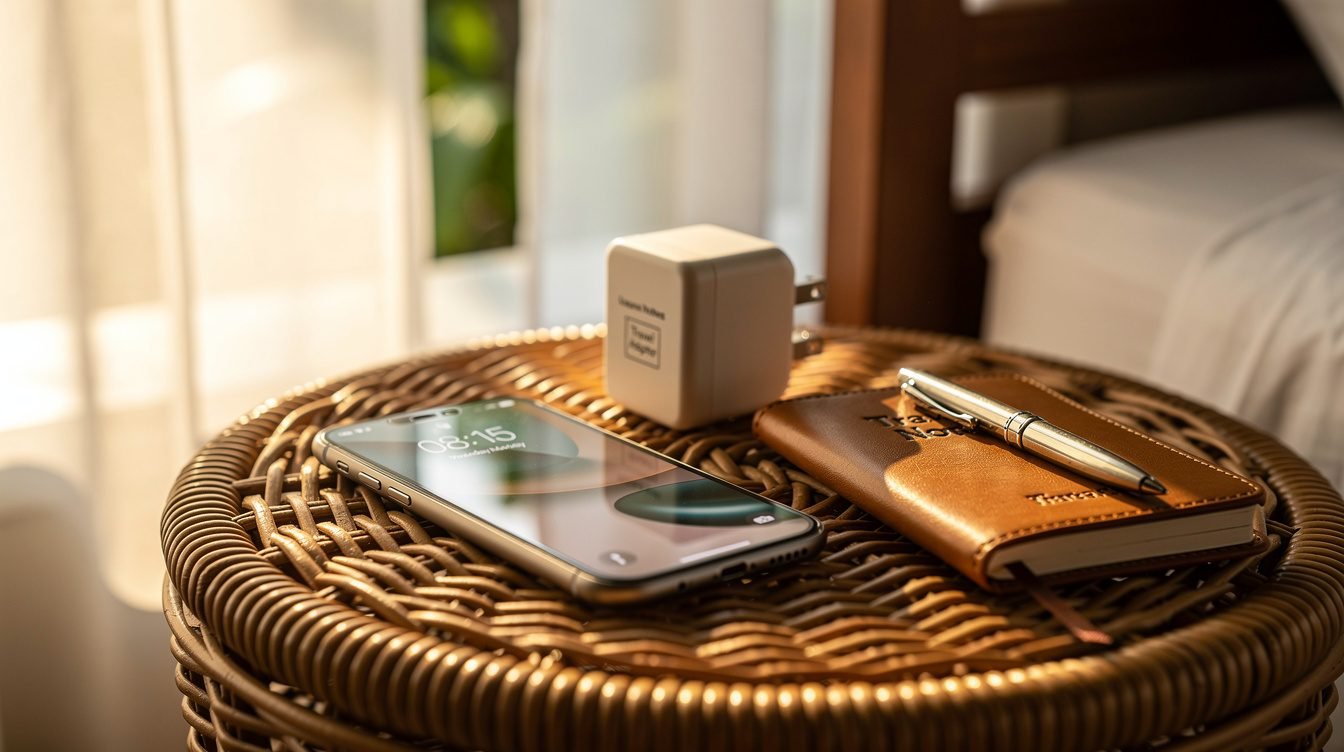
This section is short because it matters most. Forget these and your trip has real problems — unlike forgetting a sarong, which costs $4 to fix.
Documents:
- Passport with 6+ months validity — Indonesia enforces this strictly. Check before you book flights.
- Visa on Arrival fee — 500,000 IDR (or ~$30 USD equivalent). Paid at immigration. Covers 30 days. Extendable once for another 30 days. Cash or card accepted at Denpasar airport.
- Printed hotel/villa booking confirmation — immigration occasionally asks where you’re staying. A screenshot works, but a printout never runs out of battery.
- Travel insurance documentation — with medical evacuation coverage. Bali has good hospitals (BIMC in Kuta/Ubud) but serious cases evacuate to Singapore. Insurance that covers this is non-negotiable.
Tech:
- Universal power adapter (Type C/F) — Indonesia uses 230V with European-style round two-pin plugs. Your villa will have these outlets in every room. Bring one adapter or a multi-port USB charging hub.
- Power bank (10,000-20,000 mAh) — essential for full days out. Between maps, photos, ride-hailing apps, and translation, your phone drains fast in Bali.
- eSIM or local SIM card — Telkomsel has the best coverage in Ubud’s highlands. An eSIM from Airalo or Holafly works if your phone supports it. Otherwise, grab a Telkomsel tourist SIM at the airport (around 200,000 IDR for 15GB/30 days).
Money:
- Some Indonesian Rupiah in cash — smaller warungs, market stalls, temple donations, and parking attendants are cash-only. Withdraw from ATMs in Ubud (BCA and Mandiri have the best rates). Bring a backup card in case one gets blocked.
- A card with no foreign transaction fees — larger restaurants, spas, and activities accept cards. Wise, Revolut, or Charles Schwab debit cards save you 2-3% on every swipe.
If you’re considering a longer stay in Bali, add a VPN subscription to your list — useful for accessing home-country streaming and banking apps that geo-block Indonesian IP addresses.
What Your Villa Already Provides — The Packing List You Can Skip
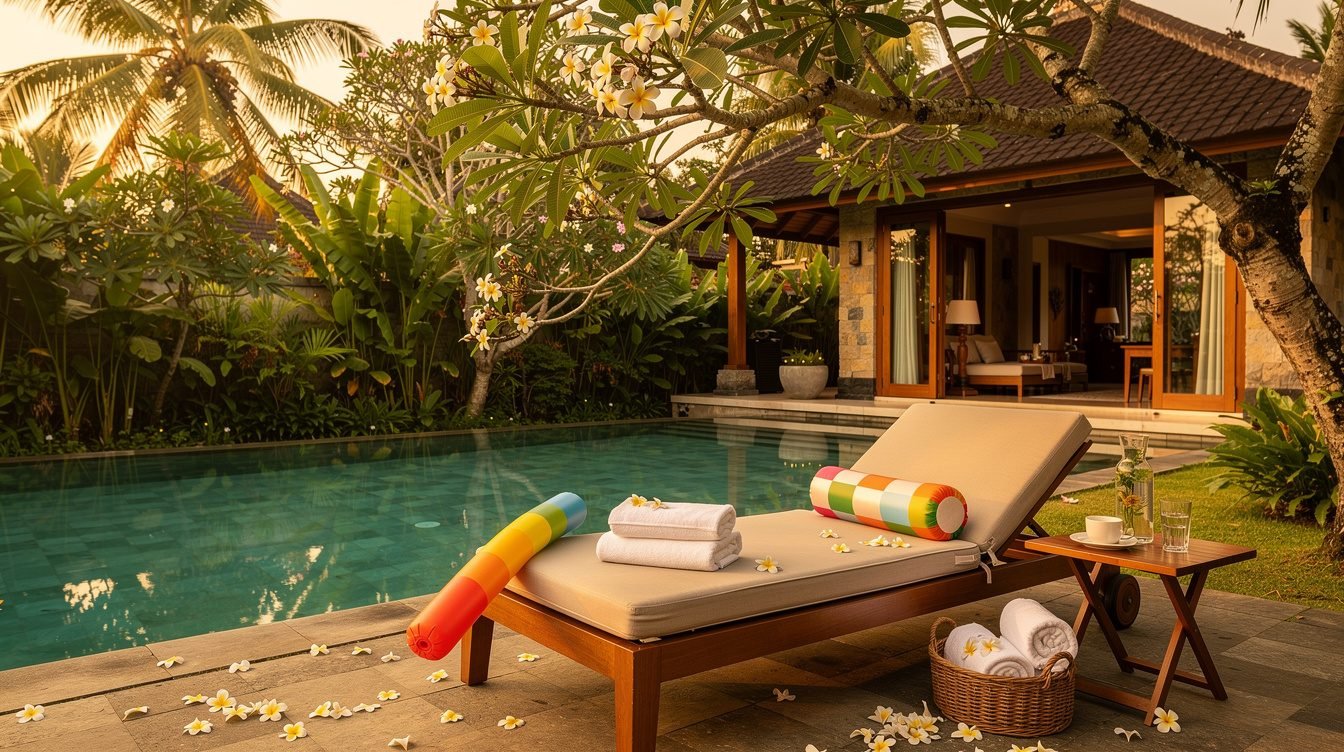
Here’s the section that no generic packing guide writes — because they don’t know what your accommodation actually provides. If you’re staying in a staffed Bali villa, you can cross a surprising amount off your list.
What a full-service villa typically provides (ours included):
- Bath towels, pool towels, and beach towels — fresh daily. No need to pack any towels beyond a small microfiber for day trips.
- Shampoo, conditioner, body wash, hand soap — quality toiletries in every bathroom. If you have a specific brand preference, bring it. Otherwise, leave the bottles at home.
- Hair dryer — in every bedroom. Don’t pack yours.
- Sarongs for temple visits — our team keeps a collection ready. But we still recommend buying your own at the market — it’s a ritual, and they make beautiful souvenirs.
- Umbrellas and rain ponchos — stored by the entrance for sudden downpours.
- Mosquito coils and citronella — lit at dusk on the terrace by the team.
- Bottled drinking water — restocked daily. Never drink tap water in Bali.
- Laundry service — same-day wash, dry, and fold. Pack for 4-5 days regardless of your trip length.
- Iron and ironing board — available on request.
- Snorkeling gear, pool inflatables — varies by villa, but many stock these.
The point: a staffed villa means less in your suitcase. Your team handles the infrastructure of daily comfort — you bring just the personal items that only you can choose.

Ready to Start Packing?
Villa Amrita is a full-staff 3-bedroom pool villa in Ubud — towels, toiletries, sarongs, and a team that makes your stay effortless. All you need to bring is yourself.
Packing for Bali’s Rainy Season — What Changes Between May and October
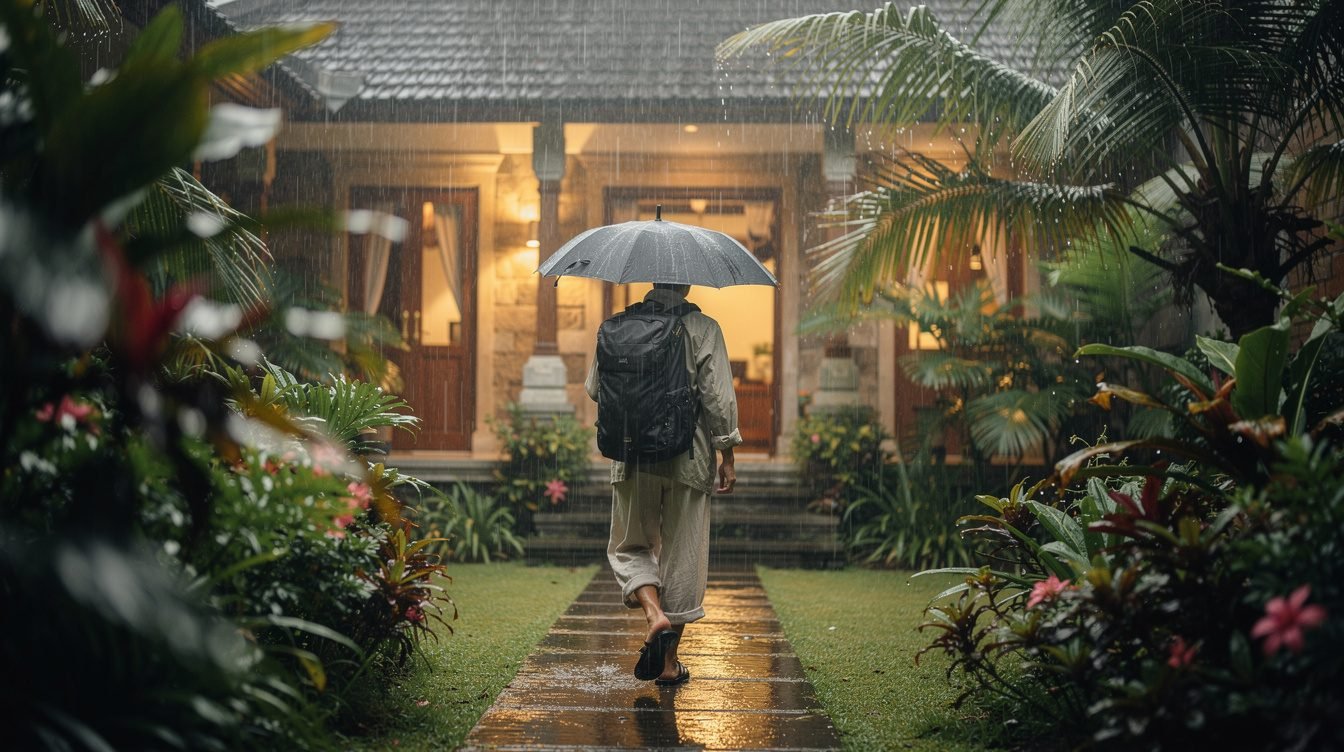
Bali has two seasons: dry (April-October) and wet (November-March). Both are warm. Both are beautiful. But they pack differently.
Dry season (April-October) extras:
- Extra sunscreen — the UV is relentless without cloud cover
- A wide-brimmed hat — for rice terrace walks and beach days
- Lighter layers overall — evenings stay warmer
- Dust mask if cycling — dry season means dusty village roads
Wet season (November-March) extras:
- A packable rain jacket — not a heavy waterproof. Something ultralight that lives in your daypack. Afternoon rain is predictable (usually 1-3 PM) and passes in 30-60 minutes.
- Waterproof phone pouch — cheap, small, saves your phone during surprise downpours and waterfall visits.
- An extra pair of quick-dry shorts — you’ll get caught in rain. Having something dry to change into matters.
- Waterproof sandals over fabric ones — Birkenstocks and fabric sneakers stay soggy for days. Rubber-sole adventure sandals are the wet season MVP.
- A dry bag (5-10L) — for electronics and documents during motorbike rides and boat transfers.
Ubud’s highland position means it gets more rain than the coast — about 20% more during wet season. The upside: fewer crowds, greener rice terraces, dramatic thunderstorms you watch from the pool deck, and lower accommodation rates. Many returning guests prefer wet season for exactly this reason.
Frequently Asked Questions About What to Pack for Bali
Can I buy things I forget in Bali?
Yes — Ubud and the southern beach towns have excellent shopping. Sunscreen, toiletries, sarongs, hats, sandals, adapters, and basic clothing are all available cheaply. The main things that are hard to replace locally: prescription medications, specialist hiking boots in larger sizes, specific tech accessories, and your favorite reef-safe sunscreen brand.
How much luggage should I bring?
A medium carry-on (40-45L) works for trips up to 14 days if you pack light and use laundry service. For a family or a honeymoon trip with nicer evening outfits, a medium checked bag is reasonable. Avoid anything over 23kg — you’ll struggle on domestic flights and in minivans on narrow Ubud roads.
Is Ubud cooler than the beach areas?
Noticeably, yes. Ubud sits at 300m elevation in the central highlands. Daytime temperatures are 28-32°C (vs 33-35°C on the coast), and nights drop to 22-24°C. You might actually want a light layer for evening dinners — something you’d never consider in Seminyak or Canggu.
Do I need to pack formal clothing?
No. Bali is overwhelmingly casual. Even fine-dining restaurants (Locavore, Room4Dessert, Mozaic) are “smart casual” at most — a clean linen shirt and trousers or a simple dress is more than sufficient. No suits, no heels, no ties.
What about packing for kids in Bali?
Add: swim diapers, a reliable sun hat that stays on, familiar snacks for the flight, a lightweight stroller that handles uneven surfaces (or plan to babywear instead), and any specific formula or baby food brands. Most baby supplies are available in Bali’s supermarkets (Pepito, Bintang) but specific brands may differ.
Should I bring gifts for staff?
It’s thoughtful but not expected. If you’d like to, small items from your home country are always appreciated more than cash equivalents — chocolates, local snacks, fridge magnets, postcards of your city. Our team treasures the personal touch.
Your Final Bali Packing Checklist — The Quick Reference
Here’s the condensed version to screenshot before your trip:
Clothing (pack for 5 days, laundry handles the rest):
- 2-3 lightweight pants/shorts
- 5-6 breathable tops
- 1 long-sleeve shirt
- 2 swimsuits
- 1 smart-casual outfit
- 1 sarong (or buy locally)
- 1 light jacket or rain shell
Footwear:
- 1 pair adventure sandals (daily wear + trails)
- 1 pair flip-flops (villa/pool)
- 1 pair closed shoes (only if trekking Batur)
Health:
- SPF 50 sunscreen (reef-safe)
- Insect repellent
- Basic first aid
- Electrolyte sachets
- Prescription meds + stomach remedy
Tech & docs:
- Passport (6+ months validity)
- Travel insurance docs
- Power adapter (Type C/F)
- Power bank
- eSIM or local SIM plan
Nice to have:
- Microfiber towel
- Dry bag
- Waterproof phone pouch
- Small daypack
- Reusable water bottle
The philosophy: pack light, pack smart, trust that Bali fills in the gaps. Your villa team, the local markets, and the island’s warmth (literal and figurative) handle the rest. The best trips here start with a suitcase that’s half-empty — and end with it full of batik, carved wood, and stories.

Join Our Newsletter — Fun, New, Exciting Bali News
Weekly notes from Ubud — what’s blooming, what’s open, and the kind of Bali intel you won’t find in guidebooks. No spam, just warmth from the team.