The Three O’Clock Rain
You learn to feel it before you hear it. The air thickens. The birds go quiet. And then, somewhere around three, the sky opens.
The afternoon rain in Ubud is not weather — it is a daily appointment. The kind of thing you stop scheduling around and start scheduling into. By your second or third day, you begin to welcome it the way you welcome a long exhale after holding your breath all morning.
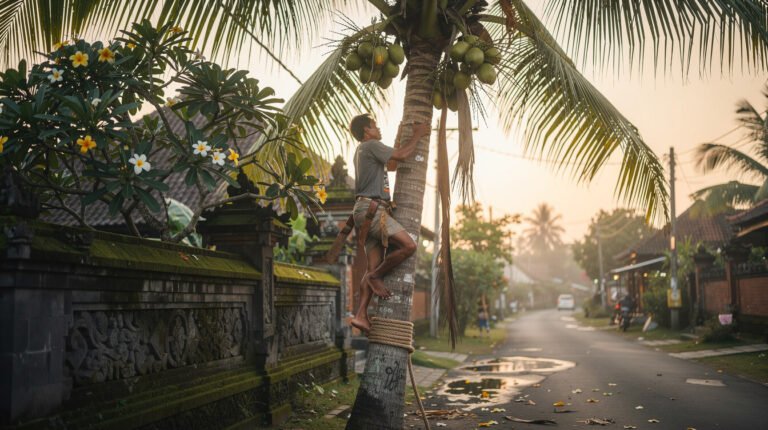
First, the smell. Warm stone releasing its heat into the first drops. Wet earth rising up from the garden beds. Frangipani blossoms bending under the weight of water, their sweetness sharpening in the damp air. The Balinese call this moment something gentle — the sky cleaning itself.
Then the sound. Rain on a thatched alang-alang roof is not the same as rain on tile or tin. It arrives soft, almost padded. A hush that fills the room and dissolves conversation. You stop talking. You stop scrolling. You just sit with it — maybe on the covered terrace, maybe curled into the daybed by the pool, watching the water dimple the surface like a thousand small fingers tapping.
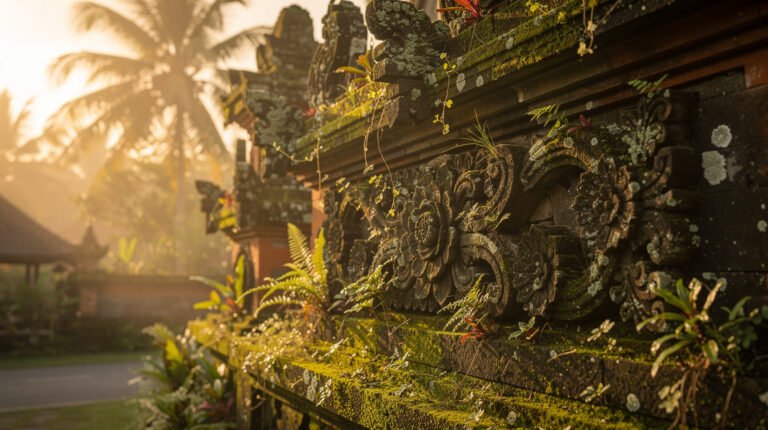
The garden shifts color in the rain. Every shade of green deepens. The moss on the stone walls turns almost electric. The banana leaves, already enormous, seem to stretch wider, catching water and releasing it in long, silver threads. Our gardener, Ketut, says the rain is when the garden does its real growing — not in the sun, but in the softness after.
The pool becomes a mirror of scattered circles. The loungers glisten. And the air cools — not cold, never cold — just enough that you reach for a light layer and think about tea. Or maybe the chef is already thinking about it for you, because a tray appears: ginger tea, still steaming, with a small plate of klepon, those emerald rice-flour bites that burst with palm sugar when you eat them.
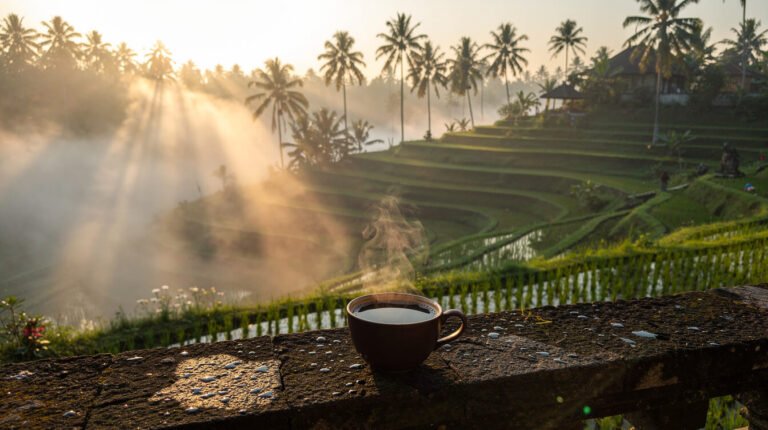
By four, maybe four-fifteen, it passes. The sun does not return with drama — it slides back, tentative, turning every wet surface into something luminous. The dripping from the eaves slows to a rhythm you could set a clock by. The birds come back. The gecko picks up where he left off.
Guests sometimes ask whether the rain in Ubud will ruin their plans. Here is the truth: the rain does not interrupt the day. It is part of the day. The part that teaches you to slow down, to listen, to let someone bring you tea while the world outside softens.
You will miss it when you leave. The rhythm of Ubud is not just in its temples and rice fields. It is in this — the three o’clock rain, the garden exhaling, the quiet permission to pause.