The Flowers Left at Your Door Before Breakfast
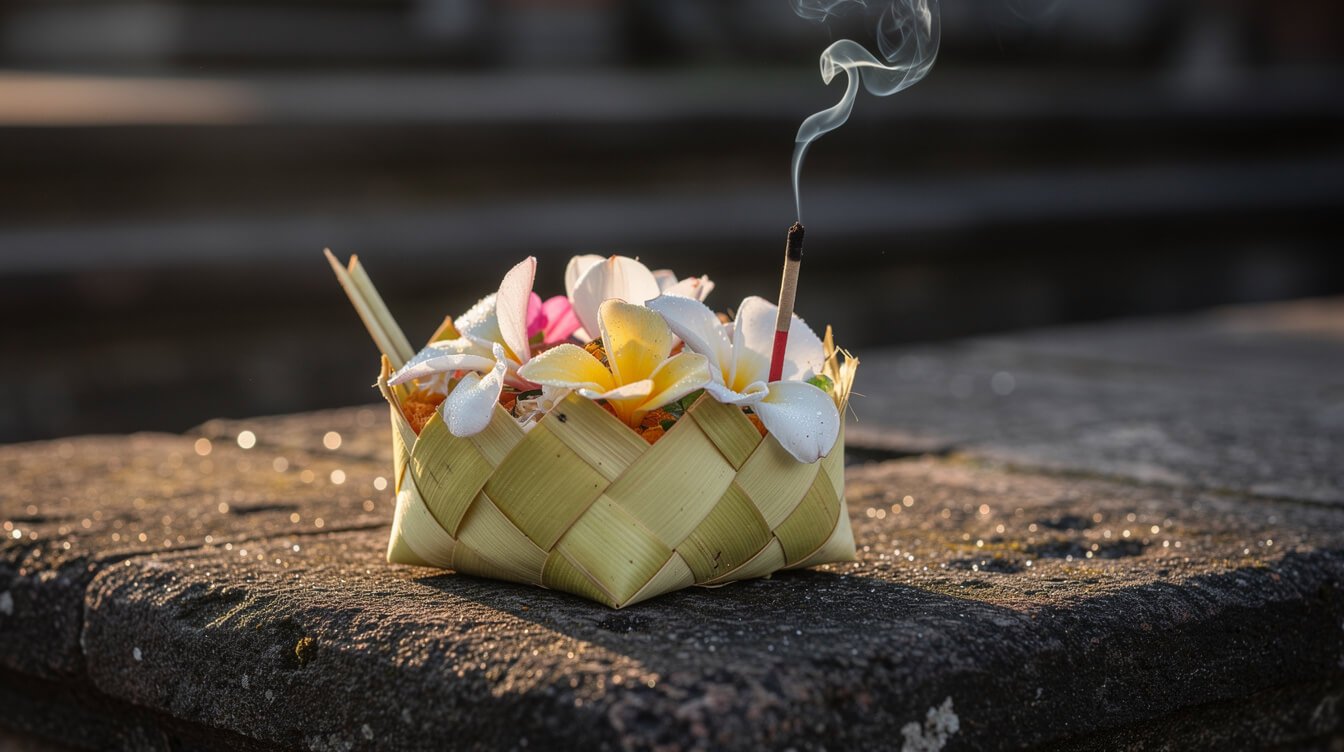
Before the coffee is even brewing, Ketut is already out with the basket. Small squares of woven palm leaf, a few grains of rice, a fold of marigold and frangipani, a stick of incense pressed in at an angle. She moves along the same route every morning — the entrance gate, the family shrine by the garden wall, the corner of the pool deck, the threshold of each villa door — setting one down, lighting it, flicking a little water from her fingers, and moving on before you’ve noticed she was there.
These are canang sari, and in Ubud they appear like this on every doorstep, every dashboard, every shop counter, dozens of times a day, in a rhythm so constant that most visitors walk past a hundred of them without registering what they are. Ours are no different, except that you’ll find one waiting exactly where your bare foot lands first each morning — just outside the bedroom door, angled so you’d have to step around it rather than on it.
Nobody explains it to you unless you ask. That’s deliberate. It isn’t a performance for guests; it’s simply what a Balinese morning looks like, and you happen to be staying inside one.
A Thank-You That Doesn’t Wait for an Answer

Get a Free 3-Day Sample Itinerary
See what three days in Ubud could look like — morning swims, temple visits, chef-cooked dinners, afternoon drives through the rice fields — all planned around your private villa base.
Canang sari means, roughly, “beautiful offering,” and the idea behind it isn’t a request — it’s gratitude offered in advance, to whatever keeps a day steady: the earth under the paddies, the gods of a particular corner, the quiet fact that the household woke up intact. Ketut doesn’t linger to see it accepted. She’s already three steps toward the next one. That unhurried, unannounced attentiveness is the same quality that runs through everything at a staffed villa Ubud guests keep coming back to — someone tending to the small, unglamorous details of the day before you’ve thought to need them, then moving on without waiting to be thanked.

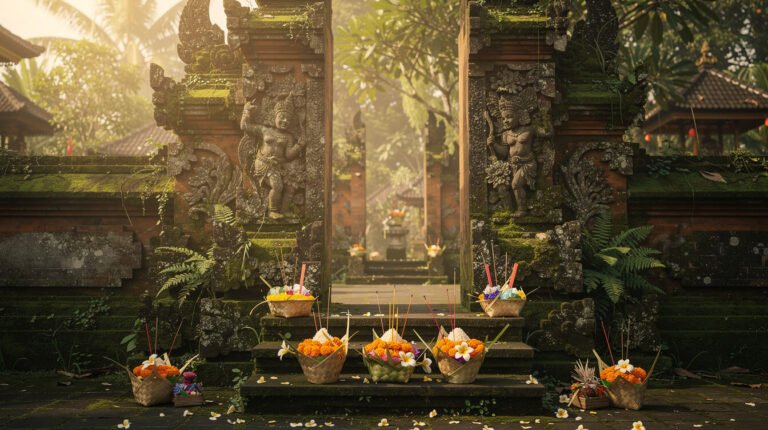
You’ll start noticing the pattern after a day or two — a fresh canang appears at the shrine after the old one has dried in the sun, another by the kitchen door around the same hour the kitchen wakes before you do, and if you visit one of the village temples nearby, you’ll see the very same offerings stacked by the hundreds ahead of a ceremony, as we described in our guide to Ubud’s sacred sites. It’s the same gesture, scaled up.
For families staying in the full three-bedroom villa, this is usually the detail kids ask about first — the tiny woven trays scattered like breadcrumbs through the garden, each one placed with more care than its size would suggest. Ask Ketut about it over breakfast and she’ll likely just smile and say it’s nothing, before heading out to start the next round.

Stay Connected with Ubud
Join our newsletter — fun, new, and exciting Bali news, seasonal stories from the villa, and the kind of Ubud writing that makes you start checking flights.