Kecak Dance Ubud: Where to See Bali’s Fire Chant & What It Means
It starts with a single voice. Then fifty more answer it. Within a minute, a hundred bare-chested men sitting in rings around a flickering oil lamp are chanting cak-cak-cak in interlocking rhythms so tight it sounds like one enormous, breathing machine. There’s no gamelan and no drum, just human voices. If you’re looking for the kecak dance Ubud stages under the stars most nights of the week, this guide covers what you’re actually watching, where to see it, how to plan the evening around it, and why it’s one of the most unforgettable hours you can spend in Bali.
Most of what’s online about Kecak is a ticket page: a time, a price, a “book now” button. That tells you how to get in, not why the night stays with you. Here we’ll walk through the ritual roots of the chant, the Ramayana story playing out in the firelight, the honest differences between seeing it in Ubud versus Uluwatu, and the small practical things (where to sit, when to arrive, what to eat beforehand) that turn a tourist show into an evening you’ll talk about for years.
What Is Kecak? The Chant Before the Story
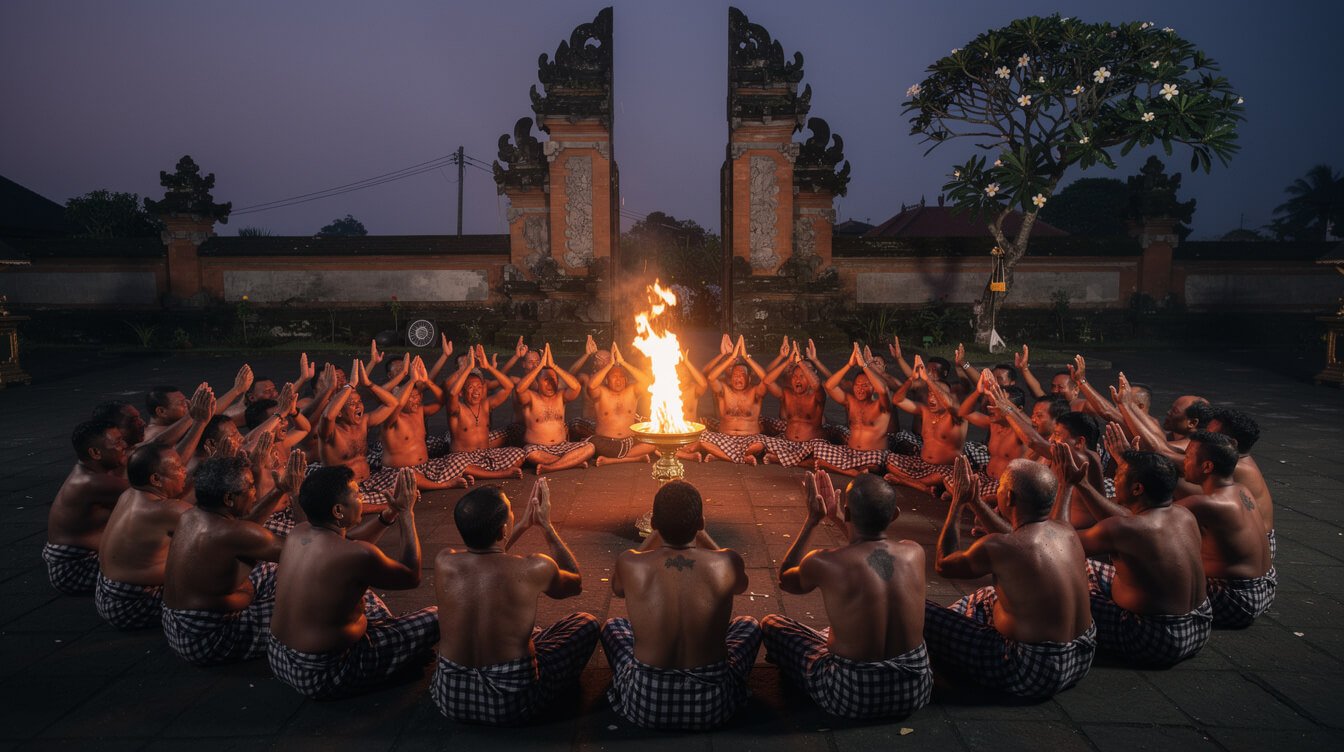
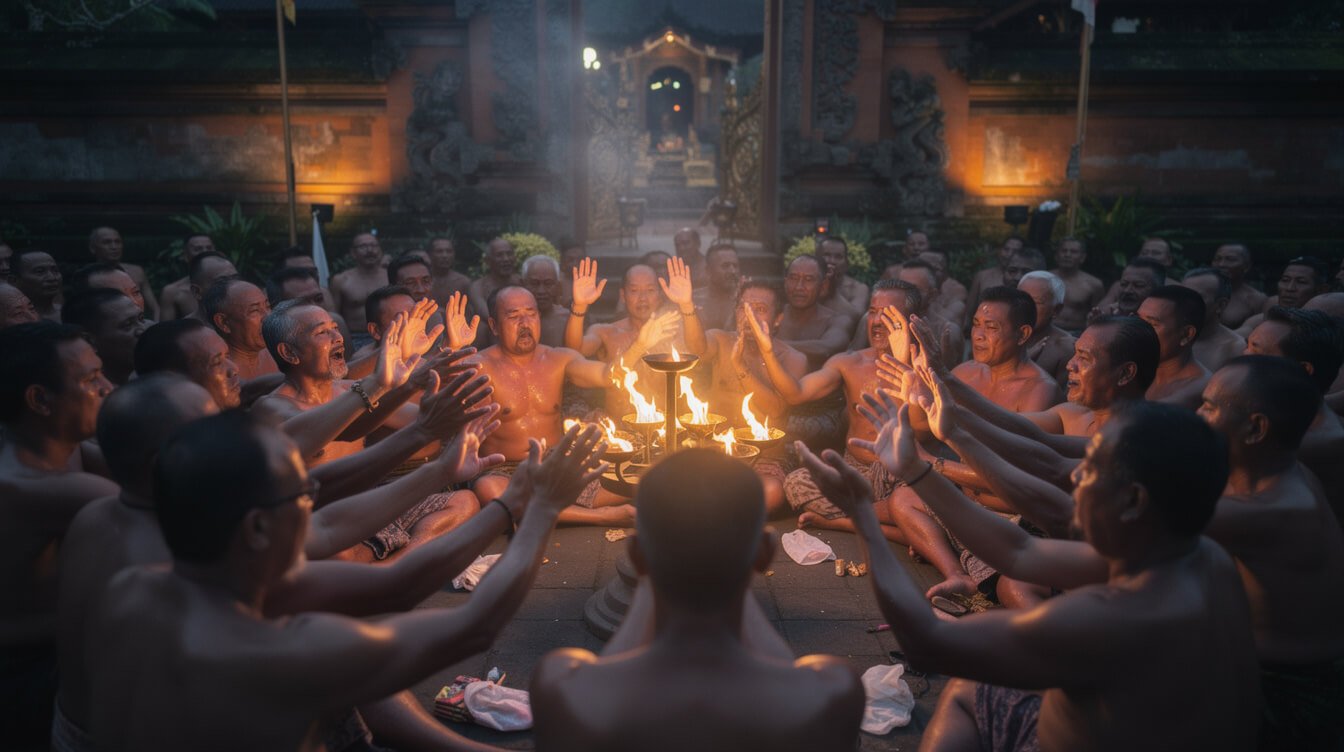
Kecak (pronounced keh-chak) is a Balinese dance-drama performed by a large chorus of men, usually somewhere between fifty and a hundred and fifty, who sit in concentric circles and provide the entire soundtrack with their voices. The name comes from the sound itself: the sharp, percussive “cak” that the chorus repeats in overlapping patterns. Some men hold the steady pulse. Others fire off syncopated bursts on the off-beats. A few carry long, droning tones underneath. A lead voice, sometimes called the juru tandak, sings the melody and narration over the top.
The effect is hard to describe until you’re sitting in it. Because the rhythms are split between different groups of singers, no single person is chanting the full pattern. It only exists when they’re all together. Watch their hands, too. The men sway, lean back, fall forward, and lift their arms with trembling fingers in unison, so the circle seems to ripple like wind through a rice field.
In the middle of the circle, dancers in full costume act out an episode from the Ramayana. The chorus becomes whatever the story needs: the monkey army, the forest, a storm, a battle. That’s why Kecak is often called the “monkey chant” in English, though the chorus plays far more than monkeys over the course of the night.
The dancers wear the black-and-white checked cloth called poleng, which you’ll also see wrapped around shrines and sacred trees all over Ubud. It represents the balance of opposites in Balinese Hindu thought: light and dark, good and evil, order and chaos. That balance is exactly what the story in the middle of the circle is about.
From Trance Ritual to Stage: A Short History of Kecak
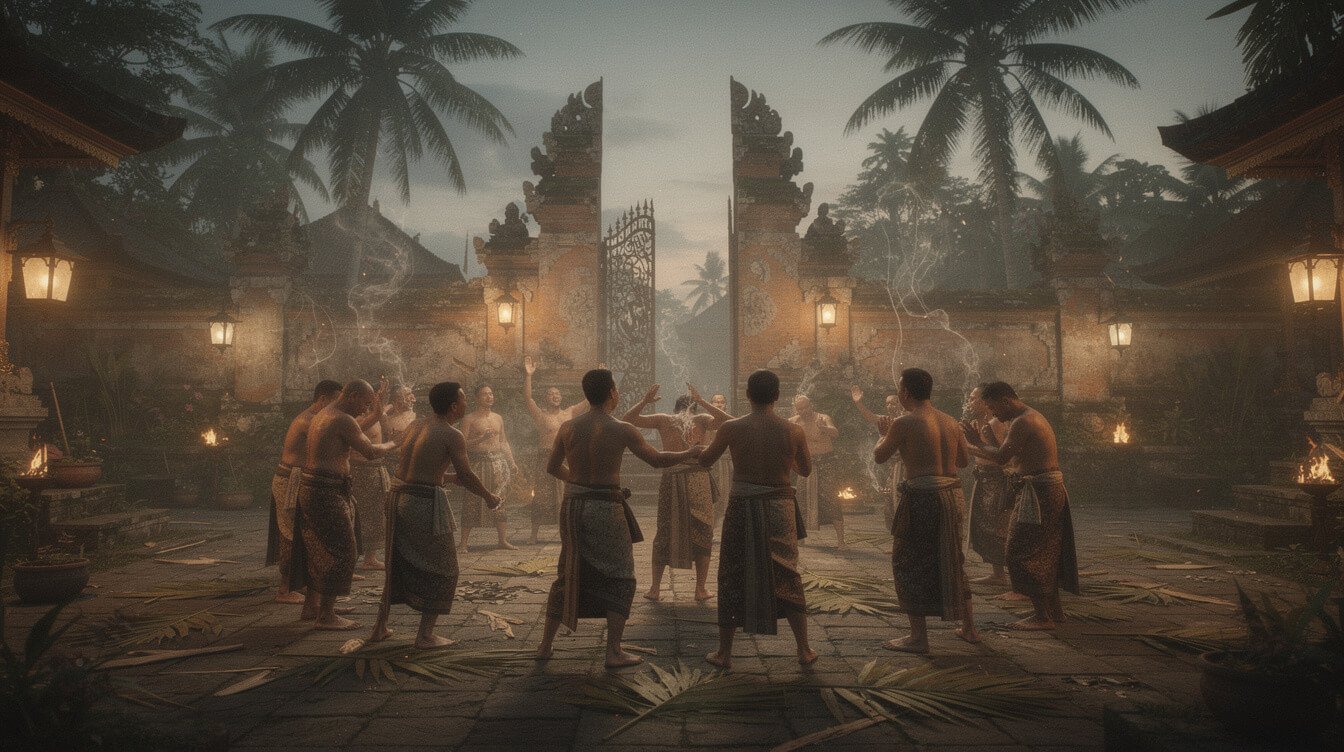
The chant is old, but the Kecak you’ll see in Ubud today is younger than most visitors expect. The “cak” chorus originally belonged to Sanghyang, a sacred trance ritual performed in Balinese villages to ward off illness and evil spirits. In Sanghyang, the chanting men helped carry dancers into a trance state so that deities or protective spirits could communicate through them. It wasn’t entertainment at all. It was a form of spiritual protection for the whole village.
In the early 1930s, Balinese dancer Wayan Limbak worked with the German painter and musician Walter Spies, who lived in Ubud at the time, to take that chorus out of its ritual setting and pair it with a dramatic story. They chose the Ramayana, an epic already beloved across Bali through shadow puppetry and temple carvings. The new form was performed for visitors and filmmakers, and it spread quickly from village to village around Gianyar, the regency Ubud belongs to.
So is Kecak “authentic”? It’s a fair question, and the honest answer is yes and no. The performance format was shaped partly for outside audiences, and it isn’t a temple ceremony in the way an odalan festival is. But the chanting technique, the trance elements, the cloth, the offerings made before the show, and the village organizations that perform it are all deeply Balinese. Many Ubud troupes are run by the banjar (the local village association), and ticket money often goes straight back into temple upkeep and community costs. The Ubud Kaja community, for example, has said publicly that its Kecak proceeds helped build its sacred space and support the families who perform.
In other words, when you watch Kecak in Ubud, you’re watching neighbors: farmers, carvers, drivers, and shopkeepers who rehearse together after work. That changes how it feels. If you’ve already explored the temples around Ubud, you’ll recognize many of the same gates and courtyards hosting the performances after dark.
Get a free 3-day sample itinerary
Want the Kecak evening slotted into a full few days in Ubud? We will send you a 3-day sample itinerary, temples, rice fields, and evenings included, ready to adapt to your own pace.
The Story You’re Watching: Ramayana in Firelight
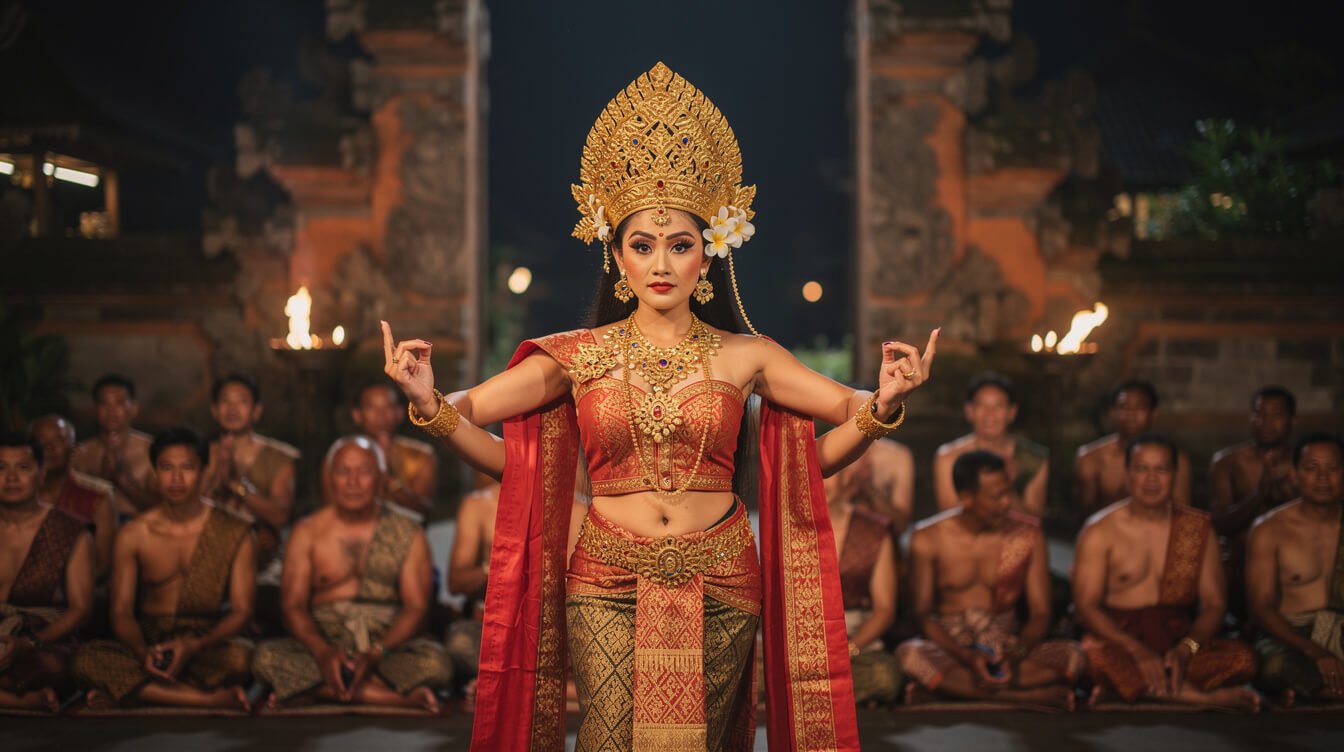
You don’t need to know the Ramayana to enjoy Kecak, but knowing the outline makes the hour far more rewarding. Most venues hand out a printed synopsis at the gate. It’s worth a quick read while you wait for the lamp to be lit.
The short version
Prince Rama, his wife Sita, and his brother Lakshmana have been exiled to the forest. The demon king Rahwana (Ravana in Indian tellings) wants Sita for himself, so he sends a golden deer to lure Rama away. Sita begs Rama to catch it; Rama leaves Lakshmana to guard her, Lakshmana is tricked into leaving too, and Rahwana carries Sita off to his kingdom.
What follows is a story of loyalty and rescue. The noble bird Jatayu tries and fails to stop Rahwana. Hanoman, the white monkey general, finds Sita in captivity and gives her Rama’s ring as proof that help is coming. Rama, aided by the monkey king Sugriwa and his army (that’s when the chorus really comes alive), goes to war against Rahwana’s forces and wins Sita back.
What to watch for
- The golden deer. Often played with playful, darting movements. It’s the first moment the story turns.
- Sita’s hands and eyes. Balinese dance tells stories through tiny gestures of the fingers and wide, expressive eyes. Sita’s sorrow is conveyed almost entirely this way.
- Hanoman’s entrance. Usually the crowd favorite, all white fur and mischief. Kids love him.
- The chorus as battlefield. During the war scenes, the circle physically leans and surges as one. It’s the most thrilling stretch of the night.
The narration is sung in Balinese and Kawi (Old Javanese), so you won’t follow the words. That’s fine. The emotion is unmistakable, and the synopsis covers the rest.
Where to See the Kecak Dance in Ubud
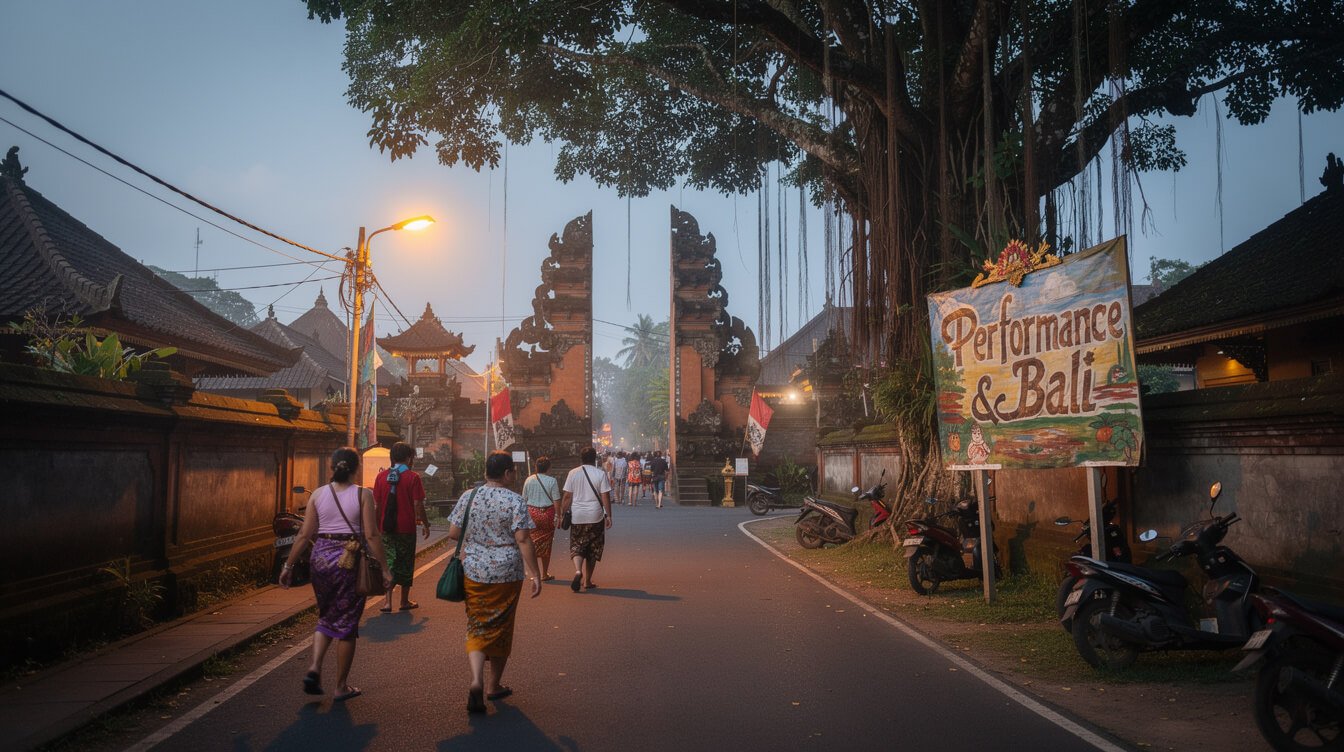
One of Ubud’s quiet advantages is choice. Several village groups perform Kecak on a rotating weekly schedule, usually at temple stages within walking distance (or a short drive) of the town center. Schedules shift occasionally, especially around major ceremonies like Galungan or Nyepi, so always confirm the night before. The Ubud Tourist Information office on Jalan Raya Ubud posts a weekly performance board, and your villa manager will know which troupe is on.
Pura Dalem Taman Kaja
A temple stage in the north of town, consistently one of Ubud’s highest-rated evening experiences. Its program is billed as “Kecak Fire & Trance Dance,” including the fire-walking finale. Seating is first-come, first-served, and reviewers routinely recommend arriving around 45 minutes early in high season for a spot near the front.
Pura Dalem Ubud
Home to the Ubud Kaja village troupe, which has performed Kecak since 1994. Its own published schedule lists performances on Monday and Friday at 7:30 pm on the open stage at Pura Dalem Ubud, with the Sanghyang Jaran fire dance as part of the program. The temple’s carved stone gates are especially beautiful after dark.
Resort and private performances
Some properties host their own troupes. Tanah Gajah, for example, stages Kecak on Tuesday and Friday evenings in a candle-lit amphitheater, with an optional dinner package. For groups (a milestone birthday, a retreat, a family reunion), private performances can sometimes be arranged through local banjar troupes. Ask the villa team well in advance if that interests you.
Timing and tickets
Across most Ubud venues, gates open from about 6:00 pm, the show begins between 7:00 and 7:30 pm, and it runs roughly an hour. At the time of writing, door tickets at the main village venues are typically around IDR 100,000 to 150,000 per person, a little more through booking apps. Prices change, so treat that as a ballpark rather than a promise. Many venues accept cash only at the gate, so bring small rupiah notes.
For a broader evening plan, our guide to things to do in Ubud pairs nicely with a Kecak night, and the Ubud Water Palace is a lovely late-afternoon stop since several stages are close by.
The Fire Dance: What Happens at the End
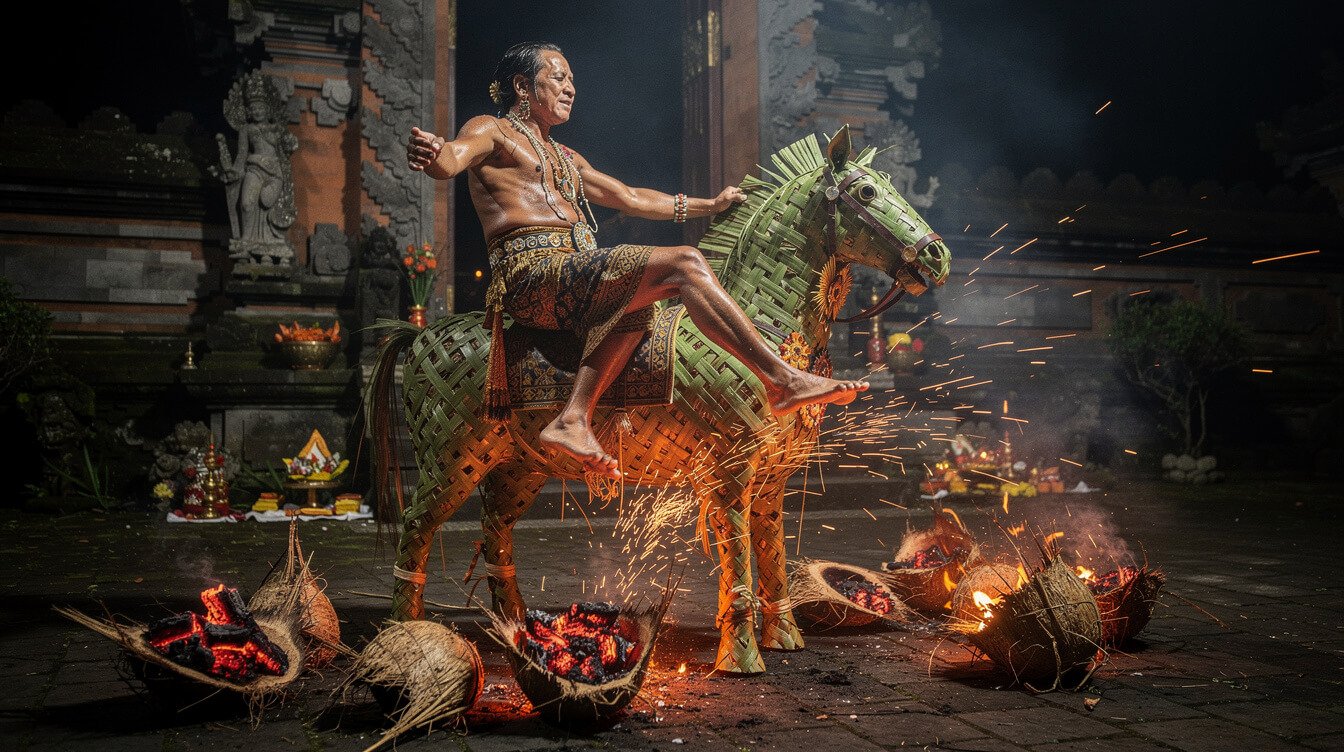
Just when you think the performance is over, the chorus files out, the lamp burns lower, and a pile of coconut husks in the center of the stage is set alight. This is the part many visitors remember most: the Sanghyang Jaran, or horse trance dance.
A single male dancer, often a respected elder from the village, rides a hobby horse woven from palm leaf and coconut stems. Accompanied by a smaller chanting group, he enters what’s understood to be a trance, possessed by the spirit of a divine horse. Then, barefoot and apparently oblivious, he gallops straight through the burning husks, kicking glowing embers across the stage. Again. And again. Assistants rake the embers back into a pile, and he charges through them once more.
It is dramatic, a little alarming, and strangely moving. Whatever you believe about trance, the dancer’s focus is unmistakable, and the village treats this part with real seriousness. A priest is typically present to bring him back out of the trance at the end, often with a sprinkle of holy water.
A practical note: if you’re in the front row, embers sometimes scatter toward the audience. Staff are quick to sweep them back, but keep bags and feet tucked in, and seat small children a row or two back.
This ending is a direct echo of Kecak’s ritual origins. It’s the closest you’ll come, as a visitor, to the trance tradition the chant grew out of, and it’s a reminder that in Bali the line between performance and ceremony is often thinner than it looks.
Book the Villa
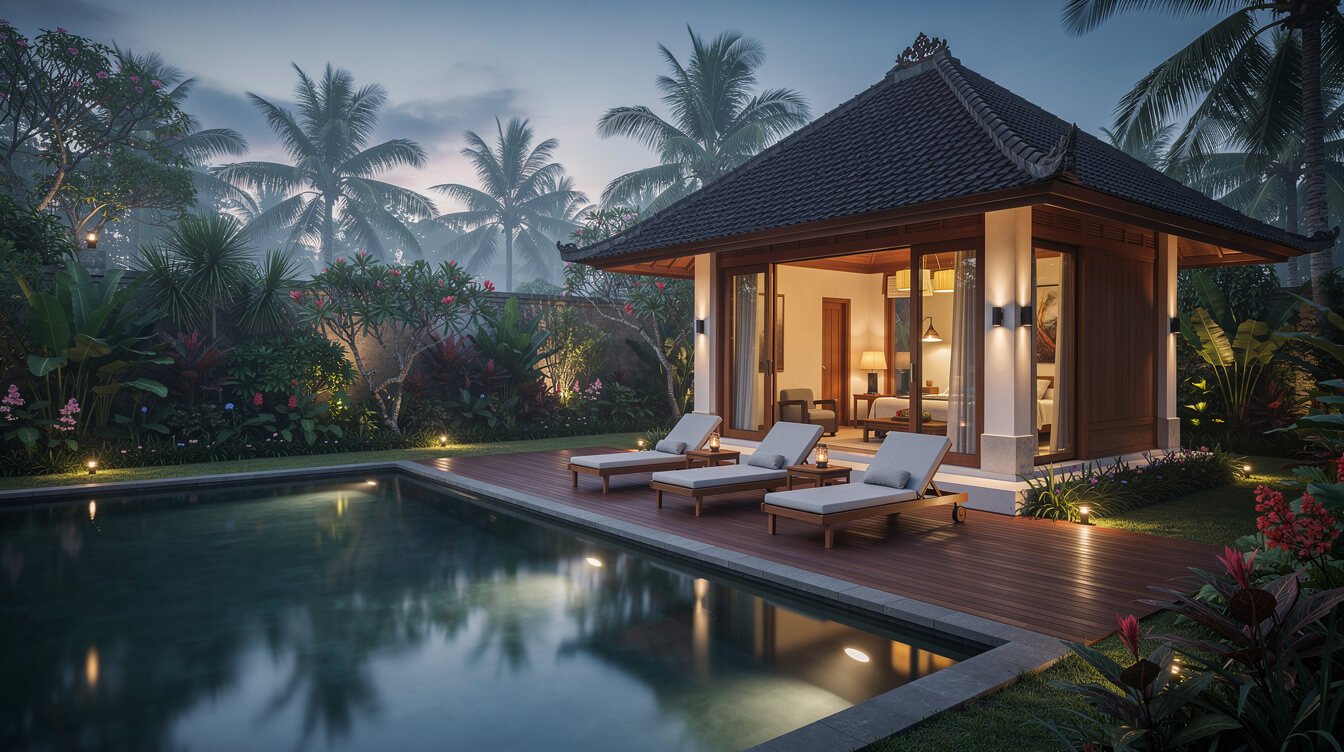
An early dinner from the chef, a driver waiting after the last chant, a quiet pool to come home to. Check availability and build your Ubud evenings around Villa Amrita.
Kecak Dance in Ubud vs. Uluwatu: Which Should You Choose?
Ask anyone about Kecak and they’ll probably mention Uluwatu: the cliff-top amphitheater on the Bukit Peninsula where the performance plays out against an ocean sunset. It’s famous for good reason. But it’s a different experience from the kecak dance in Ubud, and it’s worth knowing the trade-offs before you plan your days.
Uluwatu: the sunset spectacle
- The setting: unmatched. Clifftop, Indian Ocean, the sky going orange behind the dancers.
- The crowd: large. The amphitheater seats well over a thousand, and high-season shows sell out. Expect a big-event atmosphere.
- The journey: from Ubud it’s roughly 1.5 to 2 hours each way depending on traffic, often more on the way back. It’s usually paired with a full south-Bali day.
- The temple monkeys: notorious for grabbing sunglasses and phones. Hold on to everything.
Ubud: the village evening
- The setting: intimate temple courtyards, carved stone gates, firelight instead of sunset. Darker, closer, more atmospheric.
- The crowd: smaller, often a few hundred at most. You’re much closer to the chorus, close enough to feel the rhythm in your chest.
- The journey: minutes from your villa. Have dinner, walk or drive over, and be home by 9 pm.
- The community: performed by local banjar groups whose members you may well pass on the road the next morning.
Our honest take: if you’re spending a day in the south anyway, Uluwatu’s sunset show is worth catching once. But if you’re staying in Ubud, the local performance is the more immersive of the two. It’s easier, quieter, closer, and arguably more connected to the village life that created it. Many guests do both, and find they remember the Ubud night more vividly.
Planning Your Kecak Evening from the Villa
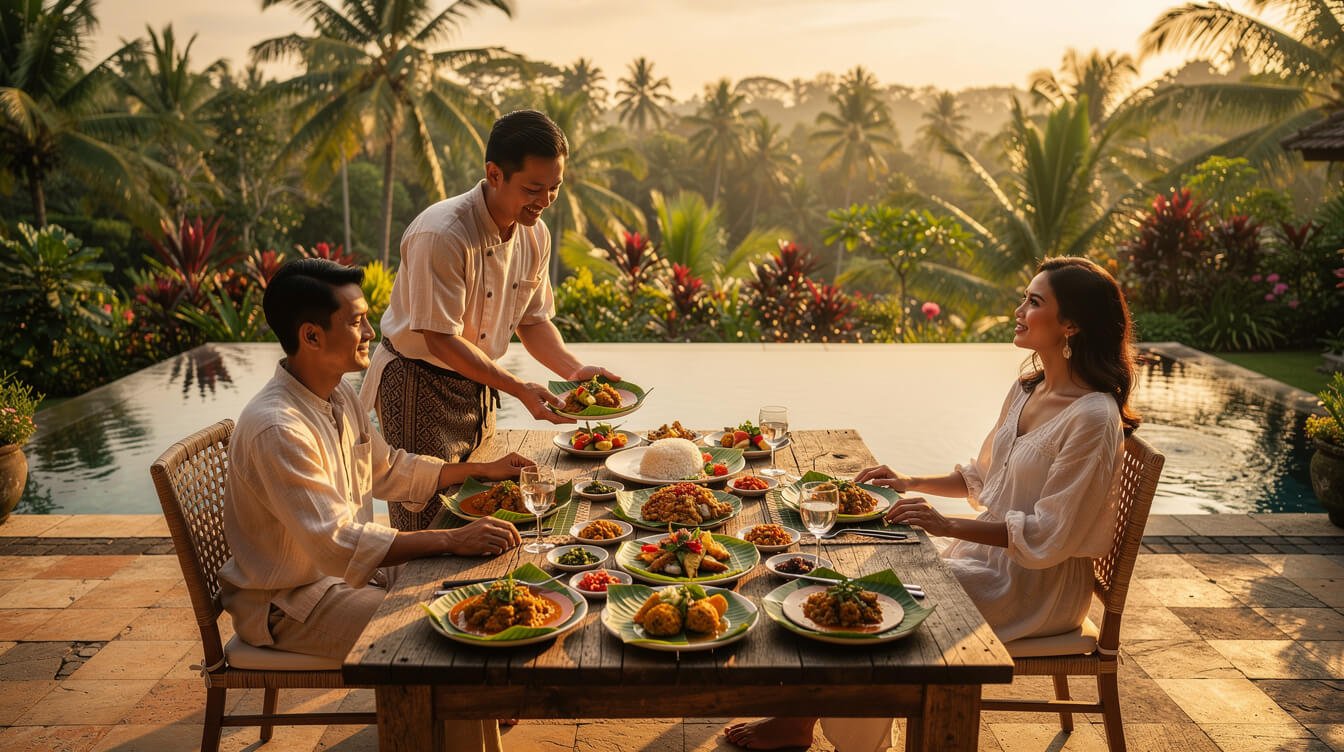
Kecak sits right in the middle of the evening, which makes dinner the main thing to plan around. Here’s how our guests tend to shape the night.
Eat early, or eat late
Ubud restaurants fill up between 7:00 and 8:30 pm, exactly when you’ll be at the show. The easiest rhythm is to ask the chef for an early dinner on the terrace around 5:00 or 5:30 pm, a few Balinese dishes, a cold drink, the light going golden over the garden, and then head out. Or flip it: a light snack before, and a late supper waiting when you get back. Having a private chef at the villa makes either option effortless, and it neatly sidesteps the inflated snack prices at some venues.
Getting there and back
Most Ubud venues are a short ride from the villa. Arrange a driver to drop you off and wait, since finding a car on Jalan Raya Ubud right as several shows let out at once can be slow. On a cool, clear night some guests walk back through town instead; just bring a small flashlight, as Ubud’s sidewalks are uneven and dimly lit.
What to wear and bring
- Modest, comfortable clothes. You’re on temple grounds. Shoulders covered is a respectful choice, though sarongs are rarely required for performances.
- A light layer. Ubud evenings cool down noticeably, especially in the dry season.
- Insect repellent. Open-air stages, tropical evening. Enough said.
- Cash in small notes for tickets and an optional donation.
- A cushion or folded sarong if you’re sitting on stone steps for an hour.
Etiquette that matters
Turn off your camera flash. It distracts the dancers and breaks the atmosphere for everyone. Don’t walk across the performance space at any point, even between scenes. And at the end, most troupes invite the audience onto the stage for photos with the dancers. Take them up on it, and say suksma (thank you).
Bringing children
Kecak is a wonderful family evening. Kids usually love Hanoman and the fire. An hour of chanting can test younger attention spans, though, so read them the story beforehand and sit near an aisle. Families staying in a family villa in Ubud often pick a night when the next morning is slow.
For couples, a Kecak night pairs beautifully with a slow dinner at home afterward. It’s one of our favorite romantic things to do in Ubud. And if you’re mapping out a short stay, our 3-day Ubud itinerary shows where an evening performance fits best.
Frequently Asked Questions About the Kecak Dance in Ubud
How long is the Kecak dance in Ubud?
Most performances run about an hour, including the fire dance at the end. Allow around two hours total for arrival, finding a seat, the show, and photos afterward.
Do I need to book Kecak tickets in advance?
For village performances in Ubud, you can usually buy tickets at the gate on the night. In peak season (July, August, and the late-December holidays), arriving early matters more than pre-booking, since seating is unreserved. Resort performances and Uluwatu are more likely to need advance booking.
What time does Kecak start in Ubud?
Typically between 7:00 and 7:30 pm, with gates opening from about 6:00 pm. Exact times vary by venue and night, so check the schedule the day before.
Is Kecak a religious ceremony?
Not exactly. Kecak is a performance art that grew out of the sacred Sanghyang trance ritual. Offerings are made before shows, and the fire-trance finale keeps a strong spiritual element, but it’s performed for audiences rather than as a temple rite.
Is Kecak suitable for kids?
Yes, most children find it fascinating, especially the monkey characters and the fire. Sit a row or two back from the front if they’re small, since embers can scatter during the fire dance.
Can I see Kecak during the rainy season?
Yes. Performances run year-round, though a heavy downpour can occasionally delay or cancel an open-air show. Your villa manager can check with the troupe before you head out.
Final Thoughts: An Hour That Stays With You
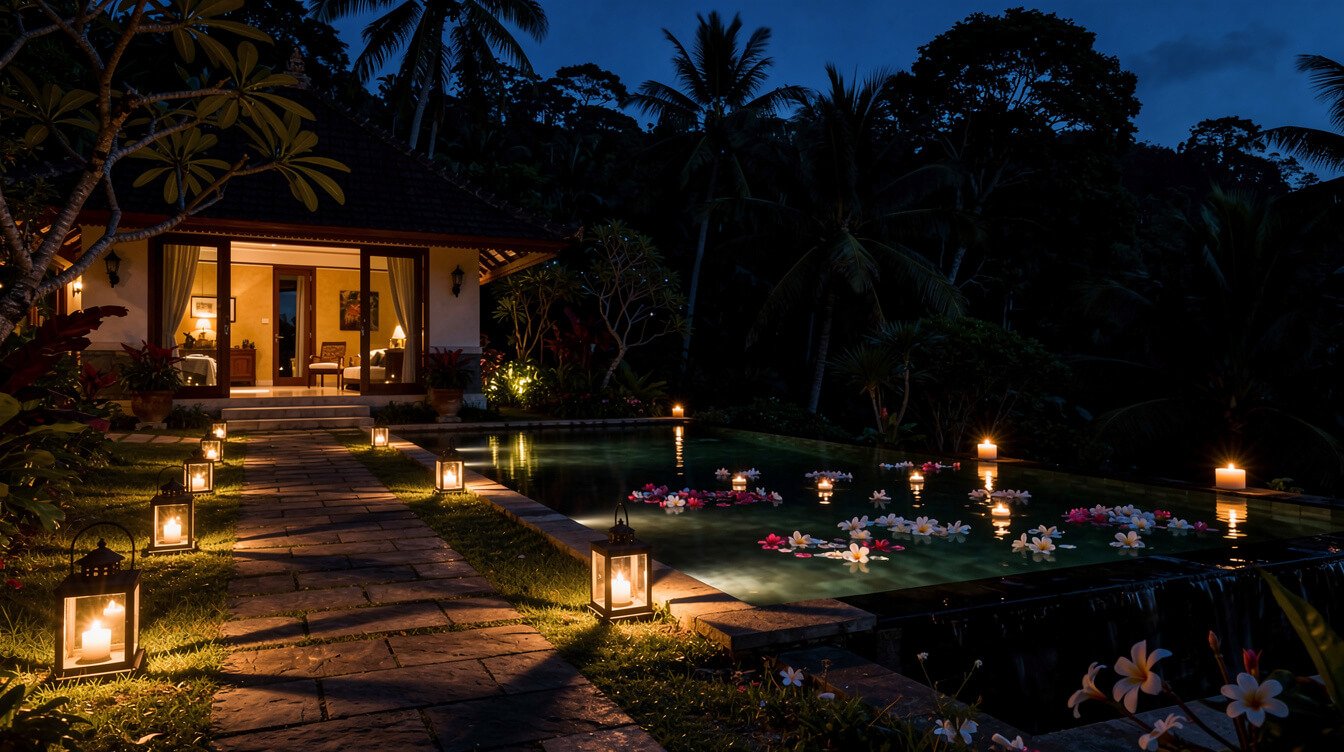
Plenty of Bali experiences are beautiful. Fewer are genuinely strange, in the best sense: a hundred voices building a rhythm no single person is holding, a story older than the temple it’s performed in, and a barefoot man running through fire while the whole courtyard holds its breath. That’s Kecak. In Ubud you get it up close, in firelight, performed by the village itself, and then you get to go home to a quiet terrace, a pool full of candlelight, and the frogs in the rice fields picking up where the chorus left off. If there’s one evening in Ubud worth planning your dinner around, this is it.

Join our newsletter — fun, new, exciting Bali news
Ceremony days, village performances worth catching, and small stories from the garden and kitchen. Delivered now and then, always worth opening.