Ubud Temples to Visit: Your Complete Guide to Bali’s Most Sacred Sites
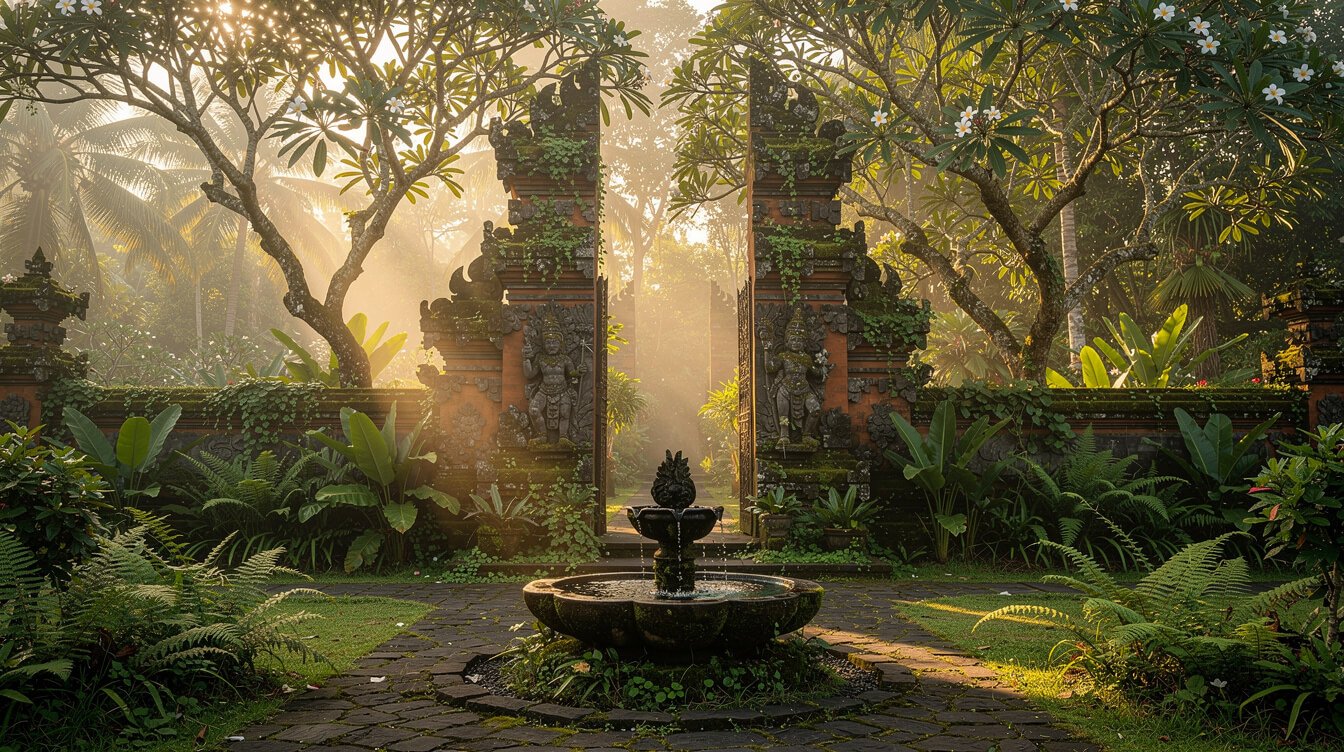
There is a particular quiet that comes with stepping off a village road in Ubud and through a stone gateway split down the middle. The air shifts. The light softens. Incense mixes with frangipani, and everything — the carved stone, the green moss, the still water — tells you that this place has been here a very long time. These are the ubud temples to visit that will stay with you long after you leave Bali.
Ubud sits at the cultural and spiritual center of Bali. Temples here are not museums. They are living places of worship — some more than a thousand years old — where ceremonies happen daily and offerings appear on stone steps before sunrise. For visitors staying in a private villa nearby, temple visits become the rhythm of your days, a quiet counterweight to the pool and the garden and the chef’s breakfast.
This guide covers the most extraordinary ubud temples to visit, from the ones you can walk to from the town center to the ancient carved shrines tucked into river valleys forty minutes away. We include practical details — entrance fees, what to wear, when to go — alongside the sensory texture of each site, so you arrive prepared and leave genuinely moved.
How to Prepare for Ubud Temple Visits
Before you step into any temple in Bali, there are a few things worth knowing — not rules to memorize, but gestures of respect that make the experience deeper for you and more comfortable for everyone.
Dress Code and Sarongs
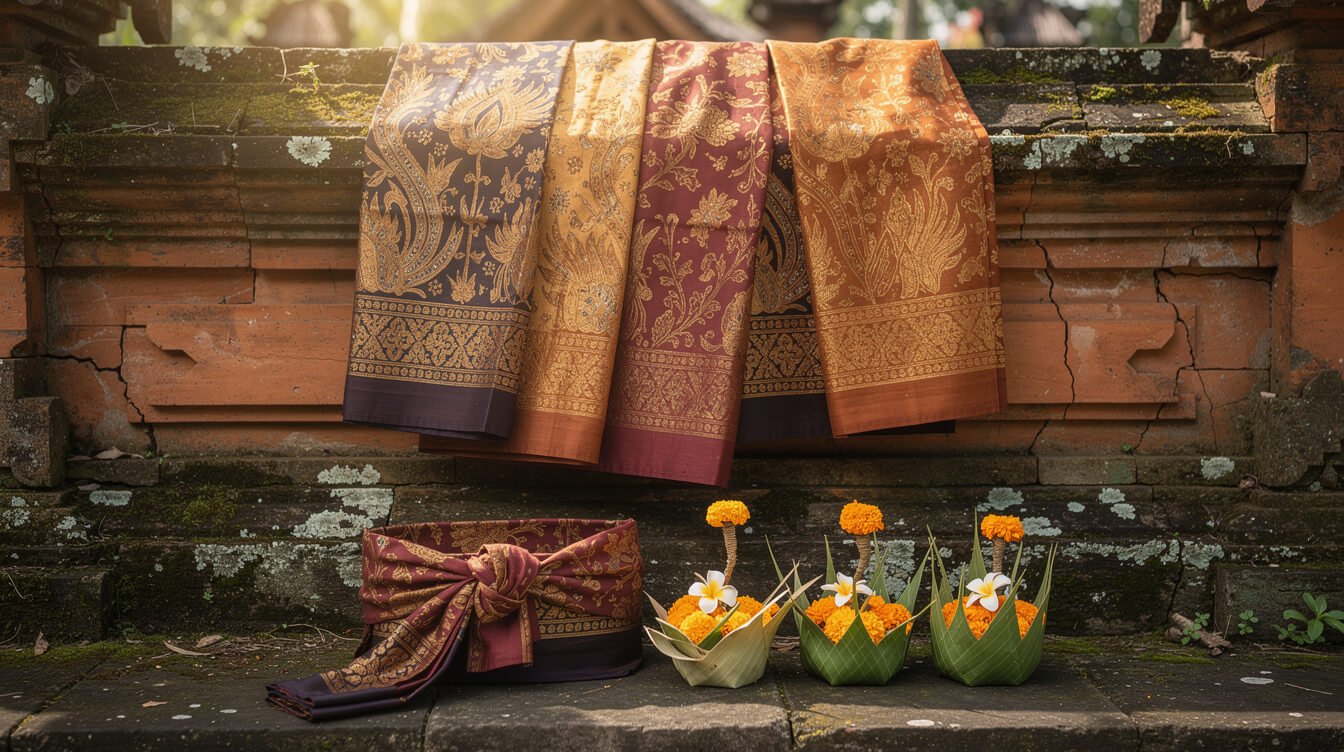
Every temple requires a sarong and sash wrapped around your waist, covering your legs. Most major temples rent or lend sarongs at the entrance for a small fee (around 5,000-10,000 IDR, roughly a dollar). You can also buy a beautiful batik sarong at the Ubud Art Market for 50,000-100,000 IDR — a practical souvenir that doubles as a beach wrap for the rest of your trip.
Beyond the sarong, dress modestly. Cover your shoulders. Skip anything too revealing. This is not a formality — temples are active prayer sites, and the gesture matters to the Balinese families who worship there daily.
Etiquette That Matters
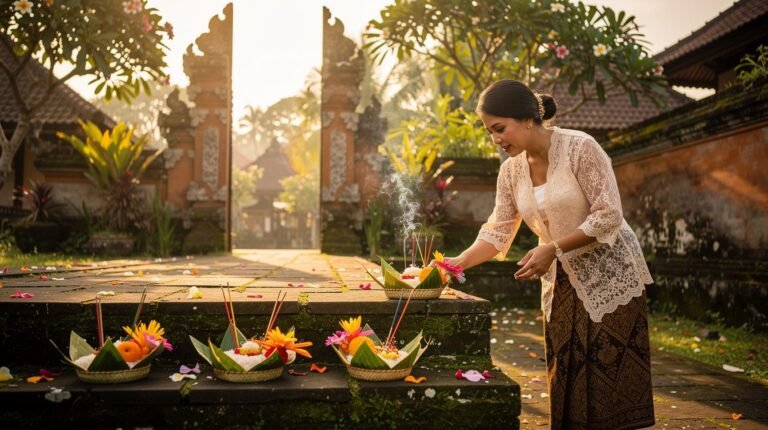
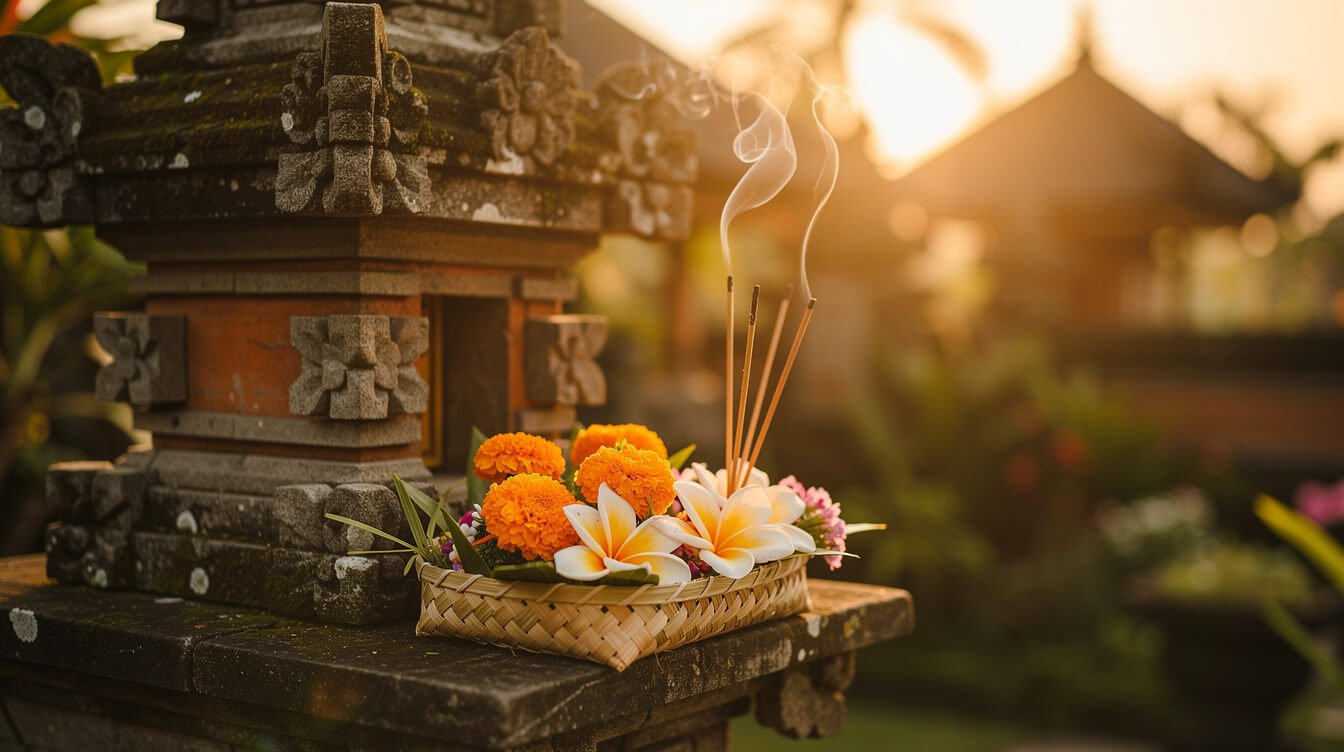
Walk quietly. Do not step on offerings — the small woven palm-leaf trays filled with flowers and rice that you will see everywhere on the ground. If you are curious about the daily practice of canang sari offerings, they are one of the most beautiful traditions you will encounter in Ubud.
Photography is welcome at most sites, but avoid photographing people mid-prayer. If a ceremony is underway, keep a respectful distance. Some inner sanctums are closed to non-Hindu visitors — signs will indicate this.
Timing Your Visits
Early morning is the sweetest window. Arrive between 7:00 and 8:30 AM and you will often have temple courtyards nearly to yourself — just you, the mist, and the sound of the gardener sweeping stone paths. By 10:00 AM, tour buses arrive at the major sites. Late afternoon (after 3:30 PM) is another good option, especially for temples facing west where the light turns golden.
Ubud Temples to Visit in the Town Center
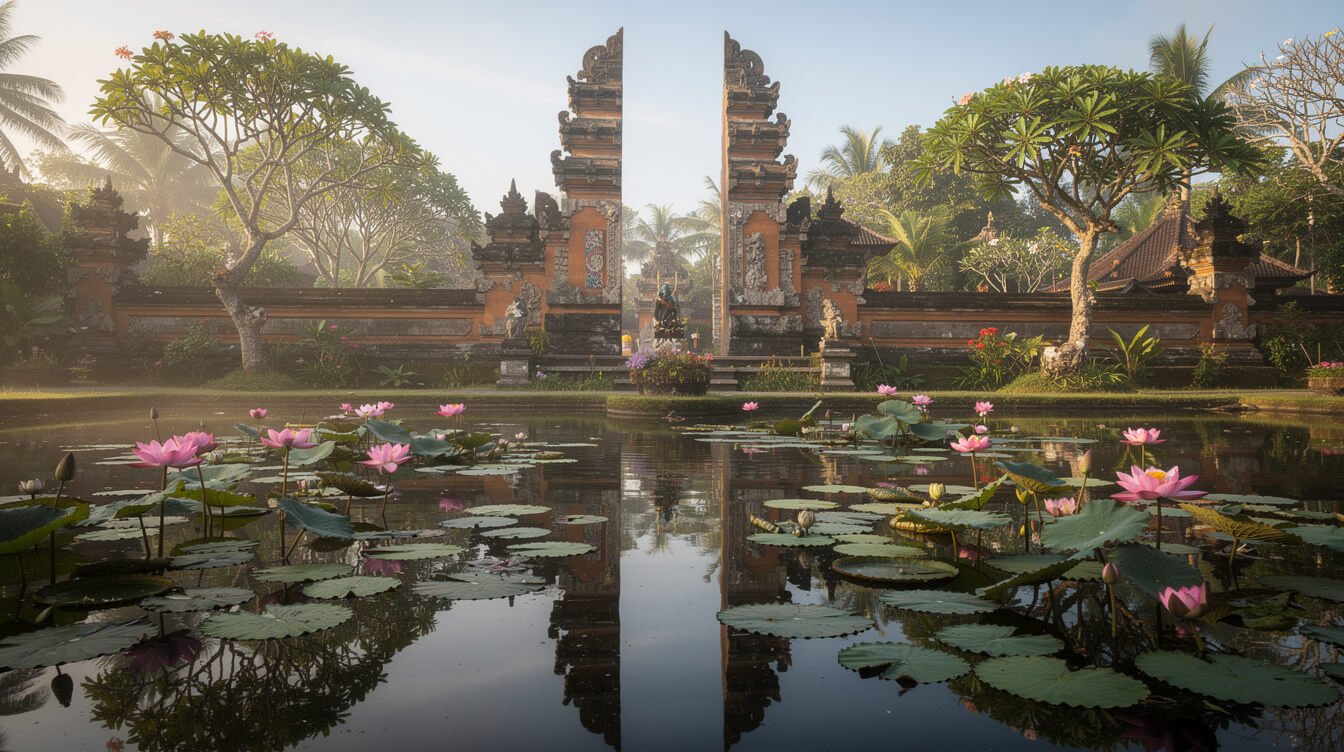
You do not need a car or a driver to experience sacred architecture in Ubud. Three of the most atmospheric temples sit right in the center of town, walkable from the main market and the palace.
Pura Taman Saraswati (The Water Palace)
This is the temple most visitors stumble upon first — and it stops them in their tracks. Dedicated to Saraswati, the Hindu goddess of knowledge, art, and wisdom, the temple sits behind a wide lotus pond that blooms pink and white in the morning light. The stone carvings on the entrance gates are among the most intricate in Ubud — layers of demon faces, floral motifs, and mythological figures carved so deeply into volcanic stone that they seem to breathe.
Entrance is free. Visit in the early morning when the lotus flowers open, or return in the evening for a traditional Legong dance performance on the temple stage. The Cafe Lotus restaurant overlooks the pond — a fine place to sit and watch the light change while you plan the rest of your day. If you are building a 3-day Ubud itinerary, start here.
Pura Dalem Ubud
Just north of the center along Jalan Raya Ubud, Pura Dalem Ubud is a temple of the dead — a “Pura Dalem” in Balinese Hinduism, dedicated to Shiva in his destroyer aspect. The stone carvings here are darker, more dramatic. Demon statues guard the entrance with wide eyes and bared teeth. The craftsmanship is extraordinary — every inch of the gate is carved.
This temple is less visited than Saraswati, which means you can stand in the courtyard and really look. The quality of the carving work alone is worth the stop. It is a five-minute walk from the Ubud Palace and takes about twenty minutes to appreciate fully.
Puri Saren Agung (Ubud Royal Palace)
The Royal Palace is not strictly a temple, but it functions as a ceremonial and spiritual center for the village. Built in the 1800s, the palace compound features ornate stone gates, thatched pavilions, and evening dance performances that draw hundreds of visitors. Entrance to the courtyard is free during the day. The evening Barong or Legong dance (usually 80,000 IDR, around $5) is one of the best introductions to Balinese performing arts you will find anywhere.
Sacred Water Temples Near Ubud
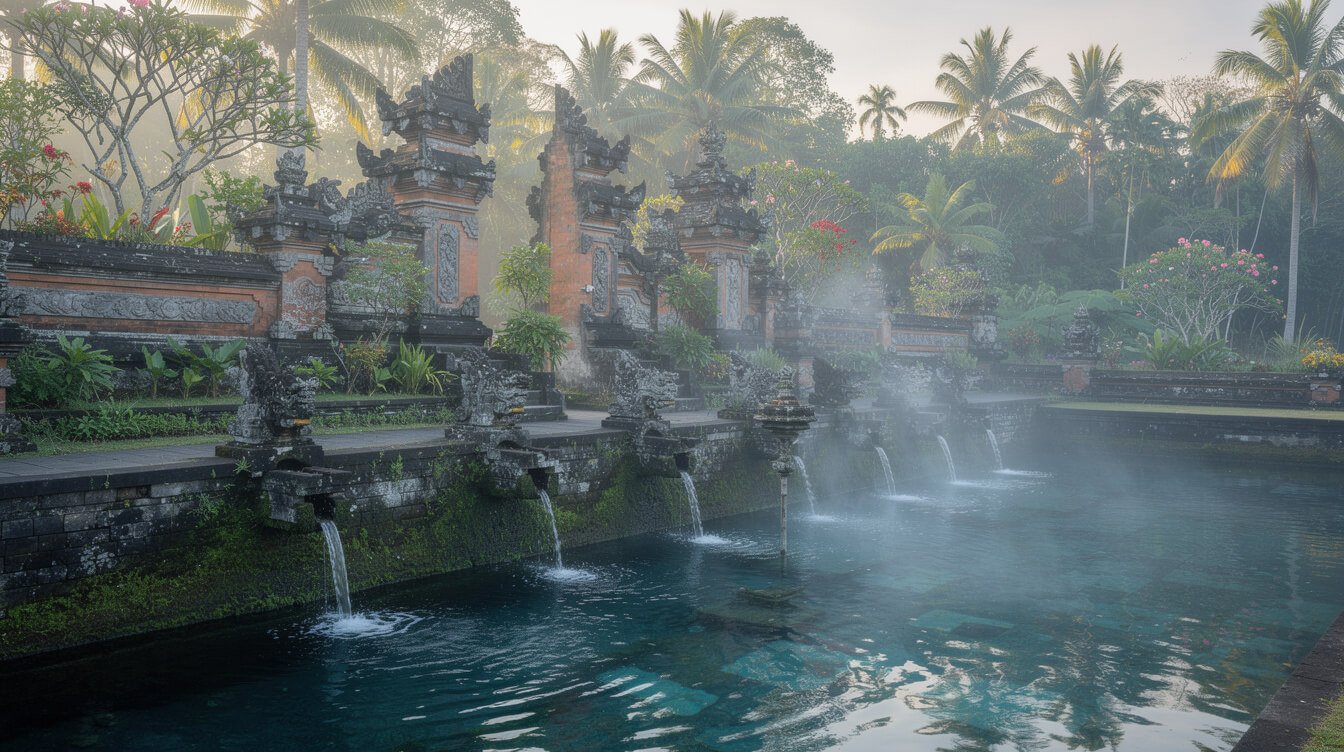
Water is sacred in Balinese Hinduism. Springs, rivers, and pools carry spiritual significance — the flow of water is the flow of purification. Two of the most powerful temple experiences near Ubud center on this element.
Pura Tirta Empul
Founded in 926 AD around a natural spring, Tirta Empul is the most sacred water temple in Bali. The spring feeds a series of purification pools where Balinese Hindus (and visitors who wish to participate) wade chest-deep through cool, clear water, passing under a sequence of stone spouts. Each spout carries a different prayer intention. The experience is quiet, reverent, and physically bracing — the water is cold.
If you choose to participate in the purification ritual, wear a sarong over your swimwear and follow the lead of the Balinese worshippers ahead of you. Move left to right. Bow your head under each spout. Hold your hands together in prayer position. The temple priests are welcoming and will guide you if you seem unsure.
Tirta Empul sits about 40 minutes northeast of central Ubud. Entrance is 50,000 IDR (around $3.50). Go early — by 9:00 AM, the purification pools can have long queues. The temple grounds themselves, beyond the pools, are worth exploring: stone courtyards, moss-covered shrines, ancient trees, and the original spring source bubbling up through sand at the bottom of a clear pool.
Gunung Kawi Sebatu
Far less visited than Tirta Empul, this water temple sits in a jungle setting about 30 minutes north of Ubud. Clear spring water flows through carved stone channels into bathing pools surrounded by dense tropical vegetation. The atmosphere is gentler, quieter — more contemplative.
Gunung Kawi Sebatu has its own purification pools and a series of ornate shrines set among fish ponds and flowering gardens. The koi ponds are enormous, the carvings are refined, and on most mornings you will be one of a handful of visitors. If Tirta Empul feels like a pilgrimage, Gunung Kawi Sebatu feels like a garden retreat. Both are worth your time if you are spending several days in Ubud.
Get a Free 3-Day Sample Itinerary
Temples, rice fields, sunrise coffee, evening dance — we have mapped out three perfect days in Ubud for you. Drop your email and we will send it right over.
Ancient Carved Temples in the Ubud Valleys
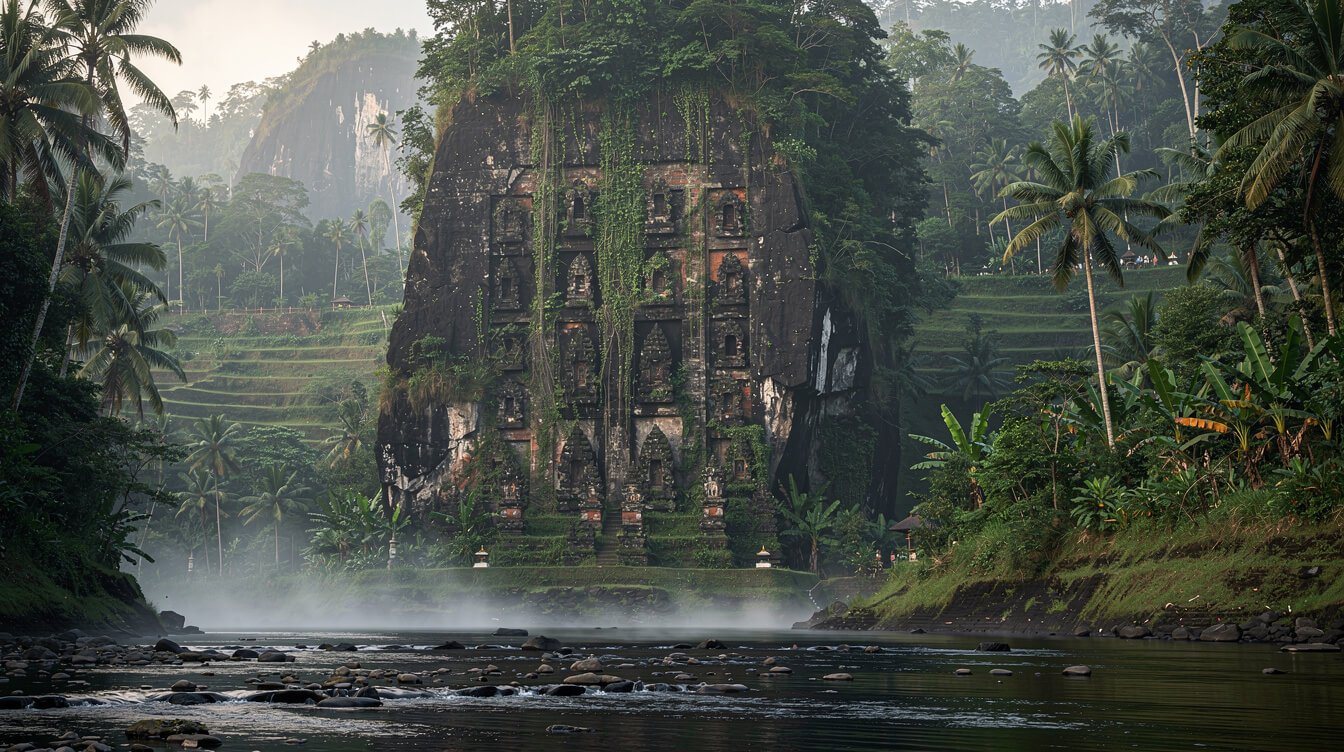
Some of the most remarkable ubud temples to visit are not towers or compounds — they are carvings cut directly into cliff faces along river valleys, testimony to a civilization that worked volcanic rock with extraordinary precision a thousand years ago.
Gunung Kawi
This is the temple that leaves the deepest impression on most visitors. Ten rock-cut candi (memorial shrines) stand seven meters tall, carved into the sheer cliff face on both sides of the sacred Pakerisan River valley. The shrines date to the 11th century and honor the Udayana dynasty — Bali’s royal family during the height of Hindu-Javanese influence on the island.
Getting there is part of the experience. From the parking area, you descend roughly 300 stone steps through a narrow gorge of rice terraces, past souvenir stalls and village gardens, down into a river valley where the air is cool and damp and the light is filtered green through the canopy. The descent takes about fifteen minutes. The return climb is real exercise — bring water and take it slow.
Once you reach the bottom, the shrines emerge from the rock on your left and right. Walk across the bridge that spans the river. Stand at the base of the tallest candi and look up. The scale of the carving work, done entirely by hand into volcanic tuff, is humbling. Monks’ meditation cells — small carved rooms called niches — line the cliff behind the shrines.
Gunung Kawi is about 40 minutes from central Ubud. Entrance is 50,000 IDR. Combine it with Tirta Empul (a ten-minute drive away) for a half-day temple circuit that covers the ancient and the sacred in one journey.
Goa Gajah (Elephant Cave)
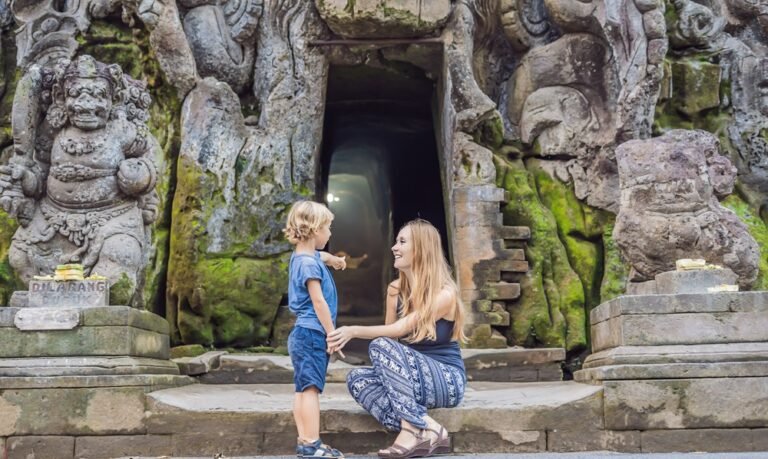
Older than Gunung Kawi, Goa Gajah dates to the 9th century and sits about 20 minutes southeast of central Ubud. The main attraction is the cave entrance: a massive face carved into the rock, mouth agape, surrounded by swirling demonic and mythological figures. You walk through the mouth into a narrow meditation cave that holds Hindu and Buddhist shrines — evidence of the two faiths coexisting in early Balinese history.
Outside the cave, stone steps lead down to a small river where bathing fountains have been restored. The temple grounds are shaded by enormous banyan trees and feel older than the other sites — there is something primal about the carved face in the rock. A local guide (around $15) can explain the iconography and the history of the dual Hindu-Buddhist worship that makes Goa Gajah unique.
If you are planning a broader visit to Ubud’s cultural heart, Goa Gajah is a natural starting point. It is close to the center, rich in history, and takes about an hour to explore thoroughly.
Quieter Ubud Temples Worth the Journey
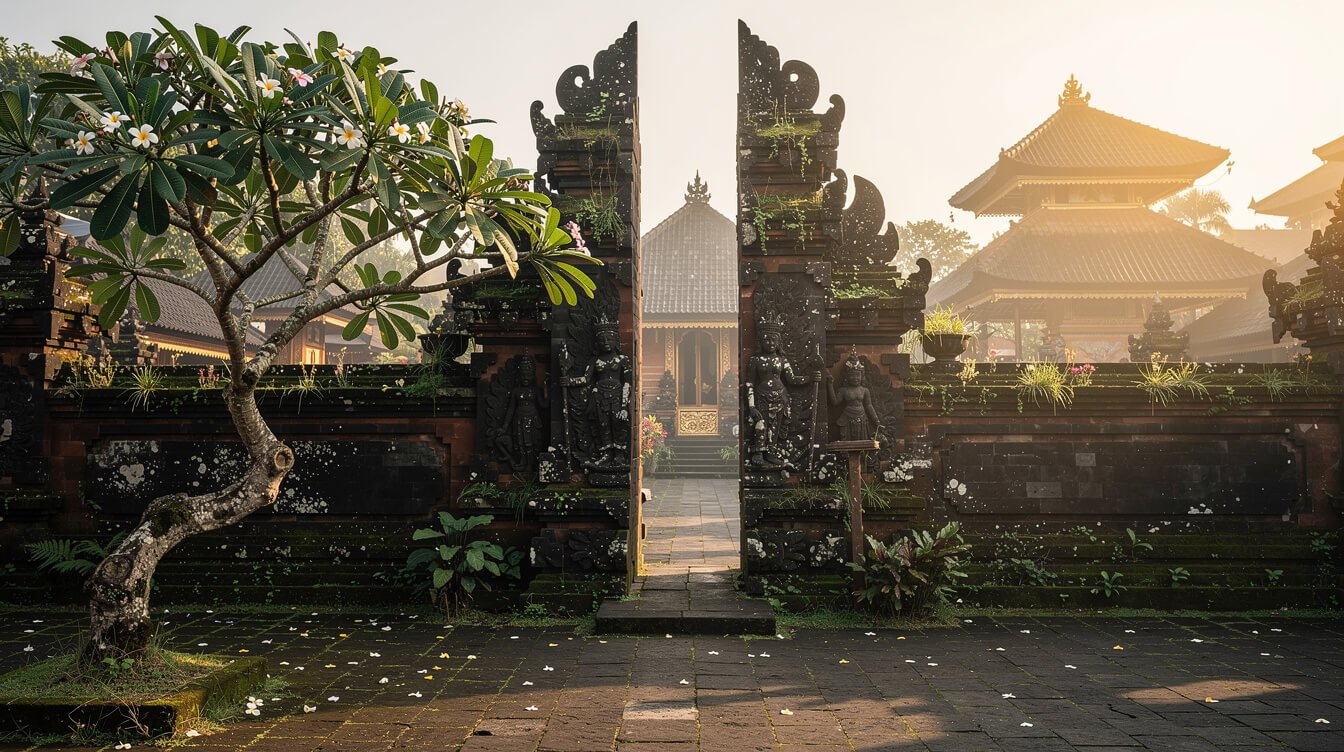
The temples above are extraordinary and deserve their reputation. But some of the most memorable temple experiences near Ubud happen at sites where you might be the only visitor — places where the moss grows thicker on the carvings because fewer hands touch the stone.
Batuan Temple (Pura Puseh Batuan)
About 20 minutes south of Ubud center, on the road toward Denpasar, Batuan Temple dates to the 10th century and is one of the most elaborately decorated temples on the island. Every surface — every gate, every wall, every shrine — is carved with an almost obsessive density of detail. Demons, gods, flowers, animals, and geometric patterns layer upon each other until the stone seems to vibrate with visual energy.
Batuan is also the center of a famous Balinese painting tradition. The village’s distinctive black-ink artistic style has been practiced for centuries, and several galleries near the temple display the work. Entrance to the temple is a donation (usually 20,000-50,000 IDR). It is rarely crowded and utterly worth a detour.
Pura Taman Pecampuhan Sala
This temple is genuinely off the radar. Located near the Campuhan ridge — the same ridge where the famous Ubud ridge walk begins — Pura Taman Pecampuhan Sala features natural purification pools fed by a waterfall. The setting is wild and green, more jungle than garden, and the atmosphere is deeply peaceful.
Entrance is by donation. There are no tour buses. The path down to the pools is uneven and mossy, so wear shoes with grip. This is the kind of temple you discover because someone local mentioned it — or because your villa manager drew you a map over breakfast.
Samuan Tiga
A 10th-century temple near Bedulu village, about 25 minutes from Ubud center, Samuan Tiga is one of the most historically significant temples in Bali. Its name means “meeting of three” — referring to the historic unification of Hindu, Buddhist, and animist practices that defined Balinese spirituality. The temple hosts major ceremonies throughout the year, particularly around the full moon.
Outside of ceremony days, Samuan Tiga is tranquil and lightly visited. The grounds are wide, the stone gates are beautifully proportioned, and the centuries of worship are palpable in the wear of the steps and the smooth polish of the prayer stones.
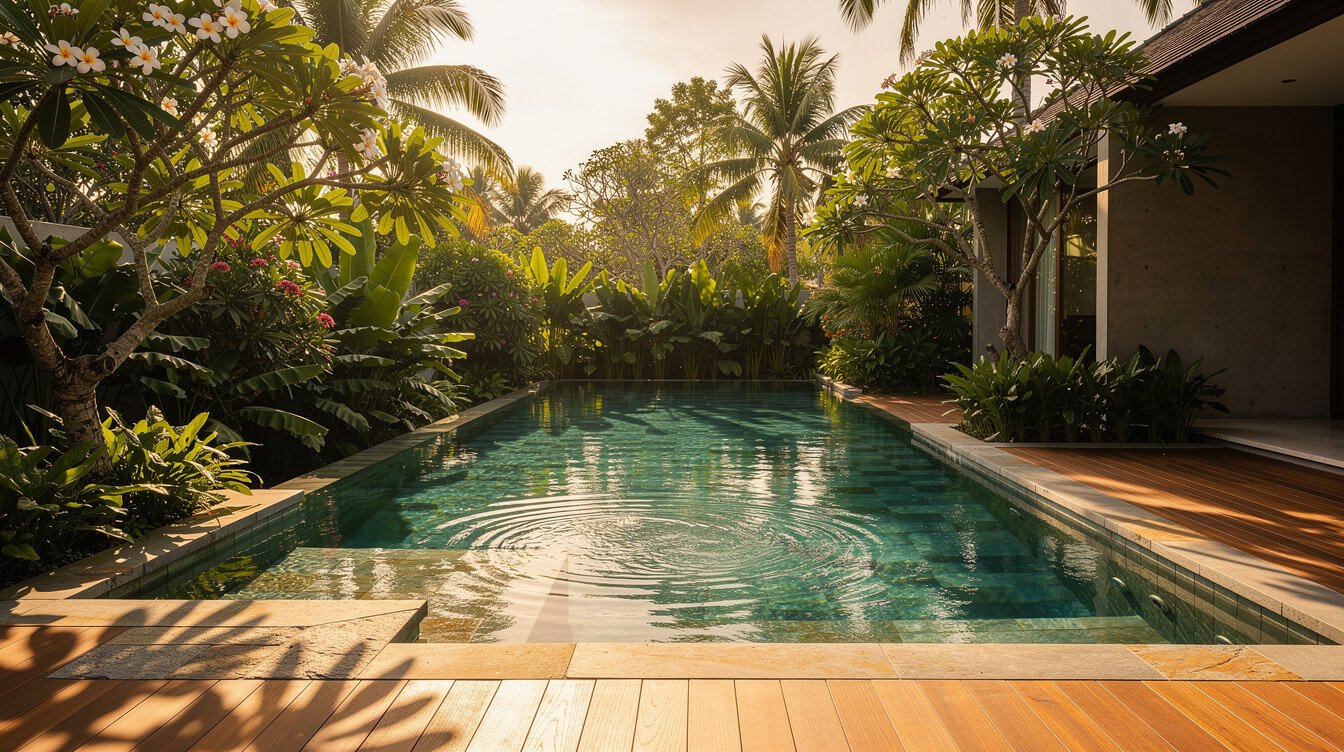
Stay Steps From Ubud’s Temples
Villa Amrita is a 3-bedroom staffed pool villa in Ubud — your private chef, housekeeper, and gardener handle everything while you explore the sacred side of Bali.
Planning Your Temple Day From a Villa in Ubud
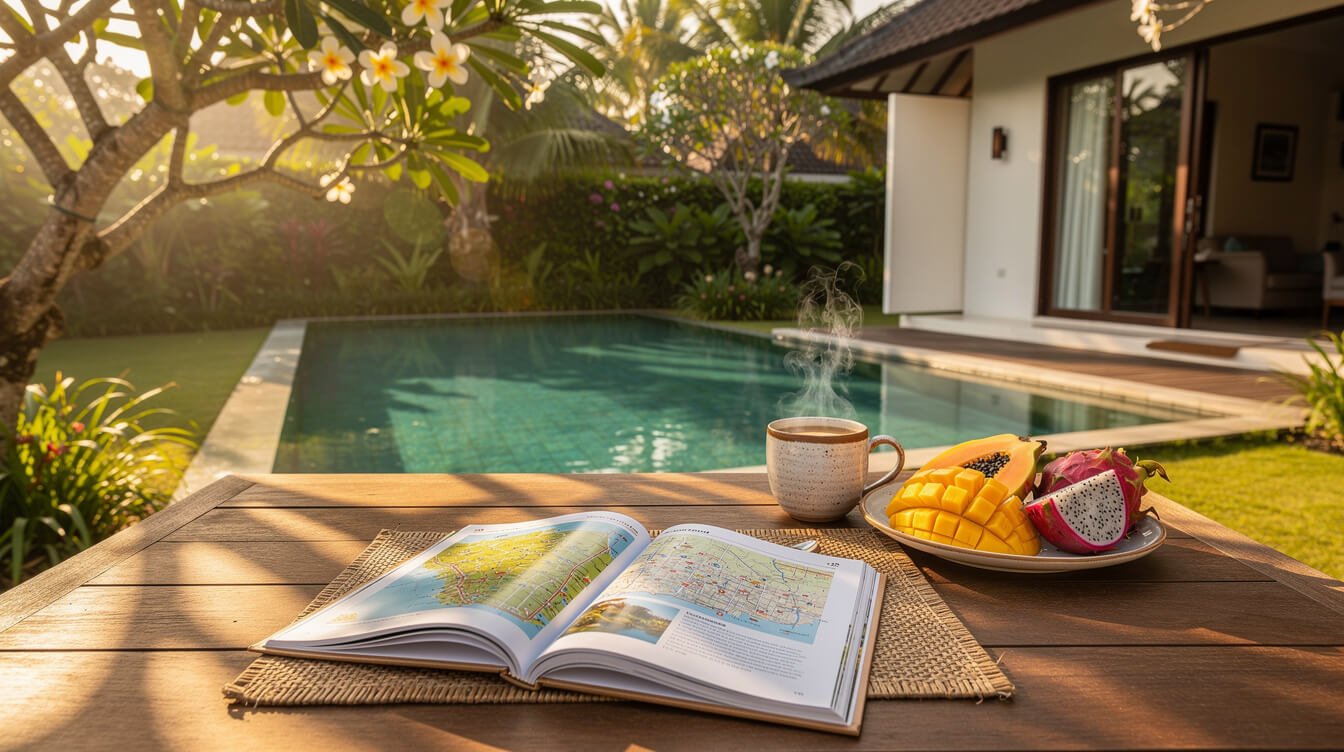
When you are staying in a private pool villa in Ubud, temple visits fold naturally into your days. You are not commuting from a hotel lobby — you are stepping out of your own garden into the spiritual heartbeat of the village.
The Morning Route (Half Day)
Start early. Have your villa chef prepare a light breakfast before 7:00 AM — fresh fruit, Bali coffee, maybe a bowl of bubur. Then drive north to Tirta Empul first (arrive before the crowds), follow with Gunung Kawi (a ten-minute drive), and return to the villa for a late lunch by the pool. This circuit covers the sacred and the ancient in one clean sweep and still gets you home before the heat peaks.
The Afternoon Route (2-3 Hours)
For a shorter outing, walk from central Ubud to Saraswati Temple in the afternoon, then stroll to Pura Dalem and the Royal Palace. All three are within ten minutes of each other on foot. End at a cafe on Jalan Raya Ubud and watch the late-afternoon light on the temple gates.
The Hidden Route (Full Day)
Ask your villa manager to arrange a driver for a full day. Visit Goa Gajah in the morning, continue to Batuan Temple, then loop to Samuan Tiga before lunch. In the afternoon, head to Gunung Kawi Sebatu for its garden-like water temple. This route covers sites most visitors never reach, and your driver will know roadside warungs for authentic Balinese lunch along the way.
A private driver for a full day in the Ubud area typically costs 700,000-900,000 IDR ($45-60) — one of the genuine bargains of Bali travel. Your villa team can arrange one with a single conversation over breakfast.
Frequently Asked Questions About Ubud Temples
How much does it cost to visit ubud temples?
Most major temples charge 50,000 IDR (around $3.50 USD) entrance fee. Some smaller temples like Pura Taman Saraswati and Pura Dalem Ubud are free. Donation-based temples typically suggest 20,000-50,000 IDR. Sarong rental at the entrance is usually 5,000-10,000 IDR.
What should I wear to visit a Balinese temple?
A sarong and sash wrapped around your waist, covering your legs. Shoulders should be covered. Most temples provide sarongs to borrow or rent. Bring your own if you prefer — they are inexpensive at the Ubud market.
Can I participate in the Tirta Empul purification ritual?
Yes. Visitors are welcome to join the purification ritual at Tirta Empul. Wear a sarong over your swimwear, follow the worshippers from left to right through the spouts, and keep your movements quiet and respectful. The water is cold but the experience is extraordinary.
Which ubud temples to visit first as a beginner?
Start with Pura Taman Saraswati in central Ubud — it is free, beautiful, and easy to reach on foot. For a deeper temple experience, Tirta Empul (sacred water purification) and Gunung Kawi (ancient cliff carvings) are the two most moving sites near Ubud.
Is it disrespectful to take photos in Balinese temples?
Photography is generally welcome in temple courtyards and grounds. Avoid photographing people during prayer. Do not use flash. Some inner sanctums are restricted — follow posted signs. If in doubt, ask a temple attendant.
How many temples can I visit in one day?
Comfortably, two to three major temples in a half day or four to five across a full day with a private driver. Do not rush — the experience is richer when you spend forty-five minutes to an hour at each site rather than racing through.
Are Ubud temples suitable for children?
Yes. Most temple compounds are open and walkable. Gunung Kawi involves a long staircase descent (about 300 steps each way) that young children can manage with patience. The water temples are exciting for children. Bring snacks and water, and plan for the heat.

Join Our Newsletter
Fun, new, exciting Bali news — temple festivals, seasonal highlights, chef specials, and quiet Ubud stories delivered to your inbox.