Best Time to Visit Ubud Bali: Your Month-by-Month Guide to Planning the Perfect Stay
The best time to visit Ubud Bali depends entirely on what you want your stay to feel like. Every month here carries its own rhythm — different light, different ceremonies, different sounds drifting across the rice fields at dawn. Some travelers arrive for bright dry-season skies and full temple processions. Others come when the rain softens everything, the valley turns impossibly green, and the village slows to a gentler pace.
We’ve hosted guests at our staffed villa in Ubud through every season, and the honest answer is this: there is no bad time to visit Ubud. But there is a best time for you — and this month-by-month guide will help you find it.
Understanding Ubud’s Two Seasons: Dry and Wet
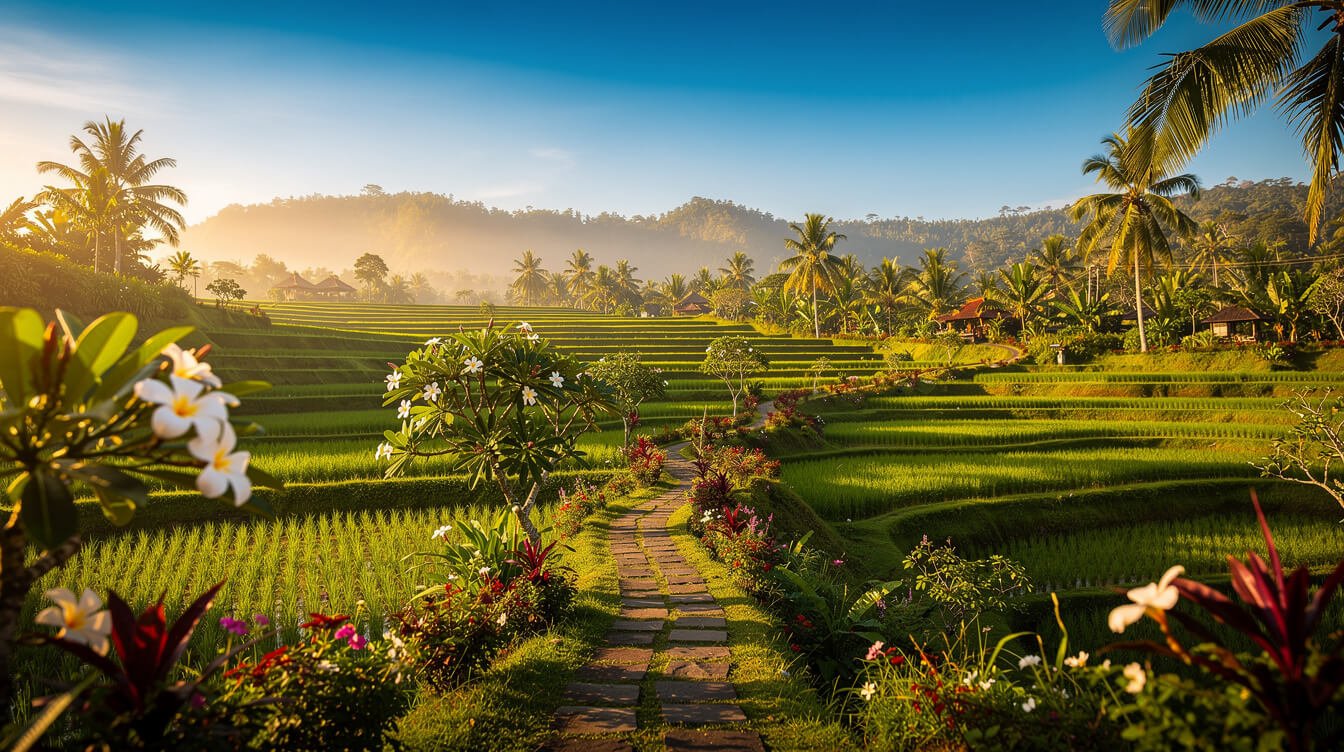
Ubud sits roughly 600 meters above sea level in the foothills of Bali’s central highlands. That elevation matters. It means cooler evenings than the coastal towns, more frequent afternoon mist, and a lushness that never quite fades — even at the peak of dry season.
Bali’s year splits into two broad seasons:
- Dry season (April through October): Lower humidity, clear mornings, warm afternoons in the high 20s to low 30s Celsius. Rain is rare but not absent — short tropical showers can still pass through, especially in the transitional months of April and October.
- Wet season (November through March): Higher humidity, afternoon thunderstorms that arrive like clockwork around 2-4 PM, then clear into warm evenings. Mornings are often still bright. The rice terraces reach their deepest green.
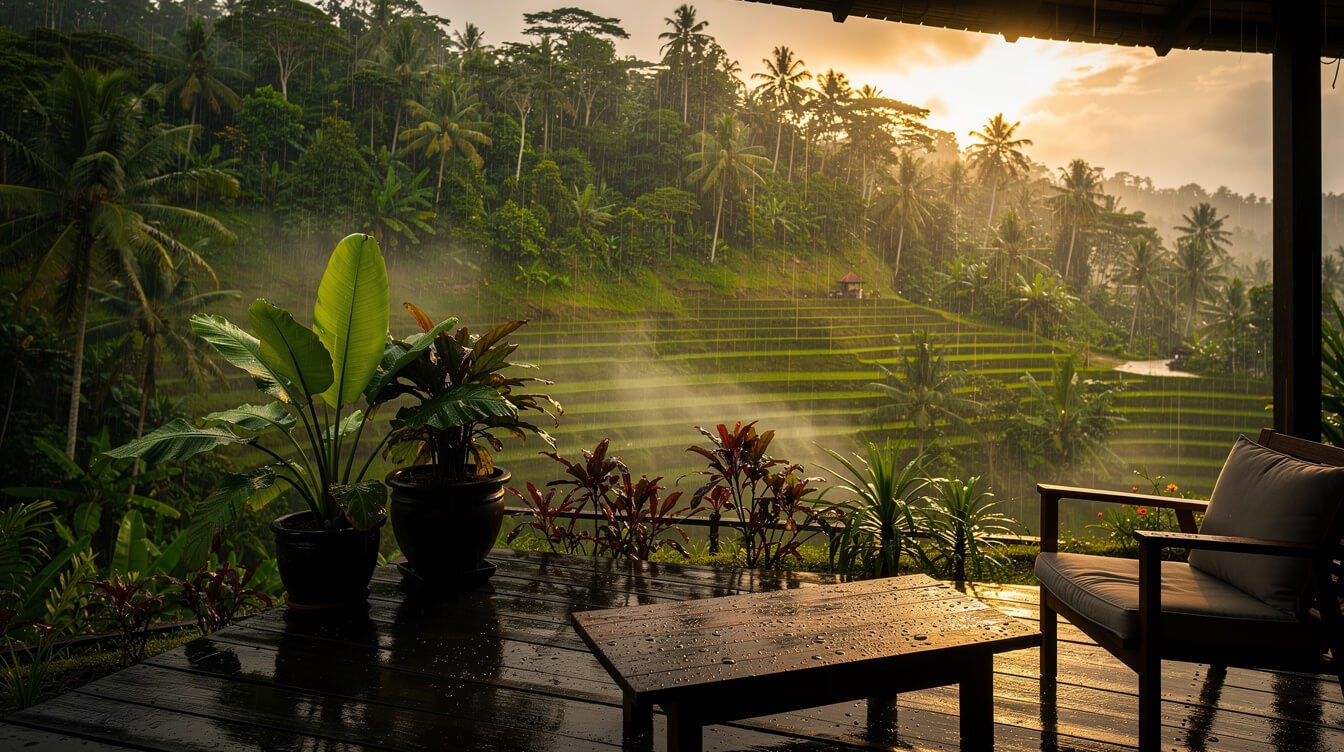
What most guides won’t tell you: Ubud’s wet season isn’t the wall-to-wall rain that Southeast Asian monsoons suggest. It rains hard for an hour or two, then the sky opens. You don’t lose entire days. You gain the smell of wet earth on warm stone, the sound of water running through the terraces, and a village that feels more intimate because the crowds have thinned.
Temperature and What to Pack
Daytime temperatures in Ubud hover between 26-32°C (79-90°F) year-round. Evenings drop to 22-24°C — cool enough that you’ll want a light layer for dinner at an open-air restaurant. Pack a rain jacket for wet season, quick-dry fabrics for both, and something respectful for temple visits (a sarong works beautifully, and they’re sold at every village market).
The Wet Season Advantage: Why November to March Has Its Own Magic
If you’re flexible on dates, the wet season is Ubud’s best-kept advantage. Here’s why experienced Bali travelers return during these months:
Fewer visitors, more village. The rice terrace walks that feel like a queue in August become genuinely peaceful in December. Restaurants have open tables. Spa treatments and wellness retreats are easier to book. The yoga shalas are less crowded, and the teachers have more energy to give.
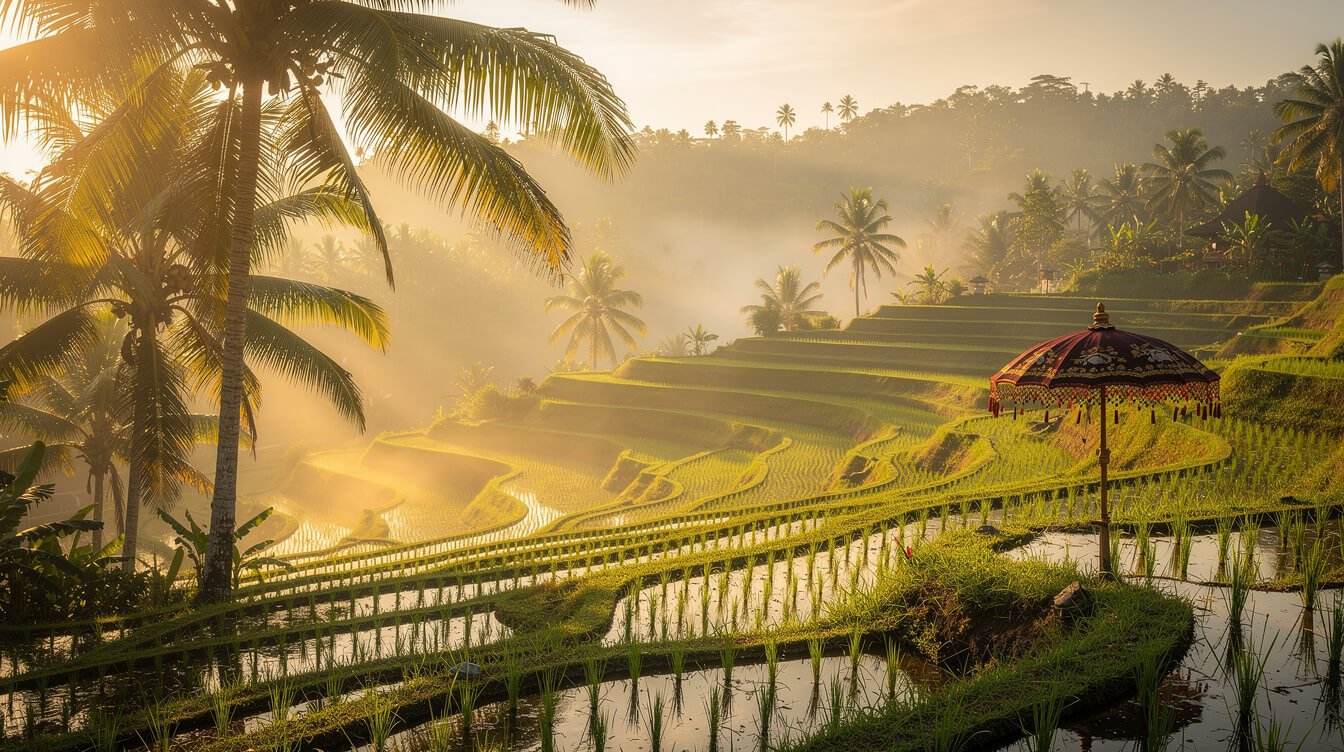
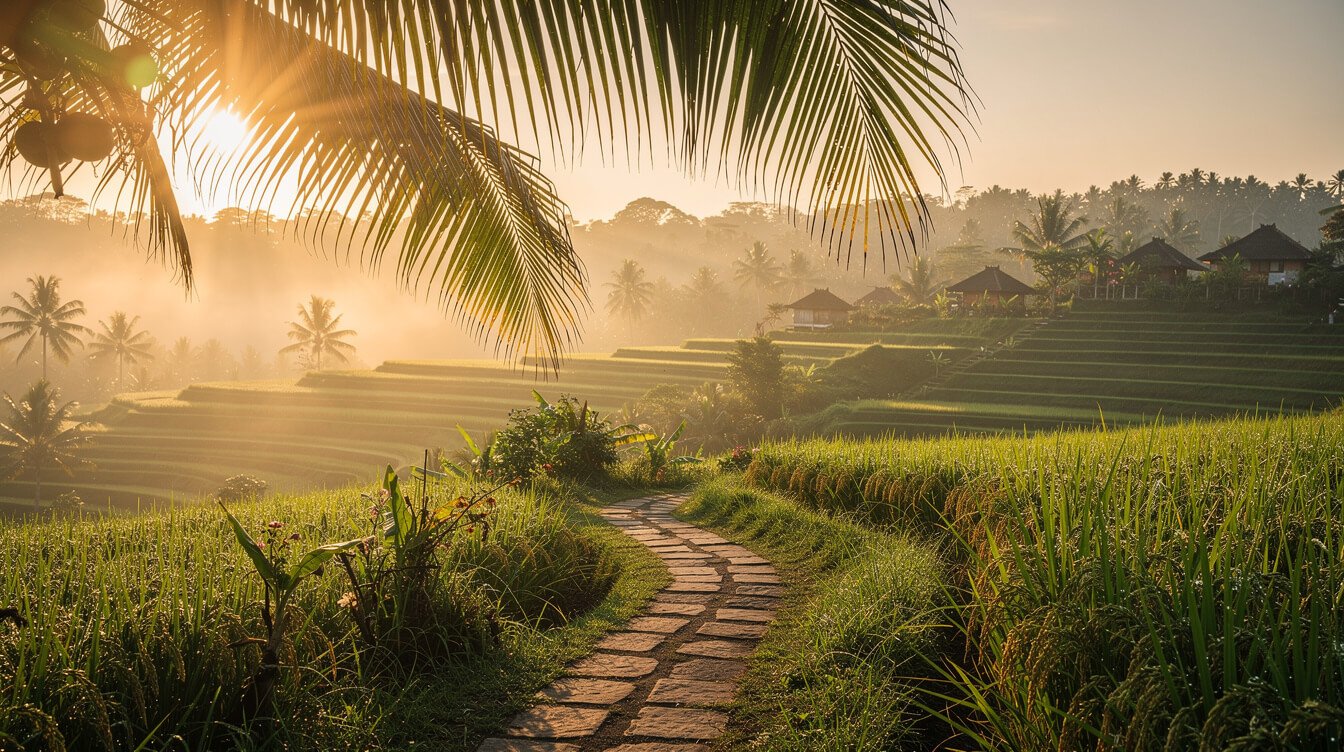
The landscape at its most dramatic. Ubud’s rice terraces follow a planting cycle, and wet season means vibrant new growth. The contrast between emerald paddies and grey afternoon skies creates the kind of photographs that don’t need a filter. Waterfalls run at full force. Streams that barely trickle in July become the soundtrack to your morning walk.
Lower prices across the board. Accommodation rates drop 20-40% outside peak season. That includes villas, restaurants, and activity providers. A private villa with a personal cook that feels like a splurge in August becomes surprisingly accessible in January.
The Wet Season Rhythm
A typical wet-season day in Ubud looks like this: bright morning, warm midday, theatrical thunderstorm between 2-4 PM, then clear skies for sunset. You’ll quickly learn to schedule outdoor activities before lunch and save indoor pleasures — a cooking class, a spa treatment, a long lunch at a rice-field restaurant — for the afternoon rain hours. It becomes second nature within a day.
Get a Free 3-Day Sample Itinerary
Planning your Ubud trip? We’ve mapped out three perfect days — temples, rice fields, food, and quiet corners most visitors miss.
Ubud’s Cultural Calendar: Ceremonies That Shape Your Visit
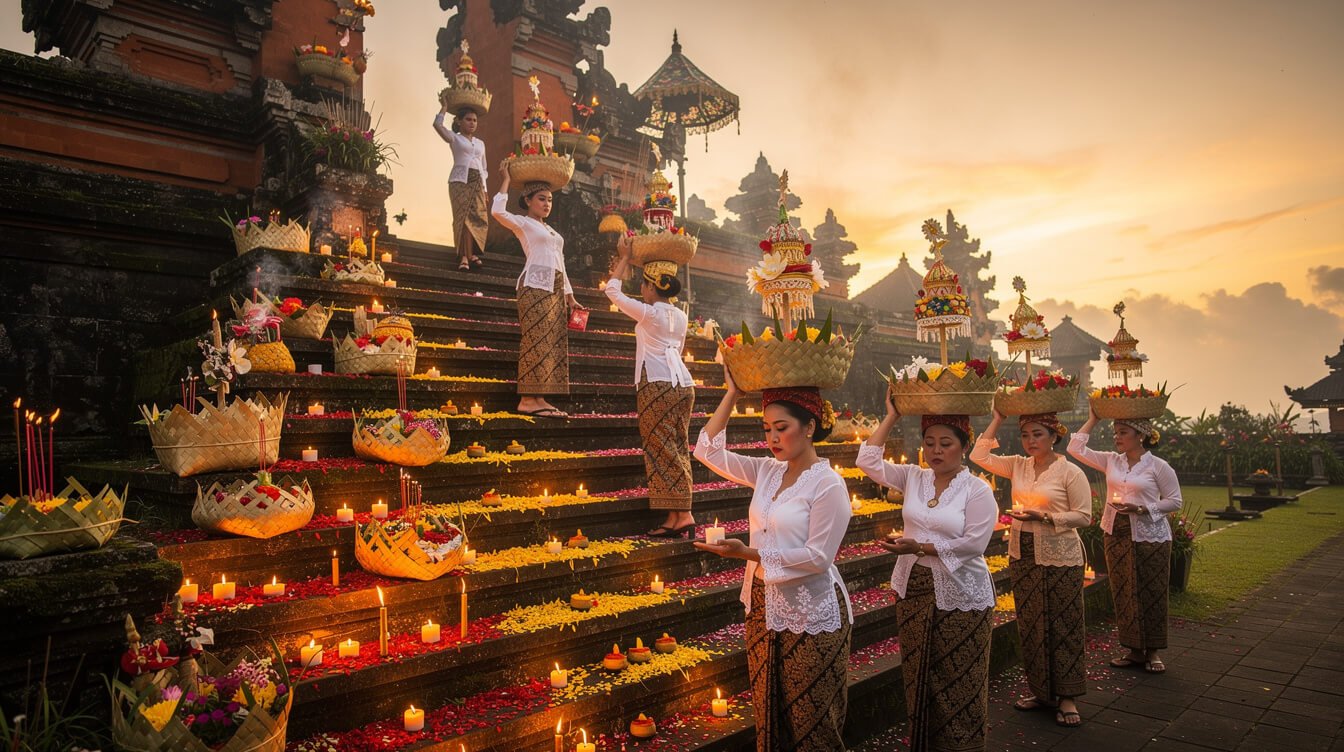
Bali runs on two calendars simultaneously: the Gregorian calendar and the 210-day Balinese Pawukon cycle. This means ceremony dates shift each year, and some of the most extraordinary cultural moments are impossible to predict more than a few months ahead.
These are the major ceremonies that shape the feel of Ubud throughout the year:
Nyepi (Day of Silence) — Usually March
The Balinese New Year. The entire island goes silent for 24 hours — no lights, no traffic, no activity. The night before, enormous ogoh-ogoh (monster effigies) parade through every village with gamelan orchestras and torchlight. It’s extraordinary. If your dates overlap with Nyepi, lean in — the silence is unlike anything you’ve experienced. Just know: no flights land or depart, restaurants close, and you’ll stay in your villa for the day. With a private cook and a pool, that’s hardly a hardship.
Galungan and Kuningan — Every 210 Days
The most important recurring ceremony. Galungan celebrates the victory of good over evil; Kuningan, ten days later, marks the ancestral spirits’ return to heaven. Every village entrance sprouts tall penjor (bamboo poles decorated with offerings), and the roads fill with families in ceremonial white headed to their family temples. Check the Pawukon calendar for exact dates — they happen roughly twice per Gregorian year.
Odalan (Temple Anniversary Celebrations)
Each of Ubud’s hundreds of temples celebrates its own anniversary on a 210-day cycle. On any given week, somewhere within walking distance, there’s an odalan underway — complete with gamelan, dance performances, and elaborate offerings. Your villa manager will know which temples are celebrating and whether visitors are welcome (most are, with appropriate dress).
Full Moon and New Moon Ceremonies
Twice monthly, offerings intensify across the island. Full moon (Purnama) and new moon (Tilem) bring special prayers at water temples, and you’ll notice the village energy shift. These are beautiful days to visit Tirta Empul or one of Ubud’s smaller water temples.
Month-by-Month Guide: What Each Month Feels Like in Ubud

Here’s what to expect from each month, from the perspective of someone who lives with Ubud’s rhythms year-round.
January and February
The heart of wet season. Warm, humid mornings that build to afternoon downpours. The rice terraces are electric green. This is peak low-season — accommodation rates are at their annual lowest, and the village belongs to longer-stay travelers, digital nomads, and yoga practitioners who know the quiet months are the real ones. Expect 15-20 rainy days per month, but rarely full days of rain.
March and April
The transition. March is still wet but tapering. Nyepi typically falls in March, making it an unforgettable time to visit. April marks the shift — rain becomes less predictable, humidity eases, and the light starts to change. April is one of our favorite months: the crowds haven’t arrived yet, the landscape is still lush from the rains, and the dry-season clarity is just beginning.
May and June
The sweet spot for many travelers. Dry, clear, warm but not punishing. May is shoulder season — good rates, few crowds, reliable weather. June brings the start of high season as European and Australian school holidays begin. Book earlier for June if you want specific dates. The rice terraces show a mix of planting stages — golden harvested fields next to bright green new growth.
July and August
Peak season. The weather is at its driest and the days are warm and bright, but Ubud feels noticeably busier. Popular restaurants require reservations. The Tegallalang rice terraces are thick with visitors by 10 AM. If you come in high season, a staffed villa with a private pool becomes more than comfort — it’s your retreat from the bustle. Mornings are still magical; just start early.
September and October
The winding down of dry season. September is still warm and dry, often with spectacular sunsets as the air holds a faint haze from the season. October is another transitional gem — the first afternoon rains return, refreshing the landscape after months of dry heat. Accommodation rates start to ease. October offers the best of both worlds: enough dry weather for outdoor adventures and the first hints of the green lushness to come.
November and December
Wet season returns. November is genuine low season — excellent rates, peaceful village mornings, warm rain in the afternoons. December splits: the first three weeks are still quiet and affordable, then the holiday surge arrives. Christmas through New Year is Ubud’s second-highest demand period (after July-August), with rates and crowds spiking sharply. If you’re visiting in December, book before the 20th for the best of both worlds — wet-season magic without holiday markups.

Ready to Book Your Ubud Stay?
Villa Amrita is a 3-bedroom staffed pool villa in the heart of Ubud — private chef, tropical garden, and a team that holds every detail of your stay.
Best Time to Visit Ubud for Wellness, Yoga, and Retreats
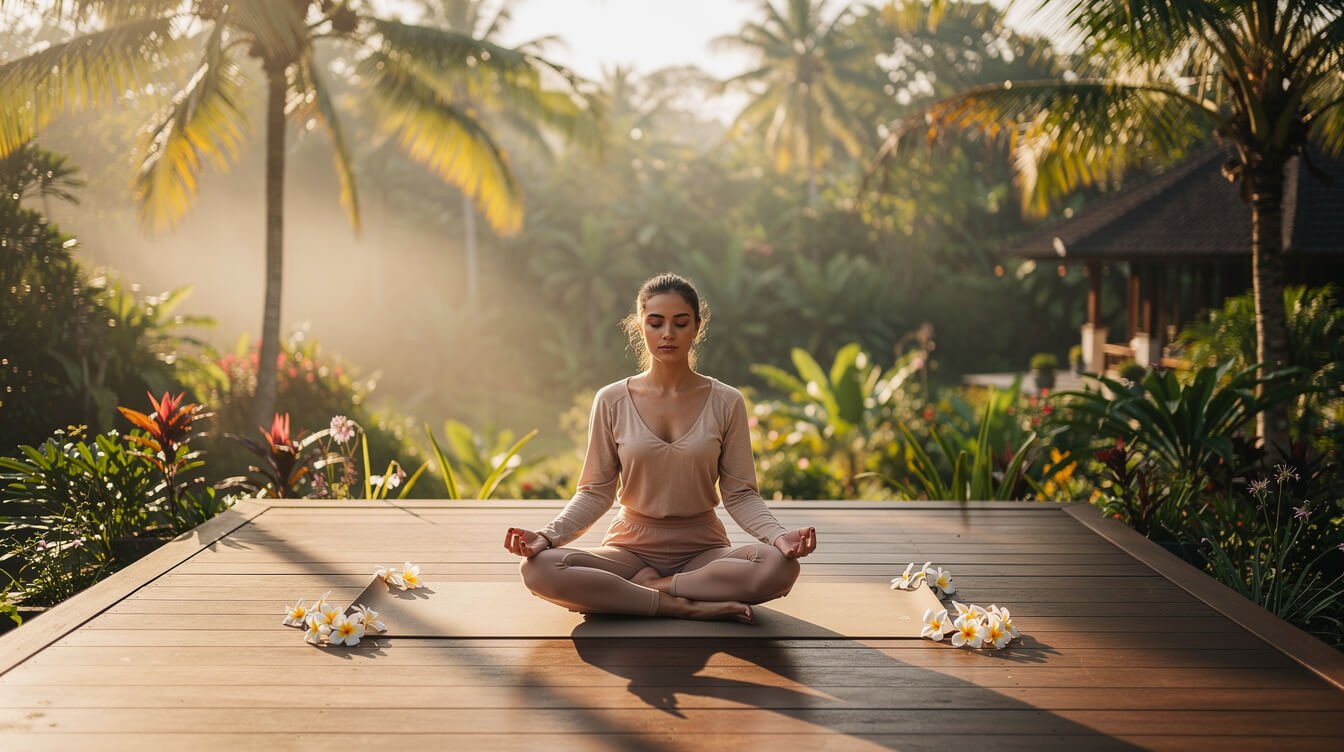
Ubud has earned its reputation as a global wellness destination, and the best time to visit Ubud Bali for yoga and retreats depends on what kind of experience you want.
For structured retreats and teacher trainings: January through March and September through November are the prime seasons. Retreat leaders book their Ubud cohorts during shoulder and low season, when villa rates are lower and the atmosphere is calmer. If you’re joining a yoga teacher training or wellness intensive, these months offer the deepest immersion.
For drop-in yoga and spa culture: Year-round. Ubud’s yoga shalas — Yoga Barn, Radiantly Alive, Intuitive Flow — run daily classes regardless of season. The difference is density: in August, popular morning classes fill up. In February, you might have four other people in the room.
For Balinese healing traditions: Water purification ceremonies at Tirta Empul and sessions with traditional balian (Balinese healers) are available year-round, but full moon and new moon dates add spiritual significance. Ask your villa manager to arrange a visit — they’ll know which healers are receiving visitors and which ceremonies are appropriate.
A private villa makes wellness travel simpler. Your morning starts with the chef’s breakfast on the pool deck rather than a hotel buffet queue. You practice in your garden if you like. And when you need quiet, you have it — no shared corridors, no lobby noise, just birdsong and the sound of water in the garden.
Practical Booking Tips: When to Reserve and What to Expect

Timing your booking matters as much as timing your visit. Here’s what we’ve learned from years of hosting:
Book Early for These Periods
- July and August: Peak demand. Book 3-6 months ahead for specific dates at premium villas.
- Christmas through New Year (Dec 20 – Jan 5): The highest rates of the year and the fastest to sell out. Book 4-6 months ahead.
- Nyepi week (March): Not the busiest period overall, but uniquely popular with travelers seeking the experience. Book 2-3 months ahead.
- Indonesian public holidays: Eid al-Fitr, Idul Adha, and Independence Day (August 17) bring domestic tourism surges. Dates vary annually.
Best Value Periods
- January through mid-March: Lowest rates, fewest visitors. Genuine quiet-season pricing.
- May and early June: Dry weather, pre-peak rates. The sweet spot for value-conscious travelers who want good weather.
- Late September through November: Shoulder season trailing off. Excellent rates as high season ends.
Getting Here
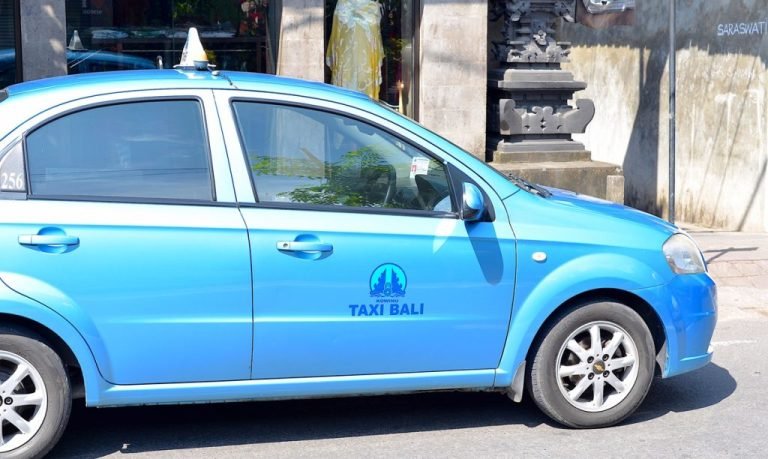
Ngurah Rai International Airport (DPS) in southern Bali is your arrival point. The drive from the airport to Ubud takes about 90 minutes depending on traffic — your villa can arrange a private transfer so you arrive without the stress of negotiating with taxi drivers after a long flight.
How Long to Stay
We recommend a minimum of four nights in Ubud. That gives you time to adjust to the rhythm, explore beyond the central market area, and actually relax. Many of our guests book seven to ten nights and wish they’d booked longer. Ubud rewards slow travel — it’s not a destination you can rush through with a checklist.
Frequently Asked Questions About Visiting Ubud
What is the cheapest month to visit Ubud?
January and February offer the lowest accommodation rates across the board. Wet season means fewer tourists and off-peak pricing at villas, restaurants, and activity providers. Expect savings of 20-40% compared to July-August rates.
Is Ubud worth visiting in rainy season?
Absolutely. The rain follows a predictable afternoon pattern — mornings are typically bright and warm. The landscape is at its most dramatic, crowds are thin, and the village feels more authentic. Experienced Bali travelers often prefer wet season specifically for these reasons.
How many days do you need in Ubud?
A minimum of four nights to feel the rhythm. Seven to ten nights if you want to explore properly — cooking classes, temple visits, day trips to surrounding villages and waterfalls, and genuine downtime. Ubud is a place that reveals itself slowly.
Is Ubud hotter than the beach areas?
Slightly cooler, actually. At 600 meters elevation, Ubud’s evenings drop to 22-24°C — pleasant enough for a light layer at dinner. Daytime heat is similar to the coast but offset by the green canopy and the absence of reflected heat from sand and sea.
When is the best time to visit Ubud Bali for honeymoons?
May, June, and September offer the ideal combination: dry weather, manageable crowds, and rates that leave room in your budget for special experiences — a private dinner by the pool, a couples’ spa treatment, a sunrise hike to the volcanic lakes. If you’re flexible, these shoulder months are genuinely romantic without the high-season intensity.
Your Ubud Stay Starts with the Right Timing
The best time to visit Ubud Bali isn’t a single answer — it’s a conversation between what you want your trip to feel like and what each season offers. Dry season for blue skies and easy planning. Wet season for intimacy, value, and the most vivid version of the landscape. Ceremony season for something you’ll never forget.
Whatever month you choose, Ubud will hold you. The rice fields don’t care about your itinerary. The chef will have breakfast ready before you wake. The gardener will have clipped frangipani for the bedside vases, rain or shine.
That’s what a staffed stay in Ubud actually feels like — not a destination you visit, but a rhythm you step into.

Join Our Newsletter
Fun, new, exciting Bali news — what’s blooming in Ubud, ceremonies to catch, quiet corners we’ve found, and travel tips from the team. No spam, just warmth from the village.