The Offerings You’ll Learn to Step Around
The first morning, you almost don’t see them.
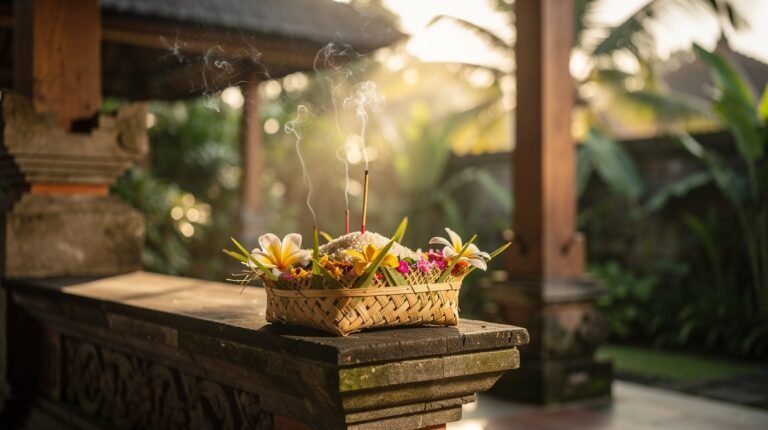
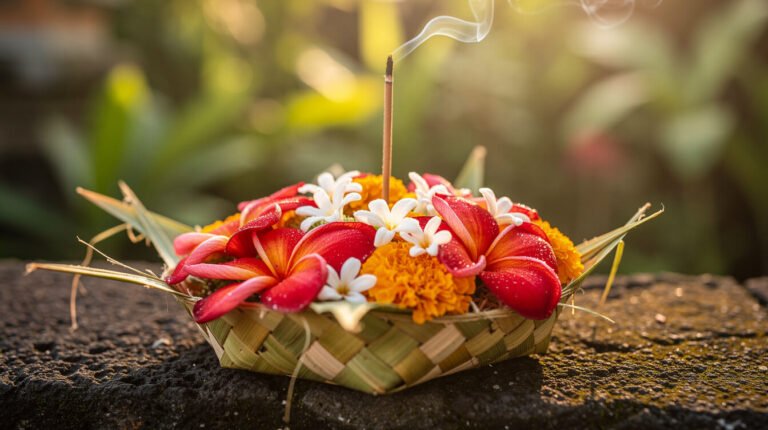
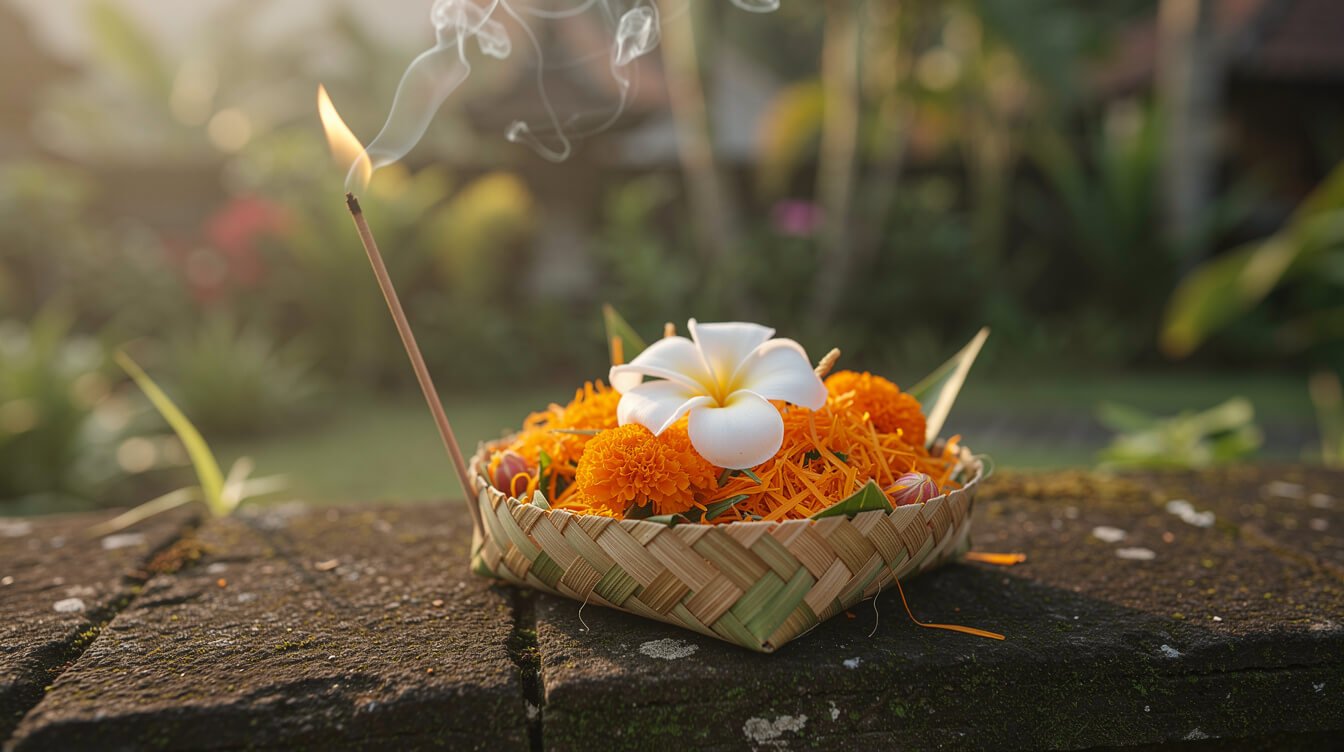
Small woven trays — palm leaf, no bigger than your hand — placed at the base of the garden shrine, at the edge of the pool deck, on the stone step by the front door. Each one holds a few petals, a pinch of rice, a stick of incense still smoking.
These are canang sari. The daily offerings that show up before breakfast, before the coffee, sometimes before you’re awake.
Made places them. She moves through the villa grounds the way she always does — quiet, deliberate, starting with the family temple in the garden’s far corner, then the house shrine, then every doorway and threshold. A small prayer at each one. A quick touch of incense to her forehead. The whole thing takes maybe fifteen minutes, and by the time you come downstairs, she’s already in the kitchen slicing fruit.
You’ll step around them at first because you’re told to. You’ll step around them later because it feels right.
The offerings aren’t for you. They’re for the spirits — the seen and the unseen that Balinese Hinduism holds in constant conversation. Good spirits get offerings placed high, on shrines and altars. For the ground-level ones — the ones at your feet on the stone path — the gesture is different: an acknowledgment, a small kindness, a way of keeping the balance.
There’s no drama to it. No ceremony bell, no incense cloud filling the room. Just a woman in a sarong, a tray of flowers, and fifteen minutes of attention before the day begins.
What you notice after a few days is the rhythm. The offerings appear. The incense burns down. By afternoon, the petals have scattered — into the grass, across the pool deck, carried off by the breeze or the garden gecko. And the next morning, fresh ones appear. The cycle doesn’t ask you to participate. It just happens around you, steady as the rice fields being tended beyond the garden wall.
Some guests ask about the offerings. Made explains — patiently, the way she explains everything — that the temple traditions are woven into daily life here, not reserved for special occasions. Every day is an occasion. Every threshold gets attention.
You don’t need to understand it all. But after a week in Ubud, stepping around those small trays of frangipani and marigold starts to feel like the most natural thing — a quiet agreement between you and a place that was here long before you arrived.