Tegenungan Waterfall Bali: What the Guides Don’t Tell You About Ubud’s Closest Waterfall
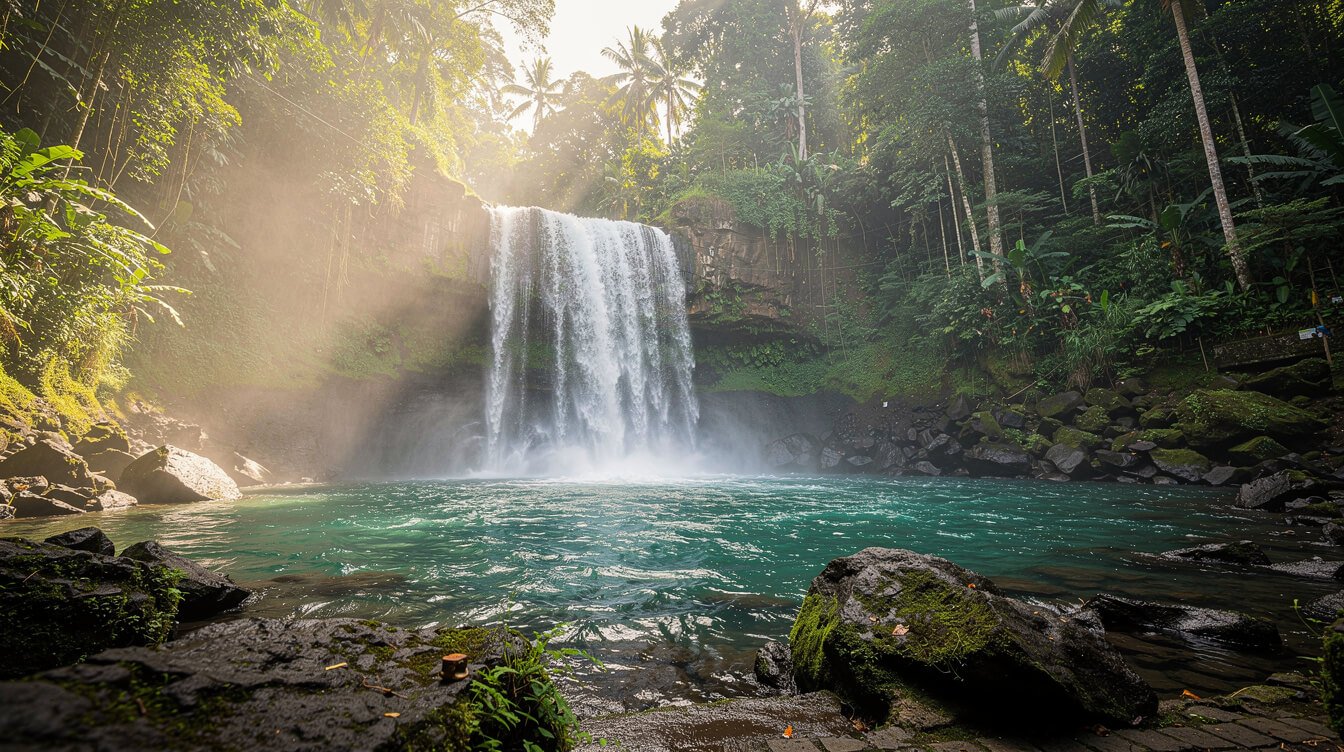
You hear Tegenungan Waterfall before you see it. The sound builds as you descend — a low rumble that sharpens into a full roar, bouncing off volcanic rock and wrapping around you like the humidity itself. By the time the cascade comes into view, framed by jungle and backlit by morning sun, the anticipation has done its work. This is not a gentle stream. Tegenungan Waterfall Bali is Ubud’s closest major waterfall, a twenty-five-minute drive south through rice fields and village roads, and it delivers the kind of raw, immediate nature encounter that makes the trip to Bali worth every hour on the plane.
What most guides won’t tell you is that Tegenungan is more than a photo stop. The Petanu River that feeds it is sacred in Balinese Hindu tradition. The valley floor holds a natural swimming pool that changes personality with the seasons. And if you time your visit right — early morning, weekday, dry season — you’ll have the kind of quiet waterfall moment that most visitors assume only exists at remote, hard-to-reach falls deep in the jungle.
This guide covers everything: how to get there from Ubud, what makes the water sacred, the best season and time of day to visit, what to expect when you arrive, how to photograph it properly, and how to combine Tegenungan with nearby waterfalls for a full morning of waterfall exploration.
What Makes Tegenungan Waterfall Bali Worth the Visit
There is a particular quality to the air around a waterfall — cooler, wetter, charged with negative ions that science says improve your mood and the Balinese simply call taksu, the invisible energy of a place. Tegenungan has taksu in abundance. The falls drop roughly fifteen meters into a wide natural pool surrounded by volcanic rock walls, moss-covered boulders, and dense tropical vegetation that keeps the light soft and green even at midday.
What separates Tegenungan from the dozens of other waterfalls scattered across Bali’s interior is accessibility without sacrifice. Most of the island’s genuinely impressive falls — Sekumpul, Aling-Aling, Nungnung — require a minimum ninety-minute drive from Ubud plus a serious jungle hike. Tegenungan gives you the same wall of rushing water, the same mist on your face, the same adrenaline-meets-calm sensation, but it’s barely thirty minutes from central Ubud by motorbike.
That proximity makes it ideal for travelers who want the waterfall experience without surrendering an entire day to transport. Visit Tegenungan in the morning, be back at your villa by lunch, and spend the afternoon at the pool. For guests planning how many days to spend in Ubud, Tegenungan fits neatly into even the tightest itinerary.
The falls sit at the base of a shallow river gorge in Kemenuh village, Sukawati district. The Petanu River feeds them year-round, though the volume and intensity change dramatically between wet and dry seasons — more on that below. Around the falls, local families have carved out a small economy: warungs selling cold coconuts, changing rooms, and a handful of viewpoints including one famous Instagram swing perched above the gorge.
Where Tegenungan Waterfall Is and How to Get There from Ubud
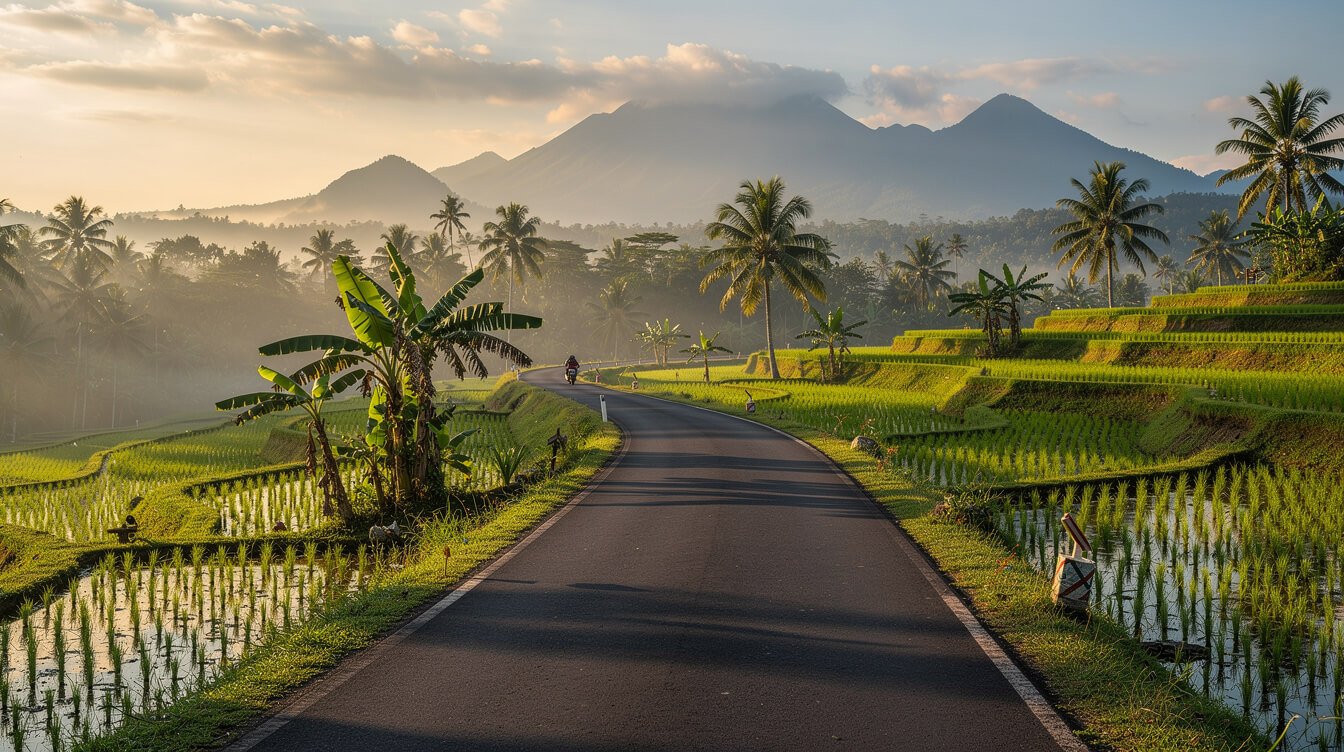
Tegenungan Waterfall sits in the village of Kemenuh, about ten kilometers south of central Ubud. The drive takes twenty to thirty minutes depending on traffic, and the route passes through some of the prettiest rice-field scenery on the island.
By Motorbike (Best Option)
Renting a scooter in Ubud costs around 70,000–100,000 IDR per day. Head south on Jalan Raya Ubud toward Mas, then follow the signs to Kemenuh. Google Maps will route you accurately — search “Tegenungan Waterfall” and it’s well-marked. The road is paved the entire way, with only the final few hundred meters narrowing to a single lane.
Parking at the waterfall entrance is 5,000 IDR for a motorbike.
By Car or Driver
If you prefer not to ride, hiring a driver for a half-day in Ubud runs about 400,000–500,000 IDR. This is a good option if you plan to combine Tegenungan with other stops like Tegallalang Rice Terrace or the artisan villages of Mas and Celuk. Your driver will wait while you explore — car parking is 10,000 IDR.
If you’re staying with us, our villa manager can arrange a trusted driver who knows exactly when to arrive for the best light and the fewest crowds. Just ask at breakfast — it’s the kind of small detail that a good local guide in Bali handles without you thinking about it.
By Ride-Hail (Grab or Gojek)
Grab and Gojek work from Ubud to Tegenungan. Expect 30,000–50,000 IDR one way. The challenge is the return: cell signal at the waterfall can be weak, and ride-hail availability in Kemenuh is limited. If you go this route, consider pre-arranging your return pickup or walking up to the main road to get a signal.
Entrance Fee
The entrance fee for international visitors is 20,000 IDR (roughly $1.25 USD) as of 2026. This is one of the most affordable waterfall entries in Bali — some north Bali falls now charge 50,000–100,000 IDR. Children under 10 typically enter free.
Get a Free 3-Day Sample Itinerary
Waterfalls, rice terraces, temples, and the best local warungs — mapped out morning to evening, with insider timing tips from our villa team.
The Sacred Water: What Tegenungan Means in Balinese Culture
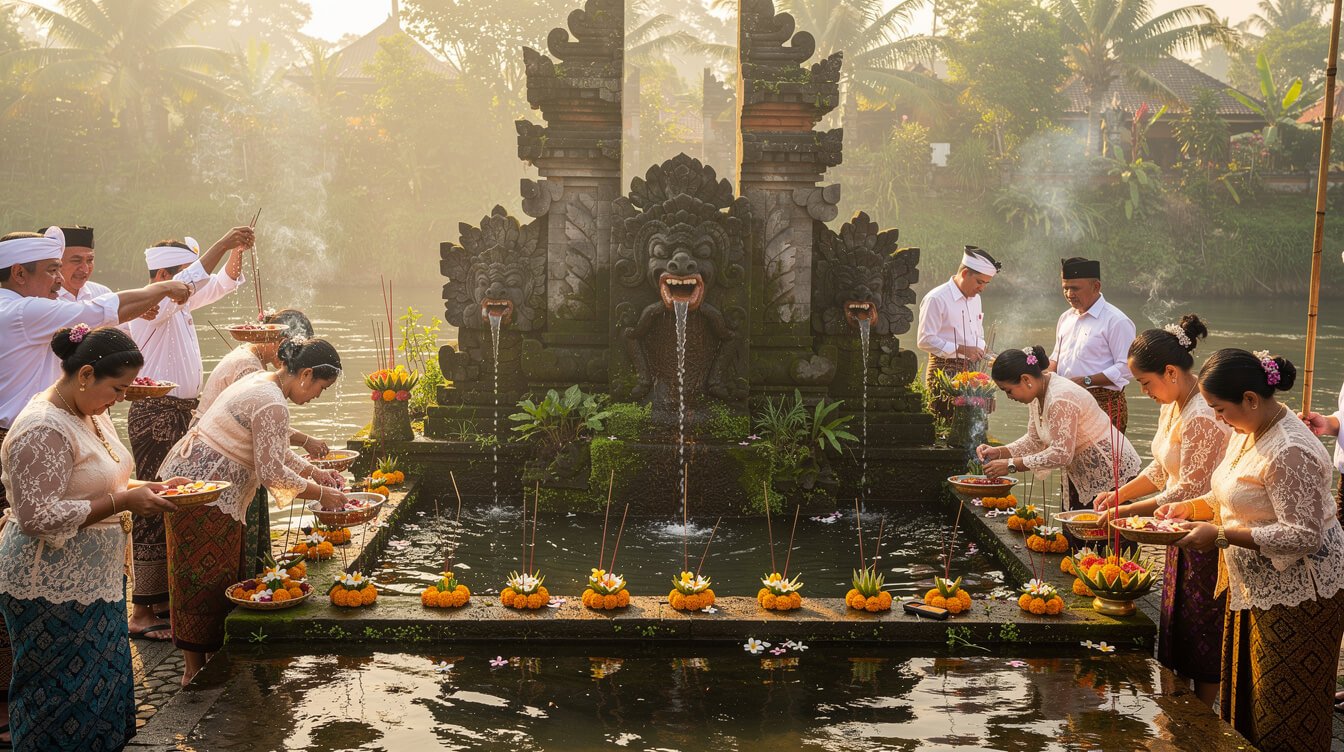
Most visitors treat Tegenungan as a swimming spot and a photo opportunity. Few realize they’re standing at one of the outlets of the Petanu River — one of the most spiritually significant waterways in Balinese Hindu tradition.
In the Usana Bali, an ancient Balinese text, the Petanu and its twin the Pakerisan are described as rivers born from the tears of Shiva, flowing through the landscape to purify the earth. The Petanu’s name itself carries weight: in older Balinese, it’s associated with prohibition and power, linked to legends of a curse that once prevented the rice along its banks from being harvested (the ban was lifted centuries ago, but the spiritual charge remains).
Today, the Petanu River still serves as a site for melukat — the Balinese water purification ceremony. You may notice small offerings of flowers, rice, and incense placed at the river’s edge near the falls. These are canang sari, daily offerings that acknowledge the sacred nature of the water. If you see a Balinese family performing a ceremony near the base of the falls, give them space and quiet. What you’re witnessing is not performance; it’s prayer.
Understanding this context changes how you experience Tegenungan. The roar of the water isn’t just beautiful — it’s part of a living spiritual landscape that the Balinese have honored for centuries. If you’re drawn to the spiritual side of Bali, our complete guide to Ubud’s waterfalls covers several falls where the sacred tradition is even more intimate and less visited.
When to Visit Tegenungan Waterfall Bali: Season by Season
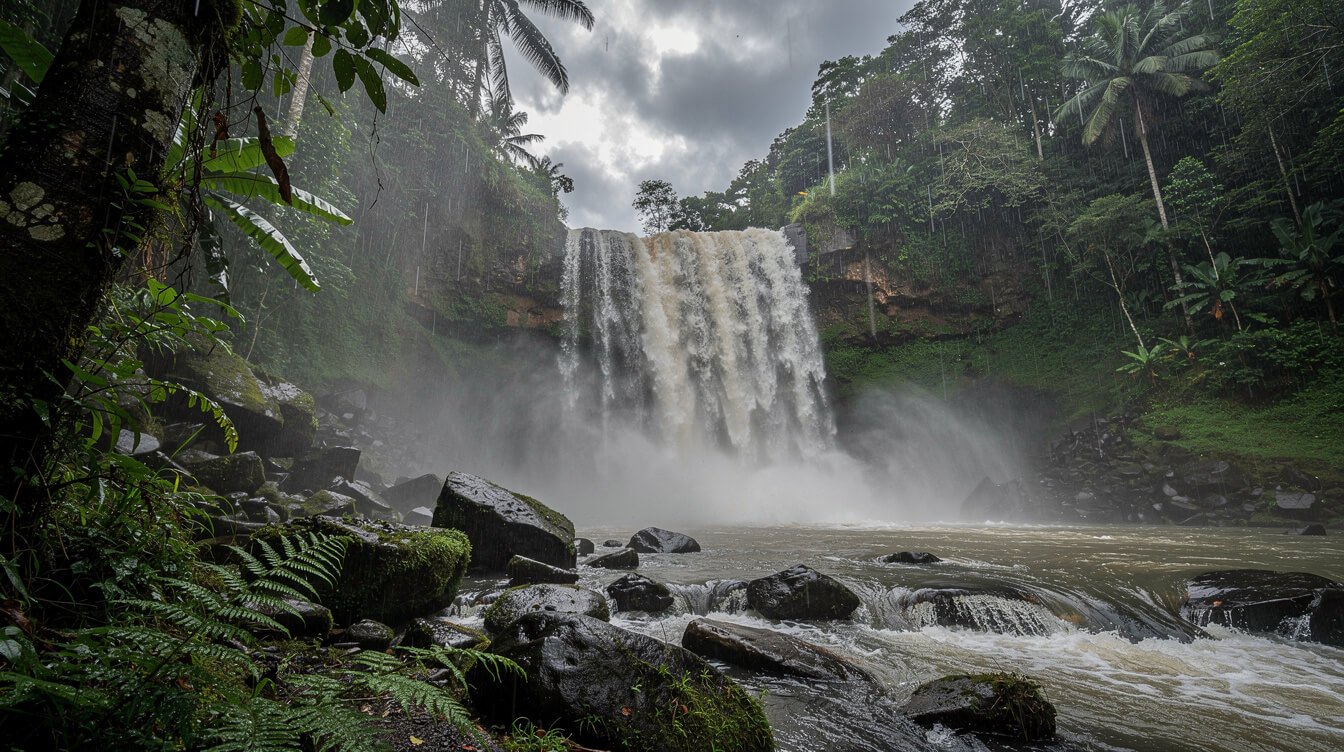
Tegenungan transforms between seasons, and the version you visit depends entirely on when you arrive in Bali. Neither is better — they’re different experiences.
Dry Season (April to October)
The water volume drops, thinning the cascade to a graceful single curtain rather than a wall of white. The pool below becomes calmer, clearer, and genuinely swimmable — you can wade right up to the base of the falls and feel the spray without the force. The stone steps down to the gorge floor are dry and manageable. Crowds peak during July and August (European summer holidays), but early mornings before 8:30 AM are reliably uncrowded even in peak season.
This is the best time for swimming and for first-time visitors who want an easy, comfortable experience.
Wet Season (November to March)
The Petanu swells. Tegenungan becomes genuinely dramatic — the cascade widens to fill the entire rock face, the mist reaches halfway up the gorge, and the sound is a full-body roar that you feel in your chest. The pool churns too hard for safe swimming (the current is real), but the visual spectacle is incomparably more powerful. The stone steps get slippery — take your time and wear shoes with grip, not flip-flops.
Wet season also means fewer tourists, lower prices across Ubud, and an intensity of green in the surrounding jungle that dry season can’t match. If you’re visiting during the Bali rainy season, mornings are often clear — the rain typically arrives in late afternoon bursts, so an early waterfall visit works beautifully.
Best Time of Day
Arrive between 7:00 and 8:00 AM for the sweet spot: soft morning light angling into the gorge, mist still rising off the pool, and only a handful of other visitors. By 10:00 AM, the tour groups arrive. By noon, the gorge floor is packed. If you can only do afternoon, aim for 3:30–4:30 PM when the day-trippers have cleared out and the light turns warm and golden.
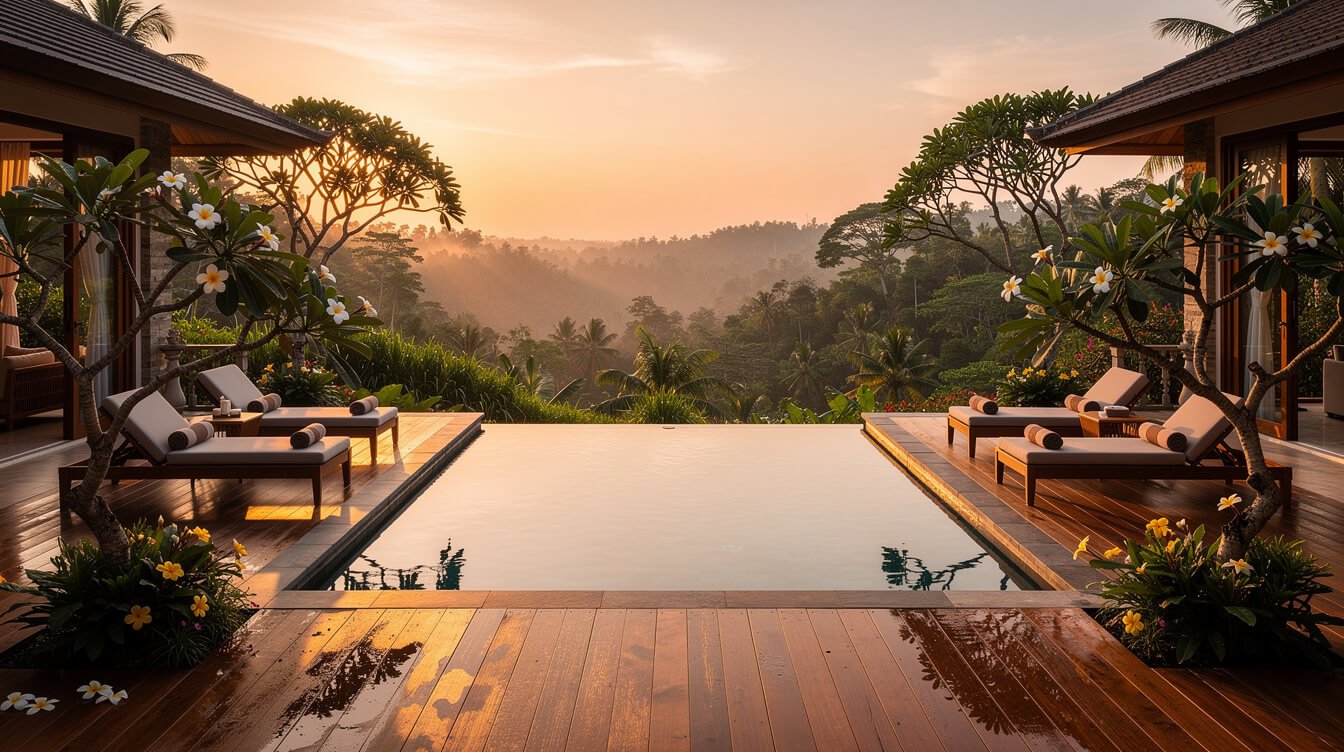
Your Ubud Base for Waterfall Mornings
Tegenungan is 25 minutes from Villa Amrita. Come back to a pool, a garden, and a chef who already knows what you’d like for lunch.
What to Expect When You Arrive at Tegenungan Waterfall
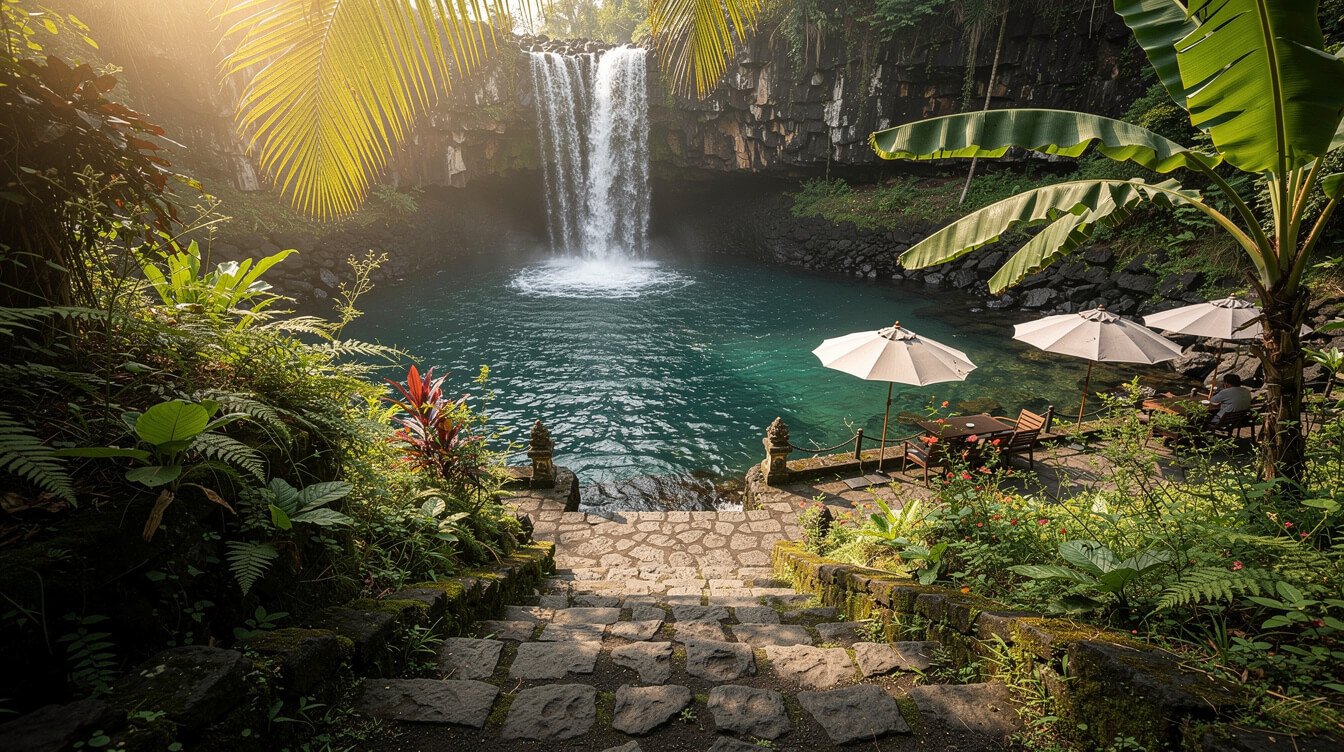
The entrance is at the top of the gorge, where a cluster of warungs, souvenir shops, and the ticket booth mark the boundary between the village road and the descent. You’ll pay your 20,000 IDR entrance fee here. Basic changing rooms and toilets are available (bring your own towel and dry bag for valuables).
The Descent
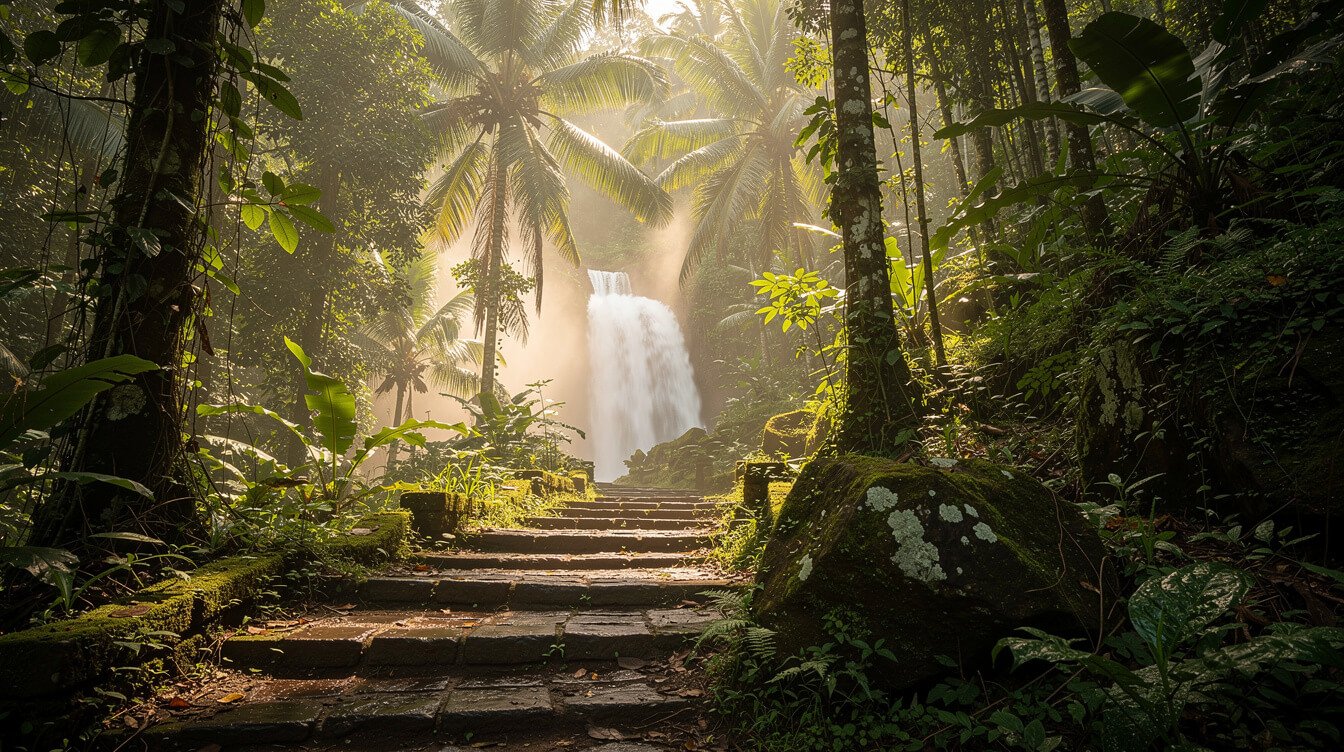
From the entrance, a stone staircase drops roughly eighty meters into the gorge. The stairs are uneven and can be slippery when wet — wear proper shoes, not sandals. The descent takes about five minutes at a comfortable pace. Along the way, you’ll pass viewpoints where the falls come into frame through gaps in the jungle canopy — these are excellent photography positions if you don’t want to descend all the way.
The Gorge Floor
At the bottom, you’ll find a natural pool at the base of the falls. In dry season, you can wade and swim here. The water is cool — not cold — and the rocky bottom is visible through clear water. The area to the left of the falls (as you face them) is generally calmer for swimming. The area directly below the cascade has real force behind it — respect the water.
To the right side of the falls, a narrower path leads to a second, smaller cascade — fewer people bother walking over, so it’s a good escape from the crowds. There’s also a rice terrace viewpoint above the gorge on the opposite side, accessible via a different entrance path (follow signs for “Blangsinga Waterfall viewpoint”).
Facilities
Small warungs at the bottom sell cold drinks, coconuts, and simple snacks. There are no lockers — keep your phone in a waterproof pouch if you plan to swim. The Instagram swing is at the top of the gorge, not at the waterfall itself, and costs extra (usually 100,000–150,000 IDR for photos). If you’re interested in swings with better views, the Bali swing guide covers all your options across the island.
Photography at Tegenungan Waterfall Bali: Best Spots and Timing
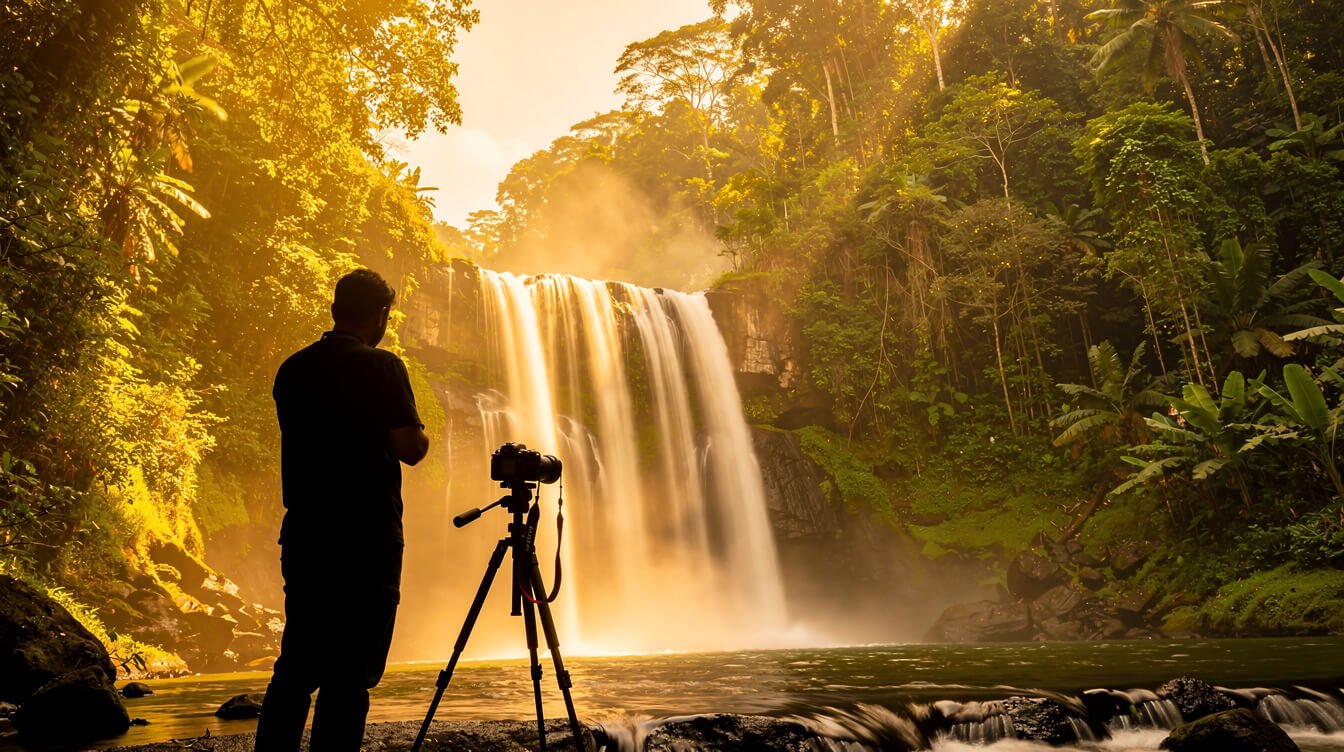
Tegenungan is one of the most photographed waterfalls in Bali, which means the obvious angles have been done. Here’s how to get something worth keeping.
Morning Light (7:00–8:30 AM)
The gorge faces roughly east, so morning sun enters at an angle that backlights the mist and creates natural flare effects. This is when the falls photograph best — the spray catches the light and the surrounding vegetation glows. You’ll also have the pool area largely to yourself, which means clean compositions without crowds.
Midday (11:00 AM–2:00 PM)
Direct overhead sun kills the drama. The gorge loses its contrast, the mist turns white and featureless, and the crowds make it nearly impossible to isolate the falls in a frame. Avoid this window if photography matters to you.
Golden Hour (4:00–5:00 PM)
The sun drops low enough to warm the gorge from the west side, painting the rock walls orange and turning the mist golden. This is the most cinematic window, but you’ll need to be quick — the gorge loses light fast once the sun goes behind the ridge.
Gear Tips
Bring a lens cloth — the mist coats everything within minutes. A polarizing filter cuts the glare off the water surface and deepens the greens. For phone photography, wipe the lens constantly and shoot in burst mode to catch the water at different stages of the cascade. A waterproof phone pouch (50,000 IDR in any Ubud shop) is essential if you want to shoot from the pool level.
Long exposure from the mid-gorge viewpoint (accessible on the staircase descent) produces dreamy, silky water effects. Even a 1/4-second shutter speed smooths the cascade dramatically. A small travel tripod or gorilla pod makes this achievable without a full photography kit.
Combining Tegenungan with Other Nearby Waterfalls
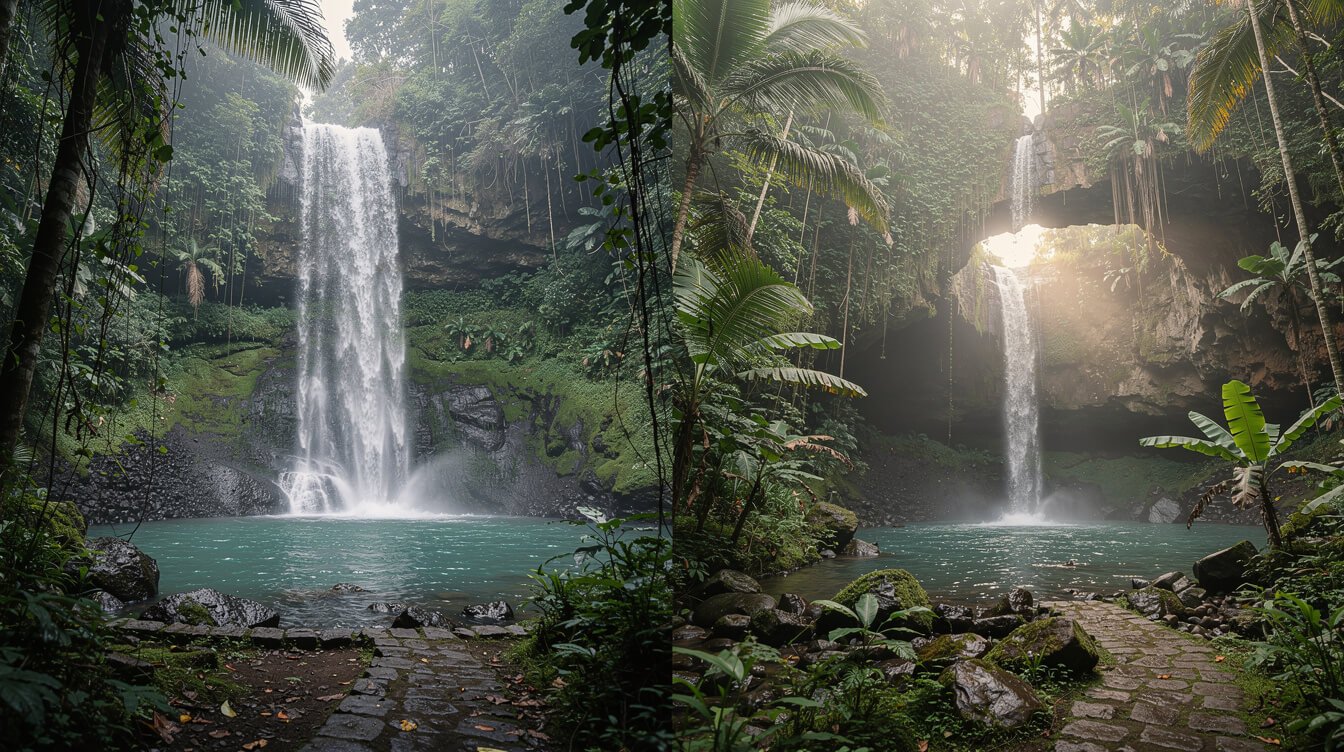
Tegenungan is the closest waterfall to Ubud, but it’s not the only one worth your morning. Two other falls sit within a thirty-minute drive of Tegenungan, making a three-waterfall morning entirely doable — and one of the best half-day activities in the Ubud area.
Tibumana Waterfall (20 Minutes from Tegenungan)
Head east from Tegenungan toward Bangli and you’ll reach Tibumana — a quieter, more intimate waterfall that drops into a narrow rock pool surrounded by overhanging jungle. The descent is shorter (about 10 minutes on well-maintained steps), the crowd is a fraction of Tegenungan’s, and the pool is deep enough for proper swimming. Entrance fee: 15,000 IDR.
Tibumana is the introvert’s waterfall. The sound is softer, the gorge is narrower, and the light filtering through the tree canopy creates a green cathedral effect that photographs beautifully even at midday. If you can only visit two waterfalls, make it Tegenungan for drama and Tibumana for peace.
Tukad Cepung Waterfall (35 Minutes from Tegenungan)
Continue east past Tibumana and you reach Tukad Cepung — arguably the most visually extraordinary waterfall in the Ubud area. The falls drop through a narrow cave opening, and between roughly 9:00 and 10:30 AM, direct sunlight enters the cave at an angle that creates dramatic light beams through the mist. The effect is genuinely otherworldly.
The hike down to Tukad Cepung involves wading through a shallow river for the final stretch — wear shoes you don’t mind getting wet. Entrance fee: 15,000 IDR.
Suggested Three-Waterfall Morning Route
- 7:00 AM — Leave Ubud for Tegenungan (25 min drive). Arrive for first light in the gorge.
- 8:30 AM — Drive to Tibumana (20 min). Swim, cool off, quieter atmosphere.
- 9:30 AM — Drive to Tukad Cepung (15 min). Time the light beams at their best.
- 11:00 AM — Drive back to Ubud (40 min). Lunch at a warung in Mas village on the way.
For a fuller picture of all the waterfalls worth visiting from Ubud — including more remote options in the north — see our complete Ubud waterfall guide.
If you’re building a broader Ubud itinerary and want to slot waterfall mornings alongside rice terraces, temples, and food markets, the 3-day Ubud itinerary maps it all out, day by day.
Frequently Asked Questions About Tegenungan Waterfall Bali
Is Tegenungan Waterfall safe for swimming?
In dry season (April–October), yes — the pool below the falls is calm enough for swimming, and many visitors wade up to the base. In wet season, the current is too strong for safe swimming. Always check conditions when you arrive and respect any local warnings.
How much does it cost to visit Tegenungan Waterfall?
The entrance fee is 20,000 IDR (about $1.25 USD) for international visitors. Parking is 5,000 IDR for motorbikes, 10,000 IDR for cars. The Instagram swing is an additional 100,000–150,000 IDR.
What should I wear to Tegenungan?
Wear shoes with grip (not flip-flops) — the stone steps are uneven and can be slippery. Bring a swimsuit if you plan to swim, a dry bag for electronics, and a towel. If you’re heading to Tegenungan as part of a bigger day, check our Bali packing guide for the full rundown.
How long should I spend at Tegenungan?
Plan for 60 to 90 minutes — enough time to descend, swim or photograph, explore the second cascade, and climb back up. Add 30 minutes if you want to try the swing or linger at a warung.
Can I visit Tegenungan with young children?
Yes, but the stairs require attention. Children over 5 can manage the descent with supervision. The pool area has shallow edges suitable for wading. Carry young children down — the steps aren’t stroller-friendly.
Is Tegenungan worth visiting if I’ve already been to Sekumpul or Nungnung?
Absolutely. Each waterfall in Bali has a different character. Sekumpul is a remote twin cascade in the north. Nungnung is a high-altitude plunge pool. Tegenungan is accessible, swimmable, and carries unique cultural significance via the Petanu River. They’re complementary, not redundant.
What other things can I do near Tegenungan?
Kemenuh village is known for its woodcarving artisans — you can visit workshops on the way in or out. The rice terraces of Tegallalang are about 30 minutes north, making them an easy combination. And if you’re planning your overall Bali trip, Tegenungan fits neatly into almost any Ubud-based itinerary.

Join Our Newsletter — Fun, New, Exciting Bali News
Insider Ubud tips, seasonal travel advice, and the kind of Bali stories that make you start checking flights. Delivered to your inbox, never spammy.