Staffed Villa Ubud: What a Fully Staffed Villa Actually Feels Like from the Team Who Does It Every Day
You read the listing. It says “fully staffed.” You picture someone in a uniform standing by the door. Maybe a housekeeper who shows up at ten and leaves by two. Maybe a cook who heats something from a package. That is not what a staffed villa in Ubud actually is.
What happens inside a genuine staffed villa is quieter, warmer, and far more personal than any listing can communicate. It is the sound of someone already moving through the kitchen at five-thirty in the morning, the smell of fresh coffee before your alarm, the way your towels appear folded on a sunlit chair before you even think about swimming. It is a way of living with people who consider your comfort their craft.
We know this because we do it every day. This is what staying in a staffed villa in Ubud genuinely feels like — from the team who makes it happen.
The Morning Nobody Talks About: What Happens Before You Wake Up
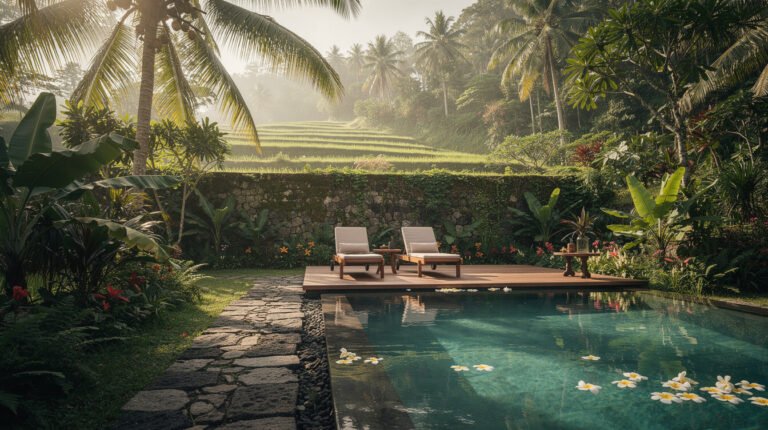
By five-thirty, the gardener has already been moving through the grounds for half an hour. He is sweeping the stone pathways with a coconut-rib broom, clearing the frangipani petals that fell overnight. He is checking the pool — not just the chemical balance, but the surface itself, fishing out every leaf, every insect, every fallen blossom so the water is glass-smooth when you first see it.
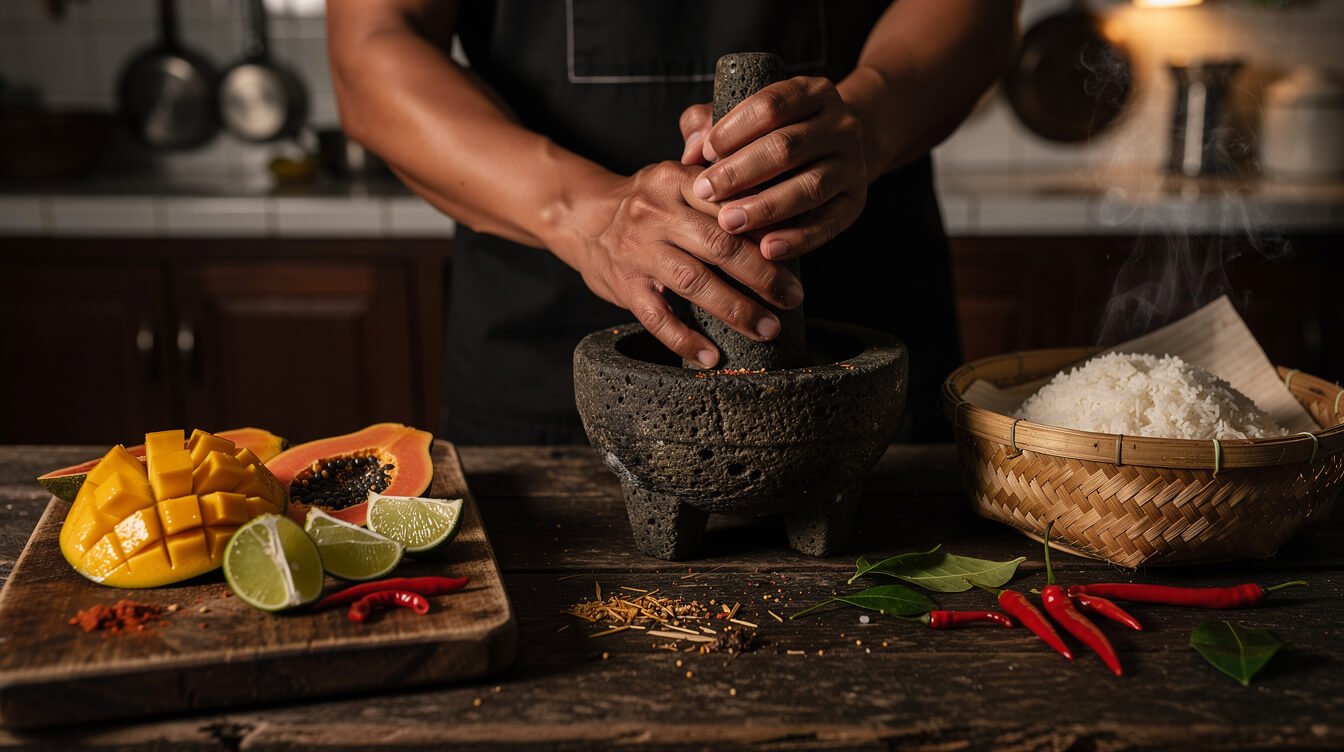
The kitchen comes alive around six. Your chef — not a temporary hire, but someone who has cooked in this kitchen for years — is slicing fruit. Dragon fruit from the morning market, papaya she selected by weight and smell, mangosteen if they are in season. She is making sambal from scratch. Grinding chili, shallot, and tomato in a stone mortar. The base genep spice paste is already prepared. Rice is steaming.
The housekeeper arrives and begins her invisible choreography. Fresh towels rolled and stacked. Bathroom surfaces dried and polished. Mosquito nets adjusted. The scent of lemongrass diffusing through each bedroom. Every room is reset to feel untouched, even though someone has cared for every detail.
By the time you walk downstairs in your bare feet, still half-asleep, the terrace table has been set. A pressed juice is ready. Your chef asks if you would like your eggs scrambled or fried, nasi goreng or pancakes, or maybe she suggests something you have never tried — jaje Bali, a sweet rice cake she makes from a recipe her grandmother taught her.
This is the morning nobody talks about. The listing says “breakfast included.” What it actually means is that someone who knows this kitchen, knows these ingredients, and knows the rhythm of a Bali morning has been working for two hours to make your first waking moment feel effortless.
Meet the Team: Not Job Titles, But People
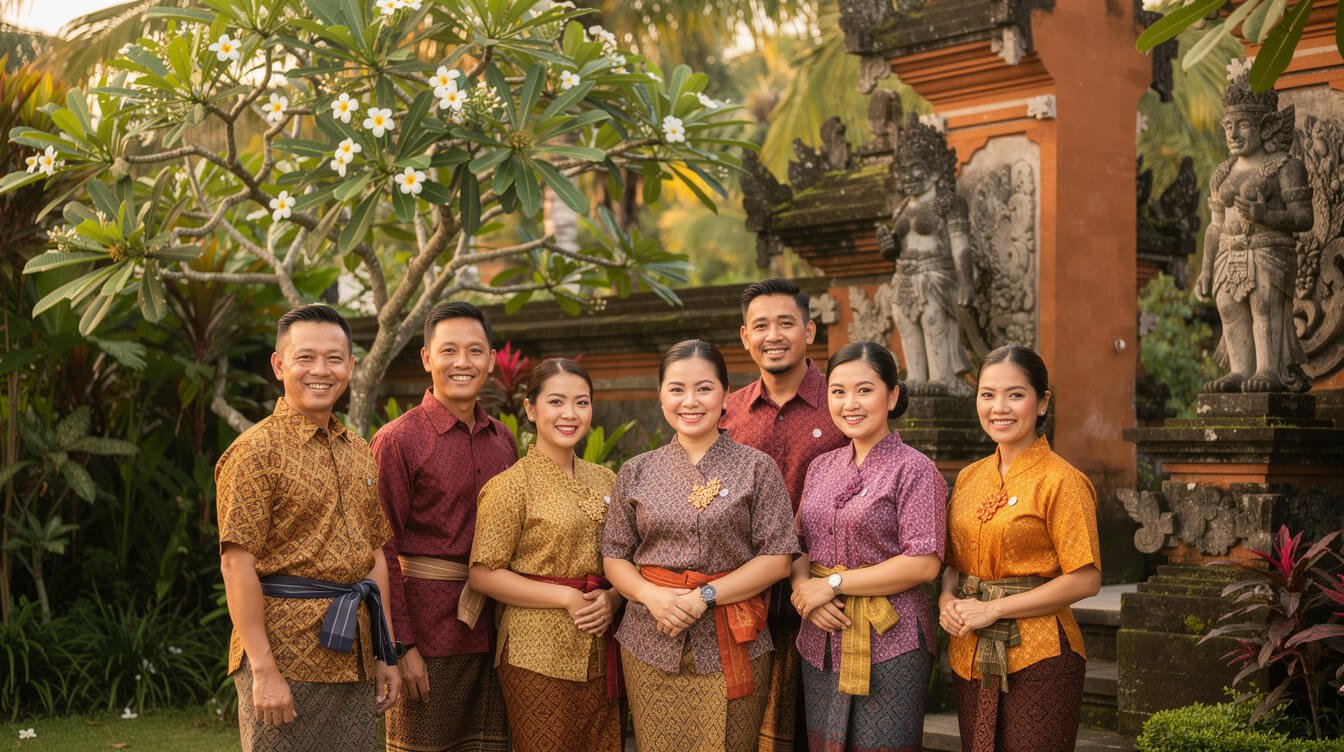
Every listing uses the same words: manager, chef, housekeeper, gardener. Checkbox features, like air conditioning or WiFi. But in a genuine staffed villa in Ubud, these are not positions. They are people. And the difference between a forgettable stay and an unforgettable one lives entirely in that distinction.
The villa manager is your single point of contact for everything. She is the one who arranges your airport pickup, books the driver you did not know you needed for Tegallalang, negotiates the sunrise trek price so you do not overpay, and knows which temple ceremony is happening this week that you absolutely should see. She answers her phone when you text at nine at night asking where to find the best gelato in Ubud. She has the answer because she has lived here her entire life.
The chef is not someone who arrived yesterday. She knows the market vendors by name. She knows which fish is freshest on which day. She can make nasi campur the way her mother made it in a village kitchen, and she can also make a Western breakfast that would hold its own in any café in Seminyak. When you tell her about a food allergy or a preference, she adjusts the entire menu without complaint, without confusion, without making you feel difficult. For more on what this experience looks like day to day, read our complete guide to villas with a private chef in Bali.
The housekeeper keeps the villa in a state that hotel housekeeping cannot match, because she is not servicing forty rooms in a shift. She is caring for one home. She knows where you left your book. She knows you prefer your coffee cup on the left side of the tray. She notices.
The gardener maintains the grounds the way a Japanese gardener tends a temple garden — with patience, pride, and a deep understanding of what tropical plants need. He prunes the frangipani. He feeds the bougainvillea. He keeps the pool perfect. And when you walk through the garden at sunset, every pathway, every stone, every blade of grass reflects someone’s daily attention.

Get a Free 3-Day Sample Itinerary
Discover what three days in Ubud actually look like from a staffed villa — morning markets, rice terrace walks, private chef dinners, and hidden temple visits.
How the Day Flows in a Staffed Villa in Ubud
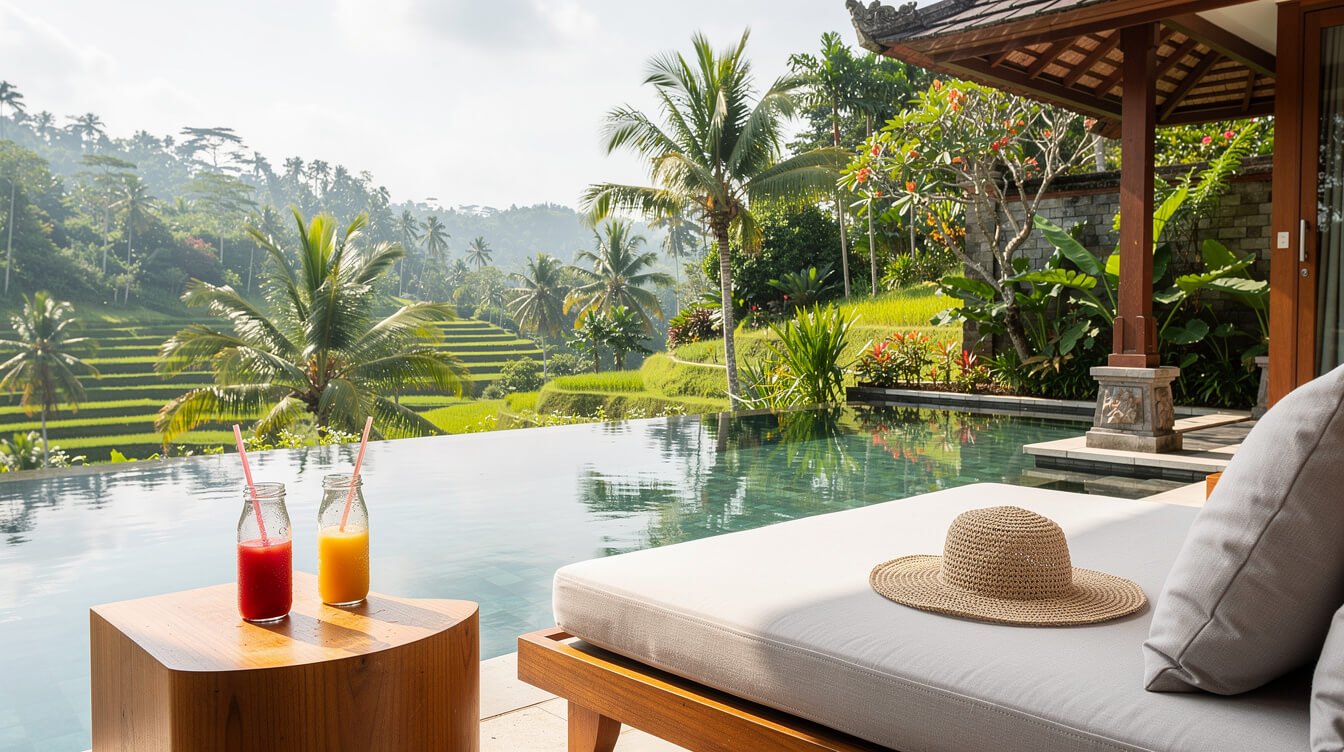
There is no schedule. No breakfast window that closes at ten. No checkout time hovering over your afternoon. The rhythm of a staffed villa is your rhythm — and the team adjusts to match it.
A typical day might look like this. You wake when you wake. Breakfast appears when you are ready. Maybe you spend the morning by the pool, reading, swimming, doing nothing. The gardener moves quietly around the edges. The housekeeper refreshes your room while you are downstairs. Around eleven, your manager might mention that the Ubud Art Market is quieter before noon, or that a Legong dance performance is happening tonight at the water palace.
You leave for the afternoon. You explore the markets and artisan shops, walk the rice terraces, visit a temple. When you come back — hot, dusty, happy — the villa is cool. The pool is waiting. A fresh juice appears on the terrace without you asking.
Dinner is the quiet highlight. Your chef has been to the market. She has planned something based on what was freshest today and what you mentioned liking yesterday. Maybe it is bebek betutu — slow-cooked duck wrapped in banana leaf, spiced with the base genep she grinds by hand. Maybe it is grilled fish with sambal matah and steamed morning glory. She sets the table on the terrace, lights a candle, and the meal unfolds under the sound of frogs and crickets and distant gamelan.
This is not room service. This is not a restaurant. This is someone cooking for you in a kitchen she knows by heart, serving you food she is proud of, in a place that feels like home. That is what a private pool villa in Bali with full staff actually delivers.
Your Private Chef: How Menu Planning Actually Works
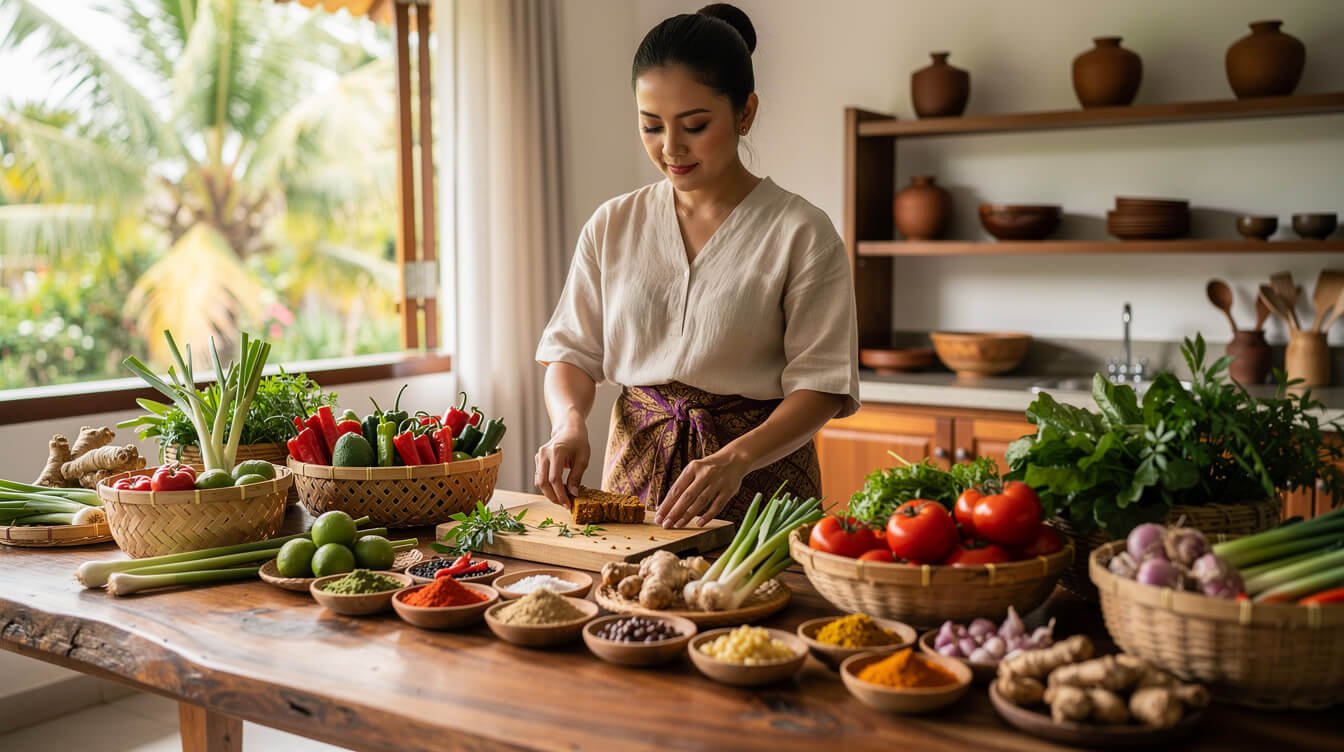
One of the most common questions we hear: “How does the chef know what to cook?” The answer is simpler and more personal than you might expect.
Before you arrive, your manager sends a brief message. Any dietary restrictions? Allergies? Foods you love, foods you avoid? Vegan, vegetarian, pescatarian, keto — your chef has cooked for all of them. She adapts without hesitation because she has been doing this for years, not weeks.
On your first morning, she will usually offer a mix — Balinese and Western. She watches what you eat, what you leave, what makes you pause and smile. By day two, she has calibrated. The menu shifts toward what you love. If you mentioned you like spicy food, the sambal gets bolder. If you loved the black rice pudding, it appears again.
The ingredients come from the Ubud morning market — the same market she has been shopping at since she was a teenager following her mother through the stalls. She knows which vendor has the best tempeh, which one sells organic greens from the Kintamani highlands, where to find the sweetest snake fruit. She returns with bags of produce that were in the ground or on the vine hours earlier. This connection between market and kitchen is central to Bali’s food culture — and in a staffed villa, you taste it directly.
The result is not a fixed menu. It is a conversation. Lunch might be nasi goreng because you mentioned you wanted to try the real thing, nothing like the hotel version. Dinner might be a full Balinese feast — satay lilit, lawar, urap, soto ayam — because your chef wants to show you what her family eats on ceremony days. Or it might be pasta and grilled vegetables because you have been eating Balinese food for four days and you want something familiar. She will make it all with equal care.
This is what separates a staffed villa from every other accommodation type. The food is not a menu you order from. It is a relationship you build with someone who feeds you the way she feeds the people she cares about.
What Guests Ask Us Most: Privacy, Tipping, and Getting Comfortable
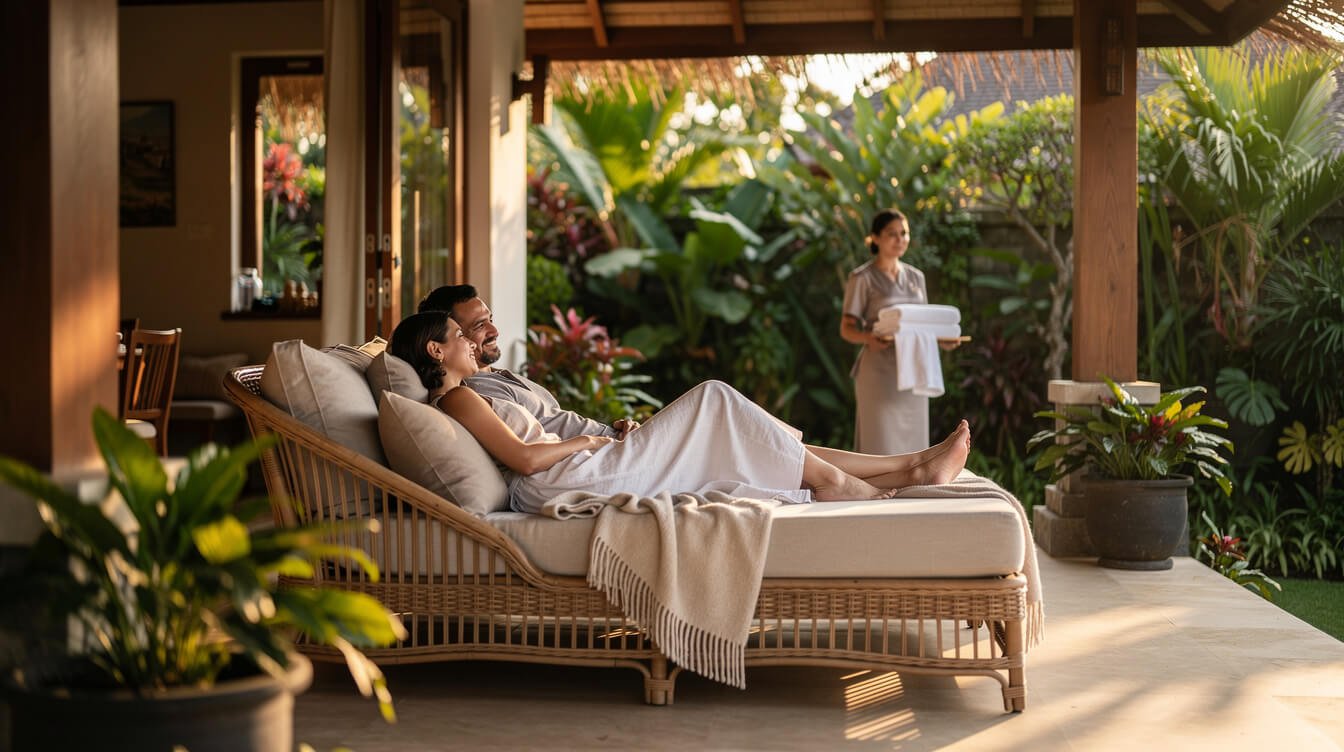
The number-one concern guests share before arriving at a staffed villa in Ubud: “Will I feel comfortable with staff around all the time?” The honest answer is yes — and here is why.
Privacy is built into the rhythm. The team works around you, not in front of you. Your chef is in the kitchen, which is separate from the living areas. Your housekeeper works in your room while you are at the pool or out exploring. Your gardener moves through the grounds at dawn and dusk, rarely during peak sunbathing hours. Your manager is available by phone or WhatsApp but does not hover. The cultural instinct in Bali is to serve without imposing — staff in a staffed villa in Ubud are present when needed, invisible when not.
Tipping. There is no obligation, and your team will never ask. But if you want to show appreciation, a general guideline: IDR 50,000–100,000 per staff member per day is generous and deeply appreciated. Some guests leave a collective tip at the end of their stay. Some tip daily. Some bring small gifts from their home country — chocolates, skincare, a children’s book for a staff member’s kid. All of these land warmly. What matters is the gesture, not the amount.
Communication. Most villa staff speak conversational English — enough to discuss your breakfast, your schedule, and your preferences clearly. Your manager speaks fluent English and handles anything more complex. If you have dietary requirements, cultural questions, or logistical needs, she is your translator and guide.
Getting comfortable. The adjustment period is usually about twenty-four hours. On day one, some guests feel slightly self-conscious — is it okay to leave dishes on the table? (Yes.) Should I make my own bed? (Please do not.) Can I walk around in a towel? (Of course.) By day two, the rhythm clicks. You stop noticing the staff the way you stop noticing the sound of the river — it becomes part of the texture of the place, natural and reassuring.
If you are traveling with family, the comfort arrives even faster. Children respond to the warmth immediately. Your housekeeper plays with them. Your gardener shows them the frogs in the rice paddies. Your chef makes them banana pancakes shaped like animals. A staffed villa is not formal hospitality. It is human hospitality.

Experience a Staffed Villa in Ubud
Three bedrooms, a private pool, your own chef, manager, housekeeper, and gardener — all yours. See what genuine Balinese hospitality feels like.
Staffed Villa vs Resort vs Airbnb: An Honest Comparison

Every traveler weighs the same options. Here is an honest breakdown from someone who has worked inside all three models.
Resort hotels give you polish and infrastructure. You get a front desk, a concierge, a restaurant, a spa, a pool shared with other guests. The service is professional but distributed — your housekeeper cleans twenty rooms, your waiter serves forty tables. Nobody knows your name by day two. You eat what the menu offers, when the restaurant is open. The experience is consistent, efficient, and anonymous. For a detailed look at this category, see our guide to luxury accommodation in Bali.
Airbnb villas give you space and independence. You get a private house, usually with a pool, and the freedom to live on your own schedule. But “unstaffed” means exactly that. You make your own bed, wash your own dishes, figure out your own meals. The kitchen is equipped but empty. The pool is yours but nobody maintains it while you sleep. The garden is beautiful on day one and slightly overgrown by day five. You save money, but you also spend your vacation doing housework.
A staffed villa in Ubud sits in the space neither option reaches. You get the privacy and space of an Airbnb, the service quality of a resort, and something neither can offer — a team of people dedicated entirely to your experience. Four humans, one villa, one family. The math is intimate and irreducible. Your chef cooks for you alone. Your housekeeper cares for your rooms alone. Your gardener tends your garden alone. This is what genuinely all-inclusive accommodation in Bali looks like when it is done with intention.
The cost comparison surprises most people. A staffed 3-bedroom villa often costs less per night than a single luxury resort suite — and you get three bedrooms, a private pool, a full kitchen with a personal chef, and a team. For families or groups, the per-person cost drops dramatically. Two couples or a family of five in a staffed villa pay roughly what one couple pays for a resort room with breakfast.
The Balinese Way: Why Ubud Staff Bring Something Hotels Cannot Teach
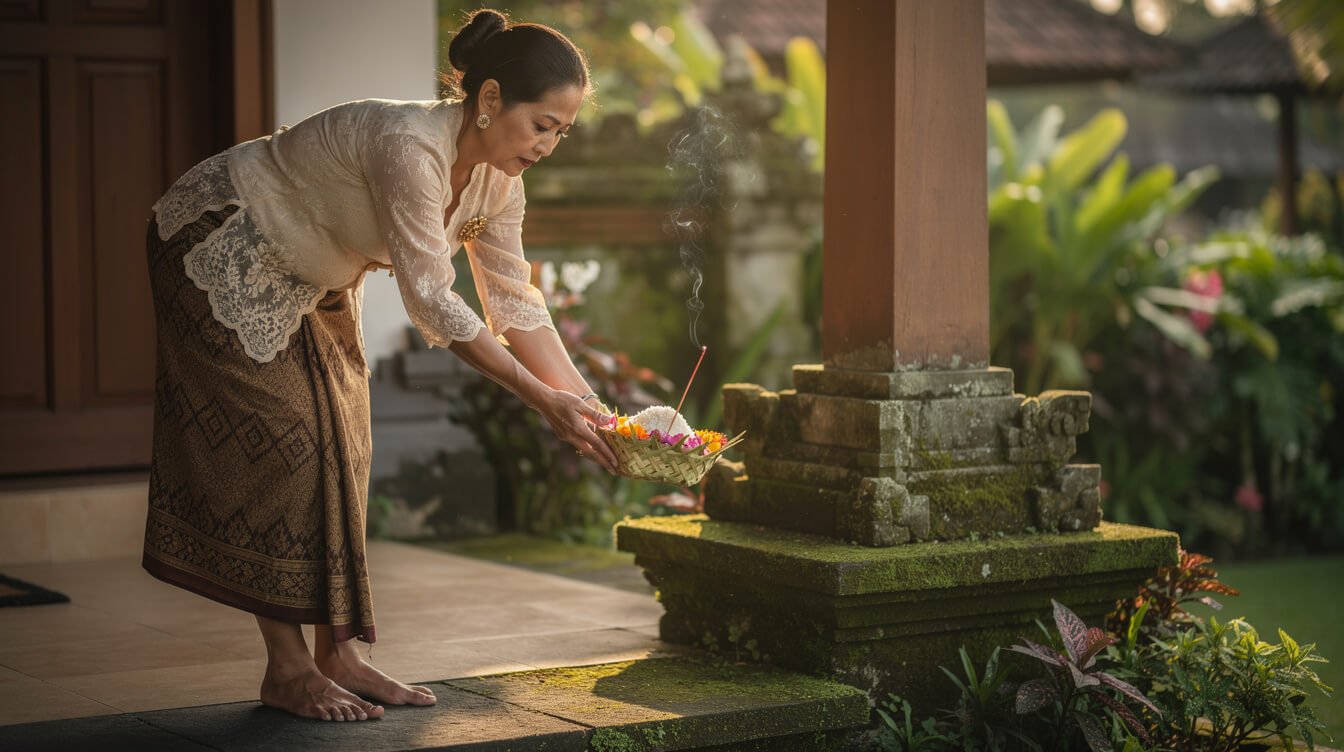
There is a Balinese concept that shapes everything about how a staffed villa operates. It is not on any listing. It is not in any brochure. But it is the reason the experience feels different from any hotel, anywhere in the world.
The concept is ngayah — the Balinese practice of offering work as a form of devotion. In village life, ngayah means volunteering your labor for temple ceremonies, community projects, and neighbor support — not for payment, but because the work itself is meaningful. It is service as spiritual practice.
When a Balinese villa team takes care of your home, something of this instinct carries over. The care is not transactional. Your gardener does not maintain the garden because it is his job. He maintains it because a well-tended garden is an offering — to the land, to beauty, to the people who live within it. Your chef does not cook because she is paid to. She cooks because feeding people well is one of the deepest expressions of care in Balinese culture.
This is not something a hotel chain can train. It is not something an aggregator can list as an amenity. It is a cultural inheritance that lives in the hands and habits of people who were raised in a community where service and devotion are the same word.
Ubud amplifies this because Ubud is still, at its core, a village. Your staff live in the surrounding banjar communities. They walk to work past rice paddies and temples. They participate in ceremony days, dress in full temple attire, and bring you offerings of fruit and flowers because it is what they do for their own homes. When your housekeeper places a canang sari offering at your doorstep each morning — a tiny basket of flowers, incense, and rice — she is not decorating. She is invoking protection and gratitude for the space you share.
You cannot buy this. You can only be present for it. And a staffed villa in Ubud is the only accommodation model that places you close enough to feel it.
What This Means for You
A stay in a staffed villa does something that no resort itinerary or self-catered Airbnb can replicate. It introduces you to Bali through the people who live it. Your chef teaches you about Balinese food through the meals she prepares. Your manager reveals Ubud through the places she recommends — not the tourist spots, but the ones she takes her own family to. Your gardener shows you the rhythm of tropical agriculture simply by doing his work where you can see it.
After a week in a staffed villa, most guests do not say “the villa was beautiful.” They say “I felt taken care of.” They remember the chef’s name. They remember the gardener’s smile. They remember the moment they realized they were not staying in a house — they were being welcomed into someone’s care.
That is what a staffed villa in Ubud actually feels like. And it is why, once you have experienced it, every other way of staying in Bali feels a little empty by comparison.
Frequently Asked Questions About Staffed Villas in Ubud

How many staff does a typical staffed villa in Ubud have?
Most genuine staffed villas have four core team members: a villa manager, a private chef, a housekeeper, and a gardener. Some larger properties add a second housekeeper or a butler. The key distinction is that these are not shared across multiple properties — they are dedicated to your villa during your stay.
Is the private chef included in the villa rate?
In most staffed villas, the chef’s service is included in the nightly rate. Groceries are typically a separate cost — your chef shops at the morning market and you reimburse the ingredient expenses, which are surprisingly affordable. A full day of meals for four to six people usually costs IDR 300,000–600,000 (roughly $20–40 USD) in market-fresh ingredients.
Can the chef accommodate dietary restrictions?
Yes. Experienced villa chefs in Ubud regularly cook for vegan, vegetarian, gluten-free, keto, halal, and allergy-specific guests. Communicate your needs before arrival and your chef will plan accordingly. Balinese cuisine is naturally rich in plant-based dishes, fresh seafood, and rice-based meals, making adaptation straightforward.
Do I need to tip the staff?
Tipping is not expected but always appreciated. A common guideline is IDR 50,000–100,000 per staff member per day, or a collective amount at the end of your stay. Some guests bring small gifts from home, which are received with equal warmth.
Will I have privacy with staff present?
Absolutely. Balinese hospitality is built on the principle of being available without imposing. Staff work in service areas separate from your living spaces and follow natural rhythms — kitchen work during meal hours, housekeeping while you are out, garden maintenance at dawn and dusk. Most guests forget staff are present within 24 hours.
How does a staffed villa compare in cost to a luxury resort?
A staffed 3-bedroom villa typically costs less per night than a single luxury resort suite — and includes three bedrooms, a private pool, personal chef, and dedicated team. For groups of four to six, the per-person cost is often 40–60% less than an equivalent resort stay, with significantly more space, privacy, and personalization. See our guide to Ubud villas with private pools for more on what to expect.
How do I book a staffed villa in Ubud?
You can book directly through the villa’s website (which often offers the best rates and direct communication with the team), or through platforms like Airbnb, Booking.com, and VRBO. Direct booking is recommended because it lets you communicate with the manager before arrival, discuss meal preferences, arrange airport transfers, and ask questions that platform messaging cannot easily accommodate. Browse our complete guide to Bali villa rentals for detailed booking advice.

Join Our Newsletter
Fun, new, exciting Bali news — Ubud insider tips, seasonal travel advice, and stories from the villa team delivered to your inbox.