Bali Rice Terrace: Your Complete Guide to Ubud’s Most Iconic Landscapes
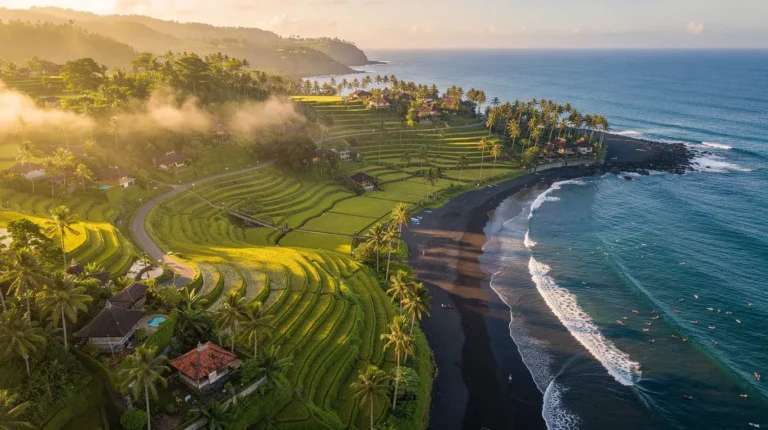
The first thing you notice about a Bali rice terrace is not the green. It’s the sound. Water trickling through stone channels that are older than your grandmother’s grandmother. The soft rustle of rice shoots when the morning breeze comes through. A silence that is not silent at all, but layered — dragonfly wings, distant roosters, the faint hum of a village waking up somewhere below you.
If you are planning a trip to Bali and the rice terraces are on your list, you are making the right call. The bali rice terrace experience is one of those rare things that actually delivers on the photographs. But there is more to it than Tegallalang and a quick photo stop. Much more. This guide takes you through every terrace worth your time — famous and hidden — and the living water culture that makes them possible.
What Makes the Bali Rice Terrace So Extraordinary
You can see rice terraces in Vietnam, the Philippines, China, and a dozen other countries across Asia. So why does Bali’s version feel different?
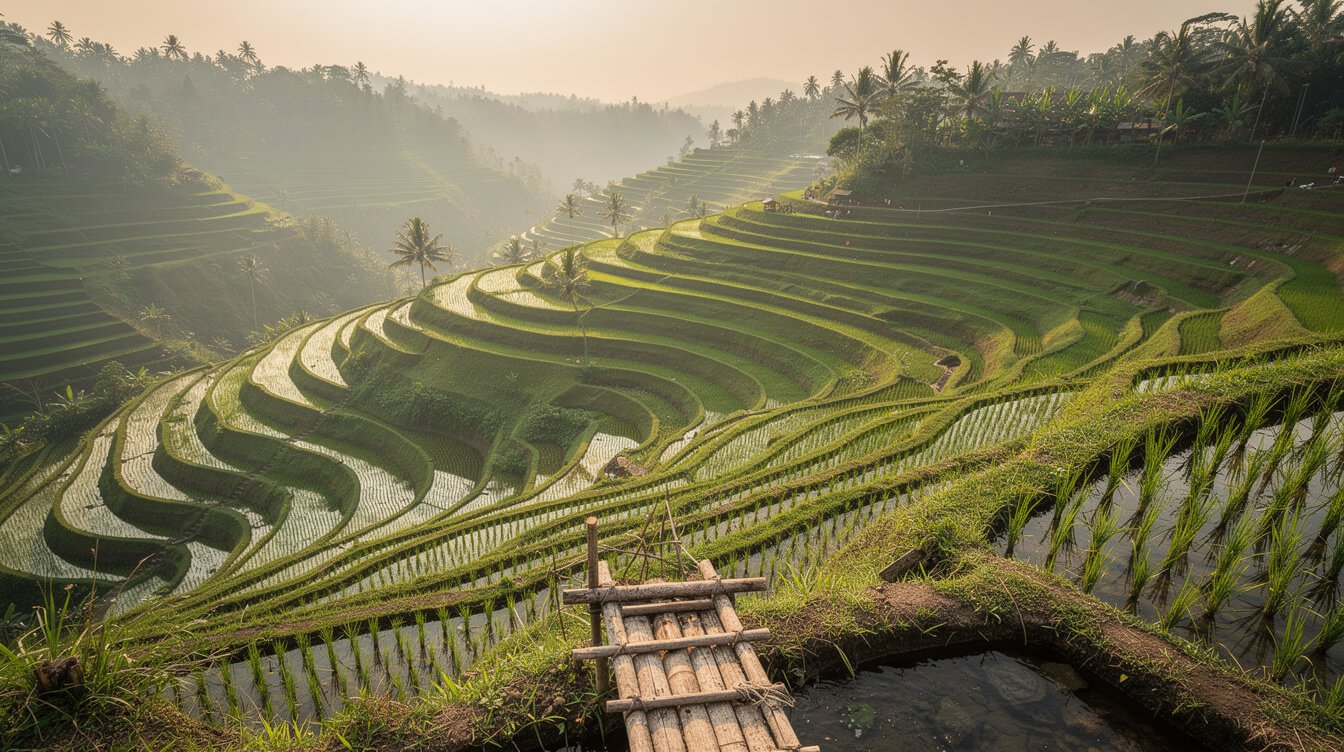
It comes down to three things: the subak water management system, the volcanic soil, and the fact that Balinese rice culture is inseparable from spiritual life. Every terrace has a small shrine at its edge. Every planting season begins with ceremony. The water that feeds the rice runs through a cooperative irrigation network — the subak — that has been operating for over a thousand years, governed not by bureaucracy but by village consensus and temple calendars.
This means the bali rice terrace is not just agriculture. It is architecture, engineering, community governance, and spiritual practice woven into one green tapestry on a volcanic hillside. UNESCO recognized this in 2012, inscribing the subak system as a Cultural Landscape of Bali.
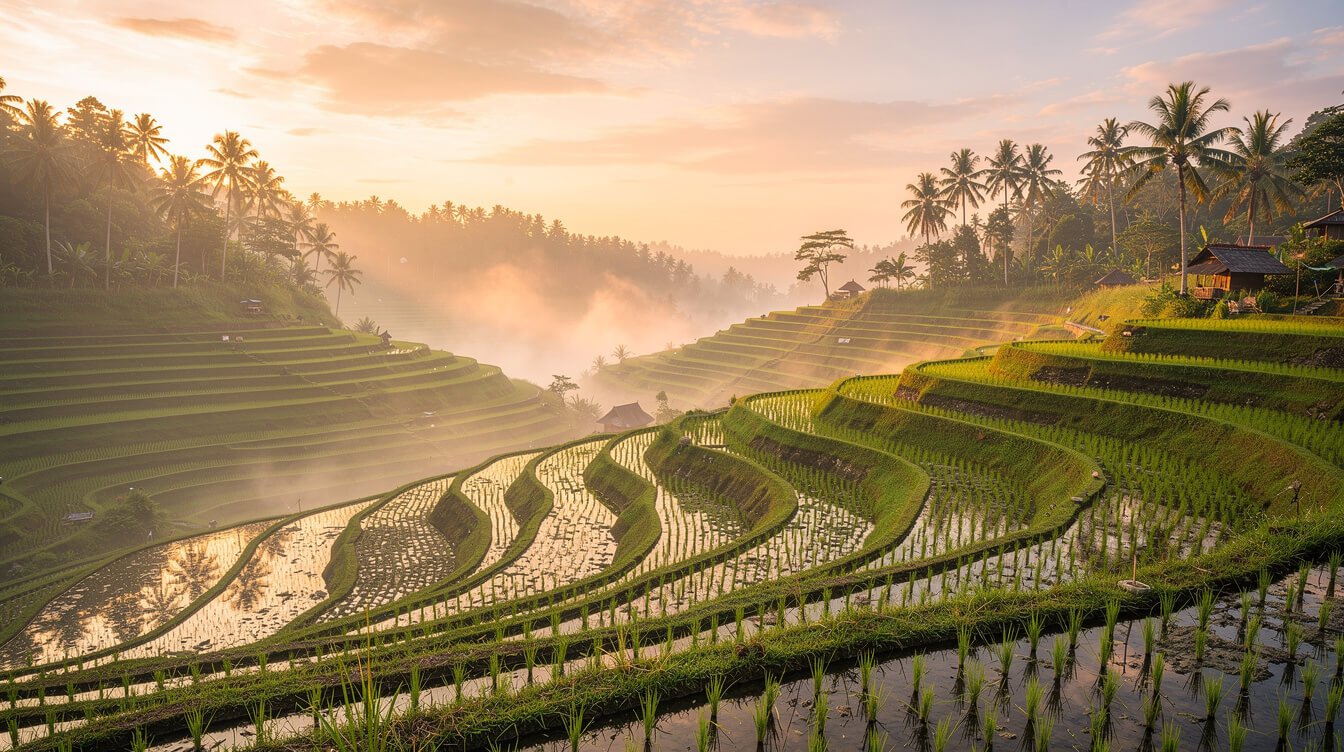
The terraces are also dynamic. They shift in color and texture through the rice cycle — flooded mirrors reflecting sky in planting season, electric green during growth, golden in the weeks before harvest, and bare stubbled earth between rotations. The same terrace looks entirely different in March versus June versus September. If you stay in Ubud, you will notice this rhythm even from your bedroom window.
Tegallalang Rice Terrace: Ubud’s Most Famous Terraces
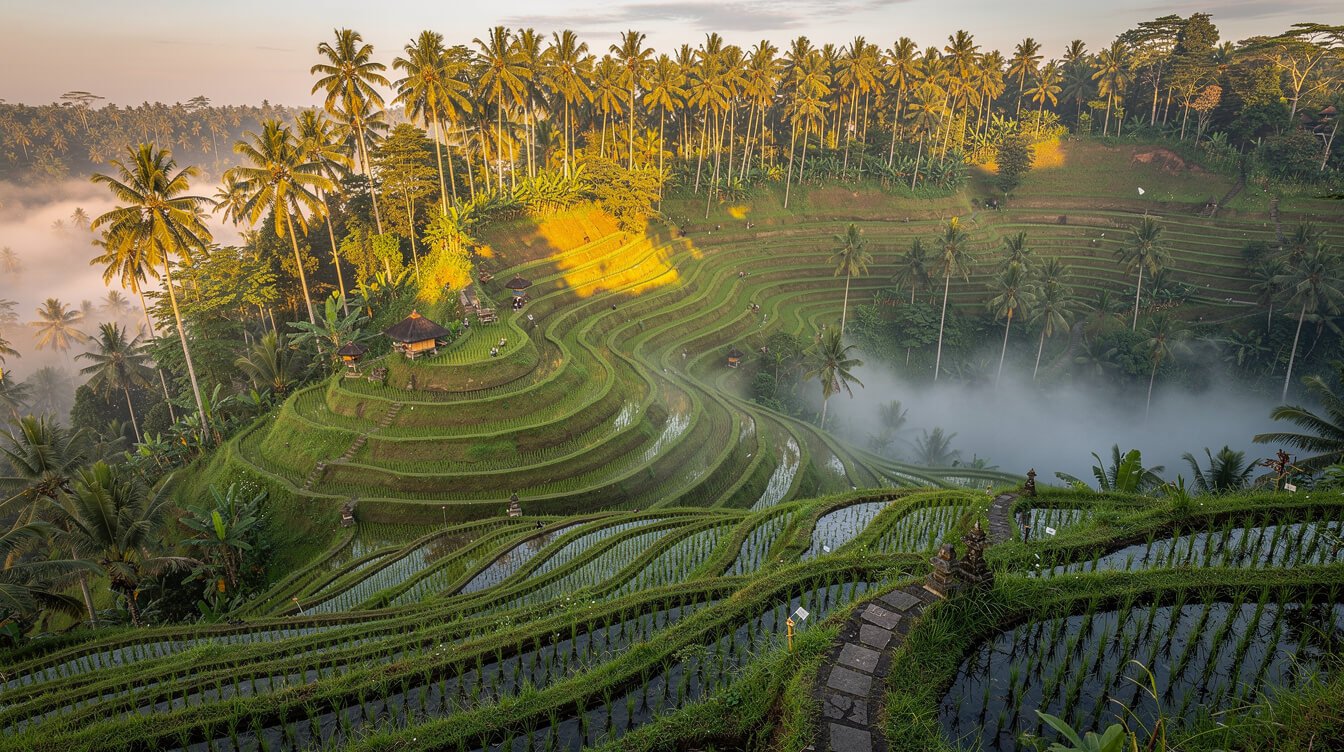
Tegallalang is the one you have seen on Instagram. About 20 minutes north of central Ubud, this dramatic cascade of terraces drops steeply into a river valley, creating the kind of layered green vista that made Bali famous.
What to Expect at Tegallalang
The terraces are real, working rice paddies — not a theme park. But they have embraced tourism fully. A network of walking paths crisscrosses the site, and you will find small cafes perched on the ridgeline with views over the valley. The famous “love Bali” swing is here, along with several other swing and photo platforms.
The entry situation can be confusing. There is no single entrance — multiple access points run along the main road (Jalan Raya Tegallalang), and local families who farm the land will ask for a small donation (usually 20,000-30,000 IDR) as you enter their section. This is reasonable and expected. It goes directly to the farming families.
Timing Your Visit
Tegallalang gets crowded, especially between 10 AM and 2 PM. The light is also harsh midday, flattening the terraces in photographs. For the best experience:
- Arrive at 7:00-7:30 AM — the terraces are nearly empty, the light is golden-warm, and the mist has not fully burned off.
- Weekdays over weekends — tour bus traffic is lighter Monday through Thursday.
- Late afternoon (4:00-5:30 PM) is a second-best window, with softer light and thinning crowds.
Give yourself at least 90 minutes. The walking paths descend deep into the valley and the climb back up is real — wear proper shoes, not sandals.
What Most Visitors Miss
Instead of staying on the main tourist path, walk north along the ridge. Within 10 minutes, the crowds disappear and you are standing in active paddies with no one around. The terraces extend well beyond the tourist zone. Some of the most beautiful sections — older terraces with mature coconut palms — are a short walk from the photo platforms but rarely visited.
Get a Free 3-Day Sample Itinerary
Rice terraces, temple visits, market mornings, and the best sunset spots — all mapped out for you. Download our curated 3-day Ubud itinerary.
Jatiluwih Rice Terraces: UNESCO World Heritage at Its Quietest
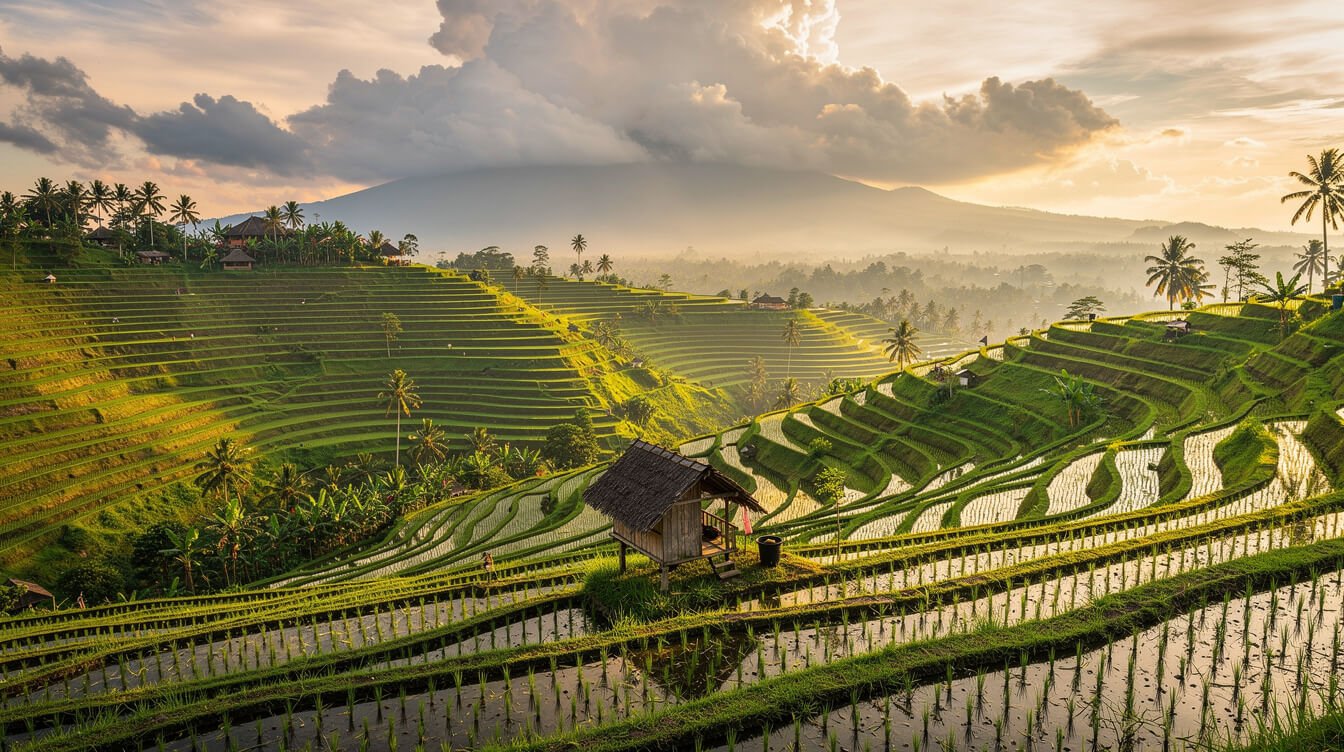
If Tegallalang is the terrace you photograph, Jatiluwih is the one you remember. Located about 90 minutes northwest of Ubud in the Tabanan regency, Jatiluwih spreads across 600 hectares of gently undulating rice paddies that stretch toward the slopes of Mount Batukaru — the second-highest peak in Bali.
The scale is what gets you. Where Tegallalang is a steep valley, Jatiluwih rolls. It breathes. The terraces here feel ancient and unhurried, and because the site is farther from the tourist corridor, it receives a fraction of Tegallalang’s foot traffic.
Getting There and Getting Around
Jatiluwih charges an official entrance fee (50,000 IDR per person as of 2026) which includes parking. The site has a well-maintained road that loops through the terraces, so you can either walk, cycle, or have your driver take you along the scenic route with stops.
Walking is the best option if you have the time. A 2-3 hour walk on the footpaths takes you through working paddies, past small temples, and along irrigation channels where you can see the subak system operating in real time. The paths are flat to gentle — far easier than Tegallalang’s steep valley descent.
Why Jatiluwih Feels Different
Jatiluwih grows traditional Balinese red rice — a heritage variety that is slower to mature and lower-yielding than modern strains. The farmers here made a conscious choice to preserve the old ways. You will notice the rice looks different: taller stalks, more varied greens, and a slightly wilder texture to the paddies.
The mountain backdrop changes everything, too. On a clear morning, Batukaru’s forested slopes rise directly behind the terraces, adding a vertical drama that flatland terraces cannot match. Cloud formations around the peak shift constantly, so the landscape rearranges itself every few minutes.
If you are visiting Bali and can only see one bali rice terrace site in depth, many locals will quietly tell you: make it Jatiluwih. Among the best things to do in Bali, this is the one that feels most like stepping into the island’s past.
Lesser-Known Bali Rice Terraces Worth Your Morning
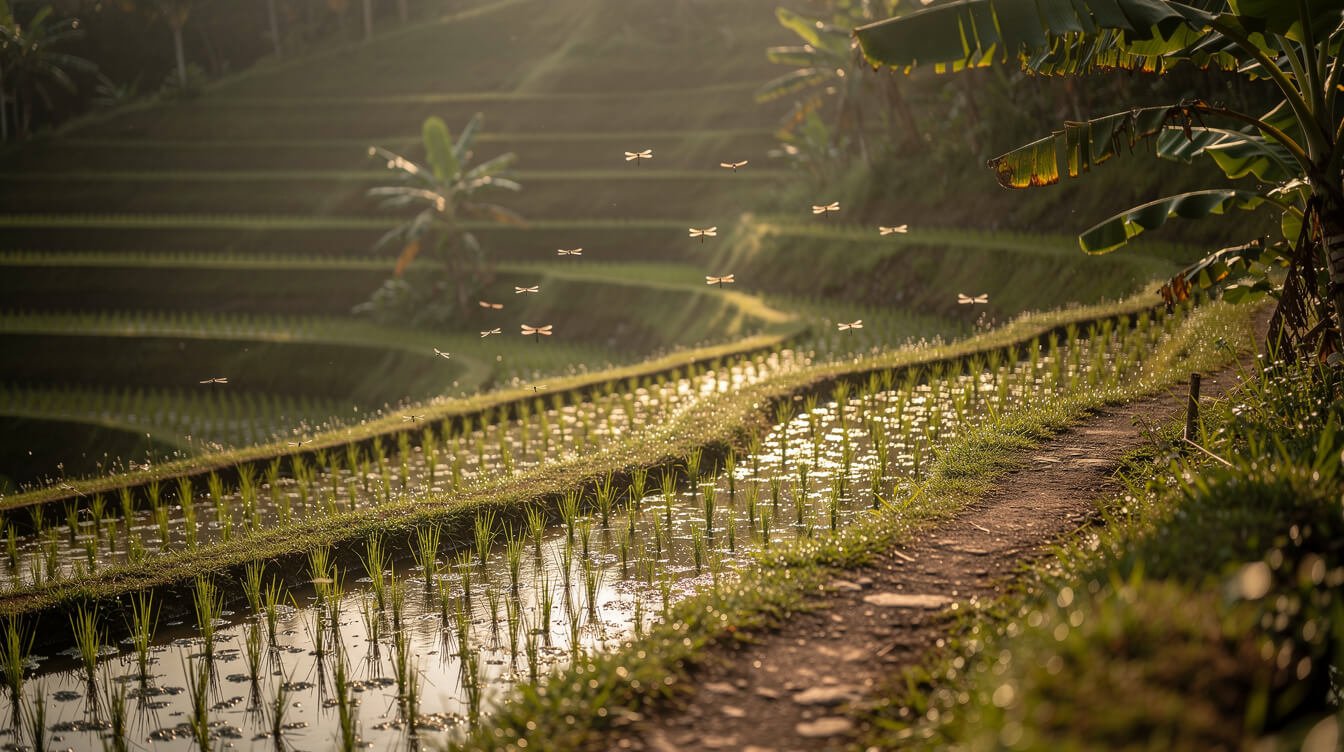
The famous terraces earn their fame. But Bali is a rice island — paddies are everywhere, and some of the most beautiful terraces sit along roads you would drive right past on the way to something else.
Sidemen Valley (East Bali)
The Sidemen Valley, about an hour and a half east of Ubud, is one of Bali’s most photogenic landscapes and sees a fraction of the visitors. The terraces here are backed by the dramatic profile of Mount Agung, Bali’s highest and most sacred peak. The valley is quieter, cooler, and slower. Local guides can take you on half-day walks through rice paddies, weaving villages, and riverside tracks.
Campuhan Ridge Walk Area (Ubud)
If you are staying in Ubud and want a terrace experience without a car, the paddies around Campuhan and Penestanan are right on the edge of town. These are working rice fields, not tourist destinations, so there are no entrance fees or selfie platforms — just footpaths between paddies and the sounds of village life. The light in the late afternoon here is remarkable.
Rendang and Selat (Karangasem)
On the road to Mount Agung’s slopes, the villages of Rendang and Selat sit among broad terraces that most visitors pass through without stopping. Pull over. Walk into the paddies. The views of Agung from these terraces — so close the mountain fills the sky — are some of the most dramatic on the island.
Pupuan (Tabanan)
Further northwest from Jatiluwih, the terraces around Pupuan are expansive and deeply rural. Coffee plantations mix with rice paddies here, and the landscape feels like a Balinese painting come to life. You are unlikely to see another tourist.
The Subak System: Why Bali Rice Terraces Are a Living Cultural Heritage
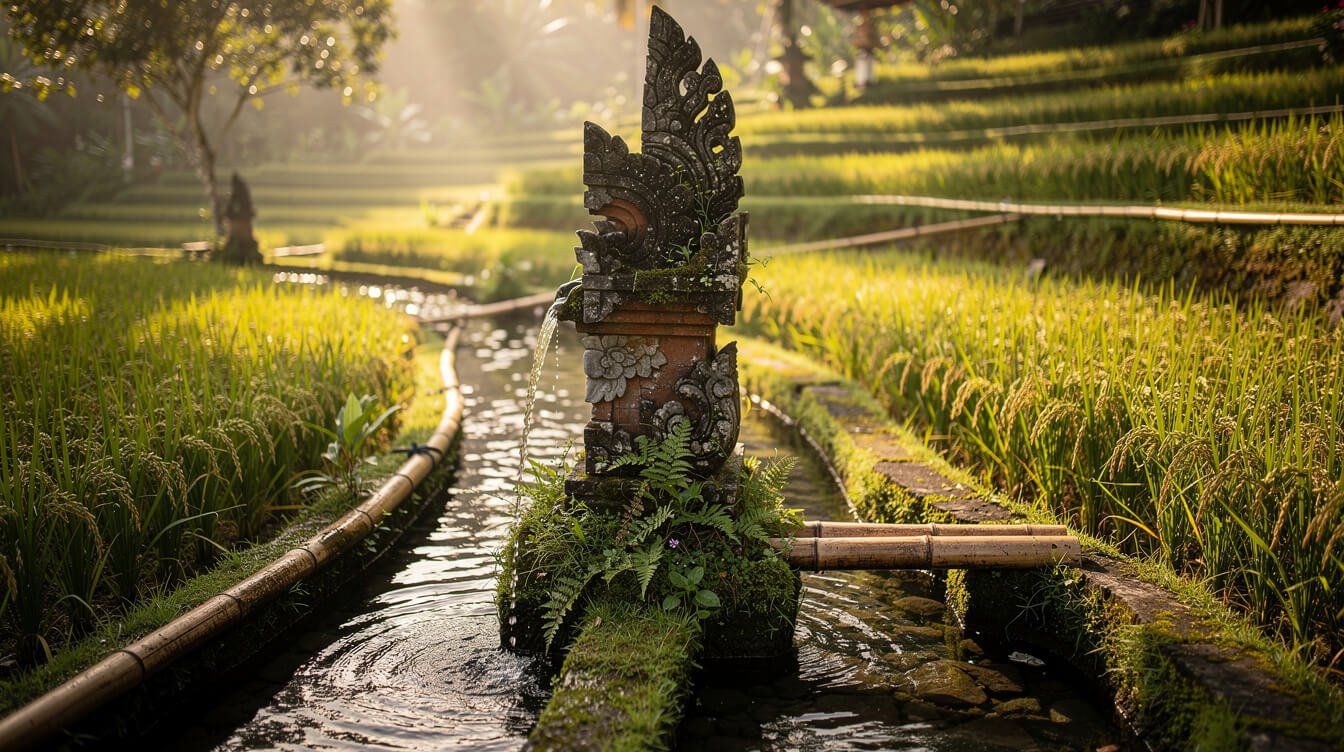
You cannot understand the bali rice terrace without understanding subak. It is the invisible architecture that makes everything work.
Subak is Bali’s cooperative water management system — a network of canals, tunnels, weirs, and distribution channels that routes water from mountain lakes and rivers through terraced paddies, shared equitably among farming communities. Each subak is a self-governing body of farmers who collectively decide planting schedules, water allocation, maintenance duties, and ceremonial obligations.
How It Works
Water flows by gravity from highland sources — typically volcanic lakes like Lake Batur — through progressively lower terraces. Each farmer in the subak network receives water in rotation, and the schedule is coordinated with the pura subak (water temple) system. The timing of planting, flooding, draining, and harvesting follows a 210-day Balinese calendar, synchronized across hundreds of farmers to ensure pest control, water efficiency, and spiritual harmony.
This is not quaint tradition for its own sake. Modern agricultural scientists have studied the subak system and found it remarkably efficient — the synchronized planting schedule naturally controls rice pests by denying them continuous habitat. The system outperforms many modern irrigation schemes at a fraction of the infrastructure cost.
The Spiritual Dimension
Every subak has a water temple, and the highest water temple in the system — Pura Ulun Danu Batur — sits at the crater lake that feeds the entire network. Ceremonies at the temples coordinate the agricultural calendar: when to plant, when to flood, when to let fields rest. The goddess of the lake, Dewi Danu, is the spiritual custodian of the entire system.
When you walk through a bali rice terrace and see a small shrine at the field’s edge, you are seeing a node in this network. The offerings placed there each morning are not decorative — they are the spiritual maintenance of a system that feeds the island.
If you want to explore the cultural side of Ubud beyond the terraces, the Ubud Water Palace offers another window into how water shapes Balinese spiritual life.
Your Base for Exploring Bali’s Rice Terraces
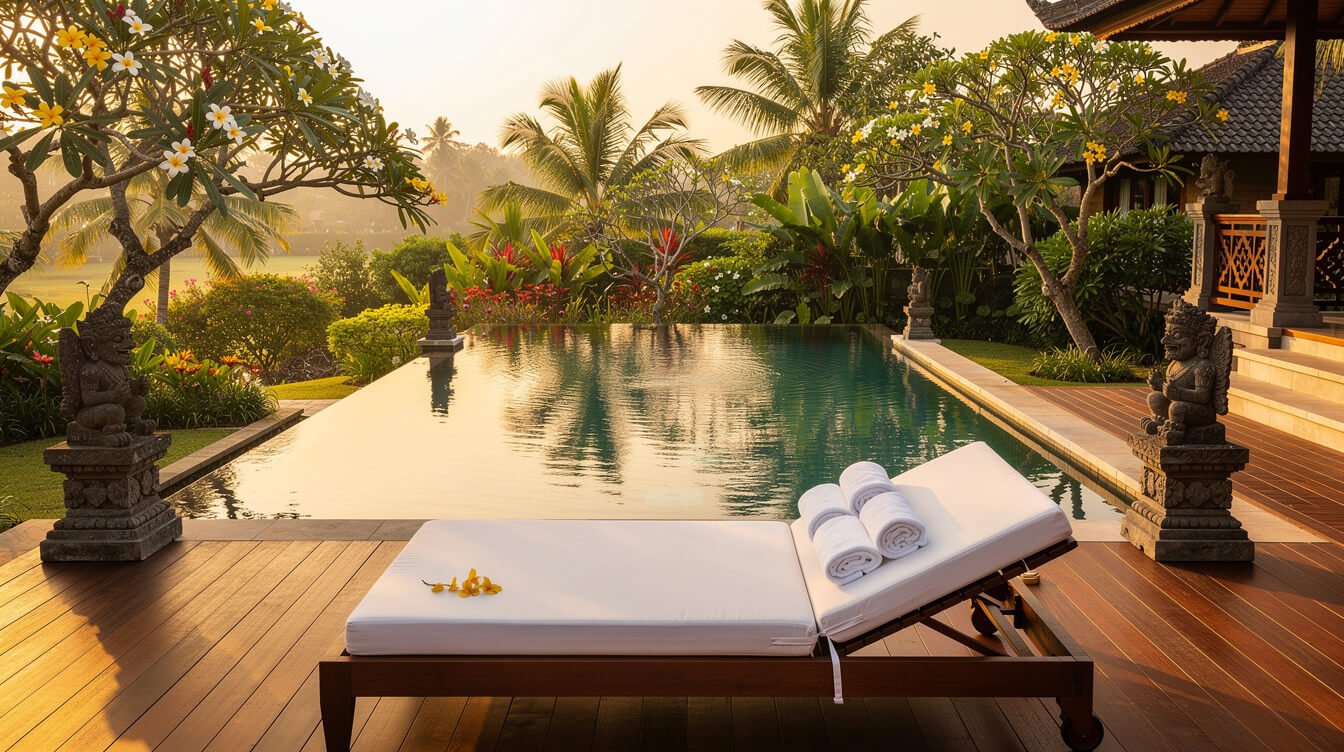
Villa Amrita sits in the heart of Ubud — minutes from Tegallalang, surrounded by working rice paddies. Three bedrooms, private pool, full staff. Come back from the terraces to a cook who already knows what you want for dinner.
Best Times to Visit and How to Make the Most of Your Bali Rice Terrace Day
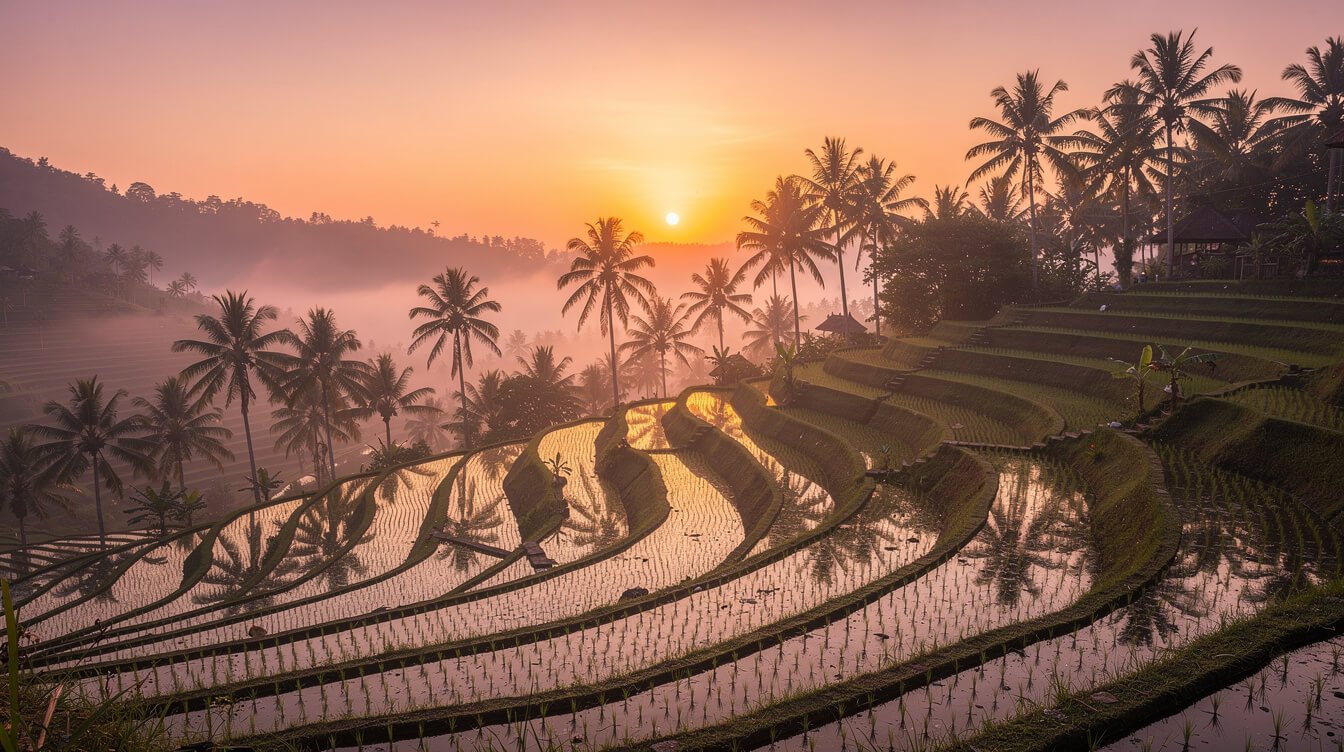
The terraces are there year-round, but the experience varies dramatically depending on when you go — both time of year and time of day.
Best Months for the Bali Rice Terrace
Rice grows year-round in Bali thanks to the tropical climate and subak irrigation, but the visual cycle matters:
- Planting season (roughly January-March and July-September): Terraces are flooded, creating mirror-like reflections that photographers love. Young bright-green shoots emerge from the water.
- Growth season (roughly March-May and September-November): Lush green paddies at their most vibrant. This is the classic “emerald terrace” look.
- Harvest season (roughly May-July and November-January): Golden-yellow rice ready for cutting. A different beauty — warmer tones, busier fields, the scent of drying rice.
Note: these are approximate. Different terraces plant on different schedules, so you will often see all three stages in a single visit — flooded paddies next to green paddies next to golden ones. This patchwork is actually part of the subak strategy for pest management.
Best Time of Day
Early morning (6:30-8:00 AM) is the answer, full stop. The light is warm and low, the mist rises from the paddies, and you will have the terraces largely to yourself. The tour buses do not arrive until around 9:30 AM.
If you are staying at a villa in Ubud, your team can arrange an early breakfast so you are at the terraces before the light gets harsh. The cook will have something ready when you get back.
What to Wear and Bring
- Proper shoes — closed-toe with grip. The terrace paths are often wet and steep. Sandals are a bad idea.
- Sunscreen and hat — there is very little shade on the terraces.
- Water — the walking can be more strenuous than expected, especially at Tegallalang.
- Small bills (IDR) — for donations at community-run access points.
- A sarong — if you plan to visit any temples along the way (required for entry).
Combining Terraces with a Full Day Out
A great full-day itinerary from Ubud: start at Tegallalang at 7 AM, walk for 90 minutes, then drive to the best restaurants in Ubud for a late breakfast or early lunch. In the afternoon, either head to Jatiluwih (90 minutes) for the contrast, or explore the quieter paddies around Campuhan. Return to your villa by late afternoon for a swim and a meal prepared by your cook.
Frequently Asked Questions About Bali Rice Terraces
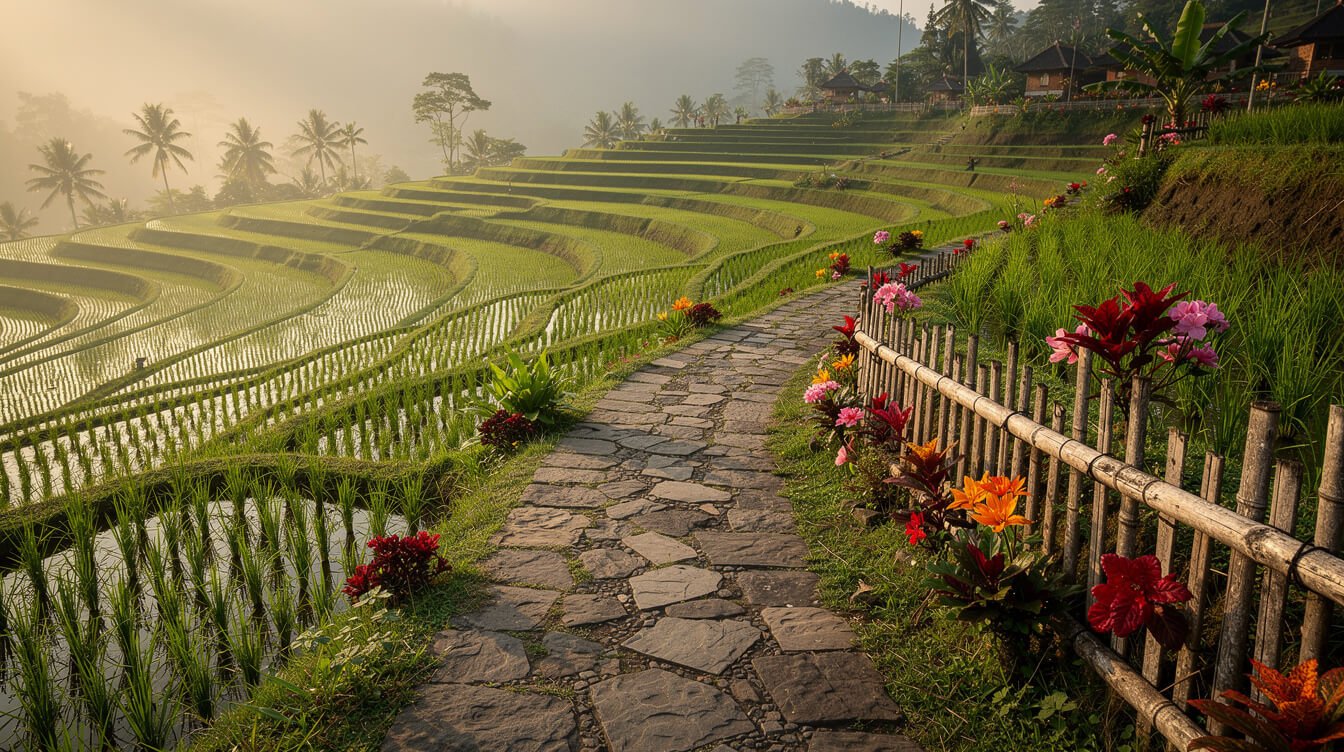
Is the Bali rice terrace worth visiting?
Yes — genuinely. The terraces are one of the few tourist attractions in Bali that exceed expectations rather than falling short. The key is timing (go early) and choosing your site (Tegallalang for drama, Jatiluwih for depth, Sidemen for solitude).
How much does it cost to visit the rice terraces?
Tegallalang: 20,000-30,000 IDR per person (donation-based, paid to farming families at access points). Jatiluwih: 50,000 IDR per person (official entrance fee). Lesser-known terraces like Sidemen and Campuhan: free, as they are open public landscapes.
Can you walk through the rice terraces?
Yes. Both Tegallalang and Jatiluwih have established walking paths through the paddies. Wear proper shoes — the paths can be narrow, uneven, and wet. Stay on the marked paths to avoid damaging the crops.
What is the best time to visit Tegallalang?
7:00-8:00 AM for the best light and smallest crowds. Weekdays are significantly quieter than weekends. Avoid the 10 AM – 2 PM window when tour groups dominate.
Where should I stay to visit the rice terraces?
Ubud is the ideal base. Tegallalang is 20 minutes north of Ubud, the Campuhan paddies are walkable from central Ubud, and even Jatiluwih is a 90-minute drive. Staying in a villa with staff means you can set your own schedule, leave early, and come back to a meal — no hotel breakfast buffet timeline to work around.
Are the rice terraces crowded?
Tegallalang can be very crowded between 10 AM and 3 PM, especially on weekends. Jatiluwih is rarely crowded. The lesser-known terraces (Sidemen, Campuhan, Pupuan) are almost never crowded.
How long should I spend at the rice terraces?
At minimum, 90 minutes at Tegallalang. For Jatiluwih, plan 2-3 hours to do the walking paths justice. If you are combining both in a day, plan for a full day trip with a meal break between them.
Join Our Newsletter — Fun, New, Exciting Bali News
Stories from Ubud, travel tips, seasonal updates, and the kind of Bali insights that do not show up in guidebooks. Delivered to your inbox, never spammy.