The Best Time to Travel to Bali: A Season-by-Season Guide for the Trip You Actually Want
The best time to travel to Bali depends on something most guides miss: what kind of trip you actually want. The climate tables will tell you April through October is dry season — and they’re right — but they won’t tell you that June in Ubud smells like clove smoke and frangipani, that November’s rain-soaked rice terraces glow a green you can’t photograph properly, or that Galungan week turns every village road into a corridor of hand-carved penjor offerings reaching toward the sky. This guide gives you the whole picture: weather, crowd rhythms, ceremonies, costs, and — critically — how the traveler staying in a staffed private villa experiences Bali differently in every single season.
What Shapes the Best Time to Travel to Bali
Bali sits just eight degrees south of the equator, which means it doesn’t experience the dramatic four-season shifts of temperate climates. What it has instead is a two-season rhythm — dry and wet — layered over a ceremonial calendar that runs on entirely different logic, plus a crowd cycle driven by school holidays in Australia, Europe, and increasingly, the United States.
Three forces actually shape the best timing for your trip:
- Climate: Dry season (April–October) brings lower humidity, reliable sunshine, and cooler evenings in Ubud’s highlands. Wet season (November–March) brings daily tropical downpours — usually short and theatrical — and the island turns impossibly lush.
- The Balinese ceremonial calendar: Galungan, Kuningan, Nyepi, and dozens of temple odalan celebrations happen on a 210-day Pawukon calendar — completely independent of the Western calendar. These events transform the island in ways no weather forecast can predict.
- Crowd pressure: July and August are peak season for Europeans and Australians. American travelers are arriving in larger numbers through 2026, extending the busy period. Shoulder months like May, June, and September offer the sweet spot: good weather, manageable crowds, and room to breathe.
Understanding how these three layers interact gives you something the simple “go in dry season” advice never does: actual agency over your own trip.
Bali’s Dry Season Month by Month — April Through October
Dry season is, genuinely, a beautiful time to be in Bali. But calling it a single block of seven identical months is like saying “Europe is nice in summer.” Each month has its own texture.
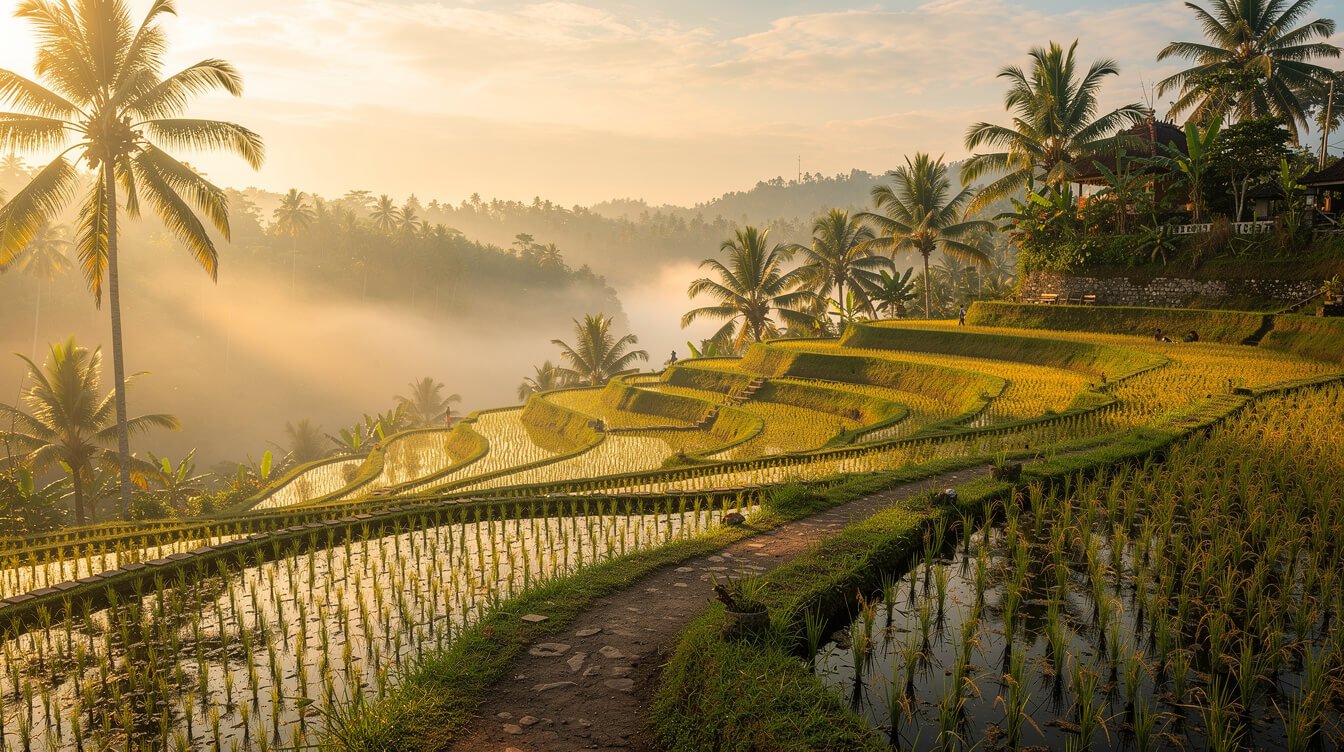
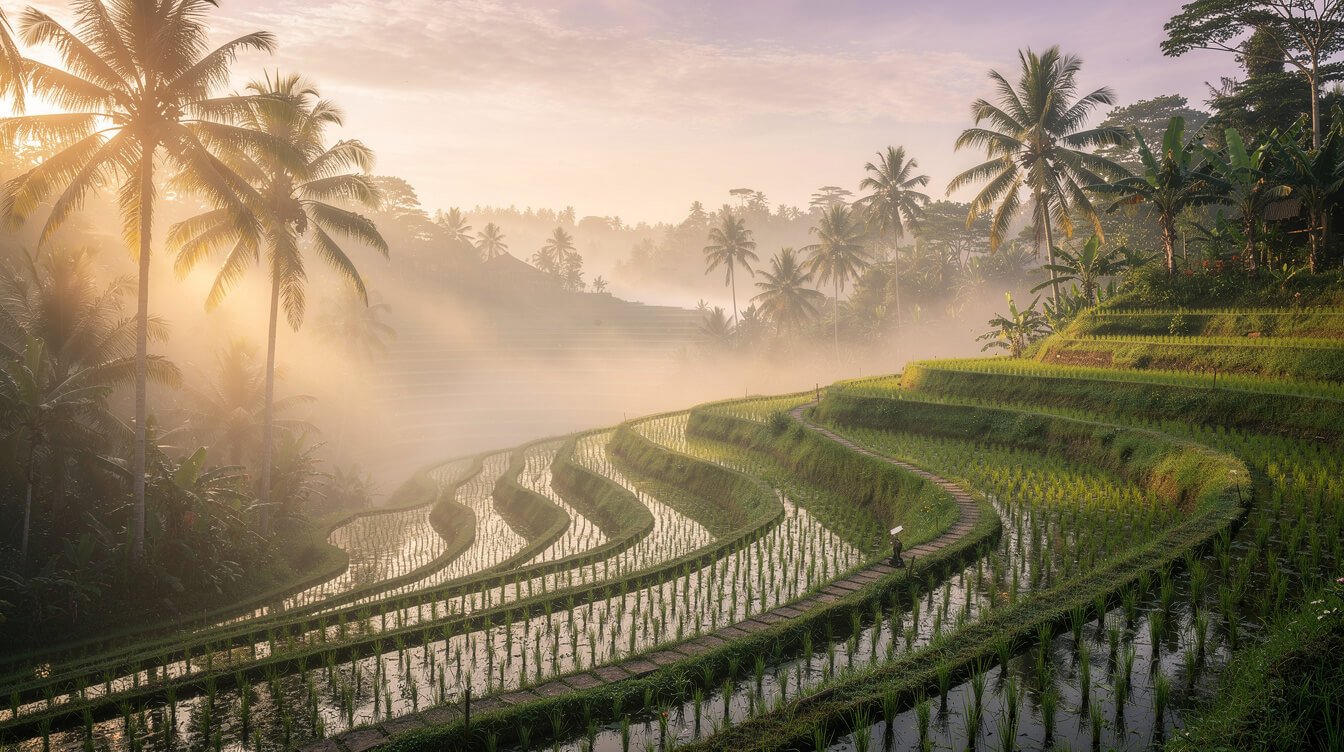
April: The transition month. Humidity drops, skies clear, but you’ll still catch occasional late-afternoon showers that leave the air smelling like wet earth and jasmine. Ubud’s rice terraces are still vivid green from the wet season rains. This is one of the best months to visit — the island is waking up, crowds haven’t fully arrived, and prices are still shoulder-season friendly.
May: Legitimately one of Bali’s finest months. Long dry days, temperatures around 27–30°C, and the pre-peak-season lull means you’ll have popular temples mostly to yourself. Villa rates sit below their July highs. Galungan often falls in late April or early May — check the date for your year, because experiencing it is something that travels home with you.
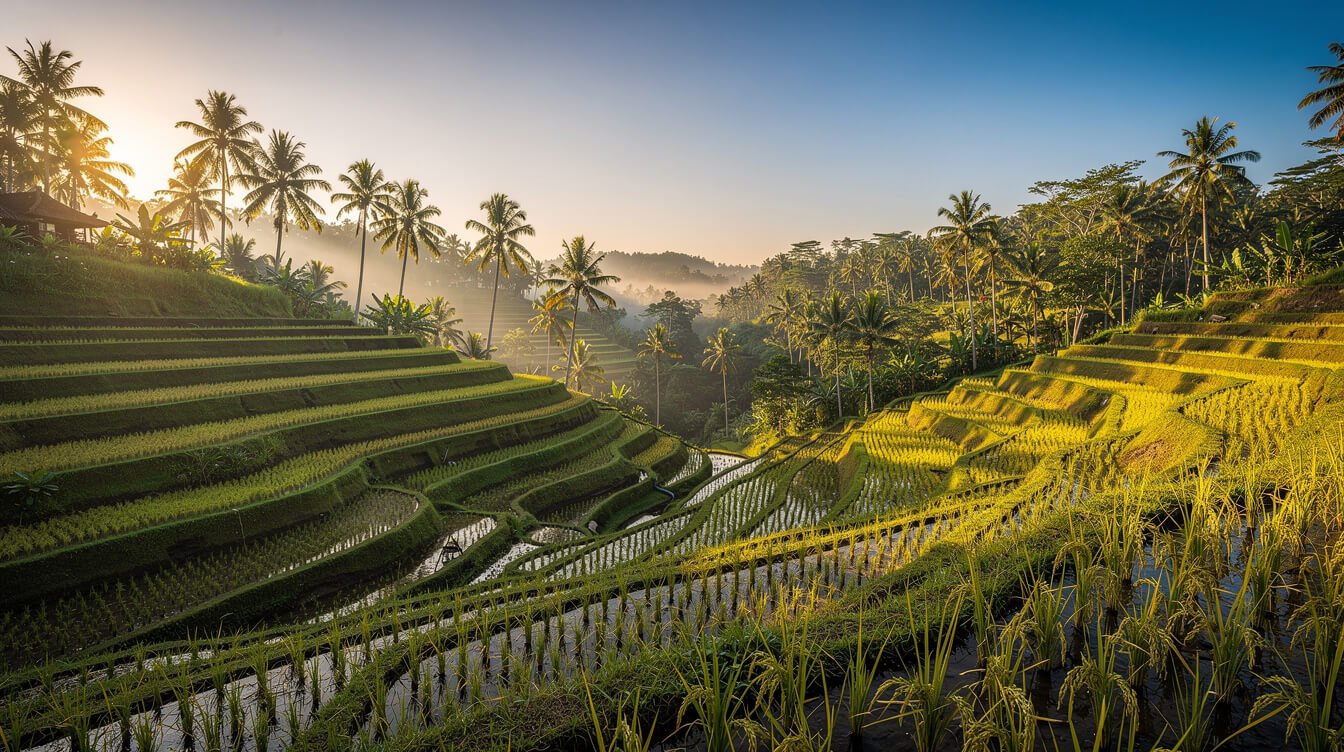
June: The island tips into proper high season. Ubud’s cafe tables fill with Europeans on long holidays. The light in late afternoon turns the rice terraces a dusty gold that photographers plan entire trips around. Hotel and villa rates begin climbing. Book well ahead.
July and August: Peak season. The busiest months of the year — Bali’s equivalent of August in Tuscany. The weather is excellent: reliable sunshine, low humidity, cool nights in Ubud’s hills. But popular sites like Tegallalang Rice Terraces and Tanah Lot are crowded from mid-morning. Prices hit their annual high. If this is when you can travel — school holidays, family constraints — go, but book your villa months in advance and plan around early mornings.
September: The crowd begins thinning. The weather stays excellent. This is arguably the ideal month for travelers who want dry-season conditions without August’s intensity. Rates ease, villa availability opens up, and the island finds its rhythm again. We’re biased — this is when Ubud feels most like itself.
October: The quiet before the wet season. Mornings are still sunny and clear. Afternoons bring the first tentative showers. A genuinely good time to visit if you’re flexible about the odd rainy afternoon and want the island nearly to yourself.
If you can only choose one dry season window, the sweet spot is May, June, or September — all the weather benefit, half the crowd pressure, and the kind of Bali experience that doesn’t require jostling past tour buses to see a sunrise.
Get a Free 3-Day Sample Itinerary
See what three days in Ubud could feel like — morning walks, temple visits, afternoons at the villa — all built around a staffed private stay.
Bali’s Wet Season — Why the Green Season Might Be Your Best Move
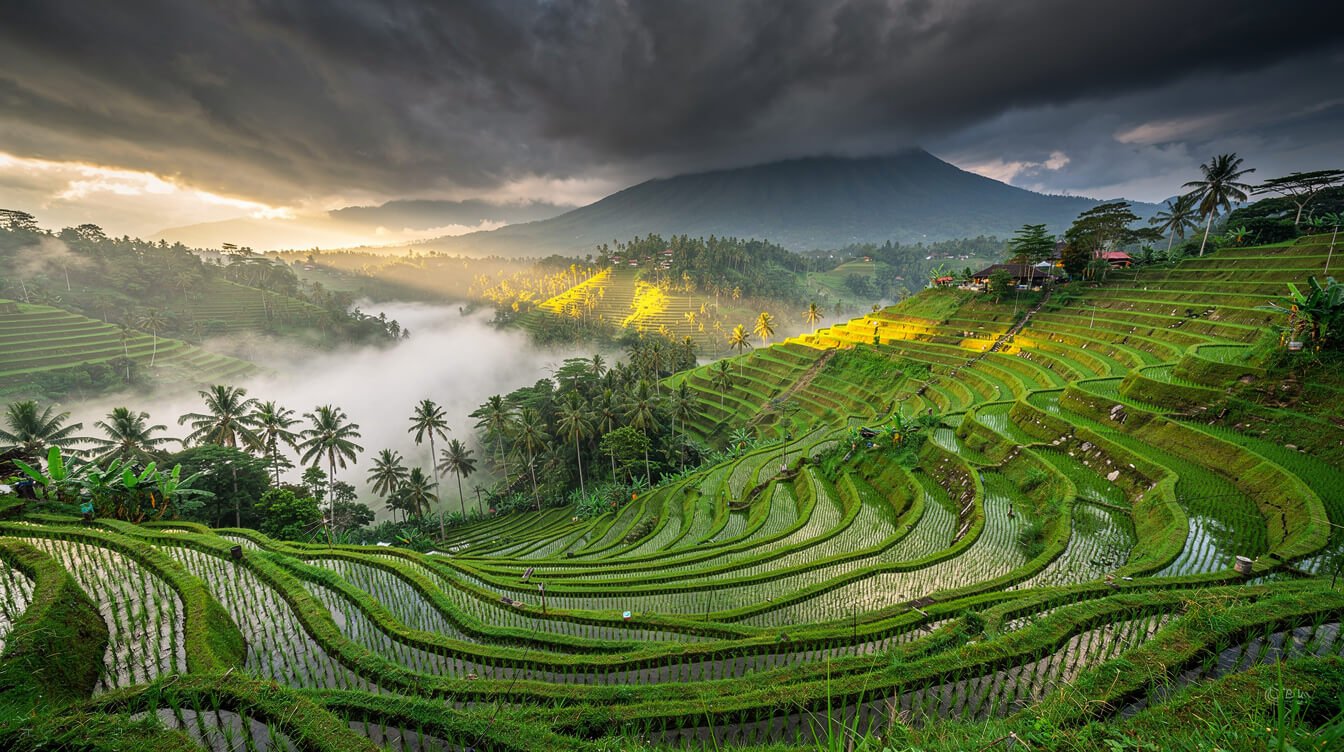
The wet season gets unfairly maligned. Yes, it rains. It rains with genuine tropical commitment — warm, dramatic downpours that turn villa pools silver and make the garden smell alive in a way dry-season Bali simply doesn’t. But here’s what the wet-season skeptics miss:
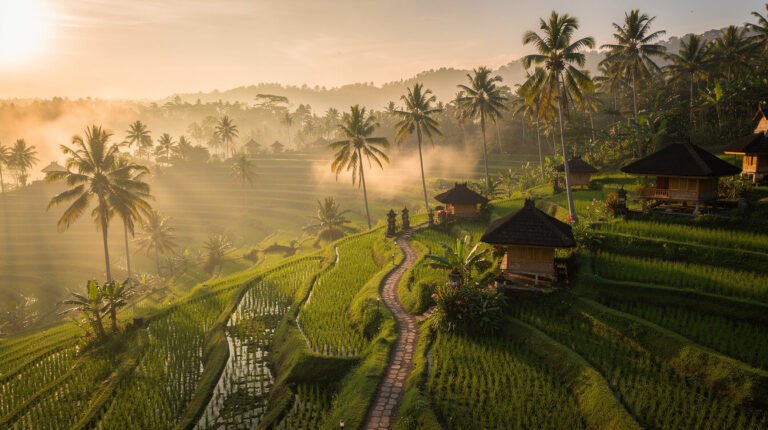
The island is at its most beautiful. Rice paddies reach a green so saturated it looks processed. Waterfalls like Sekumpul and Tegenungan run full and thunderous. Ubud’s garden landscapes drip. The photographers who know this flock to Bali in January and February specifically for the light — that heavy, diffused tropical radiance that makes everything glow.
You won’t be stuck inside. Bali’s wet season rain is rarely the grey, all-day drizzle of temperate climates. Showers typically arrive mid-afternoon, last an hour or two, and disappear. Mornings are often clear and warm. A well-structured day — temple visits by nine, lunch at your villa, rain arrives at three, sundowner on the terrace by six — works beautifully.
Rates drop and space opens. Low-season pricing is meaningful. Quality villas that are booked solid in July and August have genuine availability in January and February. If budget matters — or if you simply want to feel like a guest rather than a tourist — the green season is worth considering seriously.
November and March: The transition months sit on either side of wet season and often offer the best combination of conditions — some rain, extraordinary lushness, manageable visitor numbers, and the very beginning or end of green-season rates.
The one genuine constraint: some outdoor activities are affected. Certain dive sites have reduced visibility, some trekking routes become slippery, and beach days require more flexibility. But for a trip centered on Ubud — culture, rice terraces, cooking classes, temple visits, massage, and the deep quiet of a private villa — wet season is entirely workable and often genuinely spectacular.
The Balinese Ceremonial Calendar — Timing Your Trip to the Culture
This is the section most “best time to visit Bali” guides skip entirely, which is a shame, because the Balinese ceremonial calendar is the most profound force shaping daily life on this island — and for travelers willing to pay attention, it’s an unschedulable gift.
Bali’s Hindu culture runs on two overlapping systems: the Gregorian calendar (which governs the tourism economy) and the 210-day Pawukon cycle (which governs spiritual life). The major ceremonies don’t happen on fixed Gregorian dates — they shift year to year, which means the experience of Bali in any given month can vary dramatically.
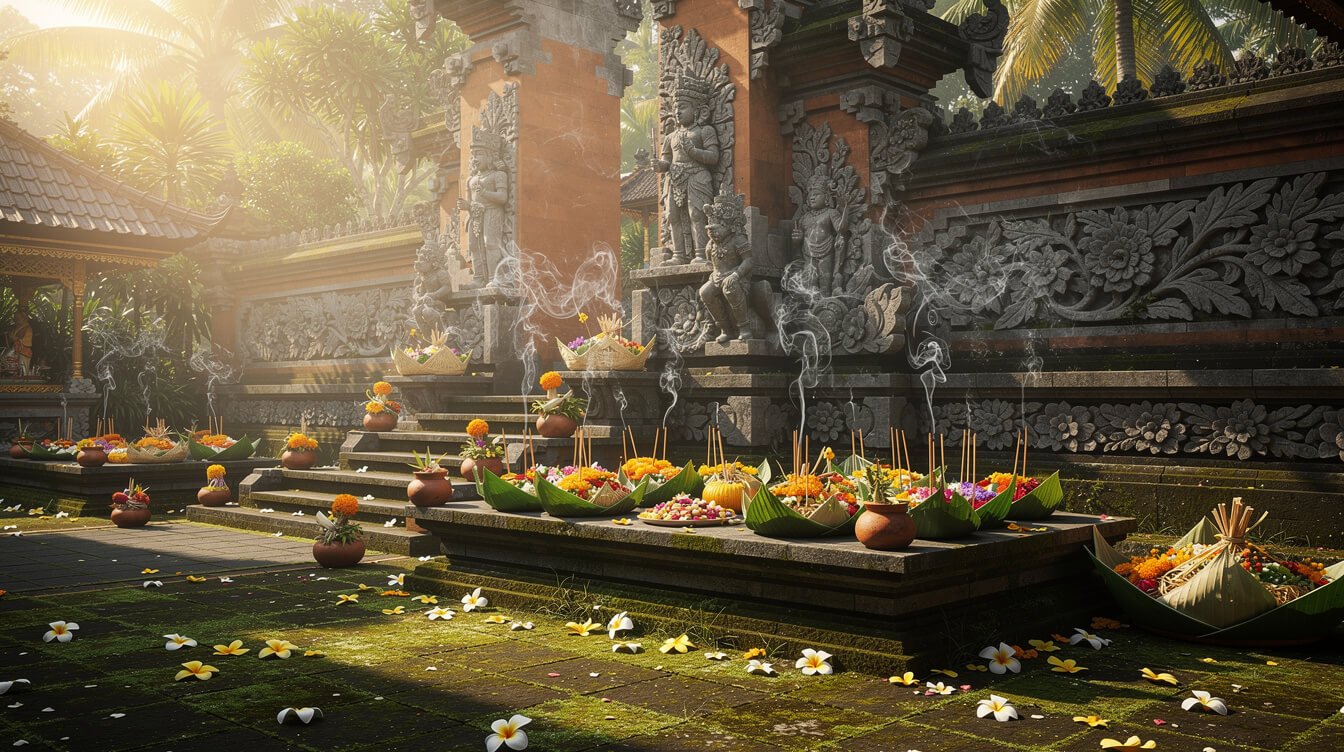
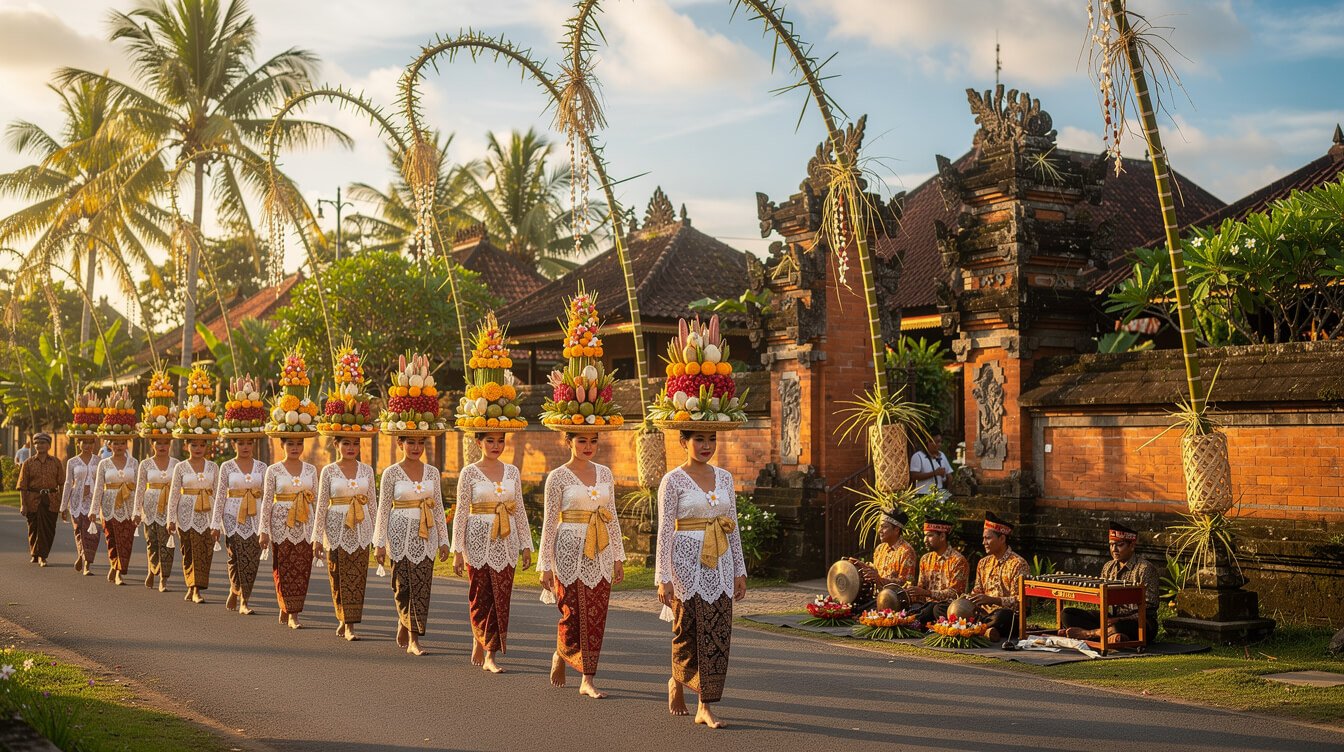
Galungan and Kuningan: The most important ceremony in the Balinese calendar. Galungan celebrates the victory of dharma (good) over adharma (evil) and welcomes the ancestral spirits back to earth. Every village road is transformed with penjor — tall bamboo poles arching overhead, draped with coconut leaves, flowers, rice cakes, and fruit offerings. The island smells of incense. Gamelan drifts from every bale. Kuningan, ten days later, marks the spirits’ return to the spirit world. Experiencing either of these is an entirely different Bali than the guidebooks describe. Check the 2026-2027 dates and plan around them if you can.
Nyepi — The Day of Silence: Every year in March, Bali observes Nyepi — the Balinese New Year, and one of the most extraordinary days anywhere on earth. The entire island goes silent for 24 hours: no lights, no travel, no noise, no work, no entertainment. The airport closes. Tourists are confined to their villas or hotels. It sounds restrictive, and yet travelers who’ve experienced it describe it as one of the most moving days of their lives. The night before, the streets fill with enormous handcrafted ogoh-ogoh demon effigies carried through the village in procession and then burned. You can read more about this in our complete Nyepi guide.
Odalan temple anniversaries: Every Balinese temple celebrates its own anniversary ceremony, called an odalan, every 210 days. These are intimate, local affairs — women in kebaya carrying elaborate fruit offerings on their heads, gamelan playing through the night. You can encounter them in any month, at any village, entirely by chance. They’re not on any tourist calendar. They simply happen, and if you walk past one, you’re welcome to observe respectfully.
The lesson: Bali’s ceremonial life doesn’t pause for season. A February trip that coincides with Galungan will feel more alive than a July trip between ceremonies. Research the current year’s calendar before you book.
The Best Time to Travel to Bali for What You Want to Do

Different trips demand different timing. Here’s how to match your travel goals to the right window.
For beach days and water activities: Dry season, specifically May through September. Kuta, Seminyak, and Canggu see reliable sunshine and calm surf. Dive visibility peaks around October on the east coast (Amed, Padang Bai) and west coast sites like Menjangan Island. July and August are crowded; June and September are the smart play.
For Ubud and cultural immersion: Honestly, year-round. Ubud’s highland location means it’s slightly cooler and wetter than the coast regardless of season — morning mist in the rice terraces is a feature, not a bug. April, May, and September are the sweet spots: good light, manageable crowds, the cultural calendar active. For the most detailed breakdown of timing in Ubud specifically, we’ve covered it at length elsewhere.
For wellness retreats and yoga: Shoulder season — April, May, September, October. The major retreat centers are fully booked in high season. Arriving in May gives you access to top teachers, better studio space, and villa availability without the July scramble. The green season also has its adherents in the wellness community — something about rain on a tin roof during morning meditation.
For families with school-age children: July and August are unavoidable for many families — and despite the crowds, Bali in high season is genuinely wonderful for kids. The beaches are calm, the culture is generous toward children, and a private villa means you have your own space, pool, and chef regardless of what’s happening outside. Finding the right family-friendly villa matters more than the month.
For couples and honeymoons: May, June, and September offer the best combination of weather, romance, and space. The island hasn’t reached July-August saturation, yet conditions are reliably beautiful. November is underrated for couples who want genuine privacy — fewer visitors, fuller waterfalls, lush landscapes, lower prices.
For photographers and creatives: Green season surprises. The soft diffused light of wet-season mornings, mist over terraces, the supersaturated color of a freshly rained-on jungle — these are conditions dry-season sun can’t replicate. January and February particularly for landscape and cultural photography.
For budget travelers: November through March (excluding Christmas/New Year). Rates drop significantly. Availability opens. The trade-off is afternoon rain — which, as noted, is usually brief and actually quite beautiful.
Book the Villa for Your Bali Trip
Three bedrooms. Private pool. Full staff — chef, manager, gardener. Your Bali trip, held beautifully, whenever you decide to come.
How a Staffed Private Villa Changes the Timing Equation
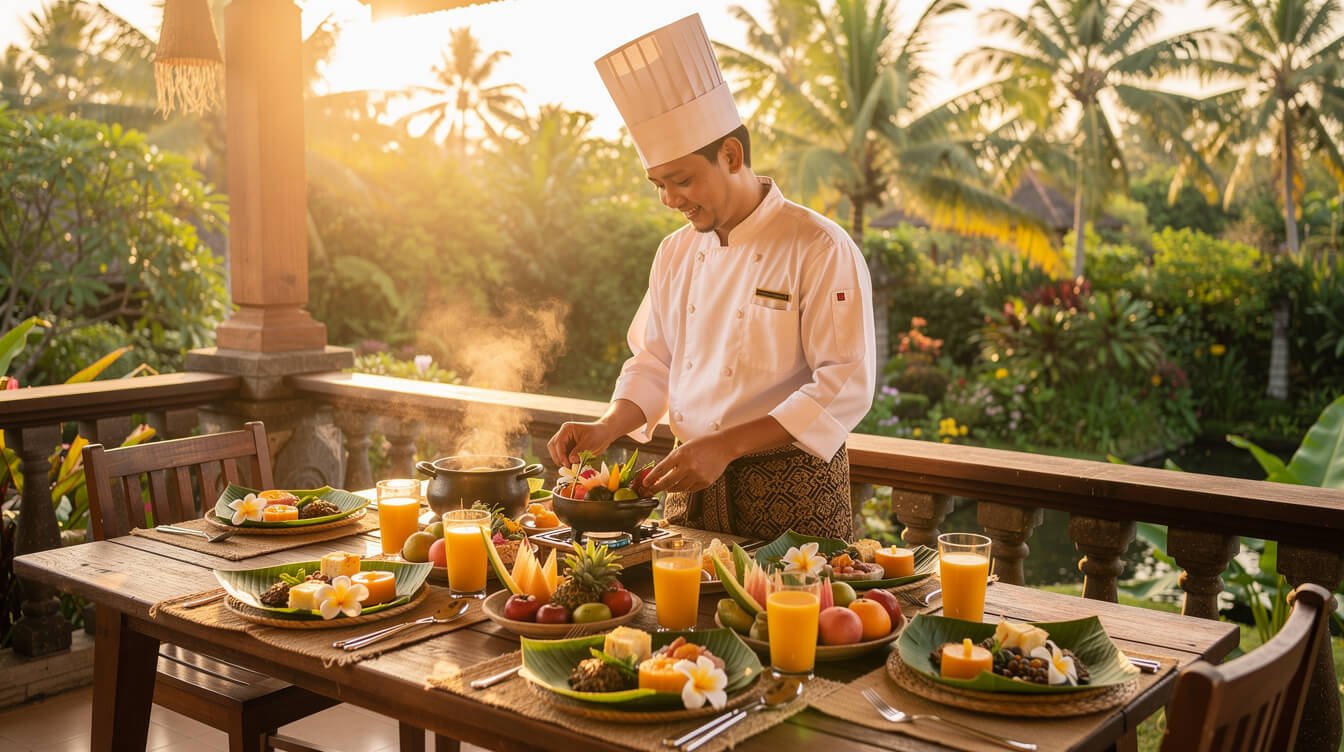
Here’s something no “best time to visit Bali” article has ever told you: the accommodation you choose matters as much as the month you arrive.
When you stay in a staffed private villa, the seasonal constraints that govern hotel stays largely dissolve. Consider:
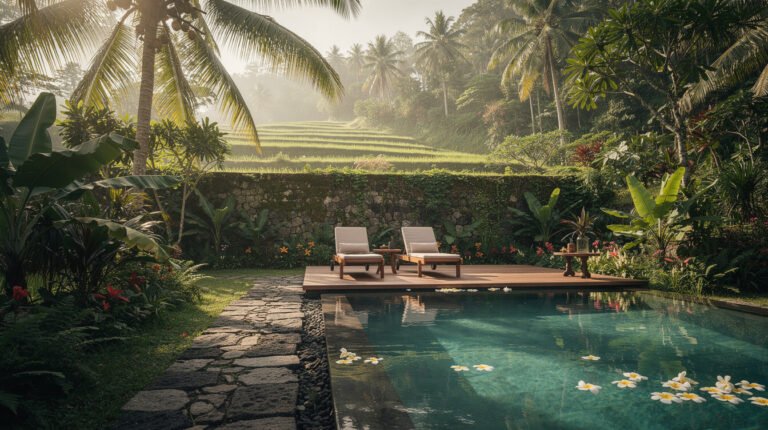
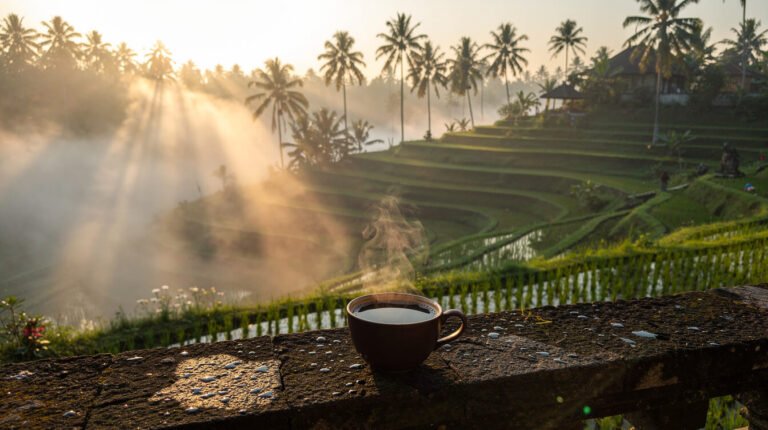
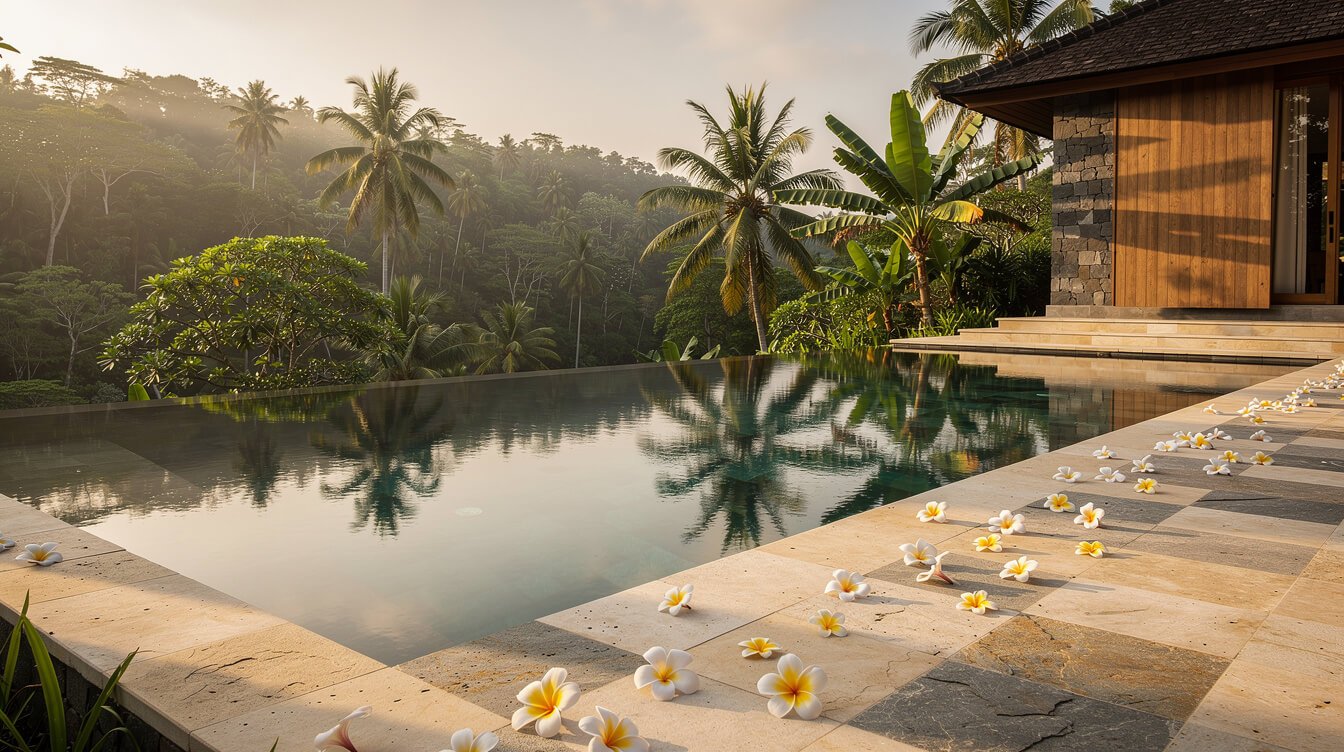
Rain doesn’t ruin your plans. In a hotel, a wet afternoon means sitting in the lobby or paying for an overpriced cocktail at the bar. In a staffed villa with a private pool, a tropical downpour is genuinely atmospheric — watch from the terrace with a coffee your chef just made, let the garden fill with the sound of rain, then swim when it passes. The pool is warm. There’s nowhere to be.
Peak-season crowds don’t reach you. The main friction of July and August in Bali is external: crowded temples, full restaurants, busy roads. Inside a staffed private villa, none of that penetrates. You wake to your own garden. Breakfast arrives exactly when you want it. The pool is yours. The team — your manager, your chef, your gardener — is focused entirely on your stay. The outside world can be as crowded as it likes.
The staff are the season. This is perhaps the less expected truth: the quality of your villa team shapes your experience of Bali more than any weather pattern. A chef who knows what’s fresh at the market this week, a manager who can get you a temple ceremony recommendation at six hours’ notice, a gardener who quietly leaves fresh frangipani on the breakfast table without being asked — these create the daily texture of your stay in a way no guidebook can package. At Villa Amrita, the team has been with the property from the beginning. They’re not seasonal staff. They’re people who genuinely love what they do because they’re treated that way, and you feel the difference within hours of arriving.
Green season at a villa is exceptional. Budget travelers and hotel guests feel wet season most acutely — rain means fewer outdoor options, more time spent in shared spaces. A villa with a covered terrace, private pool, chef, and garden turns a rainy afternoon into a feature. Some of the most memorable villa stays happen in November and February — the island quiet, the air alive, the garden dripping, a pot of local coffee on the terrace table.
If you’re on the fence about wet season, the honest answer is: in a staffed private villa, the fence disappears entirely.
Practical Timing Tips for Planning Your Bali Trip in 2026-2027
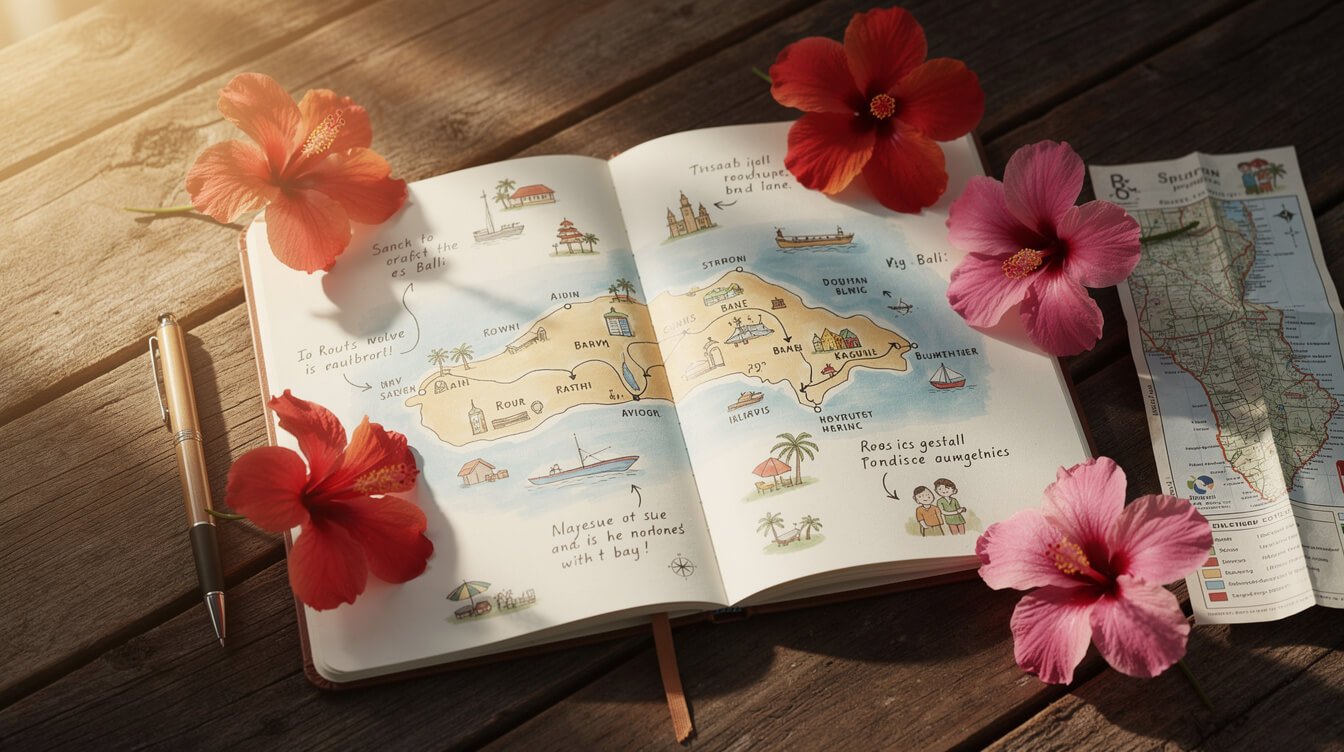
A few concrete notes for anyone planning travel to Bali in the coming year:
Bali visitor numbers are at a record high. 2026 has seen over seven million international visitors — the highest figure in the island’s history. Australian visitors lead at around 25%, but American travelers are the fastest-growing segment. Book accommodation earlier than you think necessary, particularly for high-season dates and private villas. Availability that existed in 2023 is genuinely tighter now.
Check entry requirements before you book. Indonesia’s visa regulations have evolved through 2025 and 2026. The e-Visa on Arrival process covers most nationalities, but specifics around duration and fees can shift. Read our current Bali travel guidelines for the latest on entry requirements, health documentation, and practical arrival logistics.
Budget for the real cost of Bali. The island occupies an interesting mid-point: it can be traveled cheaply or at genuine luxury levels. Accommodation rates, particularly for quality private villas, have risen 15–30% from pre-2024 levels, reflecting both increased demand and operating cost increases. If you’re planning a luxury stay, build the real rate into your budget now rather than discovering sticker shock at booking time.
Build in downtime. Bali’s seduction is the pace — or rather, the possibility of finding your own pace. Every trip that’s overscheduled becomes a logistics exercise rather than an experience. Build in a day or two with nothing planned. Let your villa chef make something new. Walk without destination. That kind of travel is available in every season — it just requires you to leave space for it.
For the cultural calendar: The Bali Tourism Board publishes ceremony dates annually, and the online Balinese calendar communities are active and helpful. For Galungan specifically, the date is set in advance for each year — search “Galungan 2026” or “Galungan 2027” to confirm the window for your planned travel dates.
Whatever month you choose, you’ll find a Bali that rewards patience and curiosity. The island has a way of delivering its best moments not through scheduled attractions, but through the unplanned ones — a procession encountered on a morning walk, a conversation with your villa’s chef about the local market, a sunset you almost missed. The best time to travel to Bali is, mostly, whenever you can get there — and then be genuinely present when you do.
Curious about the best Ubud experiences to add to your itinerary once you’ve picked your dates? Explore our guide to Ubud’s markets and artisan shopping, and when you’re ready to look at where to stay, our guide to the best villas in Ubud covers the full landscape — including what makes a staffed villa the right choice for this kind of trip.
Join Our Newsletter — Fun, New, Exciting Bali News
Seasonal Ubud stories, ceremony dates, villa life, and the kind of Bali intelligence that makes you start checking flights. Weekly from the team.