Best Time to Visit Ubud, Bali: A Complete Season-by-Season Guide
You’ve been dreaming of Ubud. The terraced rice fields, the scent of incense drifting from ancient temples, the sound of gamelan carried on the breeze. Now you’re planning your trip — and the question every traveller asks is the same: what’s the best time to visit Ubud, Bali?
The honest answer? Ubud is extraordinary in every season. The key is knowing what each time of year brings — so you can choose the experience that’s right for you. This guide covers everything: the dry season, the rainy season, monthly weather, festivals, and how your choice of season shapes a stay at a private pool villa.
Why Ubud’s Climate Is Unlike Anywhere Else in Bali
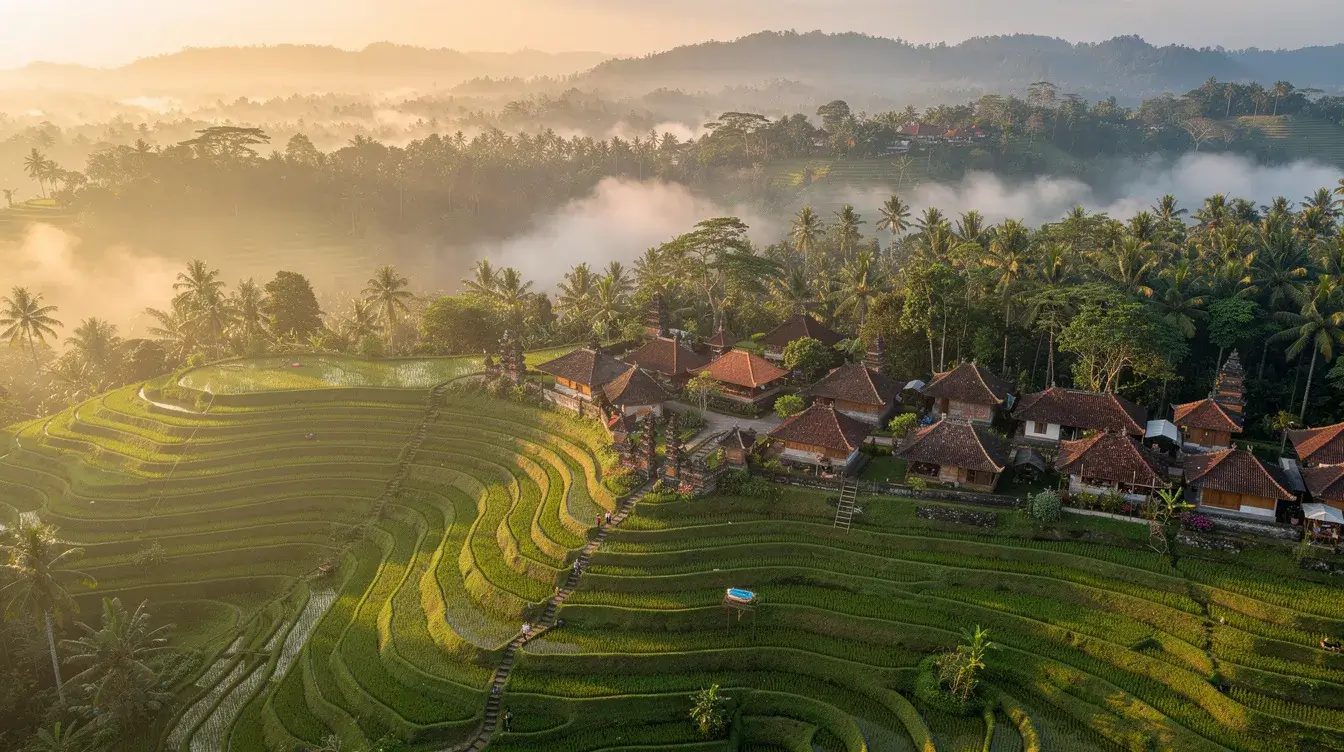
Most Bali weather guides focus on the coast — Seminyak, Canggu, Nusa Dua. But Ubud is different. Sitting at roughly 300 metres above sea level in Bali’s lush interior, Ubud runs cooler, greener, and more atmospheric than anywhere on the island’s shoreline.
Expect daytime temperatures between 27–30°C year-round, dropping to a comfortable 20–23°C at night — perfect sleeping weather under a slow ceiling fan. You won’t find the punishing humidity of a beach resort here. Even during the rainy season, Ubud’s showers tend to arrive in concentrated bursts — a dramatic afternoon downpour — before clearing to leave everything smelling of earth and flowers.
This elevation also means Ubud’s gardens are genuinely extraordinary. Frangipani blooms year-round. The rice fields shift through shades of gold and vivid green depending on the harvest cycle. Every season has its own palette.
The Dry Season: The Best Time to Visit Ubud Bali for Most Travellers (April–October)

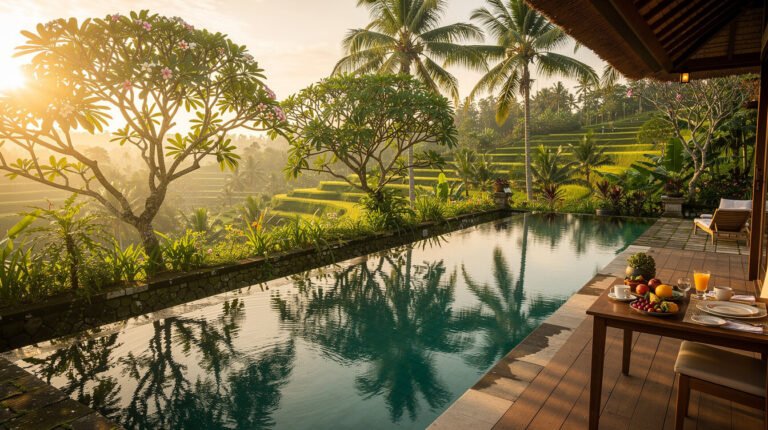
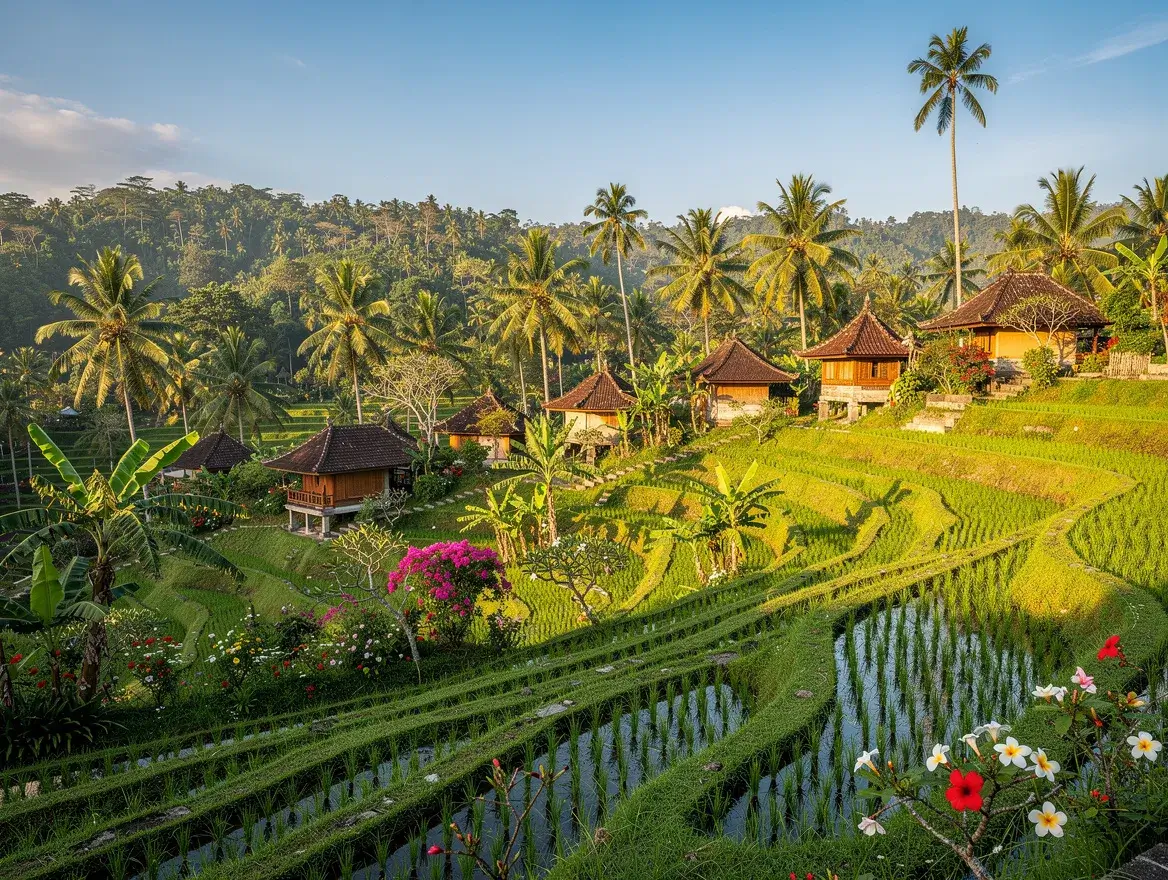
The dry season runs from April through October, and this is undeniably when Ubud shows its most photogenic face. Clear skies, low humidity, long sunny days. The rice fields shimmer. The temple courtyards glow. Your private pool looks impossibly blue against the tropical green.
This is the time to wake before dawn and walk the Campuhan Ridge — mist still clinging to the valley below, the light soft and golden. It’s the season for outdoor yoga at sunrise, long afternoons in the pool, and evenings spent watching Kecak fire dance at Uluwatu.
Peak months: July and August. This is when Ubud is at its busiest — and most alive. Prices are higher, popular restaurants fill up quickly, and the Monkey Forest path gets crowded by mid-morning. Book your villa well in advance.
Shoulder months: April–June and September–October. These are perhaps the real sweet spots. The weather is almost identical to peak season — sunny, dry, gorgeous — but with noticeably fewer visitors. April through June in particular offers something special: Ubud’s gardens are at their most lush after the last rains, the air is crisp, and you can visit the Tegallalang Rice Terraces at sunrise without sharing the viewpoint with fifty other photographers.
The Rainy Season: Ubud’s Best-Kept Secret (November–March)
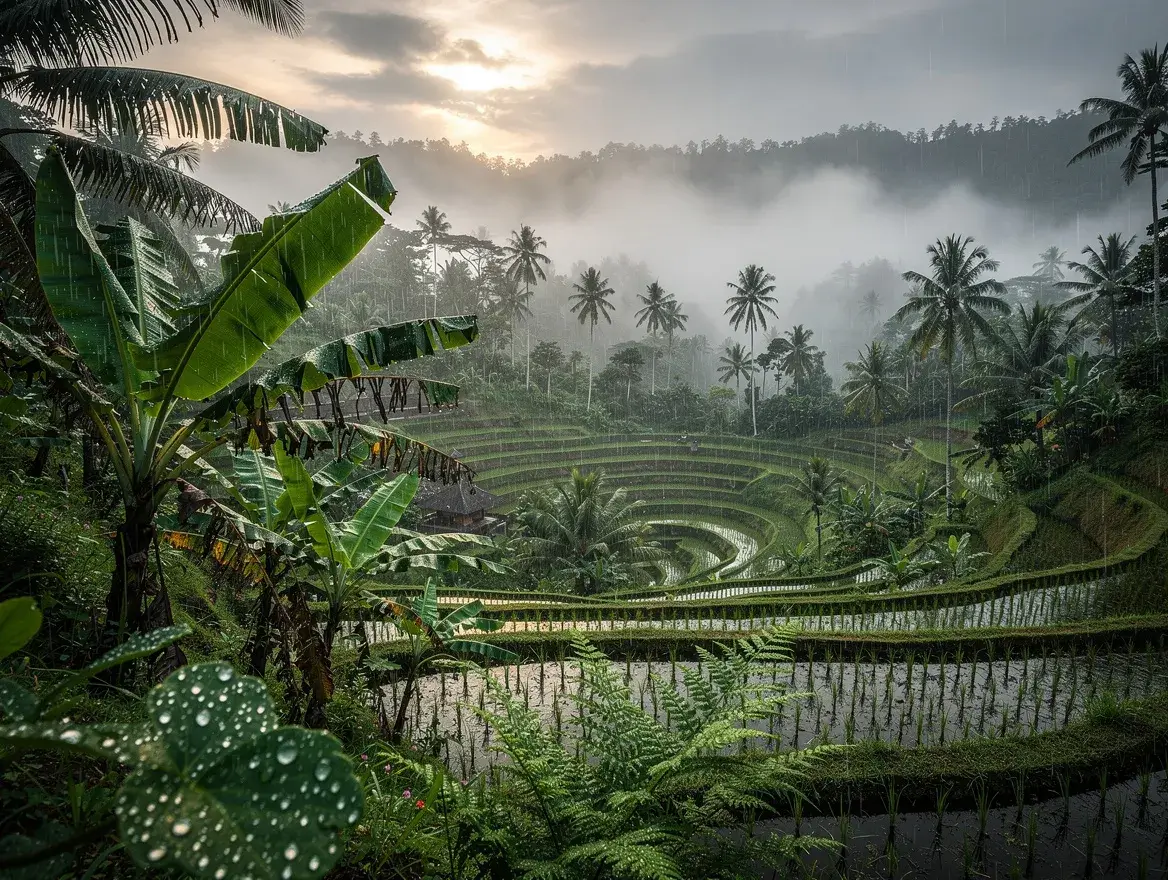
The word “rainy season” makes some travellers nervous. It shouldn’t. Ubud’s wet season is genuinely beautiful — and if you know how to work with it, rather than against it, it might become your favourite time to visit.
Rain typically falls in the afternoon, often dramatically — a curtain of warm rain sweeping over the valley, filling the air with petrichor, turning the rice terraces an almost supernatural shade of green. By evening, the sky often clears to reveal stars. Mornings are frequently crisp and bright.
The rainy season is when Ubud feels most genuinely itself. Fewer tour groups. Quieter temples. The sacred sites are accessible, unhurried, and contemplative in exactly the way they’re meant to be experienced. It’s the season for slow mornings, long spa days at one of the excellent spas near Ubud, and deep immersion in Balinese life.
Villa rates drop significantly November through January, making it a genuinely remarkable time for anyone who values space, authenticity, and value over guaranteed sunshine. Your private pool is still warm. Your chef still cooks. The garden is still extraordinary. The magic is still there — it just comes wrapped in a little more atmosphere.
The exception: January and early February. This is peak wet season. Rain can persist for days, and some outdoor activities become impractical. If your trip revolves around hiking and sunrise shots, consider shifting a few weeks in either direction.
🌴 Free Ubud Travel Guide
Get our insider guide to Ubud — best restaurants, hidden temples, rice terrace routes, and tips only locals know. Delivered straight to your inbox.
Month-by-Month Guide to Ubud’s Weather
Here’s what to expect, month by month:
- January: Wettest month. Heavy rain, lush scenery. Quiet and atmospheric if you embrace the mood. Best for indoor experiences: cooking classes, spa, yoga intensives.
- February: Still wet, but gradually improving. Nyepi (Day of Silence) often falls in late February or March — one of Bali’s most extraordinary cultural experiences.
- March: Transitional. Rains easing, prices still low, gardens spectacularly green.
- April: Dry season begins. Excellent weather, manageable crowds, vibrant scenery. One of the year’s best months.
- May: Reliably sunny and pleasant. The Bali Spirit Festival brings a wonderful energy to Ubud. Ideal month to visit.
- June: Long, clear days. Warm afternoons, cool nights. Pre-peak season prices still apply in early June.
- July: Peak season. Festivals, ceremonies, maximum energy — and maximum crowds. Extraordinary if you plan ahead.
- August: School holidays. The Ubud Village Jazz Festival is a highlight. Book everything — villas, restaurants, cooking classes — well in advance.
- September: Quieter than July/August but still beautiful weather. A wonderful month.
- October: Last of the dry season. The Ubud Writers & Readers Festival is one of Southeast Asia’s most celebrated literary events.
- November: Rains return, softly at first. Prices drop. The island relaxes. Lovely for those seeking genuine immersion over picture-perfect skies.
- December: Wetter but festive. Christmas and New Year bring a surge of visitors — the one time when low season prices briefly reverse. Book ahead for the holidays.
Ubud’s Festivals and Cultural Events Calendar
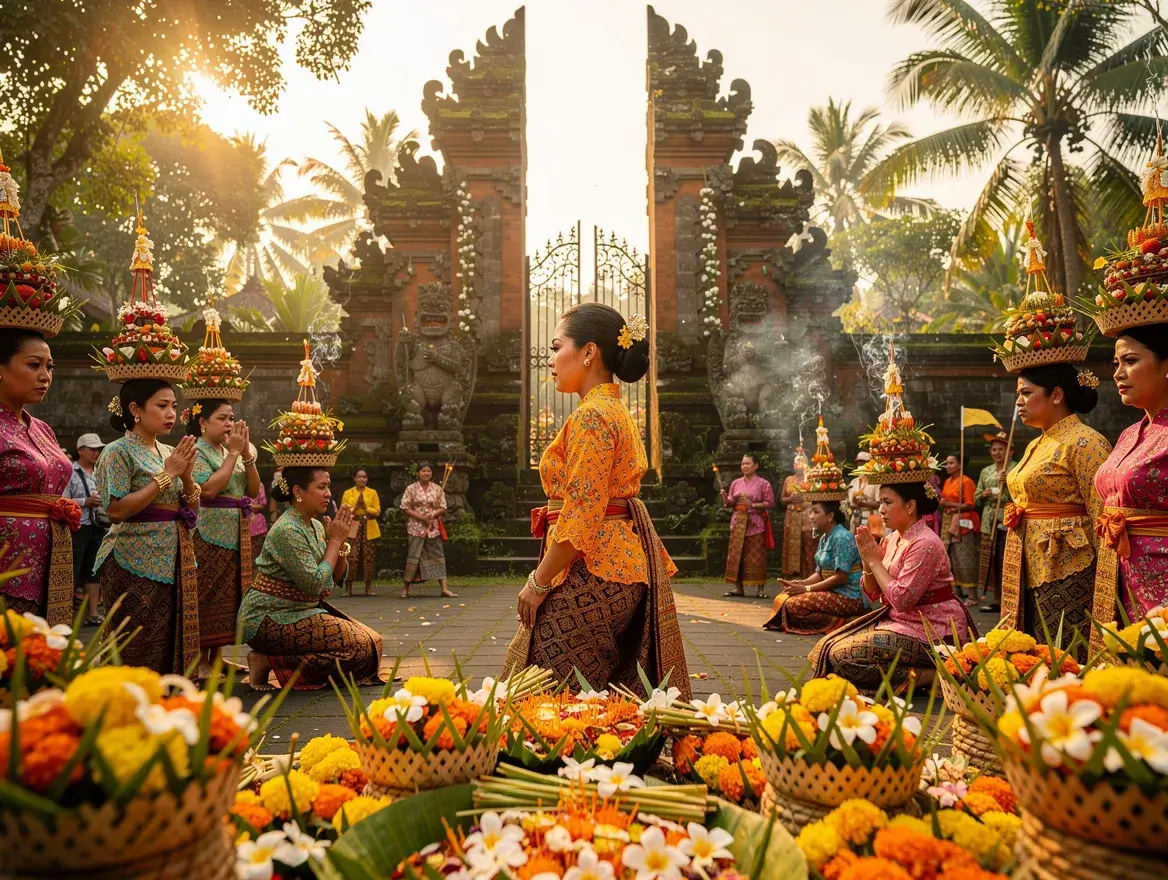
One of Ubud’s greatest gifts is its cultural calendar. Bali has one of the most active ceremonial traditions of any place on earth — there is almost always a procession, a ceremony, or a festival happening somewhere in the village. But certain events are unmissable:
Nyepi — Bali’s Day of Silence (February/March). The Balinese New Year is observed with 24 hours of absolute silence across the entire island. No lights, no movement outdoors, no vehicles. Staying at a private villa during Nyepi is a once-in-a-lifetime experience — you read, eat by candlelight, and feel Bali breathe. The night before, Ogoh-ogoh processions fill the streets with extraordinary giant demon effigies and the sound of cymbals.
Bali Spirit Festival (May). Asia’s largest yoga, dance, and world music festival takes over Ubud for a week of workshops, performances, and conscious community. If wellness is your reason for visiting, time your trip around this.
Ubud Village Jazz Festival (August). Two nights of world-class jazz in an open-air setting, surrounded by rice terraces. Genuinely magical.
Ubud Writers & Readers Festival (October). Over five days, Ubud becomes a gathering place for some of the world’s finest writers, thinkers, and storytellers. One of Asia’s most beloved literary events.
Temple Odalan ceremonies (year-round). Every temple in Bali celebrates its own anniversary on a rotating schedule. Walking past a temple mid-ceremony — the air thick with incense, the gamelan playing, the offerings stacked high — is one of the most immersive things you can experience in Ubud, and it happens on ordinary days, not just special ones.
The Best Time to Visit Ubud Bali for Your Travel Style

The “best” month depends entirely on what you’re seeking. Here’s a quick guide by travel style:
For outdoor adventurers — May, June, or September. The weather is reliably dry, trails are clear, and you won’t be jostling for position at sunrise viewpoints. Perfect for ridge walks, cycling through rice terraces, and white-water rafting on the Ayung River.
For wellness and retreat seekers — January–March or September–October. Quieter schedules at yoga studios, availability at Ubud’s finest wellness centres, and the kind of stillness that makes genuine inner work possible.
For families — July, August, or April. July and August align with school holidays and offer maximum activity options. April is an excellent alternative — great weather, fewer crowds, and a gentler pace that works well for children. You’ll find useful inspiration in our family villa guide for Ubud.
For culture seekers — time around Nyepi, the Spirit Festival, or the Writers Festival. These events give Ubud a depth and resonance that transforms a holiday into something genuinely unforgettable.
For food lovers — any season. Ubud’s food culture — from temple-side warungs to in-villa private chef dinners — doesn’t have a season. The produce is extraordinary year-round.
Staying at Villa Amrita Through Every Season

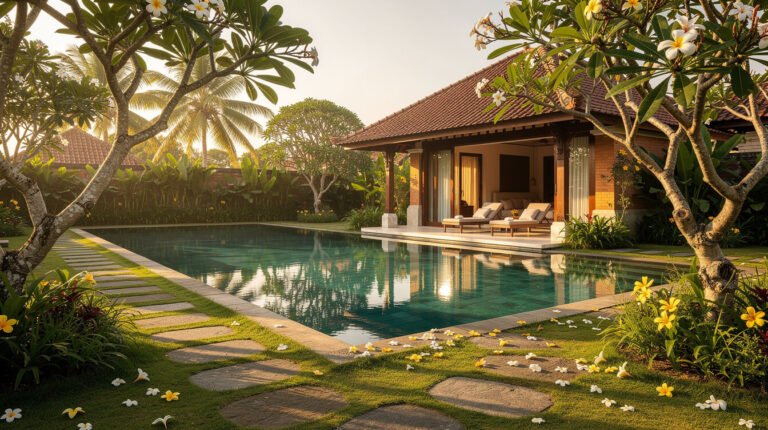
Here’s something worth understanding about staying at a private villa versus a hotel: the seasons affect you differently. At Villa Amrita, your private pool, your tropical garden, and your chef are yours regardless of what the sky is doing.
On a rainy afternoon in December, you’re not stranded in a hotel corridor. You’re in a three-bedroom villa with a covered terrace, a glass of something cold, watching the rain move across the valley. Your chef is in the kitchen preparing something extraordinary from the morning market. The garden is steaming and vivid. You are, genuinely, not going anywhere — and you don’t want to.
In the dry season, the garden at dawn is one of the most peaceful places on earth. The pool temperature is perfect by 8am. By the time the rest of Ubud is filling up, you’ve already had a sunrise walk, a swim, and breakfast served by the pool. The day stretches ahead of you, unhurried.
This is what a private villa does that no hotel can replicate: it makes you the host, not the guest. The space works for you. Every season has something generous to offer when it’s yours.
Your Private Villa Awaits in Ubud
Three bedrooms, a private pool, full staff, and the warm heart of Bali at your doorstep. Villa Amrita is where unforgettable memories begin.
Check Availability →Booking Tips: How to Plan Smart for Any Season

Whenever you decide to come, a few practical notes will serve you well:
- Book peak season early. July, August, and the Christmas/New Year period fill quickly. If you know you want those dates, lock in your villa three to six months ahead.
- Consider the shoulder seasons. April–June and September–October offer the best balance of good weather, moderate prices, and manageable crowds. These are genuinely the insider’s choice.
- Don’t write off the rainy season. If you’re flexible about outdoor activities and prioritise immersion over Instagram weather, November–December and March can be extraordinary — quieter, greener, and significantly more affordable.
- Build in a rain day. Even in the dry season, a brief afternoon shower is possible. Have a plan for it: a cooking class, a spa morning, an afternoon of reading in the villa. These days often become the ones guests remember most fondly.
- Pack a light layer. Ubud evenings can feel genuinely cool, especially in July and August. A linen shirt or light wrap makes a real difference at dinner or during temple visits.
A Final Thought
Ubud doesn’t have a bad season. It has different seasons — each with its own beauty, its own pace, its own particular gift. The dry season gives you clarity and sunshine. The rainy season gives you lushness and solitude. The shoulder months give you a bit of everything without compromise.
What Ubud always gives you, in any month, is depth. This is a place of extraordinary culture, genuine warmth, and a pace of life that is irreplaceable. Come whenever you can. You won’t regret it.
When you’re ready to plan your stay, check availability at Villa Amrita — your private pool villa in the heart of Ubud.
Stay Inspired — Join the Villa Amrita Community
Bali travel tips, seasonal guides, and exclusive offers. No spam, just warmth from Ubud.