The Hour Ubud Goes Quiet
Somewhere around one in the afternoon, Ubud does something that takes most visitors by surprise. It stops.
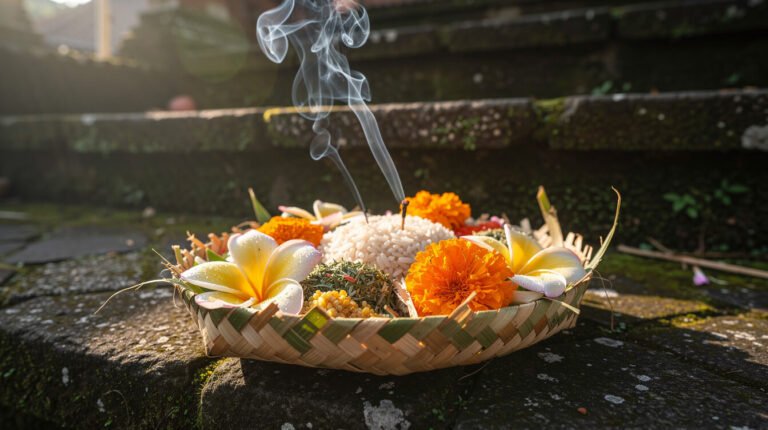
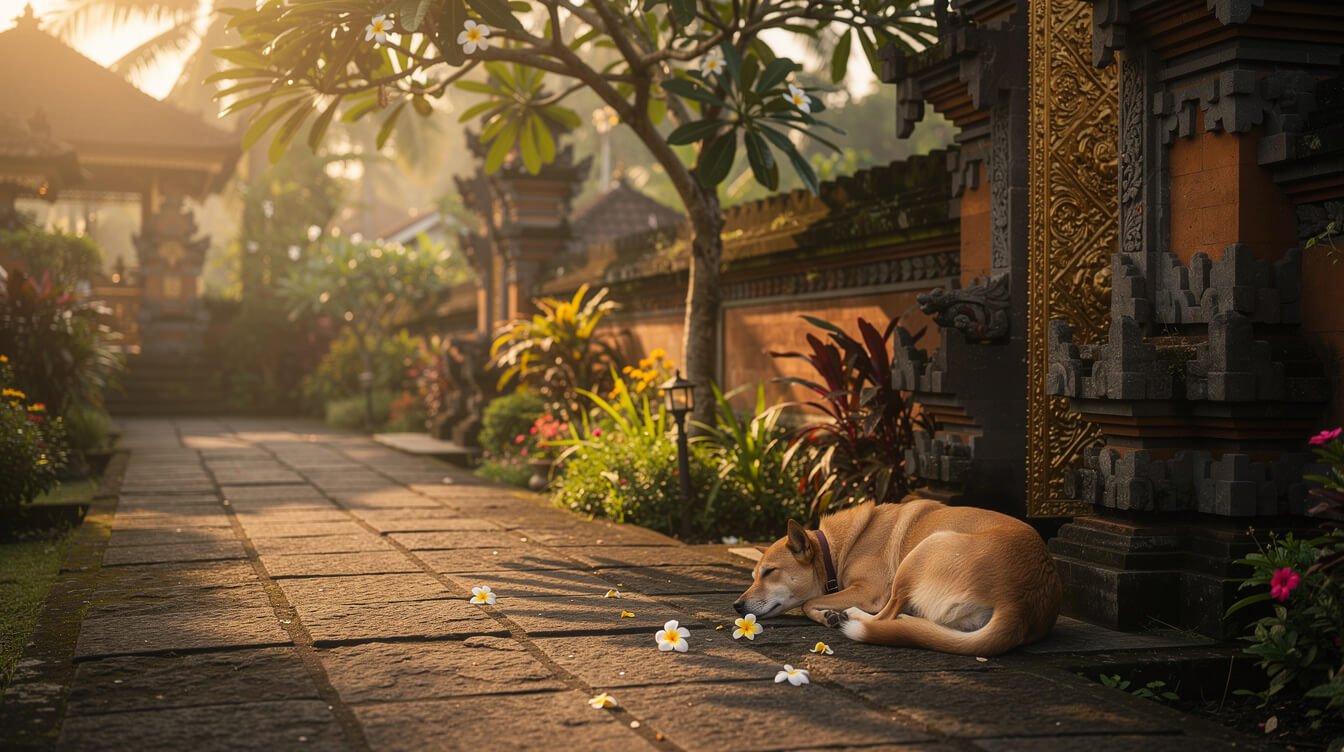
Not dramatically. Not all at once. The motorbikes thin out along Jalan Raya. The warungs pull their shutters half-closed. A dog stretches across warm stone and doesn’t move again for two hours. The only sound left is the hum of insects in the garden and maybe — if you’re listening — the slow drip of condensation from a leaf.
This is the hour nobody tells you about.
The Quiet That Holds You
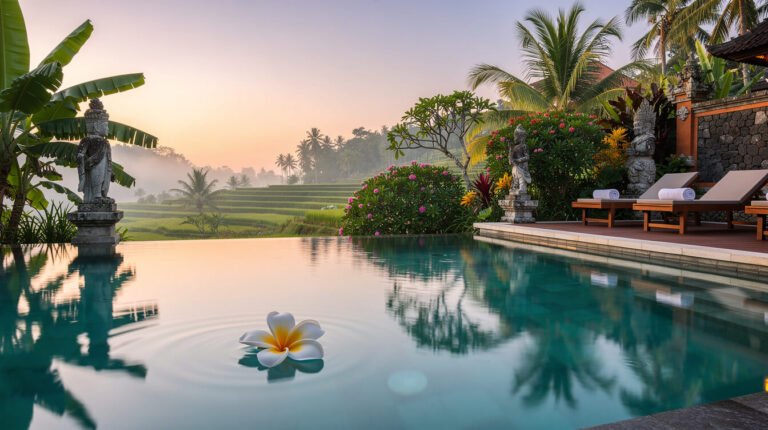
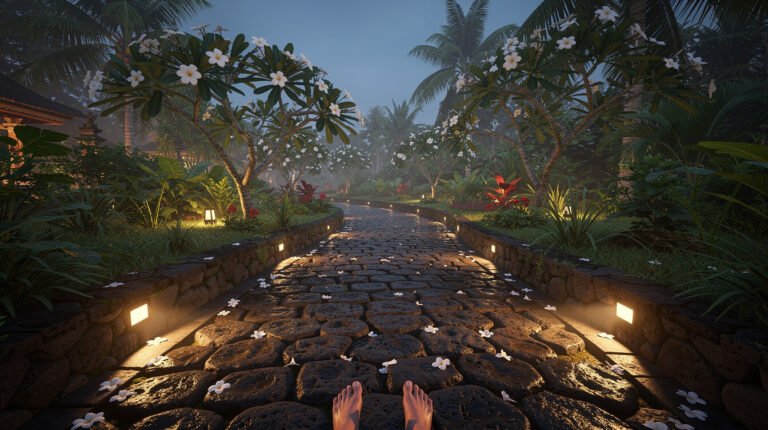
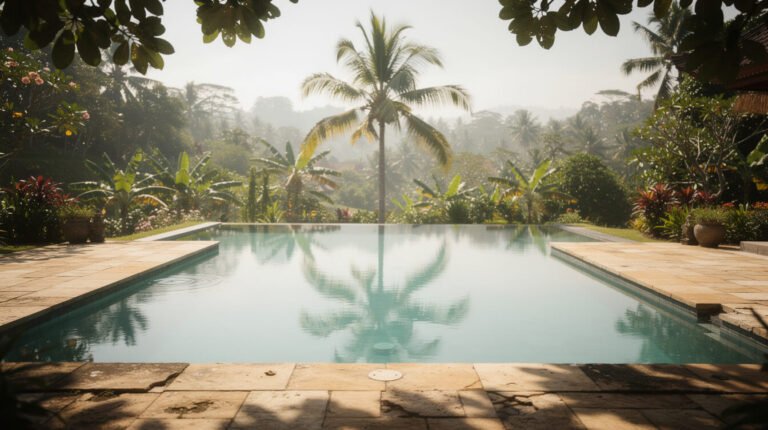
At the villa, the afternoon quiet arrives like a guest who knows where everything is. The pool goes absolutely still — no breeze, no ripple, just green reflected from the palms overhead. The stone pathway holds the morning heat in its surface, warm underfoot even in the shade. You can feel it through your sandals, that slow volcanic warmth that Bali’s garden stones absorb before dawn and release through the afternoon.
The team knows this hour. They’ve already cleared the lunch dishes. The kitchen is dark and clean. Nobody knocks. Nobody checks in. The understanding is simple: this time is yours, and doing nothing with it is the point.
What Stillness Sounds Like Here
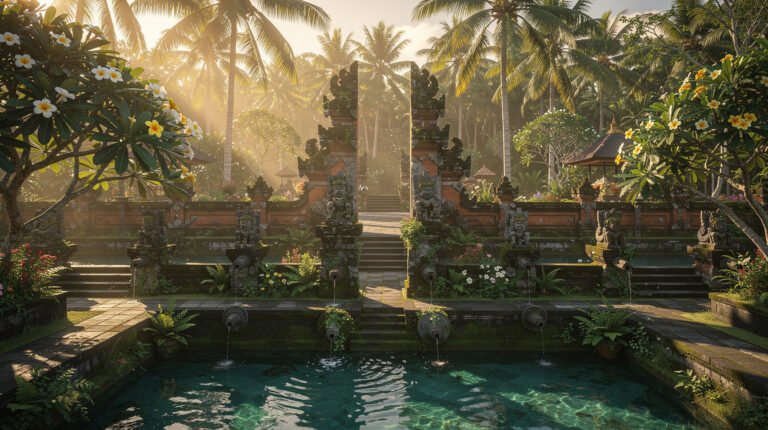
It’s not silence, exactly. A gecko clicks from the eaves. Water moves somewhere underground. The neighbor’s rooster — always the rooster — announces something that turns out to be nothing. But the human world has paused, and in that pause you hear Ubud the way the village hears itself: unhurried, unperformed, just breathing.
If you’ve come from a city — from meetings and notifications and the constant hum of being needed — this quiet might feel uncomfortable for the first five minutes. Then something loosens. Your shoulders drop. Your phone stays on the nightstand. You realize you’ve been reading the same page for twenty minutes, and that’s fine.
The Afternoon as Permission
Ubud doesn’t ask you to fill every hour. That’s what separates a stay here from a resort itinerary or a packed yoga retreat schedule. The afternoon is a blank space, and the village protects it. Shops close. Temples go quiet. Even the gamelan rehearsals wait until evening.
By three o’clock, the light shifts. A breeze finds the pool. The dog lifts its head. Ubud starts again — gently, like it never stopped. But you’ll carry that hour with you. The one where nothing happened, and everything settled.