Why Our Gardener Wins Every Morning
The ubud villa garden wakes before anyone in the house does. Not because someone sets an alarm — because the gardener has been here since before the light turned gold.
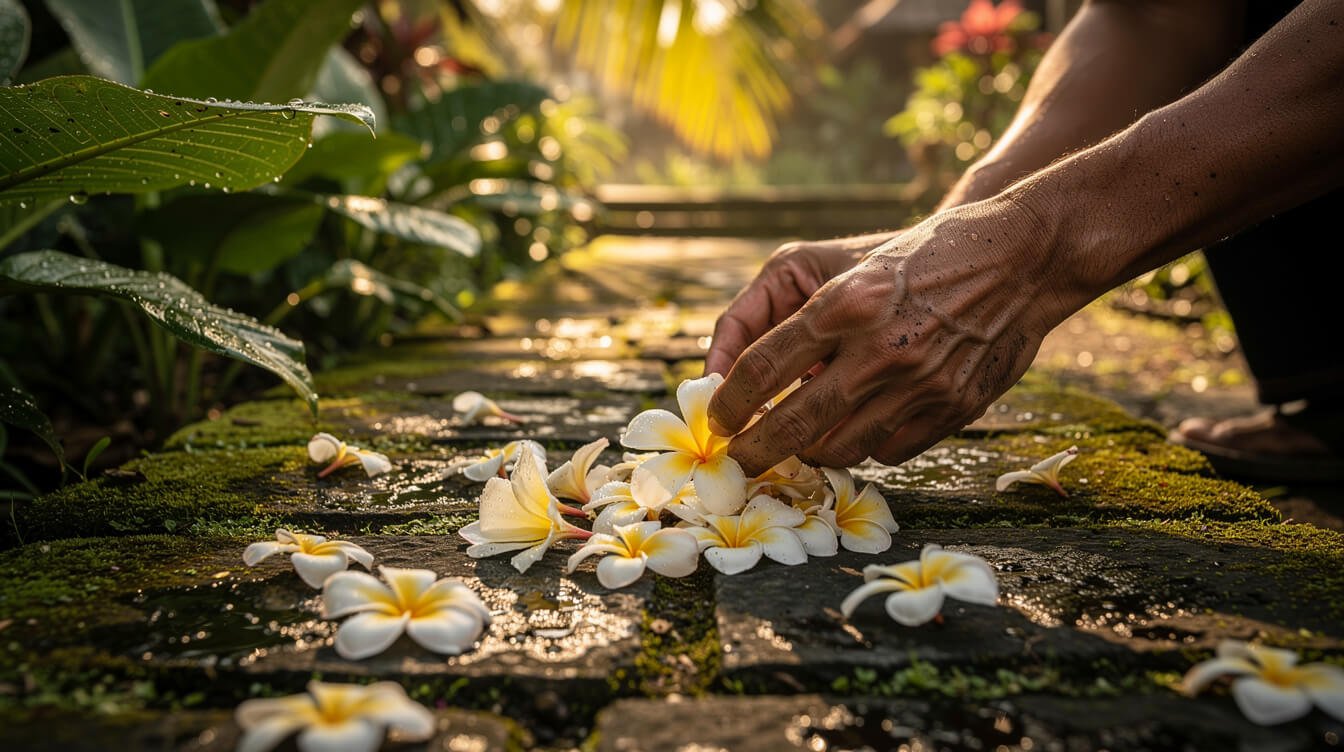
You won’t see him arrive. You’ll feel the evidence: the stone path swept clean of yesterday’s frangipani petals. The offering tray refilled with fresh ones. The pool edge wiped down so the morning light catches water instead of dust.
Before Anyone Wakes
His day starts at half past five, when the air is still cool enough to carry the scent of wet earth. He checks the frangipani trees first — always — because the blossoms that fell overnight become the day’s canang sari offerings. Then the jasmine hedge along the pool fence. Then the heliconia stand by the entrance gate, where leaves grow so fast you can almost watch them unfold.
The garden at Villa Amrita is not decorative. It’s alive — a working Balinese garden where every plant has a job. The frangipani feeds the offerings. The lemongrass goes to the kitchen. The turmeric grows behind the staff quarters, and the mornings in Ubud smell the way they do partly because of what he planted three years ago.
What the Garden Sounds Like at Dawn
The clip of hand shears on a woody stem. Water from the hose hitting broad banana leaves with a soft, uneven drum. His sandals on the wet stone — unhurried, deliberate. A rooster somewhere past the compound wall. And underneath it all, the low hum of a man talking quietly to plants he’s known longer than most guests will know this place.
By the time you step onto the pool deck for your first Ubud morning, the garden looks effortless. That’s how you know someone extraordinary has been through it.
Get a free 3-day sample itinerary
The Art of Canang Sari
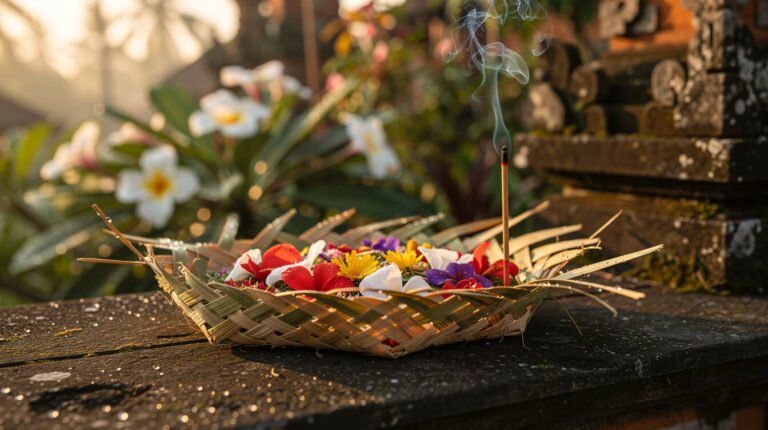
Every Balinese morning begins with offerings. Small woven palm-leaf trays — canang sari — filled with flowers, a stick of incense, sometimes a few grains of rice. They’re placed at thresholds, on shrines, at the base of old trees. The gardener makes a few each morning from what the garden gives him.
He doesn’t explain this if you don’t ask. It’s not a show. But if you do ask — while he’s pressing a white frangipani blossom into the palm leaf, smoke from the incense curling between his fingers — he’ll tell you about the three colors. White toward the east, for Shiva. Red for Brahma. Yellow for Mahadeva. Each offering is a small act of healing — a way of saying thank you to the ground you’re standing on.
The garden is his temple. And the offerings he makes are not separate from the pruning and watering — they are part of the same attention.
Why It Matters That He Cares
Anyone can plant a frangipani tree. The difference is whether someone checks on it before dawn. Whether someone notices the leaf curl that means too much afternoon sun. Whether the moss on the stone path gets cleared gently with a broom, not blasted with a hose.
Our gardener has been with Villa Amrita since the beginning. He knows where every root runs. He knows which corner of the garden catches the first morning light and which stays cool enough for the ginger to thrive. He does this work not because a checklist tells him to — but because he wants the garden to feel like something you’d remember long after you’ve gone home.
That kind of care is the real difference between a rental property and a place that’s genuinely held. You can’t hire it. You can only create the conditions for it — by treating people well, paying them fairly, and letting them take pride in what they build.

Book the Villa
What You’ll Notice
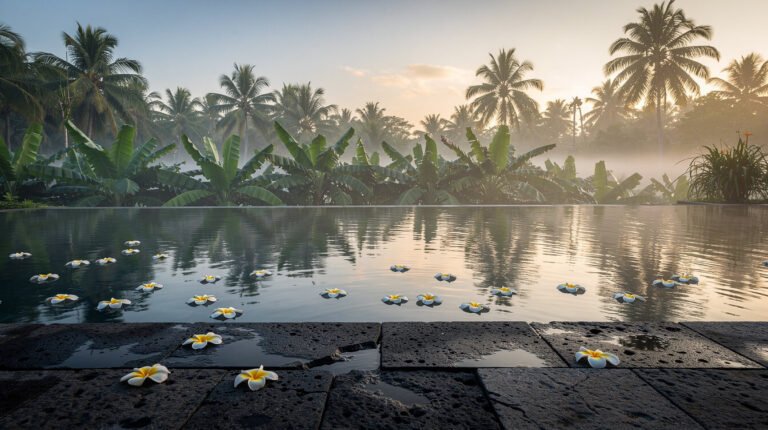
You’ll notice the frangipani first — because it’s everywhere. On your bedside table when you arrive. Floating in the pool. Tucked into the folded towel on the daybed. That’s him. He picks them fresh each morning and distributes them through the house like quiet gifts.
You might notice the stone carvings along the garden wall have no moss in the crevices. Or that the banana palms are trimmed in a way that frames the rice field view. Or that the bird of paradise by the outdoor shower blooms exactly at eye level.
None of this is accidental. None of it is labored, either. It’s the kind of attention that comes from someone who has spent years learning what a garden needs — and who wakes up early because he wants to, not because he has to.
That’s why the ubud villa garden at Amrita feels the way it does. Not because of the plants. Because of the person tending them.

Join our newsletter — fun, new, exciting Bali news