Tirta Empul Temple Bali: Your Complete Guide to the Sacred Water Temple
Tirta Empul Temple Bali is one of those places that changes the rhythm of your day. You arrive expecting a temple — stone walls, carved gates, maybe a quick photo. But within minutes, the sound of spring water filling ancient pools and the scent of incense and wet stone shift something. This is Bali’s most important water temple, a place where visitors and Balinese worshippers alike come to stand in sacred spring water and let something go. If you’re staying in Ubud, Tirta Empul is less than 30 minutes from your door, and it deserves more than a rushed stop on a tour-bus itinerary.
This guide covers everything you need to know before visiting: the temple’s origins, what happens during the purification ritual, practical details like tickets and dress code, and how to fold it into a full day exploring the Ubud countryside.
What Makes Tirta Empul Temple Bali So Significant
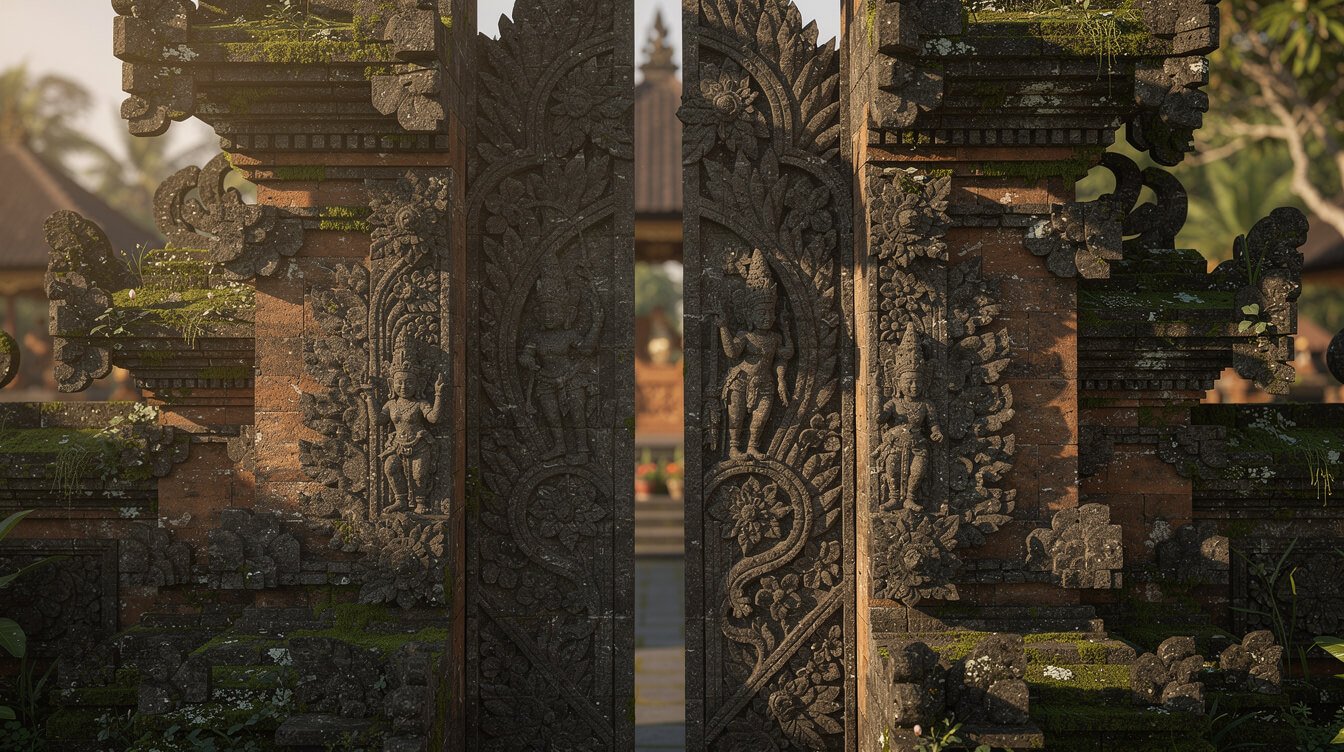
Built in 962 AD during the Warmadewa dynasty, Tirta Empul is among the oldest and most revered temples on the island. The name translates directly from Balinese as “holy water spring” — and that spring is the reason the temple exists. For more than a thousand years, crystal-clear water has pushed up from the volcanic earth here, feeding the pools and fountains that make Tirta Empul unlike any other temple in Bali.
The temple is dedicated to Vishnu, the Hindu god of water, and sits at the heart of Balinese spiritual life. It’s one of Bali’s nine directional temples (kayangan jagat) — the most sacred category of Balinese Hindu temples, believed to protect the island from spiritual harm. Every full moon and new moon, Balinese families make pilgrimages here to pray and purify.
What sets Tirta Empul apart from other Balinese temples is access. Unlike most sacred sites where visitors observe from outside, here you can enter the purification pools alongside worshippers. That openness is part of its power — and part of the responsibility that comes with visiting.
The legend behind the spring
Balinese mythology tells of the demon king Mayadenawa, who poisoned the rivers to weaken the god Indra’s army. Indra struck the earth with his staff, and a spring of healing water — amerta, the elixir of immortality — burst from the ground. That spring, according to tradition, is the one that still flows beneath Tirta Empul today. Whether or not the story moves you, watching the water surface in the inner courtyard pool — steady, clear, seemingly bottomless — does something the legend only tries to describe.
The Melukat Purification Ritual: What Actually Happens
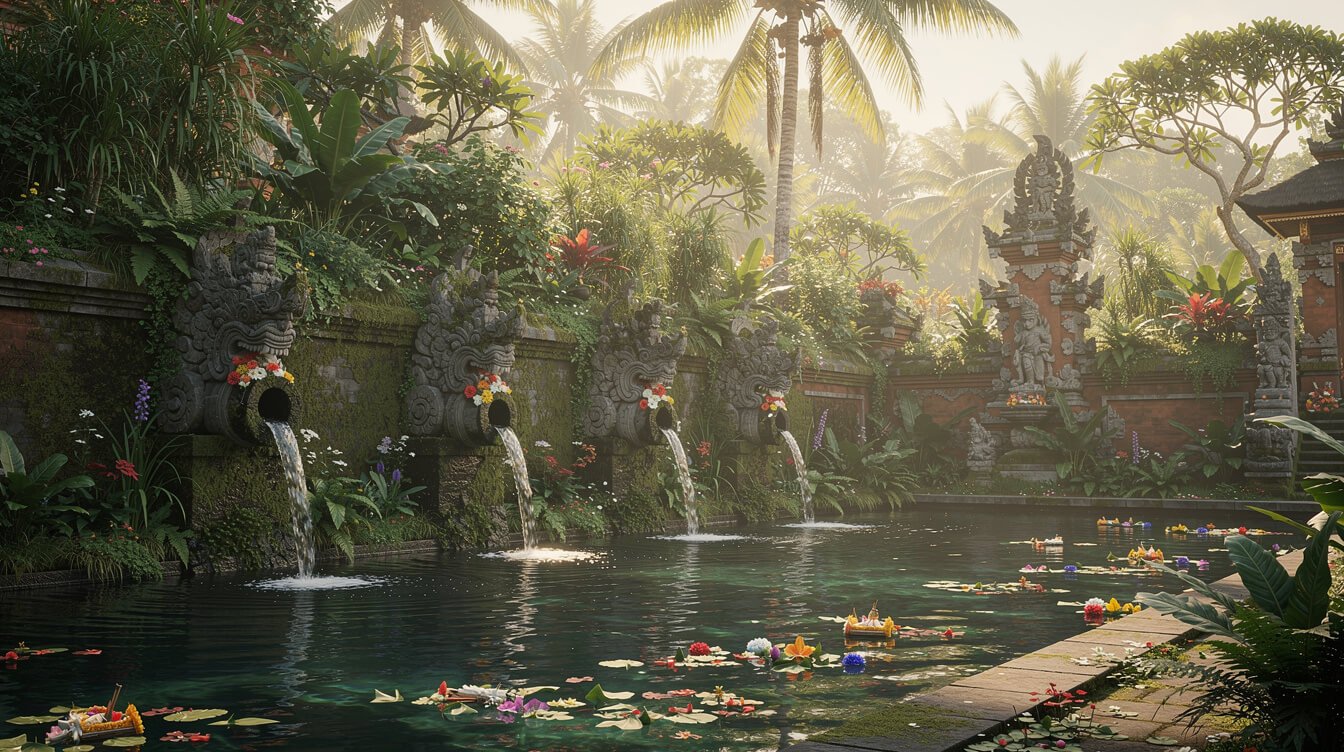
The purification ritual at Tirta Empul is called Melukat, a Balinese Hindu practice of spiritual cleansing through holy water. It’s not performative. For Balinese Hindus, this is a genuine act of devotion — washing away negative energy, illness, or spiritual imbalance. Visitors are welcome to participate, and many do, but understanding what you’re stepping into matters.
How the ritual works
The purification pools sit in the temple’s second courtyard. Two long rectangular pools are fed by a series of stone spouts — 30 in total, though not all are open to visitors at any given time. Each spout carries different spiritual significance, and you move through them in a specific order, left to right.
Here’s the sequence most guides will walk you through:
- Make an offering. Before entering the water, you’ll place a small offering (canang sari) at the temple shrine near the pools. These can be purchased at the entrance for around IDR 20,000-30,000.
- Enter the first pool. Step into the water (it’s about waist-deep and cool — the spring water runs around 26°C year-round) and approach the first open spout on the left side.
- Stand under each spout. Cup your hands, let the water flow over your head three times, then move to the next spout. Many people close their eyes or say a quiet prayer.
- Skip the two spouts reserved for the deceased. Your guide will point these out — they’re used only during funeral ceremonies.
- Move to the second pool. Repeat the process with the spouts in the larger pool.
- Close with a prayer. After the final spout, many visitors sit quietly at the pool’s edge for a moment before leaving.
The entire ritual takes 30 to 45 minutes, depending on how crowded the pools are. Early morning visits (before 9 AM) are quieter and feel more contemplative.
Do you need a guide?
You don’t technically need one, but a local guide makes the experience far more meaningful. They’ll explain which spouts to visit, help with the offering, and share context about what each step represents. If you’d like our team to arrange a guide who knows the temple well, just ask — we can connect you with someone who treats the visit as ceremony, not tourism.
Exploring the Temple Grounds: Three Courtyards, One Sacred Spring
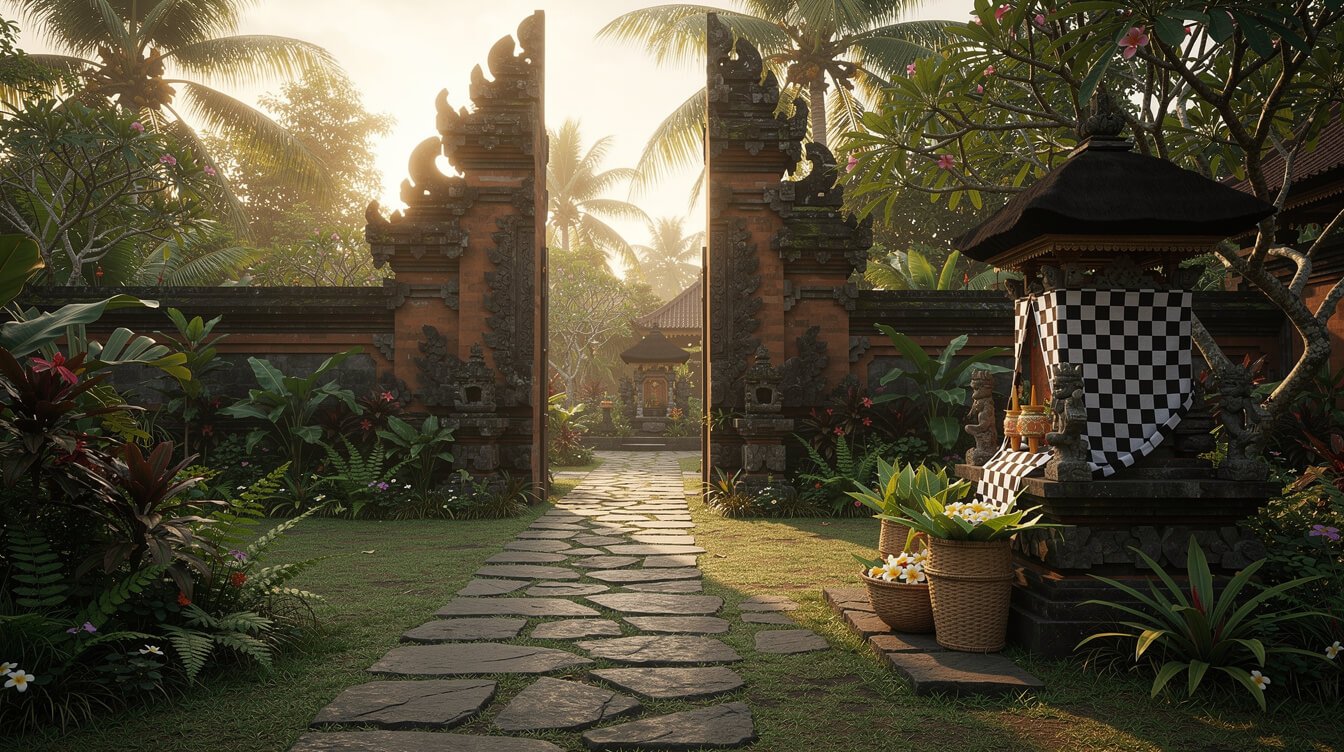
Tirta Empul is built across three courtyards, each progressively more sacred. Even if you choose not to enter the purification pools, walking the temple grounds is worth the visit alone.
Jaba Pura (outer courtyard)
The first courtyard is the public gathering space. You’ll find the ticket counter, a small market selling sarongs and offerings, and an open pavilion where Balinese dance performances sometimes take place during temple ceremonies. This is where you adjust your sarong, collect your thoughts, and transition from tourist to visitor.
Jaba Tengah (middle courtyard)
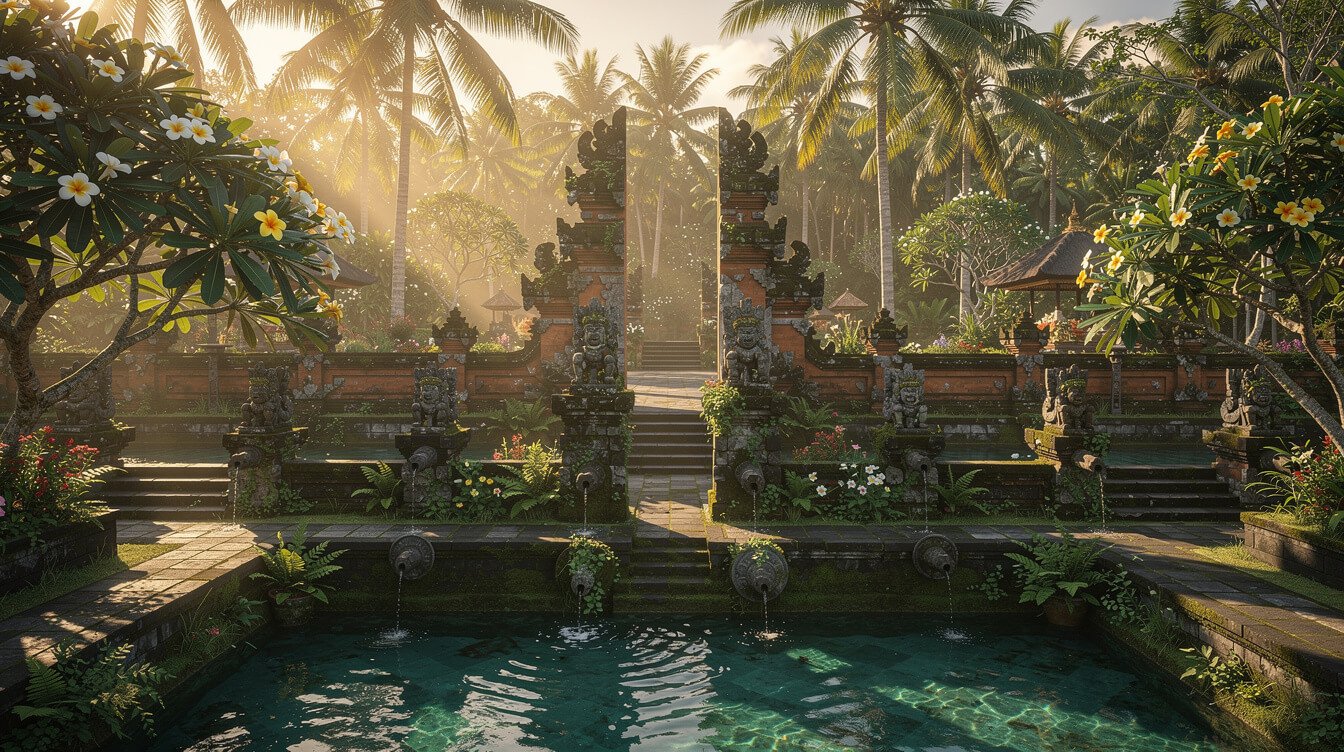
This is where the purification pools are. Two long rectangular basins sit side by side, filled with the sacred spring water flowing from the carved stone spouts. Even when the pools are busy, the atmosphere here is remarkably calm. Stone walls covered in moss frame the courtyard, and frangipani trees drop petals into the water.
At the far end of this courtyard, you can peer into the main spring source — a walled pool where water bubbles up from the sandy bottom. It’s mesmerizing. The water is so clear you can see every grain of sand shifting as the spring pushes upward.
Jeroan (inner sanctum)
The innermost courtyard is reserved for prayer and is the most ornately decorated. Tall meru towers (multi-tiered shrines) dedicated to Vishnu, Brahma, and Shiva rise above the walls. During major ceremonies like Galungan or Kuningan, this courtyard fills with families in ceremonial dress, carrying towering offerings on their heads.
Visitors can enter the inner courtyard respectfully but cannot access the shrine areas during active prayer. If you’re curious about what makes Ubud worth visiting, places like this — where daily spiritual life is visible and unhurried — are a significant part of the answer.
Get a Free 3-Day Sample Itinerary
Tirta Empul, rice terraces, cooking classes, river walks — we’ll map out three perfect days in Ubud for you.
How to Get to Tirta Empul Temple from Ubud
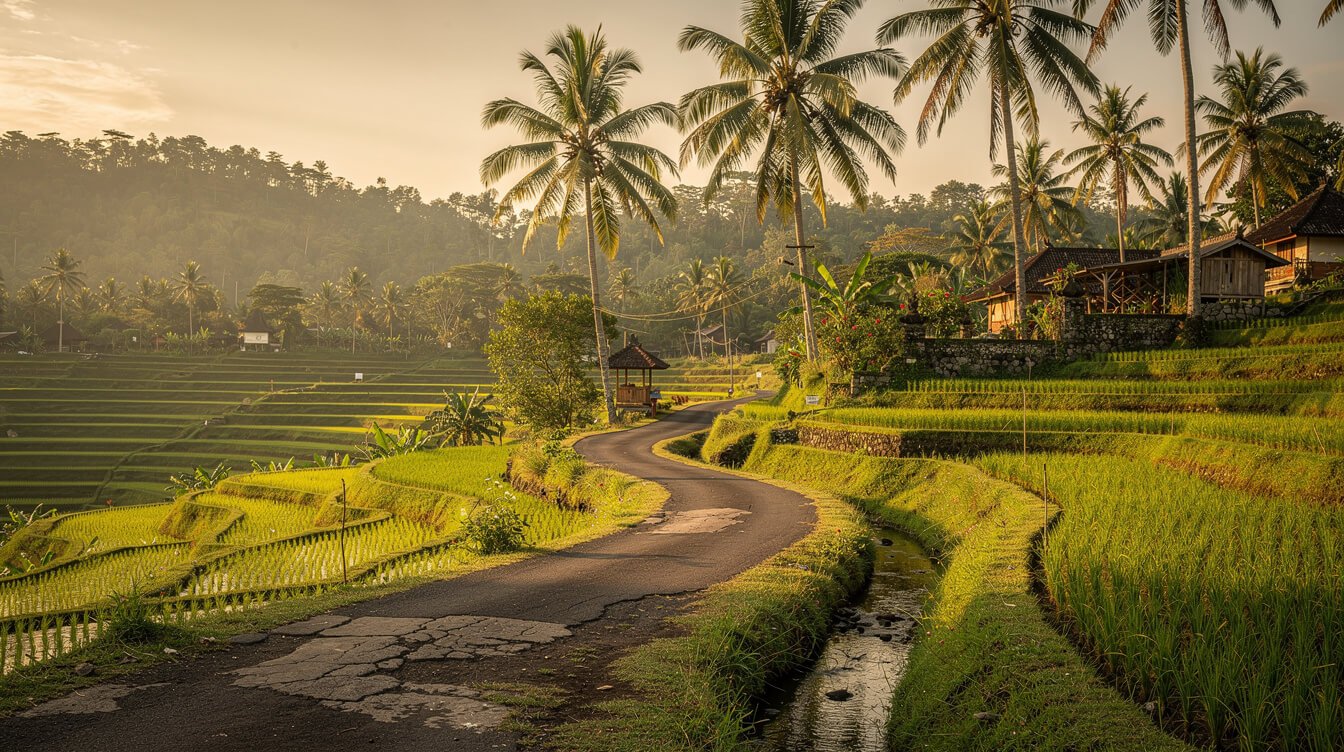
Tirta Empul sits in the village of Manukaya, in the Tampaksiring district — about 18 kilometers northeast of central Ubud. The drive takes 25 to 35 minutes depending on traffic, and the route itself is half the experience.
Getting there
By private driver: This is how most villa guests visit. Your driver will take the Tampaksiring road through rice terraces and small villages, wait while you explore the temple (usually 1.5 to 2 hours), and drive you onward. If you’re staying with us, the team can arrange a driver who knows the best route and timing — avoiding the tour-bus rush that hits between 10 AM and 2 PM.
By scooter: The road is well-paved and relatively straightforward. Park in the designated lot just past the temple entrance (IDR 5,000 for a motorbike). Helmets are required, and the last stretch has a few steep turns.
On a guided tour: Most Ubud day tours bundle Tirta Empul with Tegallalang Rice Terraces and Gunung Kawi. These are efficient but rushed — you’ll typically get 45 minutes at the temple, which isn’t enough for the purification ritual. If this matters to you, go independently.
Best time to visit
Arrive between 7:30 and 8:30 AM. The temple opens at 8 AM (some sources say 7 AM — check locally), and the first hour is the quietest. By 10 AM, tour buses begin arriving and the purification pools get crowded. Late afternoon (after 3:30 PM) is another good window, with softer light and thinner crowds.
Tickets and pricing (2026)
- Adults: IDR 75,000 (approximately USD $4.50)
- Children (5-12): IDR 50,000 (approximately USD $3)
- Under 5: Free
The standard ticket covers temple entry and access to the courtyards. If you want to participate in the Melukat purification ritual, you’ll need to arrange a ceremony guide separately (typically IDR 150,000-300,000 including offerings and a sarong). Some visitors simply bring their own sarong and offerings and enter the pools independently.
What to Wear and How to Prepare for Your Tirta Empul Temple Bali Visit
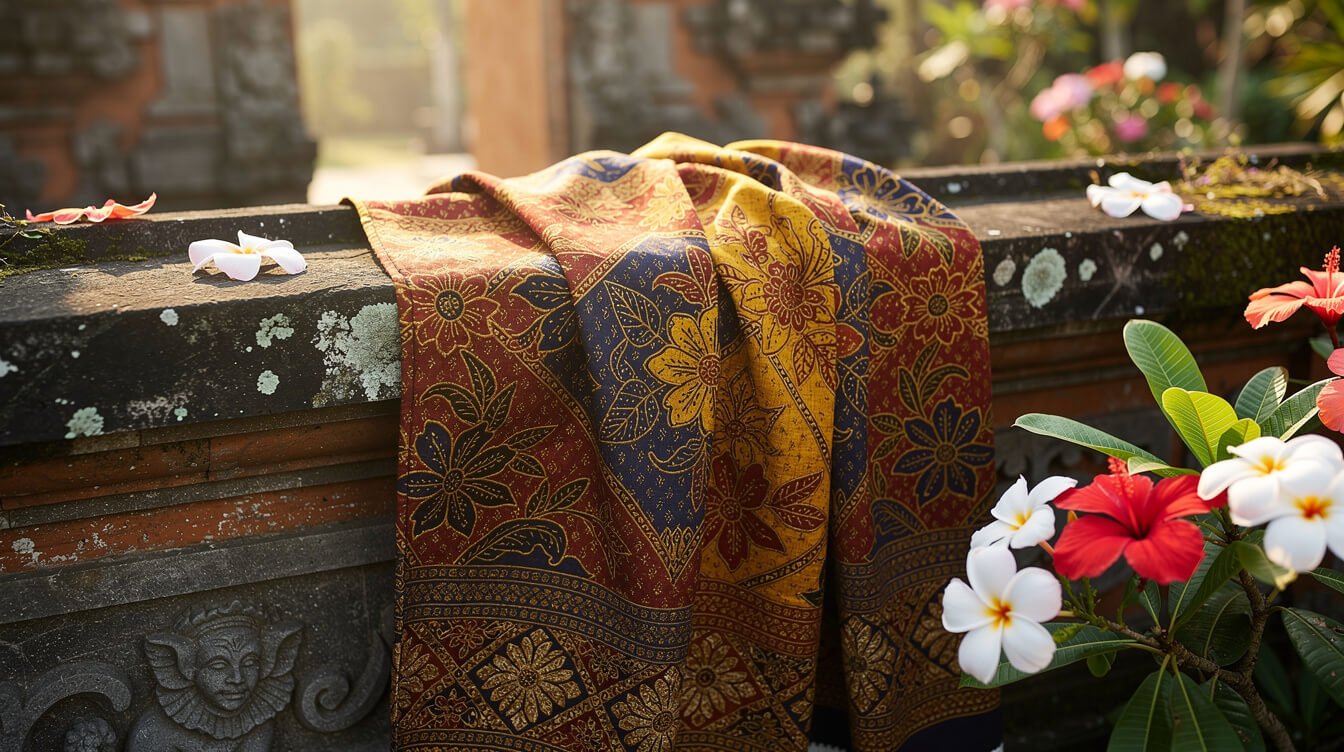
Tirta Empul is an active place of worship, and what you wear and how you behave matters — not as a formality, but as respect for the families who pray here daily.
Dress code
- Sarong and sash: Required for all visitors. You can rent one at the entrance (included with your ticket) or bring your own. If you’re planning to enter the purification pools, wear a sarong you don’t mind getting wet — or bring a second dry one for afterward.
- Swimwear underneath: If you’re doing the purification ritual, wear a swimsuit or quick-dry clothes under your sarong. The water is cool and the sarong clings — wearing something underneath is both practical and respectful.
- Covered shoulders: Sleeveless tops are fine as long as you’re wearing the sarong and sash properly. A light cover-up is nice to have for the inner courtyard.
What to bring
- A small waterproof bag for your phone (if entering the pools)
- A change of clothes or dry sarong
- A towel — there are no changing rooms with towels provided
- Cash for offerings, the ceremony guide, and the small market outside
- Sunscreen applied before arriving (don’t apply it at the pool — it pollutes the spring water)
Etiquette
Remove your shoes before entering the pool area. Don’t point your feet toward shrines. If you’re menstruating, Balinese custom asks that you not enter the sacred pools (this is a spiritual belief, not a policy — respect it). Keep voices low near the inner courtyard, and ask before photographing anyone praying or participating in the ritual.
If you’re exploring Bali with family, this temple visit pairs naturally with the kind of staffed family villa experience that makes logistics disappear — your driver, your schedule, your pace.

Stay 30 Minutes from Tirta Empul
Three bedrooms, a private pool, and a full team — chef, housekeeper, villa manager — who’ll arrange your temple visit and have lunch waiting when you return.
What to See Nearby: Combining Tirta Empul with a Full Day Out
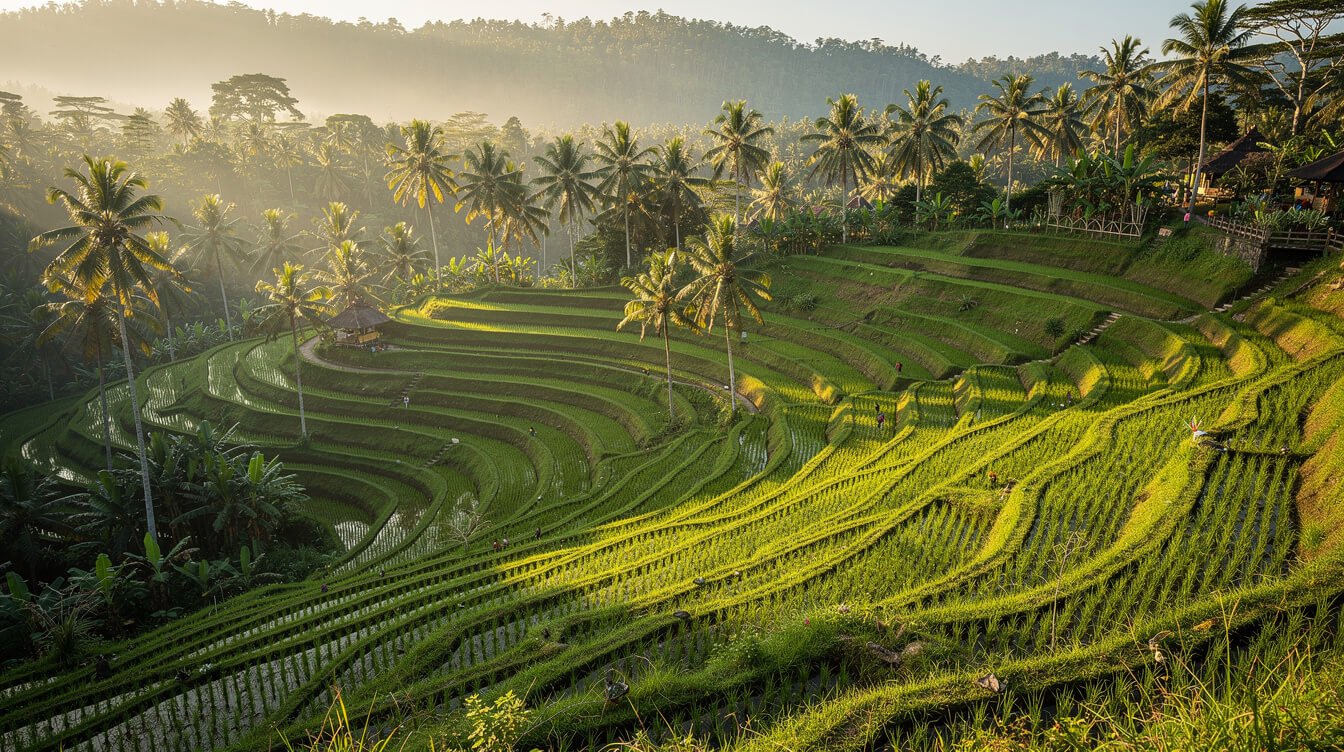
The Tampaksiring area around Tirta Empul is rich with things to see, and the smartest way to visit is to build a half-day or full-day loop rather than making a standalone trip. Here are the stops that combine naturally with a temple morning.
Gunung Kawi (10 minutes away)
This 11th-century royal tomb complex is carved directly into the rock face of a river valley. You’ll descend about 300 steps through rice terraces to reach the shrines — impressive, uncrowded (compared to Tirta Empul), and genuinely awe-inspiring. Budget 45 minutes to an hour. Entry is IDR 50,000 for adults.
Tegallalang Rice Terraces (20 minutes away)
The most photographed rice terraces in Bali sit between Tirta Empul and Ubud. Stop on the way back for a walk along the terraces or a coffee with a view. The terraces get crowded midday, so an early stop (on the way to the temple) or late afternoon return works best.
Sebatu Holy Spring (15 minutes away)
If Tirta Empul has captured your attention but the crowds felt like too much, Sebatu is a quieter alternative with its own sacred spring and purification pools. Far fewer visitors, equally beautiful, and surrounded by jungle rather than village.
A cooking class or river walk back in Ubud
After a morning at the temples, an afternoon Balinese cooking class in Ubud pairs perfectly — a different kind of immersion, hands-on and sensory. Or if you’d rather stay outdoors, the Ayung River offers rafting, gorge walks, and cycling along its banks. If your Ubud stay is part of a Bali honeymoon itinerary, combining Tirta Empul with a private dinner by the river makes for a day neither of you will forget.
Frequently Asked Questions About Tirta Empul Temple Bali
Is Tirta Empul worth visiting?
Yes — it’s one of the few Balinese temples where you can directly experience the spiritual practice, not just observe it. The purification ritual is genuinely moving, and the temple grounds are among the most atmospheric in Bali. If you visit early or late in the day and take your time, it’s a highlight of any Ubud trip.
Can anyone do the purification ritual?
Yes. The ritual is open to visitors of all faiths. Balinese Hindus are welcoming of respectful participation. The key is treating it as ceremony, not activity — slow down, be quiet, follow the guide’s lead.
How long do you need at Tirta Empul?
Without the purification ritual: 45 minutes to an hour. With the ritual: 1.5 to 2 hours. Budget extra time if you want to sit quietly by the main spring source or explore the inner courtyard.
Is Tirta Empul crowded?
It can be, especially between 10 AM and 2 PM when tour groups arrive. Early morning (8-9 AM) and late afternoon (after 3:30 PM) are noticeably quieter. Weekdays are calmer than weekends.
What’s the difference between Tirta Empul and Tirta Gangga?
Tirta Empul (near Ubud) is a sacred water temple focused on purification rituals. Tirta Gangga (in East Bali, near Karangasem) is a royal water palace with ornamental gardens and stepping-stone pools — beautiful, but more recreational than spiritual. They’re about 2 hours apart by car.
Can you visit Tirta Empul on your own or do you need a tour?
You can absolutely visit independently. A private driver from Ubud is the most flexible option. Tours are convenient but limit your time at the temple. If you’re staying with us, we’ll arrange everything — driver, timing, even a ceremony guide if you’d like one.
Making Your Tirta Empul Visit Part of Something Bigger
A visit to Tirta Empul Temple Bali is more than a half-day excursion — it’s a window into the spiritual rhythms that shape daily life across the island. The water, the stone, the offerings refreshed every morning — this is Bali at its most genuine.
From Villa Amrita, the drive to Tirta Empul winds through the kind of countryside that makes you pull over and stare. Rice terraces stepping down hillsides, village temples draped in checkered cloth, roosters announcing nothing in particular. The team can map out your route, time your arrival for the quiet hours, and have lunch waiting on the pool deck when you return. That’s the point of staying somewhere staffed — the details are held, so you can be present for the things that matter.
Ubud’s temples, rivers, and rice fields are all within reach. Tirta Empul is where the water starts.

Stay Close to Ubud — From Anywhere
Temples, rice fields, village markets, new restaurants — join our newsletter for fun, new, exciting Bali news delivered to your inbox.