Bali Travel Tips They Don’t Tell You: What Changes When You Have a Villa Team
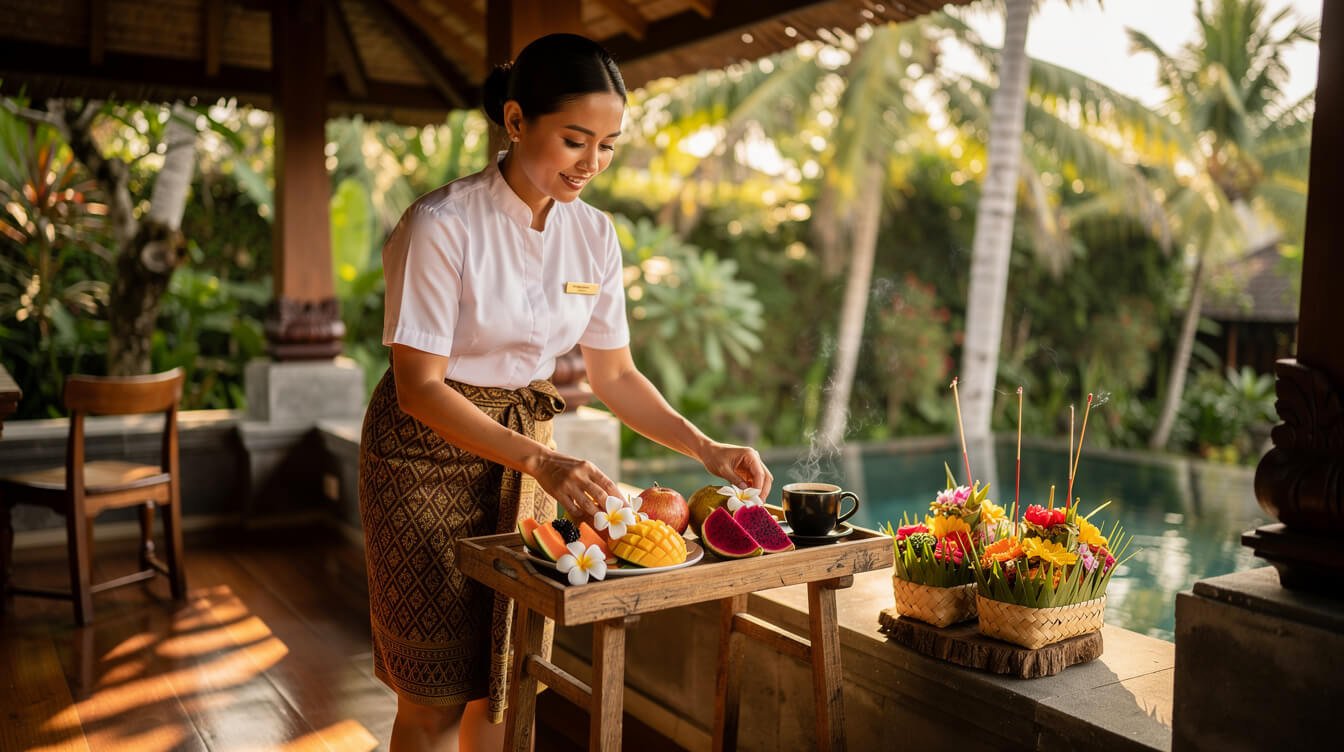
Every Bali travel tips article tells you the same things: bring sunscreen, watch out for monkeys, download Grab. Useful enough — but those guides assume you’re navigating the island alone. The travel tip that nobody writes about? Choosing a staffed villa in Ubud reshapes your entire Bali trip. Half the standard advice stops applying the moment you have a team — a chef who shops the morning market for you, a manager who knows which temple ceremony is happening today, a gardener who clips frangipani for your bedside vase before you wake.
This guide goes beyond the logistics. We’re sharing the bali travel tips that come from living here, hosting guests here, and watching first-timers go from overwhelmed to completely at ease — usually within the first 24 hours.
The Bali Travel Tip Nobody Writes About: Your Villa Team Changes Everything

Standard travel guides treat Bali like a problem to solve: currency confusion, traffic chaos, language barriers, scam warnings. And yes, those are real — if you’re backpacking through Kuta with a Lonely Planet. But the experience of arriving at a private villa with a full team is so fundamentally different that most of the standard tips become irrelevant.
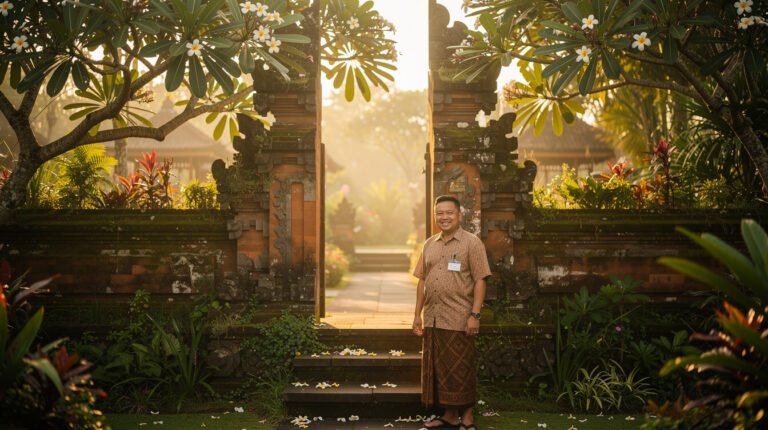
Your villa manager meets you at the gate. Someone carries your bags. Fresh coconut water appears. Your rooms are already made up with flowers on the pillows. Within ten minutes, you’re sitting on the pool deck with your feet up, watching dragonflies skim the water while your chef asks what you’d like for dinner.
This is the distinction nobody talks about: the difference between renting an empty house with a cleaner and being held by a team that cares. When your villa comes with a chef, a housekeeper, and a manager who genuinely knows the area, the entire mental load of travel disappears. You don’t need to research restaurants for every meal. You don’t need to negotiate with taxi drivers. You don’t need to figure out temple etiquette on Google at the gate — your manager already told you.
That’s the real tip: choosing the right accommodation isn’t just about comfort. It’s about how much of your trip you spend managing logistics versus actually experiencing Bali.
What to Know Before You Book: Direct Stays vs OTAs and Choosing Ubud Over the Beach

You’ll find Bali villas on Airbnb, Booking.com, VRBO, and dozens of other platforms. They work. But booking direct with a villa almost always gets you a better deal — and more importantly, a direct line to the team who’ll actually host you. When you book through an OTA, there’s a middleman. Your special requests filter through a platform’s messaging system. When you book direct, your villa manager answers your WhatsApp personally.
Ask these questions before you book anywhere:
- What does “full staff” actually include? Some listings say “staffed” but mean a cleaner who comes twice a week. Ask for names and roles. A genuine staffed villa has at minimum: a villa manager (your daily point of contact), a housekeeper, and a private chef.
- Is breakfast included? At many staffed villas, daily breakfast is part of the rate. Lunch and dinner are often available at cost — meaning you pay only for ingredients, not restaurant markup.
- What’s the cancellation policy? Direct bookings often have more flexible terms than OTA platforms, especially if you’re communicating directly with the owner.
Then there’s the Ubud-versus-beach question. Most first-timers default to Seminyak or Canggu — beach towns with nightlife and surf shops. Ubud is different. It’s the cultural heart of Bali: terraced rice fields, morning ceremonies, temple bells at dawn, and a pace of life that rewards slowing down. If your idea of Bali involves poolside novels, long breakfasts, and morning walks through rice paddies rather than beach clubs and traffic — Ubud is where you want to be. And if you want both, Seminyak is about 90 minutes away — easy enough for a day trip.
Your First Morning in Bali: What the Guidebooks Skip
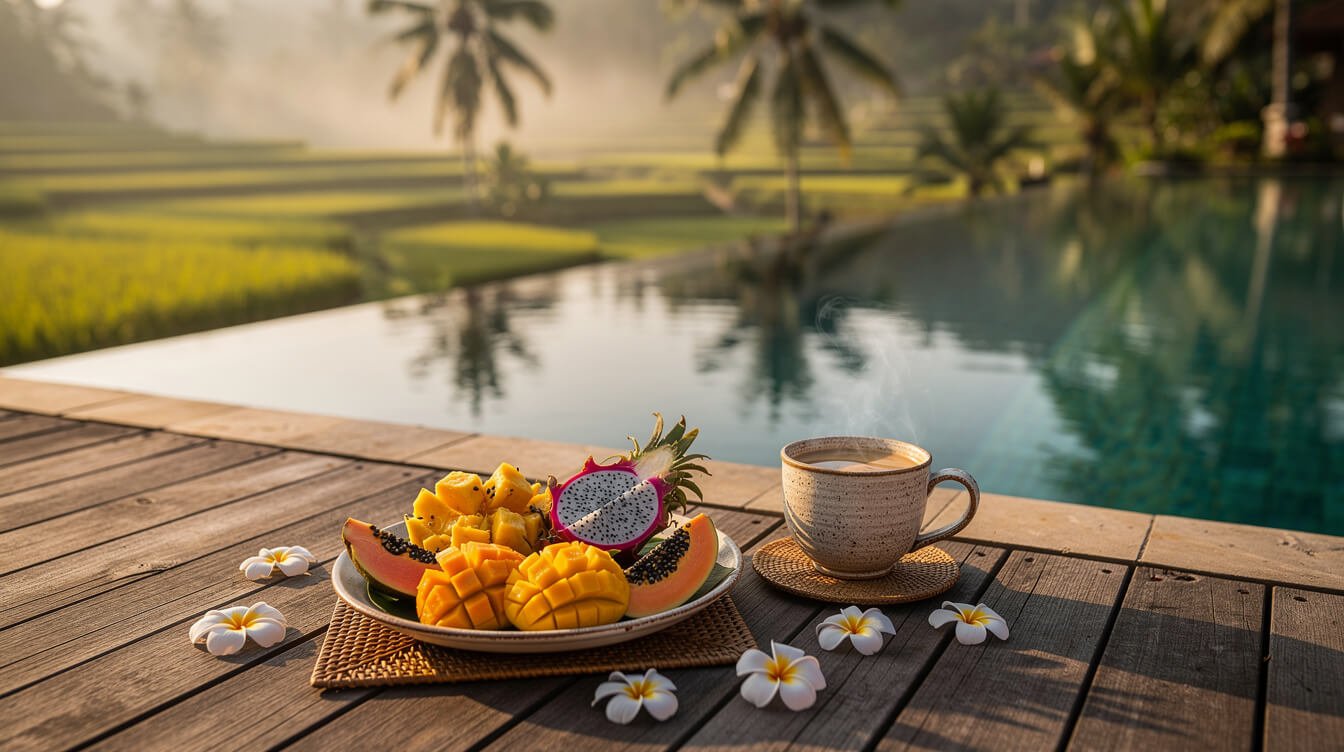
No guidebook captures what the first morning actually feels like. You’ll wake up disoriented — the jet lag, the unfamiliar birdsong, the quality of light that’s warmer and softer than anything back home. Then you’ll hear it: the quiet clatter of someone setting up breakfast on the terrace.
Walk out to the pool deck. Fresh papaya, dragonfruit, mango sliced thin. A plate of banana pancakes your chef made while you slept. Balinese coffee — thick, slightly sweet, nothing like what you brew at home. The garden smells like wet earth and frangipani. A rooster crows somewhere in the village. The pool is perfectly still.
This is the moment every guest remembers — and no amount of research prepares you for it. The air is warm but not heavy. Everything moves slower than you expect. And nobody is asking anything of you.
Practical first-morning tips from hosting hundreds of guests:
- Don’t fight the jet lag. If you wake up at 5:30 AM, enjoy it. Dawn in Ubud is extraordinary — rice-field mist, temple bells, the gardener already at work.
- Tell your chef about allergies or preferences on arrival. Not the next morning when you’re groggy. The team plans your breakfast the night before.
- Take a slow walk before the heat. The hour between 6:30 and 7:30 AM is the sweetest part of the day — cool, quiet, and the village is just waking up.
- Don’t over-schedule day one. Your body needs a day to arrive. The pool, the garden, your chef’s cooking — that’s enough.

Get a Free 3-Day Sample Itinerary
See exactly how three days in Ubud could unfold — morning walks, chef-prepared meals, temple visits, and quiet pool afternoons. No fluff, just a real-day plan from the team that hosts it.
The Real Bali Travel Tips for Families and Groups

Families and groups are where the staffed-villa advantage gets dramatic. A hotel room — even a good one — means everyone is on top of each other. Kids are bored. Mealtimes are stressful. Someone always wants to do something different. A three-bedroom villa with a private pool, a garden, and a chef who’ll make your kids’ favorite pancakes every morning? Completely different trip.
Here’s what experienced family travelers to Bali know:
- The pool is the MVP. Children will spend hours in the pool. They don’t care about rice terraces or temples (yet). Let them swim, and take turns exploring with your partner while the other parent reads a book on the deck. The villa team keeps an eye on things.
- Your chef adapts. Picky eater who only wants plain noodles? No problem. Special dietary needs? Handled. Your private chef shops fresh every morning and cooks what your family actually eats — no scanning a restaurant menu for something your six-year-old will tolerate.
- Nap schedules are sacred. At a hotel, nap time means everyone is trapped in a dark room. At a villa, one parent stays poolside while the kids sleep upstairs. Life continues.
- Split the cost. A three-bedroom villa for two couples or a family with grandparents often costs less per person than hotel rooms — and includes a private chef, a pool, and a garden you don’t share with strangers.
For groups traveling together — whether a wedding celebration, a milestone birthday, or a friend reunion — the shared private space changes the dynamic entirely. You eat together when you want to. You have your own rooms when you don’t. Nobody has to coordinate across hotel floors.
Tipping, Staff Etiquette, and the Guest-Staff Relationship in Bali
This is the bali travel tip that makes people nervous — and it shouldn’t. The guest-staff relationship at a Balinese villa is unlike anything in Western hospitality. Your team isn’t performing service. They’re hosting you in what they genuinely consider their space too. The gardener has tended those frangipani trees for years. The chef knows every vendor at the morning market by name. The housekeeper arranges the towel swans not because a manual told her to, but because she likes to.
Practical etiquette that matters:
- Tipping is appreciated but not expected. Indonesia doesn’t have a strong tipping culture. That said, villa staff earn modest wages, and a tip at the end of your stay is a genuine kindness. A good rule: 50,000-100,000 IDR per staff member per day (roughly $3-7 USD). Hand it directly to each person with a thank you — it means more than an envelope left at checkout.
- Learn two words: “Terima kasih.” Thank you, in Indonesian. Use it constantly. When breakfast appears. When your room is cleaned. When the gardener picks you a fresh coconut. It’s the single most appreciated gesture you can make.
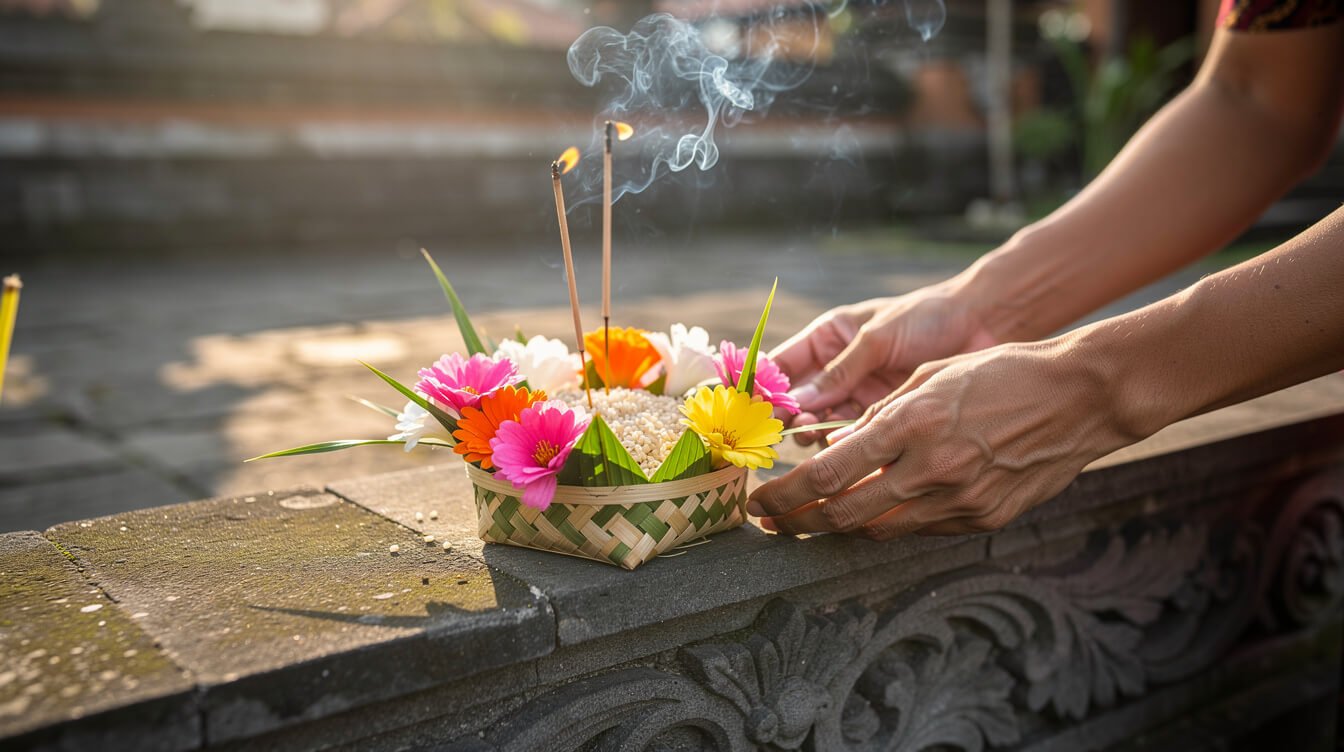
- Respect the offerings. You’ll see small woven baskets with flowers, rice, and incense placed at doorways and around the garden. These are canang sari — daily offerings to the spirits. Don’t step on them. Don’t move them. They’re not decorations; they’re prayers.
- The kitchen is open. Unlike a hotel, you’re welcome to chat with your chef, watch her cook, ask about ingredients. Most villa chefs love teaching guests about Balinese cuisine — the spice pastes, the way sambal changes village by village, the secret to a good lawar.

Ready to Experience It for Yourself?
Three bedrooms, a private pool, and a full team waiting to host you. This is what a staffed villa stay in Ubud actually looks like.
Why Ubud Rewards the Slow Stay (and Why Two Days Isn’t Enough)

You’ll read travel guides that suggest “2-3 days in Ubud is enough.” With respect — those writers stayed in a hotel, hit Tegallalang, ate at Locavore, and left. They experienced Ubud’s checklist. They didn’t experience Ubud.
Ubud reveals itself slowly. The first day, you’re a tourist — everything is new and slightly overwhelming. The second day, you start to settle — you know where the good coffee is, you’ve found a morning walk you like, you recognize the gamelan melody drifting from the temple across the river. By the third day, something shifts. You stop checking your phone. You notice the light changes color around 4 PM. You sit by the pool and actually read.
By day five, you know the gardener’s name. Your chef makes your coffee the way you like it without asking. You’ve found a warung down the lane that serves the best mie goreng you’ve ever tasted. You watch a ceremony procession pass through the village and understand — not intellectually, but in your body — that you’re somewhere genuinely different from anywhere you’ve been.
This is what the two-day crowd misses. Ubud isn’t a destination you check off. It’s a rhythm you fall into. And a week at a private villa with a team that knows the village gives you something no resort itinerary can: the feeling of actually living here, even briefly.
What Your Villa Chef Wishes You Knew Before Arriving

We asked. Here’s what the chef actually wants you to know before your trip:
Tell us what you love, not just what you avoid. Most guests send a list of allergies and restrictions — which we need, absolutely. But also tell us your favorites. Love spicy food? We’ll push the sambal further than we usually dare. Obsessed with fresh seafood? We’ll plan a Jimbaran market run. Prefer simple comfort food? Perfect — Balinese home cooking is exactly that.
The morning market is the experience. If your chef offers to take you to the Ubud market at 6 AM, say yes. It’s not a tourist market — it’s the real one, where villagers buy their day’s ingredients. You’ll see spices you’ve never heard of, fruits that don’t exist back home, and the fastest fish-gutting you’ll ever witness. Your chef will explain everything. Bring your camera.
Balinese food is more than nasi goreng. Most visitors only encounter the tourist version of Indonesian cuisine. A private chef opens the door to dishes you won’t find on restaurant menus: lawar (a spiced coconut-and-meat salad), babi guling (slow-roasted suckling pig — if your dietary preferences allow), sate lilit (minced fish satay wrapped around lemongrass), and jaje Bali (traditional rice-flour sweets). Ask your chef to cook their grandmother’s recipe. They all have one.
You don’t have to eat every meal at the villa. Your chef won’t be offended if you want to eat out. Ubud has extraordinary restaurants — from casual warungs to award-winning fine dining. A good rhythm: breakfast and one other meal at the villa, the third meal out exploring. Your manager can recommend the right place for whatever you’re in the mood for.
Cooking classes are real, not performative. If your villa offers a cooking class, take it. You’ll learn the base gede (the foundational spice paste behind almost every Balinese dish), how to make fresh coconut oil, and why the way your chef chops shallots is different from how you do it at home. These aren’t Instagram moments — they’re skills you’ll actually use.
Bali Travel Tips: What Actually Matters (A Summary from the Villa Team)
We’ve hosted hundreds of guests at our villa in Ubud. The ones who have the best trips aren’t the ones with the most detailed itineraries. They’re the ones who arrive open, trust their team, and give themselves permission to slow down.
Here’s the short version of everything above:
- Book direct when you can — better rates, better communication, no middleman.
- Choose your accommodation based on how you want to feel, not just where you want to be.
- A staffed villa isn’t a splurge — it’s a different category of travel that eliminates the mental load.
- Don’t over-schedule, especially the first two days. Let Bali come to you.
- Learn “terima kasih,” respect the offerings, tip with kindness.
- Give Ubud more than two days. Four to seven is where the magic lives.
- Talk to your chef. Go to the morning market. Say yes to the cooking class.
- And read our complete Bali travel guide and packing guide for the practical logistics.
The best bali travel tips aren’t about avoiding scams or downloading the right app. They’re about choosing the kind of trip where someone else handles the details — so you can be fully, completely present in one of the most extraordinary places on earth.

Join Our Newsletter — Fun, New, Exciting Bali News
Weekly letters from Ubud — what’s blooming, what’s cooking, ceremonies this month, and the quiet moments that make this place unforgettable. No spam, just stories from the team.