Balinese Cooking Class in Ubud: Your Complete Guide to Authentic Island Flavors
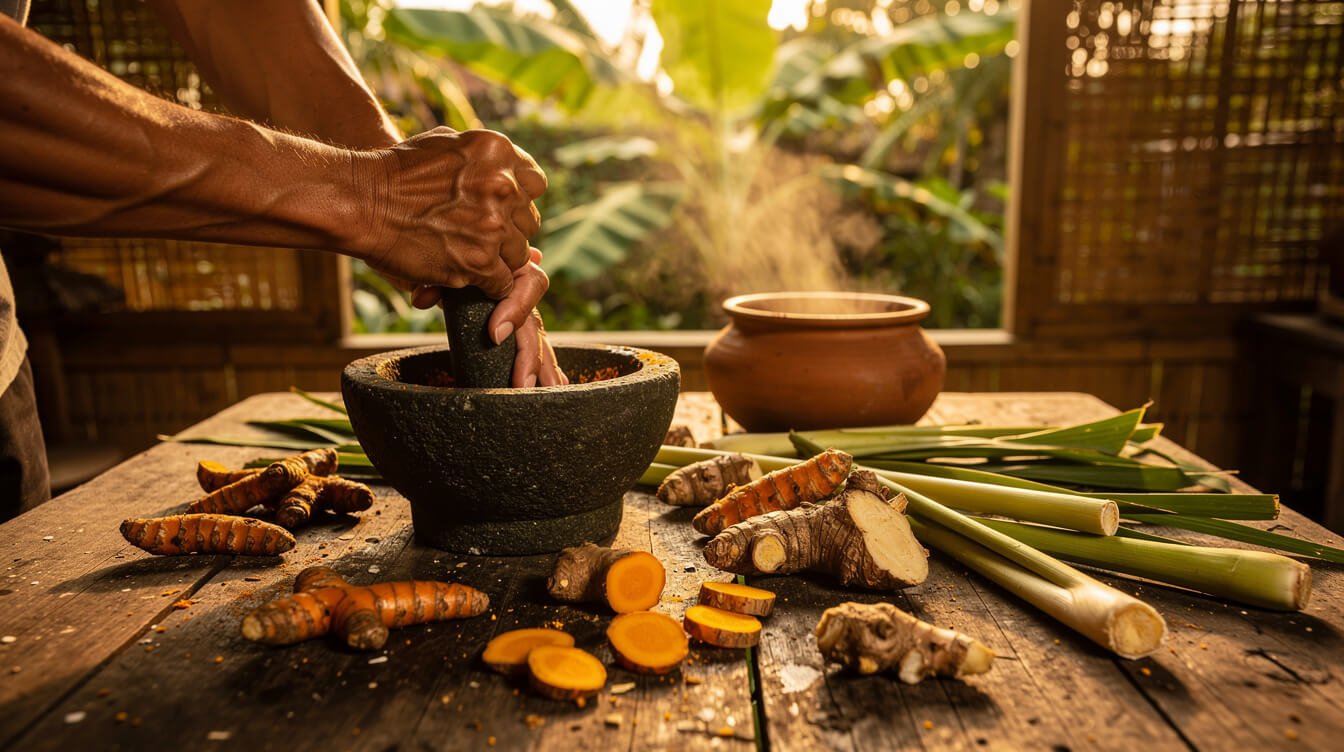
The scent of turmeric hits you first. Then lemongrass, crushed between someone’s fingers. Then galangal, sharp and warm, releasing its fragrance from the edge of a stone mortar. A Balinese cooking class in Ubud is not really a cooking lesson — it is a full-body introduction to an island that has been feeding people with intention for centuries. And there is nowhere better to experience it than right here, where the rice terraces still hold morning mist and village kitchens still hum before dawn.
If you have traveled to Bali with an appetite for something real — something beyond hotel buffets and Instagram cafés — a cooking class in Ubud gives you exactly that. You will walk through a morning market, grind your own spice pastes, and sit down to eat what your own hands made. This guide walks you through everything you need to know: what to expect, which schools to choose, what you will cook, and how to make the most of this genuinely unforgettable Ubud experience.
Why a Balinese Cooking Class in Ubud Belongs on Your Itinerary
Ubud is the cultural heart of Bali, and that culture runs through its food. Unlike the beach towns of the south, where international restaurants line the streets, Ubud still holds tight to the rhythms of traditional Balinese cooking. The warung kitchens here use spice pastes ground by hand. The ingredients come from gardens a short walk away. The meals follow the same seasonal logic they have for generations.
A cooking class in Ubud places you inside that rhythm. You are not watching from behind a counter in a commercial kitchen. You are standing in someone’s backyard, or on a working organic farm, learning the way Balinese grandmothers taught their daughters. The experience connects food, land, and culture in a way that simply ordering a nasi campur at a restaurant cannot replicate.
This is also one of the most accessible cultural experiences in Bali. You do not need prior cooking skills, special equipment, or even a particular diet — most classes offer vegetarian, vegan, and omnivore menus. Whether you are traveling solo, with a partner, or with your family, a Balinese cooking class in Ubud fits easily into your stay. If you are planning your trip around the seasons, our guide to the best time to visit Ubud helps you pick the ideal window.
What to Expect at a Balinese Cooking Class in Ubud
Most Ubud cooking classes follow a similar arc, though each school adds its own character. Here is what a typical half-day session looks like.
The Morning Market Visit
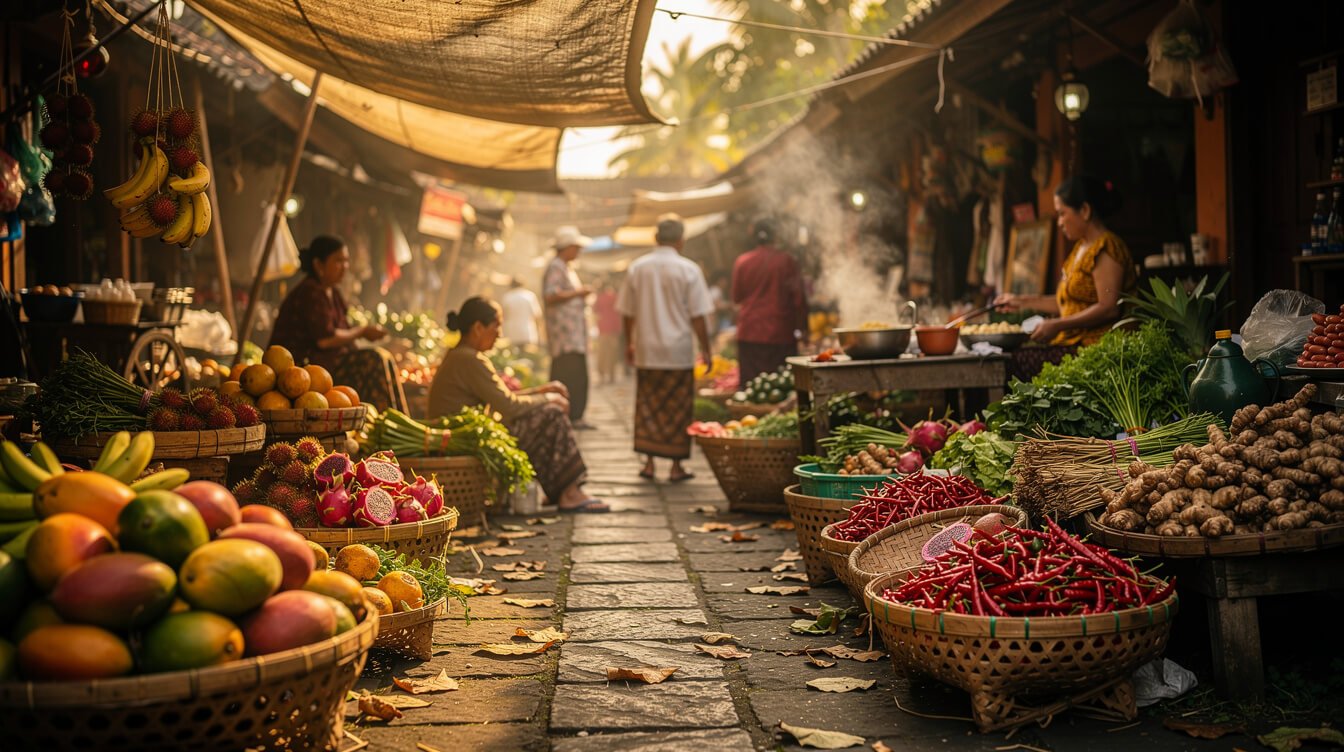
Your day usually starts early — around 7:00 or 8:00 AM — with a guided tour of a local Balinese market. This is not a supermarket. It is a village market: crowded, colorful, a little chaotic, and completely alive. Your instructor walks you through the stalls, naming ingredients you have never seen before. You learn to identify fresh turmeric by its bright orange interior, to test galangal root for firmness, and to pick the right chili for the level of heat you want.
The market visit is where the class really begins. You start to understand that Balinese cooking is built on freshness — nothing packaged, nothing preserved. The ingredients tell you what to cook that day.
Grinding the Spice Paste (Bumbu)
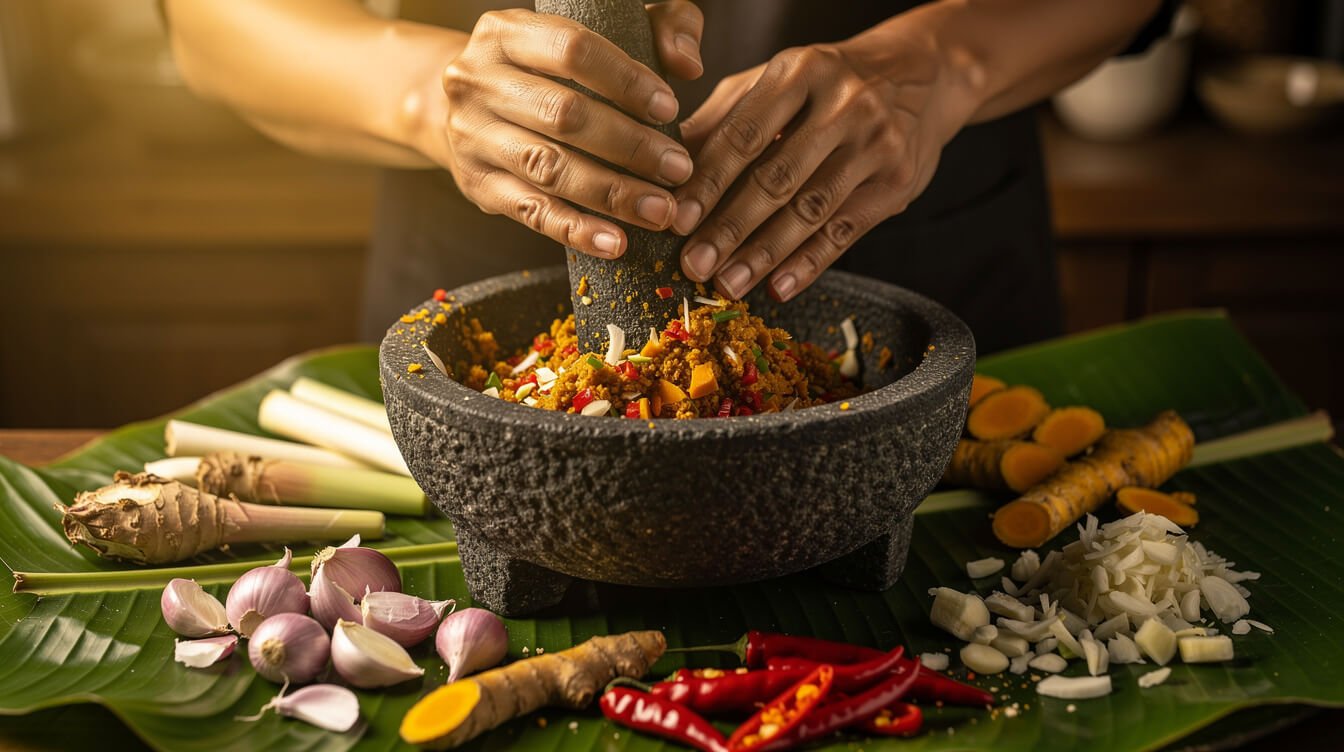
Back at the cooking school, you begin with the foundation of nearly every Balinese dish: the bumbu, or spice paste. Using a traditional stone mortar and pestle (cobek and ulekan), you grind shallots, garlic, turmeric, galangal, lemongrass, candlenuts, coriander seeds, and chili into a fragrant paste. This is hands-on work — your arms will feel it — and it is deeply satisfying.
Most instructors explain the medicinal properties of each ingredient as you go. Turmeric is anti-inflammatory. Galangal aids digestion. Lemongrass calms the nervous system. In Balinese tradition, cooking is not separate from healing. The same kitchen that feeds the family also tends to its health.
Cooking the Dishes
With your bumbu ready, you move through a menu of four to eight dishes, depending on the school. The instructor demonstrates each step, then you do it yourself — over a wood fire, a charcoal grill, or a simple gas burner. You will learn to wrap satay by hand, to steam rice in a banana leaf cone, to stir a coconut milk curry until it thickens just right.
The cooking itself is surprisingly intuitive. Balinese cuisine relies on balance — sweet, sour, salty, spicy, bitter — and your instructor helps you taste and adjust as you go. By the end of the morning, you have prepared a full Balinese feast. And you eat every bite of it.
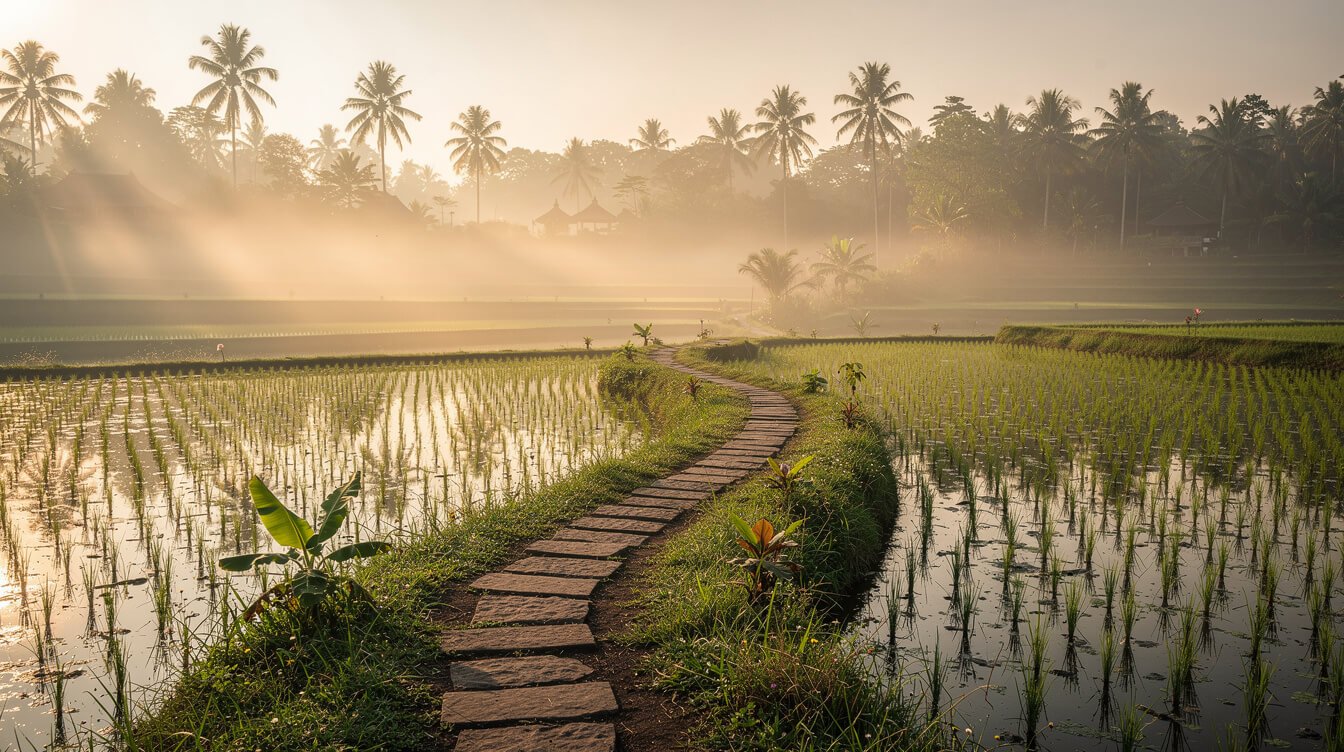
Get a Free 3-Day Sample Itinerary
Cooking classes, rice terrace walks, temple visits, and spa mornings — all mapped out for you. Download your complimentary Ubud itinerary and start dreaming.
The Dishes You Will Learn to Cook in a Balinese Cooking Class
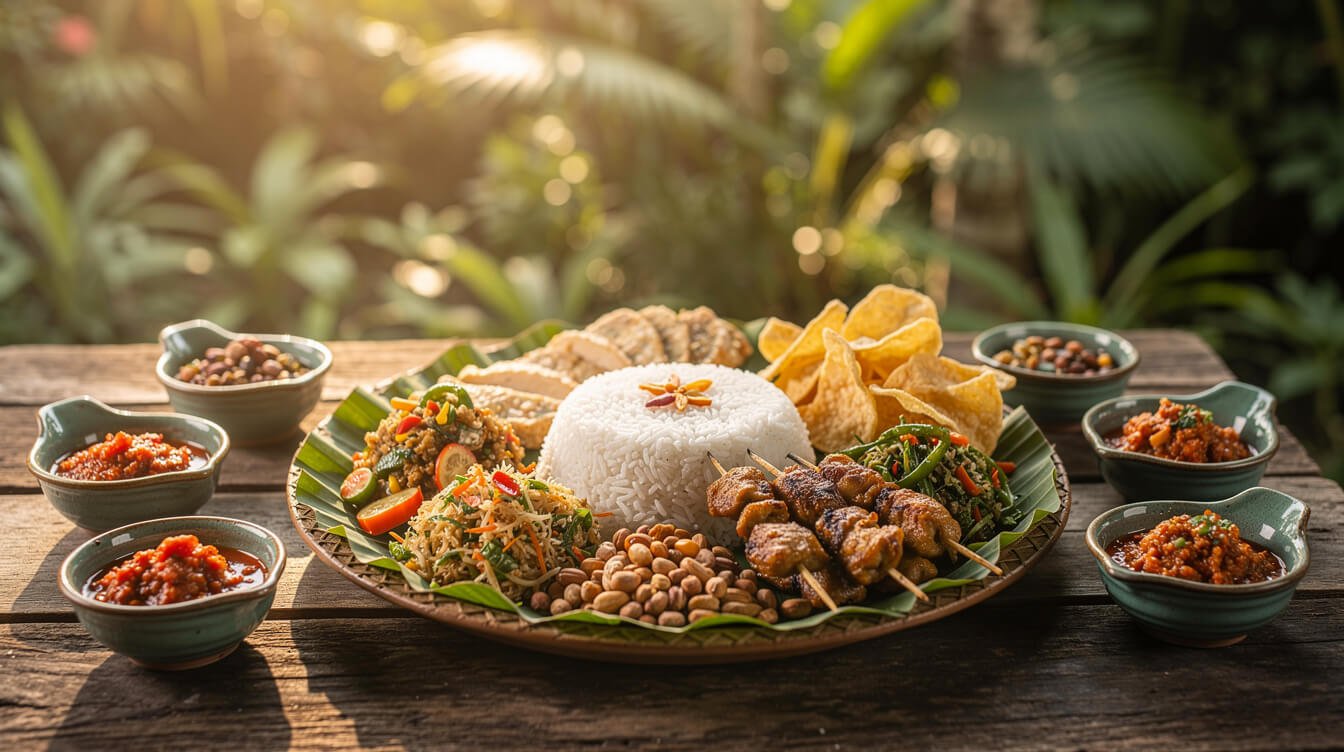
Every cooking school in Ubud offers a slightly different menu, but certain iconic dishes appear again and again. Here are the classics you are most likely to prepare.
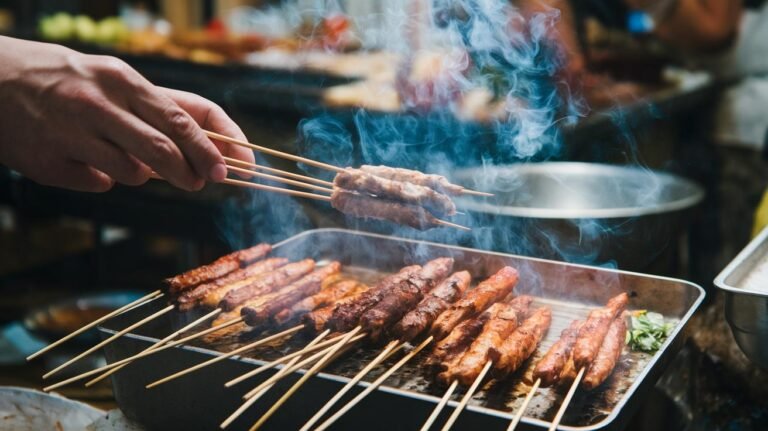
Sate Lilit (Balinese Minced Satay)
Unlike the skewered satay familiar across Southeast Asia, sate lilit is made from minced fish, chicken, or pork mixed with grated coconut, lime leaves, and spice paste, then wrapped by hand around lemongrass sticks or bamboo skewers. The technique of wrapping — twisting the meat firmly around the stick without it falling apart — is a tactile skill you will practice until your fingers learn the pressure.
Lawar (Spiced Coconut Vegetable Salad)
Lawar is a ceremonial dish, traditionally served at temple festivals and family gatherings. It combines finely chopped green beans, grated coconut, and spiced minced meat (or jackfruit in vegetarian versions), dressed in a bumbu of shallots, garlic, and chili. The flavors are complex — earthy, spicy, slightly sweet from the coconut — and the dish is a window into how Balinese food serves both body and community.
Nasi Kuning (Yellow Ceremonial Rice)
Turmeric-infused coconut rice, steamed and shaped into a cone. Nasi kuning appears at celebrations across Bali — the cone shape represents Mount Agung, the sacred volcano. Learning to cook it connects you to the spiritual dimension of Balinese food: every ingredient carries meaning, every shape tells a story.
Sayur Urab (Steamed Vegetables with Spiced Coconut)
A simple, nourishing side of steamed vegetables — typically long beans, bean sprouts, and spinach — tossed in freshly grated coconut seasoned with garlic, chili, and kaffir lime leaf. It is one of the dishes you will make again and again at home, because the technique is straightforward and the result is extraordinary.
Dadar Gulung (Pandan Coconut Crepes)
For dessert, many classes teach you to make these bright green crepes — colored naturally with pandan leaf juice — filled with sweetened palm sugar coconut. Rolling the crepe tightly is an art. The contrast of the sweet, caramelly filling against the fragrant pandan wrapper is pure Bali.
If you are staying at a villa with a private cook in Bali, you can ask your chef to prepare many of these dishes during your stay — or even arrange a private cooking lesson right in your villa kitchen.
Top Balinese Cooking Class Options Near Ubud
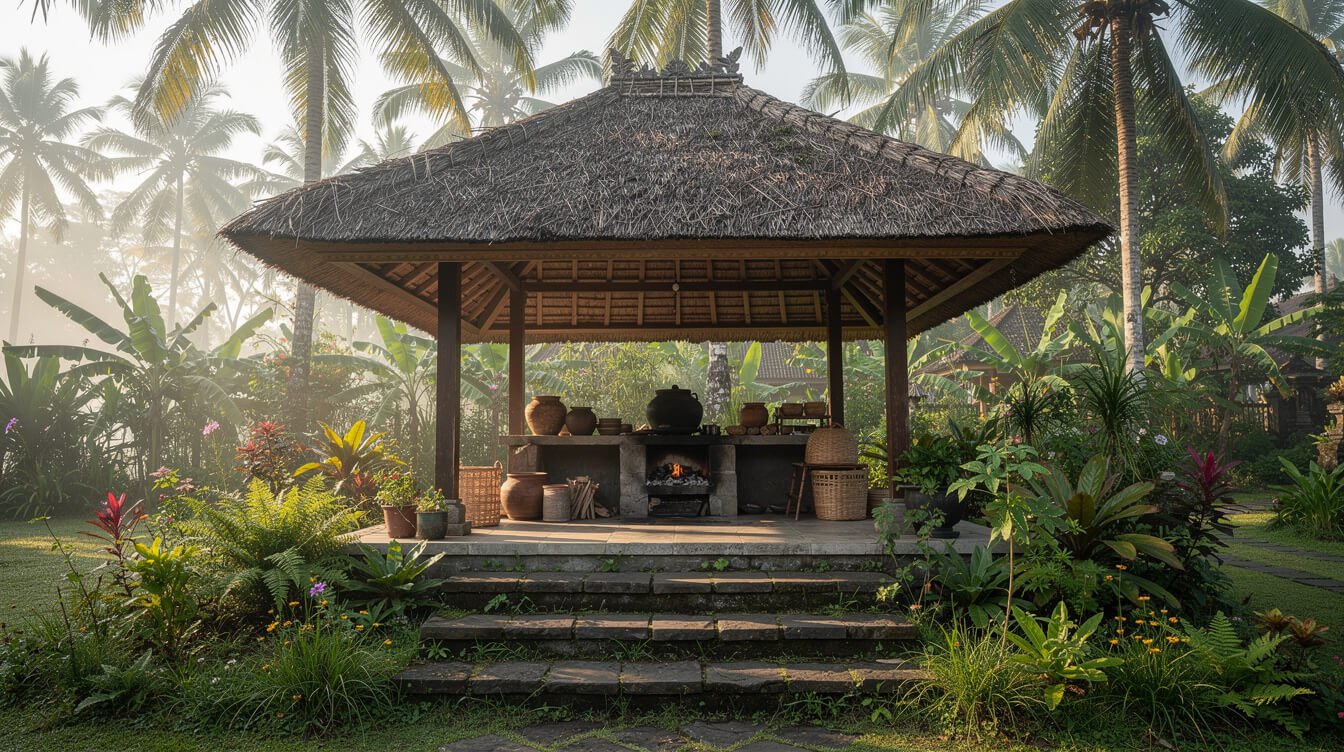
Ubud has dozens of cooking classes, ranging from intimate family-run programs to larger farm-based schools. Here are some of the most respected options to consider.
Farm-Based Cooking Schools
Schools like Pemulan Bali Farm and Taman Dukuh Cooking School combine the cooking class with a tour of their organic farm. You pick your own vegetables, learn about Balinese agriculture, and understand the connection between what grows in the soil and what arrives on your plate. These programs typically run four to five hours and include eight to ten dishes.
Village Kitchen Experiences
Smaller, family-run programs — like Ketut’s Bali Cooking Class and Paon Bali — take place in traditional village compounds. The atmosphere here is intimate: five to eight guests cooking alongside a Balinese family, learning not just recipes but the rhythms of daily kitchen life. These classes often include a deeper cultural component — making offerings, understanding the role of food in ceremony.
Private and In-Villa Classes
For families, groups, or anyone wanting a more personal experience, several schools offer private sessions. Some will come directly to your accommodation. If you are staying at a staffed villa in Ubud, your manager can often arrange a private cooking class with a local instructor who sets up right in your villa kitchen — which means you cook in your own space, at your own pace, with no group to keep up with.
What to Look For When Choosing
- Class size: Smaller is almost always better. Look for programs capped at 8-12 guests.
- Market tour included: The market visit adds essential context. Choose a class that starts there.
- Menu flexibility: Confirm vegetarian, vegan, or allergy accommodations before booking.
- Location: Some schools are 30-45 minutes outside central Ubud. Factor in travel time.
- Price range: Expect IDR 350,000-600,000 (USD 22-38) per person for a half-day class. Private sessions cost more.
Beyond the Kitchen — The Culture You Absorb
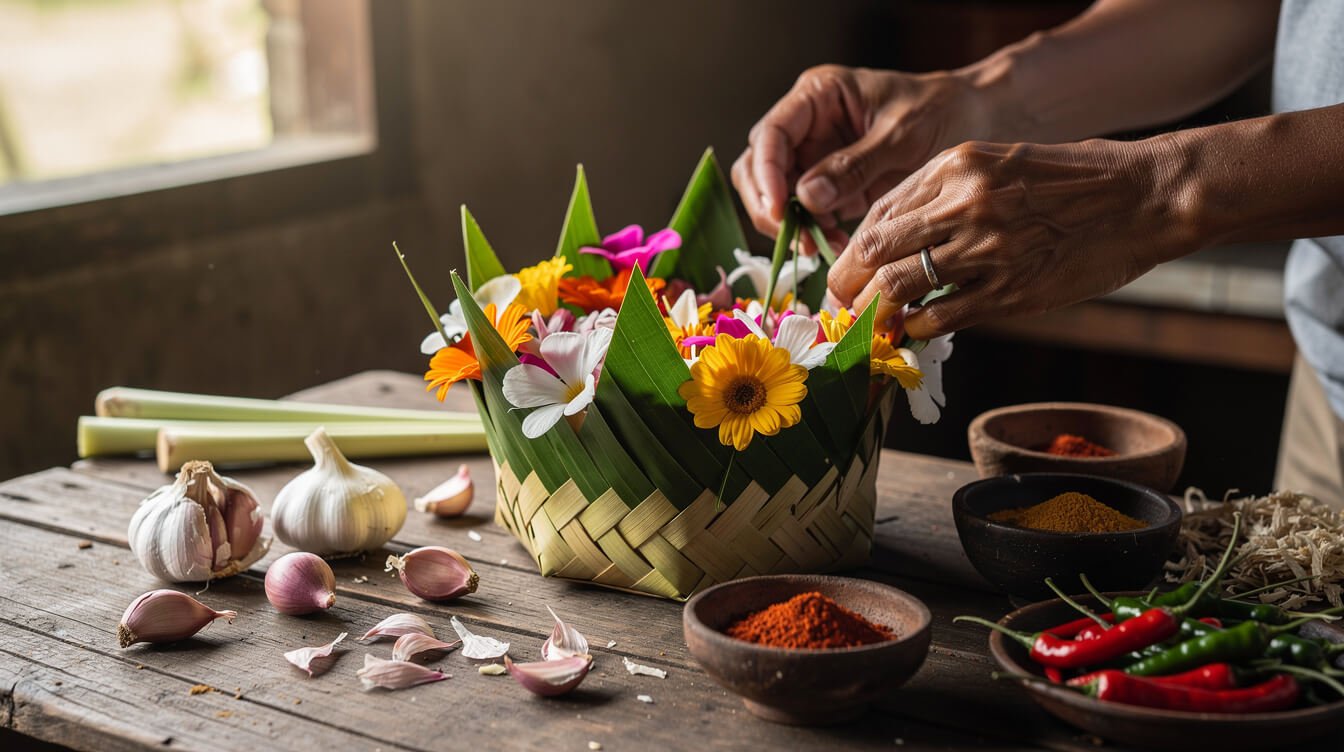
A Balinese cooking class in Ubud teaches you far more than recipes. It immerses you in the cultural logic that governs this island — the belief that food, spirit, community, and land are inseparable.
You will likely learn about Tri Hita Karana, the Balinese philosophy of harmony between humans, nature, and the divine. This philosophy shows up in every kitchen: the first portion of any meal is offered to the gods before anyone eats. The ingredients come from the earth and return to it. Cooking is an act of gratitude, not just sustenance.
Many classes also introduce you to the role of food in Balinese ceremonies. Babi guling (suckling pig) appears at temple anniversaries. Lawar and satay are prepared communally for village celebrations. Nasi kuning marks births, weddings, and achievements. When you learn to cook these dishes, you begin to understand what they mean to the people who have been making them for centuries.
This cultural depth is what separates an Ubud cooking class from a cooking class in any other tourist destination. You are not just learning technique. You are stepping into a living tradition. For a broader understanding of how wellness, culture, and healing interweave in Ubud, our guide to Bali spa and wellness retreats explores the same philosophy from a different angle.

Stay Where Every Detail Is Held for You
Villa Amrita is a fully staffed 3-bedroom pool villa in Ubud — your personal chef, gardener, and villa manager make every day feel effortless. Cooking classes, rice terrace walks, and temple visits are all within easy reach.
Practical Tips for Your Balinese Cooking Class in Ubud
A few things worth knowing before you book, so you get the most out of the experience.
When to Book
Morning classes (starting around 7:00-8:00 AM) are the most popular because they include the market tour. Afternoon classes skip the market but often offer a quieter, more relaxed pace. Book at least two to three days ahead during peak season (June through September and December). In the quieter months, same-day or next-day bookings are usually fine.
What to Wear and Bring
Wear comfortable, breathable clothing you do not mind getting splashed with turmeric — it stains everything yellow. Closed-toe shoes are smart for the market and farm tours. Bring sunscreen, a hat, and insect repellent. Most schools provide aprons. Leave your nice linen for the evening.
Dietary Accommodations
Nearly every Ubud cooking school offers vegetarian and vegan menus. If you have specific allergies — nuts, shellfish, gluten — contact the school directly before booking. Most are happy to adjust, but they need advance notice to prepare alternative ingredients.
Kids and Families
Many classes welcome children, especially private sessions. Kids enjoy the hands-on nature of grinding spices, wrapping satay, and rolling crepes. It is a genuinely engaging family activity that keeps everyone — adults and children — absorbed for hours. If you are traveling with family, a private villa in Ubud gives you the space and flexibility to build your days around experiences like this.
Taking the Recipes Home
Most cooking schools provide printed recipe cards or email you the recipes after your class. The real challenge is sourcing the ingredients back home — but Asian grocery stores in most major cities carry galangal, lemongrass, kaffir lime leaves, and palm sugar. Fresh turmeric is increasingly available in health food stores. The bumbu is the key: once you have mastered the spice paste, you can cook dozens of Balinese dishes.
Frequently Asked Questions About Balinese Cooking Classes in Ubud
Here are the questions travelers ask most often when planning a cooking class in Ubud.
How long does a typical Balinese cooking class last?
Most classes run four to five hours for a half-day session. This includes the market tour, ingredient preparation, cooking, and the shared meal. Some schools offer shorter two-hour sessions or full-day programs that include a farm tour and more dishes.
Do I need cooking experience to join?
Not at all. Balinese cooking classes in Ubud are designed for beginners. Instructors guide you through every step, from how to hold the mortar to how to test when a curry is done. Experienced cooks will enjoy the depth, but no prior skill is needed.
What is the average cost of a cooking class in Ubud?
Group classes typically cost between IDR 350,000 and IDR 600,000 (approximately USD 22-38) per person, including all ingredients, instruction, recipes, and the meal. Private classes for groups or families range from IDR 800,000 to IDR 1,500,000 depending on the school and number of participants.
Can I take a cooking class if I am vegan or have food allergies?
Yes. Most reputable cooking schools in Ubud offer dedicated vegetarian and vegan menus. For specific allergies, contact the school in advance. Balinese cuisine uses peanuts and shrimp paste frequently, so flagging allergies early ensures your instructor can prepare substitutions.
Is it better to book a morning or afternoon class?
Morning classes are generally the better choice because they include the market tour, which adds rich cultural context. The air is also cooler in the morning, making the outdoor cooking more comfortable. Afternoon classes work well if you prefer a later start or want a quieter experience with fewer participants.
Can I arrange a private cooking class at my villa?
Yes — several instructors and schools offer in-villa private classes. This is an especially good option for families, groups, or anyone who values a personalized pace. Your villa staff can often help coordinate the booking.
Bring the Flavors Home With You
A Balinese cooking class in Ubud gives you something no temple visit or rice terrace walk can: a skill you carry home. Weeks after you leave Bali, you will find yourself grinding turmeric into a paste, heating coconut oil in a pan, and filling your kitchen with the same scent that met you on that first morning in Ubud.
The recipes travel with you. The muscle memory of wrapping satay around a lemongrass stick stays in your fingers. The understanding of balance — sweet against sour, heat against coconut — changes the way you cook everything, not just Balinese food.
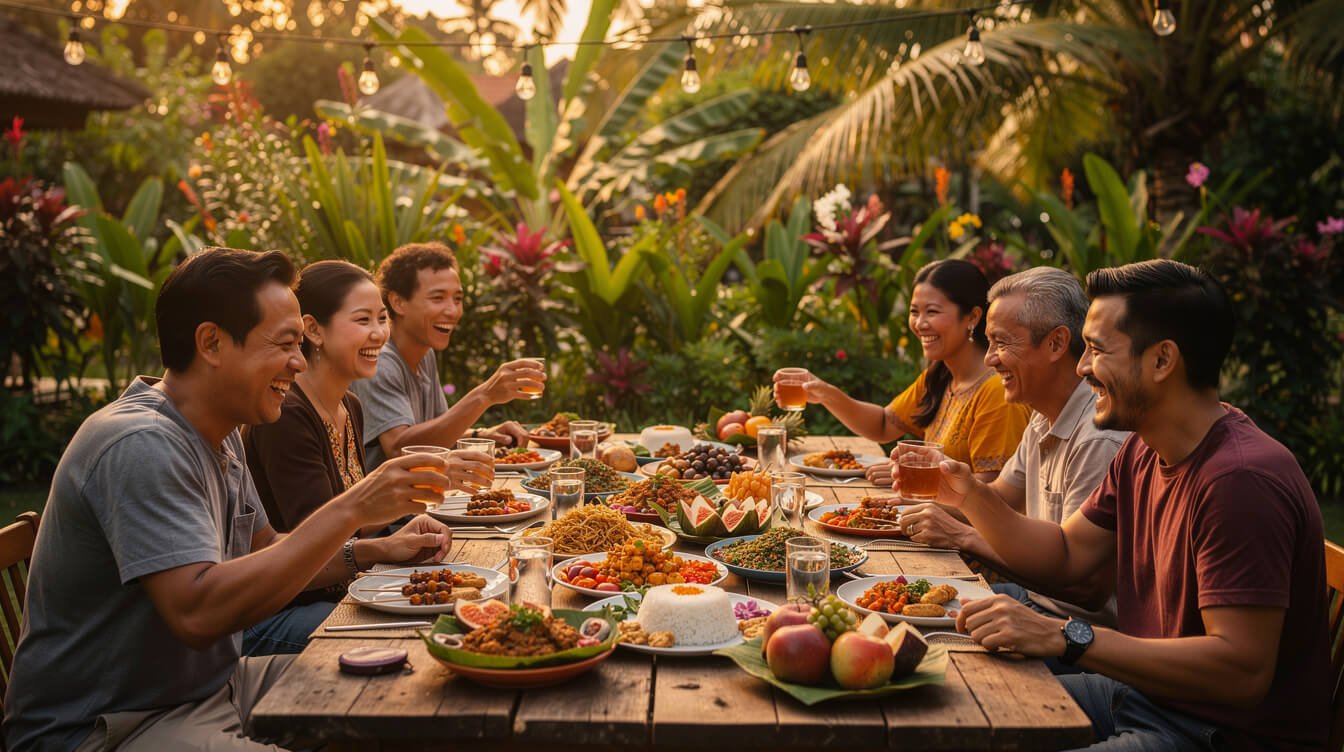
And the memory of sitting down to eat what you made, surrounded by tropical garden and the sound of insects beginning their evening chorus — that stays longest of all.
If you want your Ubud stay to hold you gently through every experience — cooking classes, temple mornings, rice field walks, and quiet evenings by the pool — Villa Amrita’s full staff is here to make sure nothing falls through the cracks. Check availability for your dates and let your Ubud story begin.

Join Our Newsletter — Fun, New, Exciting Bali News
Ubud stories, travel tips, and seasonal updates delivered to your inbox. No spam, just the good stuff — from our team in Bali to wherever you are.