Bali Starling: Where to See Bali’s Rarest Bird, Including Near Ubud
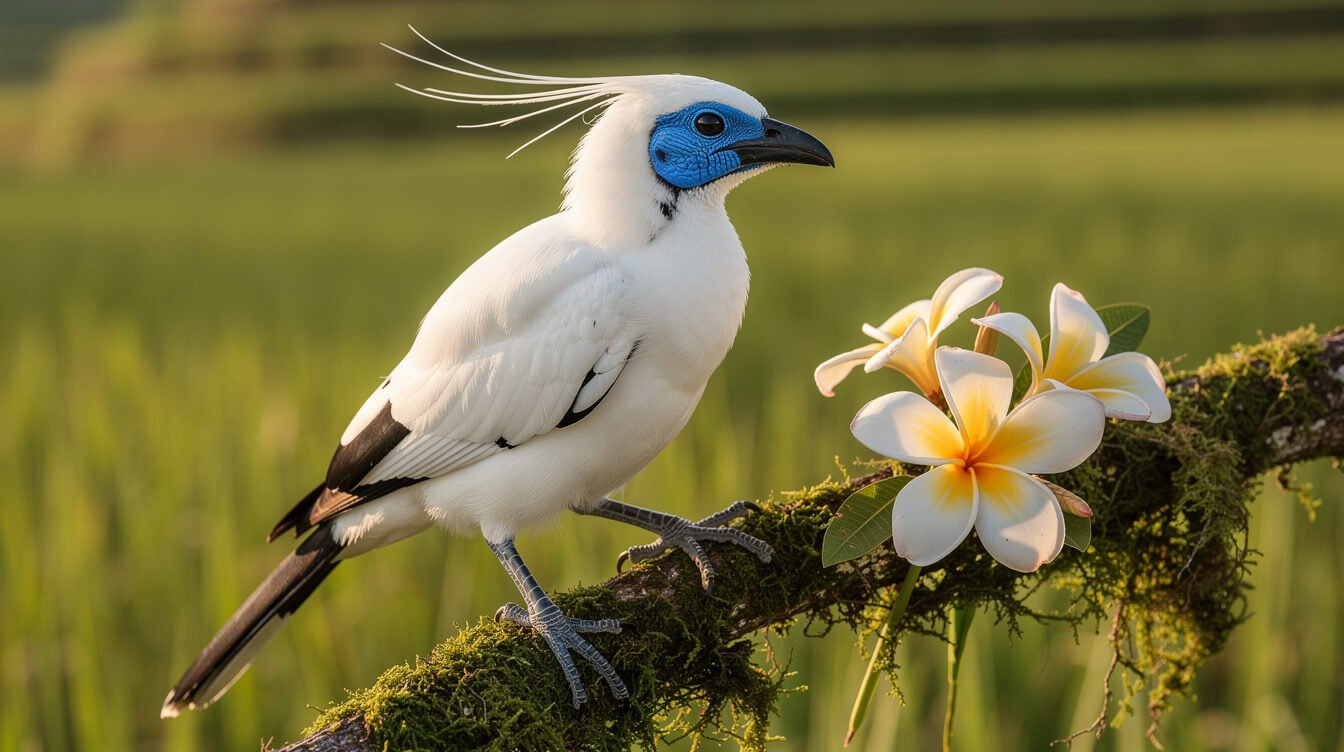
You hear it before you see it: a rough, chattering call from the top of a coconut palm, nothing like a songbird’s tune. Then a flash of white crosses the green of the rice fields, a bird so pale it almost glows, with black tips on its wings and a ring of bright blue skin around each eye. That’s the Bali starling, the only bird that lives nowhere on earth but this island. Fifty years ago it was disappearing. Today, if you know where to go, you can watch one feed its young in a village tree less than an hour from Ubud.
Most pages about the Bali starling are species cards: Latin name, conservation status, a zoo photo. This guide is written for you as a traveler. It covers what the bird is and why the Balinese care about it, how it nearly vanished, and where you can realistically see one during a stay in Ubud: a village north of town, a community bird village in Tabanan, the island of Nusa Penida, West Bali National Park, and the one place where a sighting is guaranteed. It ends with how to watch the birds without harming them.
Meet the Bali Starling: Bali’s White Bird with Blue Eyes
The Bali starling (Leucopsar rothschildi) goes by several names. Birders often call it the Bali myna. Older books say Rothschild’s mynah, after the British zoologist Walter Rothschild, whose name the bird carries. To the Balinese it’s jalak Bali or, more locally, curik Bali. Whatever you call it, it’s endemic: every wild Bali starling in the world lives on Bali or its small neighboring islands.
What it looks like
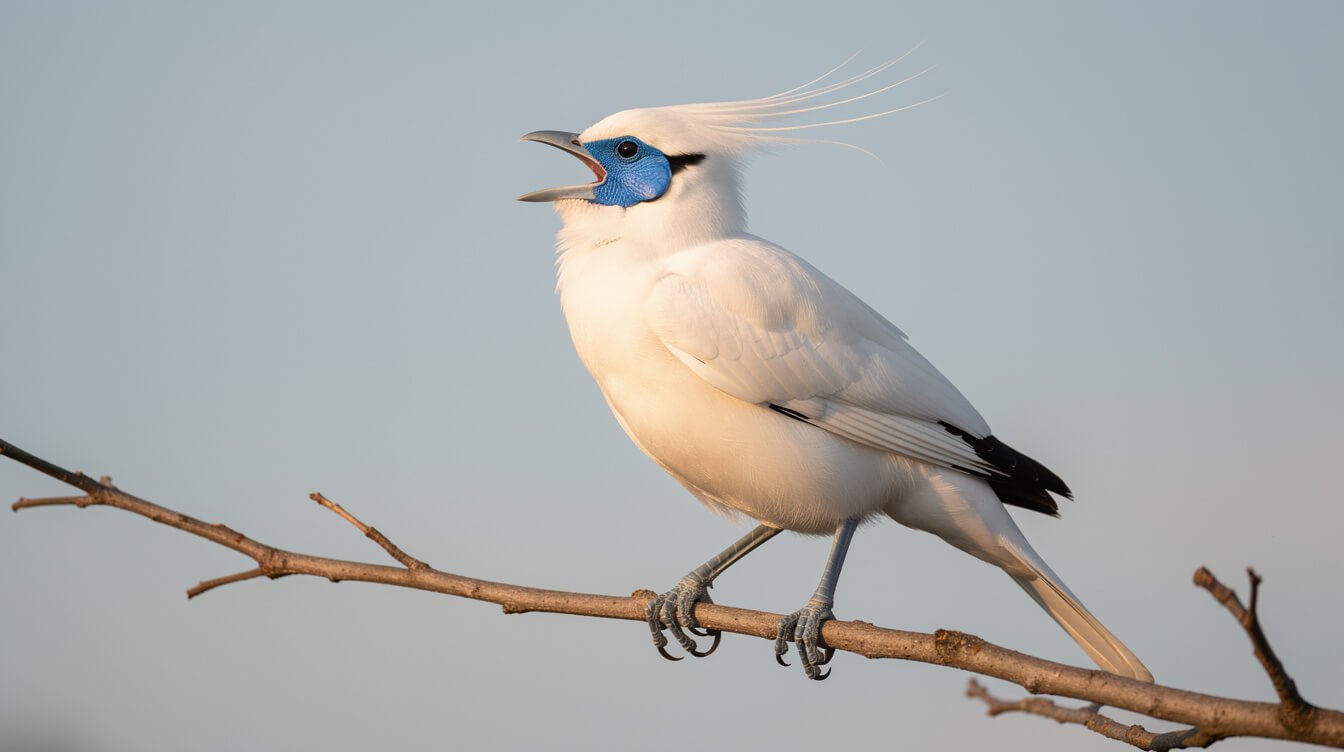
It’s a medium-sized bird, about 25 centimeters long. The body is almost entirely white. The ends of the wing feathers and the tip of the tail are black. Around each eye is a patch of bare skin in a strong cobalt blue, and that blue is what makes the face so striking up close. On its head it carries a long, thin crest that lies flat most of the time and lifts into a fan when the bird calls or displays. The legs are blue-grey and the bill is yellowish.
Males and females look nearly the same, though the male’s crest tends to be longer. The voice is a surprise if you expect sweetness. It’s a mix of harsh chatters, whistles and clicks, loudest in the early morning. Pairs nest in tree holes, often old woodpecker holes, and in the release villages they also use wooden nest boxes. They lay blue-green eggs, usually during the rainy season.
What the Bali starling means to the island
The Bali starling is the official fauna mascot of Bali Province, the way some places have a state bird. You’ll see it painted on village walls, carved into souvenirs and printed on conservation posters in schools. For many Balinese it has become a symbol of something the island is proud of: a creature that almost disappeared and came back because ordinary villages decided to protect it. That story of village protection runs through the rest of this guide.
Why the Bali Starling Nearly Vanished
The Bali starling never had much room. Its natural range was the dry northwest corner of the island: lowland monsoon forest, open savanna and the edges of mangroves. As farms and settlements spread, that habitat shrank to a small part of what is now West Bali National Park.
Habitat loss alone might not have been fatal. The cage-bird trade nearly was. Songbird keeping is a deep-rooted tradition across Indonesia, and a white bird with blue eyes found nowhere else is exactly what a collector wants. Trappers took birds from the wild for decades. According to the head of Bali’s natural resources conservation agency (BKSDA), a single pair once sold on the black market for 50 to 60 million rupiah.
The low point
By the early 2000s the wild population inside West Bali National Park had fallen to single digits. Counts from that period recorded as few as six or seven birds. A species that had lived on Bali for thousands of years was a handful of birds away from being lost in the wild, kept alive mostly in zoos and breeding centers abroad.
How it turned around
Several things changed at once. The Bali starling is listed on Appendix I of CITES, the strictest level of the international wildlife trade treaty, and it’s fully protected under Indonesian law. Licensed breeders were allowed to raise the bird legally, with one important condition: they must hand over 10 percent of their young to the government for release into the wild. As certified captive-bred birds became common, the black-market price collapsed. Officials now quote around 5 to 6 million rupiah for a legal, certified pair, which leaves poachers little reason to take the risk.
The other change happened in the villages, and you’ll read about it below. By November 2025 the head of Bali’s conservation agency told the Indonesian newspaper Kompas that around 600 Bali starlings had been recorded in the wild across the island, including West Bali National Park and the area around Gilimanuk. Researchers from Udayana University have noted that many birds in the west now carry no leg ring, which means they hatched in the wild rather than in a breeding center. The IUCN still lists the bird as Critically Endangered, and counts rise and fall from year to year. But the direction has changed.

Get a free 3-day sample itinerary
Three good days in Ubud: rice field walks at first light, a morning market, a temple, and an easy drive to the villages where the white birds fly free. We will send you a free 3-day sample itinerary.
Where to See a Bali Starling Near Ubud
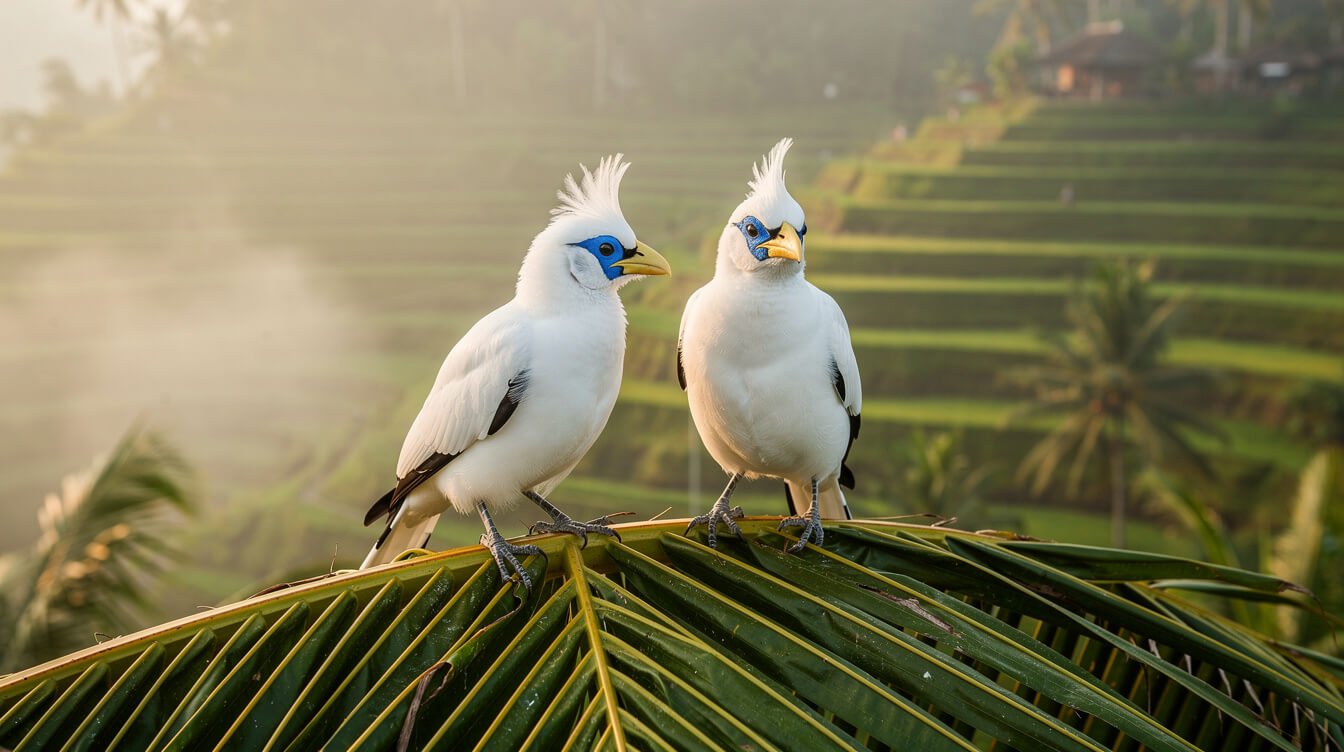
This is the part most guides leave out. You don’t have to drive to the far end of the island to have a real chance of seeing a Bali starling. Two community release sites sit within an easy day of Ubud, and a bird park sits just south of town. None of the wild options is a promise. These are free-flying birds, so think of each trip as a good chance, not a ticket.
Melinggih Kelod, Payangan: wild-living birds just north of Ubud
The Begawan Foundation bred Bali starlings for more than two decades, first in the village of Melinggih Kelod in the Payangan district, just north of Ubud, then on Nusa Penida and in Sibang, and from 2017 back in Melinggih Kelod. In November 2018 the village passed its own customary law, an awig-awig, banning the shooting, trapping or hunting of the Bali starling and other protected wildlife, with a fine of 10 million rupiah. The foundation says it released 185 birds between 1999 and 2024, and that six banjar (village wards) now enforce fines for poaching.
The foundation now describes its breeding center in the past tense, so don’t plan on a tour of the aviaries. What remains is easier to love anyway. Begawan Biji, the foundation’s farm-to-table restaurant in Banjar Bayad, sits among rice fields where several released pairs have nested, raised young and stayed. Pairs and small groups are also seen around Banjar Begawan, Banjar Tibekauh and Banjar Paneca, near the town of Payangan. A slow breakfast or lunch there, with binoculars on the table, is the most relaxed Bali starling outing you could plan. Ask when you book whether a guided walk to the release sites is running. If you’ve never explored this side of Ubud, our Payangan guide sets the scene.
Kampoeng Jalak Bali, Tengkudak: a village that whistles for its birds
Farther west, in the hills of Penebel in Tabanan regency, the hamlet of Tingkihkerep in the village of Tengkudak has named itself Kampoeng Jalak Bali, the Bali Starling Village. The idea grew out of a local Independence Day custom of releasing birds every 17 August. In 2024 the conservation group FNPF (Friends of Nature, People and Forests), with funding raised by the German wildlife filmmaker Robert Marc Lehmann, released about 54 birds here between April and June. By May 2025, FNPF said, the flock had grown to 74 and spread across Tengkudak.
The birds here are unusually easy to see. They gather around people, especially in the early morning and late afternoon. The village sits among rice fields and forest at the end of a single access road, about an hour and a half from Ubud, and it’s easy to pair with the rice terraces of the Penebel area. Search “Kampoeng Jalak Bali” in Google Maps. Local monitors do feed the flock, often with crickets, and they’ve said themselves that the birds’ dependence on handouts is a problem. Let the villagers lead, and don’t bring your own food (more on that below).
Bali Bird Park, Batubulan: the guaranteed sighting
If you want a certain, close-up look, or you’re traveling with young children who’d rather not wait in a field, Bali Bird Park in Singapadu, Batubulan, is about 30 minutes south of Ubud. It keeps more than a thousand birds from around 250 species, Bali starlings among them, and it’s open daily from 9:00 a.m. to 5:30 p.m. Check current ticket prices on the park’s site before you go. These are captive birds, so it’s a different experience from the villages, but seeing one at arm’s length makes it much easier to recognize a wild one later. For more family-friendly ideas, see our guide to Ubud with family.
Nusa Penida: An Island That Protects Its Birds by Village Law
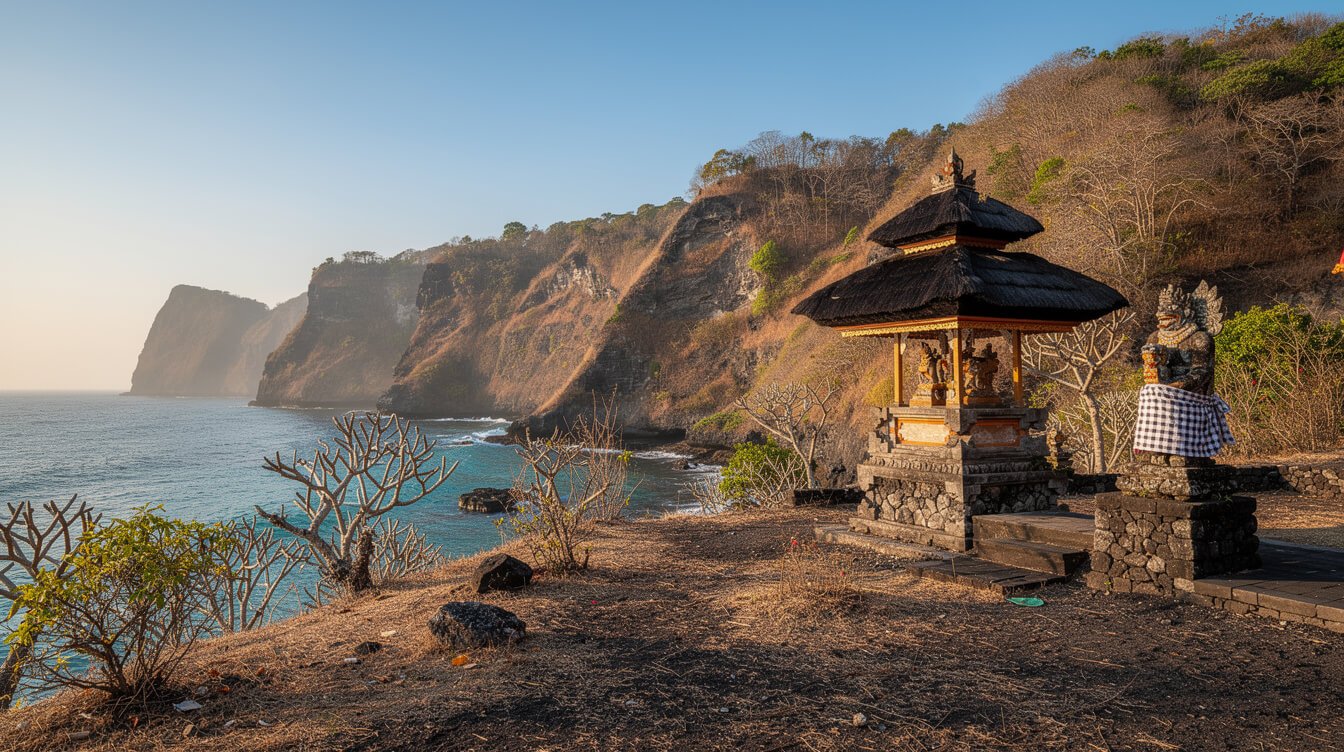
Nusa Penida, the rugged island off Bali’s southeast coast, is famous for its cliffs and manta rays. It’s also one of the great community conservation stories in Southeast Asia, and the Bali starling sits at the center of it.
FNPF spent years working with the villages of Nusa Penida, more than 40 of them, and persuaded every one to adopt a traditional village regulation protecting birds. Under that awig-awig, catching a protected bird isn’t just illegal under national law. It’s an offense against your own village, judged by your neighbors. Poaching on the island all but stopped, and Nusa Penida became an unofficial bird sanctuary.
Into that safe space came the starlings. The Begawan Foundation released 64 birds on Nusa Penida in 2006 and 2007. By 2009 monitoring suggested the number had risen past 100, with birds spreading across Penida and small numbers breeding on Nusa Ceningan and Nusa Lembongan. FNPF has continued to release rehabilitated birds there since.
Seeing them on a Nusa Penida trip
Most visitors to Nusa Penida never notice the birds, because the standard tour races between viewpoints. If you’d like a chance, ask your driver for a slower route through the villages in the early morning, or contact FNPF about visiting its Nusa Penida base. Our Nusa Penida day trip from Ubud guide covers boats, timing and how to make the day less rushed.
West Bali National Park: The Bali Starling’s Original Home
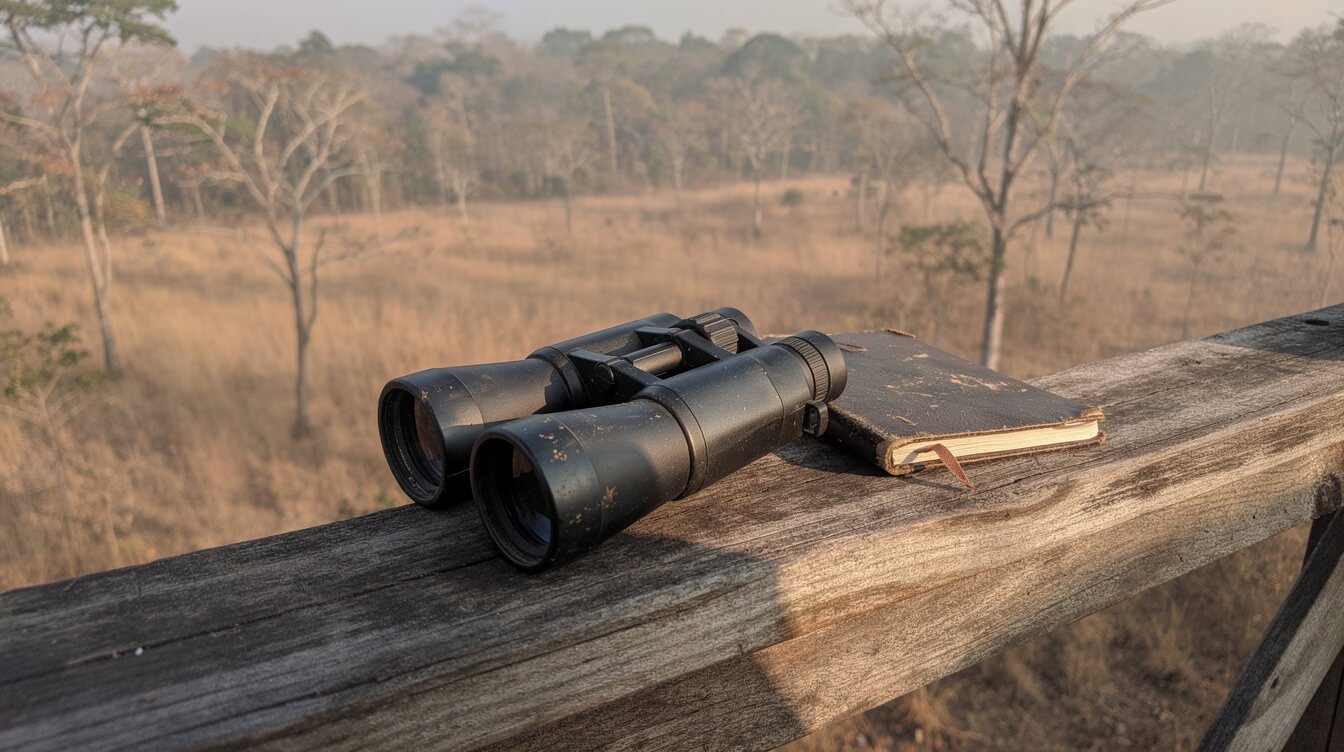
West Bali National Park (Taman Nasional Bali Barat) protects the last of the bird’s natural habitat: monsoon forest, savanna, mangroves and coral coast in Bali’s northwest corner. It’s the place to go if you want to see Bali starlings where they evolved, in the dry forest rather than a village garden.
How a visit works
The park headquarters is at Cekik, just outside the ferry town of Gilimanuk, and ranger posts sit at Labuan Lalang on the north coast. You’ll need a licensed guide to go into the park itself, and a guide also makes the sighting far more likely. Local birding guides run half-day and full-morning walks. The longer route through the monsoon forest and savanna at Tegal Bunder is where most birders look for the Bali starling, along with other dry-forest species.
From Ubud it’s a three-to-four-hour drive, so treat it as an overnight trip, not a day trip. Stay a night or two in Pemuteran or near Menjangan, start walking at first light, and combine the birding with snorkeling off Menjangan Island. The dry season, roughly May to September, brings bare trees and easier viewing. In the wet months the forest is greener and the birds are nesting.
While you’re there, keep an eye out for the black-winged starling, a close cousin with black wings and a pale body. It’s also critically endangered and just as prized by trappers.

Book the Villa
Come back from a morning of birding to three bedrooms, a private pool and a quiet tropical garden in Ubud, with a team on hand so your days stay yours. Check availability for your dates.
How to Watch Bali Starlings Responsibly
The Bali starling recovered because people decided to leave it alone. The best thing you can do as a visitor is to keep it that way. A few simple habits help.
- Never buy a caged bird, and never pay to photograph one. Songbirds are sold openly in some Bali markets. Even a “legal” certified bird keeps the demand for cage birds alive. If a seller offers you a Bali starling, walk away.
- Don’t bring food. In the village release sites the birds may come close, and feeding them is tempting. Bread, rice and snacks are harmful, and birds that depend on people are easier prey for cats and poachers. If local monitors are feeding them, watch and follow their lead.
- Keep your distance at nests. If you see a bird going in and out of a tree hole or nest box, stay well back and keep your visit short. Disturbed pairs can abandon eggs.
- Skip playback. Don’t play recorded calls to draw birds in. It stresses territorial pairs, especially during breeding.
- No drones near the birds. Drones disturb nesting birds, and many villages and the national park don’t allow them without permission.
- Use local guides. Hiring a guide from the release village or the park puts money behind protection. It’s one of the reasons villagers stop poaching and start watching.
- Report what you see. If you photograph a Bali starling in the wild, logging it on eBird helps researchers track where the birds are spreading.
Binoculars matter more than a big lens. A light pair, eight-power or so, is enough to see the blue around the eye from a respectful distance.
Bali’s Other Birds You Might Meet from an Ubud Garden
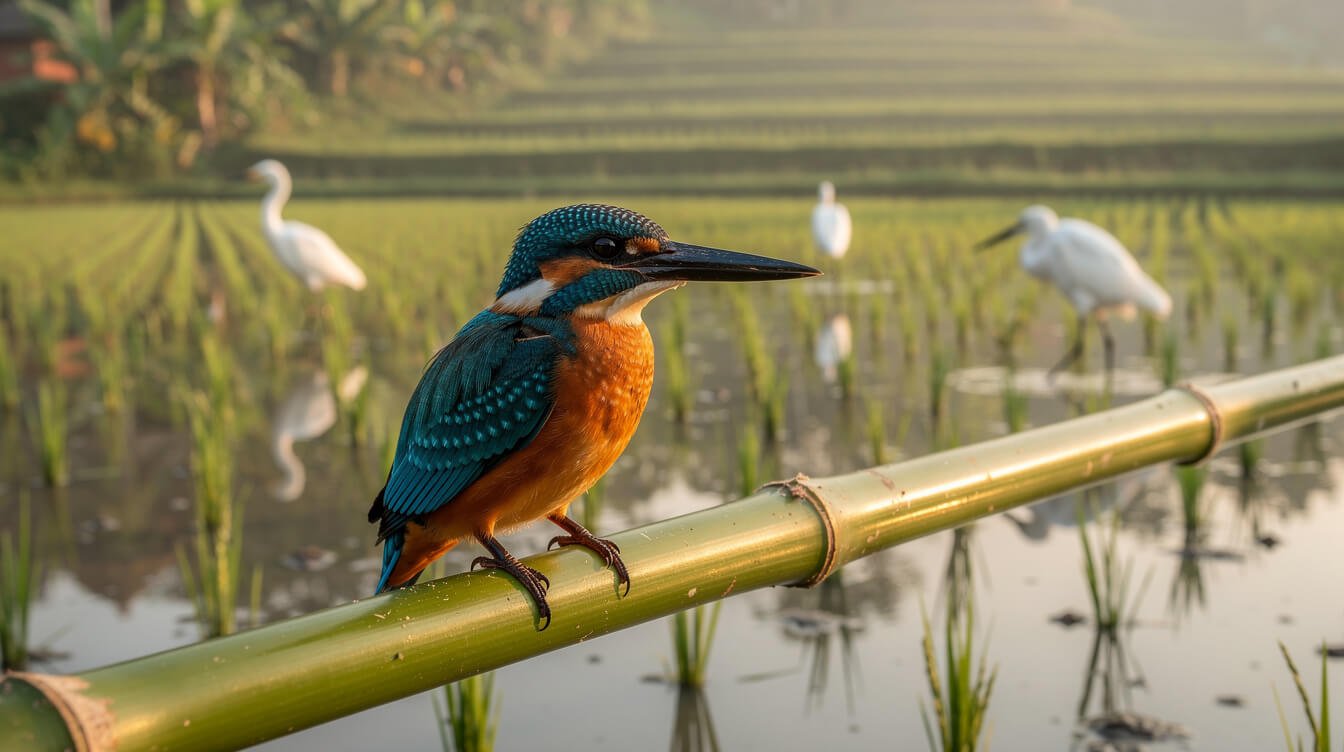
Bali has recorded more than 400 bird species, and you don’t have to leave Ubud to start a list. The rice fields and gardens around town are full of birds, especially in the hour after sunrise.
- Javan kingfisher: deep blue and chestnut, with a red bill, often sitting on a bamboo pole at the edge of a flooded paddy. We wrote about one morning with it in the kingfisher on the paddy wall.
- Egrets and herons: white birds stepping slowly through the paddies. At dusk, huge numbers fly in to roost in the trees of Petulu village, just north of central Ubud.
- Sunbirds and flowerpeckers: tiny, quick and bright, working the hibiscus and banana flowers in any garden.
- Black-naped oriole: bright yellow with a black eye-band, with a fluting call from the tall trees.
- Java sparrow: grey with a pink bill and white cheeks, often in small flocks near the fields. It’s another bird hit hard by the cage trade.
Then there are the animals that aren’t birds. The long-tailed macaques of the Ubud Monkey Forest are the famous ones. Geckos chirp on garden walls at night, the bigger tokek calls its own name after dark, and fireflies drift over the paddies in the wet season. A slow walk along a rice-field path, like the one we describe in a morning in Ubud’s rice fields, is often the best wildlife outing of the whole trip. When you’re staying with us, ask the team which nearby paths are quietest at first light.
Bali Starling FAQ
Is the Bali starling still endangered?
Yes. The IUCN lists it as Critically Endangered, its highest category of threat before extinction in the wild. Wild numbers have recovered from single digits in the early 2000s to roughly 600 recorded across Bali by late 2025, according to the provincial conservation agency. Conservationists want to see that hold before the status is downgraded.
Why is the Bali starling endangered?
Mostly because of the illegal cage-bird trade, which took wild birds for decades, and the loss of its small natural habitat in northwest Bali. A tiny population also brings the risk of inbreeding, so breeding programs try to keep bloodlines diverse.
Is the Bali starling the rarest bird in Indonesia?
It’s one of the rarest and certainly the best known. Indonesia has several other critically endangered birds, including some forest species with even smaller wild populations, so “the rarest” is hard to prove. In Bali, though, nothing compares.
What does the Bali starling symbolize?
Officially, it’s the fauna mascot of Bali Province. For many people on the island it has become a symbol of recovery and of community pride: proof that village customary law and local care can bring a species back.
Can I see a Bali starling near Ubud?
Yes, with a little luck. Free-flying birds live in the release villages of Melinggih Kelod in Payangan, just north of Ubud, and in Tengkudak in Tabanan, about an hour and a half away. For a guaranteed sighting, Bali Bird Park in Batubulan is about 30 minutes south of Ubud.
What other animals live in Bali?
Long-tailed macaques, black giant squirrels, civets, monitor lizards, geckos, fruit bats and, in West Bali National Park, deer and barking deer (muntjac). Offshore you’ll find manta rays, sea turtles and, in season, the ocean sunfish (mola mola) around Nusa Penida. If a beach day is on your list, our guide to the beaches in Bali includes the quieter west and north coasts near the national park.
The Bali starling is a small bird with a large lesson. It came back because people in a few villages chose to look after it, one banjar at a time. Go and see one if you can. Sit in a rice field in Payangan with a coffee, or stand at the edge of the savanna at Tegal Bunder while the light comes up. When that white bird lands and the blue around its eye catches the sun, you’ll understand why Bali fought so hard to keep it. If you’re planning a family trip around moments like these, our family villa in Ubud guide is a good next read.

Join our newsletter — fun, new, exciting Bali news
Ceremony days, market seasons, new trails and small stories from Ubud. Delivered now and then, always worth opening.