Tukad Cepung Waterfall: Timing the Light in Bali’s Cave Waterfall, 50 Minutes From Ubud
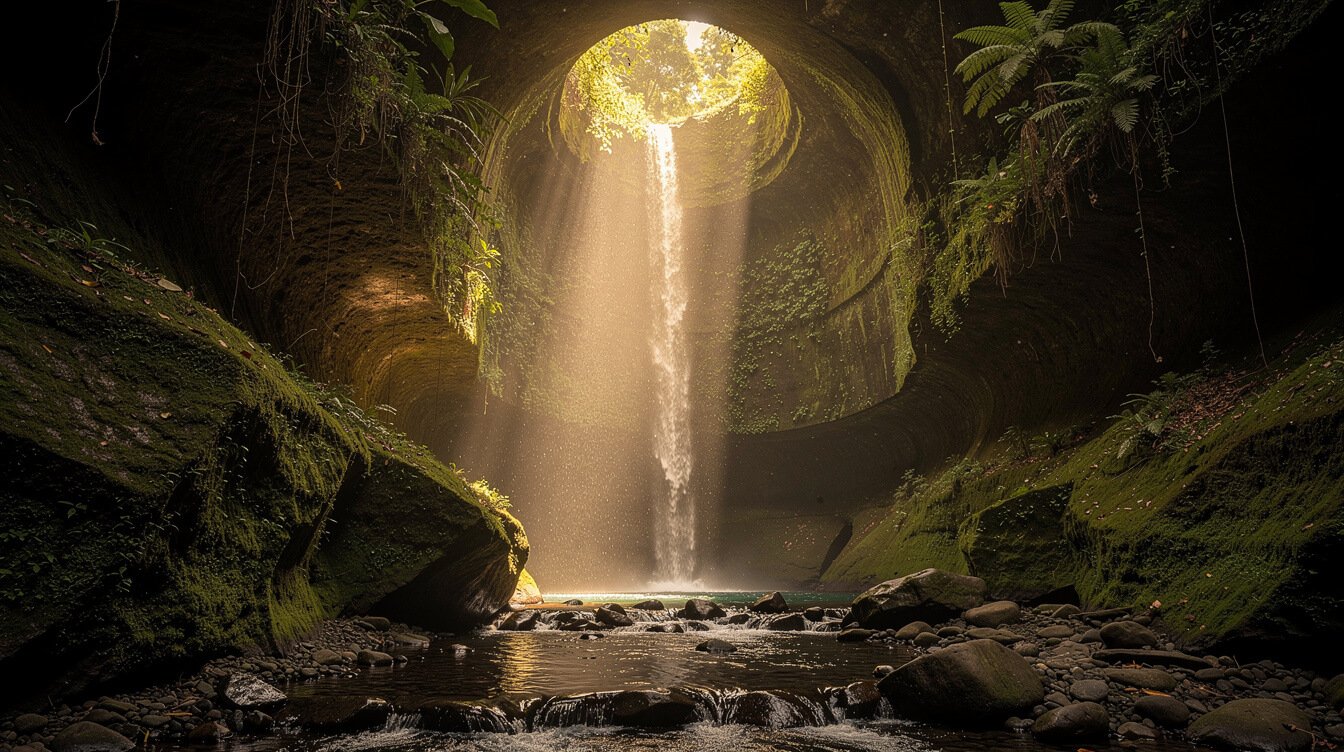
Somewhere around ten in the morning, if the sky over Bangli is clear, a single column of sunlight drops through a hole in the roof of a rock canyon and lands on falling water. For a few minutes the spray turns to gold, the stone walls glow, and everyone standing in the stream goes quiet. That is Tukad Cepung Waterfall, and that beam of light is the reason people drive out from Ubud before breakfast to stand in a river.
Most guides tell you to “go between 9 and 11 am” and leave it there. This one goes a little further. Here is where the falls are and how to get there from Ubud, what the walk in really feels like, why the light works the way it does, what you will see on a cloudy wet-season morning, what to wear, and how to turn a single waterfall into an easy, unhurried east Bali morning.
Where Tukad Cepung Waterfall Is and How to Get There From Ubud
Tukad Cepung is not in Ubud, even though it often appears on Ubud lists. It sits in Banjar Penida Kelod, in the village of Tembuku, in Bangli regency, east of Ubud. Tukad means river in Balinese, and that tells you most of what you need to know: this is a river first and a viewpoint second.
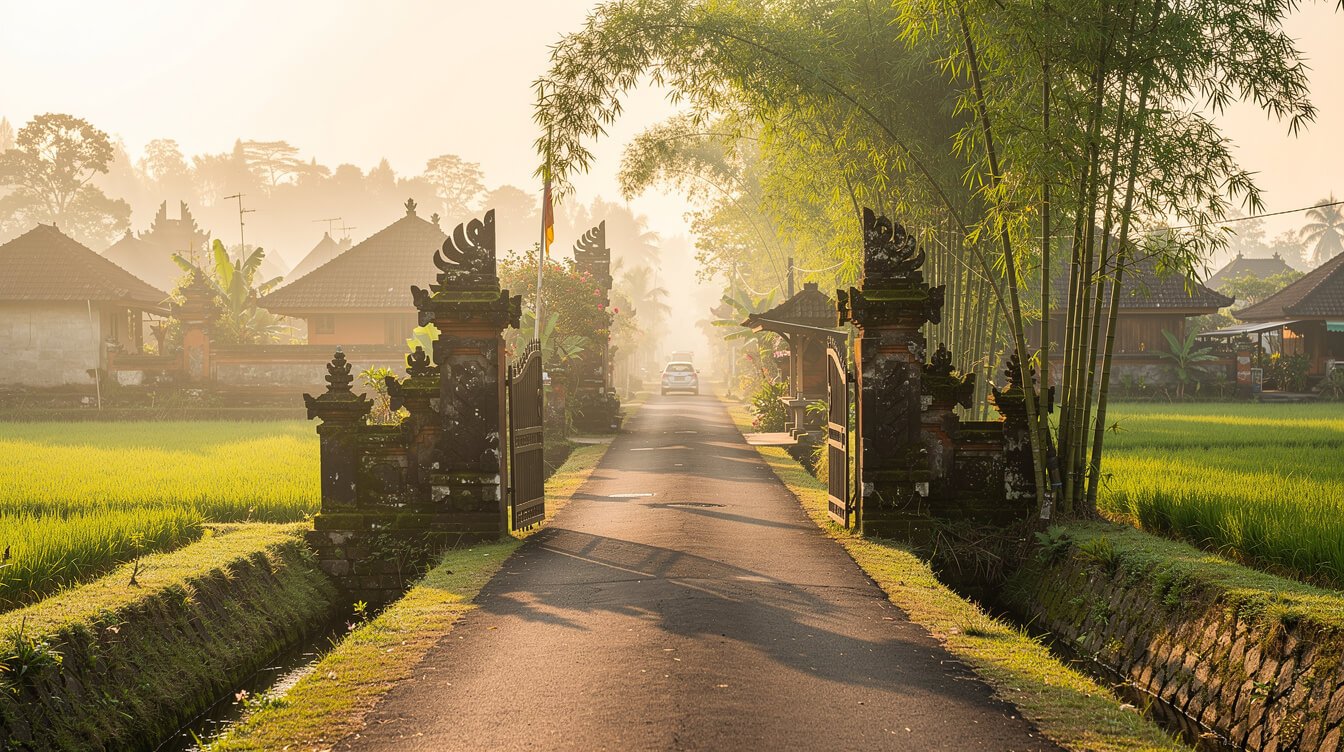
From central Ubud it is roughly 33 to 38 kilometers by road. The usual route heads east through Bedulu and Gianyar town, then turns north and climbs gently into Bangli through small villages, bamboo groves and rice fields. Allow 45 minutes to an hour each way. Morning traffic through Gianyar decides which end of that range you get.
A few honest ways to make the trip:
- A private driver. The easiest choice by far, and the one we would suggest. Your driver waits at the car park while you walk down, and you can add a second stop on the way home without thinking about directions. Agree on the route and the price before you leave.
- A scooter. Possible if you are an experienced rider. The roads are fine, but you will arrive wet from the river and ride home damp, so bring a dry change.
- A tour. Many east Bali tours from Ubud include Tukad Cepung as a morning stop. Check that the schedule actually puts you in the canyon between 9 and 11 am. A waterfall visited at 2 pm is a very different place.
If you are staying with us, ask the team about drivers when you plan your week. A good driver who knows Bangli will also know the right car park. Several guides say to look for the main Tembuku parking area by a warung with a large gorilla-face entrance. It is usually free, with an occasional charge of around IDR 2,000 to 5,000. Simply drive past anyone trying to wave you into a paid spot further up the road.
To arrive for the light, leave Ubud by about 8 am. Earlier is fine. You will have the stairs to yourself and time for a coffee before the sun climbs high enough to matter.
The Walk In: Stairs, a Riverbed and the Slot Canyon
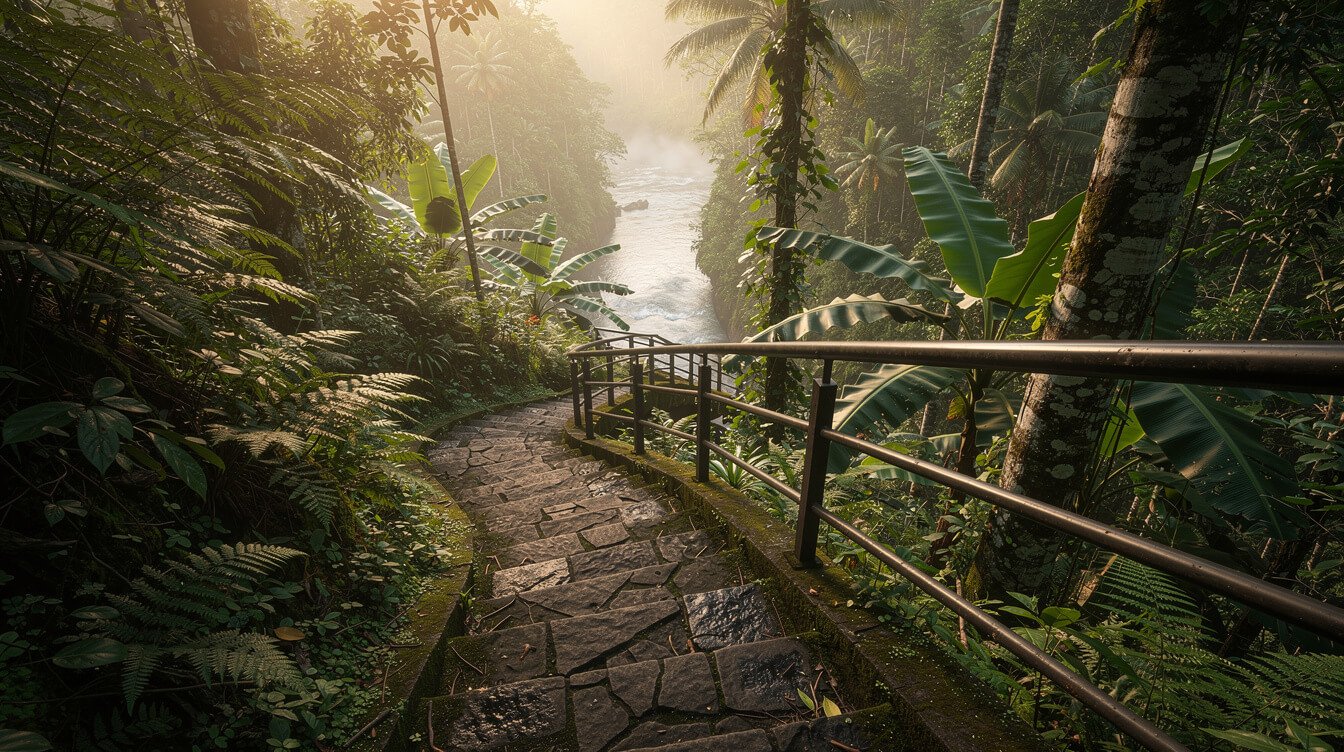
The waterfall is not visible from the road, and that is part of the pleasure. You buy your ticket at a small booth near the entrance, walk a short, flat path through gardens, and then the land falls away.
Next comes a long flight of steep stone and concrete steps down into the river gorge, with handrails most of the way. One guide counts roughly a hundred steps. Going down is easy. Coming back up, in the heat and wet to the knees, is the real effort of the day. Small warung cafés sit along the stairs, and stopping at one for a coffee or a fresh coconut on the climb out is the oldest trick in the book.
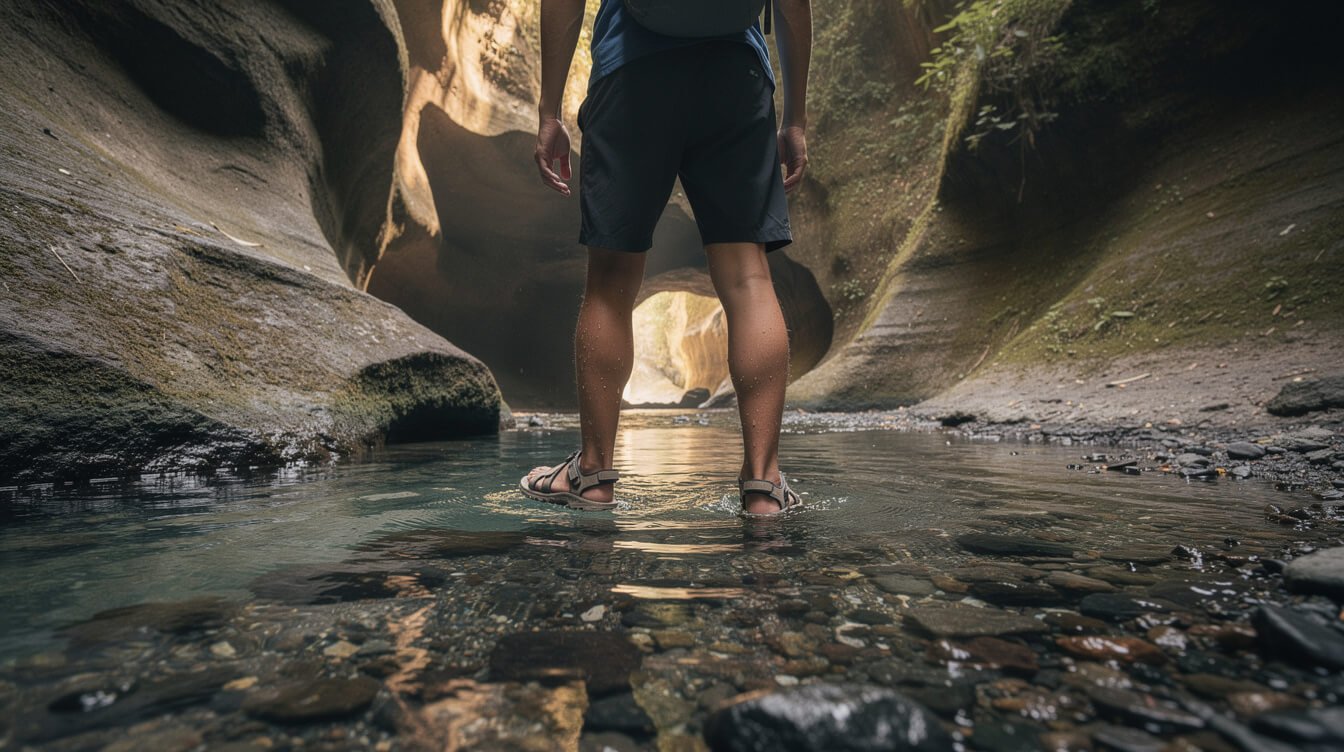
At the bottom, the path simply stops being a path. You step into the stream and follow it upriver. The water is shallow, ankle to shin deep on most days, sometimes up to the knee, running over sharp pebbles and slick dark stone. The banks close in. The walls rise and curve. Within a few minutes you are walking through a narrow slot canyon, the sky reduced to a bright crack overhead and the sound of falling water growing louder ahead of you.
Then the canyon opens into a rounded chamber, and there it is. A ribbon of water, about 15 meters tall, pours through an opening in the rock roof and falls into the chamber. Ferns hang from the rim. Mist drifts. The light changes every time a cloud moves.
Plan on 15 to 20 minutes from the ticket booth to the falls, and a little longer on the way back. With time to linger in the chamber, most visits last an hour and a half to two hours, start to finish.
The Light Beams at Tukad Cepung Waterfall: Why They Happen and When to Go
Here is the part most guides skip. The famous beam is not a show that switches on at 9 am. It is simple geometry, and once you understand it, you can plan for it.
The chamber is deep and narrow, and the opening above it is small. For a beam to reach the water, two things have to be true at the same moment:
- The sun has to be high enough to shine straight down through the gap instead of hitting the canyon wall. Early in the morning it is too low, so the chamber is lit softly but there is no beam.
- Nothing can be in the way. Direct sun only. A single passing cloud turns the beam off for as long as it takes to drift past.
That is why the window is usually given as about 9 to 11 am, with the strongest, most defined shafts of light around 10 to 11. As the sun moves on past the opening, the beam fades. Some guides suggest the window shifts closer to midday at certain times of year, which makes sense, since the sun’s path through the sky moves across the seasons. Treat the hours as a guide, not a timetable.
What makes the beam visible is the spray. Light passing through clean, dry air is invisible. Light passing through mist turns into a solid-looking column. So the best photographs come when the falls are running well and the air is full of fine water. Some visitors toss a handful of water into the beam to light it up even more.
A few practical habits help you catch it:
- Check the sky over Bangli, not over Ubud. The hills east of Ubud often cloud over first. If the morning forecast looks gray, have a backup plan (more on that below).
- Arrive by 8:30 or 9 am. That gives you time for the walk down and a few quiet minutes in the chamber before the light arrives and the crowd thickens.
- Keep your turn on the photo rock short. The beam lasts perhaps two hours on a good day, and everyone in the chamber is waiting for the same thing. A little patience and generosity go a long way in a space this small. For more thoughts on photo-spot etiquette in Bali’s waterfalls, see our guide to Kanto Lampo Waterfall.

Get a free 3-day sample itinerary
Three easy days from Ubud: rice field walks at first light, a temple morning, a market, and one unhurried east Bali morning chasing the light. We will send you a free 3-day sample itinerary.
On a Cloudy Morning: What You’ll Actually See
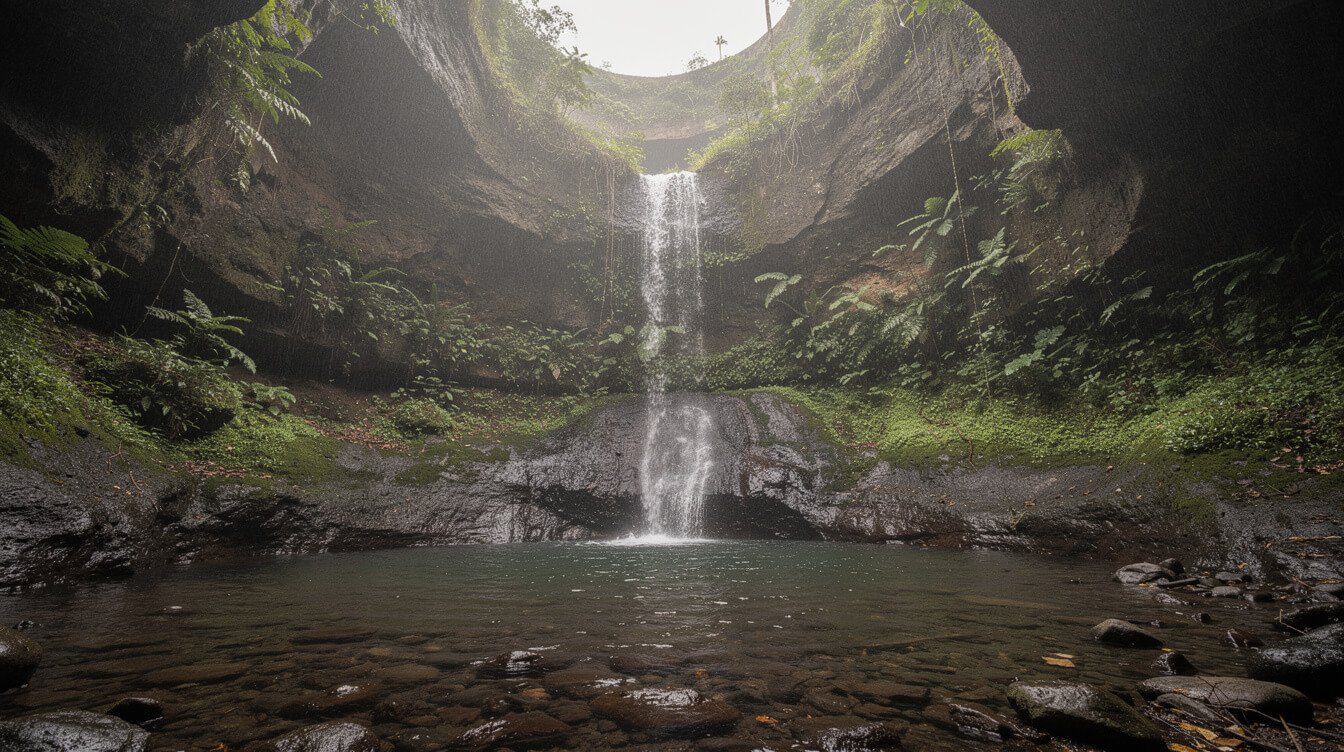
It is mid-November as we write this, and the rainy season has begun. From roughly November to March, Bali’s mornings often start bright and cloud over as the day warms. That makes the beam a matter of luck more than of clocks.
So what does Tukad Cepung look like without its famous light? Honestly, still lovely, just different. On an overcast day the chamber fills with soft, even gray light. There are no hard shadows and no golden shaft, but the moss is a deeper green, the wet rock shines, and the falls tend to run fuller and louder after rain. It feels more like a cave and less like a photograph. Some people prefer it.
What you should not expect on a cloudy day is the picture you have seen online. If that image is the whole reason for your trip, check the forecast the evening before and the sky again before you leave. If it looks heavy over the hills, swap your plan. Tibumana Waterfall, about 30 to 40 minutes away, is a single curtain of water falling into a calm, round pool where swimming is often allowed. It is just as beautiful under cloud as under sun.
And in the dry months, roughly April to October, your odds of a clear morning rise a great deal. If the beam matters to you, that is the season to plan around. Our Bali rainy season guide explains what the wetter months are really like day to day.
Can You Swim at Tukad Cepung Waterfall? What to Wear and Bring
Not really. The river inside the canyon is shallow, knee deep at most, and the base of the falls is rocky. You can wade, splash, cool off and stand in the spray, but there is no proper pool for swimming. Think of it as a walk in the water rather than a swim.

That shapes what to wear. Every visitor gets wet, at least from the knees down, and the mist inside the chamber will dampen everything else. A short packing list:
- Water shoes or strapped sport sandals. The single most important thing. You keep them on for the stairs and the river, and the pebbles are sharp. Leave flip-flops at home. They slip on the steps and float away in the stream.
- Quick-dry clothes or swimwear under a light layer. It is not a temple, so no sarong is needed, but it is a village place with families and other travelers. Simple, practical clothing feels right.
- A small dry bag for your phone and cash. Spray reaches every corner of the chamber.
- A towel and a dry change of clothes for the drive home. The toilets near the top of the stairs double as changing rooms.
- Cash in small notes. Entry is about IDR 30,000 per person, cash only, with no card payment and no ATM at the site. Bring a little extra for coffee on the climb back up.
- Drinking water. The return climb is warm, steep work.
The falls are generally open every day from around 7 am to 6 pm, although some older listings show 8 am to 5 pm. Prices and hours were checked in November 2026 and can change, so treat them as a guide. For a fuller Bali packing list, see what to pack for Bali.
Rain and Safety in the Canyon
A slot canyon is wonderful in calm weather and serious in heavy rain. The water can rise quickly, the current through the narrow channel grows stronger, and the stairs become slippery. The site can close after heavy rain, and when it does there is usually a sign or an attendant at the top of the stairs. If it has been raining hard in the hills, ask at the ticket booth before you go down, and if anything looks wrong, turn back. It is also worth knowing that hours can change on religious holidays, such as Galungan on January 13, 2027 and Kuningan on January 23, 2027. On Nyepi, March 8, 2027, the whole island stays home and nothing opens. For the full picture on wet-season waterfall safety, read the rain section of our Kanto Lampo guide, which covers it in depth.
The steps and river wade make Tukad Cepung a poor fit for strollers, wheelchairs, or anyone unsteady on wet, uneven ground. Older children who can manage the stairs with a hand to hold usually love the canyon walk.

Book the Villa
After a wet, wonderful morning in the canyon, come home to three bedrooms, a private pool and a quiet tropical garden in Ubud, with a team on hand so the evening stays unhurried. Check availability for your dates.
Make It an East Bali Morning: Tukad Cepung, Then Besakih or Sidemen
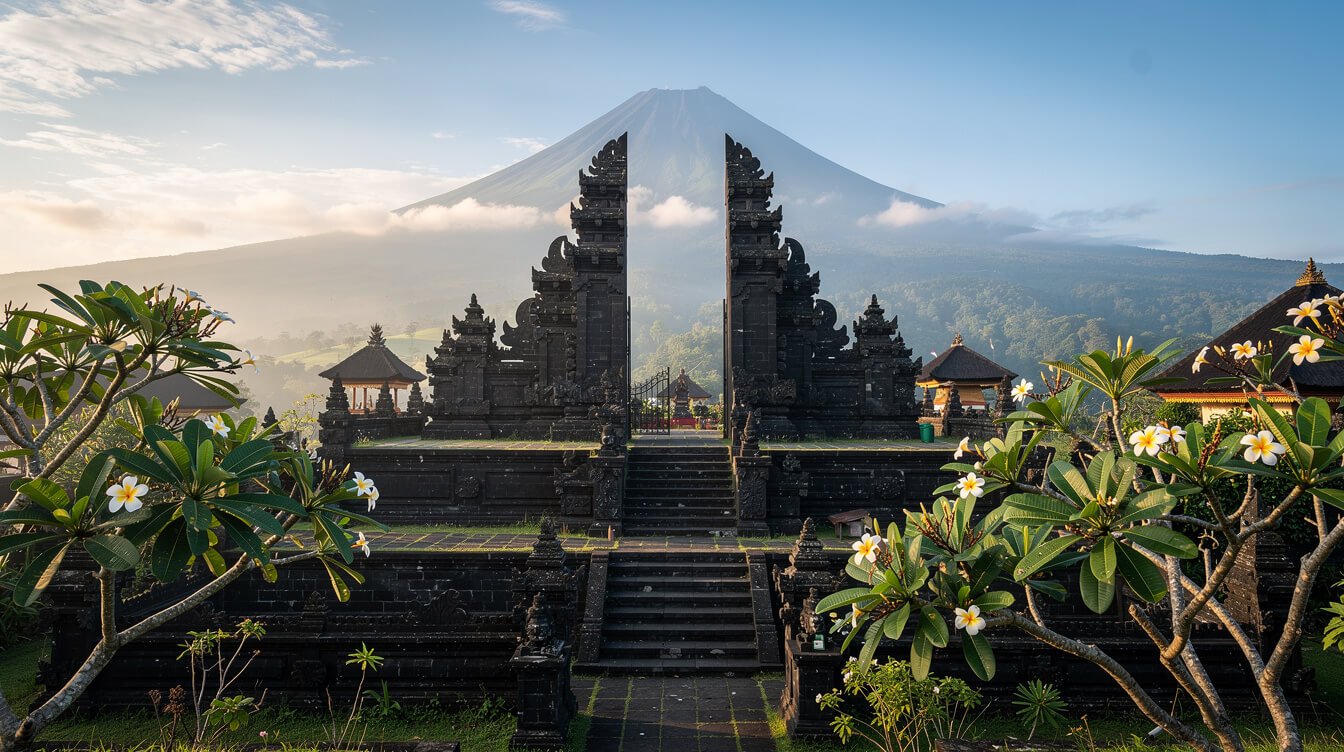
Here is the thing about Tukad Cepung’s location: it sits roughly halfway between Ubud and the slopes of Mount Agung. That makes it the natural first stop on an east Bali day, rather than one more waterfall to tick off in a loop around Ubud.
Some easy ways to build the day:
Tukad Cepung, then Besakih
Besakih, Bali’s mother temple, climbs the flank of Mount Agung about 17 kilometers further on, around 30 to 40 minutes by car. Catch the light in the canyon, change into dry clothes and a sarong and sash, and drive up to the temple. Our post on Mount Agung explains why the mountain sits at the center of Balinese life.
Tukad Cepung, then the Sidemen valley
Sidemen is roughly 25 kilometers away, about 40 to 50 minutes through Klungkung. It is a slow valley of rice terraces and weaving houses with Agung on the horizon. A late lunch overlooking the terraces after a wet morning in the canyon is about as gentle as a Bali day gets.
Tukad Cepung and Penglipuran
Penglipuran, the traditional Bangli village known for its orderly family compounds and its bamboo forest, is only about 15 to 25 minutes away. It makes an easy pairing that keeps the whole day short.
After a Batur sunrise
If you are climbing Mount Batur for sunrise, Tukad Cepung is about 40 to 60 minutes south of Kintamani. You will reach the canyon right in the light window on the way home. See our Mount Batur sunrise guide for the early start that comes first.
Or keep it simple. Visit Tukad Cepung, swim at Tibumana on the way back, and be home by lunchtime. You will have had two waterfalls, one beam of light, and a long afternoon ahead. For more ideas, browse our list of day trips from Ubud.
How Tukad Cepung Compares: Our Ubud Waterfall Series
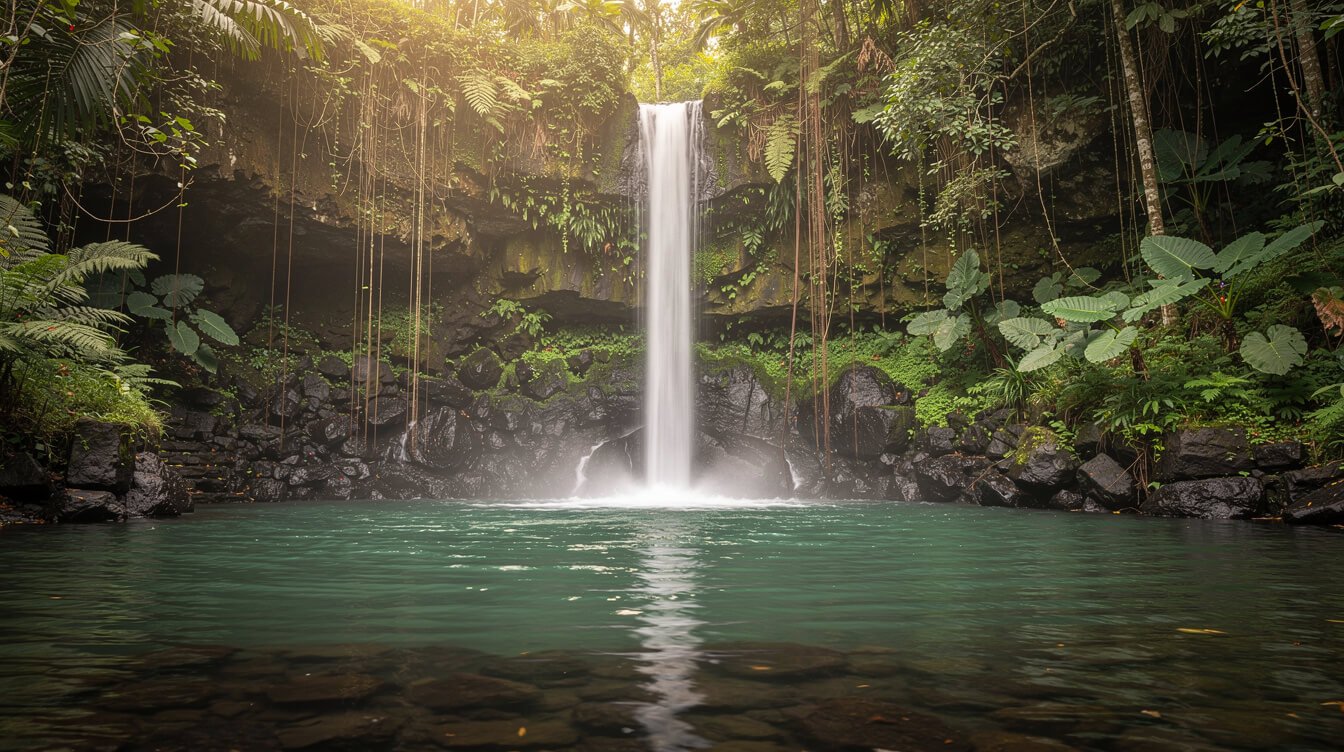
Every Bali waterfall has its own character, and the best one for you depends on what you want from the morning. Here is a quick guide to the falls we have written about, so you can choose rather than rank:
- Tukad Cepung: a cave waterfall in a slot canyon, with a beam of light on clear mornings. Wading only. Stairs plus a river walk.
- Tibumana: a single curtain into a calm pool, quieter and gentler, and often the best swim of the group.
- Kanto Lampo: tiered water fanning over black rock, close to Ubud, with a short scramble.
- Tegenungan: big, wide and easy to reach, with a broad pool and plenty of space.
- Sekumpul: a long day north for a cluster of tall falls in a deep green valley. Worth it for those who love to hike.
If someone asks you for the “top five waterfalls in Bali”, that list is a good place to start. For the bigger picture, our Bali waterfall guide and our Ubud waterfall guide cover the rest.
One more thing worth knowing. In Bali, water is never just scenery. Springs, rivers and waterfalls are treated with care, and almost anywhere on the island you may see a small canang sari offering left on a stone near the water. If you come across one, step around it, keep your voice soft, and leave the place as you found it.
Frequently Asked Questions
How do you reach Tukad Cepung Waterfall from Ubud?
By car or scooter, about 33 to 38 kilometers east through Bedulu and Gianyar, then north to Tembuku in Bangli regency. It takes 45 minutes to an hour. Most visitors go with a private driver, who waits at the car park.
How much is the Tukad Cepung entrance fee?
About IDR 30,000 per person, cash only, as of November 2026. Parking is usually free, with an occasional small charge of IDR 2,000 to 5,000.
What time are the light beams at Tukad Cepung?
Usually from about 9 to 11 am, strongest around 10 to 11, and only when the sun is shining directly through the opening. Clouds switch the beam off. Dry-season mornings, roughly April to October, give you the best odds.
How long is the walk to Tukad Cepung, and how long is the walk to Tibumana?
Tukad Cepung takes about 15 to 20 minutes from the ticket booth, down steep stairs and then wading upstream through the canyon. The walk back up is harder. Tibumana is easier: a trail of about 500 meters with concrete steps, dirt paths and a couple of bamboo bridges, around 10 to 15 minutes at an easy pace.
Can you swim at Tukad Cepung Waterfall?
Not really. The water is shallow, ankle to knee deep, and the floor is rocky. You can wade and stand in the spray. For a proper swim, pair it with Tibumana.
Is Tukad Cepung worth visiting in the rainy season?
Yes, if you go with open eyes. The canyon is atmospheric under cloud and the falls run fuller, but the beam is less likely and the site may close after heavy rain. Check the weather before you leave and have Tibumana as a backup.
What is the most beautiful waterfall in Indonesia?
Everyone has their own answer, and Indonesia has thousands of falls across its islands. In Bali, Tukad Cepung is one of the most distinctive because of its cave setting and its light. Sekumpul is often named the most dramatic, and Tibumana is one of the most peaceful.
Final Thoughts
Tukad Cepung Waterfall rewards patience more than any other waterfall near Ubud. You walk down, you get your feet wet, you follow a river into the rock, and then you wait for the sky to cooperate. Sometimes it does, and a column of light falls straight into the spray. Sometimes it does not, and you get a quiet green cave full of falling water instead. Both are worth the drive.
Leave early. Bring small notes and good sandals. Look up at the opening, not just at your phone. Then let the rest of the day unfold slowly, maybe toward Besakih, maybe toward Sidemen, or maybe straight home to the pool for a long, warm afternoon.

Join our newsletter — fun, new, exciting Bali news
Ceremony days, market finds, new trails and small stories from Ubud. Delivered now and then, always worth opening.