The Small Offerings That Appear Before You Wake
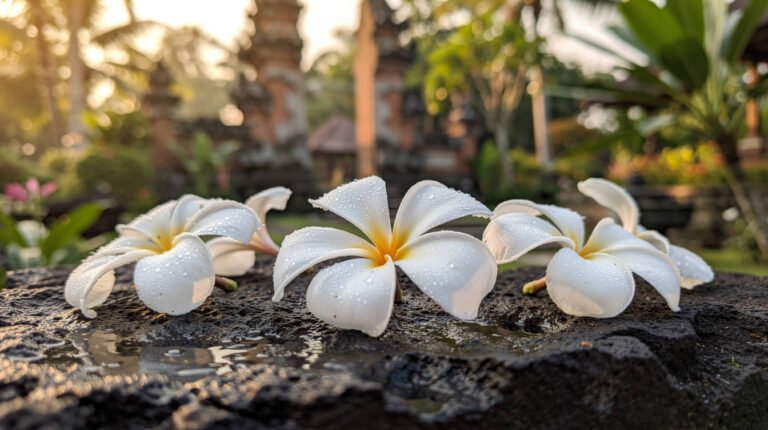
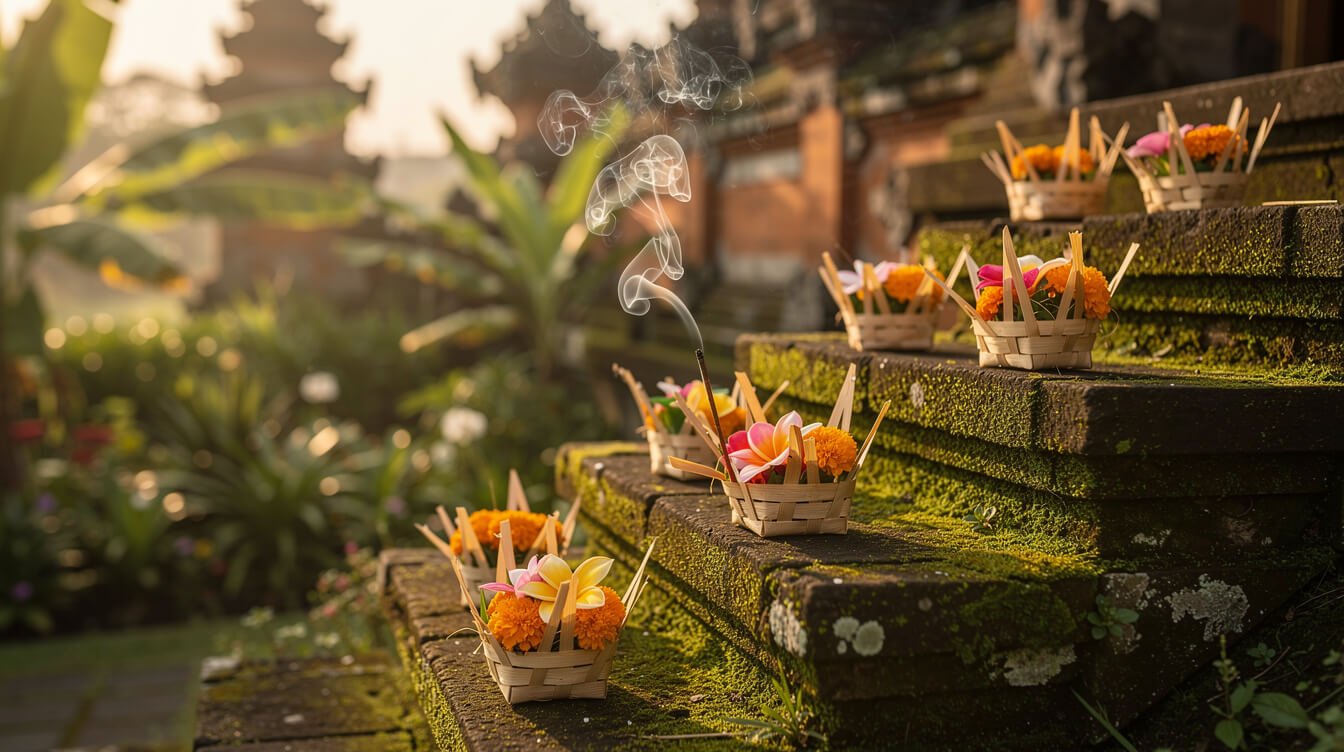
You notice them before you notice anything else. Small squares of woven palm leaf, no bigger than your open hand, placed at the base of every doorway, on every stone step, beside the pool edge where the moss has softened the corners. Each one holds a few flower petals — frangipani, marigold, sometimes a sliver of red hibiscus — a pinch of rice, a stick of incense still trailing its last thread of smoke into the morning air.
A Ritual Older Than the Stone
These are canang sari — the daily offerings that Balinese Hindu families place each morning as gratitude to Sang Hyang Widhi Wasa, the supreme god, and to the spirits that share this land. The word canang comes from the Balinese sari, meaning essence. Every element carries intention: the palm-leaf tray (ceper) woven fresh each day, the flowers arranged by color to honor the four cardinal directions, the incense that carries prayers upward.
At Villa Amrita, our team places them before dawn. By the time you pad barefoot across the warm stone terrace with your first cup of Balinese coffee, the offerings are already there — quiet, purposeful, part of the morning rhythm that starts long before you wake.
What the Canang Sari Teaches You About Ubud
There is something that shifts inside you when you realize these offerings are not decorative. They are not placed for guests. They would be there whether you came or not — at the garden gate, beside the kitchen threshold, near the carved stone guardian at the entrance. They are part of the daily conversation between the people who live here and the place itself.
Walk through Ubud’s streets in the early hours and you will see them everywhere: outside the warung where your nasi goreng is made, at the feet of moss-covered temple statues, on the dashboard of the driver’s car. The scent of incense mixes with wet earth and motorbike exhaust and frying garlic. This layering — the sacred folded into the ordinary — is what makes Ubud feel the way it does.
The Detail That Stays
Guests often tell us that the offerings are what they remember most vividly, long after the sound of the evening gamelan has faded and the taste of the chef’s sambal has become a craving. It is a small thing — a square of woven leaf, a few bright petals, a curl of smoke. But it tells you something essential about where you are: this is a place where the people who care for your stay begin each day with gratitude, and you are welcomed into that rhythm without ever being asked to perform it.
The canang sari will be there tomorrow morning, too. Fresh petals. Fresh incense. The same quiet intention, renewed.