Why Every Wall in Ubud Has a Story
You walk past a hundred walls in Ubud before you notice what they are doing. Not holding things up — though they do that, too. Telling you something. Every carved stone surface in this village is a sentence someone meant to leave behind.
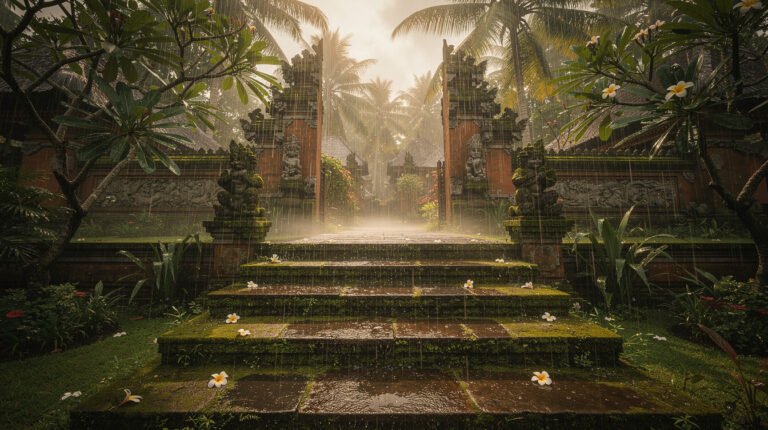
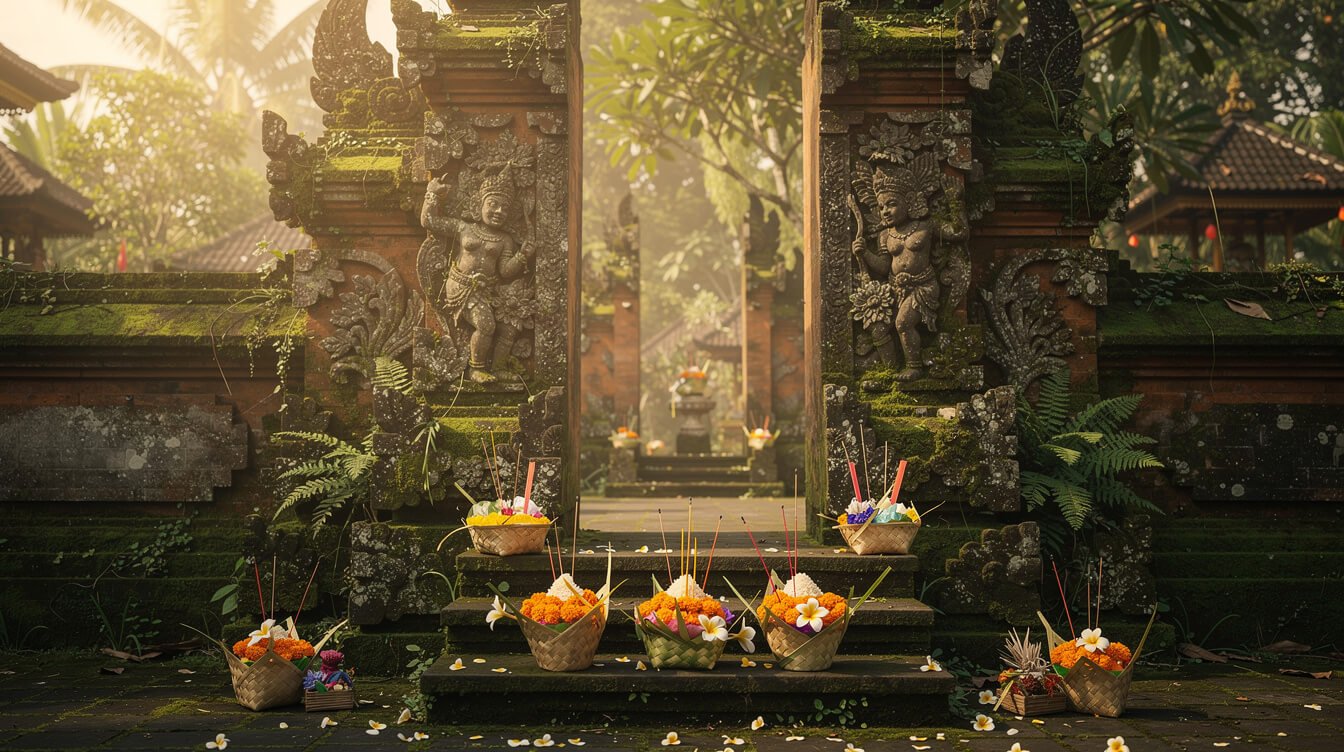
The first wall that stops you might be a temple gate. Two halves of a split arch, volcanic stone darkened by rain and age, carved so deeply that your fingers disappear into the grooves when you reach out. Demons at the base with wide eyes and bared teeth. Floral patterns climbing upward, each petal deliberate, cut by hand with a chisel and a patience you can feel in the rhythm of the marks.
At the foot of the wall, a fresh canang sari sits on a square of banana leaf. Woven palm, marigold petals, a stick of incense still curling smoke into the morning air. Somebody placed it there before sunrise. Somebody always does.
What catches you next is the moss. In Ubud, stone doesn’t stay bare for long. Green creeps into every crevice, softening the edges of centuries-old carvings until the figures look like they are growing out of the wall rather than cut into it. A demon’s face half-covered in velvet green. A lotus barely visible under a curtain of tiny ferns. The wall is alive. It has been alive for longer than anyone remembers.
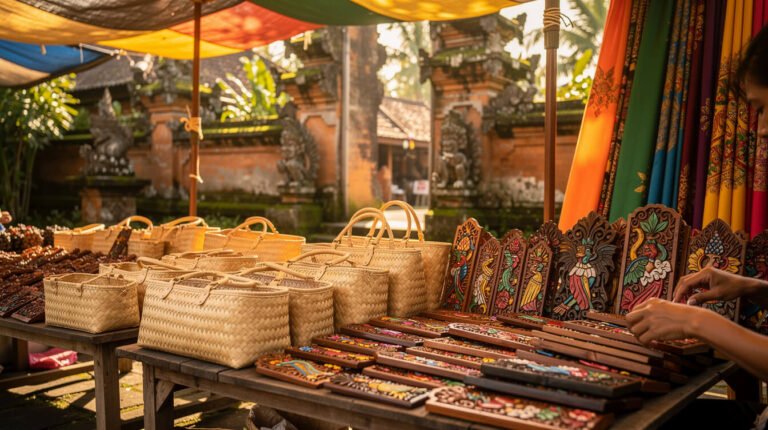
You start to see them everywhere once you know to look. The low compound wall near the market, carved with a procession of figures carrying offerings. The drainage channel cover shaped like a naga. The restaurant entrance flanked by guardian statues wrapped in checkered cloth — the poleng pattern that means balance, light and dark held together.
None of this is decorative in the way you might assume. In Balinese Hinduism, the carvings serve a purpose. They protect. They honor. They mark the boundary between the sacred and the ordinary, which in Ubud is a line so thin you cross it a dozen times on a single walk.
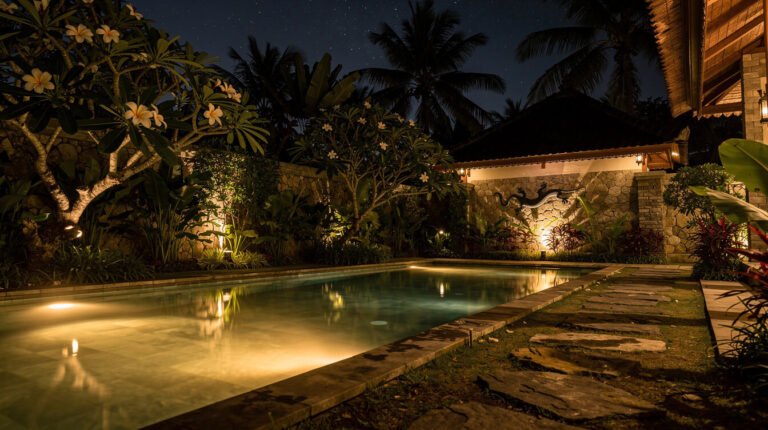
At the villa, the garden walls carry their own carvings — simpler than the temple gates, but made from the same volcanic paras stone, by hands trained in the same tradition. Run your fingers along the cool surface in the late afternoon, when the light goes amber and the stone glows warm. You are touching a language that has been spoken here for a thousand years.
The walls in Ubud do not ask you to understand them. They ask you to slow down enough to notice they are there.