Why Frangipani Falls Differently in Ubud
You notice it first on the stone path. A single white petal, five-pointed, resting where it landed sometime before dawn. Still carrying its scent — that sweet, almost honeyed warmth that does not smell like anything you have encountered outside the tropics.
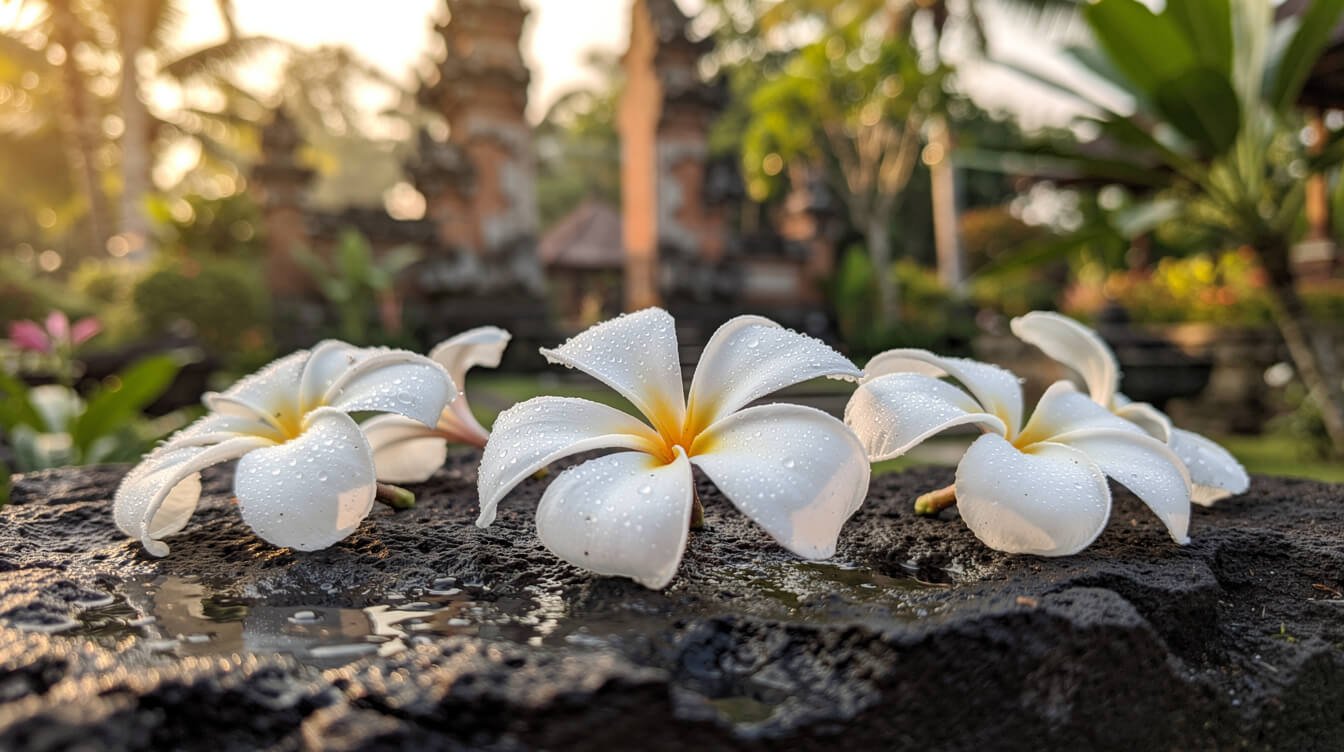
Frangipani in Ubud does not fall the way flowers fall elsewhere. There is no wind-driven scatter, no browning at the edges. The blossoms release whole, spiraling down from branches that hang over temple walls and garden walkways, landing face-up on wet volcanic stone like small offerings the tree decided to make on its own.
The Flower That Holds the Morning
By six, the gardener has already gathered a handful. Not to discard — to place. Frangipani is the backbone of the canang sari, the daily offering that appears on every doorstep, every shrine, every dashboard in Bali. The flower sits at the center, facing east, carrying a specific intention. White for Iswara. Red for Brahma. Yellow for Mahadeva. Each color holds a compass direction and a prayer. If you have ever wondered why morning offerings in Ubud smell the way they do, frangipani is most of the answer.
A Scent That Marks the Hours
What surprises most guests is how the fragrance shifts through the day. At dawn, it is faint — a whisper caught between the cooler air and the first bird calls. By mid-morning, when the sun reaches the garden wall, it opens up. Warmer. Rounder. Almost edible. By late afternoon, especially after rain, the scent saturates. You will catch it on the pool deck, drifting from a tree you had not even noticed.
At a staffed villa, the gardener knows exactly which trees produce the most fragrant blooms and when to harvest them — before the heat draws the essential oils out. It is a quiet expertise that shapes your entire morning without you realizing it.
Why It Grows Here
Frangipani thrives in Ubud’s volcanic soil and warm humidity. The trees grow slowly, sometimes for decades, their thick branches twisting into sculptural forms that frame doorways and shade courtyards. They are planted at temples not just for beauty but for meaning — in Balinese Hinduism, the flower represents the soul’s journey and the sincerity of devotion.
Walk through any village compound and you will find at least one frangipani tree old enough that nobody remembers who planted it. The branches reach over walls. The roots grip stone. The flowers keep falling, and someone keeps gathering them.
The Smallest Welcome
There is a reason the flower appears on your pillow, floats in your welcome drink, rests behind your ear when the housekeeper decides you need cheering up. Frangipani is how Ubud says you are here now, let everything else wait. It is not decoration. It is the village’s gentlest gesture of care — the same gesture that shapes every morning at a villa in Ubud, from the first offering placed at the gate to the last blossom floating in the pool at dusk.
Tomorrow morning, step outside before breakfast. Look down at the stone path. Count the fallen blossoms. Each one arrived exactly when it was ready — no sooner, no later. That is the tempo here. Ubud moves at the pace of frangipani, and once you stop rushing past it, you will understand why every ceremony in Bali begins with this flower in someone’s hands.