What Morning Offerings Smell Like in Ubud
Before the coffee. Before the roosters settle into their second round. Before the first motorbike passes on the lane outside — there is incense.
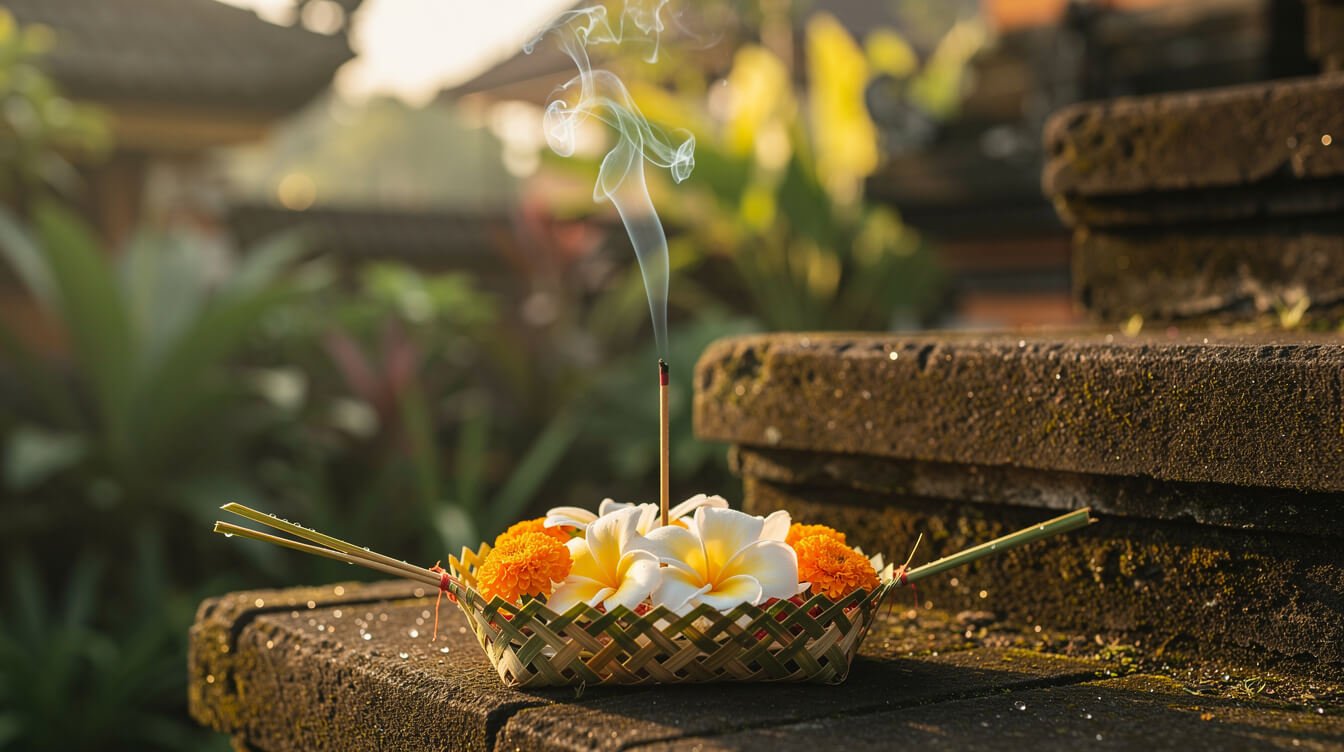
It reaches your bedroom through the open shutters. Thin, sweet, faintly woody. Not the heavy temple incense tourists encounter at Tirta Empul or Goa Gajah. This is lighter. A single stick, lit at the base of the garden shrine, sending a thread of smoke into air still cool from the night.
This is the canang sari — the daily offering that every Balinese household sets out each morning. A small tray woven from coconut palm leaf, no wider than your palm. Inside: a few grains of rice, a sliver of banana, a pinch of salt, a flower. Always a flower. White frangipani, orange marigold, red hibiscus — the colors carry meaning. White for Shiva. Red for Brahma. The arrangement is quick, practiced, unhurried. Made, our villa housekeeper, has been doing this since she was a girl.
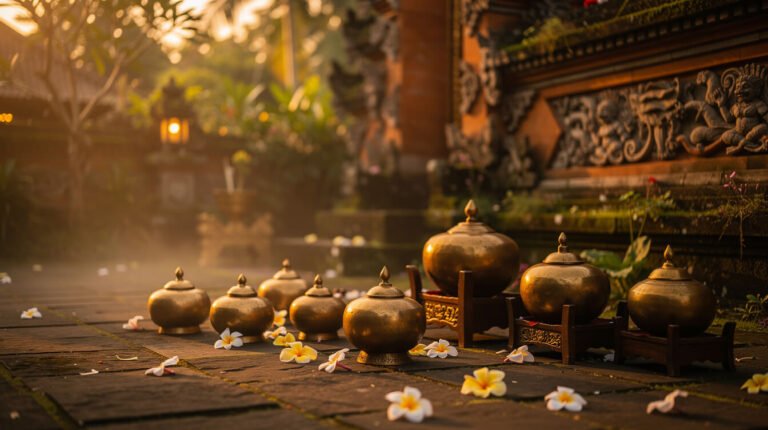
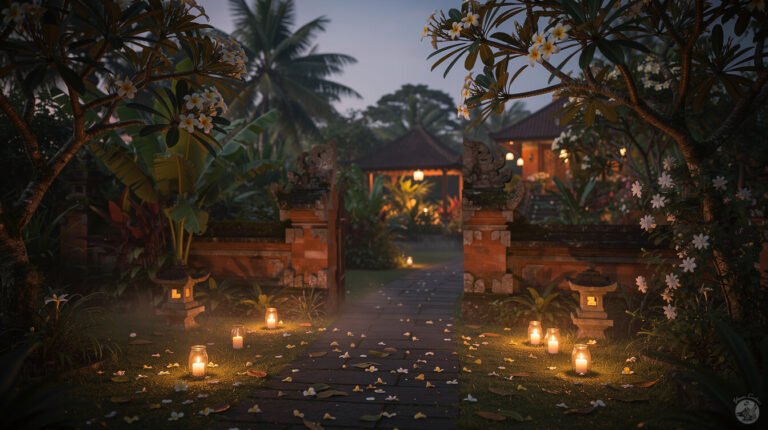
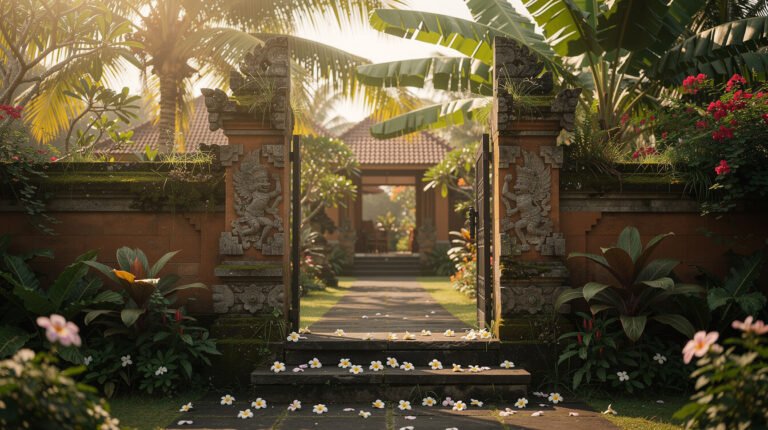
She places each offering at a threshold. One at the garden gate. One at the kitchen entrance. One beside the pool. One at the base of the stone statue near the parking area — the one guests walk past without noticing, its mossy face half-hidden by heliconia leaves. Every boundary gets a blessing. Every doorway, an acknowledgment.
The incense burns for maybe ten minutes. By the time you step out onto the terrace, only the offerings remain — small green squares with their cargo of petals, already attracting ants. You might mistake them for decoration. They are conversation. A quiet negotiation between the household and the spirits of the place, repeated every morning, every threshold, every day of the year.
Guests sometimes ask about the offerings during their first days in Bali. Why so many? Why every morning? The answer is simpler than it seems: gratitude is a daily practice here, not a seasonal one. The offering does not ask for anything. It says thank you. It says we see you. It says this space is shared.
By mid-morning the petals dry in the sun, the incense ash scatters, and the garden moves on to its louder rhythms — birdsong, the clip of Wayan’s pruning shears, water running through the stone channels. But for those first quiet minutes, the whole compound smells like intention.
You do not need to understand it to feel it. You just need to be awake early enough.