Galungan Bali: What This Sacred Festival Means and How to Experience It in Ubud
Galungan Bali is one of those experiences that changes how you understand an island. You arrive thinking Bali is beaches, rice terraces, and yoga studios — and then you wake up one morning to find every street lined with towering bamboo poles, the air heavy with incense and frangipani, the entire village dressed in white. This is Galungan, the most sacred festival in Balinese Hinduism, and if you happen to be in Ubud when it arrives, you’ll carry the memory for years.
This guide walks you through everything you need to know about Galungan in Bali — what it means, when it happens, how the days unfold, and how you can experience it respectfully as a visitor staying in Ubud.
What Is Galungan Bali? The Festival That Stops the Island
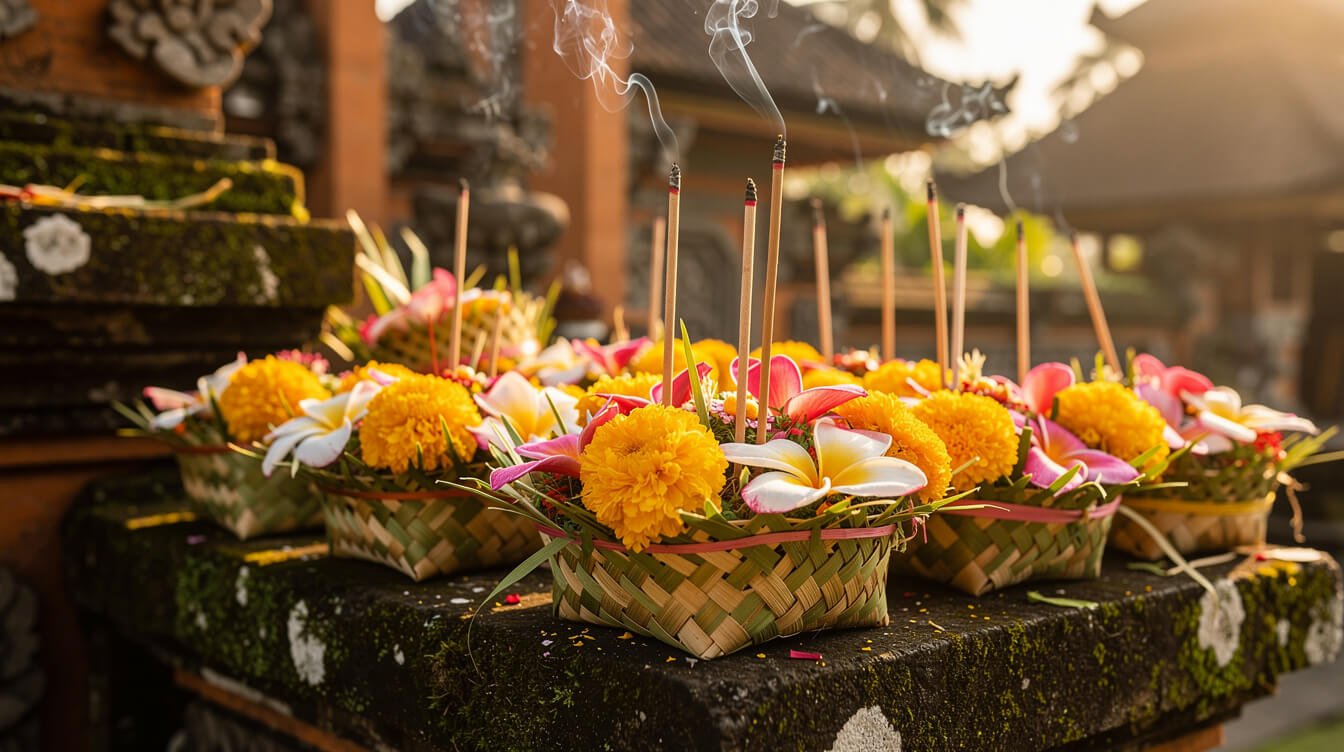
Galungan celebrates the victory of dharma (goodness, cosmic order) over adharma (chaos, disorder). In Balinese Hindu belief, this is the time when ancestral spirits descend to Earth to visit their living families — a spiritual reunion that touches every household, every temple, every roadside shrine across the island.
The mythology traces back to the story of Bhatara Indra, king of the gods, defeating the arrogant ruler Mayadenawa — a king who forbade his people from worshipping and was ultimately overthrown by divine intervention. That victory of faith over ego is what Galungan Bali commemorates, and the Balinese mark it with extraordinary devotion.
Unlike holidays you might be used to back home, Galungan isn’t a single-day event. It’s a cycle that begins days before the main ceremony and extends ten days after, culminating in Kuningan — the day ancestral spirits return to the heavenly realm. The entire period transforms daily life. Shops close. Families gather. The rhythm of the island shifts from tourist-facing commerce to something deeply personal and communal.
For visitors, this is Bali at its most authentic. The ceremonies aren’t performed for an audience. They happen because this is how Balinese families have honored their ancestors for centuries. You’re simply invited to witness it.
When Is Galungan? Understanding the Balinese Calendar
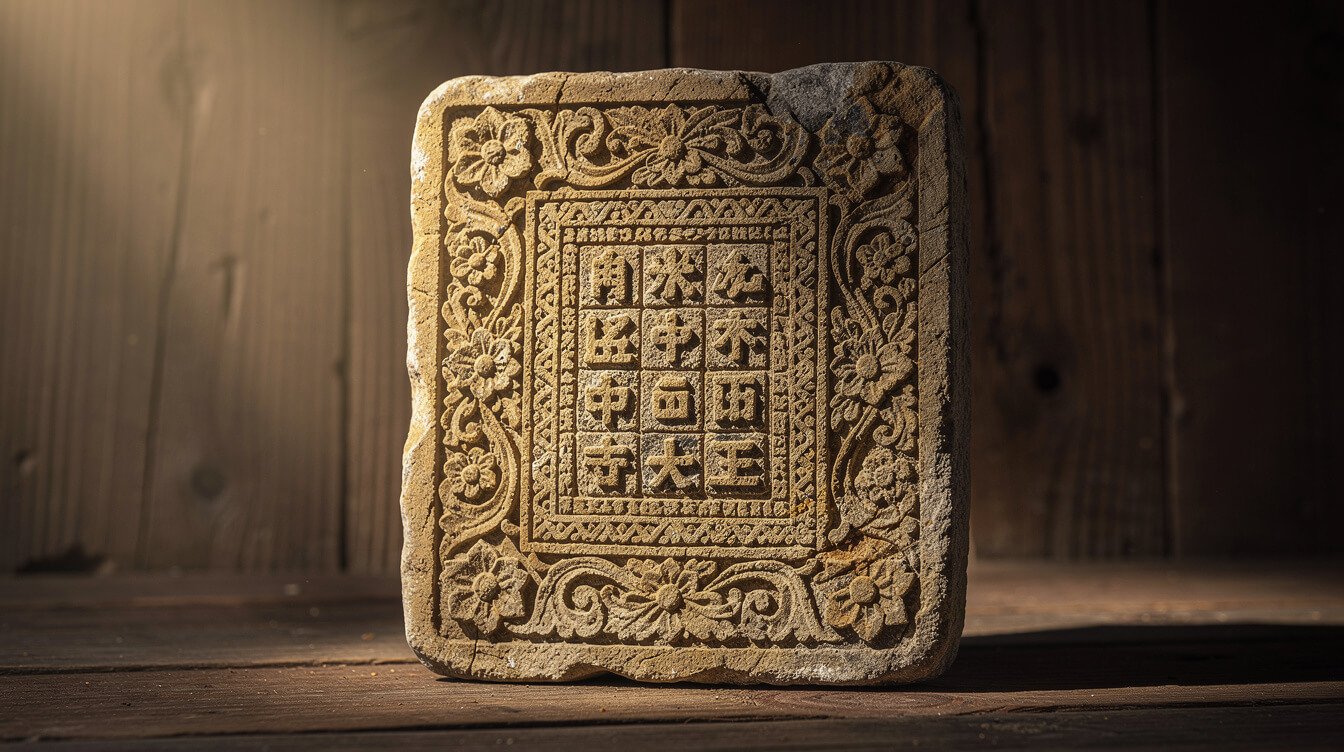
Here’s what confuses most visitors: Galungan doesn’t fall on the same date each year. It follows the Pawukon calendar — a 210-day cycle unique to Balinese Hinduism. That means Galungan Bali occurs roughly every seven months, sometimes happening twice in a single Gregorian calendar year.
Galungan always falls on a Wednesday (specifically Buda Kliwon Dungulan in the Pawukon system), and Kuningan always arrives ten days later on a Saturday.
Upcoming Galungan Dates
- 2026: June 17 – June 27 (Galungan to Kuningan)
- 2027: January 13 – January 23, and August 11 – August 21
- 2028: March 8 – March 18, and October 4 – October 14
If you’re planning your first trip to Bali, timing your visit to overlap with Galungan is one of the most rewarding things you can do. The 210-day cycle means it drifts through the year, so check the dates before you book. Schools close for about two weeks. Banks and government offices scale back. The island enters a different mode entirely.
The Days Before Galungan: How an Entire Village Prepares
Galungan doesn’t begin with a bang. It builds — slowly, beautifully — across the days leading up to the main ceremony. Each preparation day has a name and a purpose, and if you’re staying in Ubud, you’ll feel the energy shift day by day.
Sugihan Jawa and Sugihan Bali (6 and 5 Days Before)
The preparation begins with purification. Sugihan Jawa focuses on cleansing outer spaces — temples, shrines, family compounds. Sugihan Bali, the next day, turns inward: cleansing the body, mind, and spirit. You might notice temple compounds being swept and decorated, stone walls washed, moss cleared from offering platforms.
Penyekeban (3 Days Before)
Families begin ripening bananas and fruits for the elaborate offerings to come. The name literally means “to cover” — fruit is placed in containers to ripen. It’s a small, quiet act that signals the countdown has begun.
Penyajahan (2 Days Before)
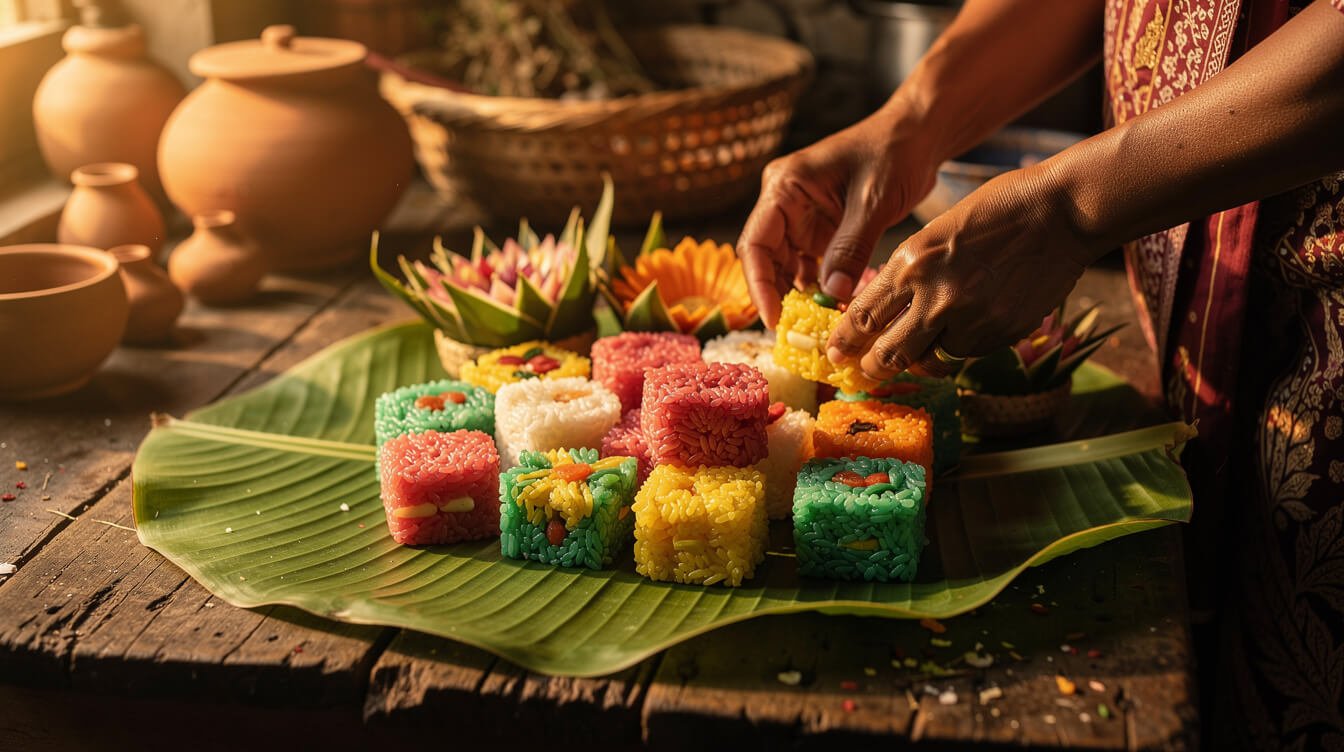
The kitchens come alive. This is the day for making jaja — traditional Balinese cakes crafted from rice flour, coconut, and palm sugar. These aren’t ordinary sweets. Each shape and color carries symbolic meaning. The colors are extraordinary: deep pinks, bright greens, rich yellows, all from natural ingredients.
Penampahan (1 Day Before)
The most intensive preparation day. Families cook lawar (a ceremonial dish of minced meat, coconut, and spices) and prepare babi guling (roast suckling pig). If you’re staying in a staffed villa in Ubud, your team may be preparing their own family offerings — and that’s a beautiful glimpse into the personal side of the festival.
Get a Free 3-Day Sample Itinerary
Planning your Ubud stay? We’ll send you a sample 3-day itinerary — temples, rice fields, restaurants, and the quiet corners most visitors miss.
What Galungan Day Looks and Feels Like in Ubud
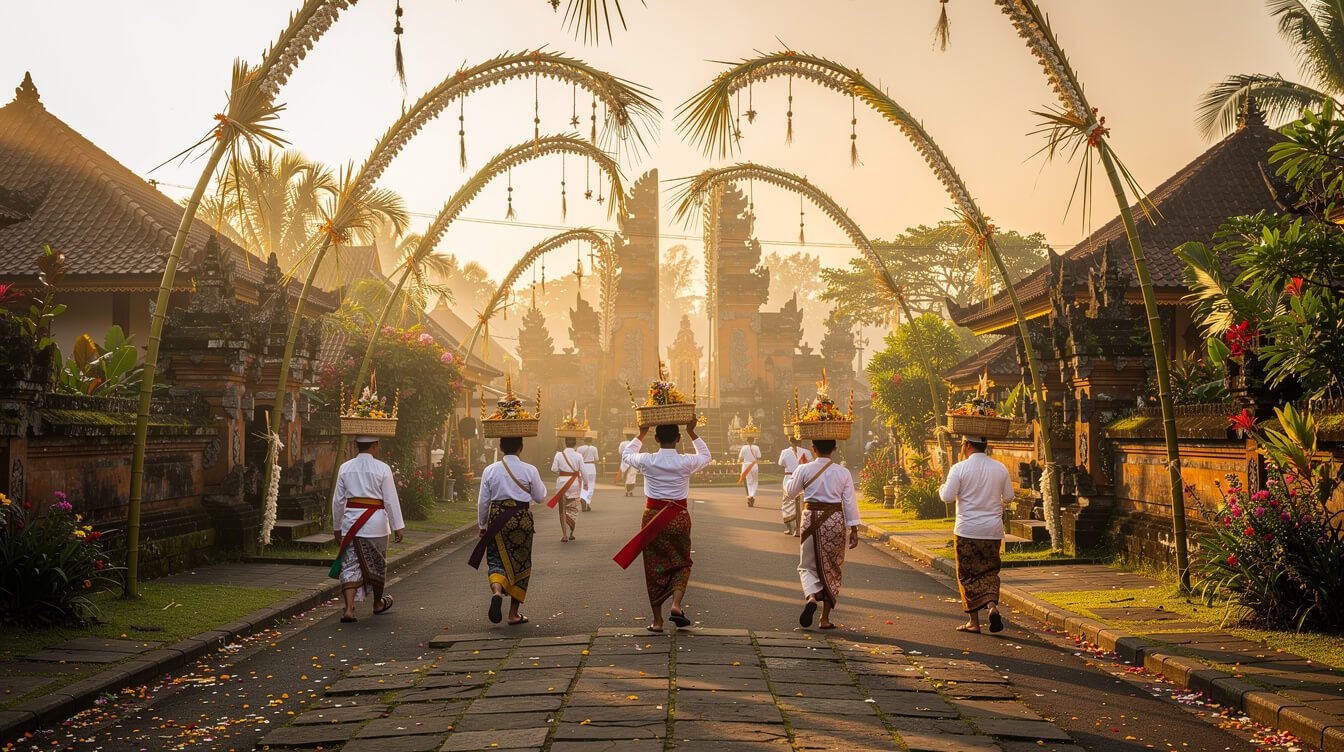
You’ll know it’s Galungan Bali before you open your eyes. The gamelan starts early — not the tourist-facing performances you might have heard at a restaurant, but the real village gamelan, carried on the morning air from the nearest temple. The incense is thicker than usual. The dogs are quieter. Something has shifted.
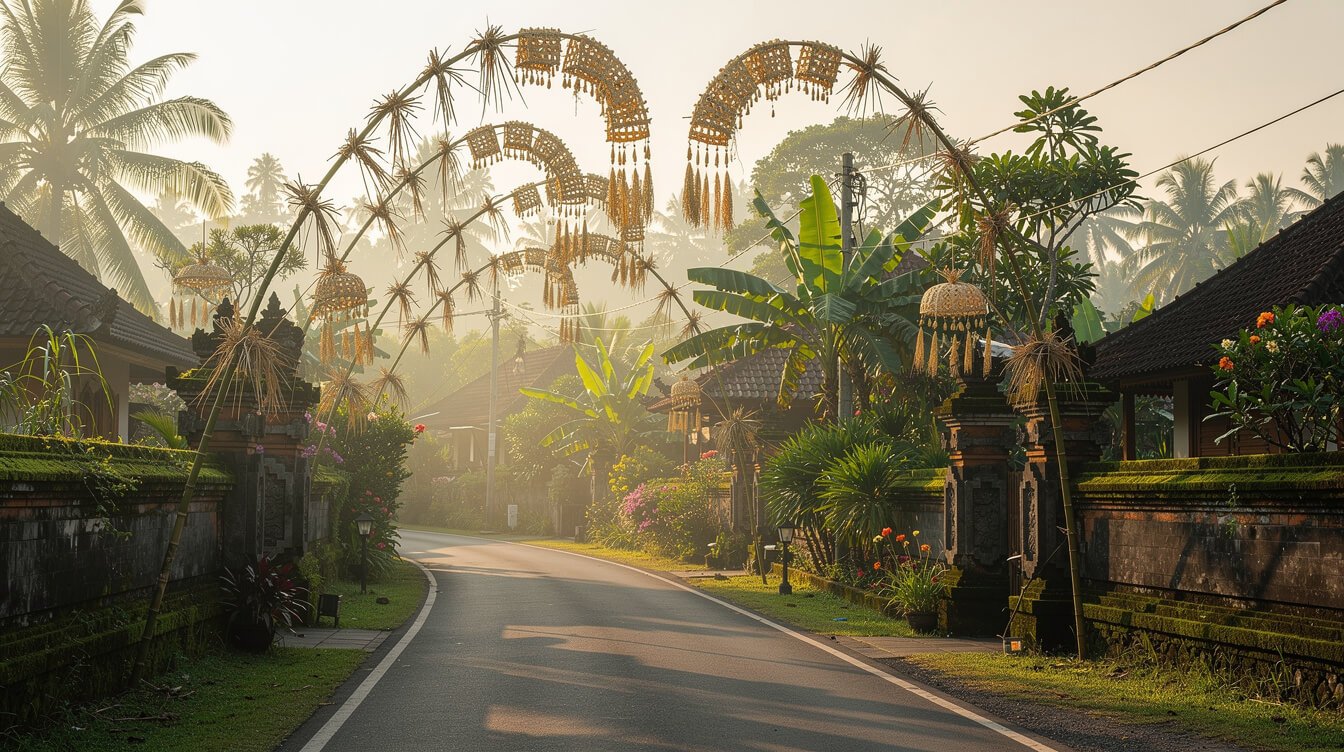
Step outside and you’ll see the penjor — tall, arching bamboo poles erected at the entrance of every home, every shop, every compound along the road. Decorated with woven coconut leaves, dried rice sheaves, fruits, flowers, and prayer flags, the penjor represent the sacred mountain Agung and the dragon Anantaboga’s tail. They’re a symbol of gratitude for the earth’s abundance. Some are simple and elegant. Others are elaborate, with LED lights and intricate woven patterns. Together, they transform ordinary village roads into cathedral-like corridors.
By mid-morning, families emerge in full ceremonial dress — women in lace kebaya blouses with colorful sashes, men in white shirts with sarongs and udeng headscarves. They carry towering offerings on their heads: pyramids of fruit, rice, flowers, and canang sari (the small palm-leaf offering trays that define daily Balinese devotion). The procession moves to the family temple first, then to the village temple, then to the larger district temples.
The Food of Galungan
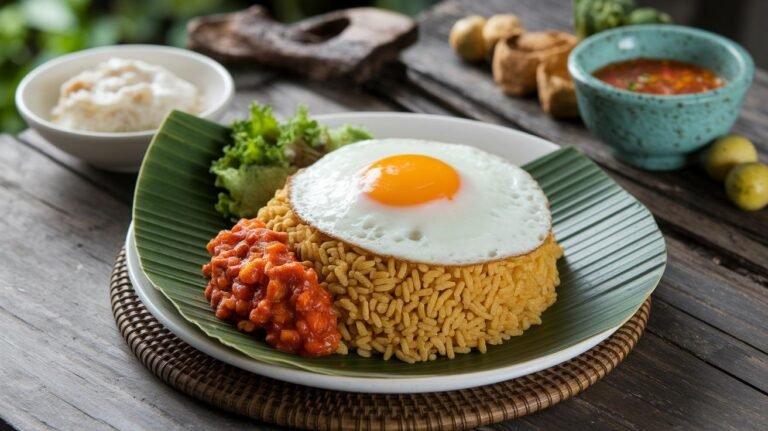
After prayers, families gather to feast. The dishes are specific to the occasion: lawar, babi guling, urab (vegetables with grated coconut), sate lilit (Balinese spiced satay), and the jaja cakes prepared days before. Everything is served on banana leaves. If you’re exploring Ubud during the festival, some local warungs and restaurants offer traditional Galungan dishes — ask around, because this food is genuinely special.
Manis Galungan (The Day After)
The day after Galungan is called Manis Galungan — “sweet Galungan.” This is the day for visiting family and friends, for reunions, for eating more food, and for the kind of slow, warm togetherness that defines Balinese community life. The ceremonial intensity gives way to relaxation. Streets are still decorated. The mood is lighter.
Kuningan: When the Ancestors Say Goodbye
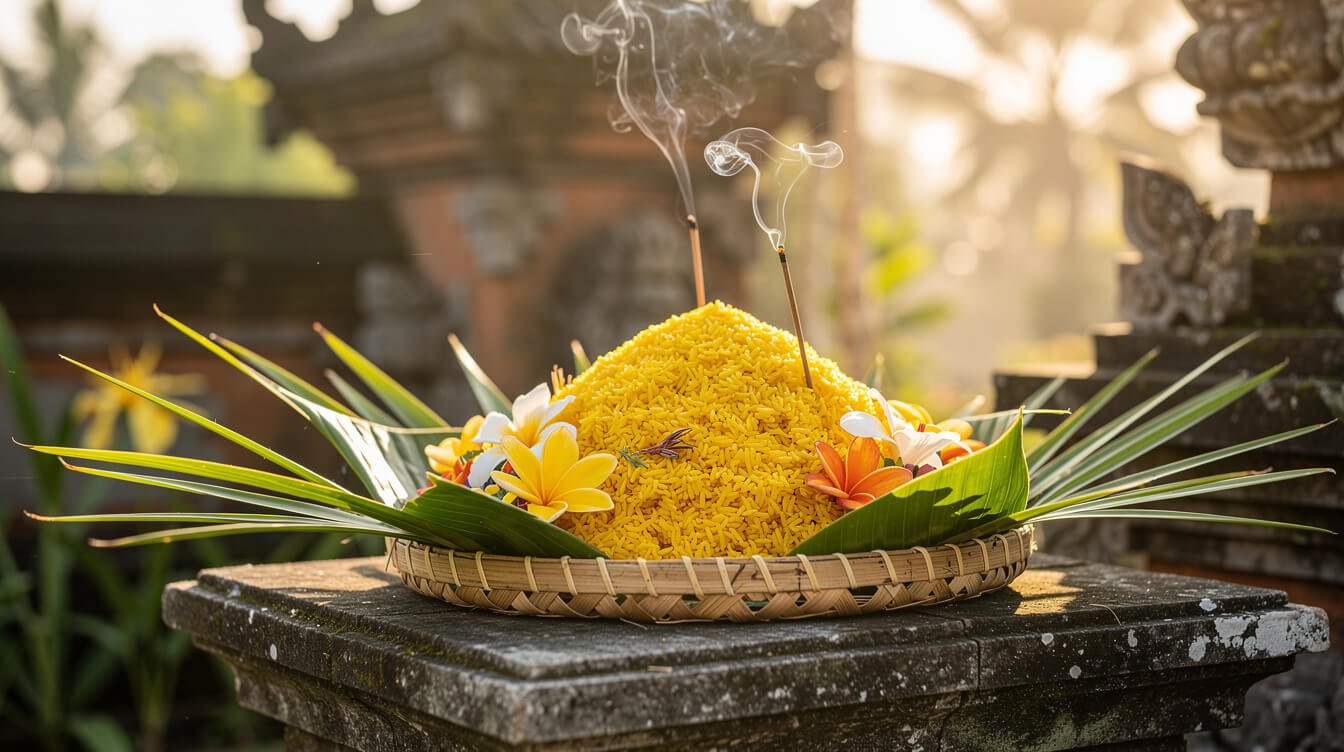
Ten days after Galungan comes Kuningan — the day ancestral spirits return to the heavenly realm. The name comes from kuning, the Indonesian word for yellow, and you’ll see why: yellow rice is the signature offering, symbolizing purity, prosperity, and spiritual farewell.
Kuningan has its own distinctive decorations. Tamiang — round, shield-like ornaments woven from coconut leaves — appear at shrines and temple gates, representing protection and spiritual closure. The morning prayers conclude before noon, because tradition holds that the ancestors depart at midday.
Where Galungan is about welcoming and celebration, Kuningan carries a quieter, more reflective energy. Families visit temples one last time, offer prayers of gratitude, and release their ancestors with blessings. By afternoon, the island begins its transition back to everyday rhythm — though the penjor stay standing for weeks, slowly drying in the tropical sun as a reminder of what just happened.
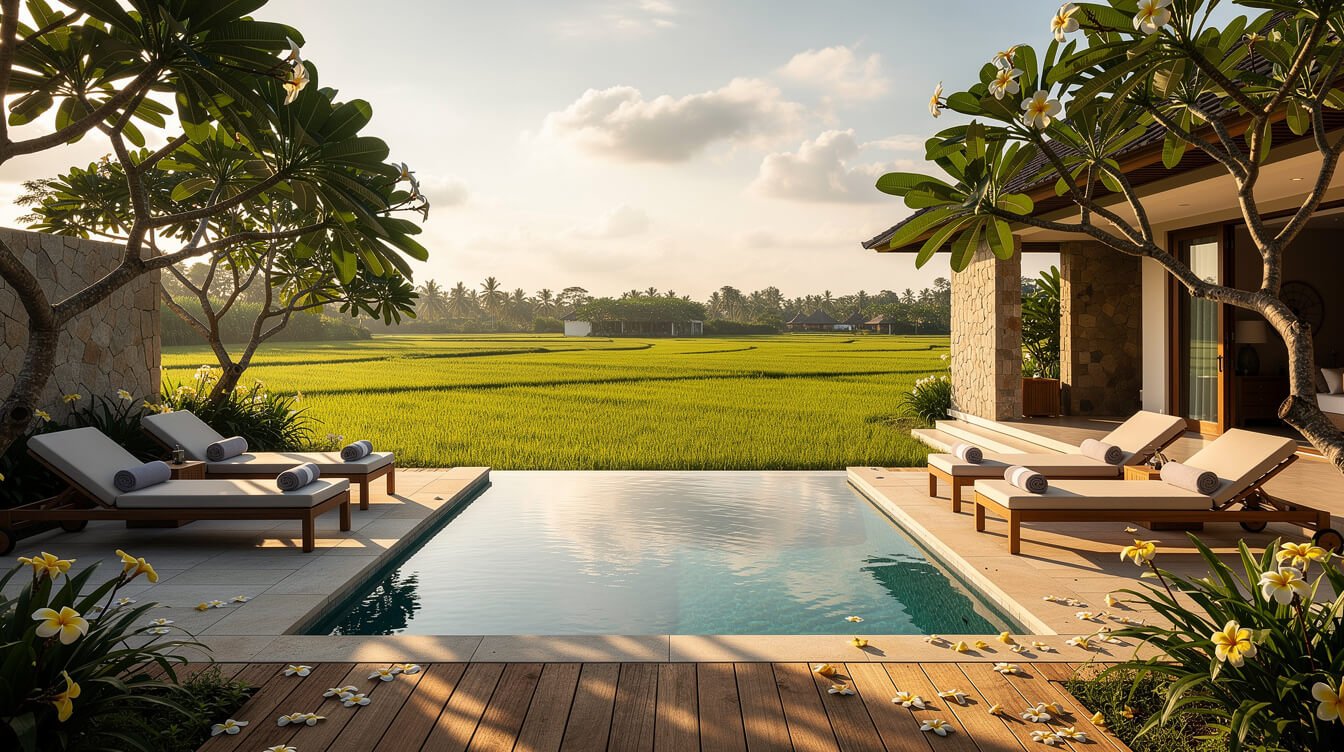
Experience Galungan From Your Own Villa
A full-staff villa in Ubud puts you inside the village — not outside looking in. Wake to gamelan, walk to the temple with the team, taste the ceremonial dishes your chef prepared.
How to Experience Galungan Bali as a Visitor
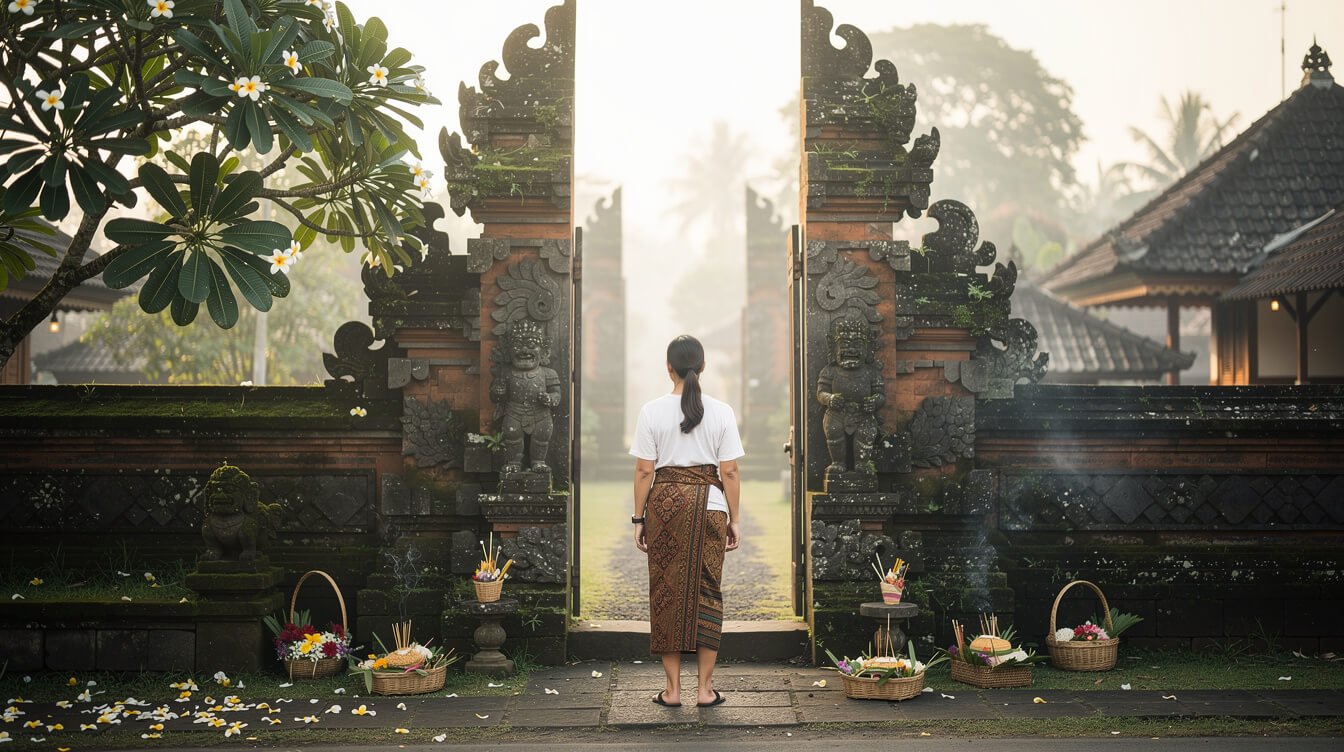
Galungan isn’t a tourist event — it’s the real spiritual life of the island. That’s exactly what makes it so meaningful to witness. Here’s how to engage respectfully and get the most from the experience.
What to Wear
If you plan to visit a temple during Galungan, dress modestly. Cover your shoulders and knees. Wear a sarong and sash — most temples have them available to borrow, but having your own shows respect. Avoid dark colors if possible; Galungan is a time of celebration, and lighter, cleaner clothing fits the occasion.
Photography and Observation
Ask before photographing people during ceremonies. Most Balinese are welcoming and often happy to share the moment, but a quiet ask goes a long way. Avoid flash photography inside temples. Step aside during processions rather than walking through them. Observe from a respectful distance unless invited closer.
Offerings on the Ground
During Galungan, canang sari offerings appear on every surface — doorsteps, sidewalks, roadside shrines, shop counters. Never step on them. Walk around them. They’re active prayers, placed with intention. This is one of the most important things to know about morning offerings in Ubud.
Practical Considerations
- Transport: Ride-sharing and taxi availability drops significantly during Galungan mornings. Plan ahead or arrange transport the night before.
- Shopping: Many locally-run shops close for the festival. Tourist-oriented businesses in central Ubud generally stay open, but don’t count on everything being available.
- ATMs and services: Most ATMs in tourist areas remain operational. Smaller money changers and family-run businesses may close.
- Restaurants: Fine-dining spots and tourist restaurants typically operate normally. Local warungs may close or offer limited menus.
Why Ubud Is the Best Place to Experience Galungan Bali
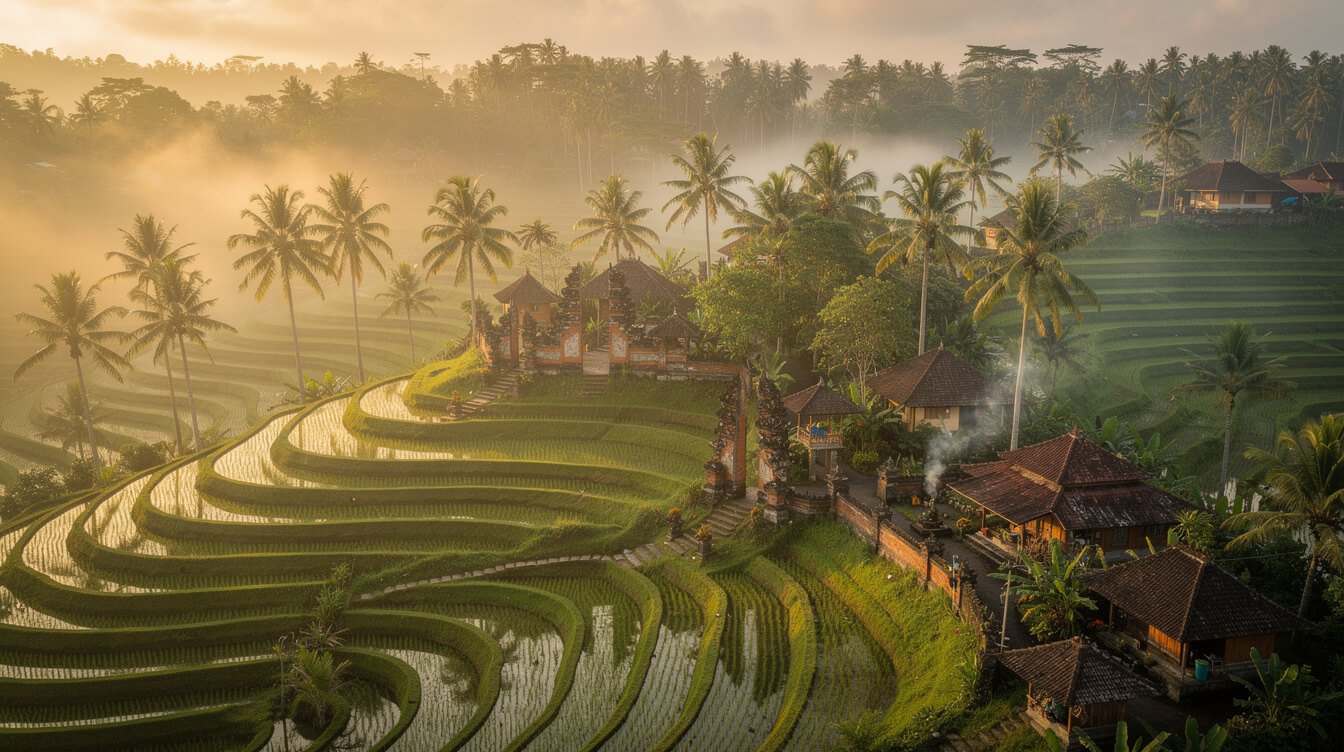
You can experience Galungan anywhere on the island, but Ubud offers something the beach towns and resort areas don’t: proximity to real village life.
In Seminyak or Canggu, Galungan is present but muted — the tourist infrastructure keeps running, and the ceremonies happen in the background. In Ubud, the ceremonies are the foreground. The village temples sit alongside the cafes. The processions walk past your morning coffee. The gamelan reaches your bedroom window at dawn.
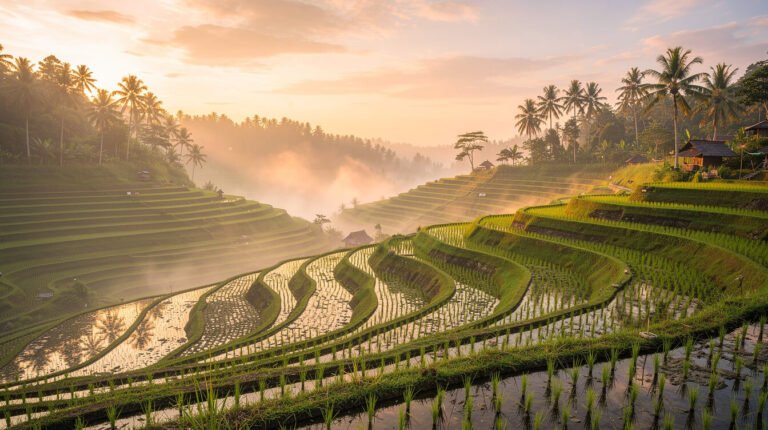
Ubud’s position in the cultural heartland of Bali — surrounded by rice terraces, ancient temples like the Agung Rai Museum complex, and traditional craft villages — means the Galungan experience here is immersive in a way that can’t be replicated in more commercial areas. The decorations are more elaborate. The community participation is deeper. The atmosphere is unmistakably genuine.
Staying in a private villa with staff who are part of the local community connects you even further. Your chef might invite you to taste the ceremonial lawar. Your gardener might explain the symbolism of the penjor he erected at his family compound. These aren’t curated experiences — they’re the natural result of being embedded in a village that takes its traditions seriously.
Galungan Bali is the island at its most honest. The ceremonies weren’t designed for visitors. The offerings weren’t arranged for photographs. The prayers weren’t rehearsed for an audience. Everything you witness during these days is real, and being present for it — respectfully, quietly, with open eyes — is one of the most extraordinary things you can do in Bali.

Stay Close to Ubud
Join our newsletter for fresh Bali stories, Ubud seasonal guides, and the kind of travel intel that only comes from living here. No spam — just warmth from Ubud.