The Hour Everything Turns Gold
Golden hour in Ubud doesn’t announce itself. There’s no switch, no fanfare. Somewhere around four-thirty, the air just — shifts. The light drops lower, edges soften, and everything you’ve been looking at all day suddenly looks different. Better. Truer.
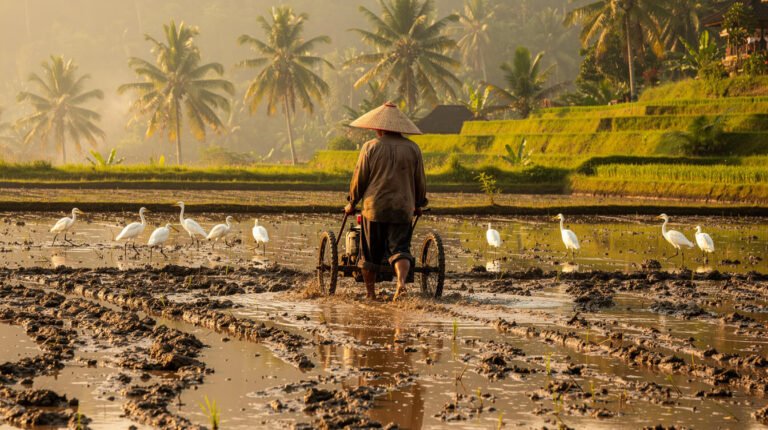
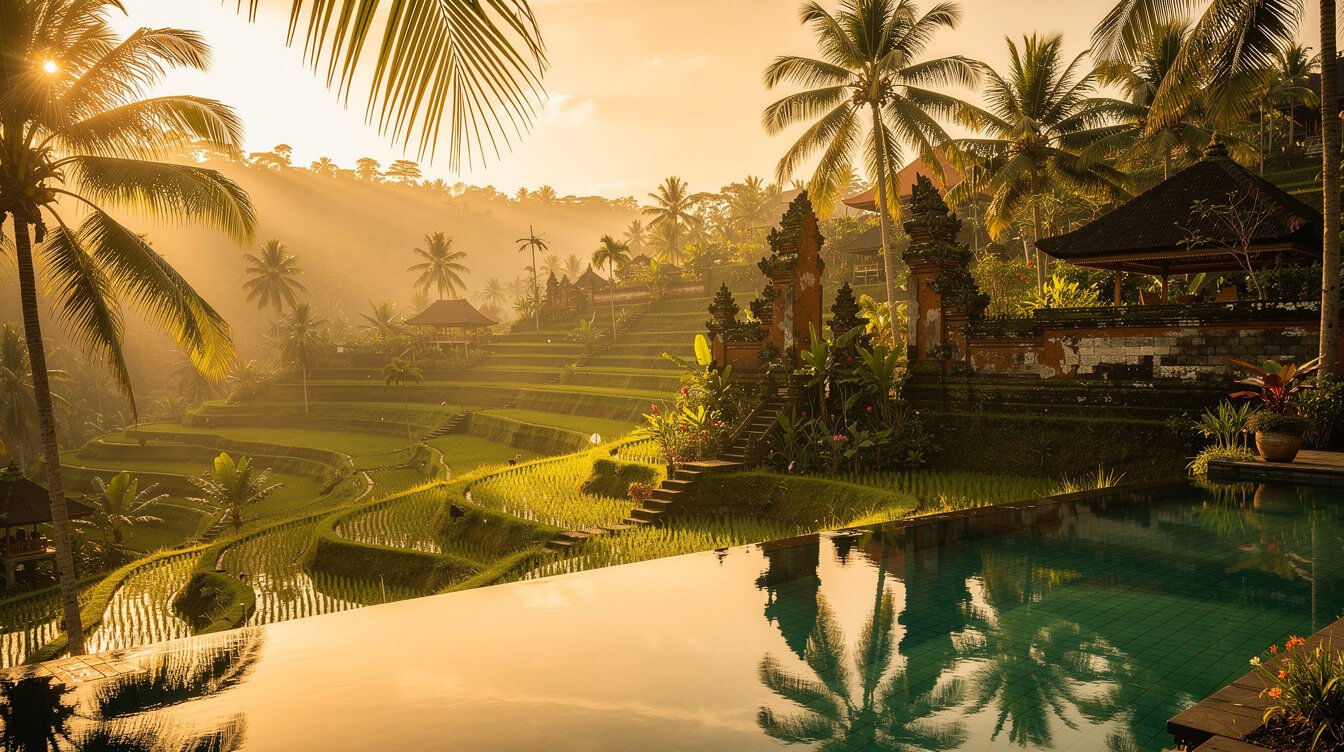
The rice terraces catch it first. What was green an hour ago turns amber, then almost copper. Individual stalks separate from the mass and glow like they’re lit from inside. The breeze carries the scent of warm earth and drying grass — a scent you’d never notice at noon.
What the Light Does to Stone
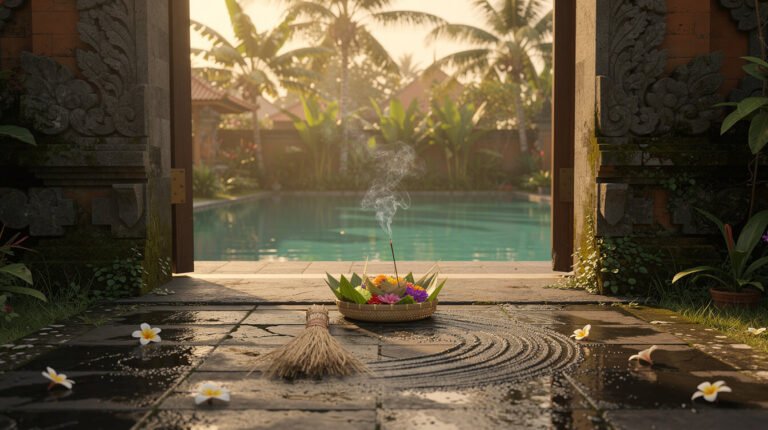
The old temple walls along every Ubud road have their best hour now. Grey volcanic tuff turns to honey. Carved faces on gateposts seem to warm, as if the stone remembers the hands that shaped it. Moss glows green-gold in the crevices. You slow down. You notice detail you walked past at noon without seeing.
The Pool Goes Still
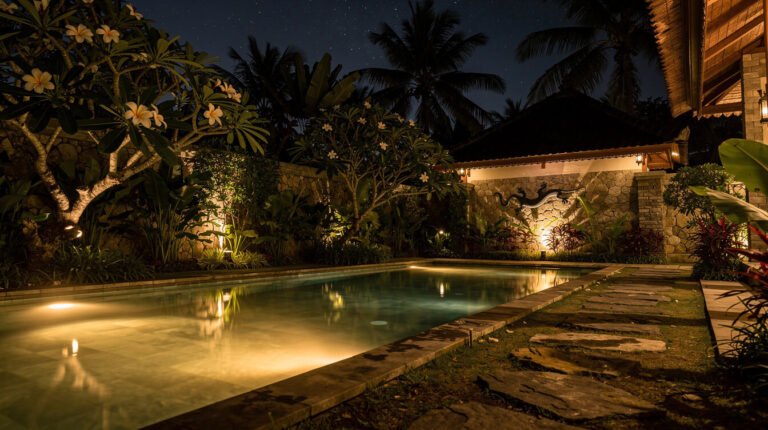
Back at the villa, the pool surface catches the low sun and holds it. If no one’s swimming — and at this hour, usually no one is — the water goes perfectly still. Sky, palm canopy, frangipani: all of it mirrored. The turquoise of midday becomes something warmer, something almost gold.
This is when the pool deck chairs earn their placement. A cold drink. A book you’ll forget to read. The air is warm but no longer pushing — it’s carrying instead, moving the scent of jasmine from the garden wall toward wherever you’re sitting.
The Sound of Things Slowing
What makes golden hour in Ubud different from golden hour anywhere else isn’t just the light. It’s what happens around it. The motorbikes thin out. Roosters stop competing. Somewhere nearby, a gamelan group begins warming up for evening rehearsal — single notes, tentative, feeling for the melody. Children’s voices from the village lane carry further than they did at lunch.
The garden staff finishes the last watering. You can hear the hose being coiled, the gate clicking shut. Everything contracts gently toward evening.
Why It Matters
Most visitors plan their Ubud days around morning and evening — the sunrise rice terrace walk, the dinner reservation. The hour between four and five-thirty slips through unclaimed. That’s the hour you should protect. Put nothing in it. Let the light do its work. Let yourself be the one who noticed.
Tomorrow, the golden hour will come again. It always does. But it won’t look quite the same — the clouds shift, the terraces change, the angle drops a fraction lower each day. This particular hour of gold is today’s. It belongs to whoever is paying attention.