The Warmth of Old Stone
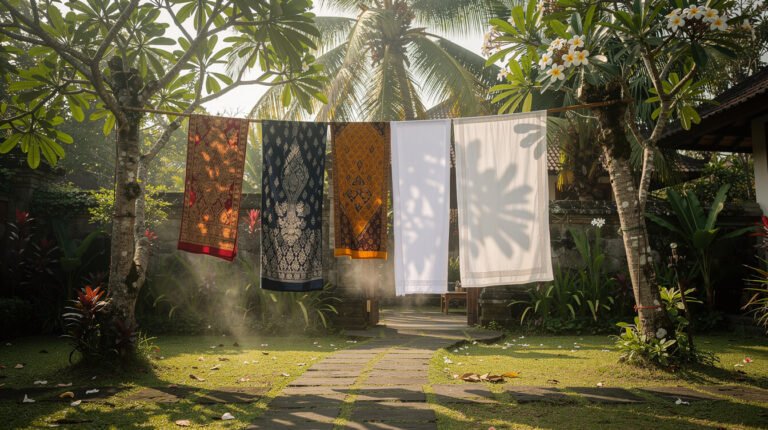
You notice it first with your feet. The stone path from the gate to the front door — smooth, warm, slightly uneven. Volcanic paras sandstone, the colour of wet earth after an afternoon downpour. Someone carved it decades ago. Someone else has walked it every morning since.
In Ubud, stone is not decoration. It is biography.
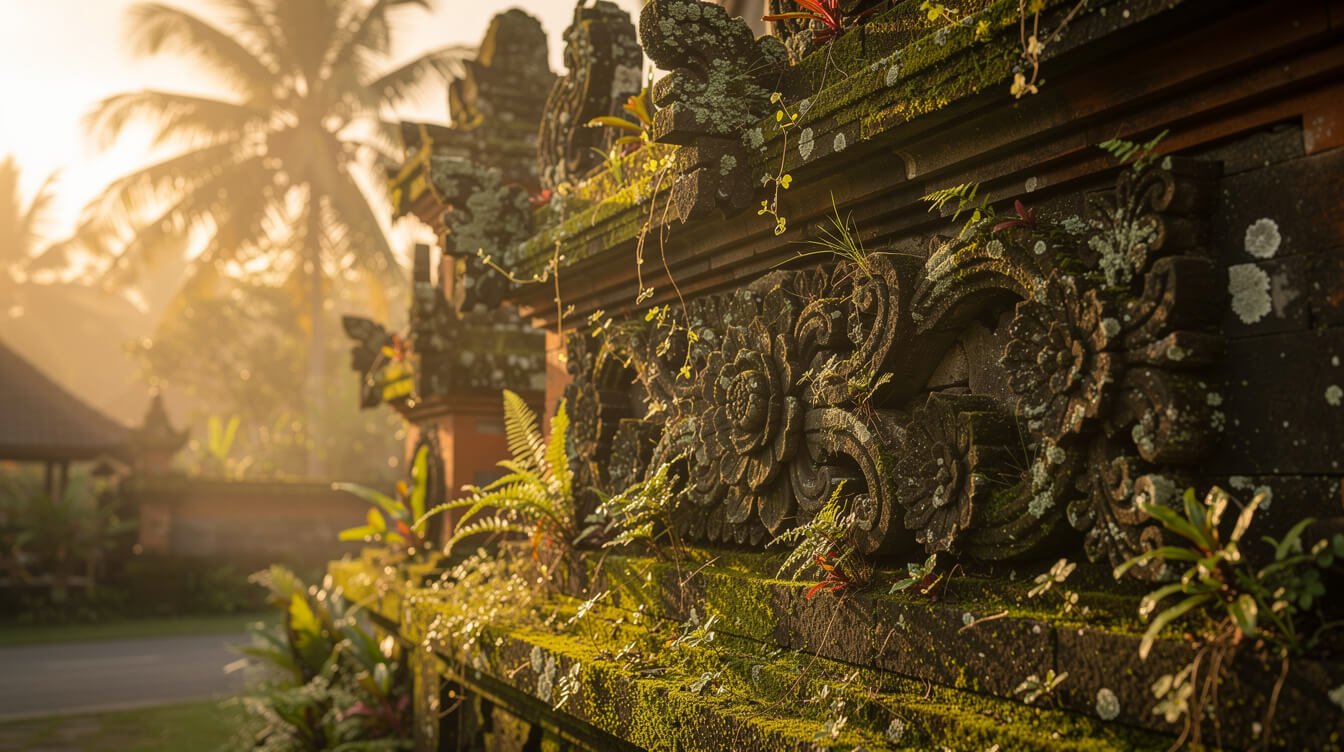
Every compound wall tells a story in relief — leaf scrolls, guardian faces, lotus blossoms pressed into soft grey rock by hands that understood how sunlight finds carved edges at different hours. The carvers work the paras while it’s still damp from the quarry, when it cuts like firm cheese. Exposed to air and years, it hardens. Moss fills the lines. Lichen softens the mouths of stone demons until they look less fearsome and more like old friends.
At the villa, you’ll find this everywhere. The pool deck’s stone border, worn to a polish by bare feet and splashed water. The low wall where the gardener sets his morning coffee. The threshold stone at the bedroom entrance, slightly dipped at the centre from years of crossing.
Walk the village lanes in the early morning and you pass temple gates where incense spirals upward from stone ledges, each ledge darkened by decades of ash and oil. Press your palm to the stone. It holds yesterday’s warmth. It holds the warmth from before you arrived and will hold it after you leave.
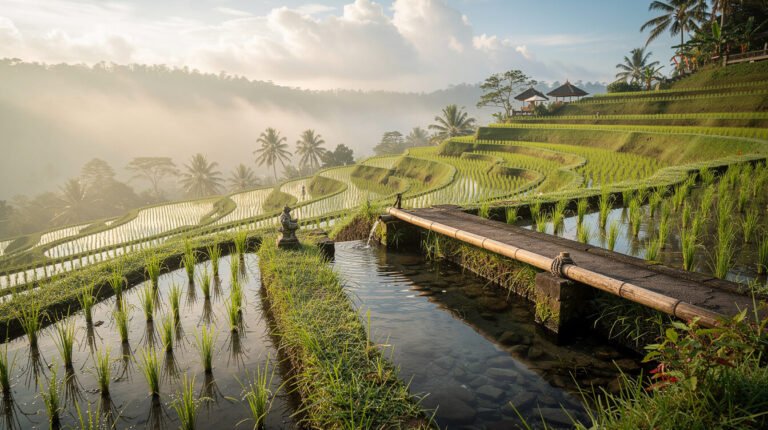
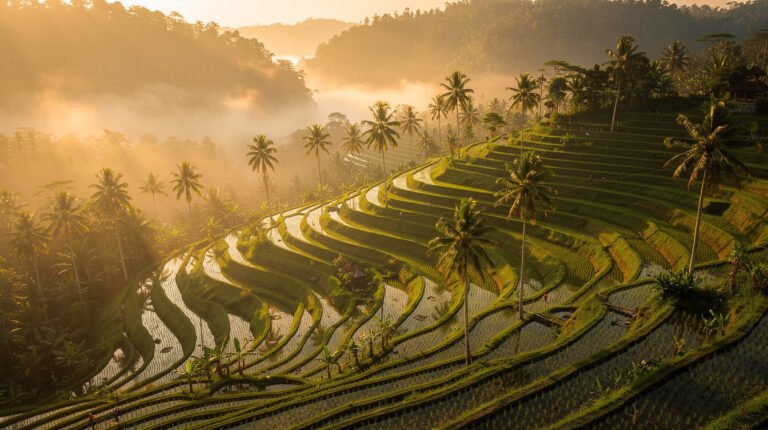
There is a particular temple wall on the path toward the rice terraces — split gate, maybe two hundred years old — where the carving has softened so thoroughly that the floral motif has merged with actual moss and frangipani roots threading through cracks. The boundary between what was carved and what grew there has dissolved. The stone invited the living world in, and the living world accepted.
This is what stays with you. Not the grand gesture, not the monument. The warm stone beneath your feet at six in the morning. The carved face at the garden corner that watches you read your book by the pool. The way an entire village has written itself into rock, and the rock has written itself back into the village.
You don’t photograph stone. You remember how it felt.