The Week the Rambutans Start to Blush
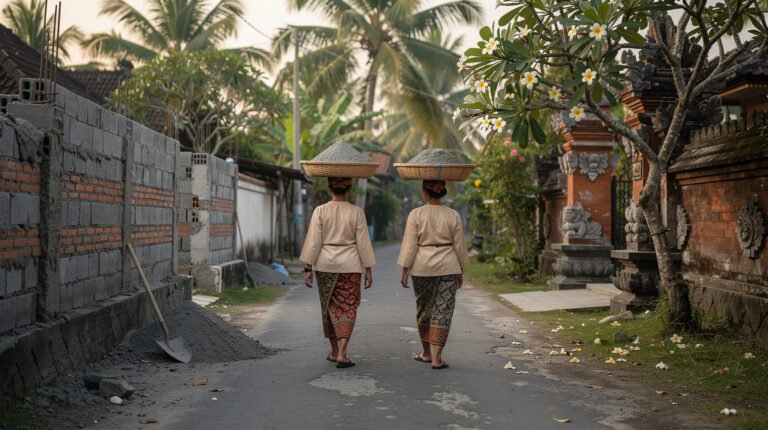
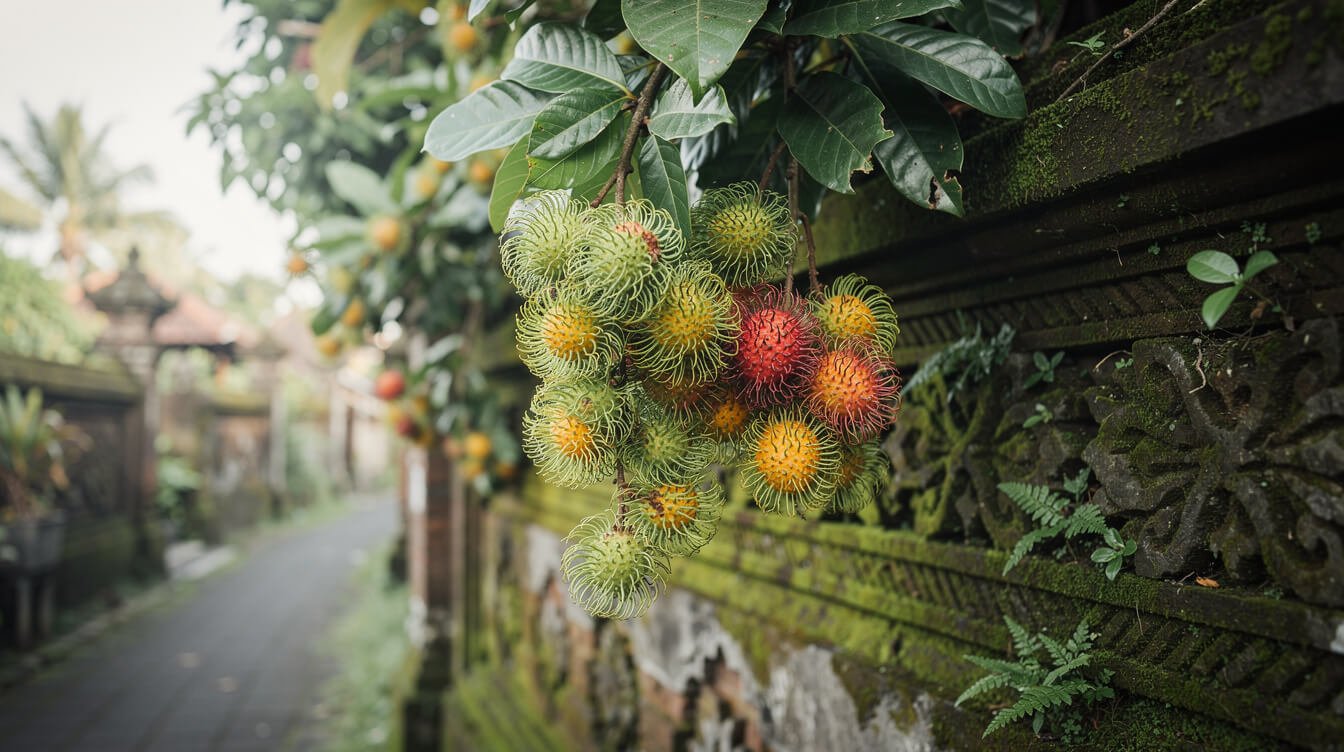
Halfway down the lane, a branch leans over a neighbor’s wall, heavy with something that looks at first like a cluster of small green sea urchins. Soft spines, all of them, the size of a hen’s egg. You have walked under it every morning this week without looking up.
Then one morning, one of them has gone yellow. By the end of the week a few are orange, and one cluster near the top has turned a deep, unmistakable red.
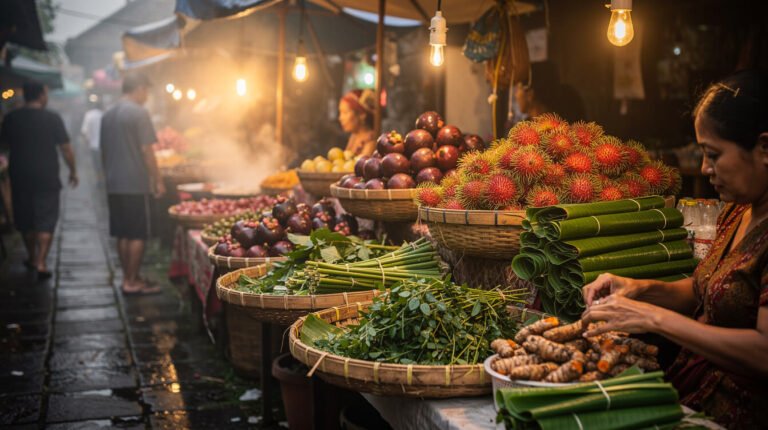
This is the rambutan tree, and it is starting to blush. The name comes from rambut, the Indonesian word for hair, and once you know it you cannot unsee it. The fruit really does look like it needs a haircut.
Get a Free 3-Day Sample Itinerary
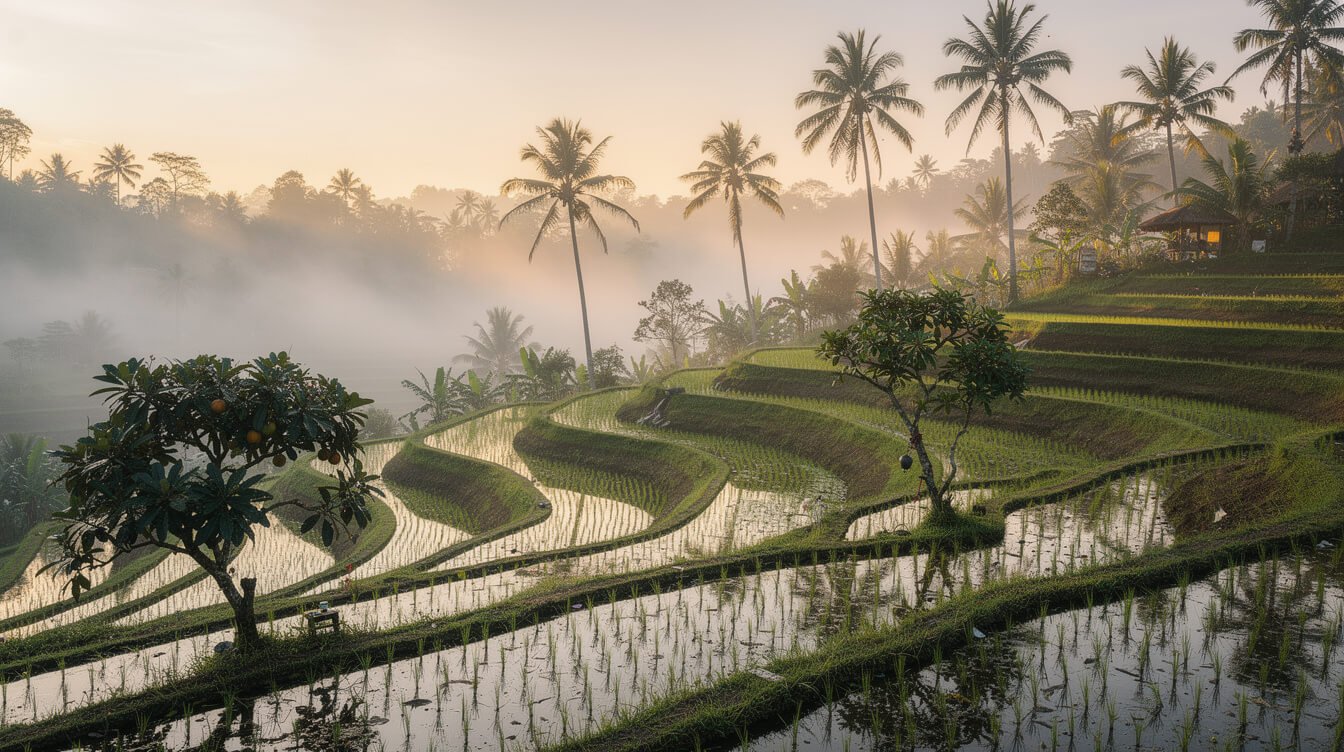
A walk down the lane, a long lunch, the rice fields in the last light of the day. We will send you a three-day Ubud rhythm built around the moments most visitors walk straight past.
In Ubud, the rambutans usually ripen with the rains. The first red ones show up in the lanes and at the market stalls toward the end of the year, and for a few weeks around December and January they seem to be everywhere. Tied in bunches on the back of motorbikes. Heaped at the roadside. Handed over a wall by a neighbor who has more than one family could eat. It is the season that follows the week the lane smells of mango, and it has its own small rules.
The first rule is that green is not ready. Wait for full red, or red going slightly dark at the tips of the spines. The second rule is in how you open one. Press a thumbnail into the skin around the middle, twist, and the shell splits like a little lid. Inside is a single fruit, white and almost see-through, cool from the shade, tasting somewhere between a grape and a lychee. There is a seed in the middle. Eat around it, gently, because the thin papery layer on the seed is bitter.
Book the Villa
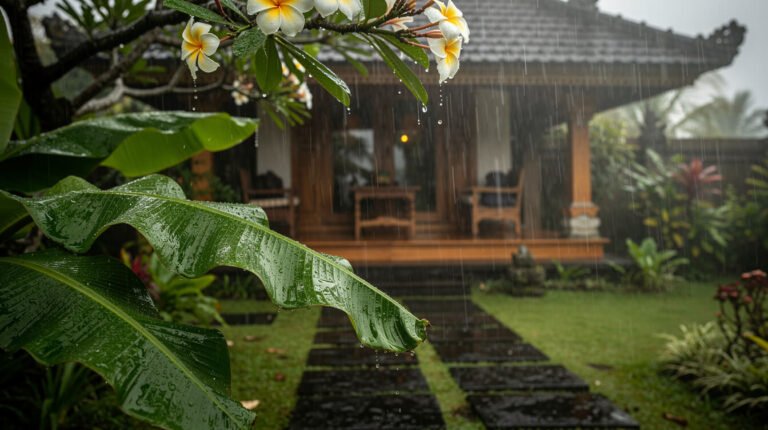
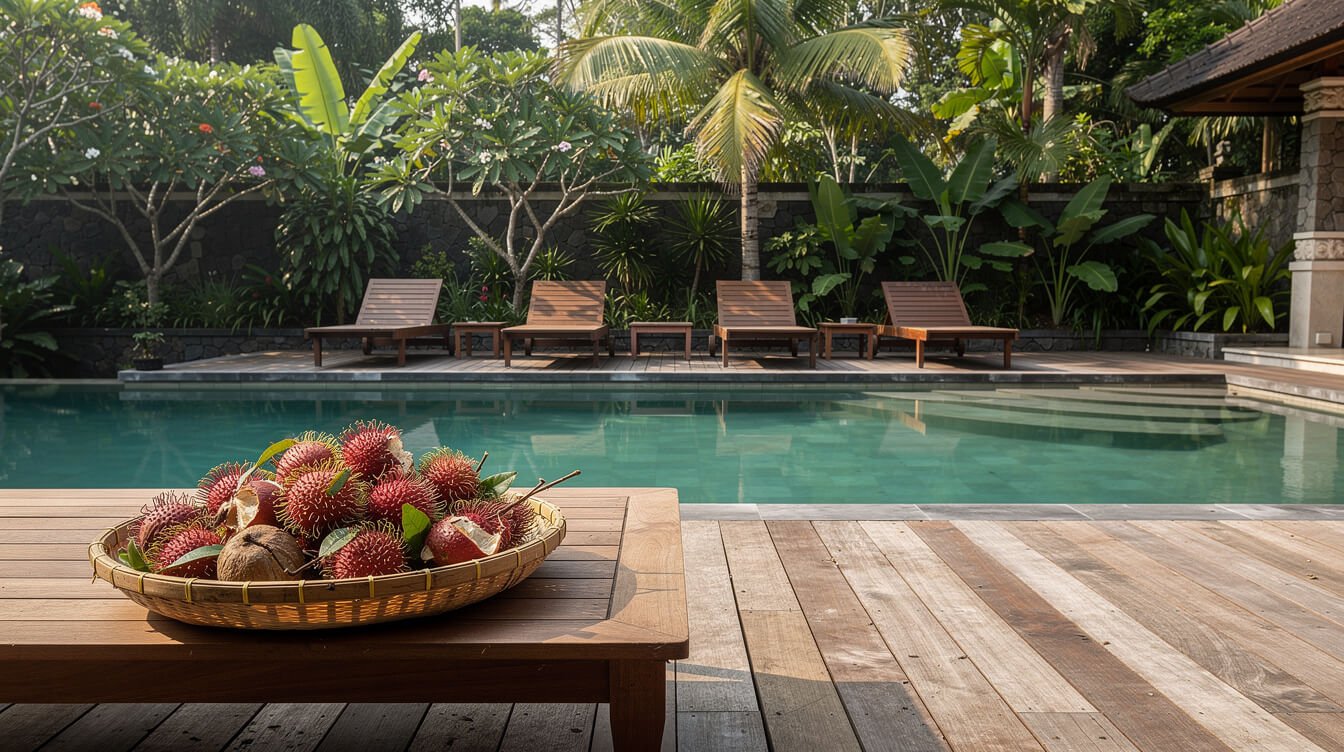
Three bedrooms, a full in-villa team, and a pool of your own and a bowl of whatever the lane is ripening this week. Check availability for your dates.
On a staffed villa Ubud stay, you will notice the bowl on the table changing with the weeks. The team buys what is ripe, not what is ordered, so the fruit plate in November is not the fruit plate in March. Our older notes on what the fruit bowl tells you and the salak, or snake fruit, are good company for this one.
And if you are only here for a short while, here is the small thing worth doing. Look up on your walk tomorrow. Find one tree that is turning. Come back in three days and see how far it has gone. It is a strange, lovely way to feel time pass on holiday, measured not in hours but in the color of a neighbor’s fruit.
By the time the rains settle in properly, that branch over the wall will be bare again, and somebody down the lane will have had a very good week.

Join Our Newsletter
Fun, new, exciting Bali news — straight from the villa, every so often.