Salak (Snake Fruit) in Bali: How to Peel, Pick and Taste Bali’s Sweetest Fruit
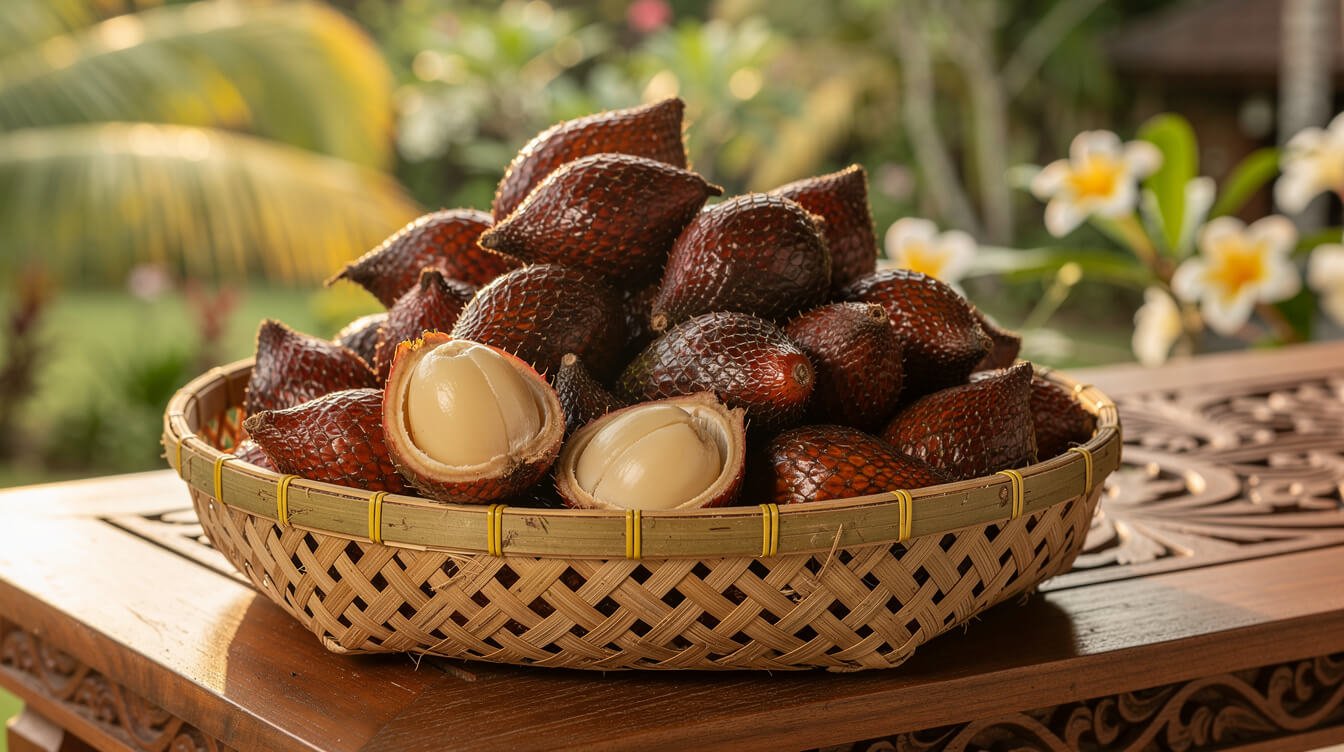
The first time you meet salak in Bali, it looks like something you shouldn’t eat. It’s a small, pear-shaped fruit wrapped in glossy reddish-brown scales, packed tightly like a snake curled up on the market table. Then someone pinches the tip, the skin cracks open like a thin shell, and inside are three ivory lobes that smell of pineapple and honey. You bite. It crunches like a crisp apple, tastes sweet and a little tart, and finishes with a faint dry pull on the tongue. By the second fruit, most people are hooked.
Most guides treat salak as a generic Indonesian curiosity: what it is, how to peel it, done. But the salak you’ll taste in Ubud has a home address. It comes from the cool hill villages of Karangasem in east Bali, where farmers have tended these spiny palms for centuries and grow more salak varieties than anywhere else on earth. This guide is for curious eaters. It covers what salak is, the Bali varieties worth seeking out, how to peel it without pricking your fingers, how to pick a ripe one at the market, when the season peaks, where it grows, what Bali makes from it, and whether it’s good for you.
What Is Salak? Bali’s Snake Fruit in One Bite
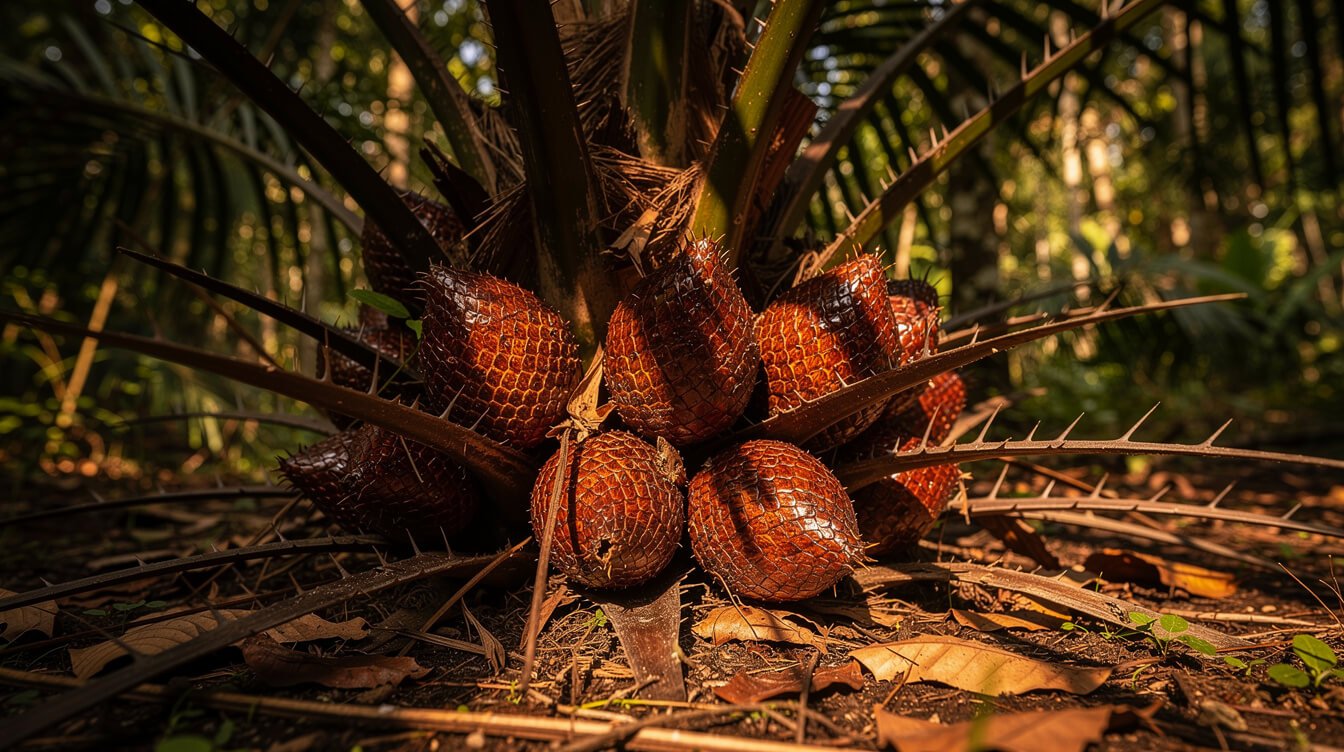
Salak is the fruit of Salacca zalacca, a short, very spiny palm native to Java and Sumatra and grown across Indonesia, including Bali, Lombok, Sulawesi and Maluku. The palm barely has a trunk. Its fronds can reach six meters long, and their stalks bristle with needle-sharp spines. The fruit grows in tight clusters right at the base of the palm, tucked among the thorns, which is one reason harvesting salak is careful, slow work.
So what does the word mean? “Salak” is simply the Indonesian (and Balinese) name for the palm and its fruit. English speakers call it snake fruit because of that skin: hundreds of small, overlapping, reddish-brown scales that look and feel remarkably like snakeskin. Run your thumb over it and you’ll feel tiny bristles at the tip of each scale. You don’t eat the skin. It peels away to reveal the flesh.
Inside, each fruit usually holds two or three lobes that look a lot like large peeled garlic cloves. Each lobe holds a hard, glossy, dark brown seed, which you don’t eat. The flesh ranges from creamy white to pale yellow depending on the variety, and the texture is the surprise: dense, crisp and juicy at once, somewhere between an apple and a water chestnut.
The flavor is harder to pin down, which is part of the fun. Many people describe salak as pineapple meets apple with a hint of jackfruit, or “honey with a squeeze of lemon.” Most varieties carry some astringency, the dry, mouth-puckering feeling you get from strong tea or an underripe persimmon. In the best Bali salak, that astringency nearly disappears, and you’re left with clean sweetness and crunch.
You’ll find salak at almost every fruit stall on the island, from the Ubud market to roadside huts on the way to the mountains. It travels well, keeps for days without a fridge, and turns up on breakfast fruit plates everywhere. If you’ve already read our love letter to Bali’s tropical fruit, salak is the one with the snakeskin jacket.
Salak Bali vs Salak Pondoh: The Varieties Worth Tasting
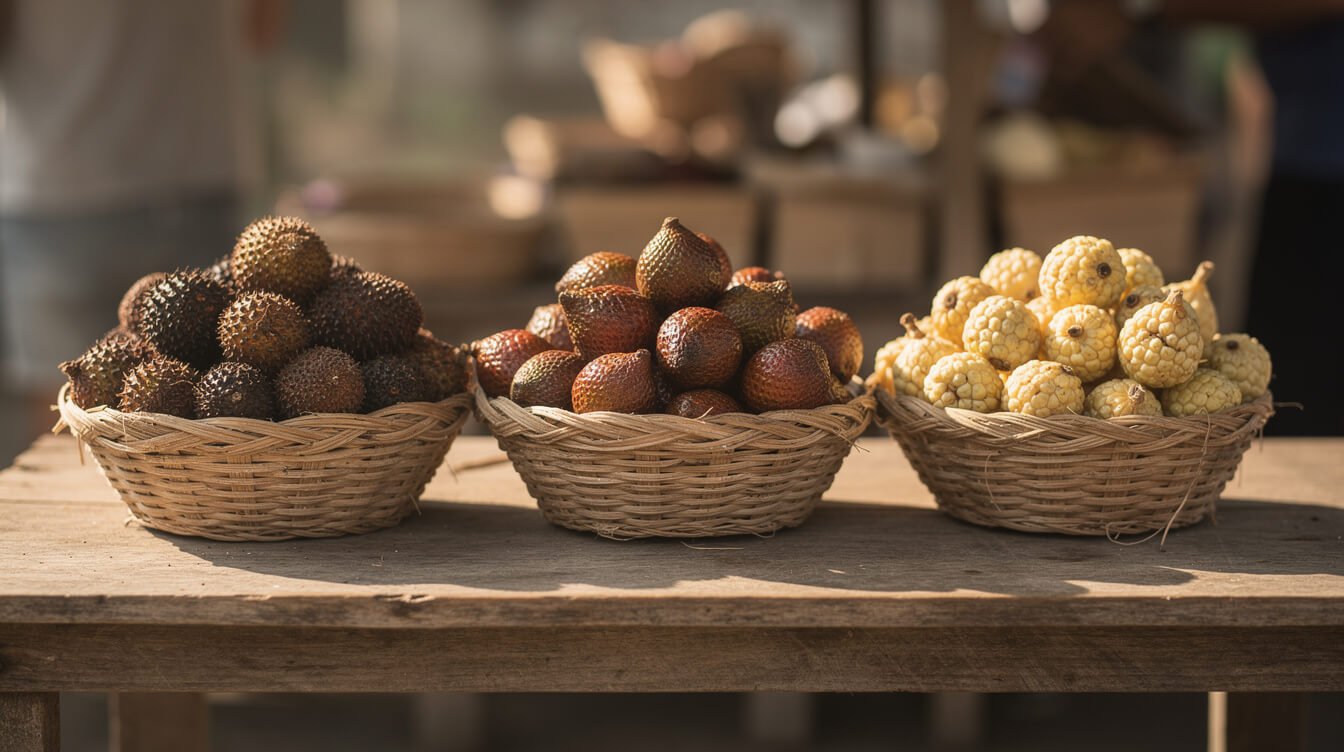
Indonesia grows at least 30 salak cultivars, but two names dominate: salak pondoh and salak Bali. Knowing the difference makes you a sharper shopper, because both turn up in Bali’s markets.
- Salak pondoh comes from Yogyakarta in Central Java. It’s sweet even before it’s fully ripe and very aromatic, with a drier, slightly crumbly texture. It’s the most widely grown salak in Indonesia.
- Salak Bali is believed to originate in Sibetan village in the highlands of Karangasem. It’s prized for its moist, juicy crunch. Botanists also find it unusual: salak Bali is the only salak that carries male and female flowers on the same plant, which sets it apart from its Javanese cousins.
Within salak Bali itself, the diversity is remarkable. The UN Food and Agriculture Organization (FAO) credits the Karangasem salak gardens with the largest number of salak varieties in the world, and local sources count fifteen or more. Each has its own color, size, sweetness and degree of astringency. These are the names you’re most likely to hear:
- Salak gula pasir (“sand sugar”): the star. It’s smaller than ordinary salak, with fine-grained, honey-sweet flesh and almost no astringency. It’s the sweetest and most expensive Bali variety. Farmers in the CNA documentary on Sibetan call it the primadona. If you only try one, make it this one.
- Salak nangka (“jackfruit salak”): round, medium-sized and blackish-brown, with milky flesh, a sweet but slightly tight finish and a faint jackfruit aroma. It’s the most widely produced variety in Karangasem, so it’s often what you’re eating when a vendor just says “salak Bali.”
- Salak getih: sweet-sour, often compared to grapefruit. It’s lovely if you like a little tang.
- Salak nanas (“pineapple salak”): noticeably sour and sharp, exactly as the name promises.
- Salak gading (“ivory salak”): pale-skinned, with a slightly starchy, astringent bite.
- Salak gondok: another low-astringency variety that’s mellow and easy to love.
At a typical Ubud market, the vendor may not label varieties at all. Just ask, “Gula pasir ada?” (“Do you have gula pasir?”). The fruit will be noticeably smaller and darker than the ordinary salak beside it, and usually priced higher. Our guide to Bali’s languages has a few more market phrases worth learning.
Get a free 3-day sample itinerary
Morning markets, rice field walks, a day trip east to the salak gardens of Karangasem, and the places our team actually loves. We will send you a free 3-day Ubud itinerary to make your own.
How to Peel and Eat Salak Without the Spines Biting Back
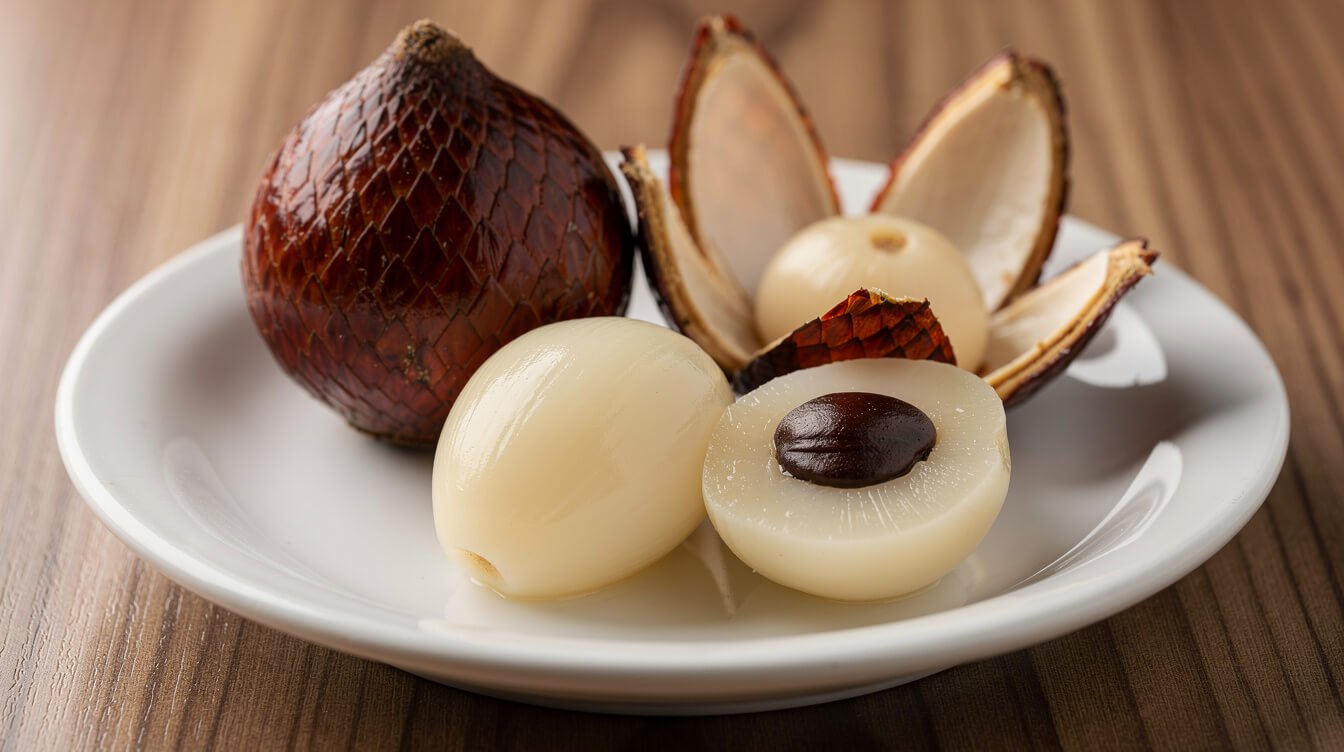
Salak looks intimidating, but once you’ve peeled one, you’ll never forget how. Here’s how to do it.
- Mind the stem end. The base where the fruit was attached to the bunch can carry a few sharp bristles and splinters from the palm. Hold the fruit by its sides, not by the stem.
- Pinch the pointed tip. Squeeze the narrow tip firmly between your thumb and forefinger until the skin cracks. If it’s stubborn, press your thumbnail into the tip or nick it gently with a knife.
- Peel it like a hard-boiled egg. Pull the skin back in strips from the cracked tip toward the base. On a ripe fruit, the scaly skin comes away cleanly in two or three pieces, like the shell of an egg.
- Separate the lobes. Inside, you’ll find two or three lobes. They pull apart easily with your fingers.
- Rub off the thin film. Each lobe is wrapped in a whisper-thin, papery membrane. Rubbing it off with your thumb softens the astringency noticeably. This is the step most first-timers miss.
- Eat around the seed. Bite the flesh away from the large, hard seed, and set the seed aside. Don’t try to crunch it.
A few tips from people who eat salak every week:
- Taste the lobes separately. The largest lobe often holds the biggest seed, and sweetness can vary slightly from lobe to lobe.
- Pair it with something rich. Salak’s tart crunch is lovely next to creamy fruit such as banana or papaya, or with a strong Bali coffee. Try it alongside a cup of kopi on a slow morning.
- Use it in salads. Sliced salak keeps its crunch and works beautifully in a fruit salad or rujak, the spicy-sweet Balinese fruit salad with palm sugar and chili.
- Keep the skin on until you eat. Peeled salak darkens and softens within hours. The skin is nature’s packaging.
Some people find salak’s skin can leave a faint brown stain on fingertips. It washes off. Keep a napkin and a small bowl for the peels nearby, and you’re set for a proper tasting session on the terrace.
How to Tell If Salak Is Ripe at the Market
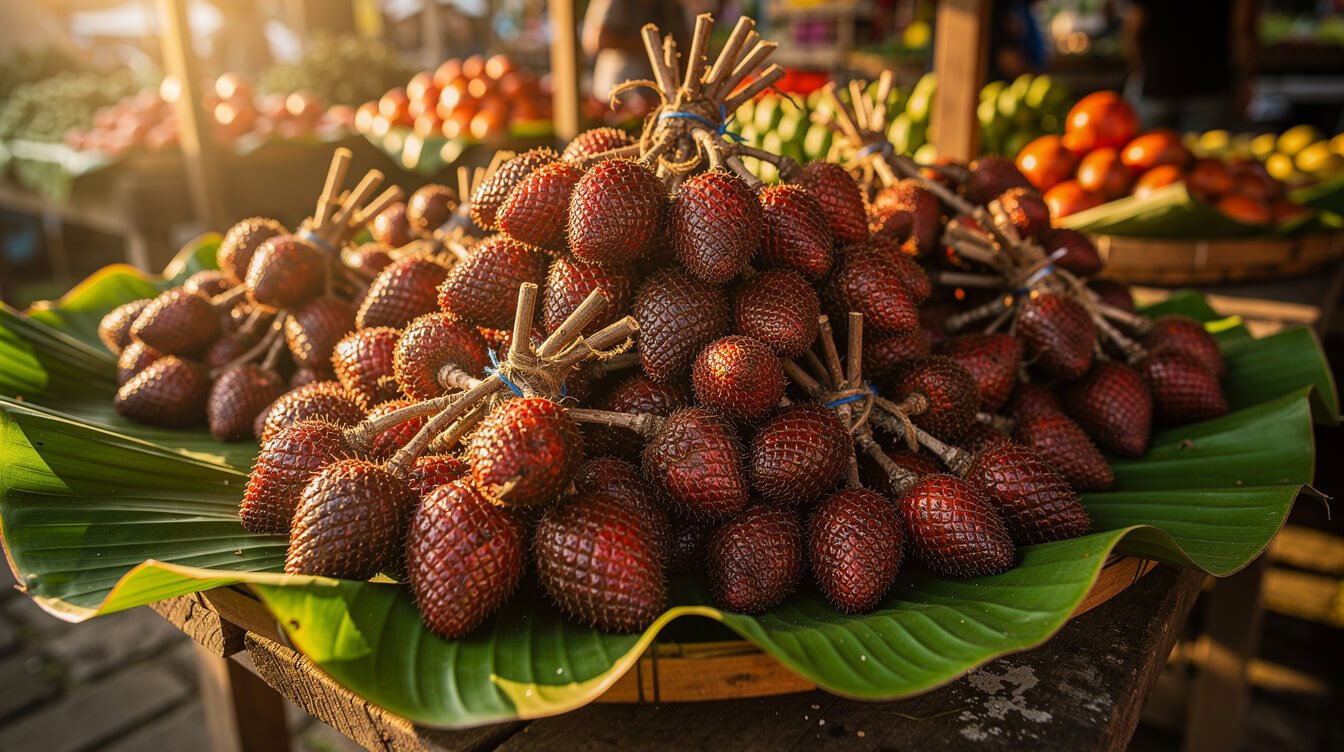
Salak doesn’t really ripen further once it’s picked, so choosing well at the market matters. Unlike a mango, you can’t judge it by color alone. Use all your senses instead.
- Look for a gloss. Ripe salak skin looks shiny and alive, with scales that are a deep, even reddish or blackish brown. Dull, dusty or grayish skin usually means the fruit is old or was picked too early.
- Check the scales. On ripe fruit, the scales sit a little more loosely, and the tip feels slightly less bristly. Very tight, sharp scales can mean an underripe fruit that will taste starchy and astringent.
- Smell the tip. Bring the pointed end to your nose. A ripe salak gives off a sweet, fragrant, pineapple-like aroma. No smell usually means underripe. A sour, fermented, wine-like smell means it’s past its best.
- Press gently. It should feel firm with a hint of give, like a ripe pear. Rock-hard fruit is underripe. A soft, sunken or squishy spot means bruising or rot inside.
- Check the base. Avoid fruit with wet, moldy or blackened bases, or skin that’s cracked open. These go off fastest.
- Look inside if you can. Vendors are usually happy to open one for you. Good flesh is creamy white to pale yellow and opaque. Brownish, translucent or watery flesh means overripe.
Salak keeps well. At room temperature, it lasts several days. In the fridge, it can last a week or more, though it loses a little fragrance. Buy a small bag, eat a couple on the spot, and you’ll know immediately whether the stall is worth returning to.
Ubud’s main morning market starts trading in the early hours, before the souvenir stalls open. It’s the best time to find fresh salak at local prices. Our village market essay captures the rhythm of those early hours, and the Ubud market guide covers what to expect. Prices vary by variety and season, and gula pasir always costs more. A friendly smile and a little bargaining go further than a hard negotiation.
When Is Salak Season in Bali?
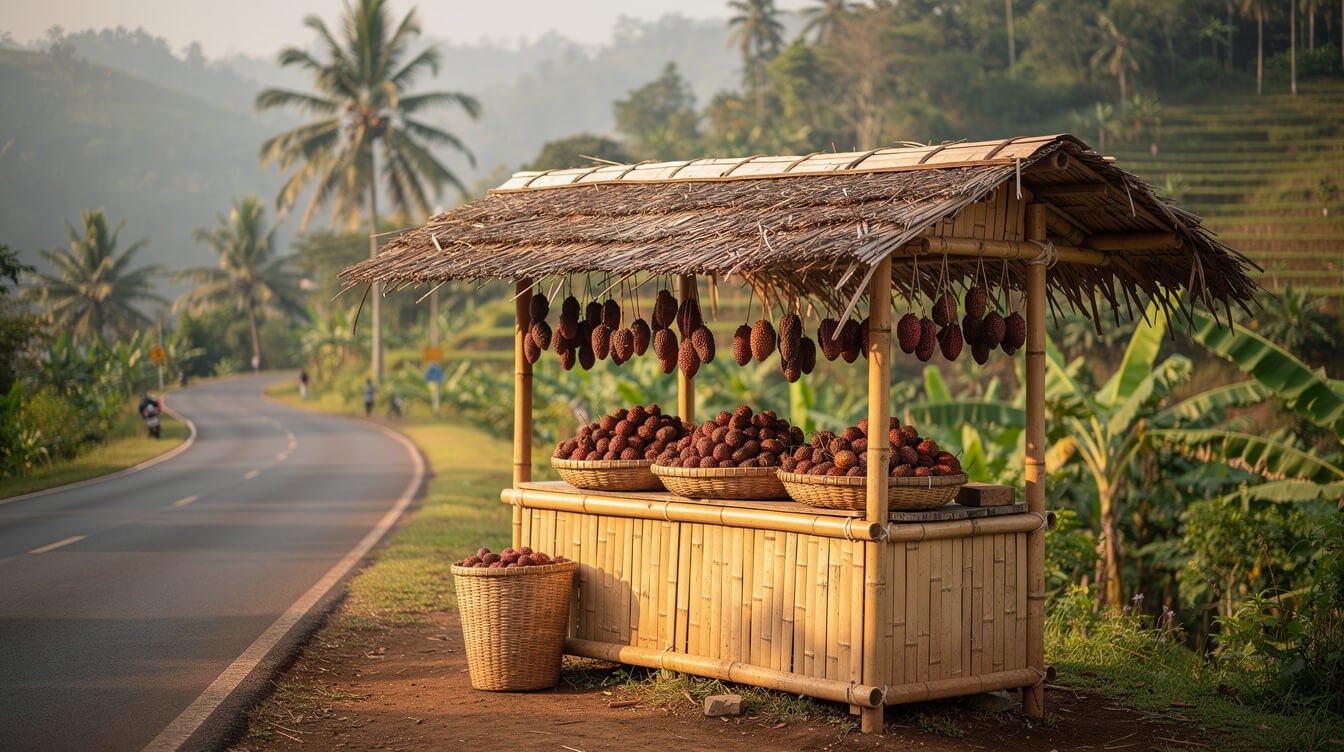
You can find salak in Bali almost year-round, but it does have a peak. According to the Bali provincial government’s tourism page for the Sibetan salak agrotourism area, the main salak harvest (panen raya) falls between December and February. That’s when the palms in Karangasem are heaviest with fruit, the roadside stalls overflow and prices drop.
Outside that window, smaller crops keep fruit flowing to the markets for much of the year, although gula pasir can be scarcer and pricier between harvests. Farmers have even experimented with irrigation to coax gula pasir into fruiting off-season on dry land, which tells you how valuable it is.
The peak harvest lines up neatly with the wet season. If you’re visiting Bali in December, January or February, you’ll find salak at its most abundant, alongside mangosteen, rambutan and durian. It’s one of the quiet pleasures of a wet-season trip. Our guides to Bali weather in January, February weather and the Bali rainy season explain why those months are greener, quieter and more rewarding than their reputation suggests.
Planning a December or early-year escape? The harvest is your excuse to drive east, buy a bag of gula pasir straight from a farmer’s stall and eat it in the car with the windows down. If you’re still choosing your dates, the best time to travel to Bali breaks the year down month by month.

Book the Villa
Three bedrooms, a private pool and a quiet tropical garden of your own, with a team who know Ubud through every season. Come during the December-to-February salak harvest, and make the terrace your fruit-tasting table. Check availability for your dates.
Sibetan: The Village Where Salak Bali Grows
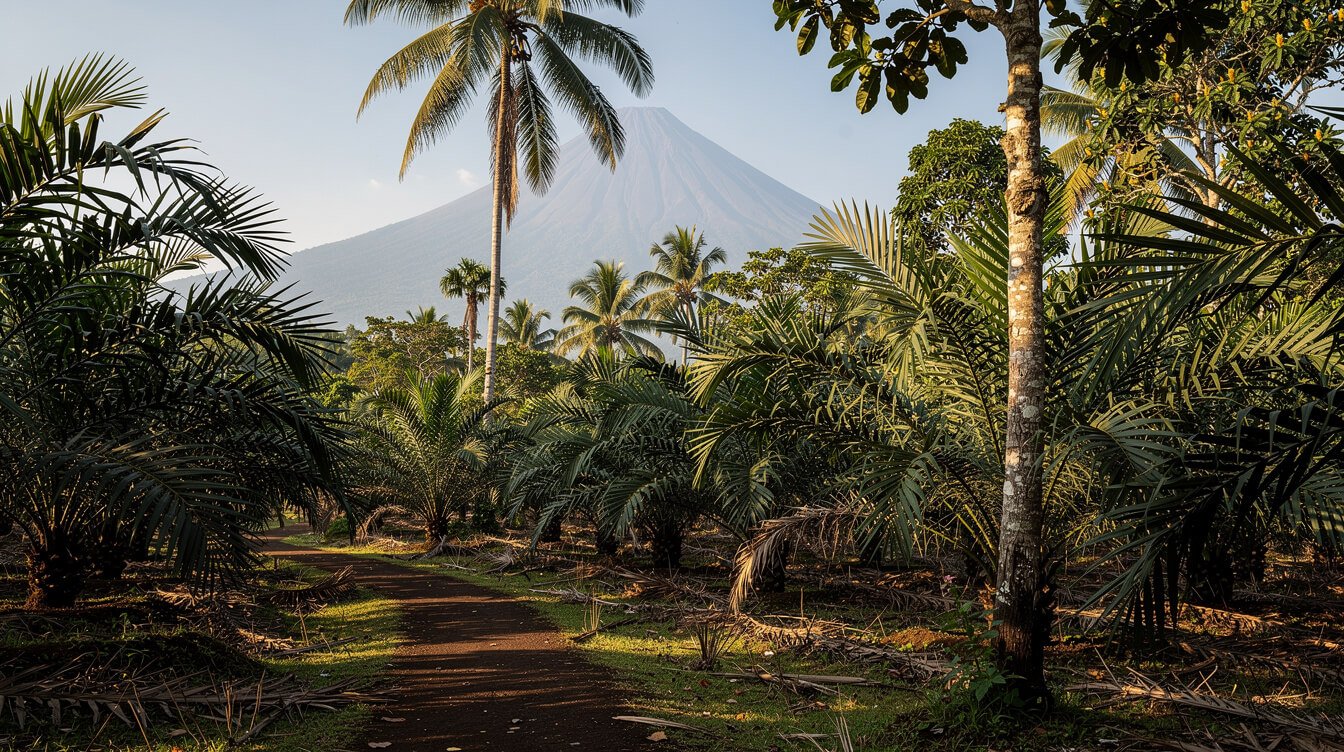
Salak Bali’s story starts in Sibetan, a village in the Bebandem district of Karangasem regency, on the slopes below Mount Agung, Bali’s highest and most sacred volcano. The village sits roughly 500 to 600 meters above sea level, in what is usually described as the driest part of the island. Local history credits a revered healer and priest, Jero Dukuh Sakti, with planting the first salak palm there in the 14th century. His legacy is still honored today.
What makes Sibetan special is how the salak is grown. Instead of plantations, farmers use a layered agroforestry system. Salak palms grow in the shade of taller mango, coconut, jackfruit and banana trees, with medicinal plants in between. The gardens are managed through subak abian, the dry-land cousin of the famous subak irrigation cooperatives that shape Bali’s rice terraces. It’s rooted in Tri Hita Karana, the Balinese philosophy of harmony between people, nature and the divine, which you can read more about in our guide to religion in Bali. Village customary law still governs the landscape. Even cutting down a jackfruit tree requires the customary village’s permission.
In September 2024, the FAO recognized the Salak Agroforestry System in Karangasem as a Globally Important Agricultural Heritage System (GIAHS), the first site in Indonesia to receive the status. The FAO highlighted how the layered gardens protect water sources, prevent erosion, store carbon and keep the island’s richest collection of salak varieties alive. CNA reports that the orchards across Sibetan and neighboring Jungutan cover nearly 1,500 hectares, and that the landscape helps supply water to around 1,000 hectares of rice fields downstream.
Visiting Sibetan from Ubud
Sibetan is an easy and rewarding day out from Ubud. Allow roughly an hour and a half each way, depending on traffic and your route. The drive east passes through the rice terraces and craft villages of Gianyar and Klungkung before climbing into the cooler hills of Karangasem.
The village runs a community-based salak agrotourism program, managed by local residents in the Dukuh Lestari tourism group. Visitors can walk through the salak gardens with a farmer, learn how the palms are pollinated and harvested, taste several varieties side by side and visit the small salak wine workshop in Banjar Dukuh. Some Bali tour operators also package salak farm visits with a tasting of salak-based products. Programs, opening times and prices change, so confirm before you set off rather than relying on old listings.
Sibetan pairs naturally with the rest of east Bali. Combine it with Pura Besakih, the island’s mother temple, or with the rice valley of Sidemen, or continue to the water palaces and coast of Karangasem. Read our guide to Ubud temples to visit first to get comfortable with temple etiquette. Wear a sarong and sash, dress modestly and carry small notes for donations. A private driver makes the day relaxed. Ask the team to help arrange one.
Salak Wine, Chips and Other Things Bali Makes from It
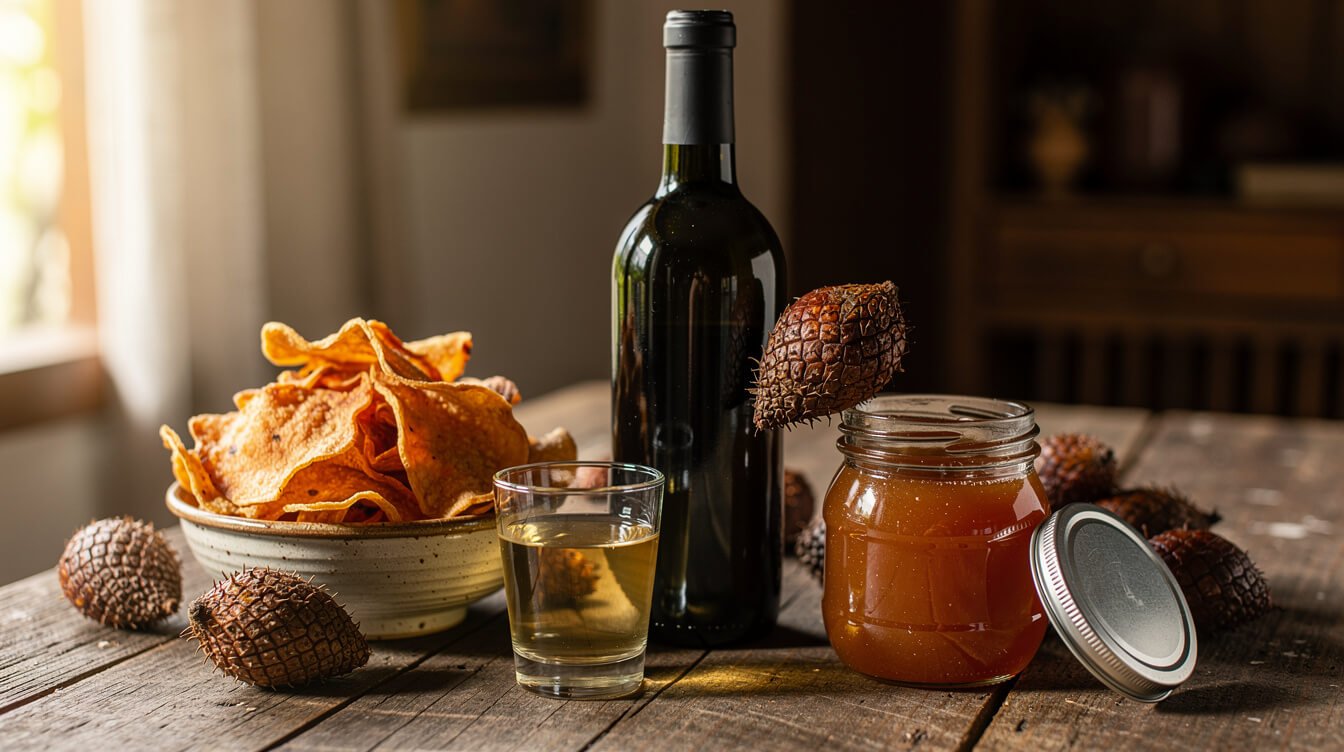
A big harvest brings a real problem. When every garden ripens at once, the price of fresh salak can crash. Researchers studying Sibetan’s farmers recorded farm-gate prices as low as IDR 500 per kilogram during the peak harvest. So the village got creative, and today salak shows up in surprising forms.
Salak wine
The most famous is salak wine. In Banjar Dukuh, Sibetan, a local group operating as CV Dukuh Lestari produces “Salacca Wine,” a fruit wine made from fermented salak Bali. The project grew out of the farmers’ frustration with harvest-time gluts and was supported by the Karangasem government, which brought in a German winemaker to train the group. Producers say only salak Bali is juicy and balanced enough for wine, and the sweet gula pasir is sometimes used on its own. The finished wine is reported to reach around 13.5% alcohol, similar to grape wine. Tasters tend to describe it as fruity and lightly sweet, with a soft tannic edge that echoes the fruit itself. You’ll find bottles at the village and in some shops around Bali. Enjoy it chilled, ideally with a view.
Everything else
Sibetan and its neighbors turn salak into a whole pantry of products. These are the ones you’re most likely to spot:
- Kripik salak: crunchy salak chips, light and gently sweet, and an excellent souvenir.
- Dodol salak: a chewy, toffee-like sweet cooked with sugar and coconut milk.
- Manisan salak: salak preserved in sugar syrup, sweet and tart.
- Salak syrup and juice: refreshing over ice on a hot afternoon.
- Salak “coffee”: a caffeine-free brew made from roasted salak seeds.
- Salak honey and vinegar: sold at farm tastings in the region.
- Salak pickles and craft beer: newer experiments from young entrepreneurs and a local microbrewery, according to a 2025 CNA feature on Sibetan.
In Balinese kitchens, salak also stars in rujak, a spicy fruit salad dressed with palm sugar, tamarind and chili, and it sometimes appears in offerings. If you love exploring Balinese food beyond the tourist menu, our guides to nasi campur and Bali food are a good next read. For something more indulgent, a floating breakfast with a fruit platter is a lovely place to meet salak for the first time.
Is Salak Healthy, and Is It Safe to Eat?
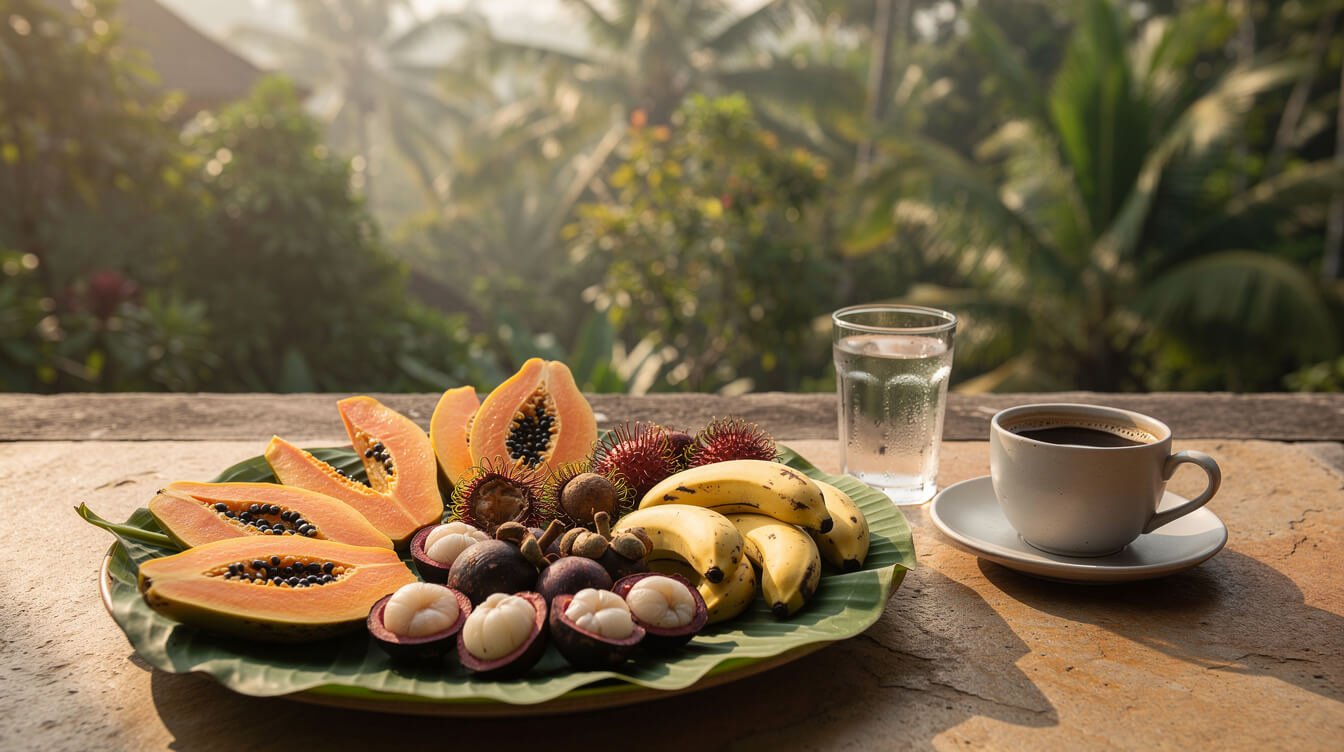
Salak is a light, wholesome snack. Indonesian Ministry of Health data puts it at roughly 77 kcal per 100 g, with about 78% water, a little protein and a useful amount of iron (around 4.2 mg per 100 g). The flesh also contains dietary fiber and pectin, plus phenolic compounds and flavonoids, which are plant antioxidants that researchers are studying with interest. A small 2025 trial in Thailand found that snake fruit jelly improved blood-sugar response and endurance in healthy adults, but it’s early research, not a reason to eat salak as medicine. Enjoy it as delicious fruit and leave it at that.
Is snake fruit safe to eat?
Yes. Salak is an everyday fruit across Indonesia. Some practical points:
- Don’t eat the skin or seed. Only the flesh is eaten.
- Go easy at first. Salak’s tannins, the compounds behind that dry, astringent feeling, are a reason many Indonesians say that eating a large pile of salak in one sitting can leave you constipated. A handful at a time is sensible, especially if you’re prone to digestive trouble.
- Wash your hands, then peel. The skin protects the flesh, which makes salak one of the safest fruits to buy from a street stall. Still, wash your hands before peeling, especially after handling cash. Our Bali belly guide has more food-safety tips for travelers.
- Allergies and medical conditions. If you have food allergies, diabetes or a sensitive stomach, start with a small taste and follow your doctor’s advice.
Salak FAQ
What does salak taste like?
Salak tastes sweet and slightly tart, often compared to a mix of pineapple, apple and jackfruit, with a crisp, juicy crunch. Many varieties have a mild astringency. Bali’s gula pasir variety is the sweetest, with almost none.
What does “salak” mean?
“Salak” is the Indonesian and Balinese name for the palm Salacca zalacca and its fruit. In English, it’s called snake fruit because its scaly reddish-brown skin looks like snakeskin.
How do you know if salak is ripe?
Ripe salak has glossy skin, a sweet fragrance at the pointed tip and a firm feel with a little give. Avoid dull, very hard, soft or moldy fruit. The flesh inside should be creamy and opaque, not brown or translucent.
Can you bring salak home from Bali?
Most countries restrict fresh fruit imports, so plan to enjoy fresh salak in Bali and check your home country’s customs rules before packing any. Sealed processed products like kripik or dodol are often easier, but always declare food at the border. Our Bali packing guide covers what to bring the other way.
Where can I try salak near Ubud?
Try the Ubud morning market, fruit stalls along the main roads, or any warung that serves a fruit plate. For the full experience, take a day trip to Sibetan in Karangasem during the December-to-February harvest.
Final Thoughts: Taste Bali, One Snake Fruit at a Time
Salak is a small fruit with a big story. It grows under centuries-old village rules in the gardens of Sibetan, it’s honored as world agricultural heritage, and it ends up on a plate in Ubud wrapped in its own snakeskin. Pinch the tip, peel back the scales, rub off that papery film and taste the gula pasir if you can find it. Then drive east one morning and see where it comes from.
The quietest way to get to know a place is through its fruit. Ask the team about the best stalls, the season and the day trips to Karangasem. Bring your curiosity, a bag of salak and an open afternoon on the terrace. Bali will happily do the rest.

Join our newsletter — fun, new, exciting Bali news
Fruit seasons worth planning around, ceremony days, and small stories from the garden and kitchen in Ubud. Delivered now and then, always worth opening.