The Sound of the Rice Letting Go
You hear it from the terrace before you know what it is. A soft, steady thwack, then a pause, then another, carried up from the fields below the garden wall. It doesn’t sound like a machine. It sounds like someone keeping time.
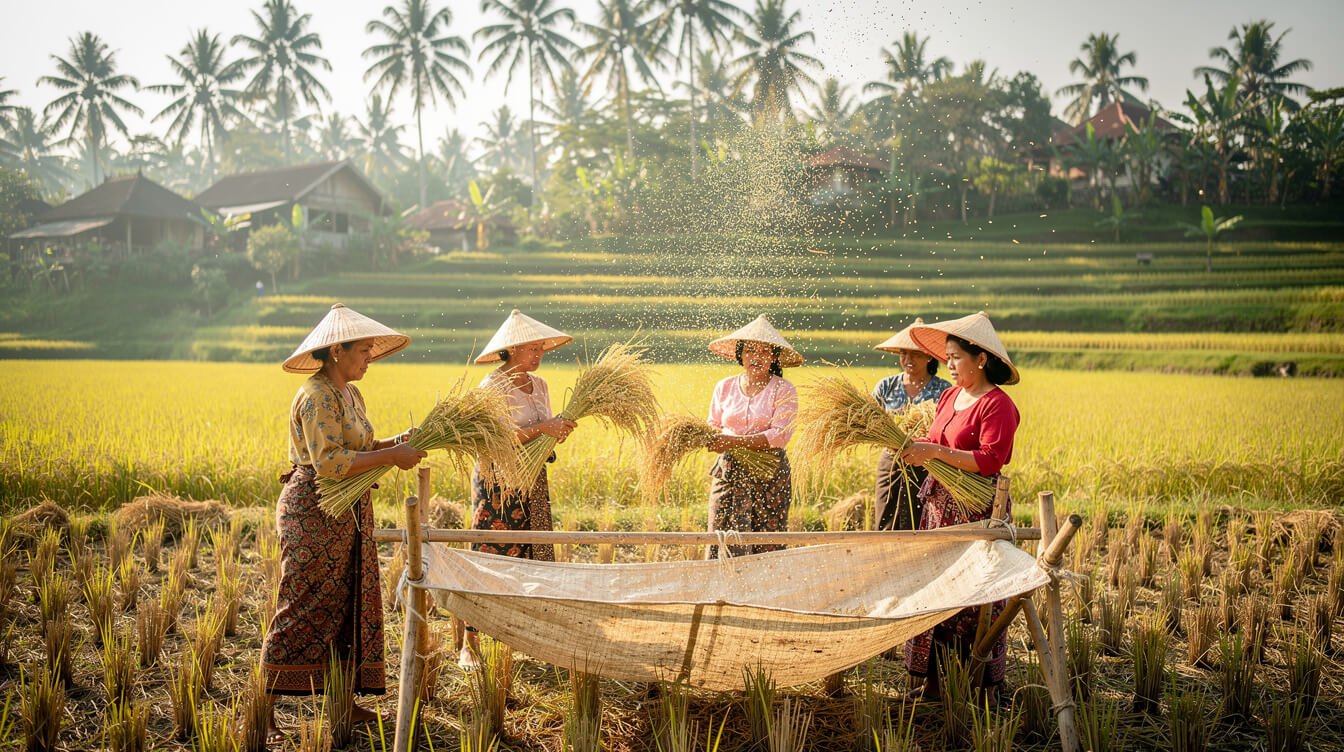
Follow it down the lane and you find a field that was gold yesterday and is stubble today. Five or six women from the village stand in a loose half-circle around a low bamboo frame with a woven tarp spread beneath it. Each one lifts a sheaf of cut rice over her shoulder and brings it down hard against the frame. The grain lets go all at once and rattles onto the tarp. The stalks go onto a pile. The next sheaf comes up.
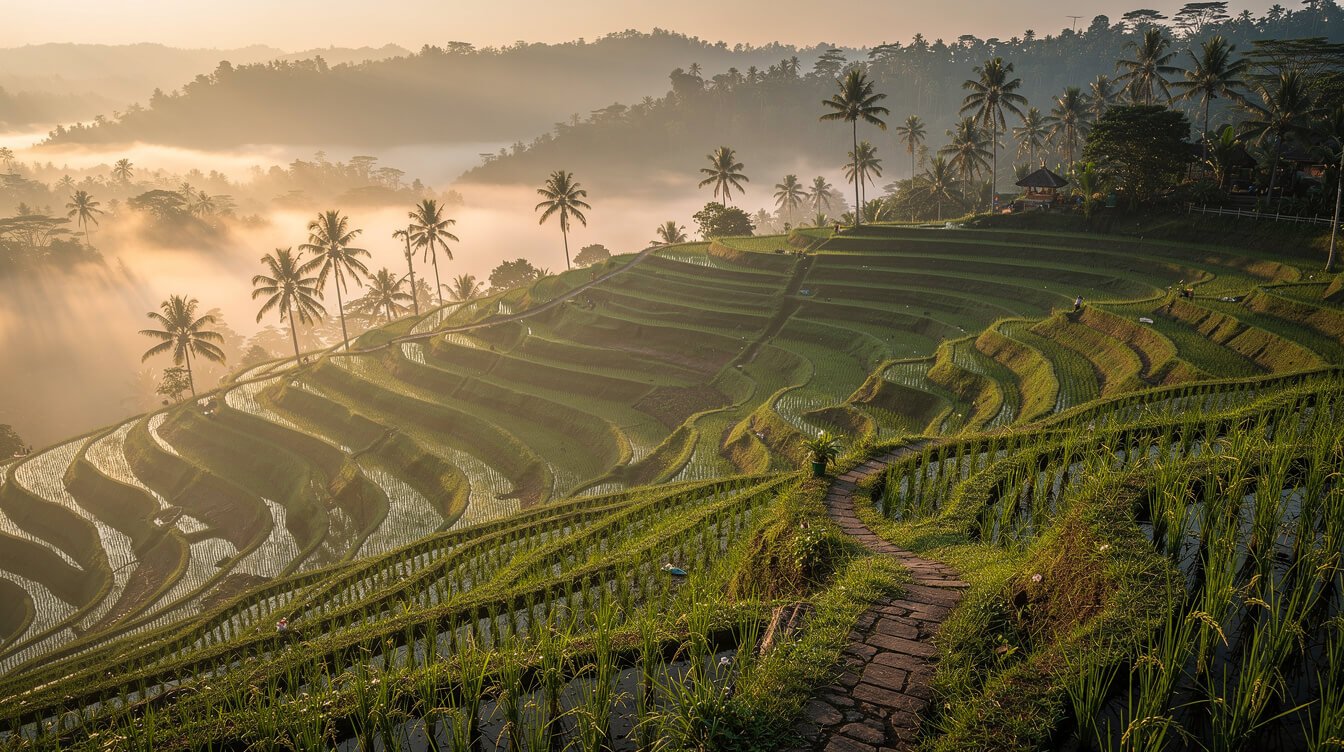
This is the threshing, and it only happens for a few days at a time. Because the subak water temples stagger the planting from field to field, harvest in Ubud doesn’t arrive all at once. One terrace is being cut while the one beside it is still bright green, so if you stay long enough, you’ll find a harvest somewhere almost any month of the year.
Get a Free 3-Day Sample Itinerary
Want mornings slow enough to follow a sound down to the fields? We will send you a three-day Ubud itinerary built around unhurried walks and village rhythms.
Stand at the edge of the dike and watch the light. Every strike throws up a fine cloud of chaff, and the late-morning sun catches it so the air above the tarp glitters like dust in a church window. The women talk while they work, laugh at something you won’t understand, and never lose the rhythm. Somebody’s small son sits on the pile of stalks, entirely in charge of nothing.
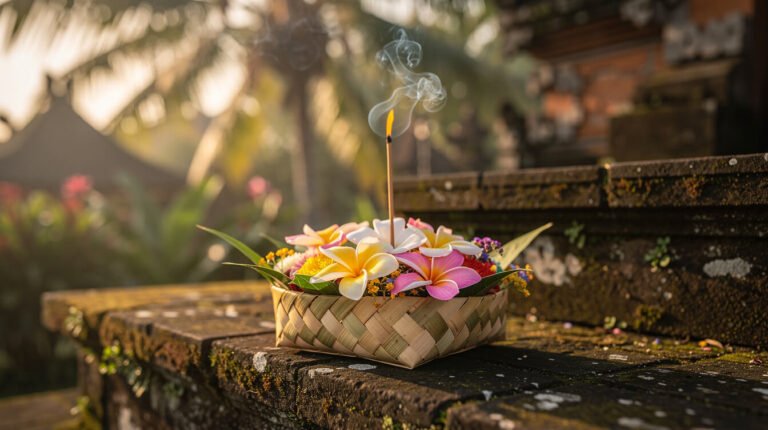
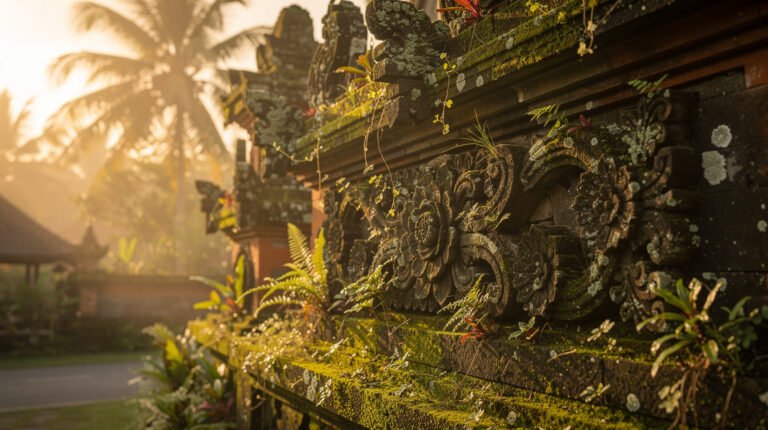
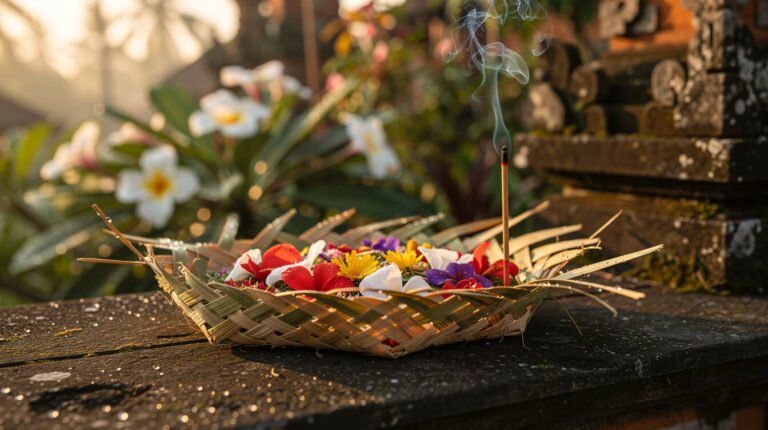
Before the first sheaf was cut, there was an offering in the corner of the field for Dewi Sri, the goddess of rice. You may still spot it: a little woven palm-leaf tray, a few flowers, a stub of incense burned down to nothing. In Bali the harvest isn’t just taken. It’s thanked for first.
Ask the team about it when you get back. That’s one of the quiet gifts of a staffed villa Ubud morning: the people looking after you grew up inside this calendar. They’ll tell you which family owns the field, when the water goes back in, and why the old women still prefer the frame to the threshing machine that some farmers now hire for the day.

Book the Villa
Three bedrooms, a full in-villa team, and a terrace above the rice fields where harvest season drifts up to you. Check availability for your dates.
By noon the tarp is heavy with grain, gathered into sacks and carried up the lane on the back of a motorbike. The stubble will burn off or be turned under, the water you hear long before you see the rice fields will flood back in, and in a few weeks the same terrace will be a mirror again, waiting for new seedlings.
So if you hear that sound one morning, don’t wait. Put on your sandals and walk the path between the rice toward it. Keep a respectful distance, smile, and stay a while. If you’re here in the windy months, the kites that hum above the rice fields will be up by the afternoon, flying over the very stubble you watched being made.
Back on the terrace, the sound keeps going below you, softer now, steady as a heartbeat. This is where the rice on your plate tonight comes from, and for a morning, you got to watch.
Join Our Newsletter
Fun, new, exciting Bali news — straight from the villa, every so often.