The Tent That Goes Up Across the Lane for a Wedding
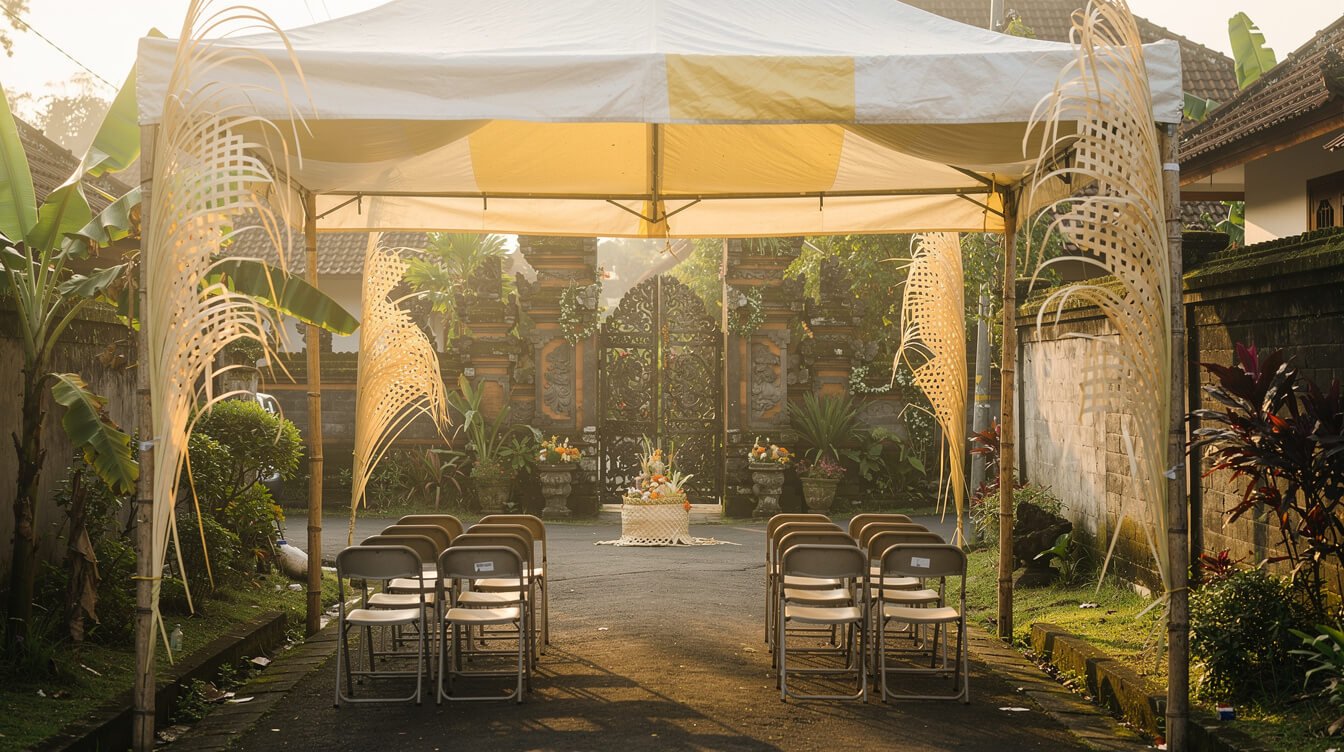
You’ll notice the tent before anyone tells you why it’s there. One morning the lane outside a family compound is half closed. Bamboo poles have gone up overnight with a tarp stretched between them in white and pale yellow, and rows of folding chairs wait in the shade underneath. Tall curls of woven young coconut leaf hang from every pole and sway when a motorbike squeezes past. Someone in the village is getting married.
A Balinese wedding doesn’t happen in a hall across town. It happens at home, and the lane becomes part of the house for a few days. The date itself is usually chosen with a priest’s help, matched to an auspicious day on the Balinese calendar, so the tents tend to bloom in clusters across the village in the same week. The work starts well before the guests arrive. Some of those knives you hear chopping lawar at dawn are cooking for exactly this kind of day, and the women of the banjar sit for hours folding palm-leaf offerings in the courtyard.
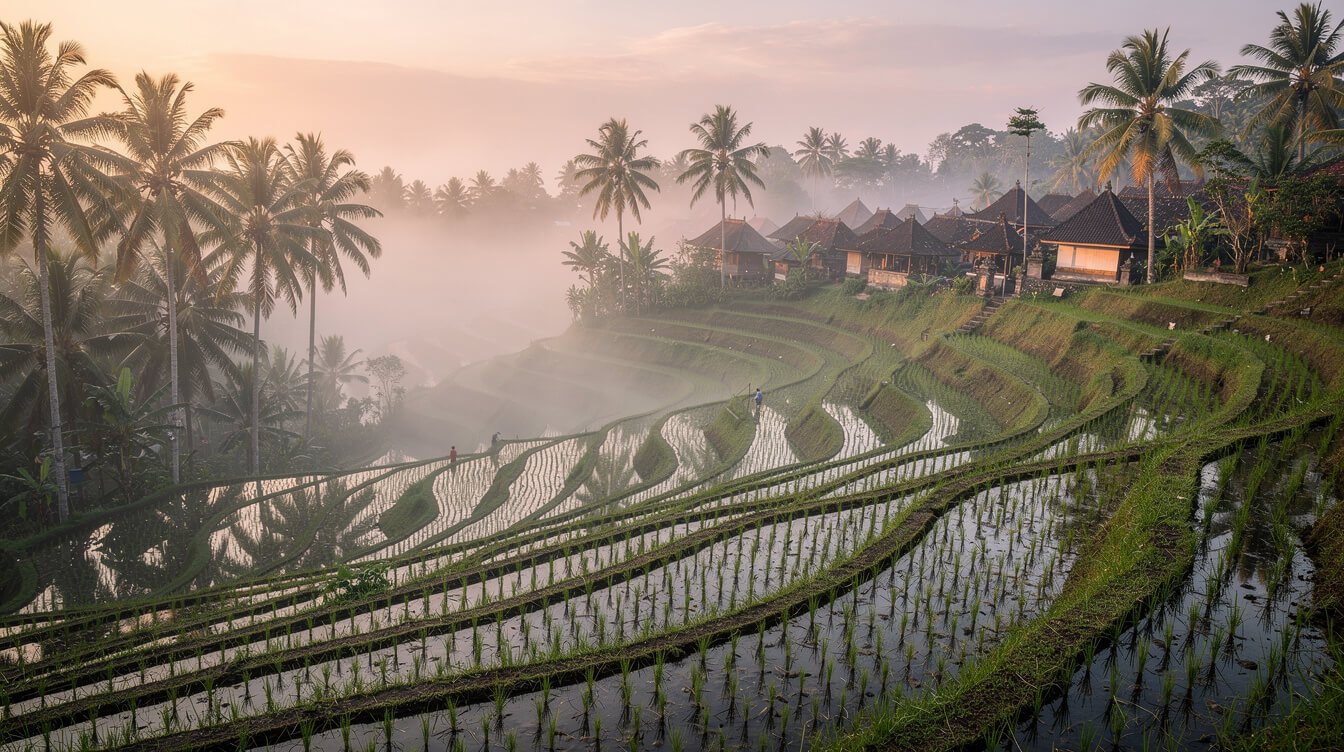
Get a Free 3-Day Sample Itinerary
A walk down the lane, a long lunch, the rice fields in the last light of the day. We will send you a three-day Ubud rhythm built around the moments most visitors walk straight past.
By mid-morning the sounds take over. Most often it’s a crackling speaker playing gamelan or Balinese pop, sometimes a live ensemble tucked into a corner of the compound. Guests arrive in their best ceremonial clothes, women in lace kebaya and sashes, men in white shirts with an udeng tied around the head. They carry baskets or envelopes, sit a while, eat, talk, and drift home. Inside the walls, the couple goes through rituals that are about purification and joining two families more than about romance. In Bali, the bride traditionally moves into the groom’s family compound, so a wedding is also a homecoming for a whole household.
If the lane is blocked when you pass, don’t stress. Smile, nod and take the slow way around. Everyone else does. Ask before you take photos, and take them from a distance. If you’re lucky enough to be invited, cover your shoulders and knees, wear a sarong and sash, and bring a small gift. Our gentle guide to Balinese Hinduism covers the basics of ceremony etiquette. And if you’re staying at a staffed villa in Ubud, ask the team whether any weddings are happening in the village that week. They’ll know, and they’ll tell you the gentlest way to see one.
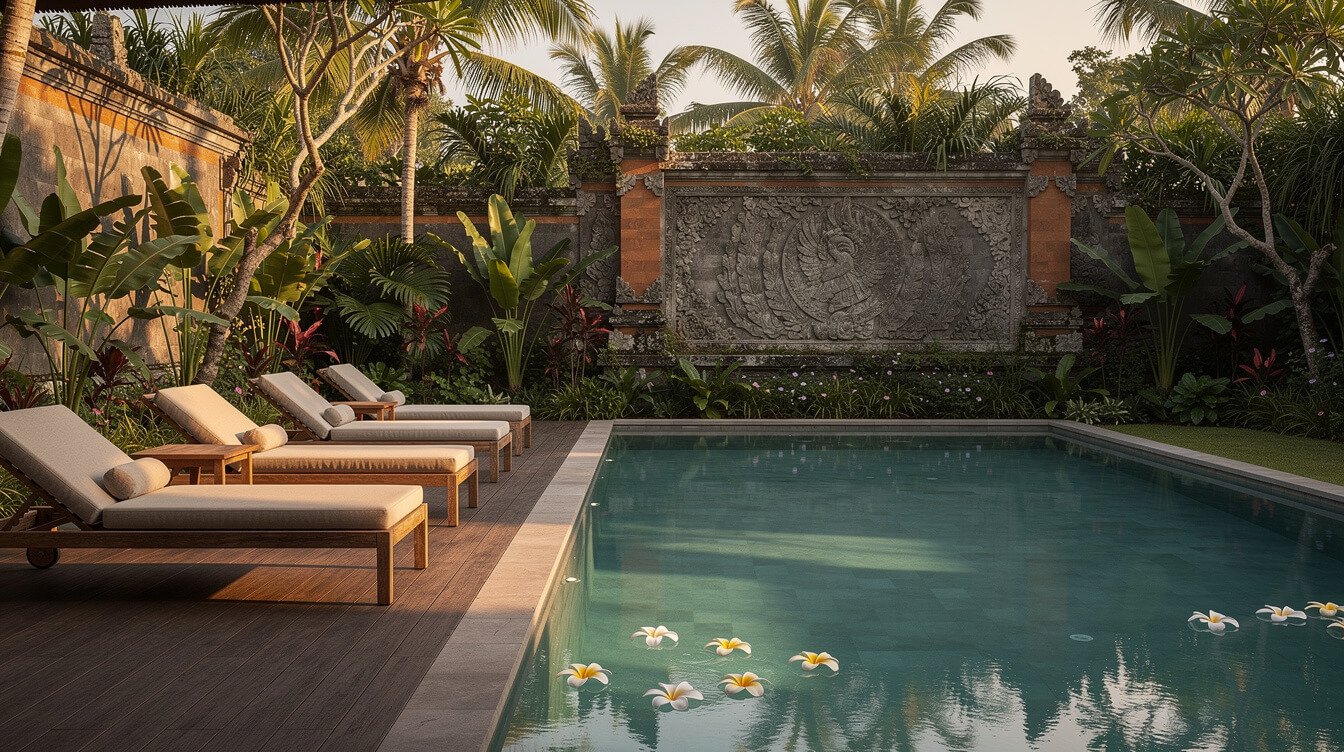
Book the Villa
Three bedrooms, a full in-villa team, and a pool of your own, and mornings slow enough to hear the village celebrating down the lane. Check availability for your dates.
It belongs to the same rhythm as the 210-day birthdays that come around for every child and the dance lessons the girls practice for occasions just like this one. In Ubud, the big moments in a life are never private affairs. The whole lane gets to share them.
Then, a few days later, the tarp comes down, the chairs are stacked onto a truck and the bamboo poles are carried off. The coconut-leaf curls go brown and soft in the sun. The lane goes back to scooters and roosters. But for a little while, a road became a living room, and you got to walk right through the middle of it.

Join Our Newsletter
Fun, new, exciting Bali news — straight from the villa, every so often.