Bali Waterfall: Your Complete Guide to Every Waterfall Worth Visiting from Ubud
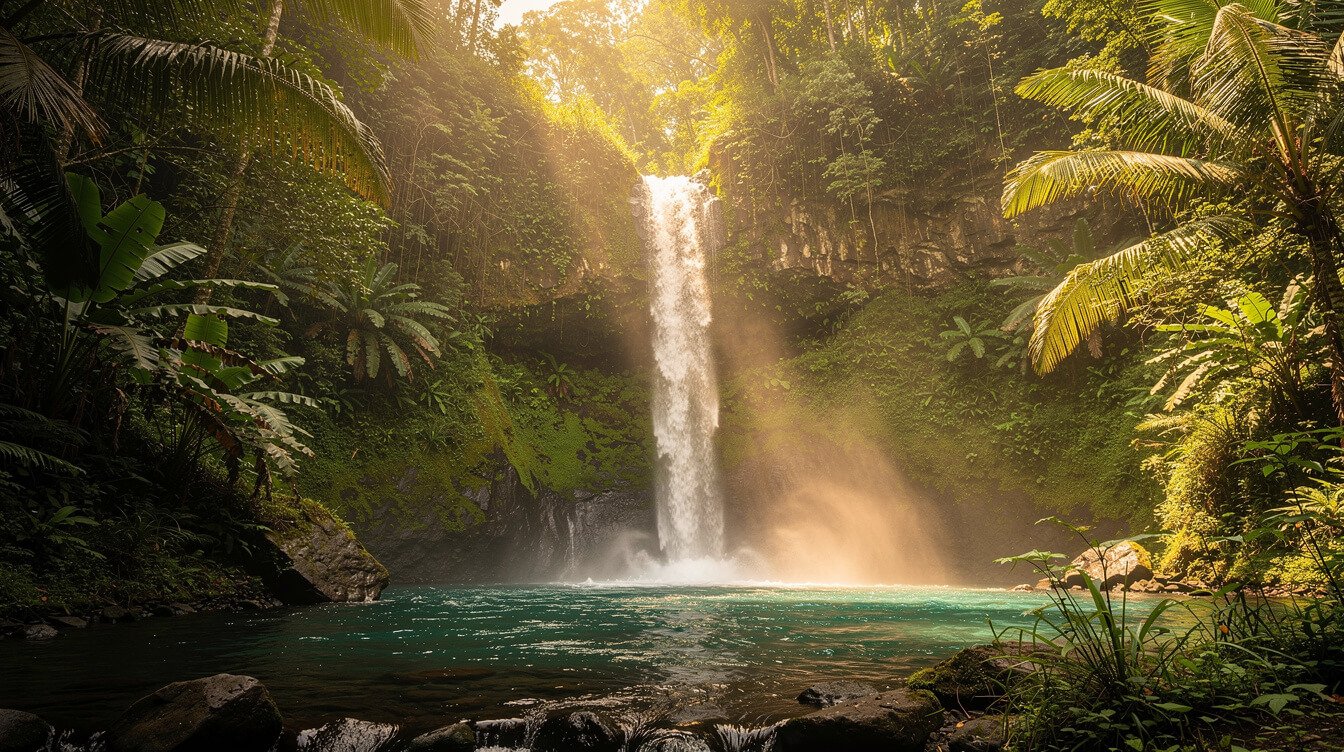
You hear it before you see it. The deep rumble of water hitting stone, growing louder as the jungle path narrows and the air turns cool against your skin. This is what a Bali waterfall sounds like when you finally arrive — and it never gets old, no matter how many times you make the walk down.
Bali is a waterfall island. Volcanic peaks catch monsoon rains, ancient rivers carve through jungle ravines, and sacred water flows through every layer of Balinese spiritual life. From the roadside cascades twenty minutes south of Ubud to the towering twin falls in the remote north, this island holds more waterfalls per square kilometer than almost anywhere on earth. And most visitors only ever see one or two.
This guide covers every bali waterfall worth visiting — organized by region, rated by difficulty, and mapped into ready-made day trip routes you can hand to your driver tomorrow morning. We’ve arranged these trips for hundreds of guests over the years, and we know which falls are worth the steep descent, which ones transform between seasons, and which hidden gems the tour buses never find.
Why Bali Is a Waterfall Island: Sacred Water and Volcanic Geology
Understanding why Bali has so many waterfalls starts with two forces: volcanoes and monsoons. Mount Agung and the central volcanic ridge rise over 3,000 meters, catching moisture from the Indian Ocean and Java Sea. Annual rainfall exceeds 3,000mm in the highlands — and all that water has to go somewhere.
It carves through layers of volcanic basalt and ancient lava flows, dropping over cliff faces where softer rock has eroded faster than harder stone above. The result is hundreds of waterfalls scattered across the island, from gentle curtains of mist to thundering 80-meter plunges into jungle canyons.
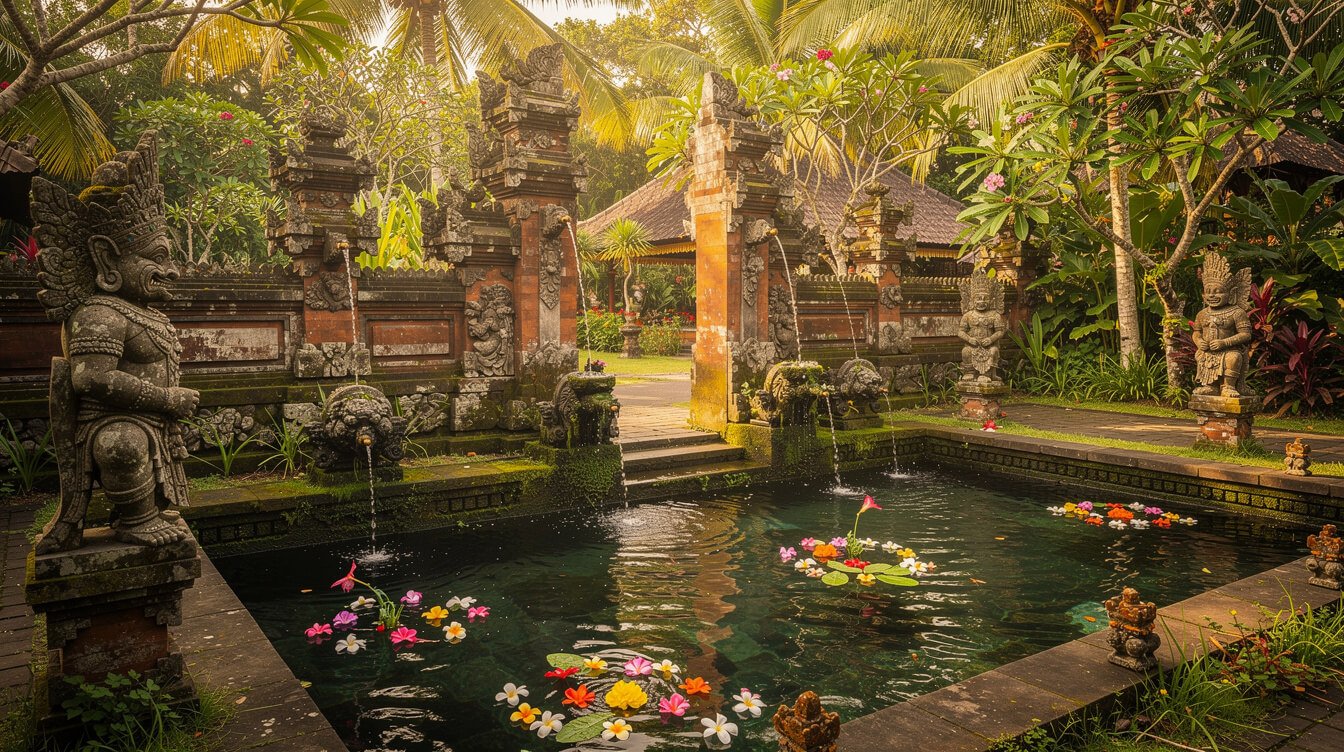
But geology is only half the story. In Balinese Hinduism, water — tirta — is sacred. Every waterfall connects to the island’s spiritual geography. Many falls have small shrines at their base, where locals come for melukat purification ceremonies. The most famous, Tirta Empul, draws from the same volcanic aquifer that feeds waterfalls throughout central Bali.
This spiritual dimension means waterfall visits in Bali carry a different weight than chasing cascades in Iceland or Costa Rica. You’re not just sightseeing — you’re stepping into a landscape the Balinese consider alive and holy. Dress modestly near shrines, leave offerings undisturbed, and carry out everything you carry in.
The Best Bali Waterfall Experiences: A Quick-Reference Overview
Before we dive into each waterfall by region, here’s a practical overview to help you choose which ones match your energy, fitness level, and available time. All drive times are from central Ubud.
| Waterfall | Region | Drive from Ubud | Difficulty | Entry (IDR) | Best Season |
|---|---|---|---|---|---|
| Tegenungan | South | 20 min | Easy | 20,000 | Year-round |
| Tibumana | South | 25 min | Easy | 15,000 | Wet season |
| Tukad Cepung | South | 45 min | Moderate | 15,000 | Dry (light play) |
| Kanto Lampo | South | 30 min | Easy | 10,000 | Wet season |
| Sekumpul | North | 2 hours | Challenging | 20,000 | Wet season |
| Fiji (Sekumpul twin) | North | 2 hours | Challenging | Incl. with Sekumpul | Wet season |
| Aling Aling | North | 2 hours | Moderate-Hard | 20,000 | Wet season |
| Banyumala | North | 1.5 hours | Moderate | 30,000 | Year-round |
| Gitgit | North | 1.5 hours | Easy | 20,000 | Year-round |
| Munduk | North-West | 2 hours | Moderate | 20,000 | Wet season |
| Leke Leke | Central | 1 hour | Moderate | 40,000 | Year-round |
| Nungnung | Central | 1.5 hours | Challenging | 20,000 | Wet season |
| Blahmantung | West | 2 hours | Challenging | 10,000 | Wet season |
| Banyu Wana Amertha | North | 2 hours | Moderate | 30,000 | Year-round |
Difficulty key: Easy = paved or well-maintained steps, 10-15 minutes. Moderate = uneven terrain, 20-30 minutes, some steep sections. Challenging = 30+ minutes of steep jungle paths, river crossings, slippery rocks — bring proper footwear and reasonable fitness.
Southern Bali Waterfall Near Ubud: The Easy Morning Circuit
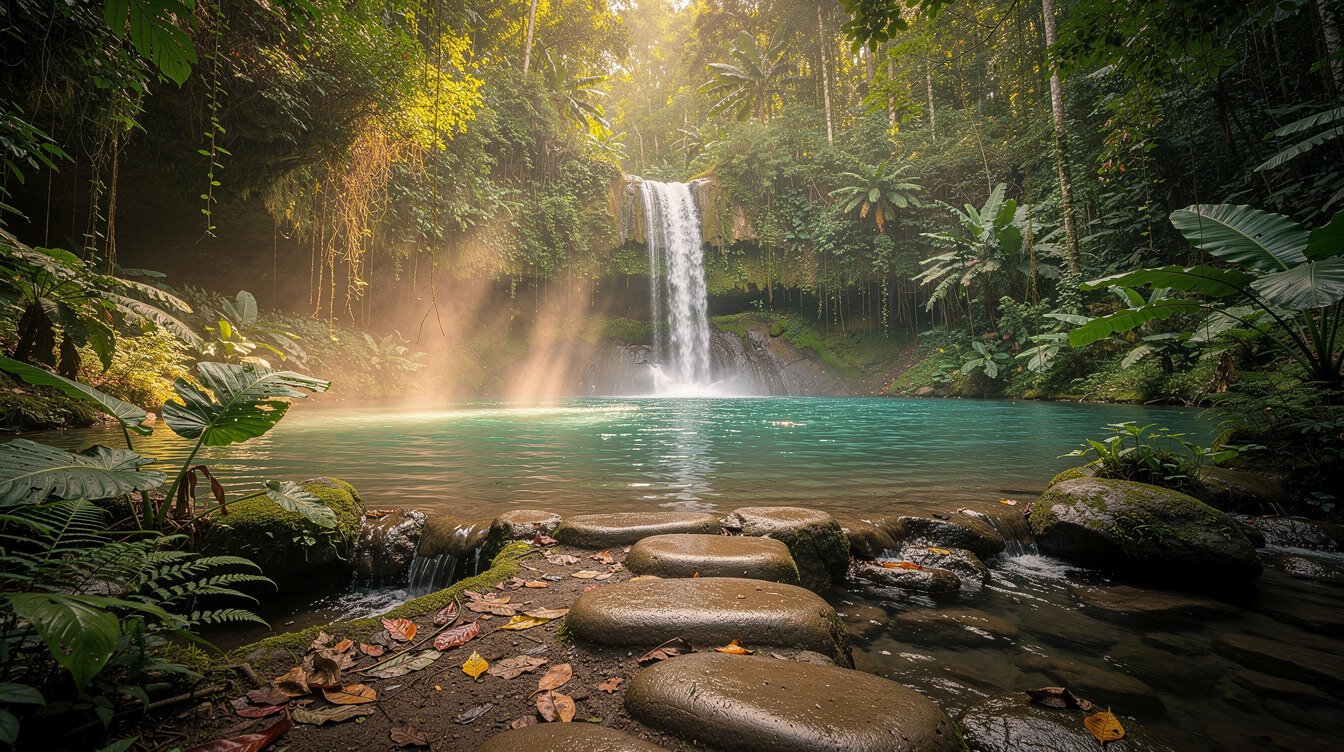
The waterfalls closest to Ubud are also the easiest to reach, which makes them perfect for a relaxed morning before the midday heat arrives. You can visit two or three of these in a single morning and be back at the villa for a late lunch by the pool.
Tegenungan Waterfall
Twenty minutes south of central Ubud, Tegenungan is the waterfall most visitors see first — and for good reason. The falls are wide, powerful, and set in a dramatic river gorge lined with tropical vegetation. Arrive before 8 AM to have the pool largely to yourself. The light is best between 7 and 8:30 AM when golden rays hit the water at an angle that makes the mist glow.
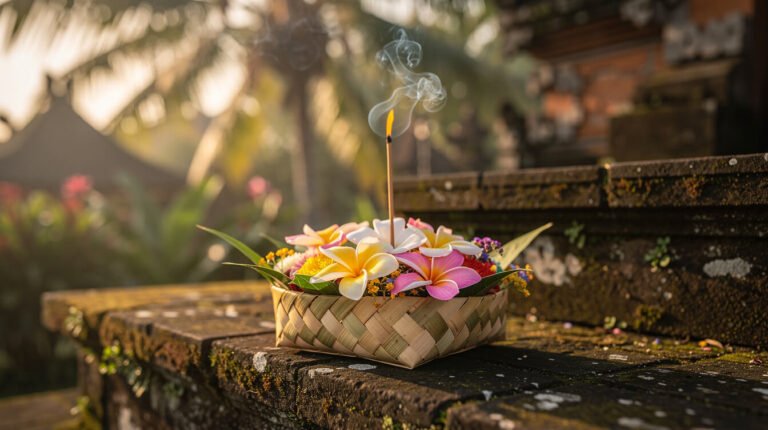
What most guides don’t mention: the Petanu River that feeds Tegenungan is sacred in Balinese tradition. You’ll see small canang sari offerings along the path. The left side of the falls has a spot where locals come for informal melukat purification — give them space and respect.
Tibumana Waterfall
Just ten minutes further east from Tegenungan, Tibumana is Tegenungan’s quieter neighbor. A short walk through a bamboo forest leads to a narrow, graceful fall dropping into a clear turquoise pool. The swim here is better than at Tegenungan — calmer water, smoother rocks, fewer people. During wet season (November through March), the water flow doubles and the pool deepens beautifully.
Tukad Cepung Waterfall
Forty-five minutes east of Ubud, Tukad Cepung is unlike any other bali waterfall you’ll visit. The falls are hidden inside a narrow canyon, reached by wading upstream through ankle-deep water. When you round the final bend, water pours through a natural skylight in the rock above, creating shafts of light that move across the cave walls as the sun shifts. Visit between 9 and 11 AM during dry season for the most dramatic light play. Bring a dry bag for your phone.
Kanto Lampo
Thirty minutes south of Ubud, Kanto Lampo is a staircase waterfall — water cascading over a series of smooth, rounded rock formations that look almost sculpted. It’s become popular for photography (the rock formations create a natural frame), but it’s genuinely beautiful. Best visited during wet season when the water flow is strongest. Easy access via a short staircase.
Get a Free 3-Day Sample Itinerary
Waterfall mornings, rice terrace walks, and villa evenings — mapped out for you by our team in Ubud.
Northern Bali Waterfall: Where the Dramatic Cascades Live
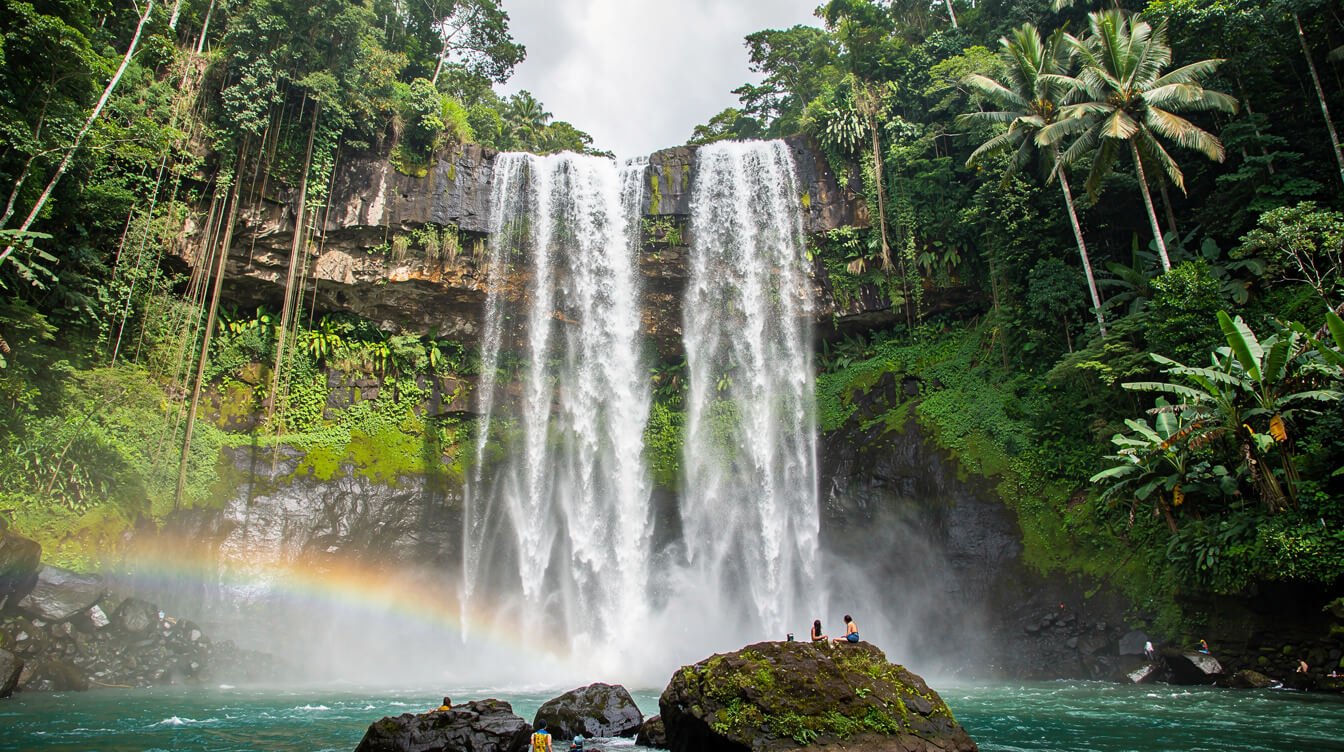
Northern Bali is where the waterfalls get serious. The terrain is steeper, the jungle thicker, and the falls themselves are significantly larger than anything near Ubud. These require a full-day commitment — a two-hour drive each way through mountain roads — but the reward is waterfalls that will genuinely take your breath away.
Sekumpul Waterfall
Sekumpul is widely considered the most beautiful waterfall in Bali, and after sending hundreds of guests there, we agree. Twin cascades plunge roughly 80 meters down a sheer cliff face into a jungle bowl that feels prehistoric. The hike down takes 30-40 minutes on steep, sometimes slippery paths — it’s not casual, but it’s manageable for anyone with reasonable fitness.
The pool at the base is swimmable, and the scale of the falls creates a constant cool mist that feels extraordinary after the sweaty descent. There are two viewpoints: the upper lookout (accessible without the full hike) and the base pool (worth every step). Our villa manager can arrange a driver who knows both the Kintamani route (more scenic, stops at Mount Batur viewpoints) and the Bedugul route (slightly faster).
Aling Aling Waterfall
About thirty minutes west of Sekumpul, Aling Aling is the adventure waterfall. The main falls are a stunning 35-meter curtain you view from a distance, but the real draw is the series of smaller cascades below where — with a local guide — you can cliff jump from heights of 5 to 15 meters into deep natural pools. It’s the closest thing to a natural water park in Bali, and the guides know exactly which pools are safe and which heights to avoid.
Banyumala Twin Waterfalls
Near the Bedugul lake district, Banyumala is one of the most photogenic waterfalls in Bali — a wide curtain of water splitting into multiple streams over a moss-covered rock face, with a calm swimming pool at the base. The access path is well-maintained (about 15 minutes down), making this one of the easier northern falls to reach. Combine it with a visit to the Ulun Danu Beratan Temple on the lake for a complete day in the highlands.
Munduk and Gitgit Waterfalls
The Munduk area in Bali’s northwest is waterfall country — at least four significant falls within walking distance of the village. Munduk itself is a graceful 25-meter cascade reached via a short jungle walk through coffee and clove plantations. Gitgit, further east along the northern coast road, is one of Bali’s most accessible falls — a short walk from the parking area to a dramatic 40-meter drop. Both are good options for travelers who want northern falls without the challenging hikes.
Hidden Bali Waterfall Gems Most Visitors Never Find
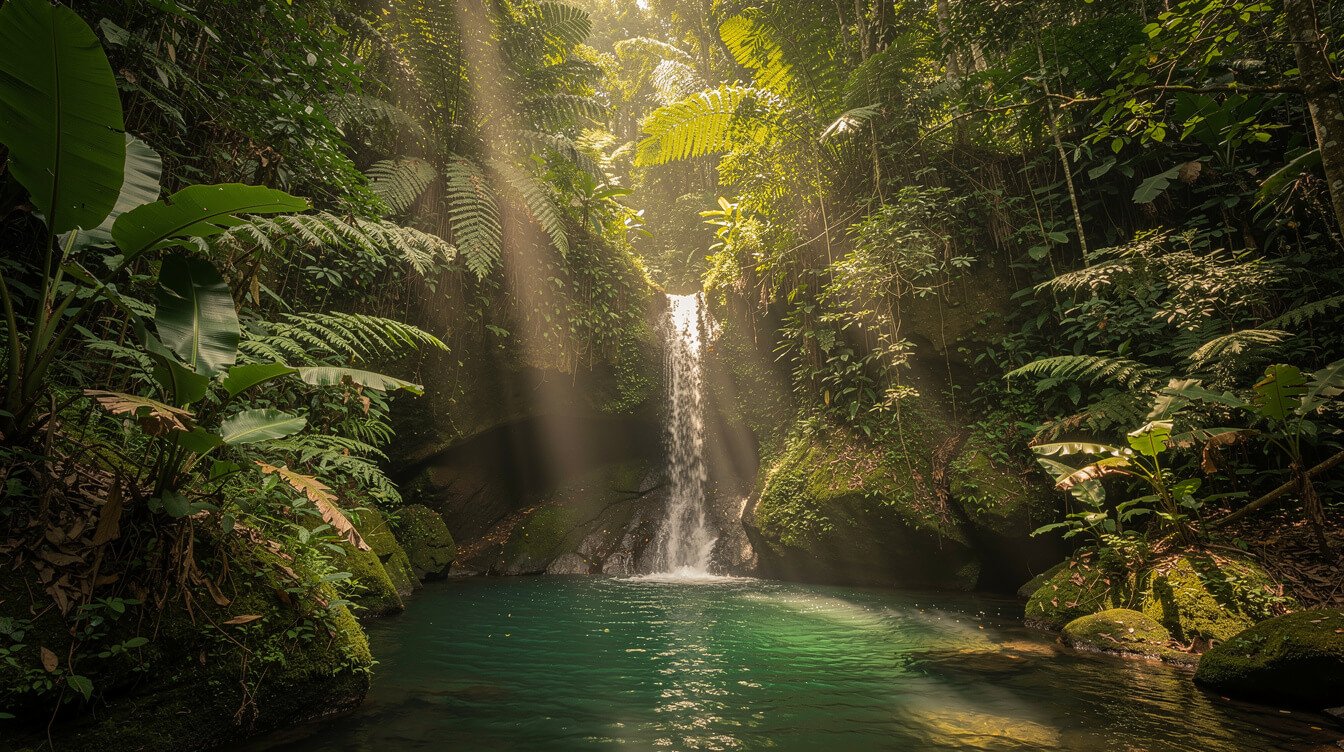
Beyond the famous names, Bali holds dozens of waterfalls that rarely appear in guidebooks. These require more effort to reach and often lack the infrastructure of the popular falls — which is exactly what makes them special.
Leke Leke Waterfall
An hour north of Ubud on the road toward Bedugul, Leke Leke drops in a narrow, elegant stream into a small canyon pool surrounded by giant ferns and hanging roots. The walk in passes through a working cacao and coffee plantation, and the falls themselves have an intimate, almost secretive quality. The entry fee is higher than most (IDR 40,000), but the maintained paths and lower crowds justify it.
Nungnung Waterfall
The staircase down to Nungnung is legendary — roughly 500 steps carved into the cliff face. The waterfall at the bottom, a powerful 50-meter drop into a misty gorge, rewards every step. This is not for the casual visitor: the descent takes 20 minutes, the return climb 30-40. But if you have the fitness, Nungnung offers a waterfall experience with almost no other visitors. Go early, take your time, and bring water for the climb back.
Blahmantung Waterfall
Bali’s tallest waterfall at roughly 100 meters, Blahmantung is a two-hour drive west of Ubud in the Tabanan regency. The falls are spectacular during wet season — a thundering column of white water against dark volcanic cliff. Access is basic (a steep local path), and you’ll likely have the place to yourself. Combine with a visit to the Jatiluwih rice terraces (a UNESCO site thirty minutes away) for a full western Bali day.
Banyu Wana Amertha
This cluster of four waterfalls near the Munduk area offers variety in a single visit — a main waterfall plus three smaller cascades of different character, connected by jungle paths. The “Banyan Tree” waterfall, where water falls through the roots of a massive banyan, is genuinely unique. The site is well-maintained and less crowded than Munduk or Gitgit.
Your Waterfall Adventures Start Here
Come home from every waterfall to your own private pool, a chef who has lunch ready, and a team that plans tomorrow’s route for you.
Planning Your Bali Waterfall Day Trips from Ubud: Three Ready-Made Routes
The most common mistake visitors make with Bali waterfalls is trying to see too many in one day. The drives between regions are longer than they look on a map — Bali’s roads wind through villages, rice terraces, and mountains. Here are three tested routes that we arrange for our villa guests regularly, each designed around realistic timing and energy levels.
Route 1: The Southern Ubud Morning (Half Day, Easy)
Duration: 4-5 hours including drive time
Difficulty: Easy — suitable for families with children
Best for: First-time waterfall visitors, families, anyone short on time
Leave the villa at 7 AM. Tegenungan first (arrive by 7:30, explore for 45 minutes before the crowds). Drive ten minutes east to Tibumana (quieter, better swimming). If energy allows, continue twenty minutes to Kanto Lampo for the Instagram-friendly staircase falls. Back at the villa by noon for lunch by the pool.
This is the route we suggest most often, especially for families or anyone who wants a waterfall morning without an expedition.
Route 2: The Northern Epic (Full Day, Challenging)
Duration: 10-12 hours
Difficulty: Challenging — steep descents, river crossings
Best for: Fit travelers, adventure seekers, photographers
Leave at 7 AM via the Kintamani road (stop for coffee with the Mount Batur view). Continue to Sekumpul (arrive by 9:30, descend to the base, swim, photograph — allow 2 hours). Drive thirty minutes to Aling Aling for cliff jumping and the adventure cascades (1.5 hours). Lunch at a warung in Singaraja. Return via the Bedugul lake road, stopping at Banyumala if legs are willing. Back in Ubud by 6-7 PM.
This is Bali’s ultimate waterfall day. Tell your driver-guide the night before so they can plan the mountain roads and the chef knows when to have dinner ready.
Route 3: The Highland Hidden Gems (Full Day, Moderate)
Duration: 8-9 hours
Difficulty: Moderate — well-maintained paths with some stairs
Best for: Travelers who’ve done the popular falls and want something different
Leave at 8 AM heading northwest. Stop at Leke Leke (intimate canyon waterfall, 45 minutes). Continue to Nungnung (the 500-step descent — worth it for the empty gorge). Lunch in the Bedugul area overlooking the twin lakes. Afternoon at Banyu Wana Amertha (four waterfalls in one visit). Return through the Tegallalang area as sunset hits the terraces. Back by 5-6 PM.
What Every Bali Waterfall Visitor Needs to Know
Wet Season vs. Dry Season
The same waterfall can look completely different depending on when you visit. Wet season (November through March) brings thundering water volume, lush green surroundings, and dramatic mist. Dry season (April through October) means lower flows but easier access, better hiking conditions, and the magical light play at places like Tukad Cepung.
Our recommendation: visit southern waterfalls (Tegenungan, Tibumana) in either season — they’re beautiful year-round. Save northern waterfalls (Sekumpul, Aling Aling, Nungnung) for wet season when the water volume justifies the longer drive.
What to Wear and Bring
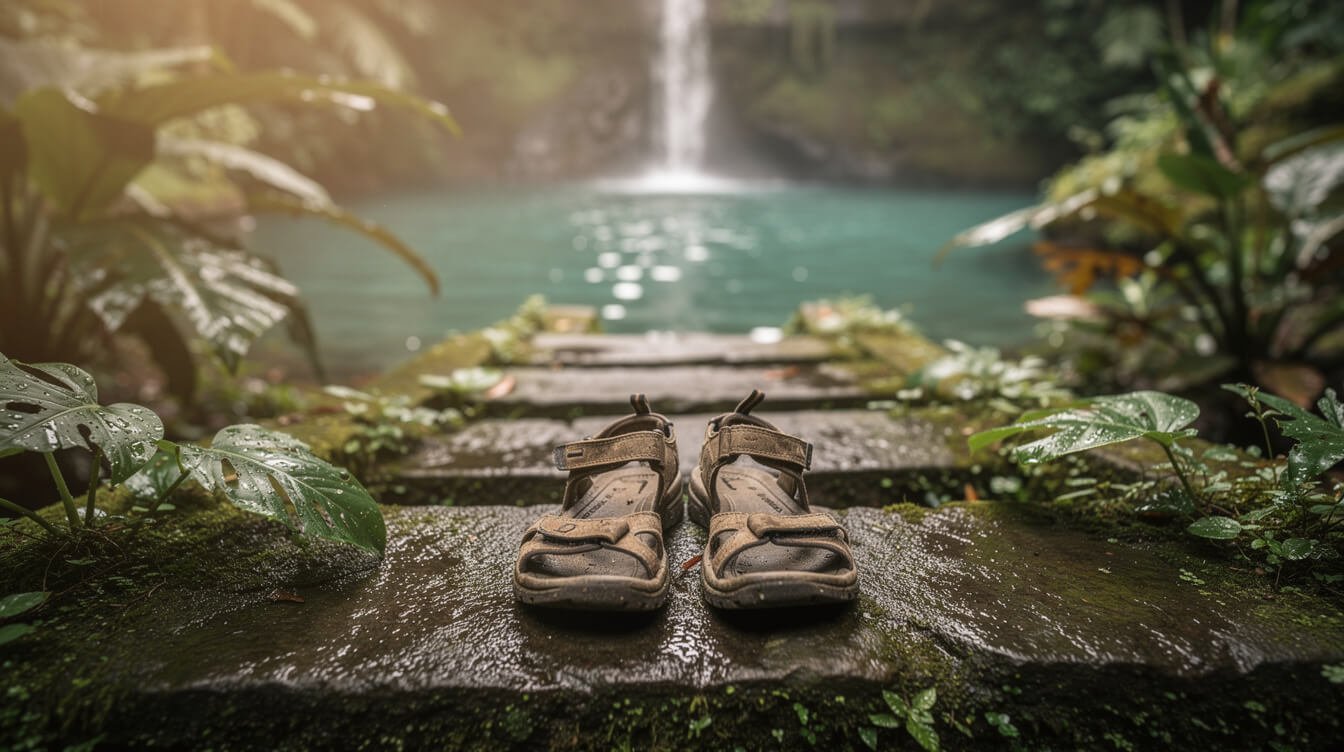
- Footwear: Reef-safe water shoes or sturdy sandals with grip. Flip-flops are dangerous on wet volcanic rock. Check our packing guide for specific recommendations.
- Clothes: Quick-dry shorts and a lightweight top. You will get wet — from the falls, the mist, or the river crossings. Bring a dry bag for your phone, camera, and wallet.
- Sun protection: Reef-safe sunscreen, hat, and sunglasses for the walks between waterfalls.
- Cash: Most waterfalls charge entry fees in cash (IDR 10,000-40,000). Bring small bills — change is sometimes limited.
- Water: At least one liter per person, more for challenging hikes like Nungnung or Sekumpul.
Safety Considerations
Bali waterfall accidents happen, and most are preventable. Flash floods during rainy season can change water levels rapidly — if you see the water turning brown or rising quickly, move to higher ground immediately. Stay on marked paths. Don’t swim directly under the falls where the water force can push you under. Avoid solo visits to remote waterfalls; always tell someone where you’re going.
If you’re staying with us, your villa manager always knows which falls are in good condition that week and which recent rains might have made slippery. It’s one of those small things a full-staff villa handles that a hotel concierge simply can’t.
Cultural Etiquette
Many Bali waterfalls have spiritual significance. If you see a shrine, offerings, or people in prayer, keep a respectful distance. Don’t touch or move canang sari offerings. Cover your shoulders when shrines are present. And if you see someone performing a melukat ceremony (standing under the water in prayer), give them privacy — this is a sacred moment, not a photo opportunity.
Frequently Asked Questions About Bali Waterfalls
What is the best waterfall in Bali?
Sekumpul is widely considered the most spectacular bali waterfall for its sheer scale and jungle setting. But “best” depends on what you want: Tukad Cepung for unique canyon light play, Aling Aling for adventure and cliff jumping, or Tegenungan for easy access close to Ubud. Our Ubud waterfall guide covers the falls closest to the villa in detail.
How many waterfalls can I visit in one day?
Two to three is realistic for a comfortable day. The southern circuit (Tegenungan + Tibumana + one more) fits in a half day. Northern waterfalls (Sekumpul or Aling Aling) need a full day including drive time. Don’t try to combine southern and northern in one day — the four-hour round-trip driving will exhaust you.
Do I need a guide for Bali waterfalls?
Not for most southern waterfalls (well-signed, easy paths). For northern waterfalls like Sekumpul, a local guide helps navigate the steep descent and river crossings. For Aling Aling cliff jumping, a guide is essential for safety. Your driver-guide can also serve as a translator and navigate the mountain roads confidently.
Are Bali waterfalls safe for children?
Southern waterfalls (Tegenungan, Tibumana, Kanto Lampo) are family-friendly with maintained paths and calm pools. Northern waterfalls involve steep descents that are difficult for young children. For families with kids, we recommend the southern morning circuit and saving the northern falls for when the children are older.
When is the best time to visit waterfalls in Bali?
Early morning (7-9 AM) for southern waterfalls to avoid crowds and heat. For a Bali trip focused on waterfalls, wet season (November-March) brings the most dramatic flows but muddier paths. Dry season (April-October) offers easier hiking. Both have merit — plan your 7-day itinerary to include at least one waterfall morning.
What is the entrance fee for waterfalls in Bali?
Most charge IDR 10,000-40,000 (roughly $0.60-$2.50 USD) per person. Some, like Aling Aling with a guide, cost more (IDR 50,000-125,000 depending on the cliff jumping package). Parking fees are separate and minimal (IDR 5,000-10,000). Always carry small cash bills.

Stay Close to Ubud
Fun, new, exciting Bali news — waterfall discoveries, seasonal tips, and honest recommendations from our team in Ubud. Join our newsletter.