What the Dark Brings Alive
The sun drops fast in Ubud. One moment the garden is all gold and shadow. The next, the sky pulls inward, and something else begins.
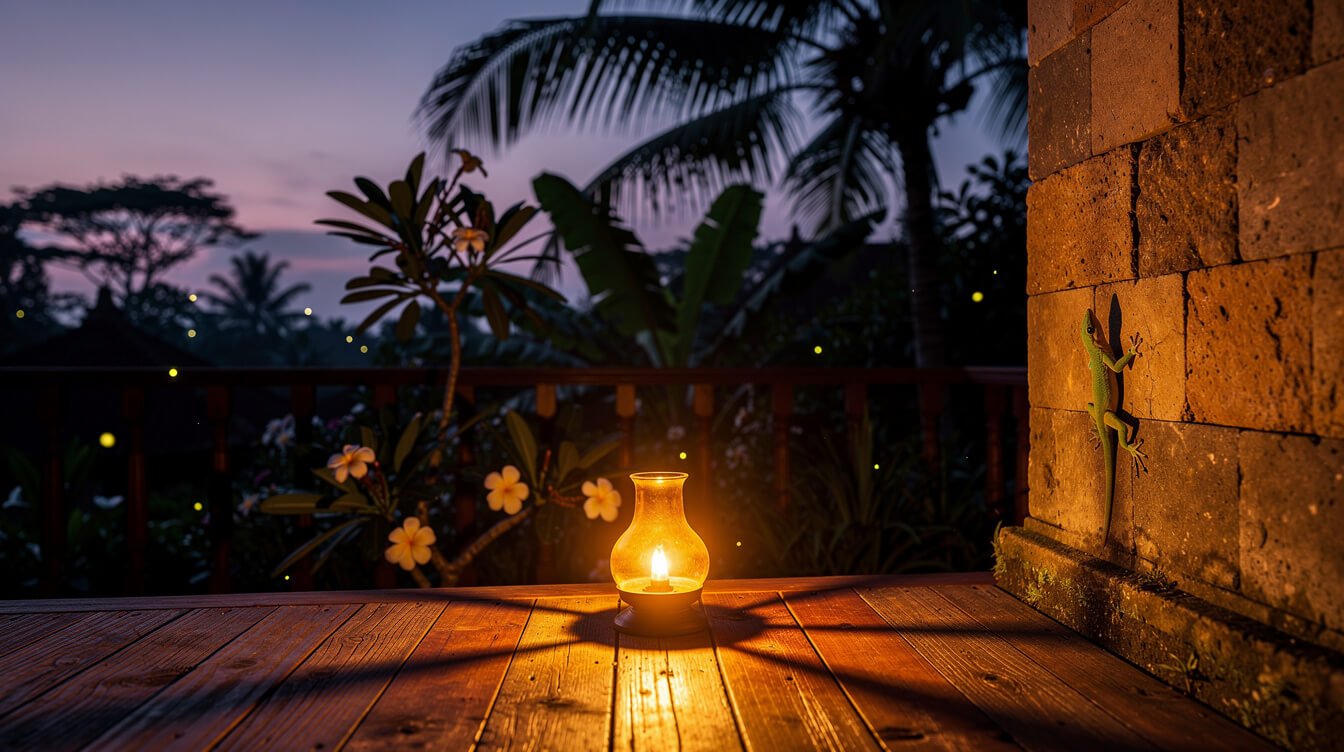
It starts with a single gecko. A sharp, bright toh-kay from somewhere near the roof beam — two syllables, deliberate, like a door being knocked on. Then another answers from the far wall. Within minutes, the whole house is talking in a language older than the stone it’s built on.
The frogs are next. Not one frog, not a duet, but a full orchestra rising from the rice paddies below the terrace. A deep, rhythmic pulse that fills the space between the paddies and carries upward through warm, still air. If you’ve never heard a Balinese frog chorus at close range, there’s nothing to compare it to. It’s not background noise. It’s architecture — layered, timed, enormous.
Then, somewhere past the treeline, gamelan. Not a performance. A rehearsal, maybe, from the banjar hall down the road. Metallic and sweet, the notes arrive in fragments — enough to know the melody, never enough to hold it whole. This is what Ubud at night gives you that no resort lobby soundtrack can replicate: the real village, practicing its music in the dark.
On the pool deck, the water holds the last blue of the sky. A candle on the stone table catches the frangipani that fell during the afternoon. The air smells like wet earth and jasmine. You could read. You could talk. Most guests, on their first evening, just listen.
That’s the thing about staying in a staffed villa here — nobody rushes the transition from day to night. The manager has already closed the day’s tasks. The pool is yours. The garden is lit by whatever light feels right. And the night sounds rise around you like they’ve been waiting all day for this audience.
You don’t need to do anything. Just sit. The dark brings its own show.