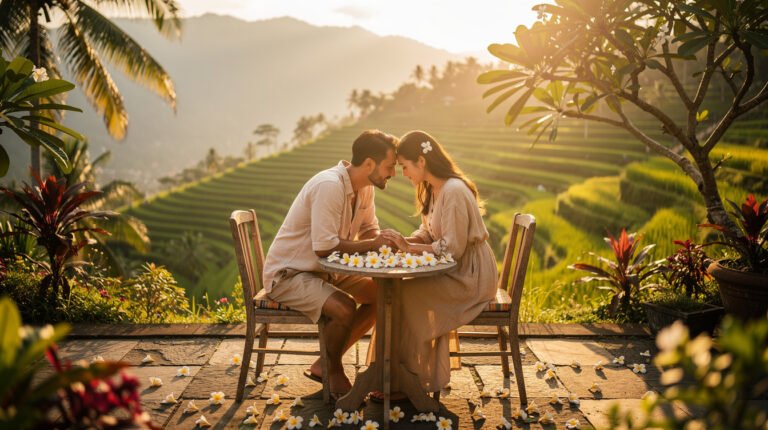
Is Bali Safe to Travel? What We Tell Every Guest Before They Arrive
Every week, someone messages our villa manager the same question in a dozen different phrasings: is Bali safe to travel right now, and should they actually book the trip? It’s a fair question, and an honest one deserves a real answer instead of a canned reassurance. The short version is yes — Bali is safe to travel, with the same ordinary preparation you’d bring to any unfamiliar country, plus a few things that are genuinely specific to this island. What follows is the exact conversation our team has with every guest before they land, not a government advisory rewritten with palm trees added.
We’re not a travel insurance company or a tourism board, and we don’t have anything to sell you by making Bali sound scarier or safer than it is. We’re the people who greet you at the gate, drive you in from the airport, and answer the phone at 11pm if something feels off. That vantage point changes what we notice — we’re not summarizing statistics from a desk somewhere else in the world, we’re describing the island we actually live on.
This guide walks through what genuinely matters: the everyday risks worth planning around, the ones the headlines exaggerate, and the parts of your safety that quietly get handled the moment you choose a staffed villa over a hotel room. By the end, you should have a clear, unromantic picture of what to prepare for — and permission to stop worrying about the rest.
Is Bali Safe to Travel? The Short Answer: Yes, With Preparation
Bali welcomes millions of travelers a year, and the overwhelming majority go home with nothing worse than a sunburn and a craving for nasi goreng. The island’s tourism economy depends on visitors feeling secure, and Ubud in particular — set inland, away from the nightlife strips — runs at a noticeably calmer pace than the headlines suggest. Crime rates for violent offenses against tourists are low by global standards, hospitals in the main tourist areas are equipped for common travel ailments, and the roads, while chaotic-looking to a first-time visitor, follow a logic locals navigate every day without much drama.
That said, “safe” isn’t a single switch you flip. It’s a handful of ordinary precautions stacked together: sensible traffic awareness, basic health prep, knowing which areas suit your travel style, and having someone local to call when you’re unsure. None of it is exotic. Most of it is the same due diligence you’d apply visiting any unfamiliar country, adjusted for Bali’s specific quirks — scooter traffic, tropical weather patterns, and a tourism industry large enough to attract the occasional scam alongside the genuine hospitality.
Where this question tends to get muddled online is that “Bali” gets treated as a single monolithic place. Kuta’s nightlife strip, Canggu’s surf-and-coworking scene, and Ubud’s rice-terrace interior are different enough in character that lumping them into one safety verdict does a disservice to all three. A concern that’s real in one area — say, late-night petty theft near a beach club — may be nearly irrelevant twenty minutes inland. Knowing which version of Bali you’re actually visiting changes the entire conversation.
We tell every guest the same thing before arrival: come prepared, not anxious. The preparation is short. The peace of mind lasts the whole trip.
Why Ubud Feels Different
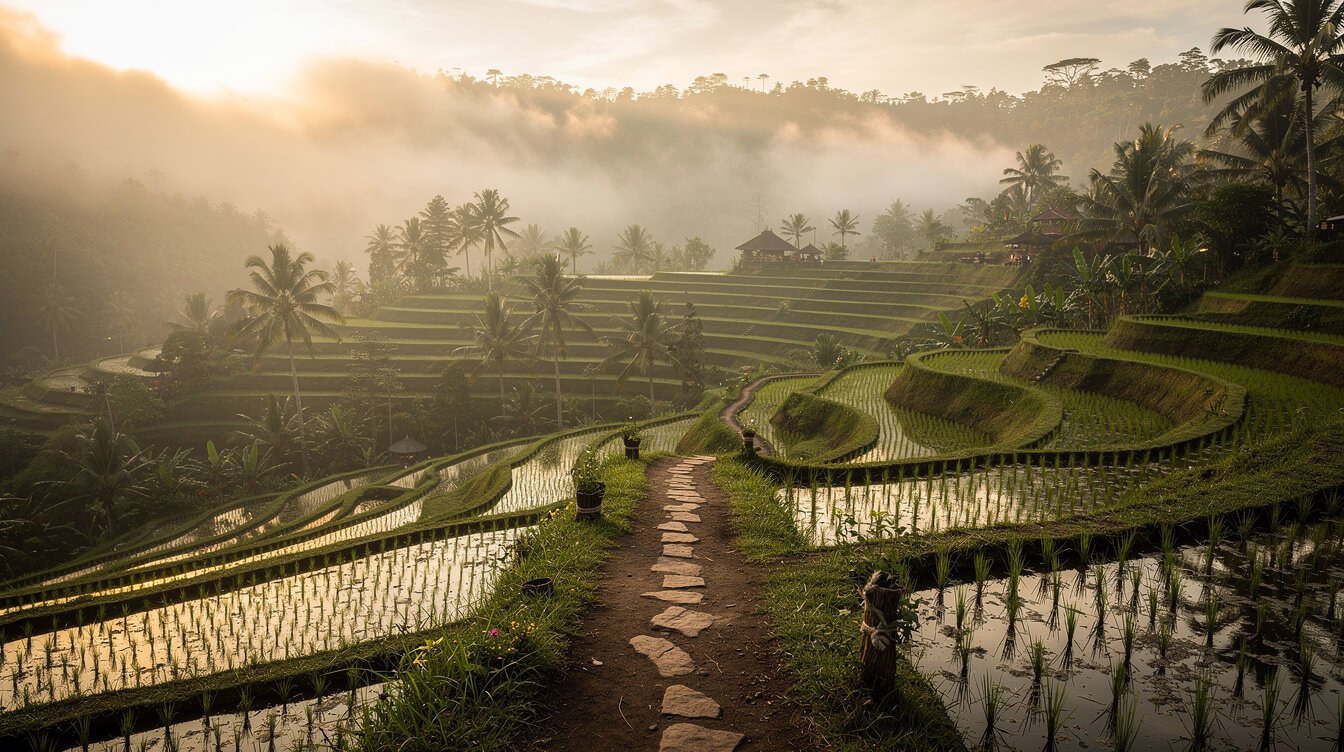
If your mental image of Bali risk comes from stories about Kuta or Canggu on a Saturday night, it’s worth knowing that Ubud is a different island entirely in temperament, even though it’s only a 90-minute drive away. Ubud grew up around rice farming, temple ceremony, and craft — not beach clubs. The pace shows in small ways: fewer scooters weaving at speed, more families and multi-generational households along the main roads, shopkeepers who know your name by day three, and an evening rhythm built around gamelan practice and temple offerings rather than sound systems.
None of that means Ubud is a bubble, and it would be dishonest to pretend otherwise. It means the specific risks shift in character. You’re less likely to encounter the aggressive nightlife-adjacent scams and street hustling that show up in south-coast tourist zones, and more likely to deal with ordinary rural-road hazards — uneven footpaths near rice terraces, temple steps without railings, monkeys at the Sacred Monkey Forest Sanctuary who will absolutely take your sunglasses, your snack, or your water bottle if you give them the chance.
There’s also a social layer to Ubud’s safety that’s easy to underestimate: it’s a small town, in practice, built around a tourism economy that depends on word-of-mouth reputation. A driver who overcharges a guest, a shop that shortchanges a tourist — word travels fast in a community this size, and the incentive structure favors treating visitors well over the long run. That’s not a guarantee, but it’s a real cultural undercurrent that shapes how most everyday interactions actually go.
If you want a fuller sense of how the regions differ before you land, our complete guide to Ubud walks through the cultural rhythm of the area — useful context for understanding why “Bali” isn’t one uniform experience, safety included.
Real Safety Concerns in Bali — and How to Handle Them
Here’s what we actually tell guests, ranked roughly by how often it comes up in practice:
Traffic
This is the real one, and it’s worth taking seriously rather than glossing over. Scooters outnumber cars by a wide margin, road markings are more suggestion than rule, and sidewalks — where they exist at all — are inconsistent and often shared with parked motorbikes, food carts, and offering baskets. Intersections rarely have working signals, and right-of-way is negotiated in the moment rather than posted on a sign.
If you’re not an experienced scooter rider, don’t learn on Bali’s roads. Every year a meaningful share of tourist injuries trace back to visitors renting a scooter on day one without local road experience. Hire a driver instead, at least for your first few days while you get a feel for the pace. Our villa team can arrange one for any excursion — airport runs, temple visits, day trips to Mount Batur — and most guests find it’s cheaper than expected and considerably calmer than white-knuckling an unfamiliar intersection.
Water and stomach health
Stick to bottled or filtered water, including for brushing your teeth in your first few days while your system adjusts. “Bali belly” is common enough among first-time visitors to have its own nickname, and it’s almost always traceable to tap water, ice made from tap water, or undercooked street food rather than anything more dramatic. Our kitchen uses filtered water for everything served in the villa — cooking, ice, drinking water in your room — and our chef can walk you through which street-food stalls in the area are genuinely safe bets if you want to explore beyond the gate. Local knowledge here is worth more than any packing list.
Theft and scams
Petty theft happens, and it’s almost always opportunistic rather than targeted — an unattended phone left on a café table, a bag left open on a scooter’s front rack, a wallet visible in a back pocket in a crowded market. Common tourist scams, like inflated “damage” fees charged when returning a rental scooter or currency-exchange counters that short-change with distraction techniques, cluster heavily around high-turnover tourist zones near the airport and south-coast strips — not the kind of residential neighborhood a staffed villa typically sits in. Basic vigilance — a zipped bag, an eye on your phone, exchanging money at reputable licensed counters — handles nearly all of it.
Swimming conditions
Bali’s south-coast surf beaches have real rip currents, and drowning is consistently the leading cause of tourist fatality on the island — almost entirely ocean-related, almost never villa-pool-related. The waves that make Bali a world-renowned surf destination are the same waves that catch unprepared swimmers off guard. Respect flag warnings at patrolled beaches, never swim alone at an unpatrolled one, and treat the ocean here with more caution than a postcard ever suggests. A villa pool, by contrast, is about as low-risk as water gets.
Get a free 3-day sample itinerary
Curious what a first Ubud stay actually looks like day to day? We’ll send you a sample itinerary built from real guest stays — no obligation, just a feel for the rhythm.
What a Staffed Villa Actually Changes
This is the part that doesn’t show up in generic safety guides, because generic guides aren’t written by people who run a villa. Staying somewhere with a manager, chef, housekeeper, and gardener on-site quietly removes a surprising number of the risk factors above — not because staff are bodyguards, but because local knowledge closes the gap between “tourist guessing” and “resident knowing” at every point in your day.
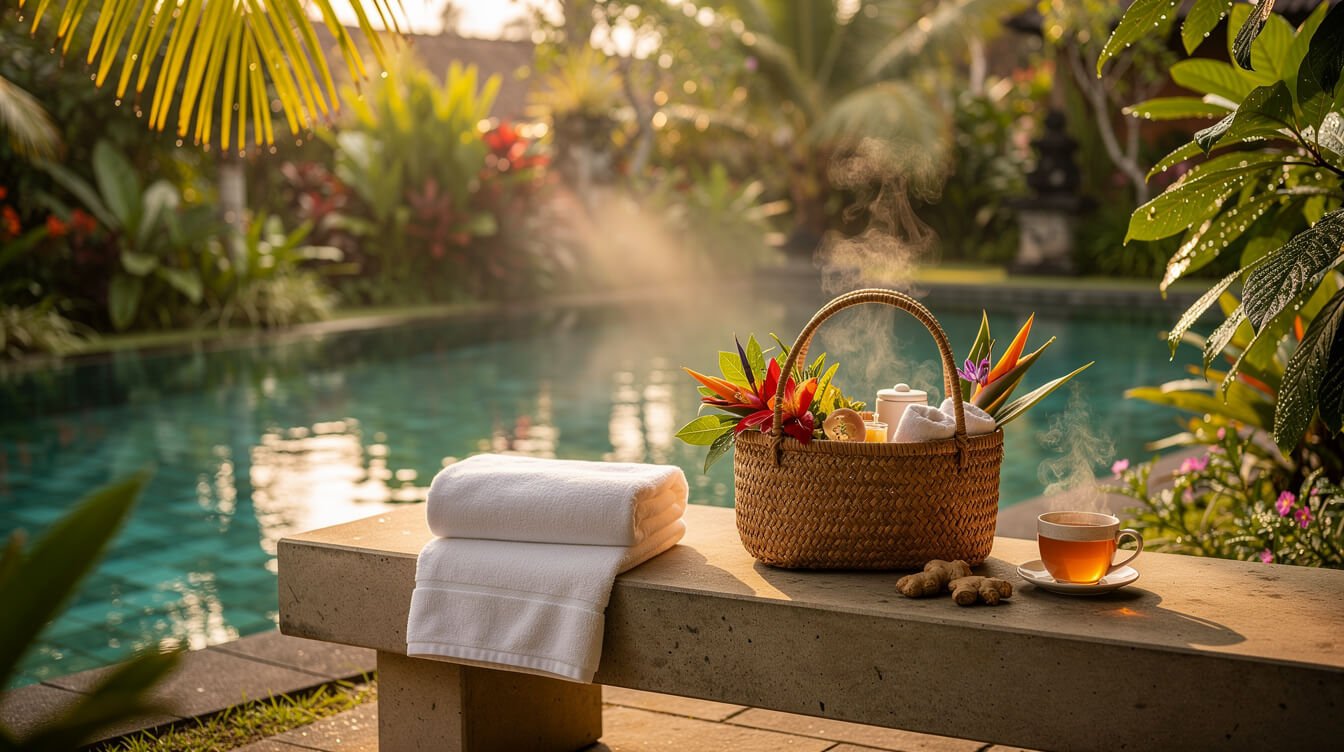
When our manager arranges your airport transfer, that’s one less moment of standing in an unfamiliar arrivals hall negotiating with unlicensed taxi touts who target visibly jet-lagged new arrivals. When our chef sources produce and manages your kitchen, that’s water and food safety handled by someone who eats the same food, sourced from suppliers they’ve vetted over years, not a menu translated for tourist palates. When our housekeeper notices you’ve been scratching mosquito bites, she’ll quietly appear with citronella and a mosquito coil before you’ve had to ask.
And when something genuinely goes wrong — a lost passport, a medical question at 2am, a scooter accident down the road, a stomach bug that won’t settle — you have someone who speaks the language fluently, knows exactly which clinic to call and how to get you there fastest, and has navigated this exact situation before. Not a hotel front desk reading from a laminated emergency card, and not a call center in a different time zone. A person, in the next building, who already has a relationship with the doctor.
It’s a different kind of safety net than insurance paperwork, though we’d never suggest skipping the insurance. It’s the difference between a safety plan you have to execute yourself under stress, and a safety plan that’s already running in the background because someone who lives here is holding it for you.
Health, Vaccinations, and Your Travel Kit
Bali doesn’t require any vaccinations for most travelers arriving directly from most countries, but standard travel-health guidance still applies and shouldn’t be skipped just because the entry requirements are minimal. Routine vaccinations (MMR, tetanus, flu) should be current before any international trip, and many travel clinics recommend Hepatitis A and Typhoid protection given the food and water exposure that comes with genuinely exploring a place rather than staying inside a resort perimeter. If you’re planning jungle trekking, extended rural stays, or visiting more remote parts of Indonesia beyond Bali, it’s worth asking your clinic about Japanese Encephalitis too. None of this is Bali-specific alarm — it’s the same short list a travel doctor gives for most of Southeast Asia, and a five-minute conversation with your GP a few weeks before departure covers it.
Mosquito-borne illness — dengue fever, mainly — is a real if statistically uncommon consideration, more present during rainy season (roughly November through March) when standing water is everywhere. Repellent containing DEET or picaridin, covering bare skin at dawn and dusk when mosquitoes are most active, and choosing accommodation that isn’t sitting water-adjacent all cut the risk meaningfully. Our gardener keeps the grounds clear of standing water for exactly this reason — emptying saucers under potted plants, maintaining the pool’s chemical balance, checking drainage after heavy rain — routine villa maintenance that happens to double as effective mosquito control without you ever needing to think about it.
Pack the boring things, because they’re the ones that actually matter: a small first-aid kit with basics like antihistamines and rehydration salts, any prescription medications in original packaging accompanied by a doctor’s note (Indonesian customs can be strict about unlabeled medication), and travel insurance that actually covers medical evacuation, not just trip cancellation. Ubud has good clinics for everyday issues — minor injuries, stomach trouble, the occasional infected mosquito bite. Anything more serious typically means a transfer to a larger hospital in Denpasar or, for the most serious cases, Singapore, and solid insurance is what makes that transfer a logistical formality instead of a financially frightening scramble.

Ready to see it for yourself?
A staffed villa changes the whole shape of a Bali trip — including how safe it feels. Check dates and come see Ubud with a team already looking out for you.
Natural Disasters: What the Headlines Miss
Bali sits on the Pacific Ring of Fire, and international news occasionally runs a dramatic headline about Mount Agung or a distant earthquake that makes the whole island sound like it’s one tremor away from evacuation. The reality, lived day to day, is considerably calmer than the coverage. Indonesia’s volcanic monitoring agency tracks activity continuously across every active volcano in the country and issues staged alerts — from normal, through watch, to warning, to danger — well before any real threat materializes. Tourism in unaffected areas, including Ubud, continues normally even during periods of elevated volcanic watch elsewhere on the island, which is more often than headlines suggest.
Ubud itself sits inland and elevated in the island’s interior, well outside the tsunami risk zones that affect low-lying coastal areas. Earthquakes do happen across Indonesia, as they do across much of the Pacific Ring of Fire, and the overwhelming majority are felt as a brief shake — enough to notice, rarely enough to cause structural concern in a well-built modern property. Bali’s building codes for tourist-facing structures account for seismic activity as standard practice, not an afterthought.
We monitor BMKG (Indonesia’s meteorological, climatological, and geophysical agency) alerts as a matter of course, the same way any resident household would, and we’d tell you directly and immediately if anything affecting your specific stay changed — not after you’d already seen it filtered through international news and started worrying unnecessarily. That’s part of what living here full-time, rather than managing a property remotely, actually means in practice.
The honest framing, stripped of both alarm and false reassurance: check current conditions before you book if there’s genuinely active volcanic activity being reported by BMKG, but don’t let a dramatic headline about an eruption on the far side of an island 60 kilometers away cancel a trip to Ubud. Context matters more than the headline’s tone.
So, Is Bali Safe to Travel? Your First 24 Hours Will Tell You
Guests often arrive a little braced, running through a mental checklist of everything that could go wrong, half-expecting the trip to demand constant vigilance from the moment they land. It usually dissolves within the first day. You land, and someone with your name on a sign is waiting instead of a taxi scrum shouting over each other for your business. You’re driven through rice fields catching the last of the daylight instead of negotiating a fare in a language you don’t speak, watching the meter, wondering if you’re being taken the long way. You arrive at the villa gate, and someone hands you a cold towel and a glass of something cold and unfamiliar and good before you’ve even set down your bag.
That first evening — dinner already arranged around whatever you told us you’d eat, mosquito coils lit without you asking, the gate locked, staff a phone call away if anything at all feels uncertain — is usually when the tension guests didn’t know they were carrying quietly leaves their shoulders. You notice it around the second glass of something cold on the terrace: the specific quality of not having to be on alert. Not because nothing could possibly go wrong, but because if it did, you wouldn’t be the one solving it alone.
Bali doesn’t ask you to be fearless. It asks you to be reasonably prepared — the traffic awareness, the water habits, the travel insurance — and then it hands the rest of the work to people who live here and genuinely want your stay to go well, because it’s their home too, not just your holiday.
That’s the real answer to “is Bali safe to travel”: yes, especially when the people hosting you have a direct stake in making sure it is. If you’re weighing the decision, our Bali travel guidelines guide covers entry requirements and visas in full detail, and our route-by-route travel guide is a useful next read for planning how you’ll actually move around once you land.

Join our newsletter — fun, new, exciting Bali news
Weekly notes on Ubud life, village rhythms, and the small things happening around the villa — no sales pitch, just a genuine window into the place.