The Sound That Still Calls the Banjar to Work
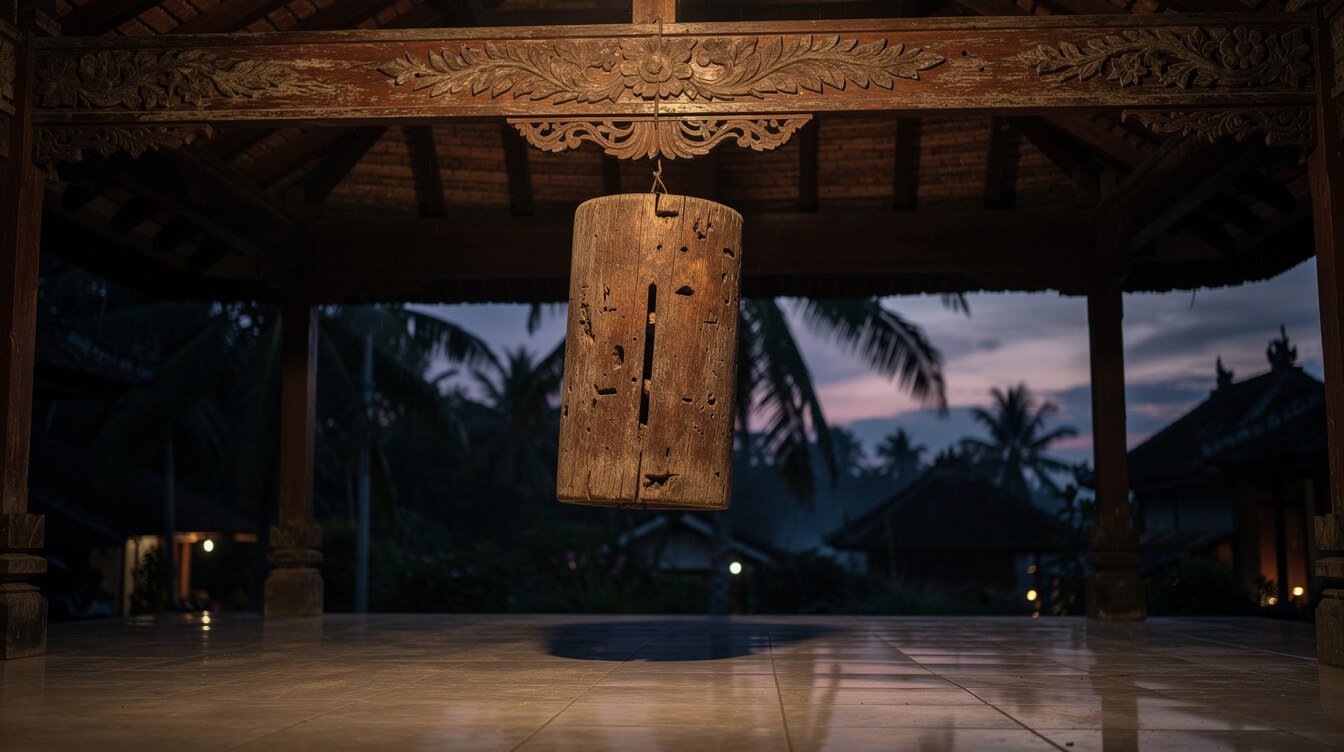
The sound reaches the villa a little after six most evenings, right when the light starts going amber over the garden wall: a hollow wooden knock, three quick then one slow, coming from somewhere down the lane. Not a bell, not a gong — something drier and more percussive, like a knuckle on a door built entirely of teak. It’s the kulkul, the slit-drum hanging in the open pavilion of the neighboring banjar hall, and once you’ve heard its pattern a few evenings running, you start to notice it the way you’d notice a familiar voice calling from another room.
Ketut, the villa manager, doesn’t look up the first time it sounds. He’s usually halfway through locking the pool gate for the night, and he just says, half to himself, “gotong royong tomorrow” — communal work, probably clearing the irrigation channel or setting up for a ceremony at the banjar’s shrine. He’ll go. Not because anyone at the villa asked him to, but because the rhythm on that drum is a summons he’s understood since he was a boy, and answering it is simply part of being a person who lives here, not just someone who works here.

Get a free 3-day sample itinerary
Rice terraces at sunrise, a slow lunch, sunset at the villa — tell us and we’ll send a sample 3-day rhythm for your Ubud stay.
The kulkul predates the phone by centuries, and villages here still lean on it because it does something a phone call can’t — it reaches everyone within earshot at once, and the rhythm itself carries the message. A steady, even beat means a routine meeting. A fast, urgent pattern means fire or death, and every household is expected to drop what it’s doing and come. Our guide to Ubud’s temples and the ceremonies that animate them goes deeper into this layer of village life — the calendar of obligations, offerings, and communal duty that runs underneath the postcard version of Bali most visitors never get shown.
You’ll likely hear it too, some evening from the terrace, and you won’t know what it means — and that’s rather the point. It’s not staged for you, and it isn’t explained in a welcome binder. It’s one more sign that a staffed villa Ubud stay puts you inside a place with its own working rhythm, not a resort compound sealed off from the village around it. Ketut will tell you what it meant if you ask over breakfast. Most guests do, eventually.

Book the Villa
Three bedrooms, full staff, and a village rhythm still running just beyond the garden wall. Check your dates and come hear it for yourself.
By the time you’ve finished your sunset drink, the drum has usually gone quiet again, and the lane outside settles back into cicadas and the occasional scooter. Ketut has already made a mental note of what tomorrow requires. Nothing about your evening changes because of it — the pool lights come on the same as always, dinner arrives on schedule — but the village just did what it’s done for generations, three knocks and a slow one, and somewhere a few doors down, someone heard it and got ready.

Join our newsletter — fun, new, exciting Bali news
A short letter from Ubud — what’s blooming, what’s in season, what the villa’s been up to.