Ubud Market: Your Complete Guide to the Best Markets in Ubud, Bali
Ask anyone who has spent a week in Ubud what surprised them most, and a good number will say the same thing: the Ubud Market. Not the temples, not the rice terraces — the market. It is the one place in town where the tourist version of Ubud and the actual, working version of Ubud share the same floor, sometimes the same stall. Our villa manager walks past it most mornings on her way to check on things, and she still stops.
This guide is written the way we’d explain it to a guest over coffee on the terrace — not a listicle assembled from a search results page. We’re five minutes from Ubud Market. We know its rhythm because we live inside it, not because we visited once for a photo.
What Is Ubud Market, and Why Everyone Ends Up There
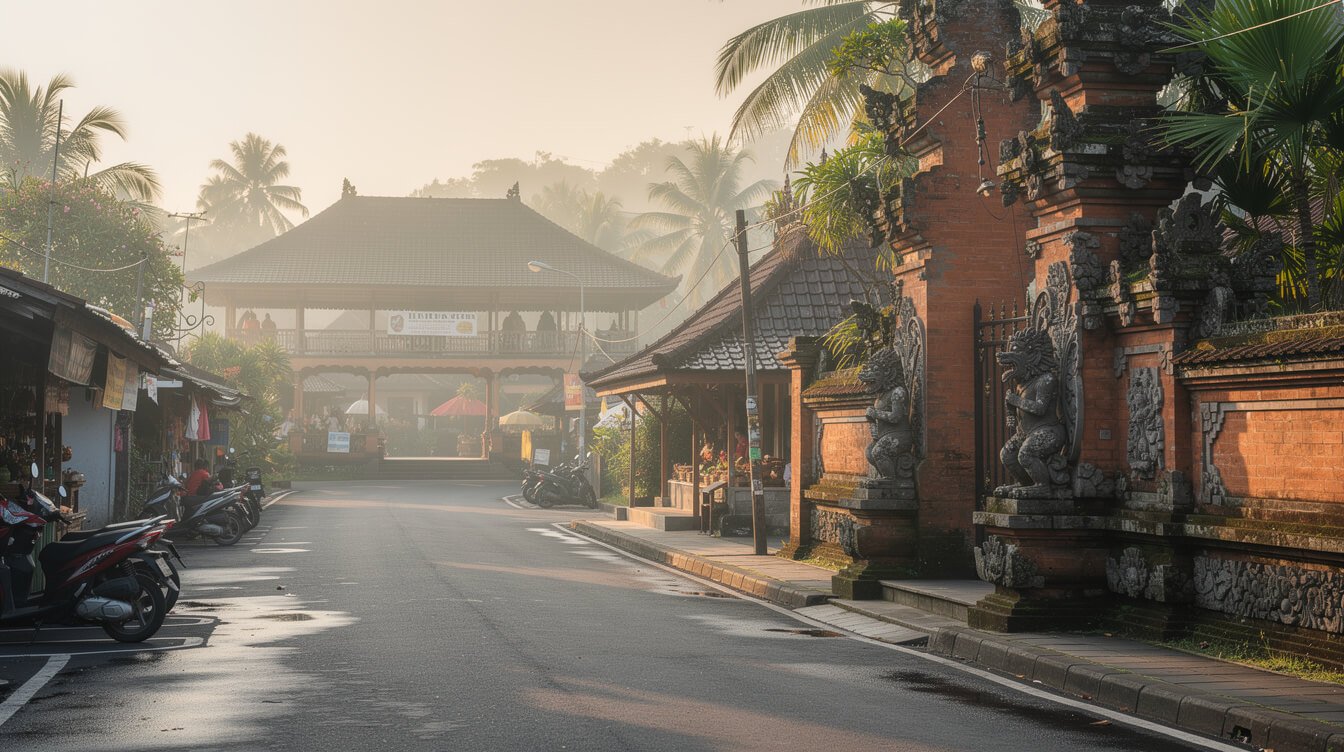
Ubud Market — Pasar Ubud to the people who actually shop there — sits directly across from Puri Saren, the royal palace at the center of town, on Jalan Raya Ubud. It has been trading in that exact spot for generations, long before anyone thought to put “Ubud” and “wellness retreat” in the same sentence. What made it famous internationally was a movie. What keeps it running is a lot more ordinary and a lot more interesting: a two-story building and the surrounding streets, functioning as two markets stacked on top of each other.
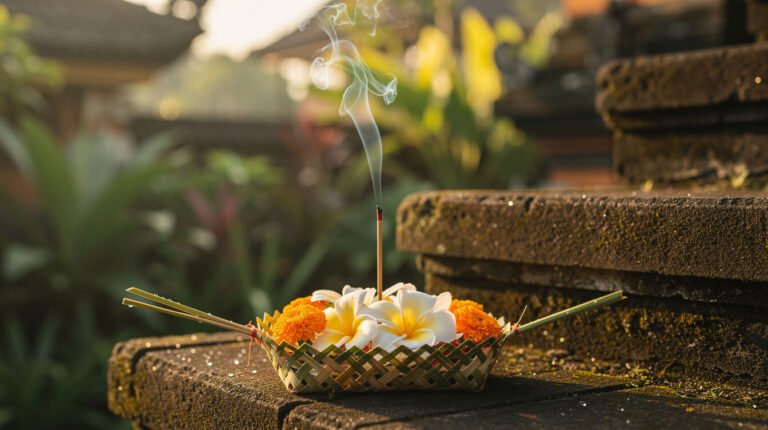
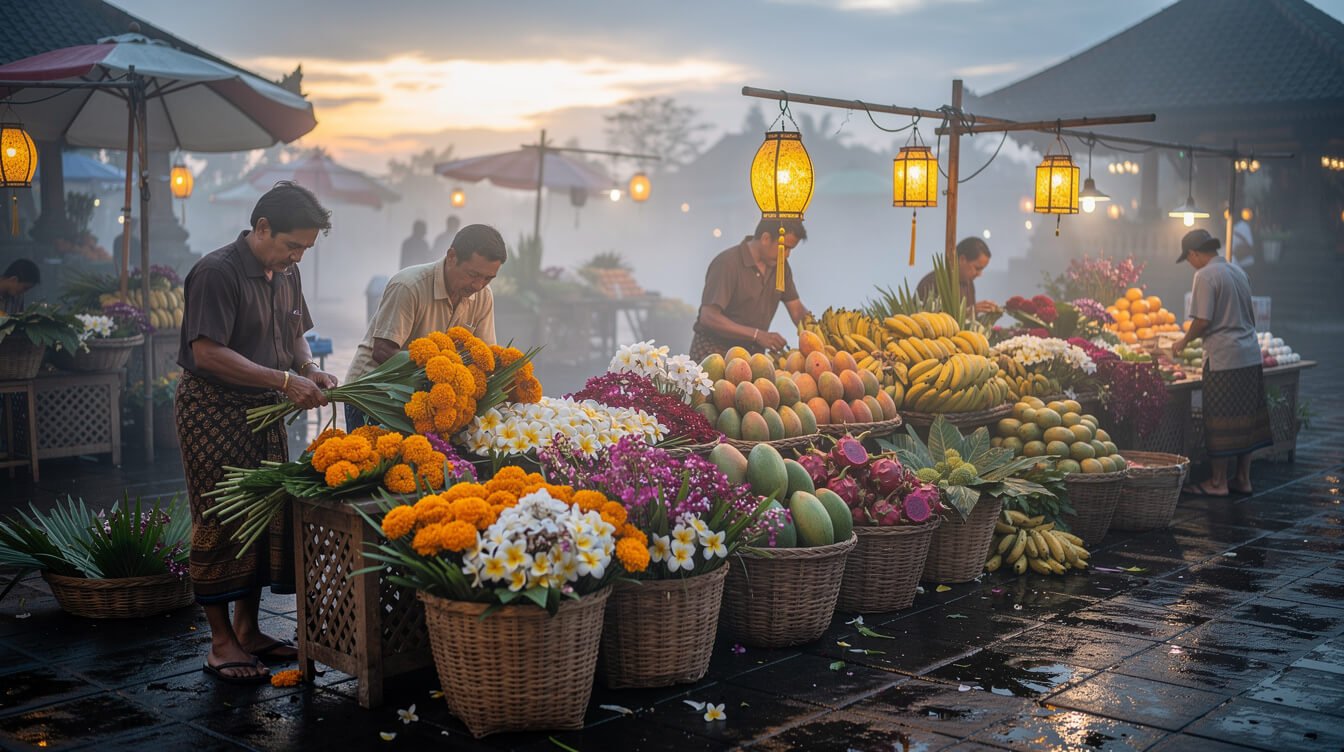
Downstairs and out on the street before sunrise, it’s a produce and flower market — the one the villa’s own kitchen team visits for the morning’s vegetables, chilies, and the little woven canang sari offering baskets you’ll see set out on doorsteps everywhere in Bali. Upstairs, and increasingly spreading through the ground floor as the morning goes on, it becomes the market most visitors picture: textiles, wood carving, silver, sarongs, paintings, the full inventory of Balinese craft.
The two markets don’t really compete for attention because they don’t run on the same clock. That timing — not the map, not the layout — is the thing most guides skip and the thing that actually matters if you want to see Ubud Market at its best.
About that movie, since it comes up in almost every conversation about this place: yes, a scene was filmed here, and yes, it put Ubud Market on a lot of travel lists it wasn’t on before. But the market doesn’t perform for that reputation the way some famous filming locations do. There’s no plaque, no re-created scene for photos. It just kept doing what it was doing before the cameras arrived, and it’s still doing it now. That’s worth knowing going in — you’re not visiting a movie set, you’re visiting a market that happened to be in one.
The Two-Story Pavilion — What You’ll Actually Find at Ubud Market
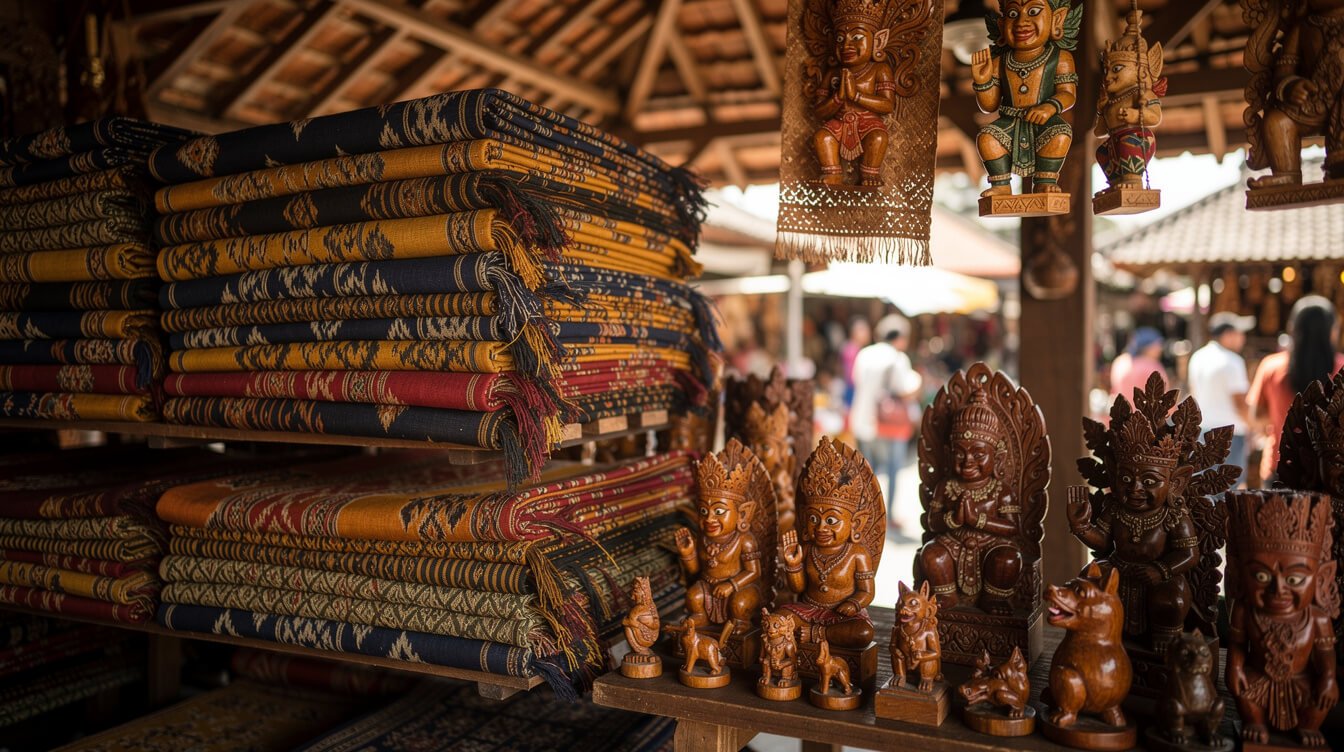
Once the produce sellers clear out, the craft side of Ubud Market takes over the space, and it is genuinely dense with good work — the trick is knowing what you’re looking at. Here’s what tends to fill the stalls, roughly by what’s worth your attention:
- Ikat and hand-woven textiles — scarves, sarongs, and table runners, quality varies a lot stall to stall; feel the weight and check the weave before you commit.
- Wood carving — much of it arrives from villages like Peliatan, Tegallalang, and Pengosekan, which have specialized in carving for generations. Ask where a piece is from; sellers who know, usually sell the better stuff.
- Silver and jewelry — a lot of it hammered nearby in Celuk, a village that’s basically synonymous with Balinese silversmithing.
- Paintings — from mass-produced tourist scenes to genuinely accomplished work by local artists, sometimes in the same row of stalls.
- Bags, sarongs, and the inevitable “Bali” t-shirts — fine as they are, just don’t mistake them for the craft above.
A quick word on quality, since it varies more than most first-time visitors expect. For wood carving, weight and finish tell you a lot — a piece that feels suspiciously light for its size is often a softer, faster-growing wood dressed up to look like the harder varieties. For textiles, run your hand across the weave; genuine ikat has a slight irregularity to it that machine-printed imitations don’t. Neither of these takes expertise to notice once you know to check — just a few extra seconds before you decide.
None of it is priced the way a shop with fixed tags would price it, which brings us to the part every first-timer asks about before they even land: how do you actually buy something here without feeling like you’re doing it wrong? We’ll get to that in a moment — first, timing, because timing decides which version of Ubud Market you even get to see.

Get a free 3-day sample itinerary
Market morning, temple walk, slow afternoon by the pool — we’ll send you a sample 3-day Ubud itinerary built around the villa.
When to Go — Ubud Market’s Early-Morning, Midday, and Weekend Rhythm
Ubud Market genuinely runs on a schedule most visitors never learn, because most visitors show up once, at whatever hour their itinerary allows, and take that single hour as the whole story.
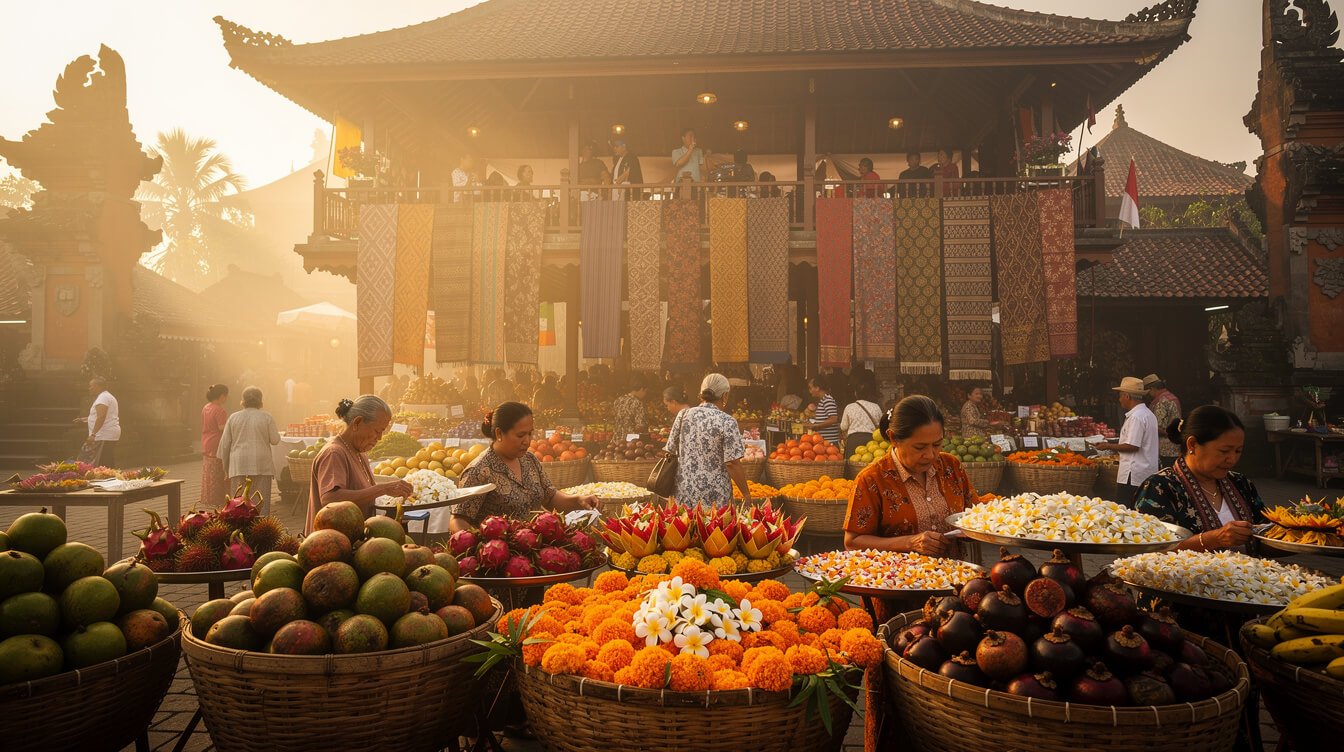
Before 6:30 AM — this is the produce and flower market at full strength. Vendors are still arranging fruit into pyramids, and the offering-basket sellers are doing their busiest trade of the day. It’s quiet, it’s local, and almost nobody selling to you is selling to a tourist. If you want to see the Ubud that keeps running underneath the version built for visitors, this is the window.
Mid-morning through early afternoon — the craft market is in full swing, tour groups arrive, and the energy shifts entirely. This is the busiest, loudest, most “market” version — good for browsing at volume, less good if you want a quiet look at any one stall.
Late afternoon — a lull. Some vendors start packing in the craft section while others are just getting comfortable with slower, more patient bargaining. If you want room to actually talk to a seller rather than compete with a tour group for their attention, this is an underrated window.
On top of the daily rhythm, market day traditions still shape the wider village — ceremonial days can quiet certain streets and fill others with processions, so if your dates line up with a temple anniversary or a Balinese holiday, expect the market to feel different in a good way: busier with locals, thinner with tourists.
How to Bargain at Ubud Market Without the Awkwardness
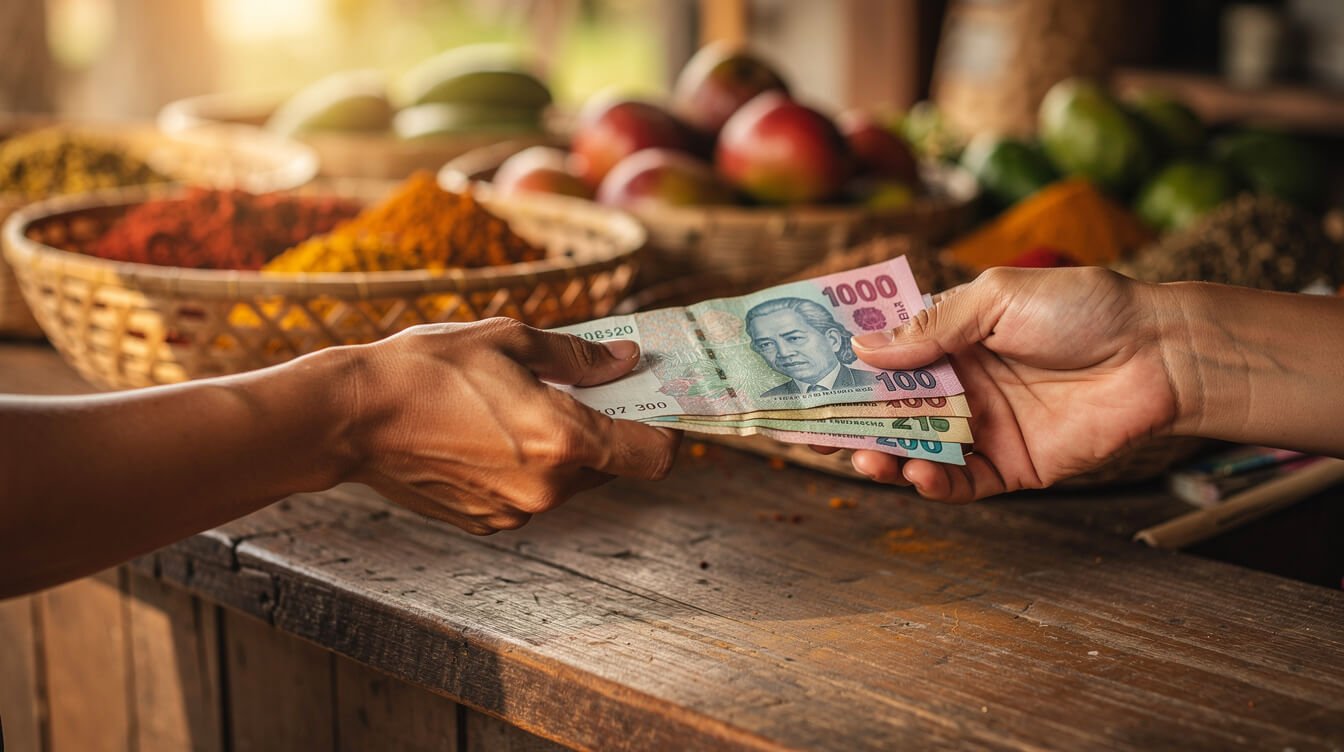
Bargaining at Ubud Market is expected, not rude, and it works best when you treat it as a conversation rather than a contest. A few things our team tells guests before their first visit:
Start friendly, not skeptical
A smile and a genuine “Good morning, how are you” before any talk of price changes the whole interaction. Sellers remember who treated them like a person.
Know roughly what you’re willing to pay before you ask
Rather than asking “how much” and negotiating down from their opening number by percentage, decide what the item is worth to you first. Counter with that number, not with a reflexive half-price offer.
Expect two to four rounds, not ten
A typical exchange goes: their price, your counter, their counter, and a landing point somewhere in the middle — sometimes closer to your number, sometimes theirs. If a seller won’t move at all, that’s often a sign the first price was already close to fair.
Walking away is a real tool, used gently
If the number isn’t working, a warm “thank you, I’ll think about it” and an actual step away often produces a better offer — and if it doesn’t, that’s fine too. Nobody owes you a lower price.
Cash, small notes, and a rough sense of scale
Small woven items and offerings run a few dollars’ worth of rupiah; textiles and carvings can run considerably more depending on size and quality. Bring smaller denominations — it’s harder to bargain well when your only note is far larger than the price under discussion.
None of this needs to feel transactional in the cold sense. Most of the sellers at Ubud Market have been doing this for decades, in some cases inheriting the stall from a parent. A little curiosity about their work goes further than a hard negotiating stance ever will.
Beyond the Stalls — Ubud Market, the Art Market, and Pura Desa Ubud
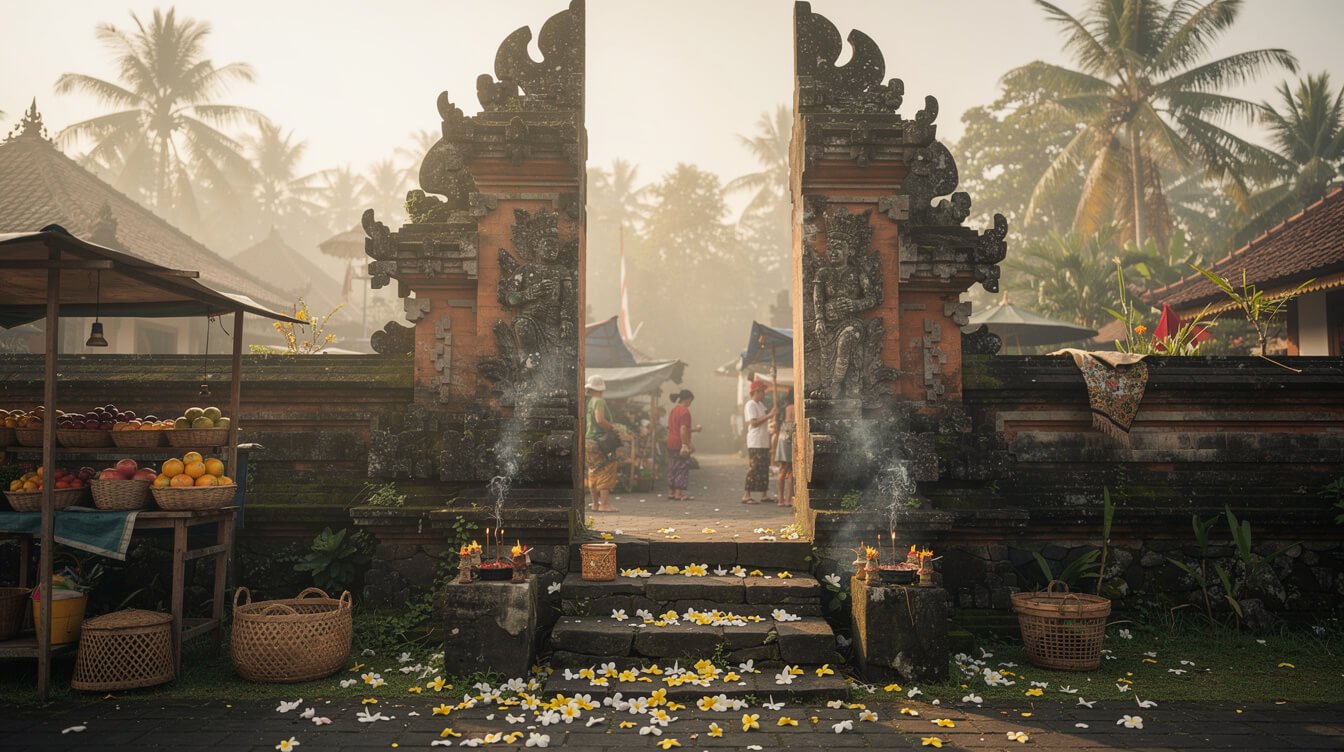
Ubud Market doesn’t sit in isolation — it’s part of a small cluster of sights you can cover on foot in under an hour, which is exactly why it’s worth building a slow morning around rather than a rushed stop between other plans.
Directly across the street is Puri Saren, the royal palace, with its carved gates and open courtyards — free to walk through during the day, and the site of traditional Balinese dance performances most evenings. A few minutes’ walk brings you to Pura Desa Ubud, one of the village temples that still anchors daily ceremonial life; you may catch women carrying towering fruit offerings on their heads on their way to a blessing. None of this is staged for visitors — it’s simply what a Balinese village center still does, market day or not.
If you’re deciding how to spend a morning that includes the market, it pairs naturally with the kind of unhurried, culturally rich few hours we cover in our guide to romantic things to do in Ubud — several of the quieter stops there are a short walk from the market itself.
Worth building into your timing: the Ubud Palace dance performances usually start in the early evening, several nights a week, and tickets are sold at the gate rather than online. If you’ve spent the morning at the market and want a full circle back to the same block after dark, checking the current schedule when you’re there is easier than trying to pin it down in advance.

Book the Villa
Five minutes from Ubud Market, with a chef, housekeeper, and gardener already looking after the rest of it. Come stay with us.
Where to Eat Near Ubud Market — Warungs Worth the Five-Minute Walk
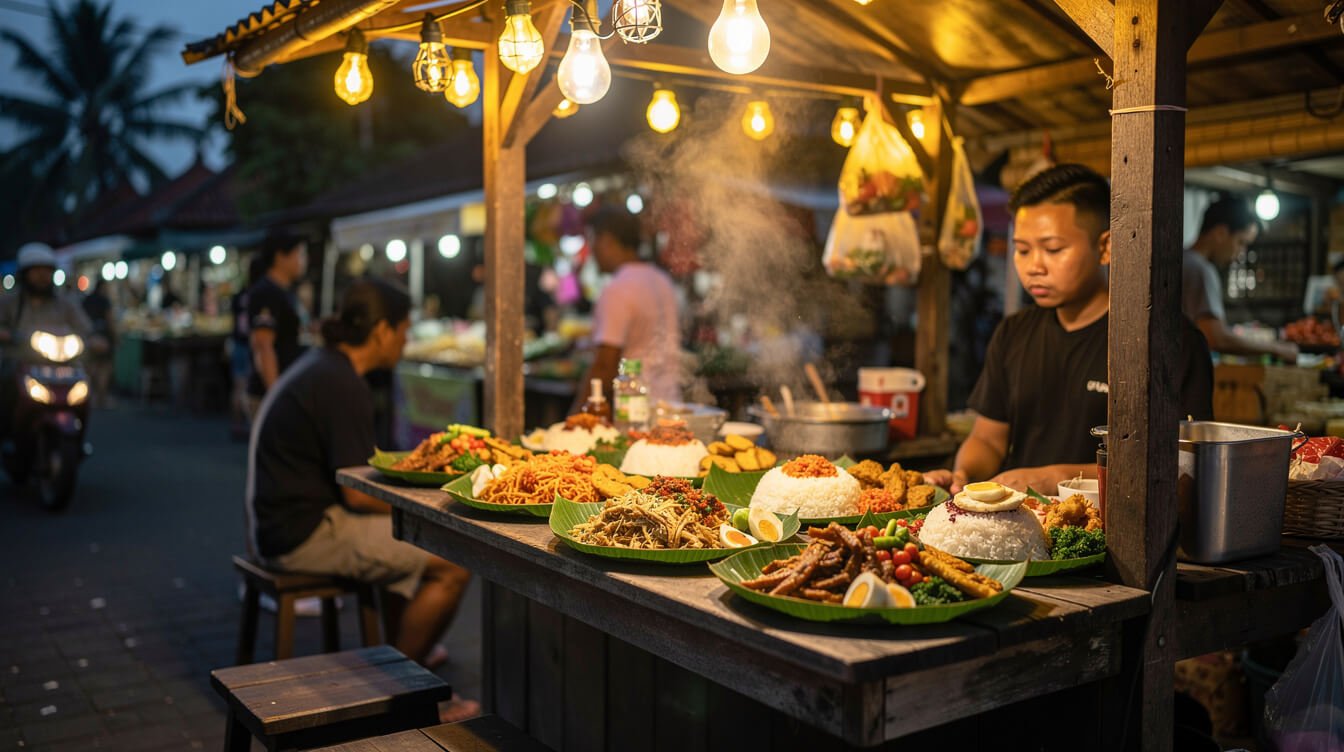
Market mornings run on food, and the streets around Ubud Market are lined with small, unpretentious warungs that will outcook most restaurants twice their price a few blocks over.
Look for nasi campur — a plate of rice with a rotating selection of small dishes, different at every warung and usually assembled based on what’s freshest that morning. It’s the closest thing Bali has to a home-cooked lunch served to strangers, and it’s often better right after the market has restocked than at any other point in the day. Fresh coconut, still warm jaje (traditional Balinese sweets) sold from baskets, and strong, sweet Balinese coffee round out a proper market breakfast.
If you’d rather skip the walk and let the villa handle it, this is exactly the kind of morning our chef builds into a stay — market-fresh ingredients, cooked at home, on your own schedule. It’s a small thing, but it’s the difference between visiting Ubud and actually living inside it for a week.
Frequently Asked Questions About Ubud Market
What time does Ubud Market open?
The produce and flower side starts before dawn, often around 4-5 AM, and winds down by mid-morning. The craft and textile side is at its busiest from around 8 AM to late afternoon, though individual stalls keep their own hours.
Is Ubud Market open every day?
Yes — Ubud Market runs daily. Balinese ceremonial days can quiet certain vendors or shift crowds, but the market itself doesn’t close for a weekly rest day the way some Western markets do.
Is Ubud Market the same as Ubud Art Market?
“Ubud Art Market” and “Ubud Market” refer to the same building and block — the craft and souvenir side is often called the Art Market, while the produce side across the street and ground floor is what locals mean by “the market” in daily conversation.
How much should I expect to pay?
It depends entirely on what you’re buying and how it’s made — small woven offerings and trinkets cost very little, while a well-made textile or carving reflects real skill and hours of work. Treat the first price as a starting point, not a fair one, and you’ll land somewhere reasonable for both sides.
Is it safe, and is it crowded?
It’s a safe, everyday part of Ubud life — pickpocketing is rare but not impossible in the busiest midday crush, so keep bags zipped and in front of you the way you would in any dense market anywhere. Early morning and late afternoon are noticeably calmer than the midday peak.
Can I get there on foot, or do I need a driver?
If you’re staying in central Ubud, walking is easy and often faster than a car given the traffic around Jalan Raya Ubud on a busy morning. From further out, a short drive or a scooter is the norm — just note that parking directly at the market is limited, so many visitors get dropped off and arrange a pickup rather than trying to park themselves.
What should I skip buying at Ubud Market?
Anything electronic, anything claiming to be a name-brand original, and any “antique” sold with real urgency — genuine antiques don’t usually surface at tourist-facing stalls at tourist-facing prices. For everything else — textiles, carving, produce, offerings — the market is exactly where you want to be.
Final Thoughts — Let Ubud Market Be Part of Your Stay, Not a Stop on a List
Most visitors treat Ubud Market as a single errand: go, buy a scarf, leave. Given a full stay in Ubud, we’d gently suggest the opposite — let it become a habit. Walk down before breakfast one morning just to watch the flower sellers work. Go back mid-week for the textiles once you know what you’re looking for. Notice that the palace across the street and the temple around the corner are having their own quiet, ordinary Tuesday, exactly like they were before anyone wrote a guide about it.
That’s the version of Ubud we try to hold open for our guests — not a highlight reel, but the actual rhythm of the village, market included. If you’re still mapping out the rest of your visit, our guide to the best time to travel to Bali and our comparison of Ubud versus Canggu are good next stops for planning. And if you want a sense of how the village marks its bigger ceremonial moments, our team wrote honestly about what Galungan feels like from inside an Ubud villa.

Join our newsletter — fun, new, exciting Bali news
Market days, festival dates, and what’s blooming in the garden this week — a short letter from Ubud, not a sales pitch.